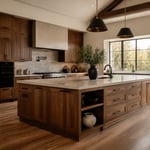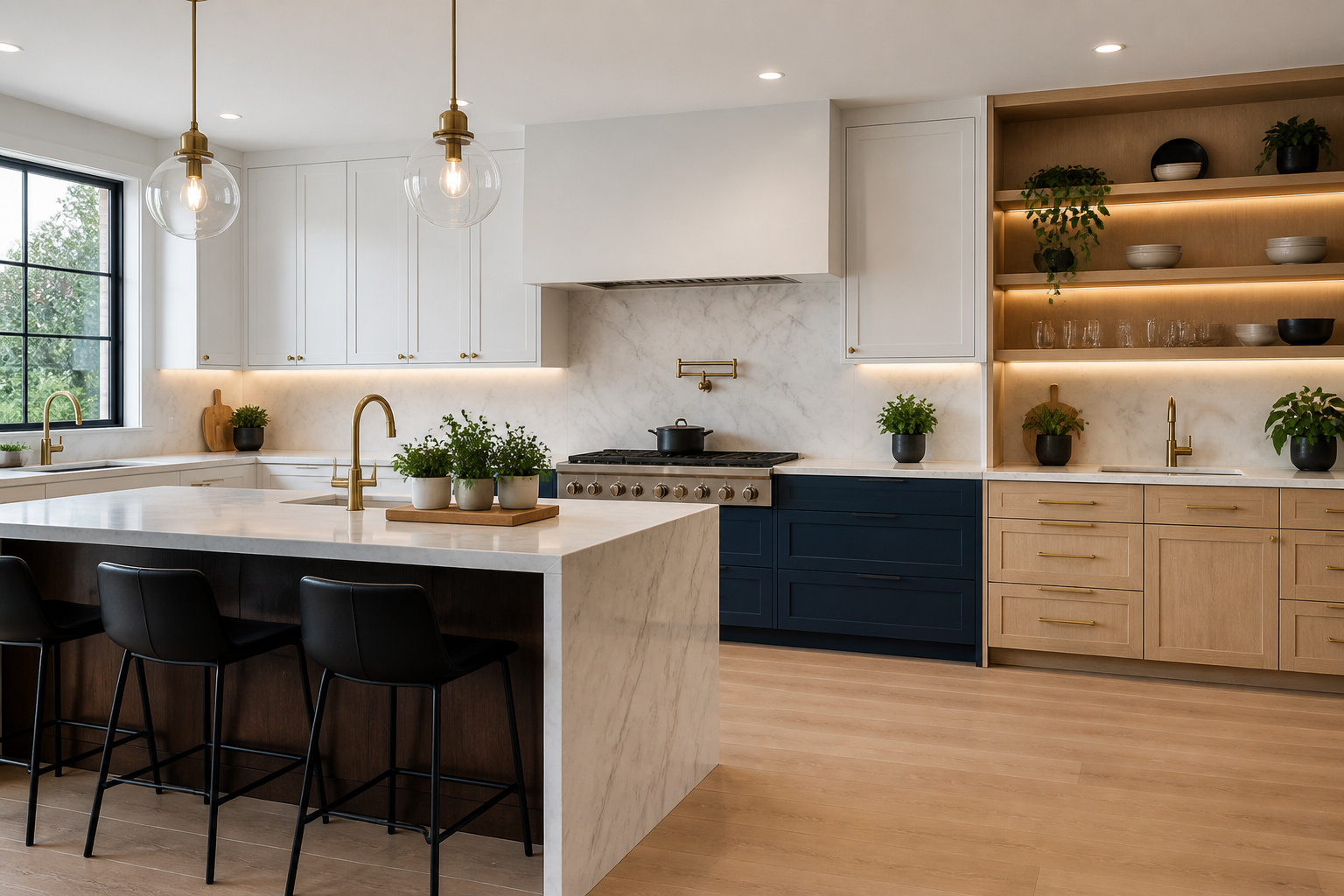
Most homeowners spend 40 to 60 percent of their kitchen remodel budget on cabinets and less than three hours making the decision. After documenting hundreds of kitchens as an architectural photographer, I can tell you that the kitchen design cabinets you choose establish the entire visual grammar of the room — door style, construction method, material, and color collectively determine whether a space reads as modern, traditional, transitional, or something that fits no category at all.
This guide covers 15 cabinet styles from shaker classics to handleless slabs. The goal is not what looks good in a photo, but what works in an actual kitchen for the next 20 years.
1. Shaker-Style Kitchen Design Cabinets That Never Go Out of Fashion
Construction and Proportions
Standard stile and rail widths run 2.25 to 2.75 inches, with the bottom rail always wider than the top — typically 2.5 to 2.75 inches at the base versus 2.25 at the top. A heavier bottom rail stabilizes the door visually. Skip this detail and the proportions will bother you every time you open the cabinet.
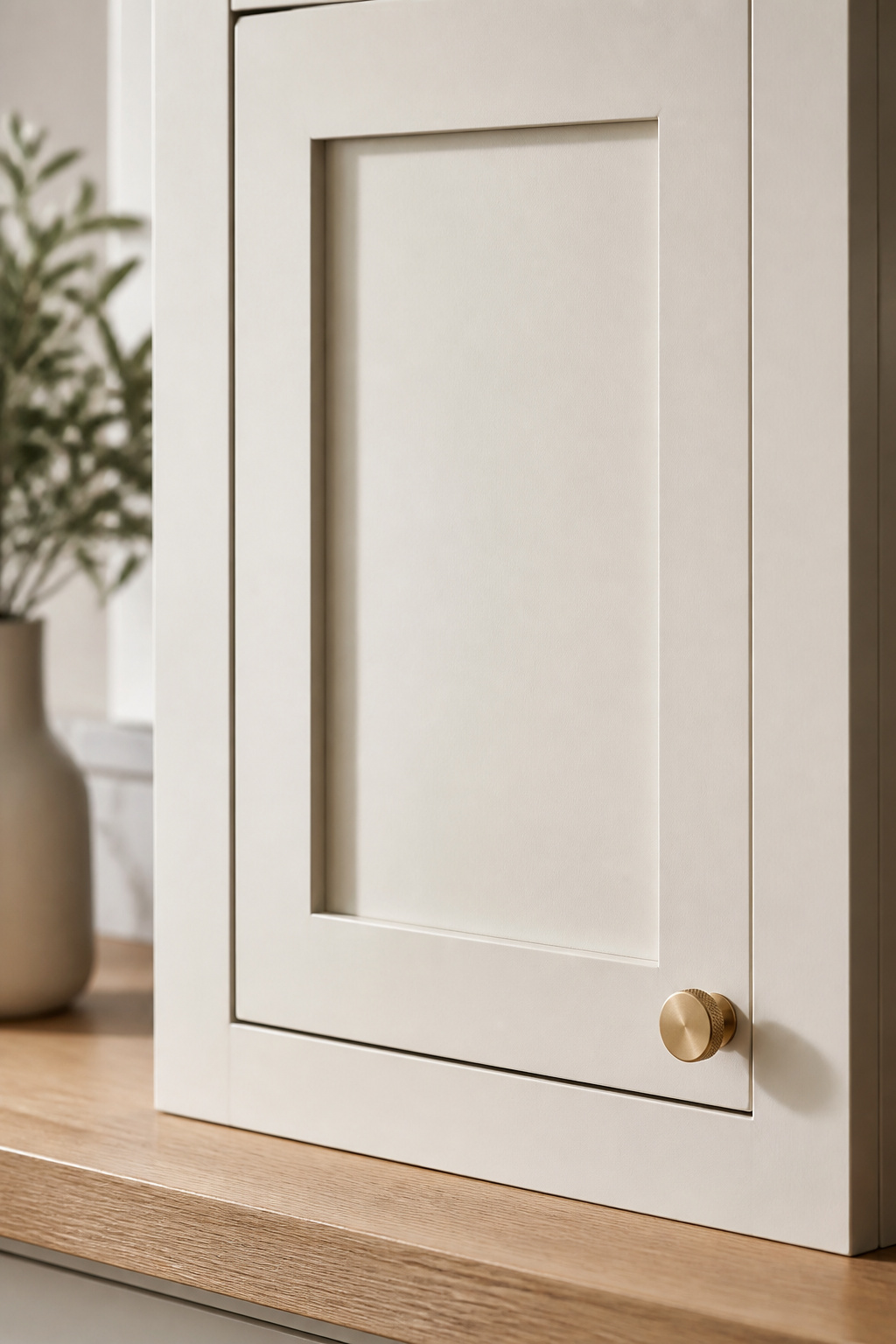
For painted shaker kitchen design cabinets, maple is the preferred substrate. Its fine grain creates a smooth surface with no bleed-through. Stained versions in white oak or walnut allow the wood character to show through, adding warmth that paint cannot replicate.
Inset vs Overlay
Full overlay shaker — doors covering nearly all of the face frame — reads as cleaner and more contemporary. Inset shaker, where the door sits flush within the frame with a 1/8-inch reveal, gives the kitchen a furniture-grade built-in quality. Inset runs 15 to 30 percent more expensive, but in a kitchen you intend to use for two decades, it is worth calculating carefully rather than dismissing on price.
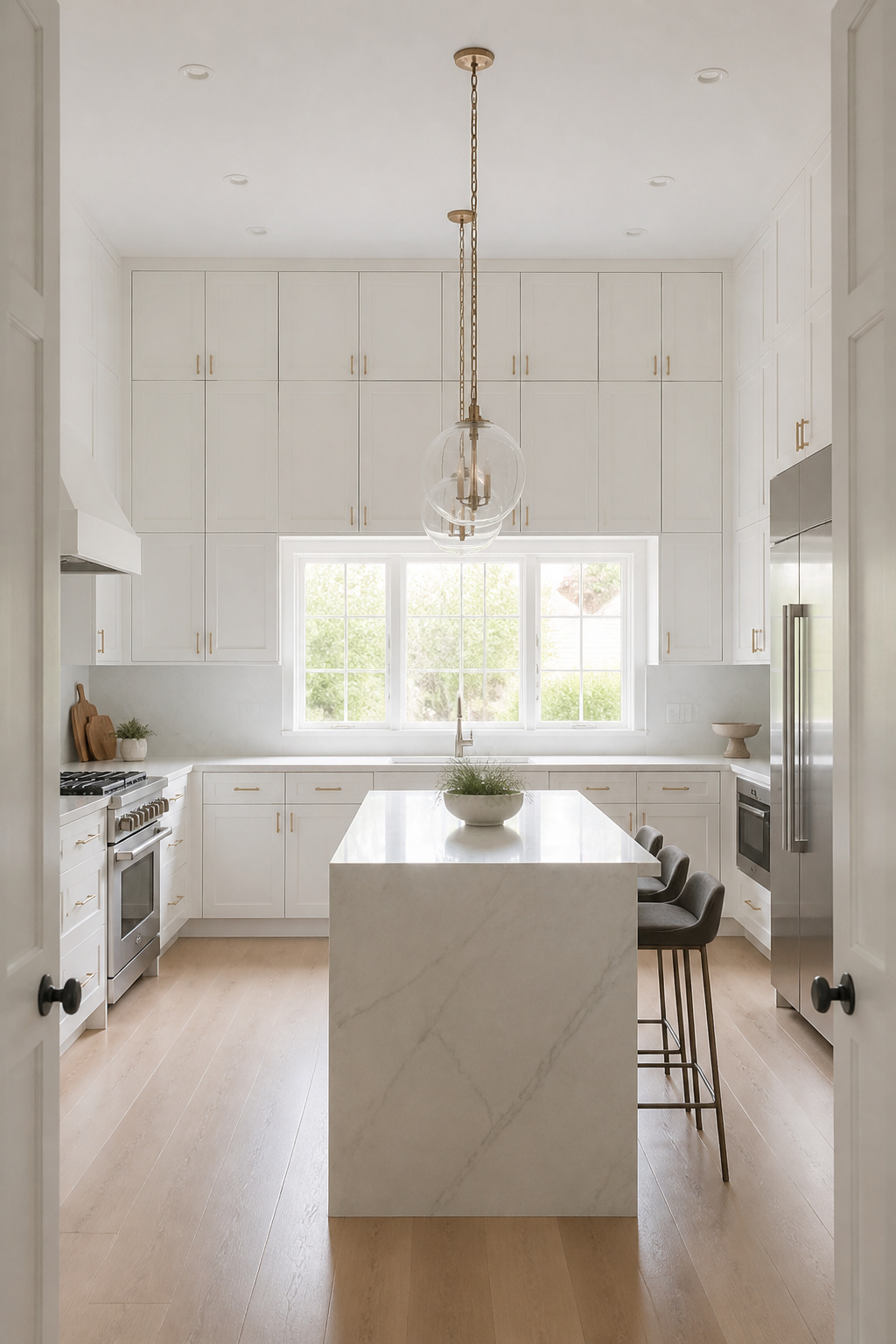
2. Floor-to-Ceiling Cabinet Runs That Make Small Kitchens Feel Larger
Kitchen Cabinet Design Options by Ceiling Height
For 8-foot ceilings, standard 36-inch upper cabinets with 3 to 6 inches of crown molding bridge to the ceiling without custom work. For 9-foot ceilings, 42-inch uppers with 12 inches of crown molding achieve the same result. At 10 feet and higher, stacked upper cabinets — a 36-inch lower tier topped by a 12 to 15-inch upper tier — are the cost-effective middle ground. Full-custom-height boxes add a 20 to 40 percent premium over semi-custom pricing.
Cabinet Design: Handling the Soffit Gap
Soffits cost $15 to 25 per linear foot installed. If mechanical systems prevent removal, infill with cabinet-face panels in the matching finish. Crown molding is the budget version at $100 to 200 in materials, though it requires skilled mitre work at ceiling intersections. A lighter alternative: remove upper cabinet doors in the soffit zone and install floating shelves instead, creating a visual hybrid that sidesteps the cost of extending cabinet boxes entirely.
3. Two-Tone Cabinet Combinations That Define the Kitchen Zones
Color Pairing for Two-Tone Kitchen Design Cabinets
The LRV rule is the most practical guide: aim for 30 to 40 LRV (Light Reflectance Value) points of contrast between upper and lower cabinets. Below 20 points of difference, the two tones blend and the split looks accidental. Popular 2026 pairings: white upper with navy lower, white upper with forest green lower, off-white upper with medium walnut-stained lower.
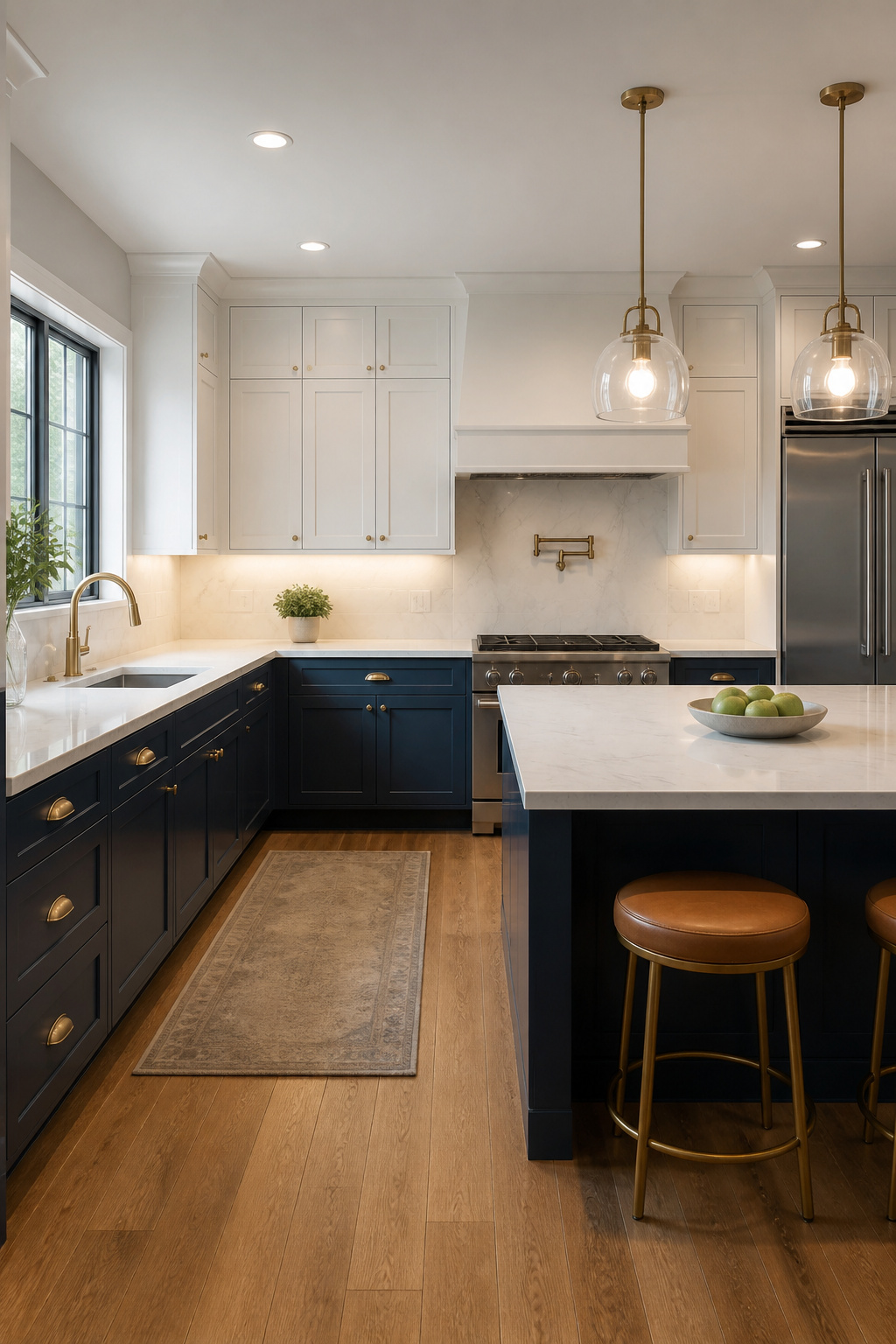
For a thorough look at which specific paint codes are working best right now, kitchen cabinet color ideas runs deep into undertone matching and LRV calibration.
The Island Decision
The island is the third surface in any two-tone kitchen. Match it to one of your two existing tones — lower cabinets for a unified base, upper cabinets for a lighter float — rather than introducing a third color. Most designers agree that equal amounts of three unrelated tones fragments the space rather than defines it.
4. Glass-Front Cabinet Designs That Add Depth Without the Clutter
Glass Types Compared
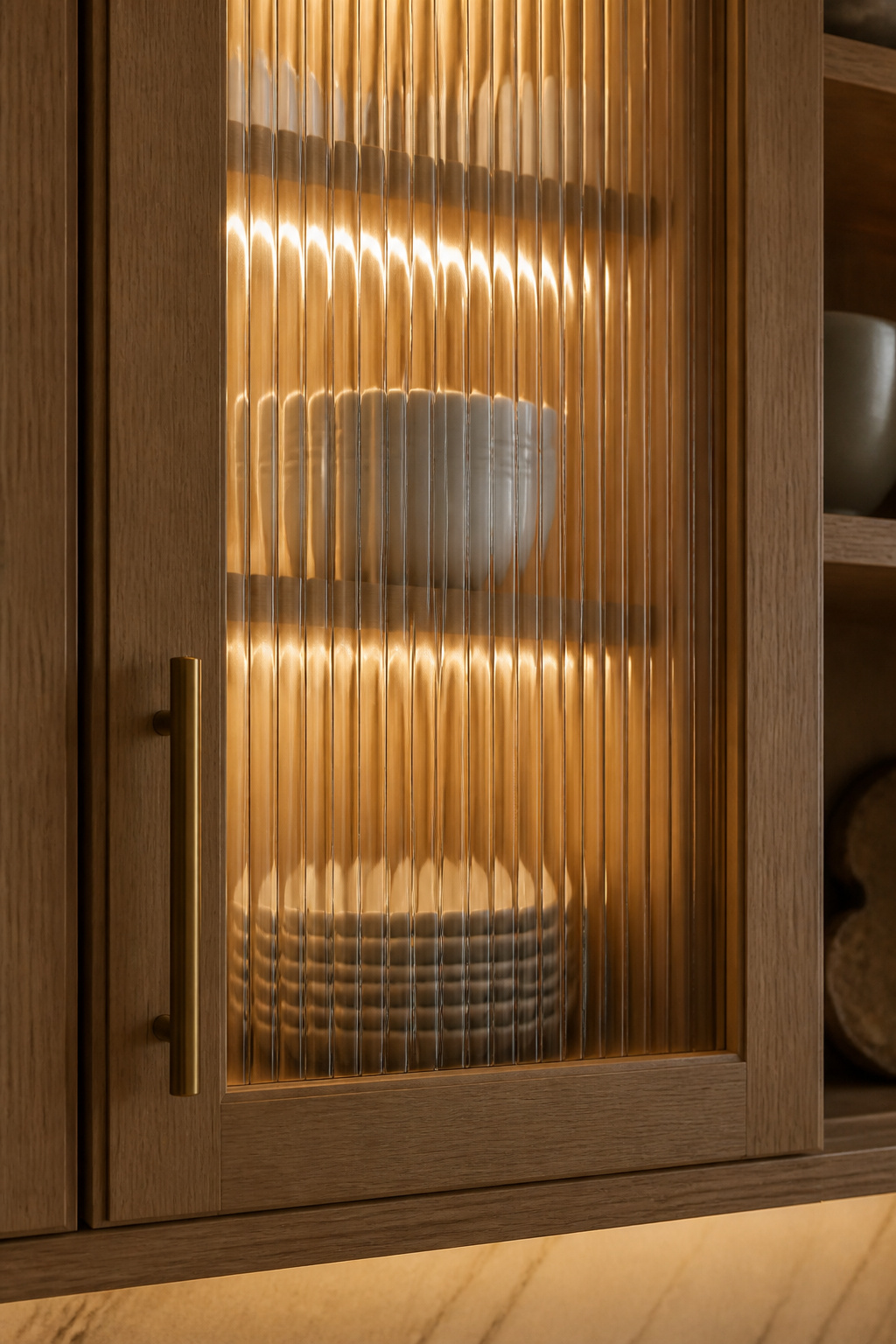
Clear glass maximizes visibility — every item is on permanent display. Reeded (fluted) glass is the more interesting choice: vertical ridges create a shutter-like pattern that partially obscures interior contents while adding textural dimension that shifts as daylight moves through the kitchen. Reeded glass has become the dominant cabinet glass trend in 2026 precisely because it delivers visual lightness without demanding organizational discipline. Frosted glass conceals almost everything and adds soft diffused light. Seeded glass reads as antique and cottage.
Lighting the Interior
LED strips mounted inside glass-front uppers transform these cabinets after dark. Warm white LEDs at 2700 to 3000K create an ambient glow that reads through textured glass as soft, diffused light. Plan this wiring at rough-in stage. And upgrade the interior cabinet finish first — raw MDF inside a glass-front door undermines everything the glass is trying to achieve.
5. Handleless Slab Cabinet Kitchen Design for a Minimal Modern Look
Three Mechanisms
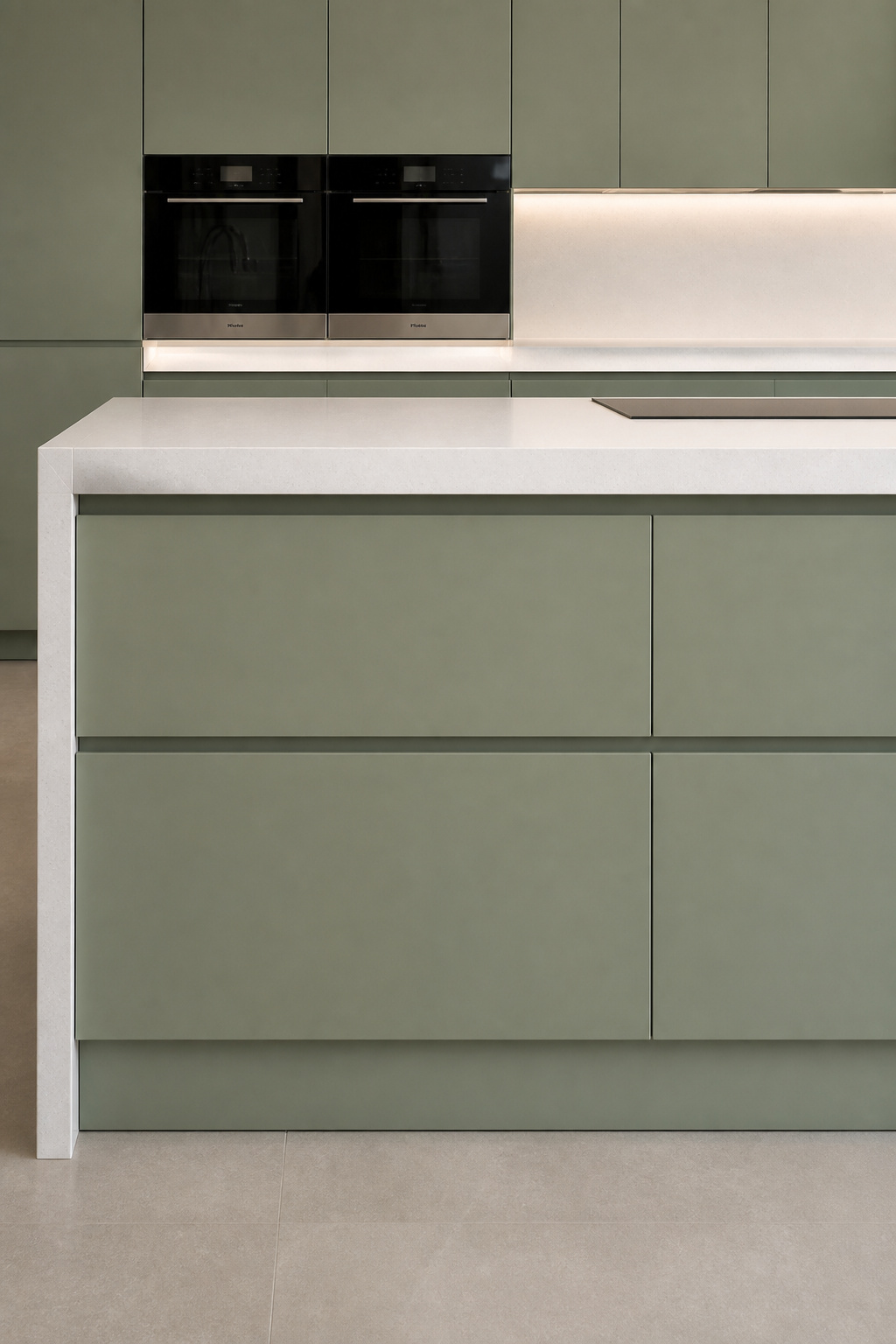
The J-pull is the most minimal — a machined channel runs along the top edge of lower doors and the bottom edge of upper doors; no hardware visible at all. For anyone drawn to sleek cabinet hardware for a modern kitchen, the J-pull is the logical endpoint of that direction. Push-to-open uses a spring-loaded hinge mechanism — completely invisible, cleanest-looking of all, but requiring periodic adjustment under heavy load. Recessed grip profiles are more durable and do not require special hinge systems, at the cost of slightly less minimal appearance.
Materials and Tolerances
Thermofoil — PVC film heat-bonded to MDF — is the affordable smooth slab option. Keep it at least 18 inches from persistent heat sources; delamination near ovens is the primary failure mode. Lacquered MDF costs 20 to 35 percent more and handles high temperatures better. Solid wood slab doors require quarter-sawn or floating panel construction to prevent warping.
J-pull handleless kitchen design cabinets require exact milling alignment during fabrication. Push-to-open hinges demand perfectly plumb and level boxes. This kitchen style does not forgive a rushed installation.
6. Natural Wood-Grain Cabinets That Warm a Modern Kitchen
Wood Species for Kitchen Design Cabinets
Janka hardness ratings: Maple 1,450; White oak 1,360; Red oak 1,290; Walnut 1,010. All are adequate for kitchen design cabinets — the practical minimum is around 1,000 — but maple is the most dent-resistant. For an island taking real daily punishment, maple’s hardness is a genuine advantage. For cabinet runs where aesthetics matter more than impact resistance, white oak’s grain character and neutral undertone make it the stronger design choice.
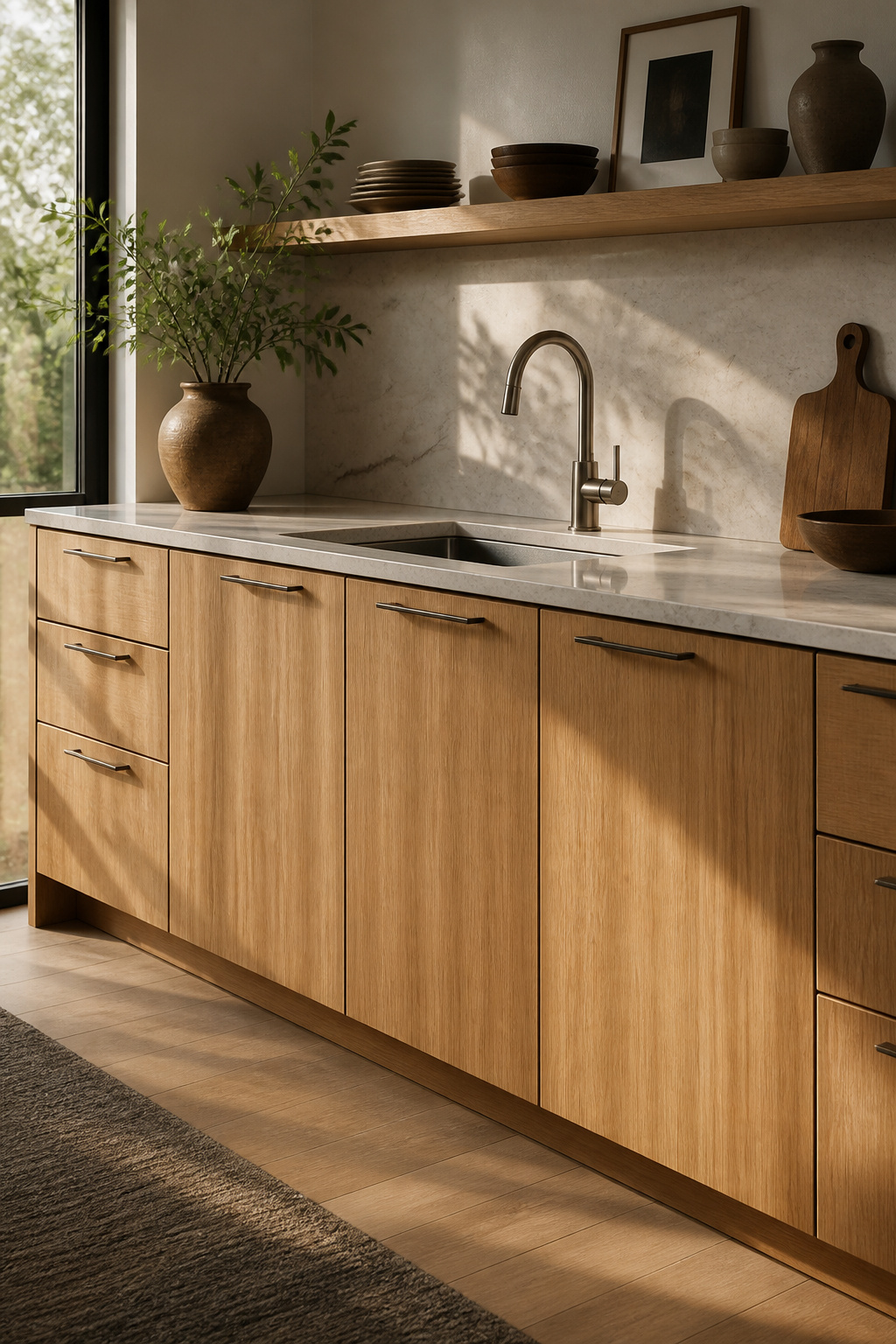
Kitchen Cabinet Design: Rift-Sawn vs Flat-Sawn
Flat-sawn oak produces the familiar cathedral grain pattern. Rift-sawn white oak is cut at an angle producing straight, parallel vertical lines with far fewer ray flecks — more architectural and linear, typically 20 to 40 percent more expensive. Pairing rift-sawn oak cabinets with flat-sawn oak floors in the same kitchen creates tonal consistency while giving each surface its own distinct grain identity — one of the quieter design decisions that separates a considered kitchen from a coordinated one.
For finish, walnut is almost always clear-coated; staining it would obscure the natural color that justifies its price. White oak takes both oil and lacquer well. Near a busy cooktop, lacquer’s durability advantage is real.
7. Open Shelving Upper Cabinets That Replace Doors Entirely
The Grease Reality
Grease from cooking is airborne. Over time it settles on open shelving and everything on it, creating a sticky film that attracts dust. Shelves near a cooktop require weekly cleaning of both the shelves and their contents. This reality is almost never mentioned in open shelving design guides but matters enormously in a kitchen that sees regular high-heat cooking.
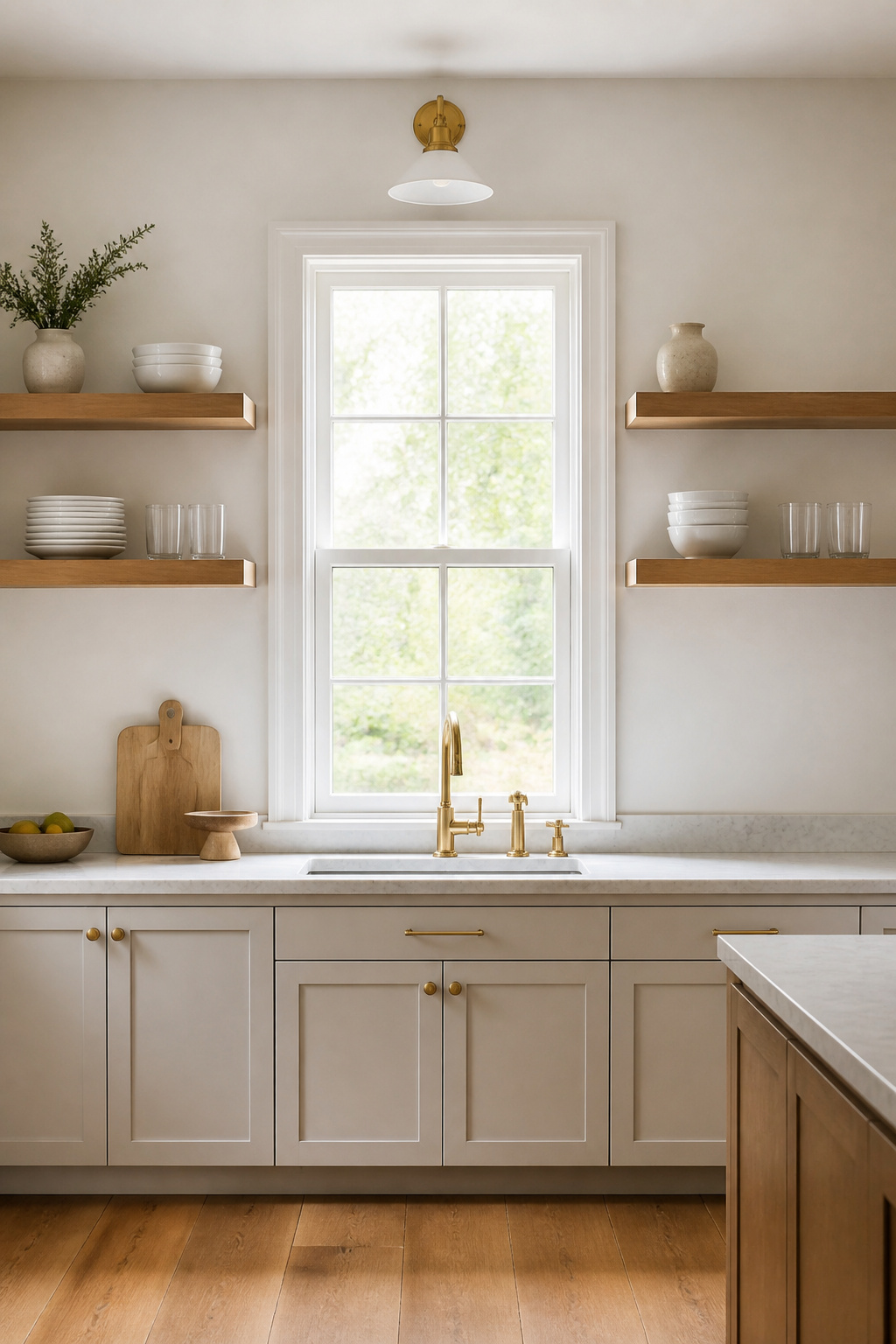
In 2026, open shelving is increasingly limited to a single accent zone — 1 to 2 shelves flanking a window or range hood — rather than full upper-cabinet replacement. For anyone reconsidering the whole open-versus-closed question, a practical overview of kitchen cabinet design options beyond just shelving is worth reading on homedecorhero.com’s kitchen design cabinets guide.
Open Kitchen Cabinet Shelf Design Specs
Standard shelf depth: 10 to 12 inches for dishes, 8 to 10 inches for glassware. Brackets should be mounted into structural studs; floating shelves into studs carry 40 to 50 pounds per bracket pair — a full shelf of stoneware approaches this limit. Styling rule: leave 20 to 30 percent of shelf surface empty. Fewer items, well-spaced and consistently colored, always look more considered than packed shelves.
8. Dark Lower Cabinet Kitchen Design Choices That Ground the Room
The Visual Weight Principle
Darker elements have higher visual weight. Placing that weight at the base concentrates the room’s gravity where gravity naturally belongs. Light upper cabinets above dark lowers keep the ceiling zone airy. Under-cabinet lighting is non-negotiable here: dark lower kitchen design cabinets absorb the overhead light that would otherwise reflect back from the countertop. Without LED strips under the upper cabinets (warm white, 2700 to 3000K), the workspace is left in shadow.
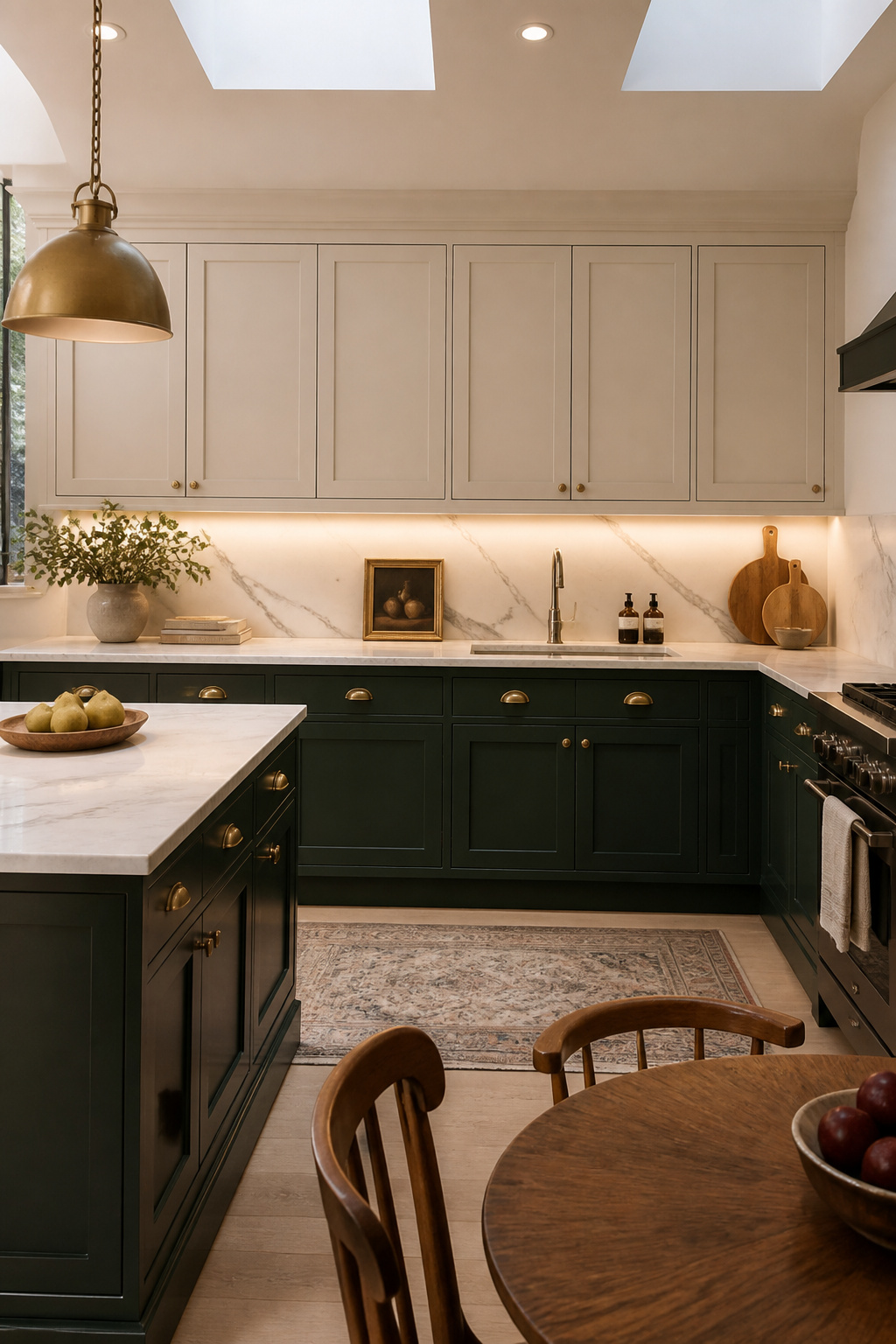
Color Options Beyond Black
Benjamin Moore Silhouette AF-655 (2026 Color of the Year): a rich espresso brown with charcoal undertones — a dark that reads as nuanced, not flat. Farrow & Ball Cola: dark brown with warm red undertones, particularly effective in kitchens with wood elements. Forest greens (Calke Green, SW Shade-Grown) read as dark from across the room and reveal their green character up close. For the full story on dark kitchen cabinetry and lighting, the complete guide to black kitchen cabinets covers contrast principles in depth.
Countertop pairing: high contrast is the goal. Light quartz or Calacatta marble against dark lowers creates maximum visual contrast. Warm white oak or butcher block offers a softer contrast with more natural warmth.
9. Inset Door Cabinets With a Furniture-Grade Finish
Inset Kitchen Cabinet Design: Construction and Cost
The precision required to achieve that reveal is why inset kitchen design cabinets cost 15 to 30 percent more than overlay. The cabinet box must be perfectly square. Doors must be cut to exact dimensions. Any deviation produces uneven reveals that catch the eye on every opening.
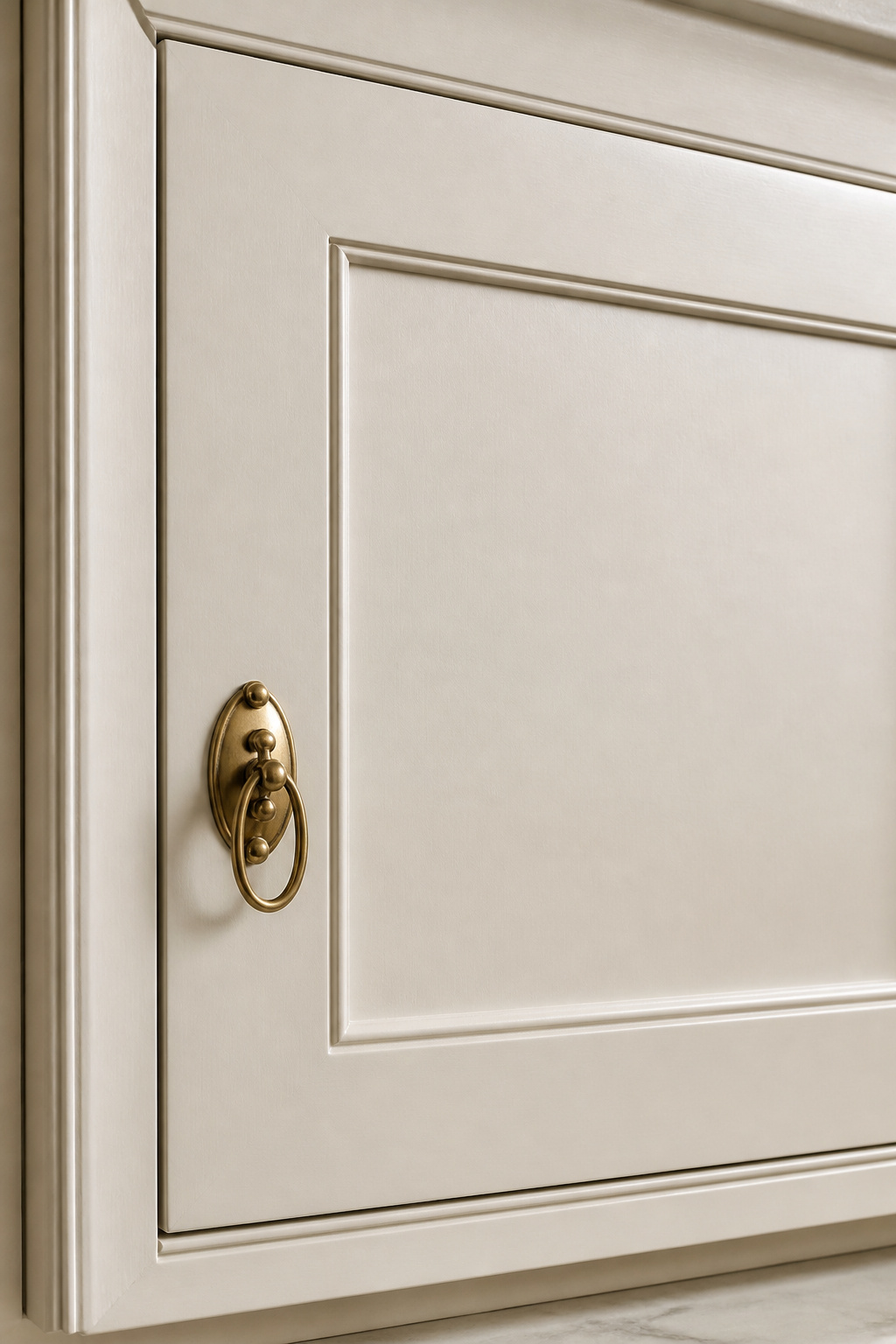
For traditional kitchens, the connection between inset construction and American cabinetmaking is direct — it is how quality casework has been built for two centuries. The 18 traditional kitchen cabinets for timeless style resource covers the style vocabulary thoroughly. For contemporary applications, inset flat-panel cabinets bring the same precision and quality signal without period styling.
Face Frame vs Frameless
Face frame (American) construction attaches a solid wood frame to the cabinet box front; the inset door sits within this frame. Frameless (European) construction uses no face frame — the door hangs directly from the box. Frameless with full-overlay doors is the modern European standard. Inset is the traditional American standard. The distinction tracks the kitchen’s broader style direction.
10. Navy Blue Cabinets That Make a Statement Without Overwhelming
Kitchen Cabinet Design Colors: Best Navy Paint Codes
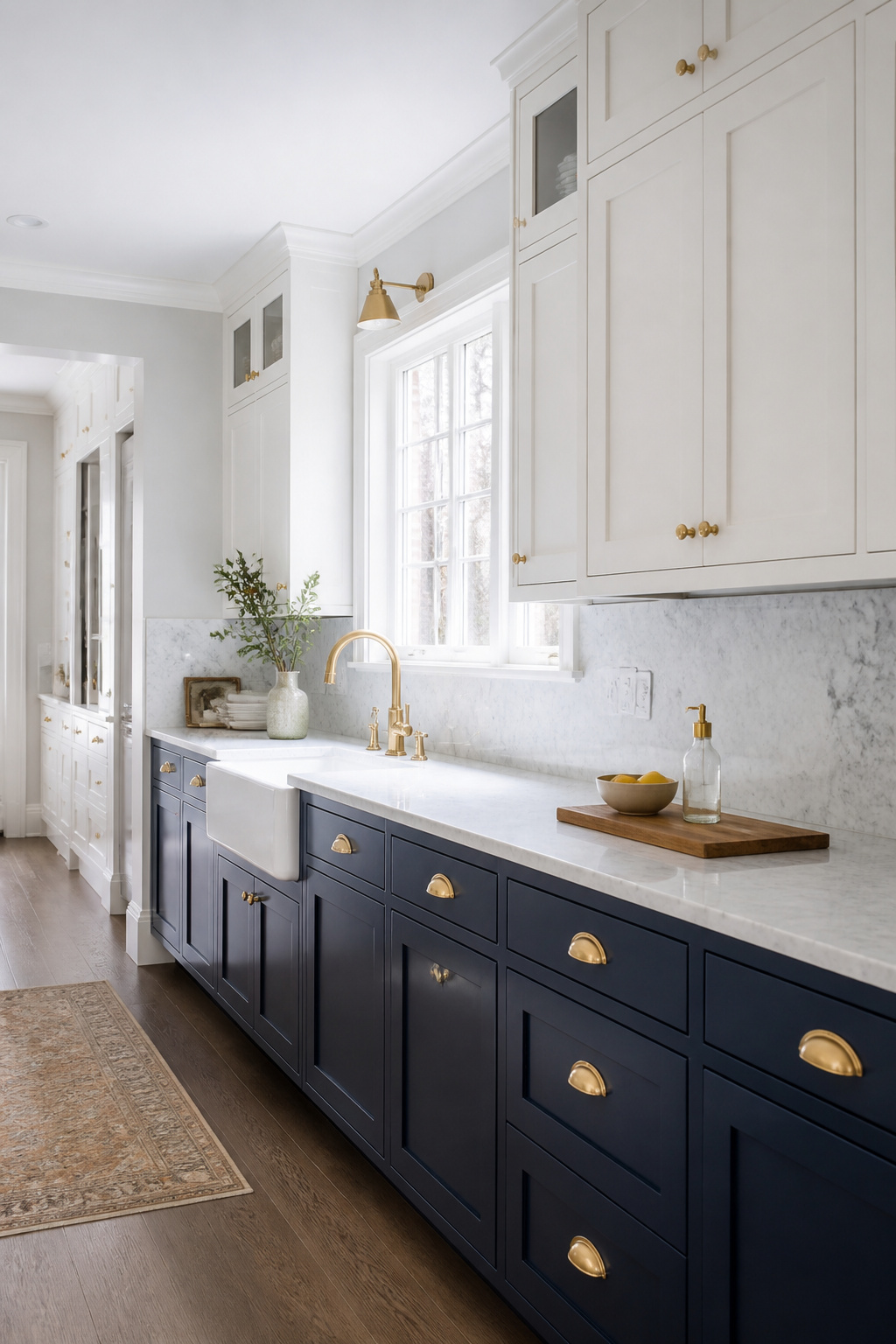
Benjamin Moore Hale Navy HC-154: the benchmark. LRV of 4.7 — genuinely dark, not a medium blue. The cool gray-green undertone pairs with both warm brass and cool chrome. In daylight it reads as rich blue; under evening lighting it deepens toward near-black. Sherwin-Williams Naval SW 6244 is the warmer version — more pure navy, less gray — and suits kitchens with warmer wood tones. Newburyport Blue HC-155 is one step lighter at LRV 13, a better choice for smaller kitchens where Hale Navy’s depth might dominate.
Hardware Pairings
Unlacquered brass against Hale Navy is the most-referenced pairing in 2025–2026: the warm gold against the cool navy creates a tension that reads as sophisticated. Unlacquered brass develops a patina that lacquered brass does not, adding character that deepens over time. Matte black is the more graphic, contemporary choice — works best with other black architectural details. Test navy paint in the actual kitchen before ordering cabinet finishes; navy shifts dramatically between LED, incandescent, and natural light.
11. Integrated Appliance Panel Cabinets That Create a Seamless Wall
How Integration Works
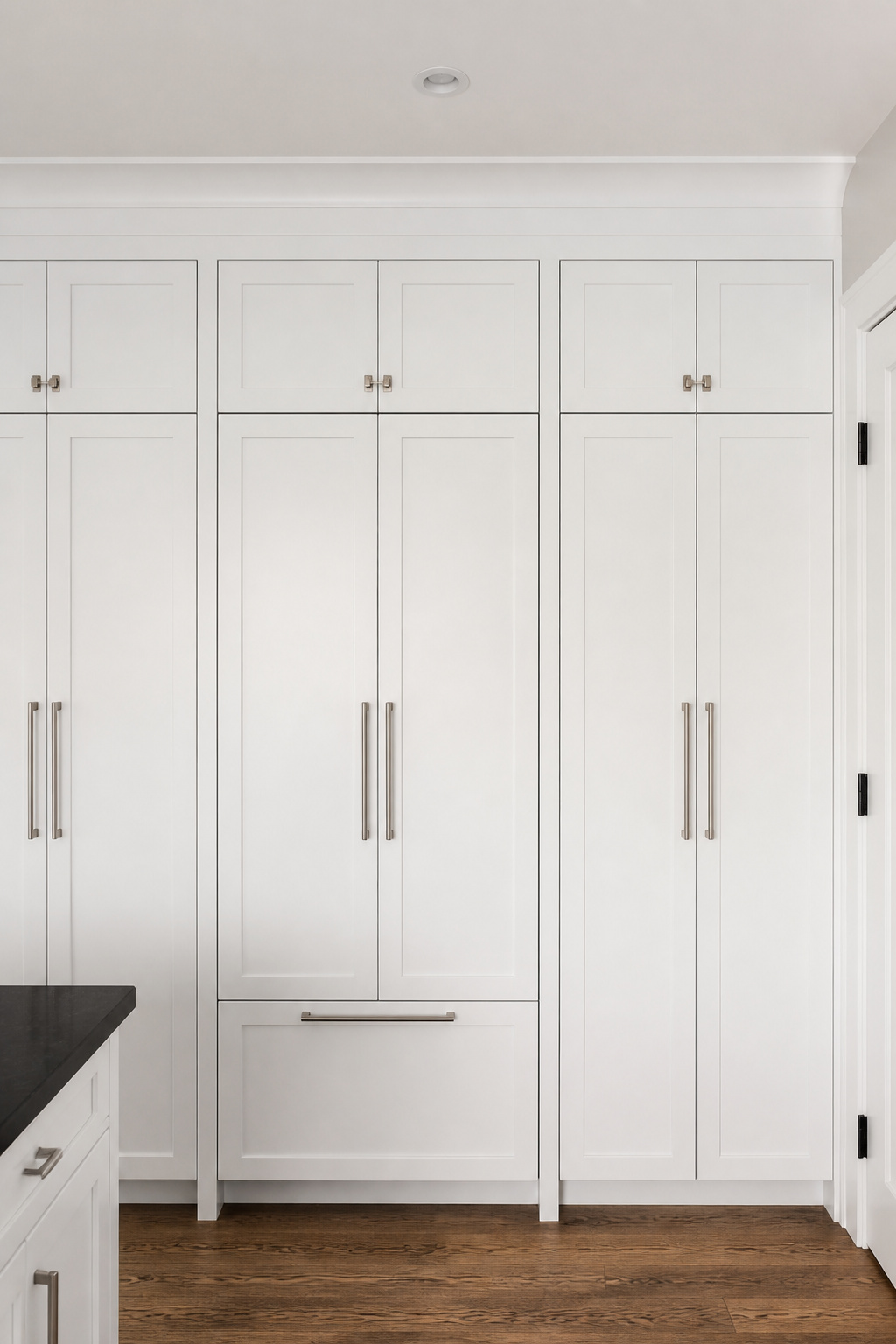
Panel-ready appliances accept custom panels on their door faces. When installed correctly, the panel door looks identical to an adjacent kitchen cabinet door. The dishwasher is the most accessible entry point: panel-ready models from Bosch, Miele, and Fisher & Paykel start around $1,000 to $1,500, and a custom panel cut from matching cabinet door material completes the look at modest additional cost.
Integrated Kitchen Cabinet Design: Budget Reality
Fisher & Paykel’s 36-inch integrated fridge: approximately $6,000 — the most accessible full-size panel-ready option. Sub-Zero and Miele equivalents run $8,300 to $10,000+. For anyone weighing the full investment landscape, the guide to luxury kitchen appliances covers specifications and brand comparisons comprehensively.
A practical middle path: integrate only the dishwasher and one column refrigerator, leaving the range as a statement stainless appliance. This partial approach achieves 80 percent of the seamless effect at 40 percent of the full-integration cost. And the critical planning rule: specify panel-ready appliances before the cabinet design is finalized — depth discrepancies discovered after cabinetry is built are expensive to retrofit.
12. Corner Kitchen Cabinet Designs That Recover Dead Space
Solutions Compared
The lazy Susan — rotating circular trays in a pie-shaped cabinet — is inexpensive at $50 to $150 in hardware, reasonably accessible, and understood by every installer. Its limitations are genuine: round trays waste corner space at the edges, and items fall behind the rotating platform over time.
The Magic Corner II from Kesseboehmer/Hafele is the more sophisticated solution: front baskets pull out and swing 90 degrees; back baskets simultaneously move to the door opening. Capacity: approximately 1,138 square inches. Load: 22 pounds per front basket. Minimum opening required: 520mm. Installed cost: $400 to $600. For anyone committed to maximizing this zone, the clever kitchen corner storage solutions guide covers Magic Corner, Rev-A-Shelf, and diagonal drawer alternatives in detail.
When to Skip the Corner Cabinet Entirely
If the corner aligns with a window, eliminating the corner cabinet and installing a window seat or open prep zone is often the better design decision. A butcher block counter spanning the corner with open shelving below creates an accessible prep area without the enclosed-cabinet complexity — and in a farmhouse or transitional kitchen, it can be the most attractive feature in the room.
13. Mixed-Material Cabinets Combining Wood, Metal, and Paint
Mixed Kitchen Cabinet Design: The 60-30-10 Rule
Allocate 60 percent of cabinet surfaces to a dominant material, 30 percent to a secondary material, and 10 percent to an accent. In practice: white painted perimeter cabinets as the 60 percent, natural white oak lowers and island as the 30 percent, and 2 to 3 steel-frame glass doors as the 10 percent accent. Each material is present; none overwhelms.
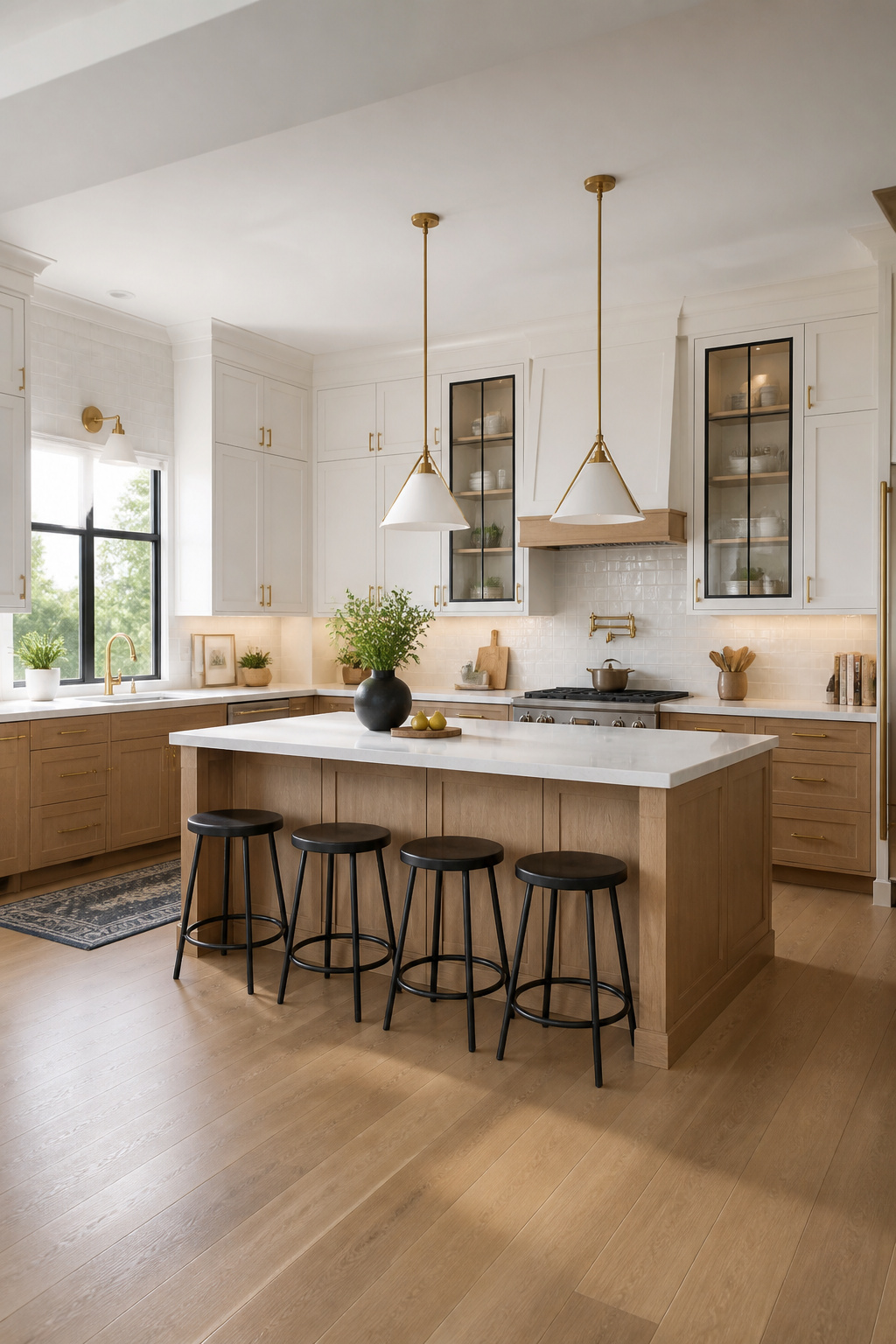
Steel frame and glass hybrid cabinet doors reference industrial steel window framing — a thin flat-bar or T-bar profile holding a glass infill. The architectural character holds its own next to wood. Custom steel frame doors run $200 to $500 per door — a design investment that gives a mixed kitchen visual distinction that is genuinely hard to replicate with standard cabinet hardware.
Material Transitions
Where two materials meet matters more than the materials themselves. Where natural wood lowers meet painted uppers on the same wall, a continuous countertop acts as the natural visual break. Without a deliberate break, a flush butt joint between two different finishes reads as a mistake rather than a design decision.
14. Raised Panel Cabinets With Traditional Detailing for Classic Kitchens
Raised Panel Kitchen Cabinet Design Profiles
Square raised panel: the raised field is rectangular with sharp 90-degree transitions. More formal and architectural. At home in Georgian, Federal, and craftsman-influenced kitchen design cabinets. Cathedral arch raised panel: the raised field carries a curved arch at the top, echoing Colonial architectural detailing. Softer and more romantic. Works best in country, cottage, and French country kitchens. A caution: cathedral arch panels on tall upper cabinets (42 inches or more) can look distorted if the arch proportion does not scale correctly to the door height.
The cope-and-stick construction that defines raised panel doors is a traditional joint where profiled rails and stiles interlock mechanically. The raised centre panel floats — not glued — allowing seasonal wood movement without cracking. This is a genuine structural advantage over flat-panel construction in painted kitchens.
Traditional Finishing
Glazed finishes accentuate raised panel detail by remaining in profile recesses when the topcoat is wiped back. Antique white base with a brown glaze is the classic American traditional finish: warm, lived-in, and period-accurate. Physical distressing (dents, rasping at profile edges, sand-through at corners) takes the aged quality further — appropriate when the entire kitchen supports that language, out of place when paired with modern countertops and stainless appliances.
15. Green Kitchen Design Cabinets Riding the Color Shift of 2026
The Three Greens to Know
Sage: soft, gray-green with low saturation. Reads as a warm neutral from a distance and reveals its green character up close. Farrow & Ball Mizzle, Benjamin Moore Sage Green 2143-40. The most approachable green kitchen design cabinets, particularly for smaller kitchens or those with limited natural light.
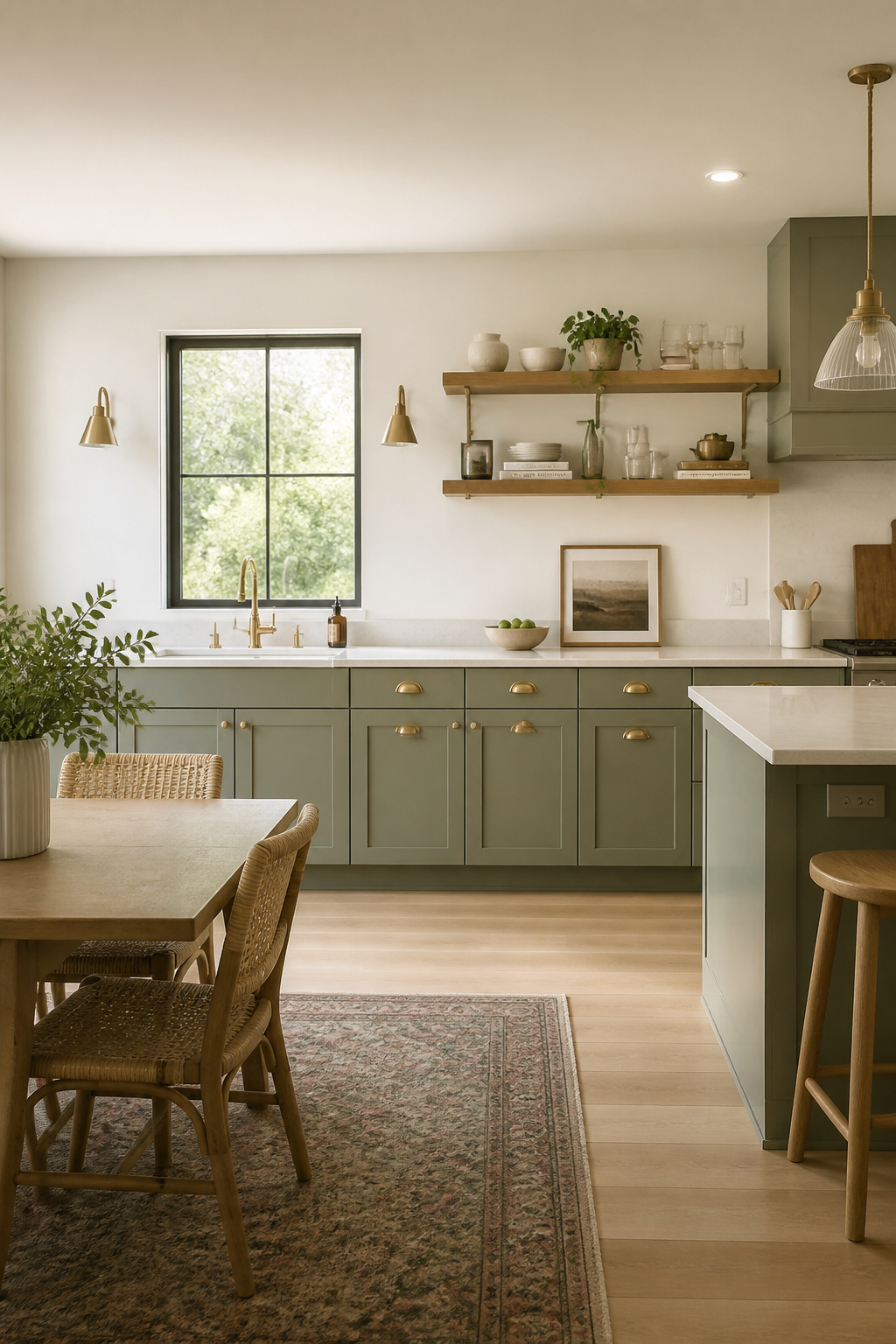
Forest: deeper, more saturated, definitively green. Farrow & Ball Calke Green, Sherwin-Williams Shade-Grown. Makes a stronger statement and works best in larger kitchens with generous natural light. Pairs exceptionally well with white oak shelving and unlacquered brass.
Olive: earthy, brownish-green with warmth. Benjamin Moore Salisbury Green HC-139, Sherwin-Williams Rosemary. The choice for kitchens that want green with farmhouse warmth rather than contemporary crispness.
Staying Power vs Trend Risk
Muted, earthy greens (sage, olive, forest) function as neutrals when paired with classic materials — marble, white oak, unlacquered brass. When you keep saturation below 60 percent, the color reads as enduring rather than fashionable. Bright, highly saturated greens (kelly, emerald, lime) are fashion-driven and more likely to feel dated in 5 to 7 years. For a 15-year kitchen renovation, the earthy end of the green spectrum is the safer choice.
How to Choose Your Kitchen Design Cabinets and Budget Wisely
The right kitchen design cabinets for your space starts with reading the architecture you already have, not identifying styles you like in photos.
Reading Your Kitchen’s Architecture
Ceiling height establishes scale. Low ceilings suit flat-panel or shaker doors — styles that do not add visual complexity above head height. High ceilings can carry raised panels, floor-to-ceiling runs, or stacked uppers that fill the vertical space. The existing architectural detail of your home sets the style vocabulary: crown molding, paneled walls, and traditional window profiles point toward inset shaker or raised panel; architecturally plain or modern homes are naturally suited to flat-panel or handleless slab.
Natural light and kitchen size affect your color choice more than personal preference should. Dark lower kitchen design cabinets perform best in larger kitchens with generous natural light or strong artificial lighting. In small, low-light kitchens they close in the space — unless the dark cabinets are limited to the lower run with light uppers above.
Kitchen Design Cabinets: Where to Invest and Save
Most homeowners get this backwards: they invest in decorative door styles and cut costs on the cabinet box. The sensible approach is the reverse. The box — the carcass — is what you live with for 20 years. Plywood construction is more durable than particle board; dovetail drawer boxes last decades longer than stapled construction. Cabinet doors can be replaced; boxes almost never are. If your budget is constrained, specify a quality box with a simpler door and budget for a door upgrade in 5 to 7 years.
Hardware quality correlates directly with daily experience. Soft-close hinges and full-extension drawer slides affect how the kitchen feels every time you use it. Poor-quality hardware fails within 3 to 5 years. The premium across a full kitchen is typically $200 to $500 — a modest sum for something you touch every day.
For a kitchen renovation budget that needs real-world constraints, the budget kitchen renovation ideas resource offers a practical sequencing framework that applies to any of the 15 kitchen design cabinets styles above.