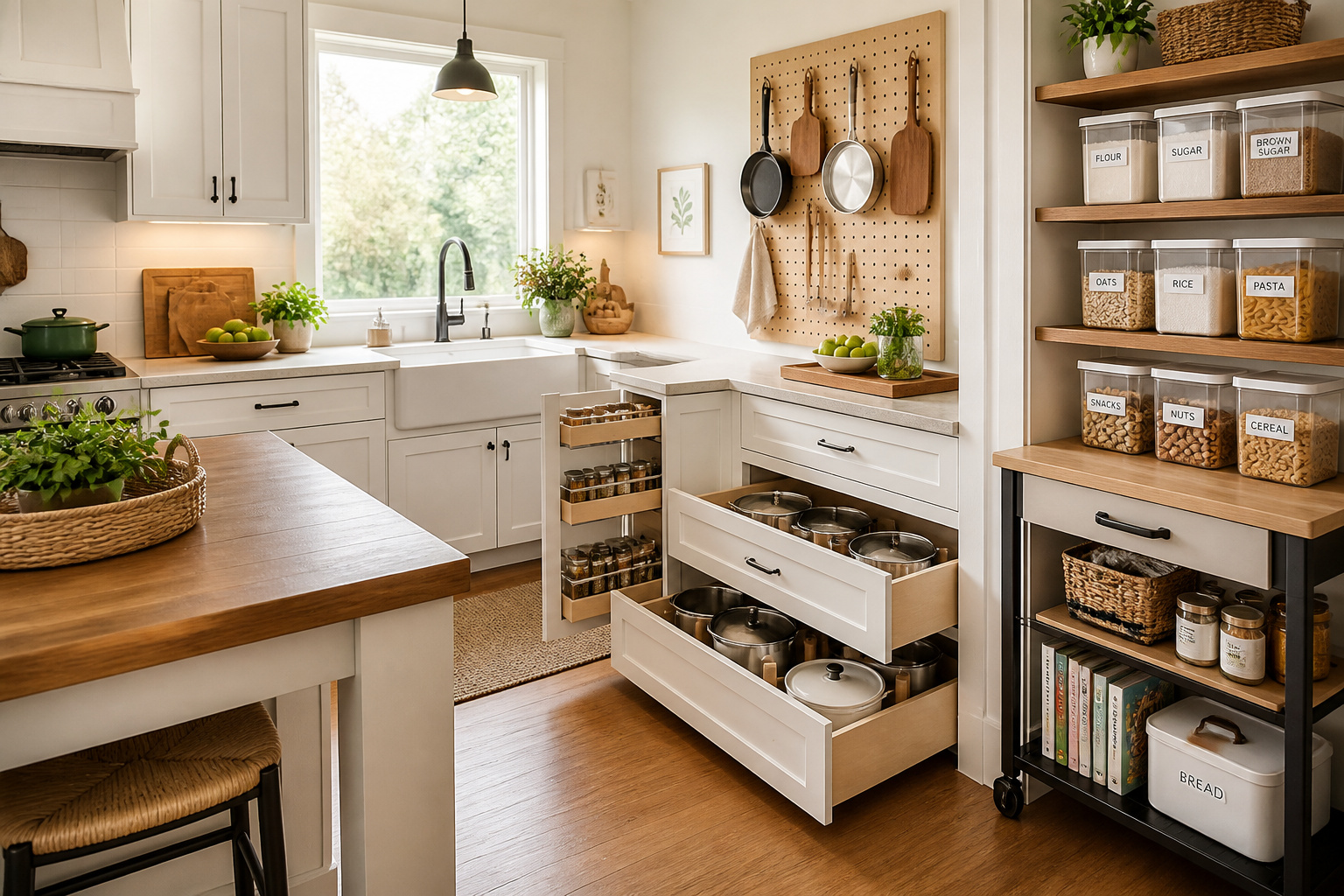
There’s a moment every home cook knows: you open a cabinet to grab a baking sheet and something — usually a pot lid — launches itself onto the floor. You reach into the back of a deep lower cabinet for the garlic and pull out three mystery bags of rice instead. Kitchen storage organization doesn’t have to be a full renovation project or an expensive overhaul. Most of the ideas below cost less than $50 and take an afternoon at most — and a few cost nothing more than a couple of tension rods from the dollar store. These 15 kitchen organization solutions are chosen for the fact that they fix real, daily frustrations rather than just looking good on a shelf. Work through the ones that match your biggest pain points and your whole kitchen will feel different within a week.
1. Pull-Out Drawer Inserts That Rescue Deep Lower Cabinets
Deep lower cabinets are the kitchen’s biggest storage betrayal. They look spacious — and they are — but most of that space is inaccessible. Anything stored at the back gets forgotten, then eventually tossed because nobody can see it. Pull-out drawer inserts fix this by converting a fixed shelf into a rolling drawer that brings everything to the front of the opening on demand.
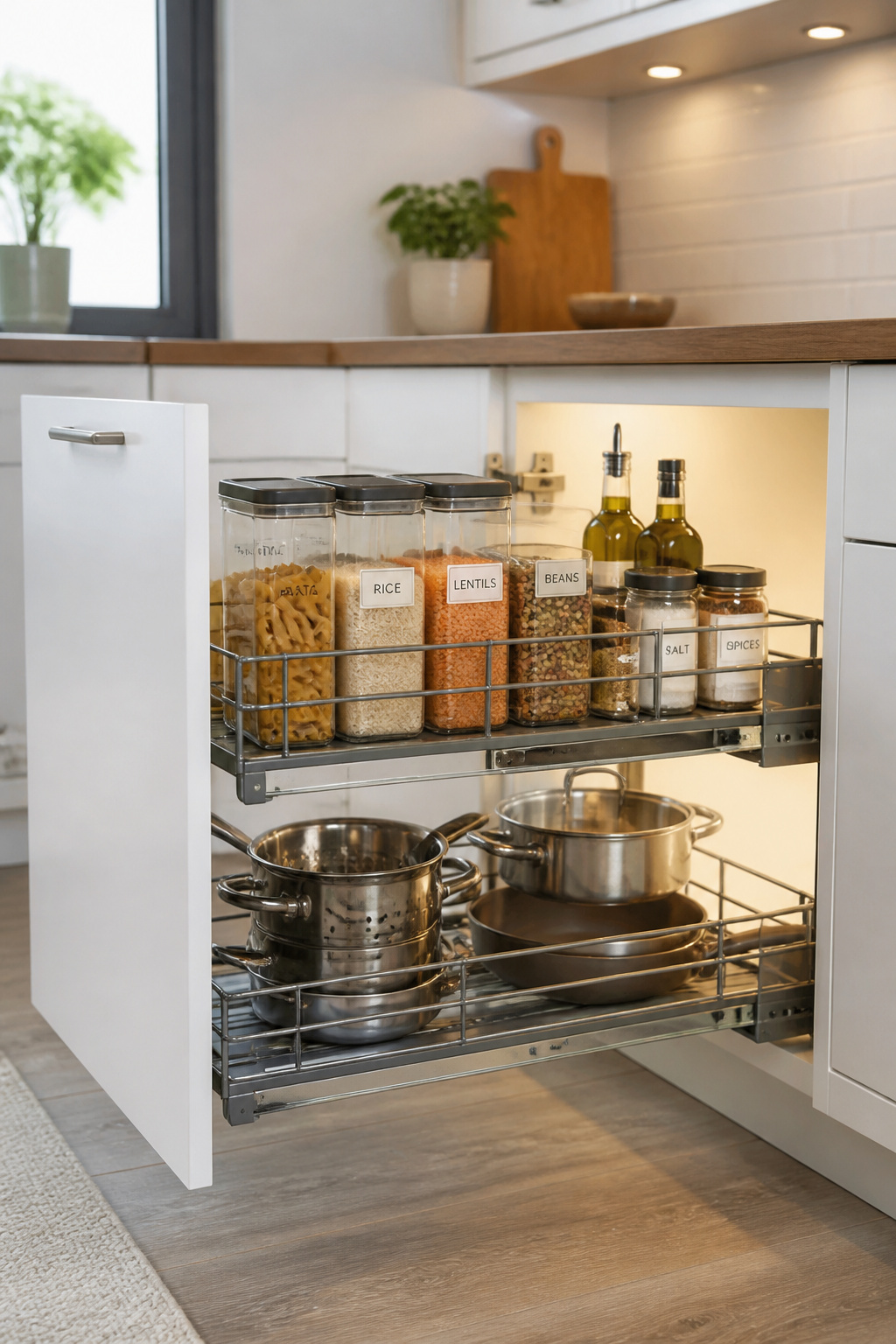
Rev-A-Shelf makes the most widely available DIY option — their pull-out baskets come fully assembled and install with a handful of screws using a template included in the box. For a cabinet that’s 15 inches wide or more, the 4WB-series wire pull-out basket ($40-$70 at Home Depot or Lowe’s) fits without any cabinet modification. The measurement worth double-checking: measure the interior width, height, and depth of the cabinet opening, not the exterior — and account for door hinges. A 3-inch wide filler pullout needs a minimum 6-inch base cabinet; a 6-inch pullout needs at least a 9-inch opening. For anyone with an IKEA SEKTION kitchen, the UTRUSTA baskets slot directly into the existing rails without any additional hardware.
If you’ve been living with a lower cabinet you basically treat as a black hole for heavy pots, a pull-out insert is the most immediate kitchen storage organization fix available. Pair it with some kitchen cabinet organizers that maximize space on the upper shelves and you’ll find your whole kitchen working harder within a weekend.
2. A Magnetic Knife Strip to Free Your Counters From the Block
A knife block sits on your counter taking up roughly 8-10 inches of depth and 5-7 inches of width — space most home cooks could desperately use for prep. A magnetic knife strip mounted to the wall or backsplash holds the same knives in zero counter footprint and actually keeps blades sharper, since they’re not sliding against wood slots.
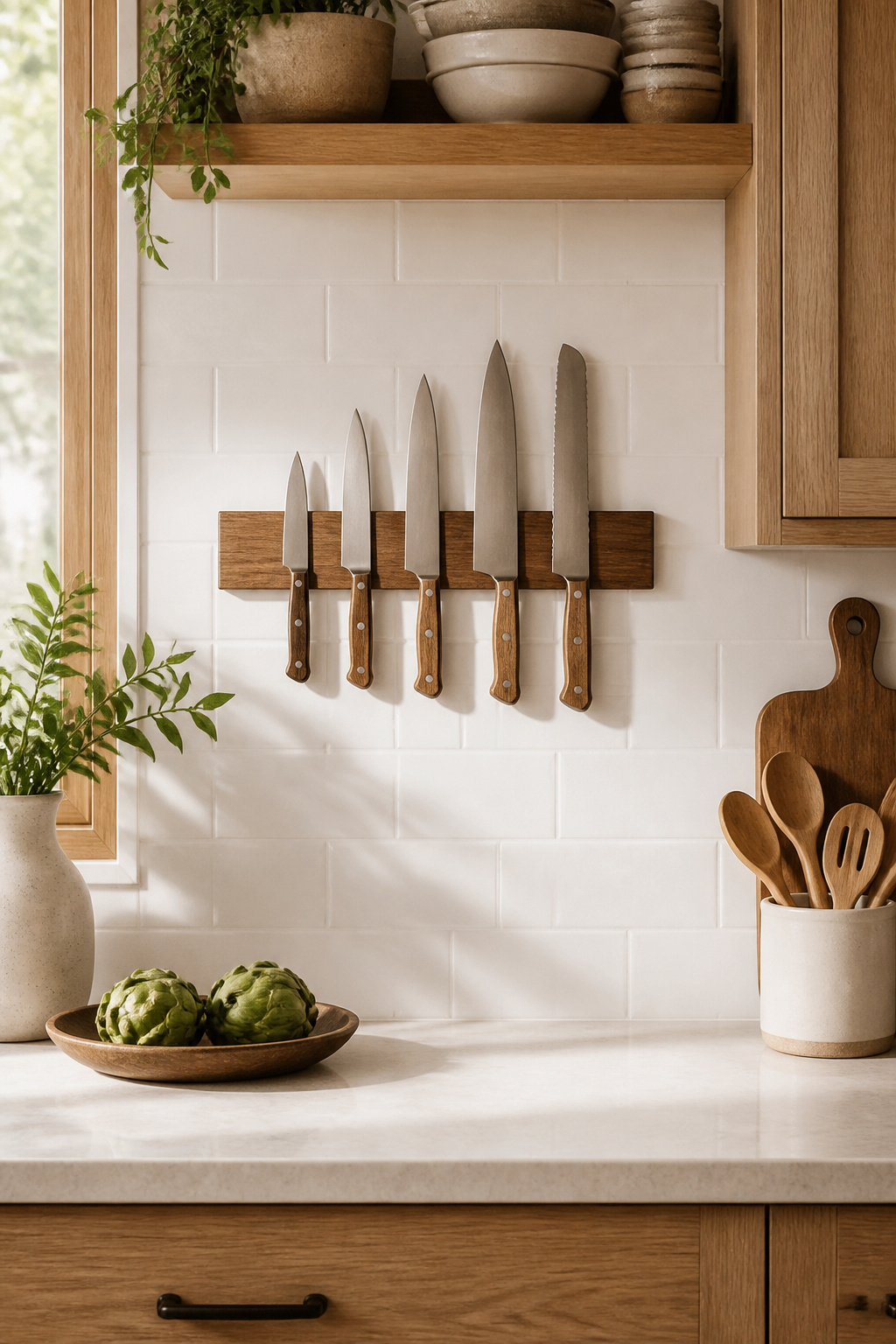
Strips come in 10, 17, and 24-inch lengths — the 17-inch version is the most versatile, fitting the gap between cabinets and backsplash in most standard kitchens and holding a full set of 5-8 knives comfortably. Material matters more than most people expect: wood-backed strips (bamboo, walnut, beech) are gentler on blade edges than bare stainless steel. America’s Test Kitchen recommends strips at least 3/4 inch thick — the added depth means knives sit far enough from the wall that you can grab handles without scraping your knuckles.
For renters, adhesive-mounted strips are the answer. Quality double-sided tape rated at up to 20 kg per 10 cm bonds to tile, wood, stone, and even fridge exteriors without leaving marks. One placement note: aim for at least 18 inches from active burners. Heat and steam degrade adhesive over time, and a full knife strip deciding to detach on a Tuesday evening is not a kitchen storage problem you want to solve twice.
3. Under-Sink Kitchen Storage Organization With Tiered Shelves
The cabinet under the kitchen sink is one of the most reliably neglected spaces in any home. Irregular dimensions, a plumbing drain pipe running through the middle, and often a garbage disposal occupying a chunk of the floor space turn most people off from trying. Tiered shelving designed specifically for this environment changes what’s possible with under-sink kitchen storage organization.
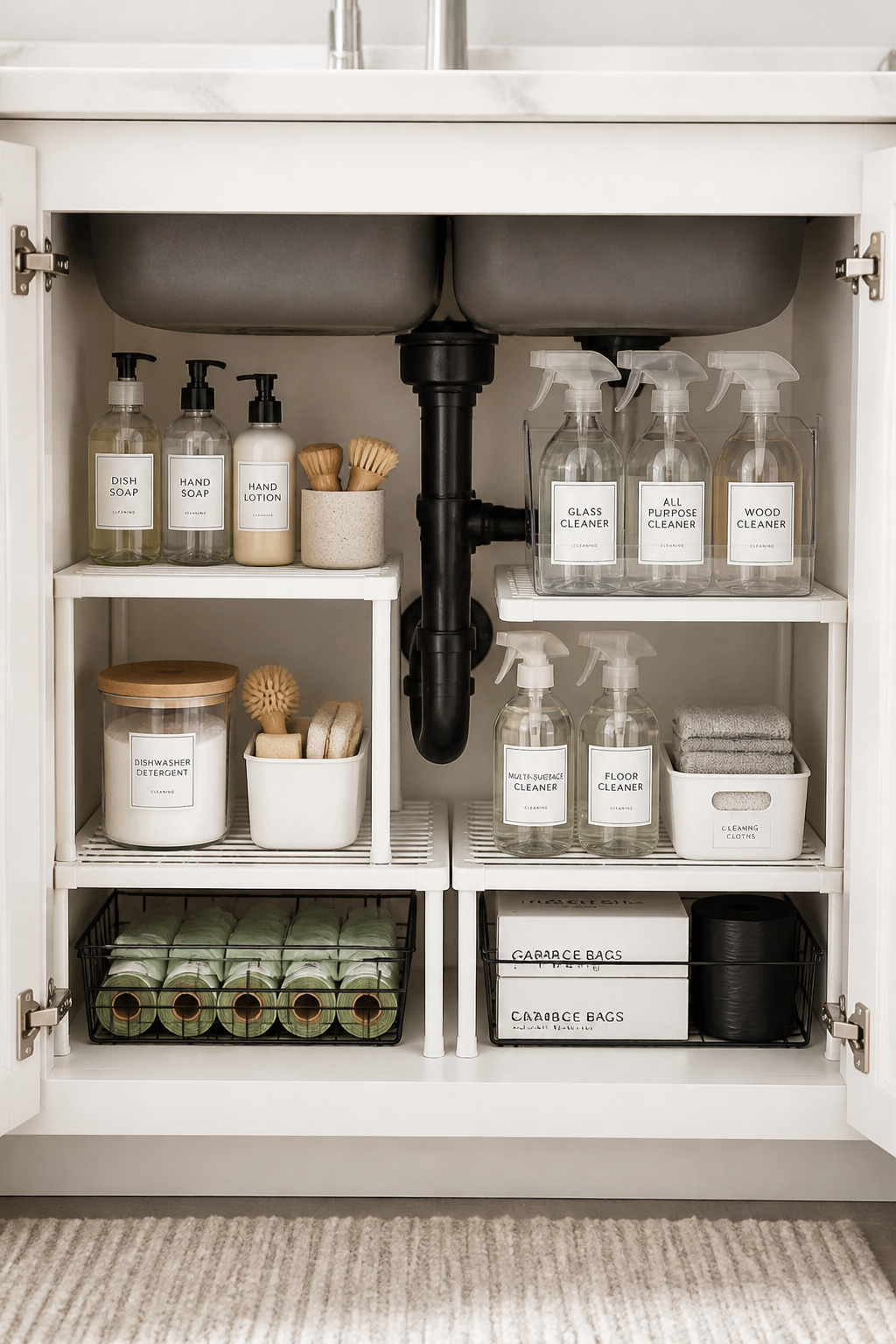
A two-tier under-sink shelf adds a second elevated level inside the cabinet, essentially doubling usable storage surface. The best designs have an L-shape or U-shape that routes around the drain pipe without any cutting — the REALINN 2-tier pull-out shelf is popular for both kitchen and bathroom applications. Before buying, measure the full width, depth, and height of your under-sink opening, then note the pipe diameter and its distance from the back wall. Look for shelves that list drain pipe clearance specs (usually 2-4 inches) so you know it’ll fit before it arrives.
Once the shelf is in, pair it with a small caddy for spray bottles and a tension-rod-mounted bag holder for bin liners on the inside of the cabinet door. Also worth exploring: there are genius ways to maximize your kitchen storage cabinets throughout your whole kitchen using the same organizing logic applied here. One frequently forgotten detail: a standard garbage disposal sits 12-14 inches tall. Any shelf that passes over the disposal needs to clear it — measure before ordering.
4. Pegboard Panels That Turn a Blank Wall Into a Storage Wall
The wall between your cabinets and countertop — the backsplash zone — is vertical real estate most kitchens use for decoration at best. A pegboard panel converts it into flexible, reconfigurable kitchen storage for everything from pots and pans to utensil sets and small herb pots.
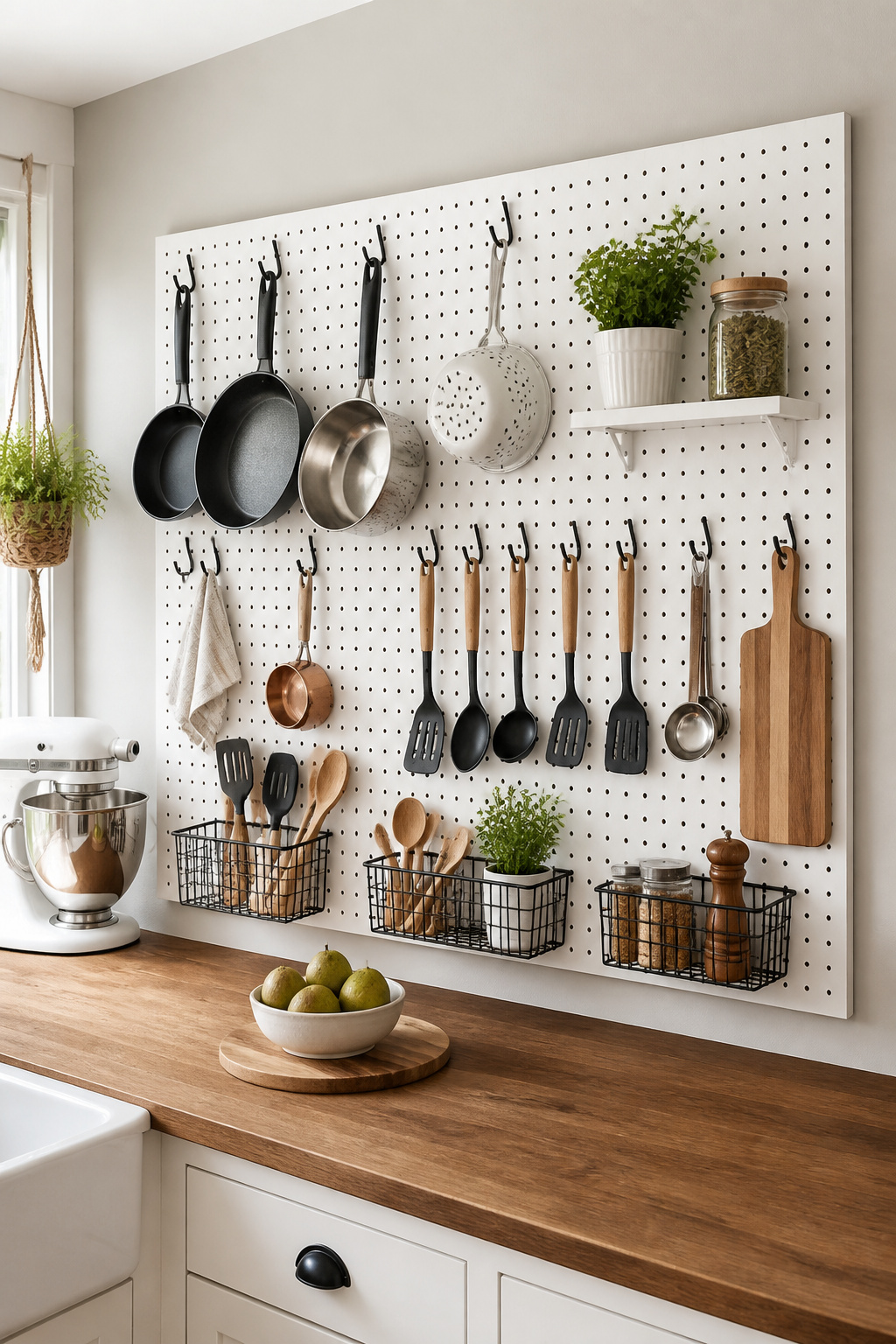
The material decision matters. Standard wood or MDF pegboard holds 25-50 lbs total on drywall with quality anchors — enough for a utensil set, colander, and a few lighter pans. For heavier cookware, 20-gauge steel pegboard like the Wall Control 32×32-inch kitchen panel handles up to 200 lbs and comes with compatible hooks. Mounting requires one critical detail: standard pegboard needs 1/2-inch spacers behind it. That gap allows hooks to insert and grip — skip the spacers and the whole kitchen organization system is useless. Into studs with 2-inch wood screws is the most reliable approach.
The beauty of pegboard over fixed shelving is infinite rearrangement — try a hook layout for a month, move things, try again. Add wire baskets for items without handles, paint the board (chalk paint or spray paint gives a clean look rather than a garage aesthetic), and you have a storage wall that earns its place visually. For more on making vertical space work, these wall space ideas for kitchen storage cover what’s possible beyond pegboard.
5. Lazy Susan Turntables That Solve the Corner Cabinet Problem
Corner cabinets are the kitchen’s most frustrating storage situation — and not because they’re small. The opposite is true. A standard blind corner cabinet can be 24-36 inches deep on both sides, creating an L-shaped intersection of space most people can only reach about 30% of. A lazy Susan doesn’t add space; it makes the space that already exists actually usable.
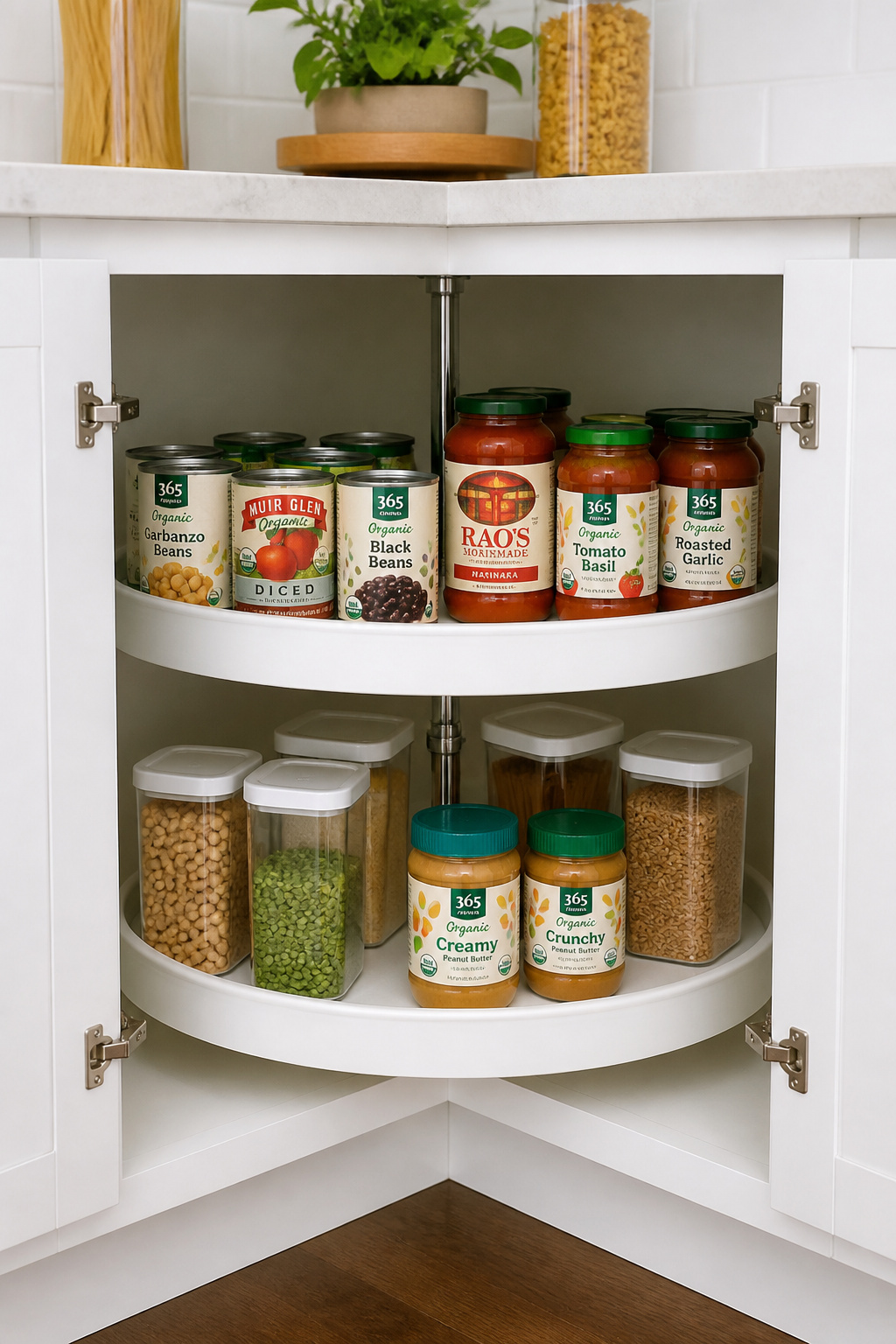
Rev-A-Shelf offers five types to match different cabinet configurations: Full-Circle, D-Shaped, Kidney-Shaped, Half-Moon, and Pie-Cut. D-shaped turntables — one flat side, one curved — are the most common retrofit choice because the flat side clears the cabinet door frame. They come in pairs mounted on a central pole, with two shelves rotating independently so you access different levels without lifting anything off. Standard sizes run 24, 28, and 32 inches in diameter; measure the inside diameter of the cabinet at the door opening (not the full cabinet depth) to get the right fit. Buying one too large is the most common mistake.
Smaller standalone turntables (9-16 inch diameter) are equally useful inside regular cabinets and on pantry shelves. A 12-inch bamboo turntable corrals oils, vinegars, and sauces — spin it to see everything without moving individual bottles. Wire versions are easiest to clean; acrylic shows everything at a glance. Both run $10-$35 and install in zero minutes.
6. Over-the-Door Racks Built for Kitchen Storage in Tight Spaces
The back of a pantry door is one of the most underused surfaces in any kitchen — flat, immediately accessible, and completely wasted in most homes. A 6-tier over-door rack converts that surface into structured kitchen storage that holds 20-60 lbs depending on the model, and installs by hooking over the top of the door frame with no screws, no drilling, and no landlord conversation.
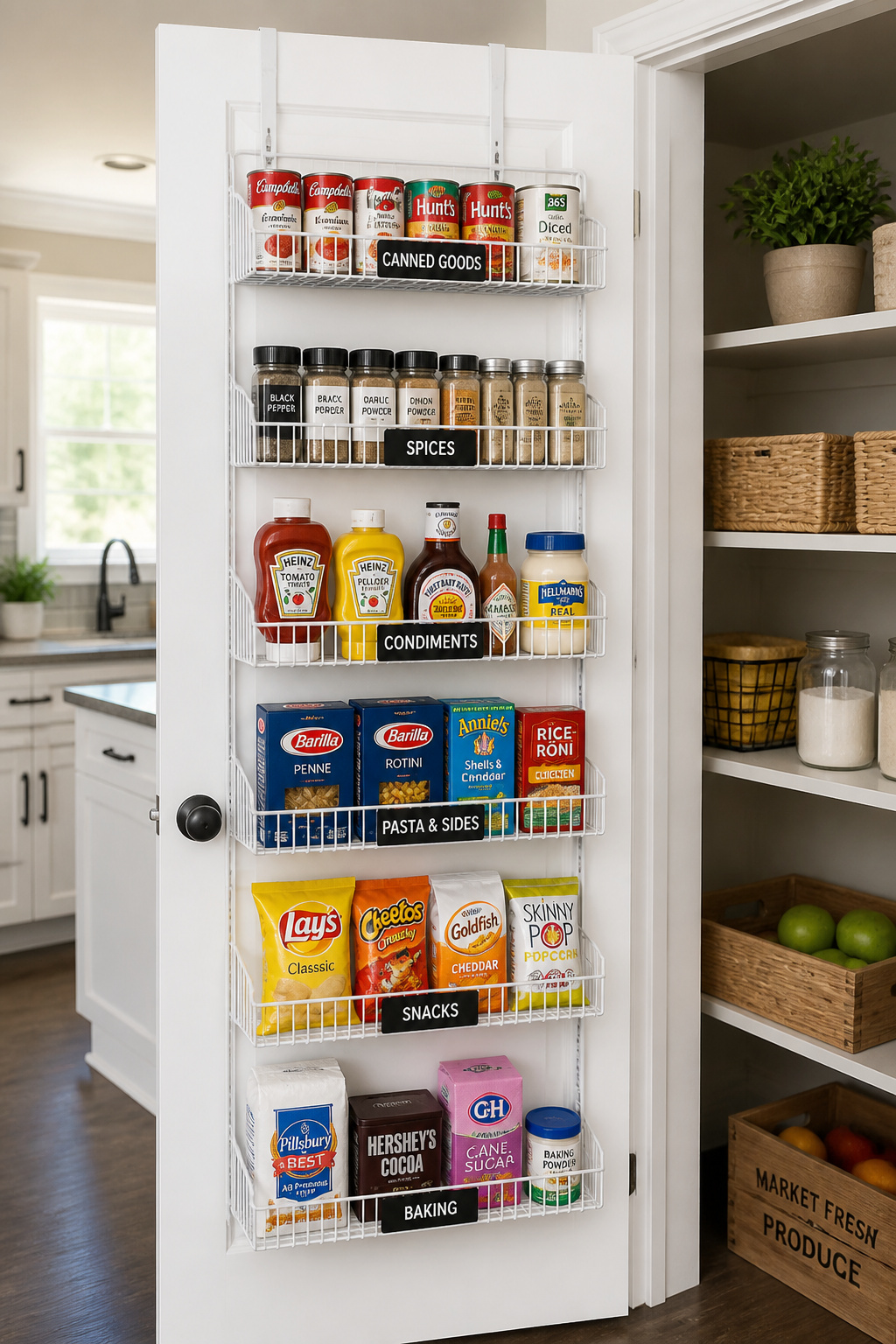
This makes over-door storage the most rental-friendly kitchen storage idea on this list. A 6-tier pantry door organizer typically measures 17-18 inches wide and up to 54 inches tall — standard 24-30-inch interior doors accommodate them easily. Cabinet door racks are the smaller version (9-16 inches wide, 21-25 inches tall, 3-4 inches deep) and work for the inside of kitchen cabinet doors. The depth is the critical measurement: open your cabinet door and measure from the door face to the nearest shelf edge. You need at least 3.5 inches of clearance or the rack will hit shelves when the door closes.
For anyone exploring budget-friendly kitchen designs for small spaces, over-door racks are one of the highest-return small-kitchen storage solutions available. Add foam padding to the hooks to protect the door edge, and load heavier items on the bottom tiers where the center of gravity is lowest.
7. Drawer Dividers That Bring Actual Kitchen Organization to the Utensil Chaos
Open a kitchen drawer at random in most homes and you’ll find spatulas piled on tongs piled on a garlic press that nobody uses but nobody throws away. The mess isn’t a character flaw — it’s a system problem. Without physical dividers creating zones, a drawer reverts to chaos within a week of being cleaned out.
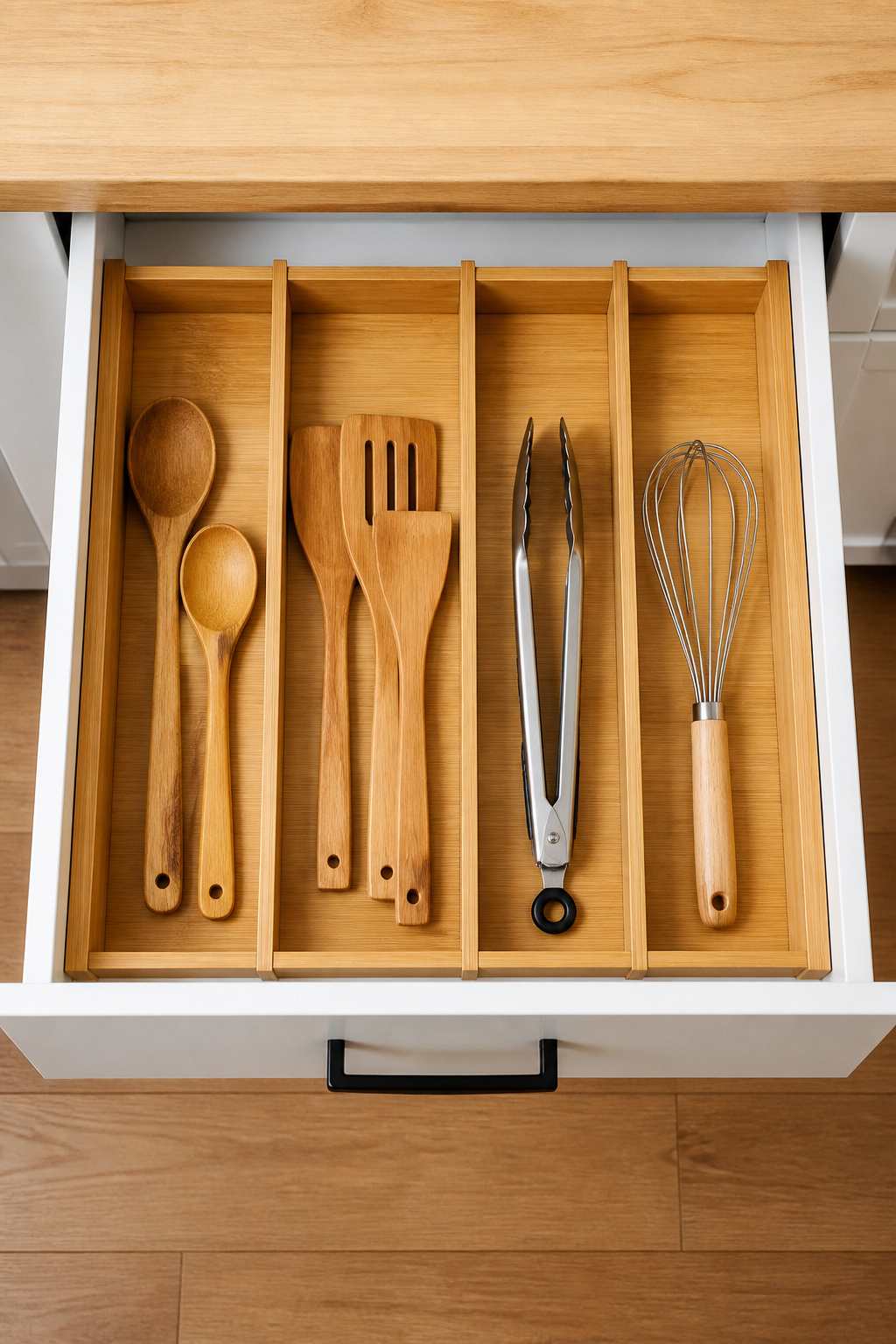
Expandable bamboo dividers are the best value kitchen organization solution for drawers. They press against the drawer walls using spring tension — no tools, no adhesive, no measuring required — and stay firmly in place with regular use. SpaceAid’s set (4 dividers plus 9 insert strips and labels, around $25-$35) expands from 17 to 22 inches. Narrow drawers (12-17 inches) need the smaller Bambusi 4-pack; drawers wider than 22 inches work with the KitchenEdge model that extends to 28 inches. Use three or four dividers per drawer, not one — a single divider splits the drawer in half, but three or four creates actual functional zones. For specific organizational hacks for kitchen drawers that go deeper than dividers alone, those are worth adding to your plan.
One rule worth keeping: knives don’t belong loose in a utensil drawer. Blades dull on contact with other metal and fingers get cut reaching in. A knife block, magnetic strip, or in-drawer knife insert keeps them separated from everything else.
8. Open Shelving That Keeps Everyday Items Accessible and Tidy
Open shelving works when it’s treated as a display-plus-access system for items you use every day and don’t mind keeping tidy. It stops working — quickly — when it becomes a catch-all for anything that doesn’t have another home. The kitchen organization logic here is simple: if you’d be happy for a guest to see it without any preparation, it earns a spot on an open shelf.
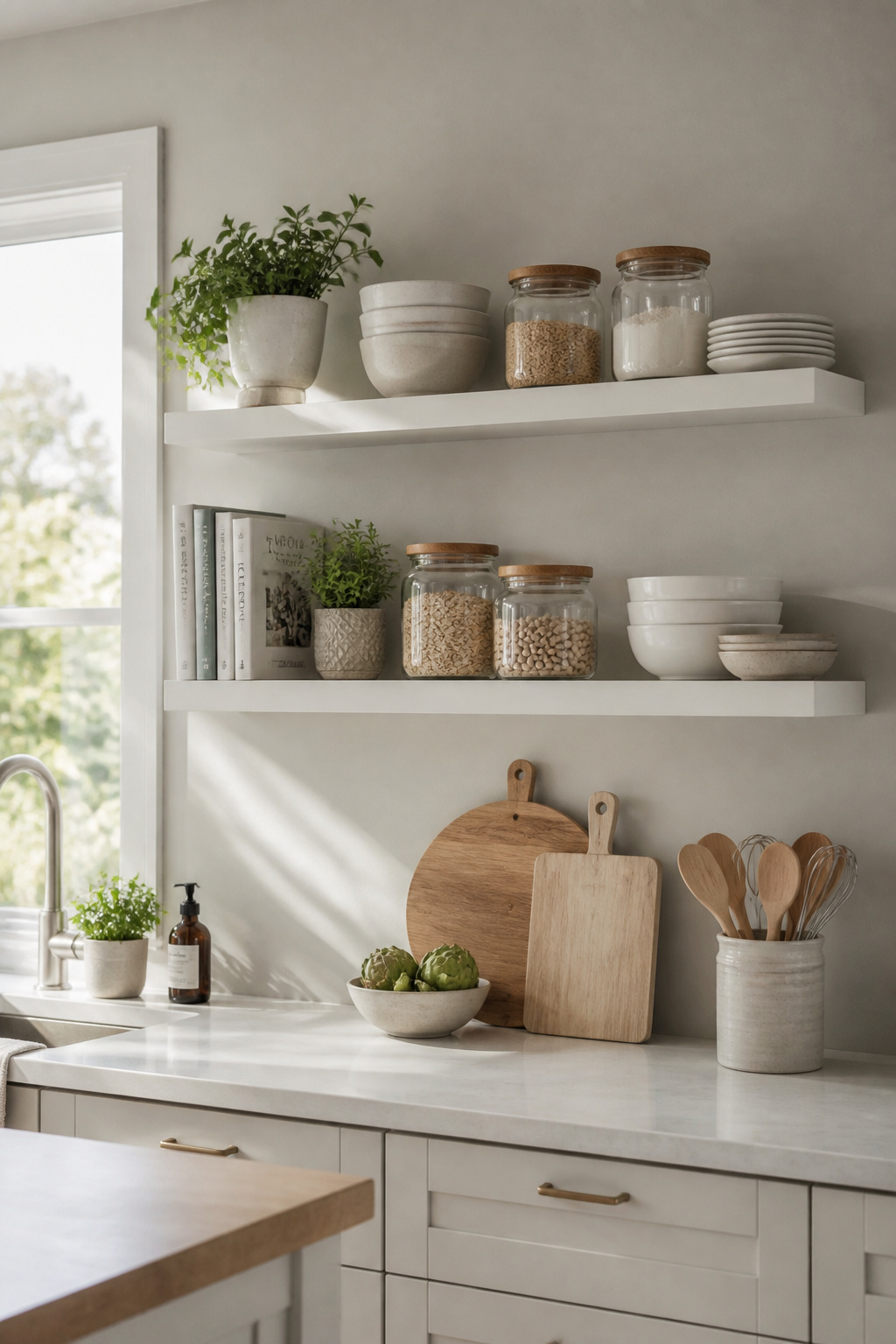
Items that consistently work on open shelves: dishes and glasses used daily, a few frequently reached-for spice jars, a small cookbook, a trailing herb plant. Items that reliably ruin them: plastic containers with mismatched lids, appliances used twice a year, and bags of anything. Leave 20-30% of every shelf empty — that breathing room is the difference between styled and overstuffed.
For floating shelf installation, IKEA LACK shelves ($12-$20) come with brackets and all hardware; the BOAXEL wall system holds up to 44 lbs per shelf for heavier dishware. Always anchor into wall studs (standard 16-inch intervals) using 2.5-inch screws — this holds 50-100 lbs depending on the bracket and is the only reliable approach for shelves holding dishes. The luxury kitchen shelving ideas on the higher end of this concept show what’s possible when the system is fully thought through.
9. Tension Rods for Baking Sheets, Cutting Boards, and Lid Storage
This is the $4 kitchen hack that genuinely earns its reputation. Spring-loaded tension rods — the same type used for shower curtains — installed vertically inside a lower cabinet create a custom filing system for baking sheets, cutting boards, and serving platters. Instead of stacking everything horizontally and triggering an avalanche every time you pull one sheet out, you file them upright in individual slots and pull exactly what you need.
Installation takes about two minutes. Insert the first rod vertically inside the cabinet, extend it until it’s half an inch taller than the cabinet opening, and twist until it locks. Place the second rod 3 inches from the first (center to center) — the slot between them holds baking sheets. Standard half-sheet pans are 13×18 inches, so any lower cabinet at least 14 inches deep works. These small tension rods run $2-$5 each at hardware stores and dollar stores. A quality spring-loaded rod handles the lateral weight of two heavy wooden cutting boards or three commercial baking sheets without slipping.
For a more complete kitchen storage system, add a small wire basket mounted to the underside of the shelf above for lids — they store horizontally while the pans file vertically below. This setup suits the narrow cabinets (12-15 inches wide) where typical shelf organizers don’t fit, making it one of the best small kitchen storage tricks available.
10. Cabinet Door Spice Racks That Reclaim the Space You Forgot You Had
The inside face of a kitchen cabinet door is probably the most consistently overlooked storage surface in any kitchen — flat, directly accessible, and at eye level when the door is open. A door-mounted spice rack uses this forgotten space to store 12-20 spice jars in a footprint of 3-4 inches that previously did nothing. As kitchen organization upgrades go, this one requires almost no commitment.
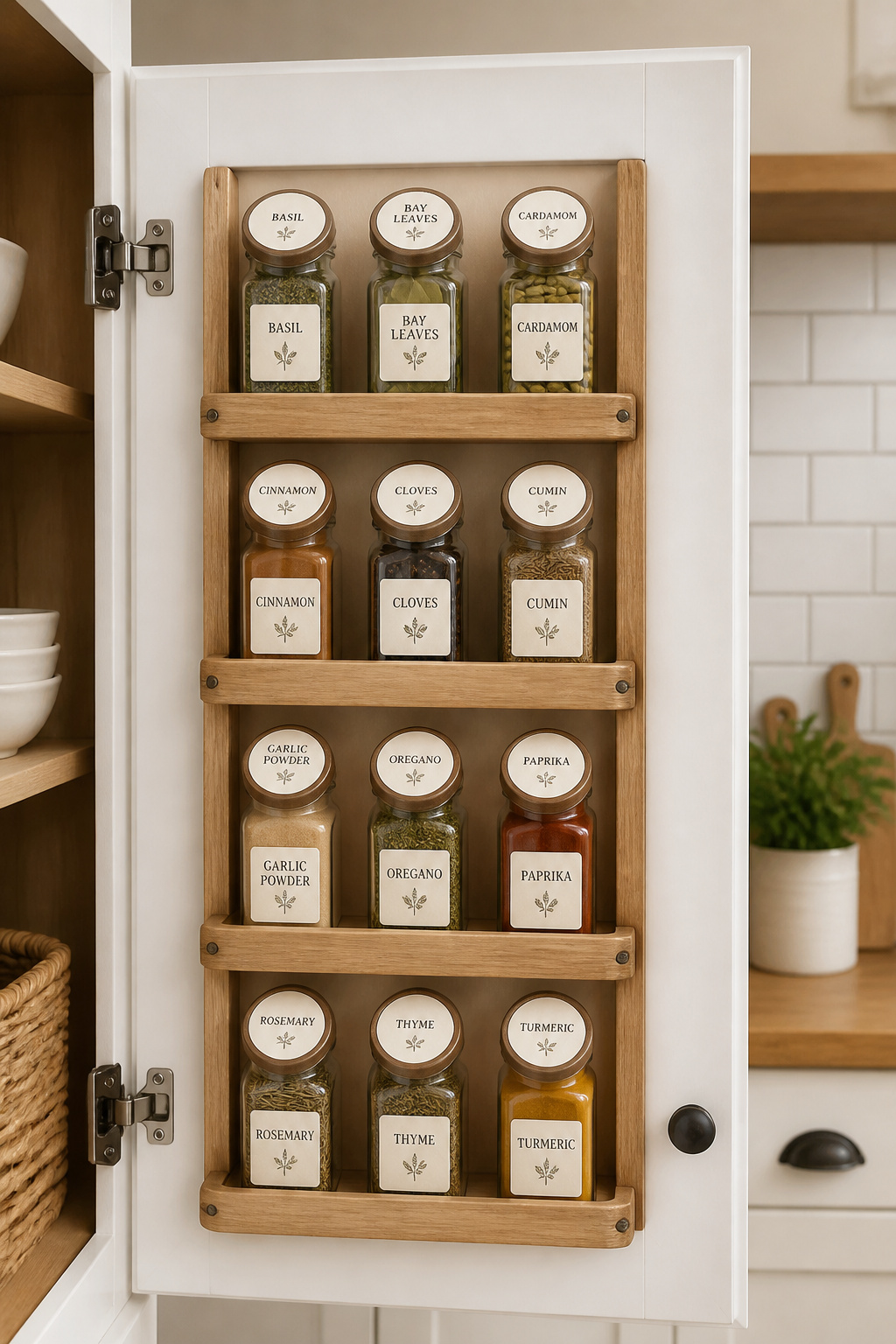
The right fit depends on two measurements. First, the door width: standard cabinet door racks come in three sizes — 9-10, 12-13, and 15-16 inches wide. Second, and more critical: measure from the door face to the nearest cabinet shelf with the door fully closed. You need at least 3.5 inches of clearance or the rack will hit the shelves when the door shuts. The Rev-A-Shelf 4SR-15 (10.5 inches wide × 21.25 inches tall × 3.125 inches deep) is the most widely compatible option for 15-inch cabinet doors — it installs with four screws and includes all hardware.
Decanting spices into matching uniform jars before loading the rack makes a real difference to how the kitchen organization system holds up long-term. Label both the front of the jar and the lid — when you look down into an open rack from above, a lid label tells you what’s there without pulling the jar. Chalkboard labels (peel-and-stick, $8 for 30) or vinyl Etsy label sets ($15-$30 for a full spice collection) are both popular options.
11. A Rolling Cart That Doubles as Flexible Kitchen Storage Organization
Most small kitchen problems come down to the same tension: not enough counter space, not enough cabinet space, and not enough floor space to solve either problem with something fixed and permanent. A rolling utility cart sidesteps all three by being mobile — park it next to the stove while cooking, roll it to the table for serving, tuck it against a wall when you need the floor back. As a kitchen storage organization solution, it’s one of the most flexible options available for renters.
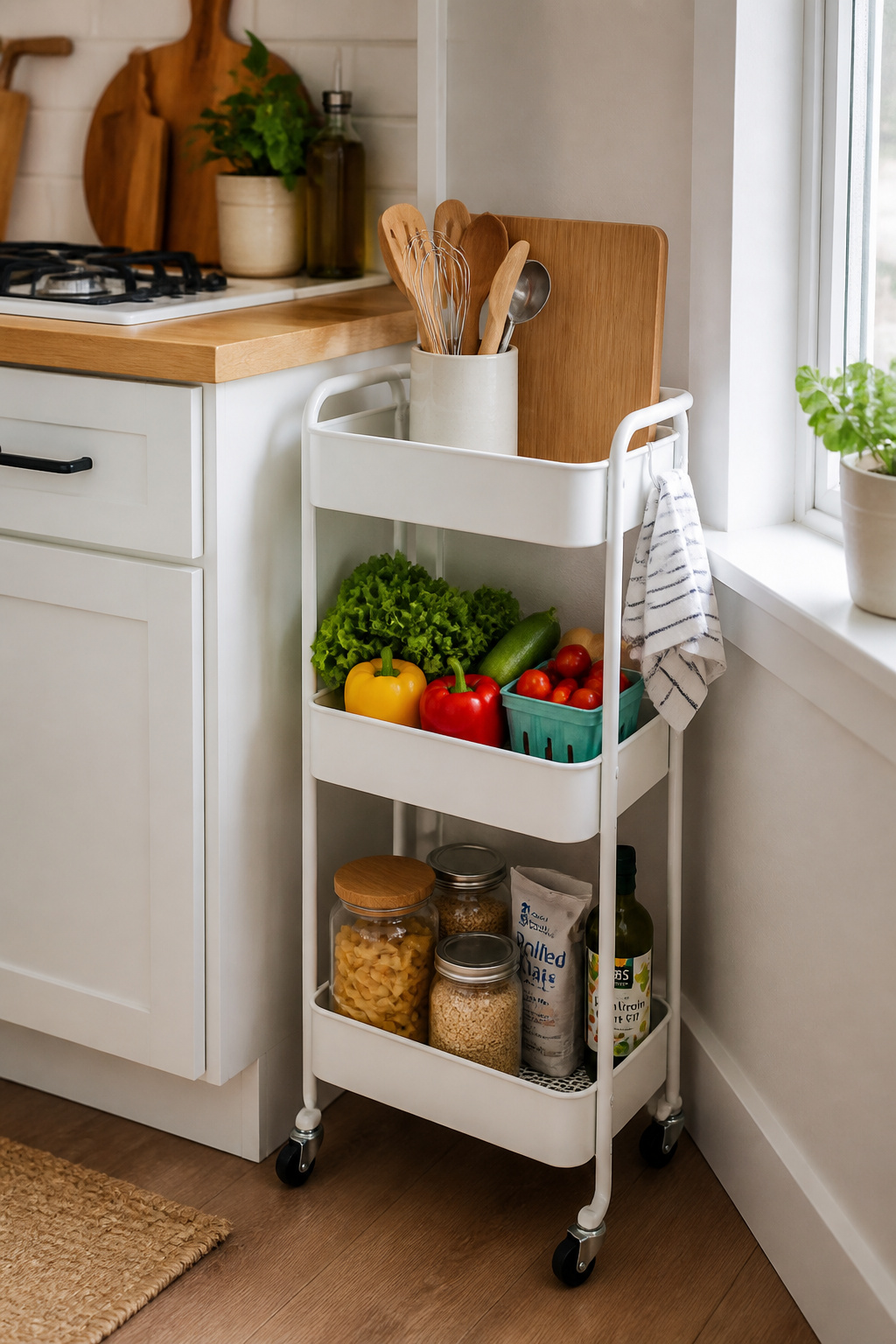
The IKEA RÅSKOG is the most popular cart at its price point, in two sizes: 11x15x24 inches (small) and 13¾x17¾x30⅜ inches (larger). The locking casters are the feature that makes it actually useful for prep — without them, the cart rolls every time you push down on a surface, which quickly becomes frustrating. The small RÅSKOG has a max load of 9 lbs per shelf: fine for produce, pantry overflow, or a coffee station setup, but not appropriate for cast iron on the top tier. Load heavy items at the bottom and keep the top surface clear for active prep work. For anyone weighing a cart against something permanent, kitchen island storage solutions offer fixed capacity that a cart can’t match — but in kitchens under 150 square feet, mobility wins.
12. Wall-Mounted Pot Racks That Move Bulky Cookware Off the Shelf
Pots and pans are among the largest, most space-hungry items in any kitchen, and they almost always end up stacked in a lower cabinet where retrieving one means moving everything else first. A wall-mounted pot rack moves the whole collection to wall space that was doing nothing, typically freeing 2-4 full cabinet shelves for other kitchen storage.
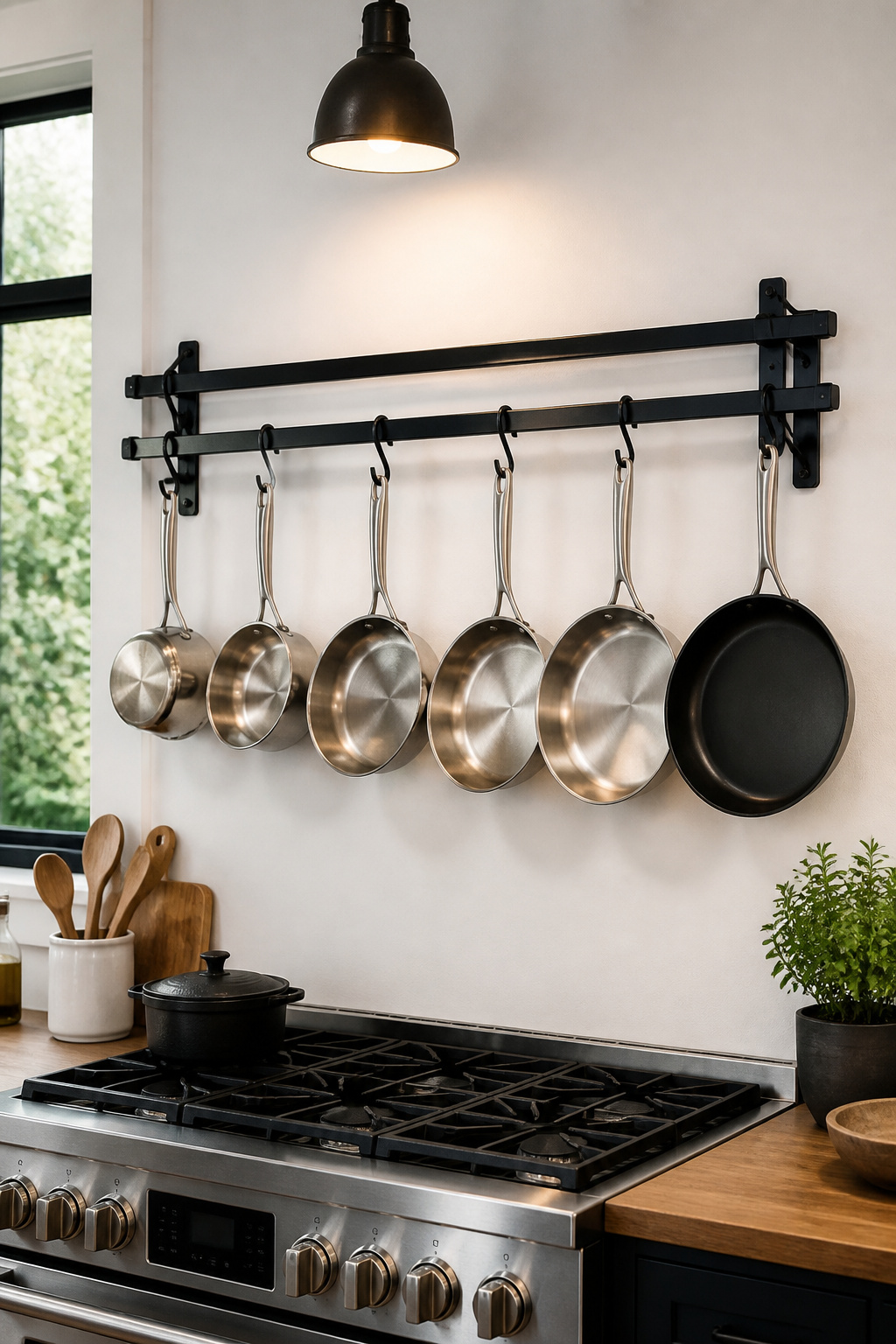
Wall-mount racks suit smaller kitchens best: they sit flat against the wall taking only 6-8 inches of depth, and don’t require the ceiling joists or overhead island that ceiling-mounted racks need. Always anchor into wall studs using appropriate screws — standard spacing is 16 inches — never drywall anchors alone for a rack that holds heavy pots. The optimal hanging height is approximately 42 inches above the counter surface: low enough to reach by extending an arm, high enough that the rack and pans don’t become an obstacle during active kitchen use. Expandable single-rail wall racks run from 19 to 30 inches wide and hold 8-12 S-hook positions, enough for most home cookware sets.
Choose hook gauge based on what you’re hanging. Heavy-gauge S-hooks (5mm diameter minimum) handle cast iron; standard gauge is fine for stainless or aluminum. Avoid hanging pot lids without dedicated lid hooks — regular S-hooks can’t hold a lid securely by the knob.
13. Shelf Risers in the Pantry That Double Your Usable Shelf Space
Look at your pantry shelf right now and notice the space between the top of your canned goods and the shelf above. Standard 12-inch shelf spacing leaves 7-8 inches of empty air above cans that are 4.25-4.5 inches tall. That dead zone is storage capacity you already own and aren’t using. Shelf risers put it to work by creating a second elevated surface inside that gap — a smart, no-installation kitchen storage solution.
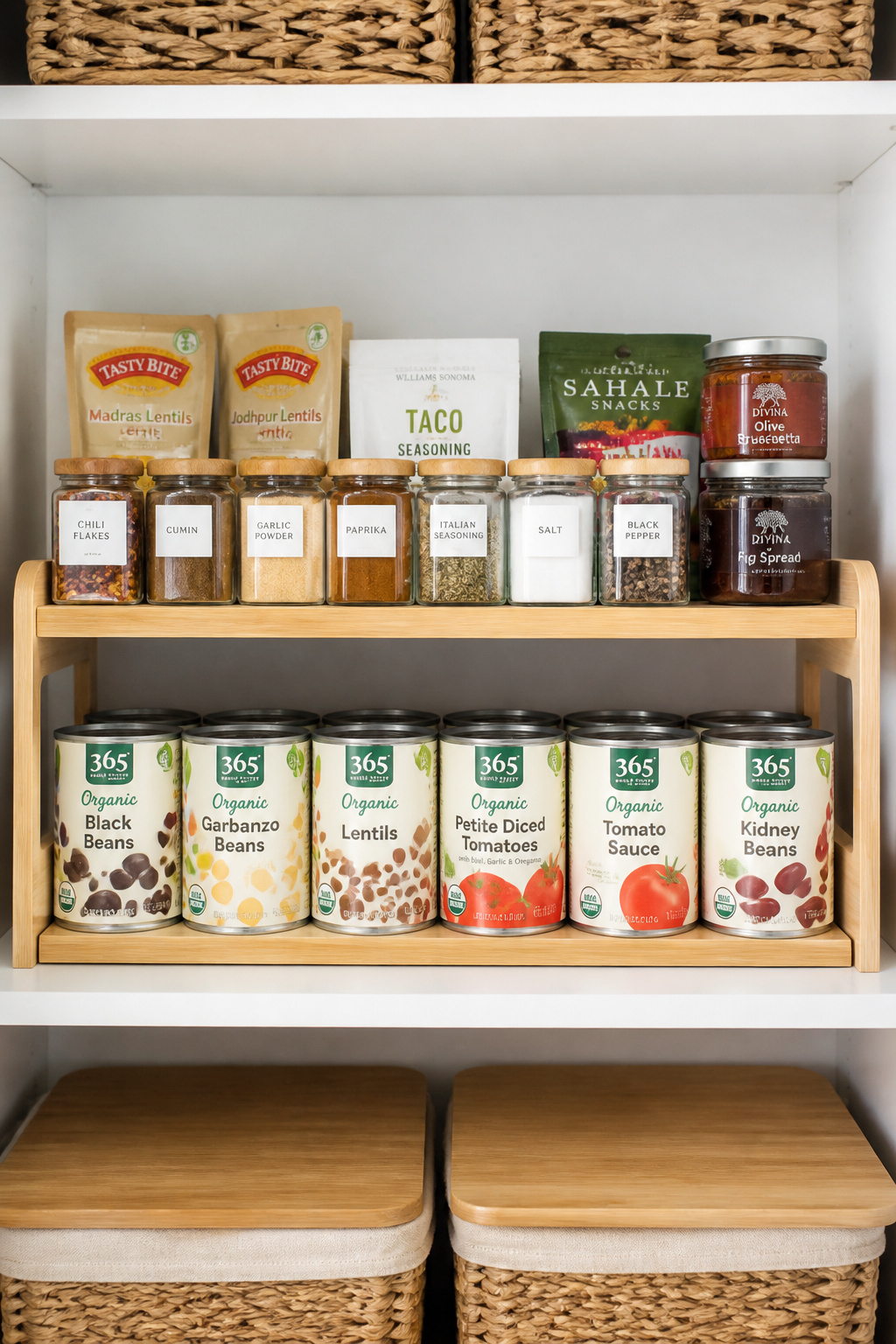
A two-tier riser approach works in either of two ways. Gravity-feed can racks (the Smart Design 3-Tier is a popular version) use a sloped surface that automatically rolls cans forward as you remove them — the back is always refilling the front row, and nothing gets forgotten at the rear of the shelf. Stepped shelf risers (bamboo or wire, 2-3 tiers, $10-$25) work for jars and bottles in a stadium-seating layout where every item is visible at a glance. Before buying either, check that the riser doesn’t overhang the front edge of the shelf — anything that juts past the lip will get knocked off every time you reach past it.
Budget note: the bestselling riser-style can organizer on Amazon costs under $10. It’s the lowest-stakes test of whether this kitchen organization approach will work in your specific pantry. Start there.
14. Clear Stackable Containers for Kitchen Storage Organization You Can Actually See
Switching from original food packaging to clear, airtight, uniform containers is the single pantry change with the highest visual payoff for the least effort. The reason isn’t just aesthetics — visibility is a functional kitchen storage organization system. When you can see what you have, you use it. When items are buried in crinkled bags and mismatched boxes, they get ignored until they expire.
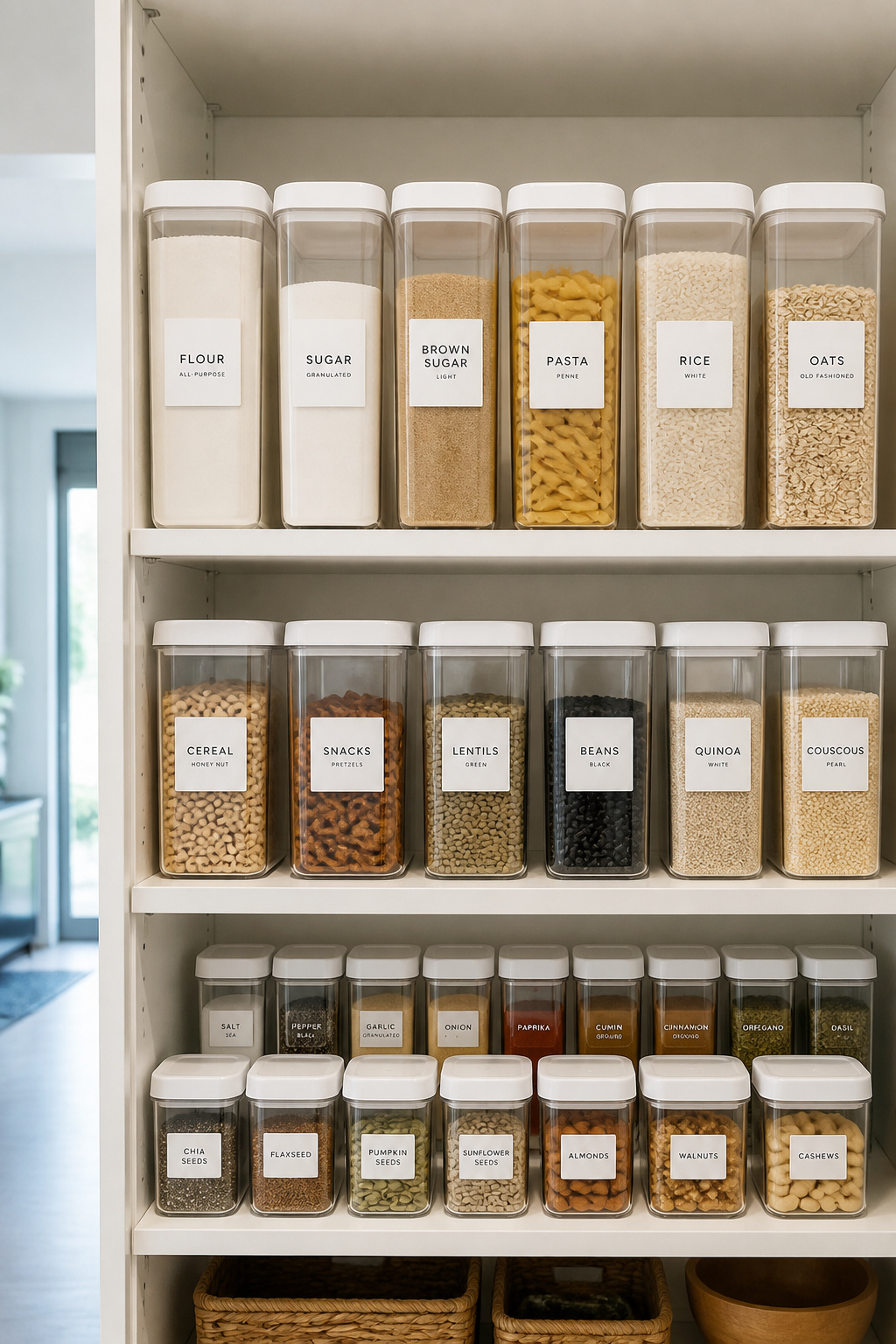
Rubbermaid Brilliance and OXO Good Grips POP are the two most consistently tested lines for kitchen storage organization. Rubbermaid Brilliance uses Tritan plastic — crystal clear, shatter-resistant, stain-resistant, dishwasher-safe — with airtight latching lids and a stackable design. OXO POP containers have a one-button lid: press to engage the airtight seal, press again to open — faster single-handed than latching lids when you’re mid-recipe. Both store flour, sugar, cereal, pasta, rice, oats, and most dry pantry goods. Pour-spout versions earn premium placement for flour and sugar, which you reach for often and need to pour from quickly.
Labeling: commit to one system from the start and apply it to everything at once. A Brother P-touch label maker ($20-$40) produces consistent, durable labels that stick to any surface and look uniform across the whole pantry. Chalkboard peel-and-stick labels ($8 for 30) work well for rotation items. Whichever you choose, label the lid as well as the side.
15. Built-In Pull-Out Pantry Cabinets for Full Kitchen Storage Overhaul
Every kitchen organization idea on this list addresses a specific problem. A pull-out pantry cabinet addresses all of them at once. Instead of organizing what’s inside a static cabinet, you replace the fixed shelving with a full pantry that slides out toward you — every item visible, every shelf accessible from the front, nothing trapped behind anything else.
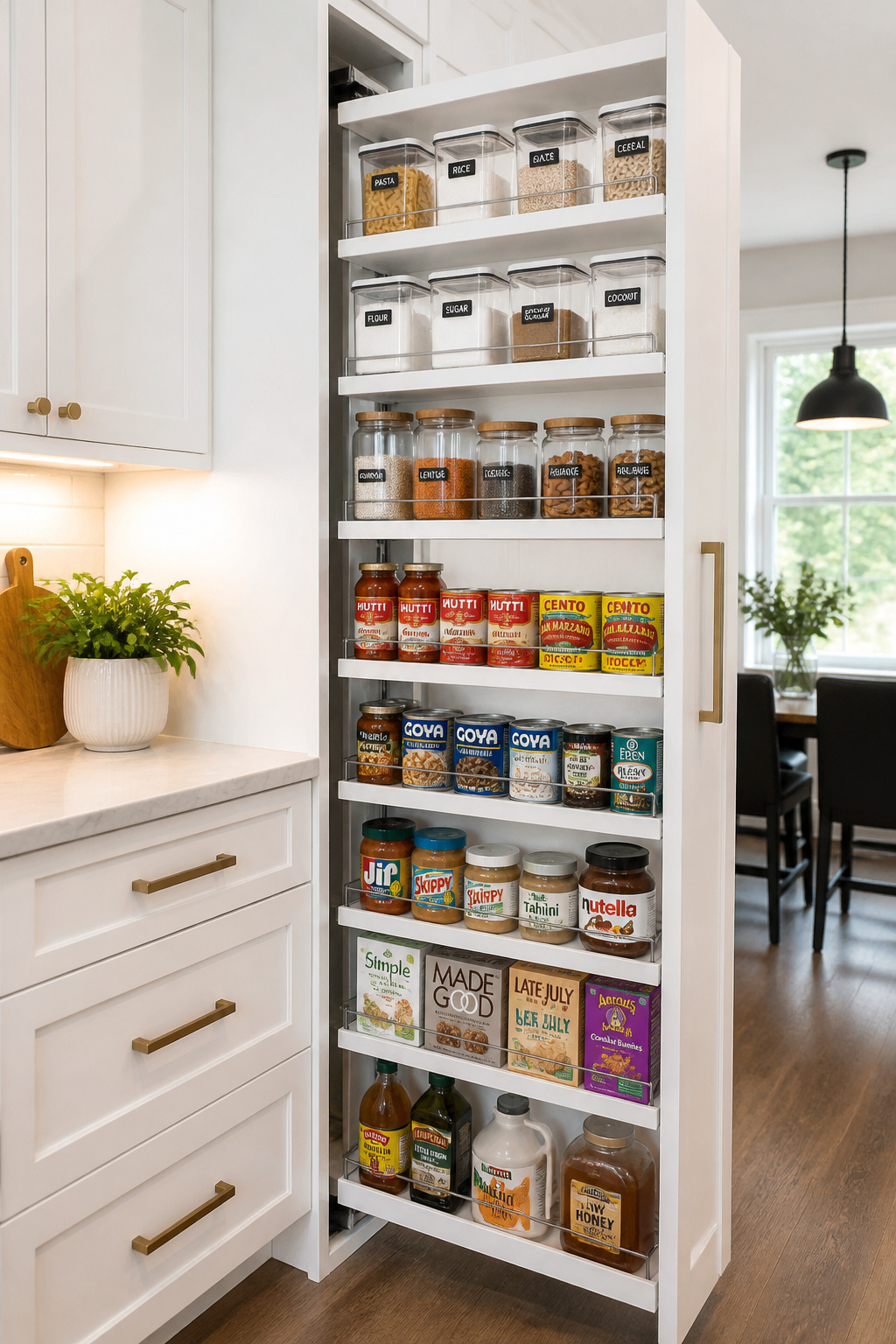
The IKEA SEKTION high cabinet with pull-out pantry makes this achievable without a custom carpentry quote. The 24x24x80-inch version starts at $321; add the suspension rail, legs, and plinth (sold separately) and the total sits around $400-$500 installed DIY. For comparison, custom-built pull-out pantries run $800-$3,000 depending on height, width, and drawer slide quality. The SEKTION system needs a minimum 24-inch wide floor-to-ceiling opening — a standard fridge-slot cabinet position works. For a smaller commitment, the SEKTION base cabinet with pull-out storage (12x24x30 inches) replaces just one lower cabinet with a drawer-style pull-out and serves as a useful starting point before committing to the full-height version.
One detail worth flagging: the SEKTION system requires a suspension rail for wall mounting, sold separately. It’s easy to miss in the product listing, and arriving at assembly without it is its own specific kind of frustration.
Finding the Kitchen Storage Organization System That Fits Your Space
Before ordering a single organizing product, the most useful step is a full audit of your kitchen. Pull everything out of every cabinet and drawer — yes, all of it — and sort into three piles: keep (used at least monthly), relocate (doesn’t belong in the kitchen), and discard (expired, broken, duplicated, or simply never used). This step alone usually frees 15-20% of storage capacity before any product is purchased.
Then identify your three biggest friction points. Which cabinet do you dread opening? Which drawer jams? Which surface accumulates clutter within two days of clearing? Those are the starting points — not the prettiest areas, and not the ones you’d feature in a photo. Fix the daily irritants first and the whole kitchen feels better faster.
For most kitchens, the highest-return first moves in kitchen storage organization are: expandable bamboo drawer dividers (under $30, immediate impact), an under-sink tiered shelf ($15-$25, transforms the most neglected cabinet), and one pull-out insert for the lower cabinet you use most. That’s a $70 kitchen storage organization upgrade that does more than a $300 collection of matching baskets you’re not sure where to put. Build from there when those three changes feel solid — and they will.