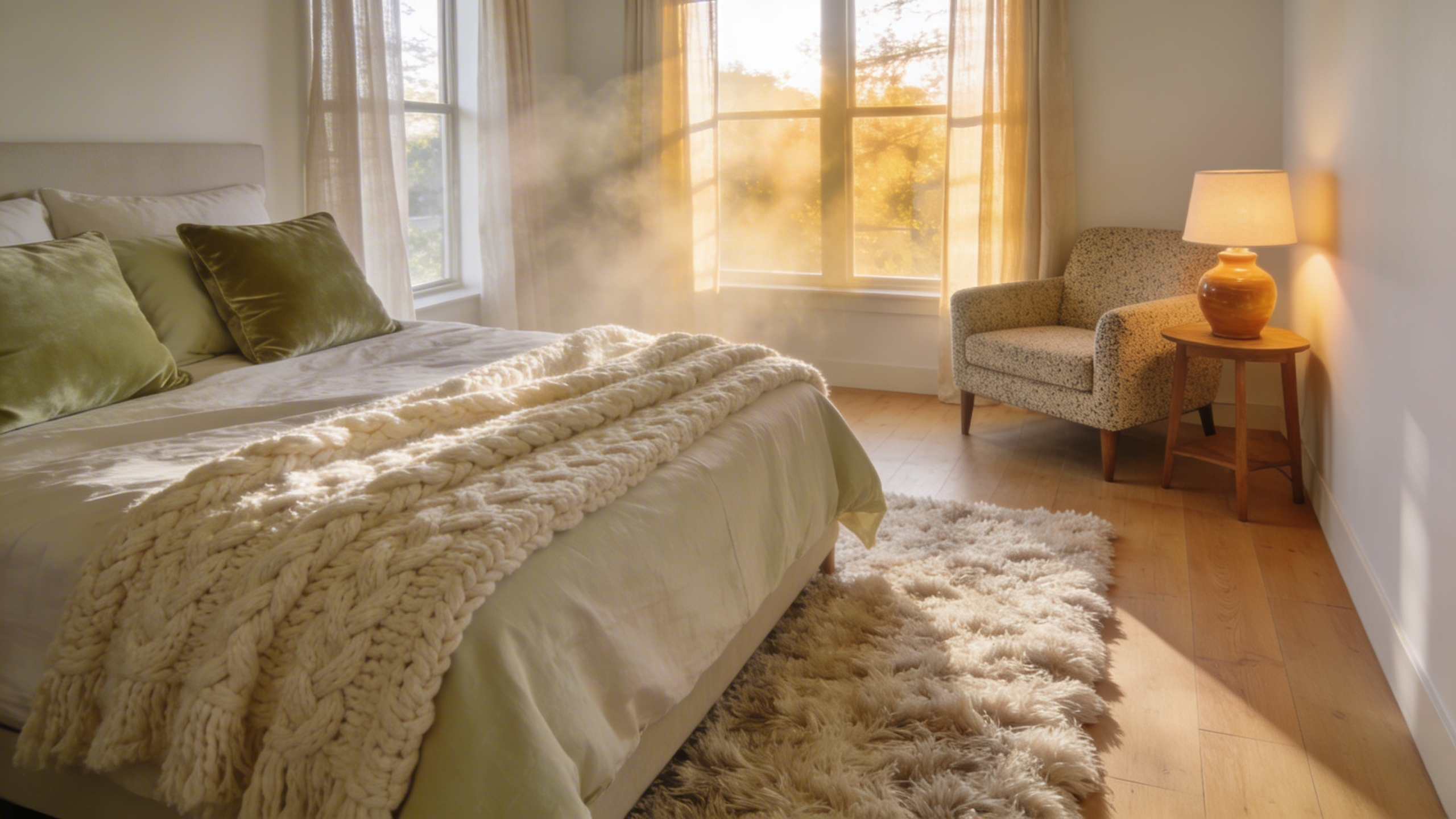
Imagine a fierce storm raging just beyond your bedroom window. The rain hammers relentlessly against the glass. Yet, inside, you remain perfectly warm. When curating cozy bedroom ideas for a high-end sanctuary, look beyond the aesthetic. You must address the emotional resonance of the space. This contrast creates a profound psychological sense of safety. French philosopher Gaston Bachelard described this phenomenon as the house acting like a “cradle” for the soul. The storm’s violence outside actually deepens the tangible silence within your private sanctuary.
Creating this feeling requires more than buying soft throw pillows. Scientifically, the specific sound of rain functions as “pink noise.” This synchronizes brain waves for better rest. Similarly, wool bedding offers active thermoregulation. This feature potentially boosts restorative REM sleep by 25%. Historically, features like four-poster beds were designed to create this necessary “micro-climate.” True coziness is actually a biological tool for survival.
This guide reveals the practical mechanics behind building your ultimate refuge. First, we examine how low-Kelvin lighting mimics the calming “Golden Hour.” Next, we explore layout strategies that satisfy your evolutionary nesting instincts. Finally, you will discover accessible ways to transform your space into a protective shell using these bedroom style ideas as a foundation.
The Psychology of ‘Cozy’: Why texture affects our stress levels
To understand “cozy,” we must look beyond simple aesthetics. Our brains are biologically wired to respond to texture. Specialized nerve endings called C-Tactile fibers exist solely to detect soft touch. Consequently, wrapping yourself in a plush throw triggers a powerful biological reaction. These fibers immediately signal the brain to release oxytocin and serotonin. Simultaneously, they significantly lower cortisol, the body’s primary stress hormone. Soft textures act as a “biological hug” for your nervous system. They provide essential haptic feedback that signals safety to the brain.
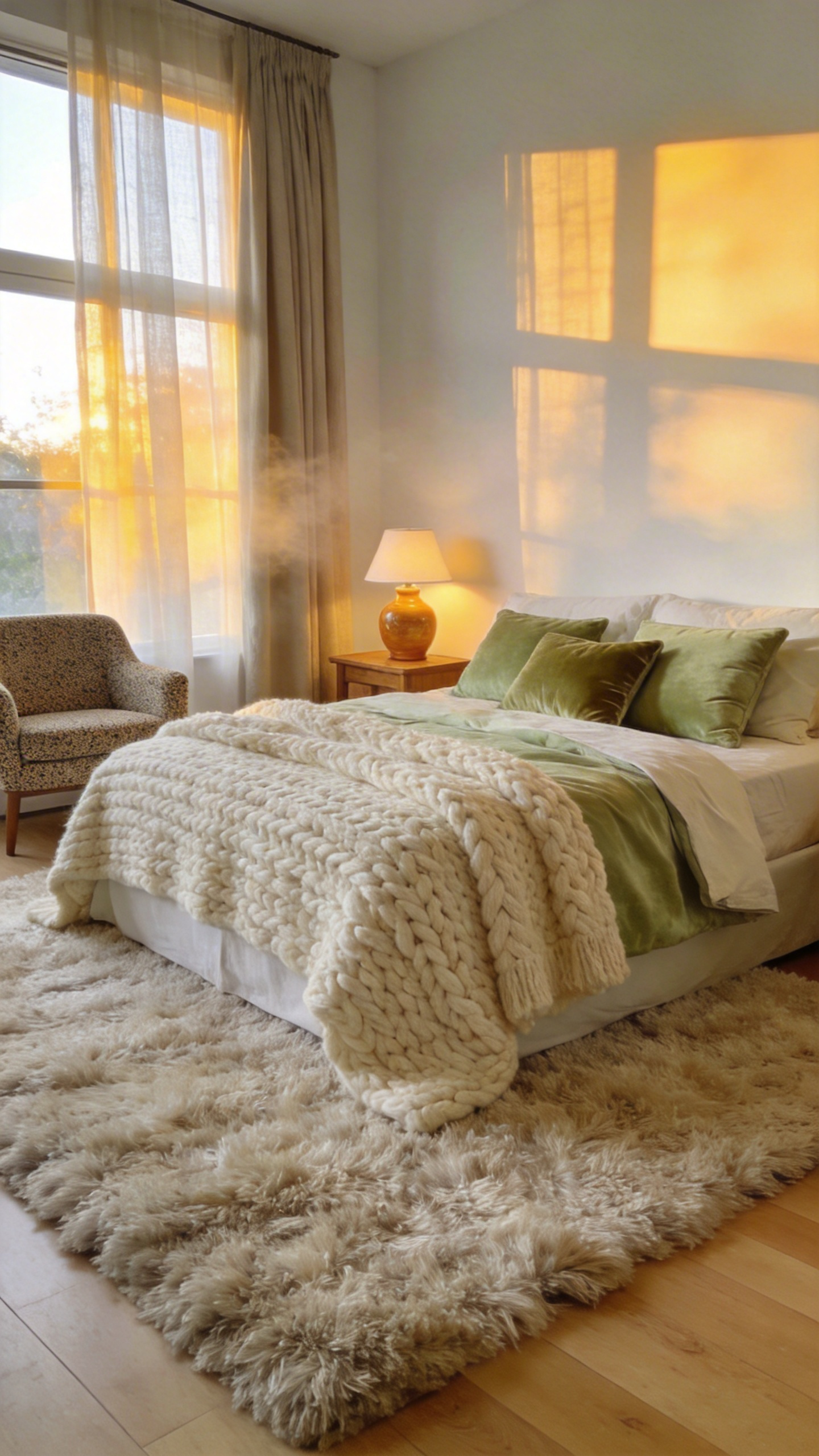
Conversely, hard or sleek surfaces can trigger subtle anxiety. Evolutionarily, shiny materials require more cognitive effort to scan for threats. This visual noise maintains a state of vigilance. However, natural textures like chunky knits provide what researchers call “soft fascination.” This gentle engagement allows the brain to finally stop scanning. Essentially, these layers create a sensory buffer against the outside world. Incorporate these bedroom decor ideas into your primary suite to dampen that noise.
Furthermore, familiar textures like worn linen engage our haptic memory. Soft flannel often mimics childhood security objects. Ultimately, this tactile predictability signals safety, allowing deep relaxation to occur.
Phase 1: The Foundation of Softness (Textiles & Bedding)
Creating a sanctuary begins with engineering a tactile environment, not just buying sheets. Specific textures directly signal safety to the brain. In fact, haptic psychology suggests that soft surfaces trigger the parasympathetic nervous system. Contact with plush textiles lowers stress hormones like cortisol. Therefore, your bedding serves as a biological tool for relaxation and tactile luxury.
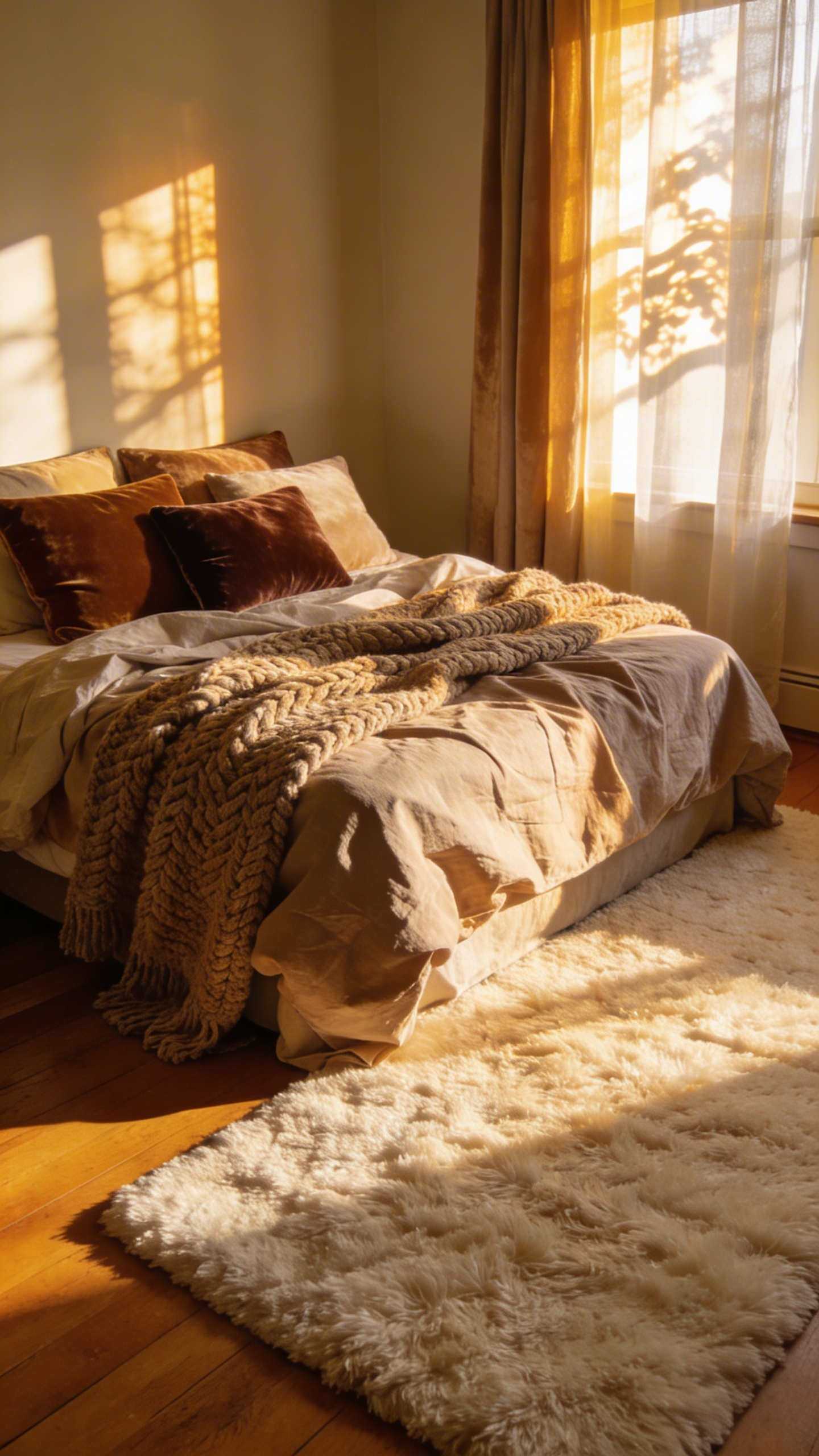
However, you must navigate past the pervasive “thread count” myth. High counts over 500 are often marketing gimmicks using twisted, low-quality yarns. Instead, prioritize “staple,” or fiber length. Notably, long-staple cotton produces smoother, stronger threads. As a result, you avoid micro-irritations that cause tossing and turning.
Next, consider the geometry of the weave. A Sateen weave exposes more thread surface. Thus, it creates a silky, warm “cocoon” feeling. Conversely, a Percale weave offers a matte, crisp breathability. Modern options like Tencel integrate sustainability with sleep hygiene. Ultimately, the right foundation balances weight and softness for restorative rest.
1. The ‘Double Duvet’ Hack: Creating a cloud-like bed without buying a new mattress
Achieving a hotel-quality sleep experience doesn’t necessarily require investing in a new mattress. You can focus on the sensory environment through the “Double Duvet” hack. Fundamentally, this technique maximizes “loft,” or the amount of air trapped within your bedding. Insert two mid-weight quilts into a single cover to create necessary structural tension. Consequently, the two layers push against each other. This prevents the filling from shifting or clumping. Executing this correctly will make your bedroom look like a million bucks without a full renovation.
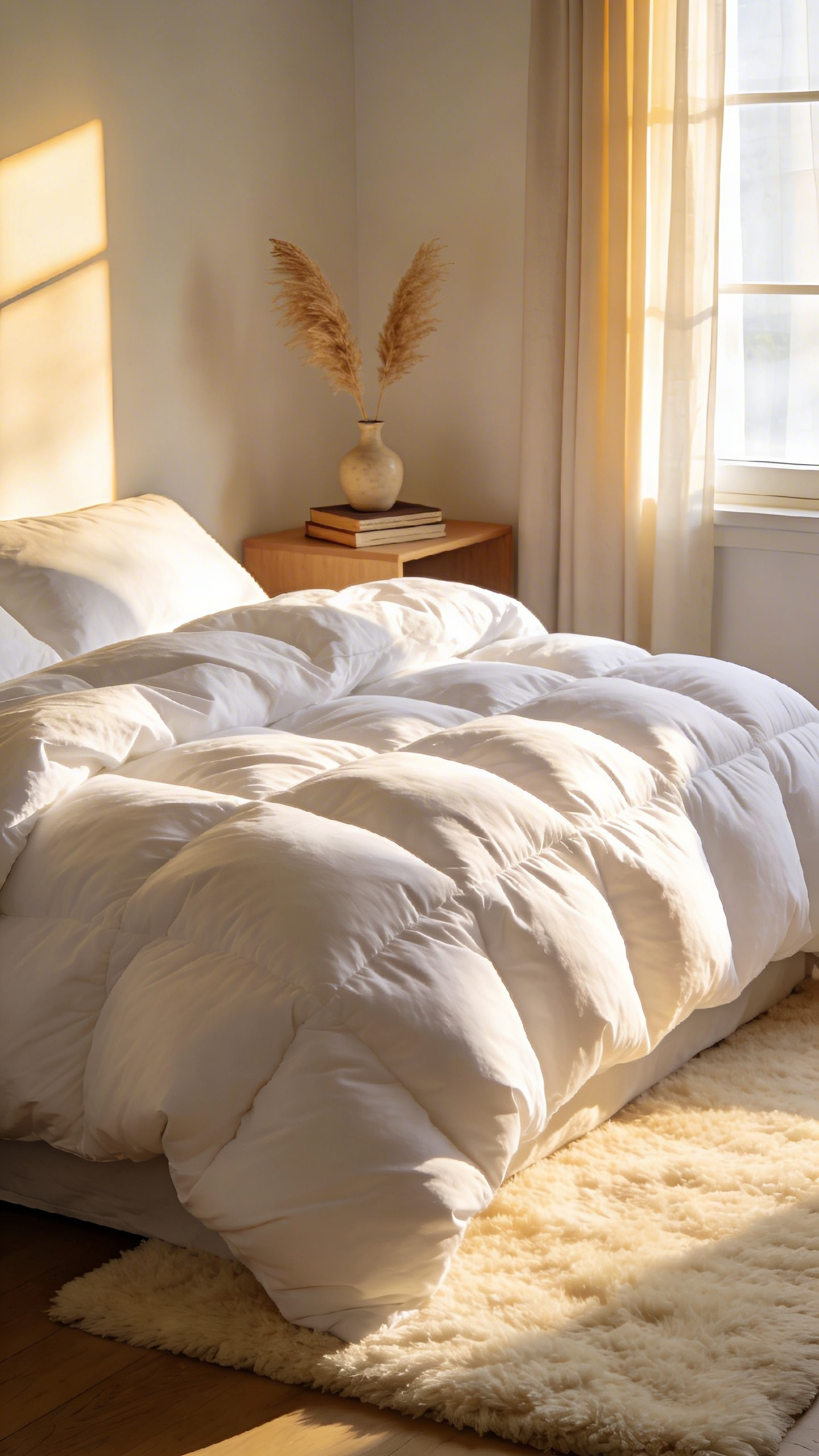
Moreover, this method provides a sensory benefit known as Deep Pressure Stimulation (DPS). Unlike clinical weighted blankets, a double duvet feels indulgent rather than restrictive. To execute this effectively, professionals often recommend a “hybrid material strategy.” Specifically, combine one down insert for natural breathability with a microfiber one for structure. Thus, you achieve the showroom aesthetic without creating unmanageable heat.
Additionally, consider the “sizing secret” for extra volume. Simply place two King-sized inserts into a Queen-sized cover. The excess material forces the duvet to bunch upward rather than outward. This creates dramatic, fluffy ridges often seen in interior design magazines. Visually, this mimics the “halo effect” used by luxury hotels like the Ritz-Carlton. White linens are preferred to emphasize these sculptural shadows. However, double layers can trap body moisture. Run the inserts through a dryer with wool balls monthly to re-oxygenate the fibers.
2. Mixing, Not Matching: Layering chunky knits with smooth velvets
Creating a truly cozy sanctuary requires balancing visual temperature. This pairing works so well because of light manipulation. Velvet’s unique pile acts like thousands of tiny mirrors. Consequently, it reflects ambient glow, adding movement to low-light spaces. Conversely, chunky wool knits are matte and porous. They effectively “swallow” light, creating deep shadows within the weave. Therefore, layering these materials prevents a room from feeling either too shiny or too flat.
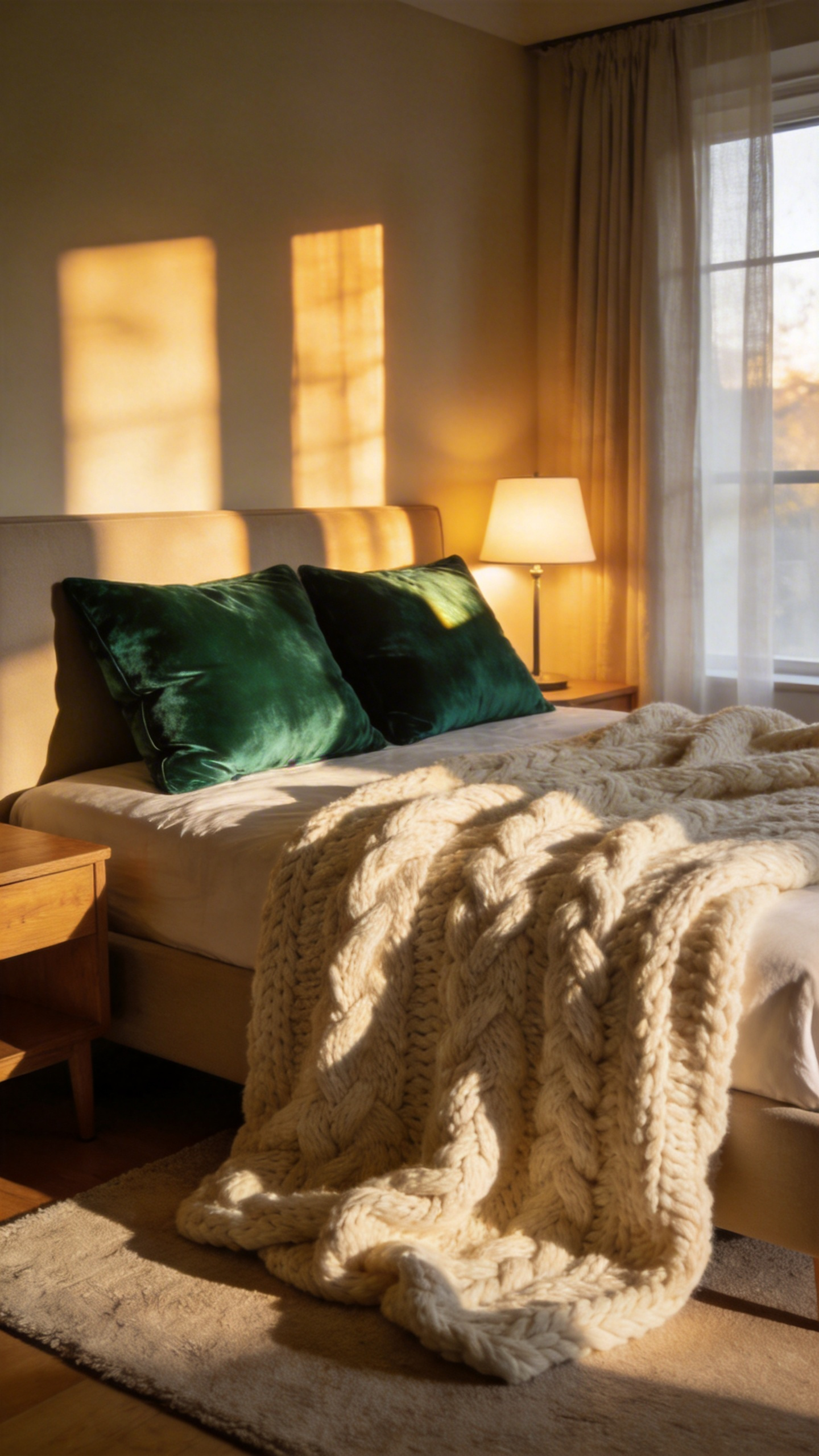
Beyond aesthetics, this combination engineers serenity through touch and sound. Interior psychology suggests humans crave varied textures for emotional connection. Heavy knits offer a “grounding” sensation, mimicking a weighted blanket’s embrace. In contrast, smooth velvet invites a feeling of luxury. Furthermore, these materials serve a functional purpose regarding noise. Both velvet and wool possess high acoustic insulation properties. They trap sound waves to reduce echo. This acoustic layering transforms the bedroom into a sensory “hush” zone, physically lowering stress.
To master this look, expert consensus leans toward tone-on-tone coloring. For example, place a slate-grey knit throw over a charcoal velvet pillow. Because the colors are similar, the eye focuses entirely on the rich texture difference. Ultimately, this mix blends “high” luxury with “low” handmade comfort. It transforms a stiff showroom aesthetic into a lived-in, authentic home.
3. Grounding the Space: The art of layering area rugs over carpet or hardwood
Layering area rugs is a sophisticated technique that transforms a bedroom into a multi-dimensional sanctuary. Historically, this practice served as a thermal necessity for nomadic cultures. Today, however, it serves a visual and sensory purpose called “grounding the space.”
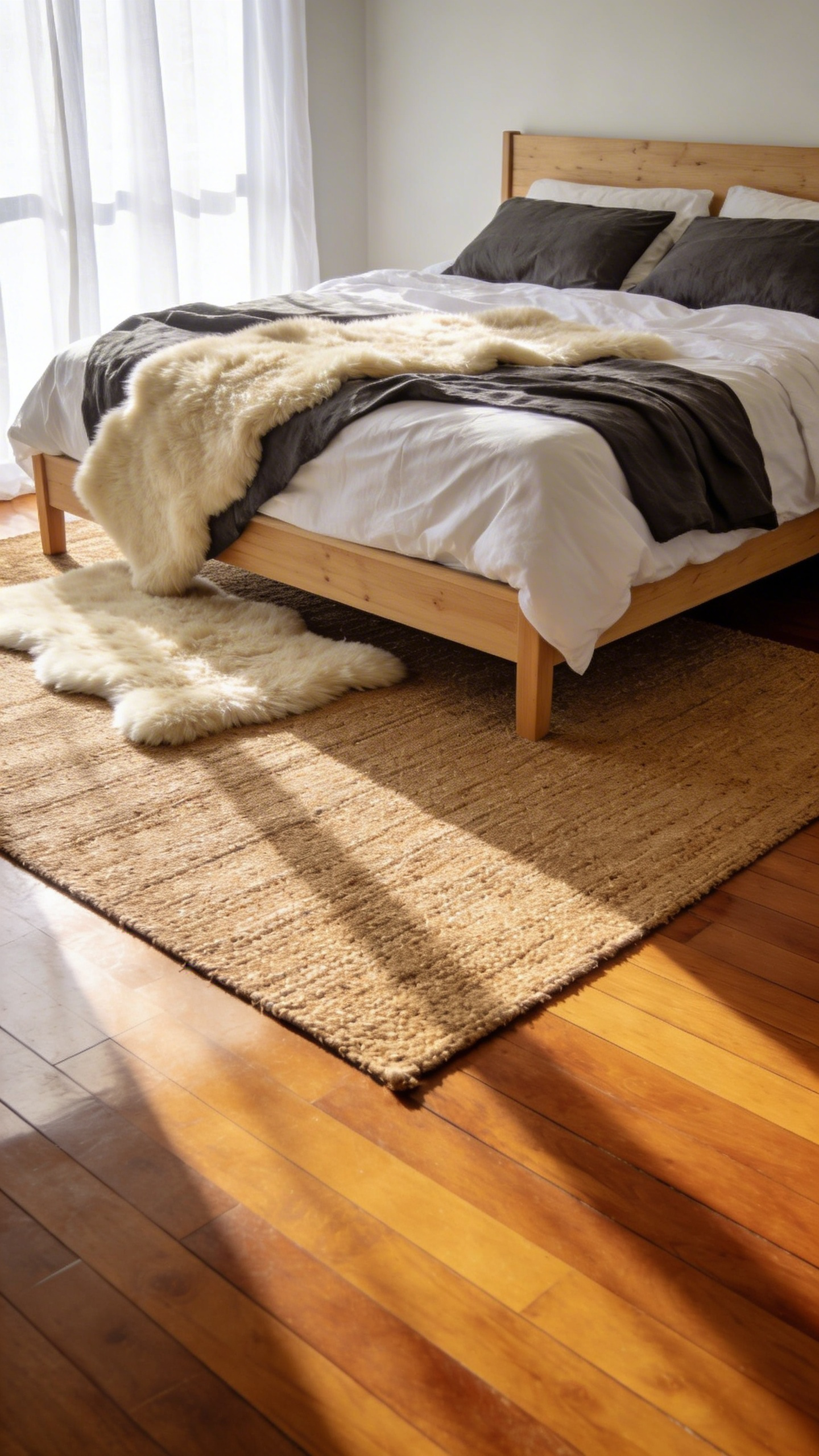
To start, you must address stability to prevent dangerous bunching. Professional designers adhere to the “Opposite Piles” rule. Specifically, pair a flat-weave base, like jute, with a plush top layer. The coarse, “toothy” texture of the bottom rug grips the softer fibers above. If layering over wall-to-wall carpet, use a felt-and-rubber hybrid pad. This specialized tool locks the layers together, effectively preventing the “walking rug” effect.
Beyond mechanics, this approach alters the room’s atmosphere. Multiple textile layers create a staggered acoustic barrier. The varying densities trap sound frequencies, significantly “hushing” the space for better rest. Additionally, this creates a “haptic map” for your feet. Stepping onto a soft wool rug provides a gentle signal to your nervous system. Thus, the transition from sleep to wakefulness becomes a comforting tactile experience. Layering offers a practical way to add warmth and “soul” without expensive renovation.
4. Pillowscaping on a Budget: How to arrange sleeping vs. decorative pillows
“Pillowscaping” balances architectural structure with sensory comfort. Pillows shifted historically from stone “bug barriers” to Renaissance status symbols. Today, you can democratize this luxury on a budget. Use large “Euro shams” (26×26) against the wall. These affordable anchors mimic an upholstered headboard, effectively creating a custom suite look.
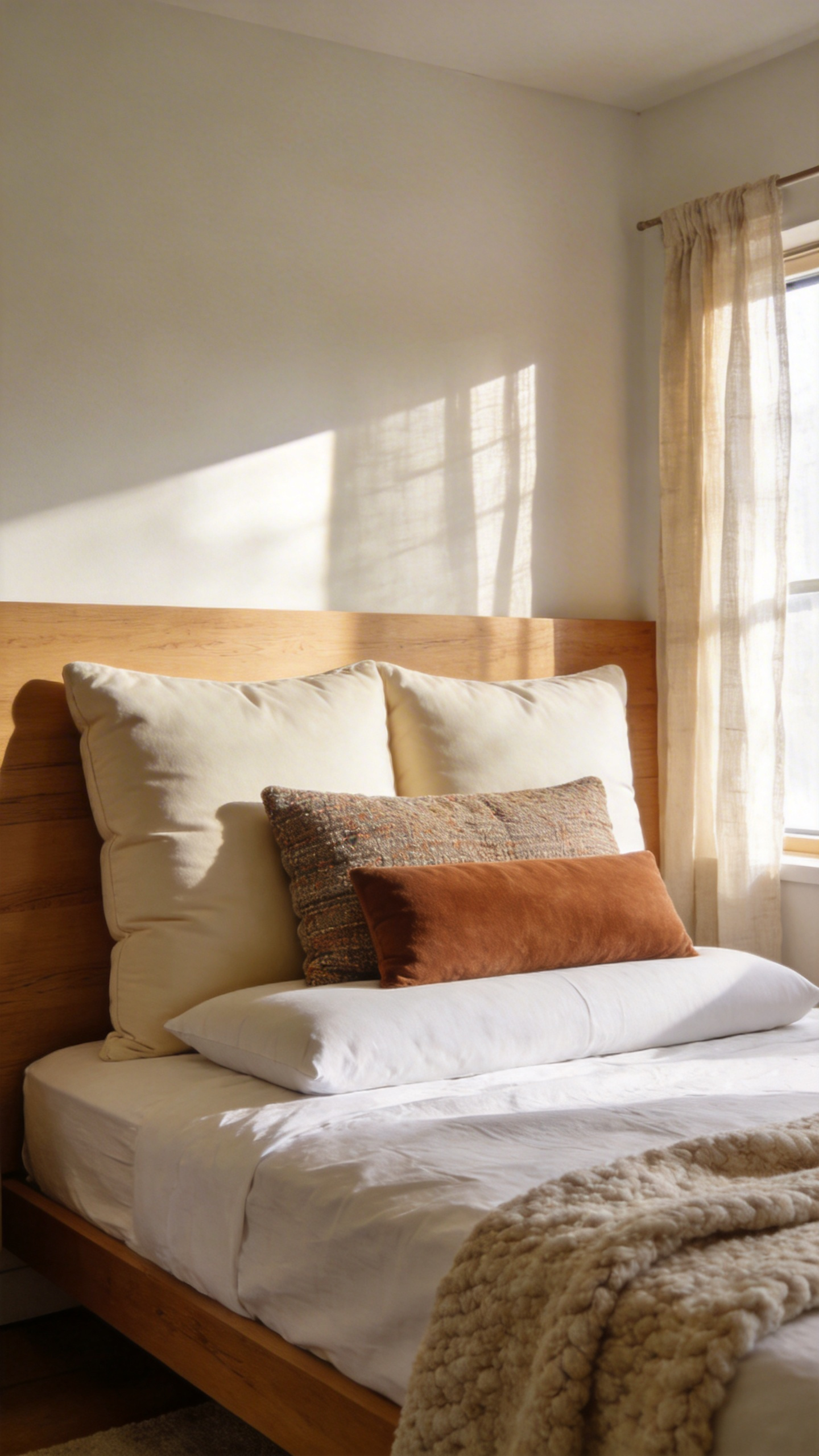
However, managing sleeping pillows is often challenging. Therefore, adopt the “Horizontal Stack” method. Simply lay sleeping pillows flat rather than propping them up. This technique hides lumpy or yellowed inserts while providing a level platform. Your decorative cushions sit neatly on top, making the morning arrangement a quick task.
Next, consider the “2-Inch Rule” for those decorative accents. Frequently, budget decorators match the insert size to the cover. Instead, buy an insert two inches larger than your pillowcase. This “Upsize Hack” fills corners completely, creating a plush, high-end appearance.
Finally, focus on texture and the “Karate Chop.” Research suggests that nesting in soft textures lowers cortisol. Yet, you cannot chop cheap polyester. Invest in one down-alternative pillow for the front. This allows for that lived-in indentation. This approach turns a basic bed into a safe, sensory retreat.
5. Weighted Blankets and Faux Fur: Adding tactile comfort for better sleep
True comfort requires more than just visual appeal. It involves distinct physiological changes. Weighted blankets utilize a therapeutic technique called Deep Pressure Stimulation (DPS). By applying gentle weight, these blankets shift your nervous system from stress to rest. Consequently, your body releases serotonin and melatonin naturally. However, the experience is incomplete without the right texture.
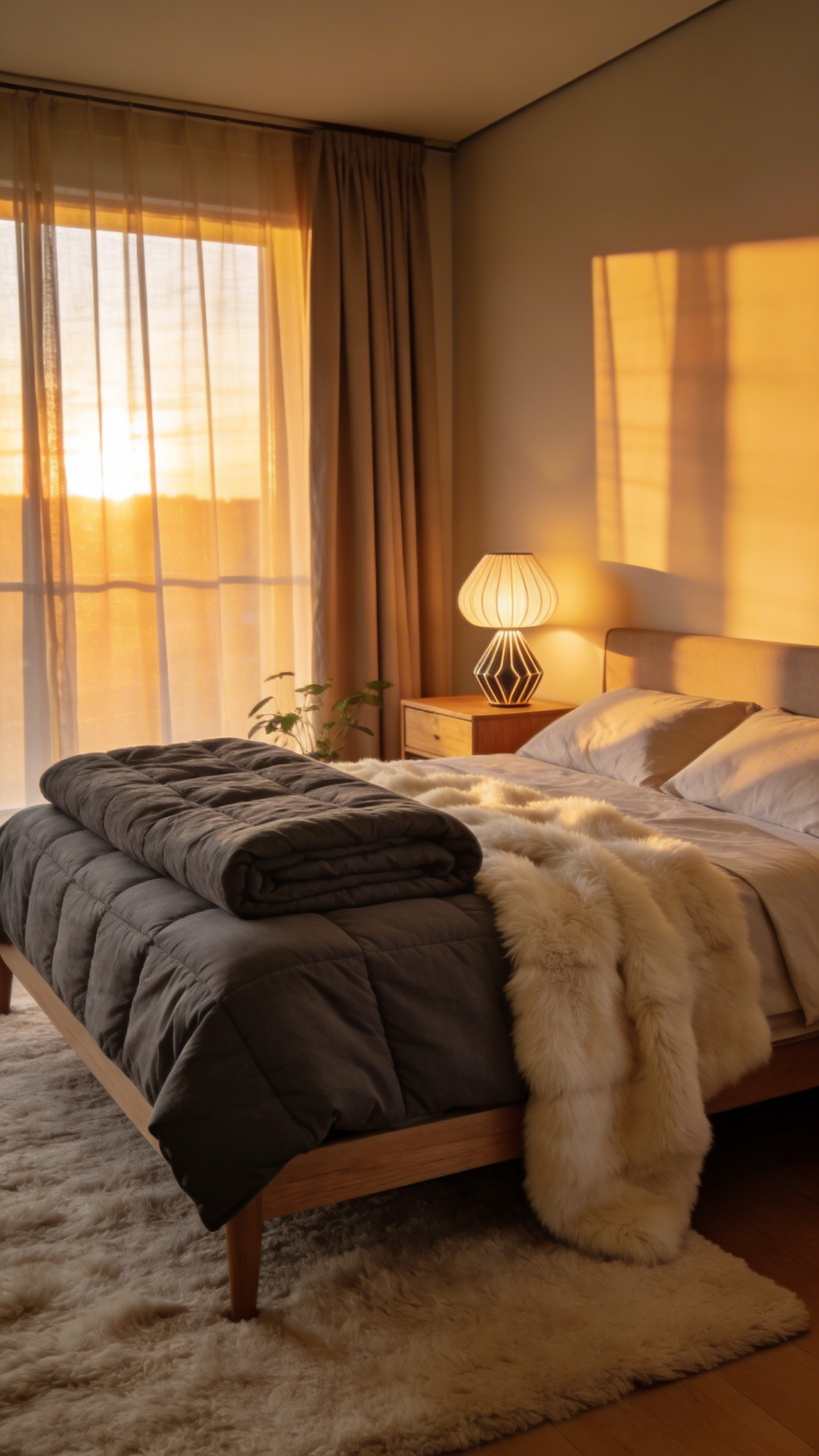
Adding faux fur introduces a concept known as “tactile security.” Ancestrally, humans associate soft, shaggy textures with safety. Touching these plush fibers triggers oxytocin, the “cuddle hormone.” Simultaneously, the blanket’s heaviness provides a firm “hug” while the fur offers a soothing “stroke.” This multi-sensory approach effectively quiets a busy mind.
From a design perspective, this combination adds essential “tactile layering.” The heavy drape creates a sculptural, grounded look on your bed. To maximize this effect, pair chaotic fur textures with crisp cotton sheets. Furthermore, modern dual-sided designs prevent overheating by allowing necessary breathability.
Finally, protecting this investment requires specific care methods. High heat is the enemy of synthetic fur. Never place these blankets in a dryer. Instead, rely on spot cleaning or removable covers to handle the weight. Occasionally, use a wide-tooth comb to fluff the fibers. This maintenance preserves both the look and the therapeutic benefits.
Phase 2: Setting the Mood (Lighting & Ambience)
Lighting often acts as the silent protagonist in any well-designed bedroom. To truly transform a space, move beyond generic advice about warm bulbs. Modern design prioritizes Biophilic design, which mimics the sun’s natural, dynamic arc. Instead of static brightness, look for “warm-dim” LED technology. These smart bulbs shift from a functional 3000K to a candle-like 1800K as they dim. This transition signals your brain to release melatonin, preparing you for rest by aligning with your circadian rhythm.
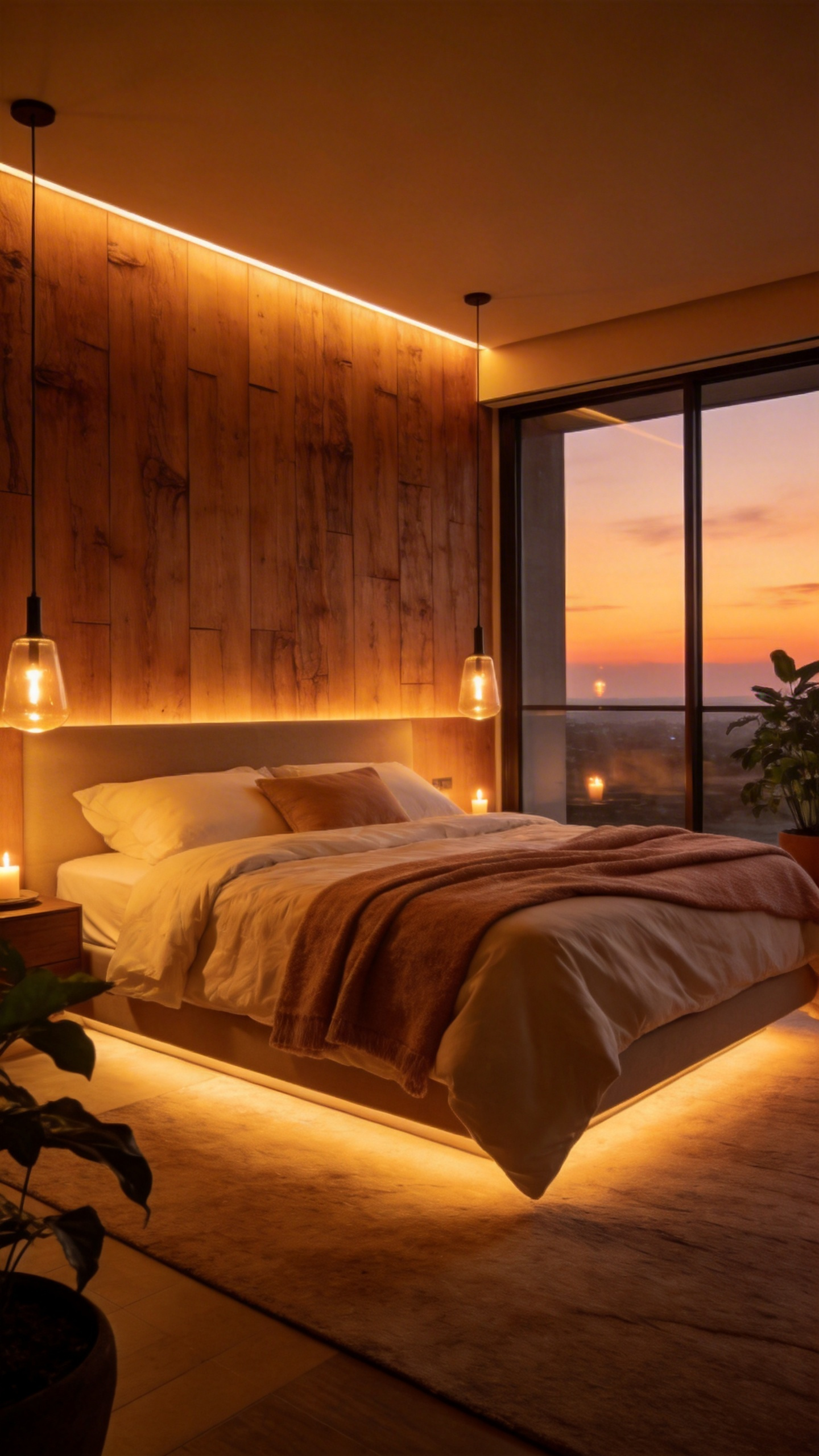
Beyond color temperature, placement dictates the psychological safety of the room. Environmental psychology suggests humans crave “refuge” within their spaces. Avoid relying on a central overhead fixture that flattens the room visually. Instead, create distinct “islands” of light using low sconces or floor lamps. This technique, known as pooling, keeps illumination below eye level for an intimate feel.
Furthermore, shadows are just as important as the light itself. By placing lamps near textured surfaces like curtains, you create a “wall grazing” effect. This reveals the grain of the room, adding three-dimensional depth. Finally, choose your lampshades carefully. Materials like natural linen or Washi paper scatter harsh photons effectively. The light “whispers” rather than shouts, ensuring the atmosphere remains soft and restful.
6. Banishing the ‘Big Light’: Why overhead lighting kills the cozy vibe
The ubiquitous flush-mount dome isn’t actually a superior design choice. In reality, its dominance stems from economic convenience and outdated “value engineering.” Historically, builders utilized central fixtures simply to meet electrical codes cheaply. They prioritized speed over atmosphere. Consequently, this top-down approach creates a clinical, flat illumination that destroys a room’s character.
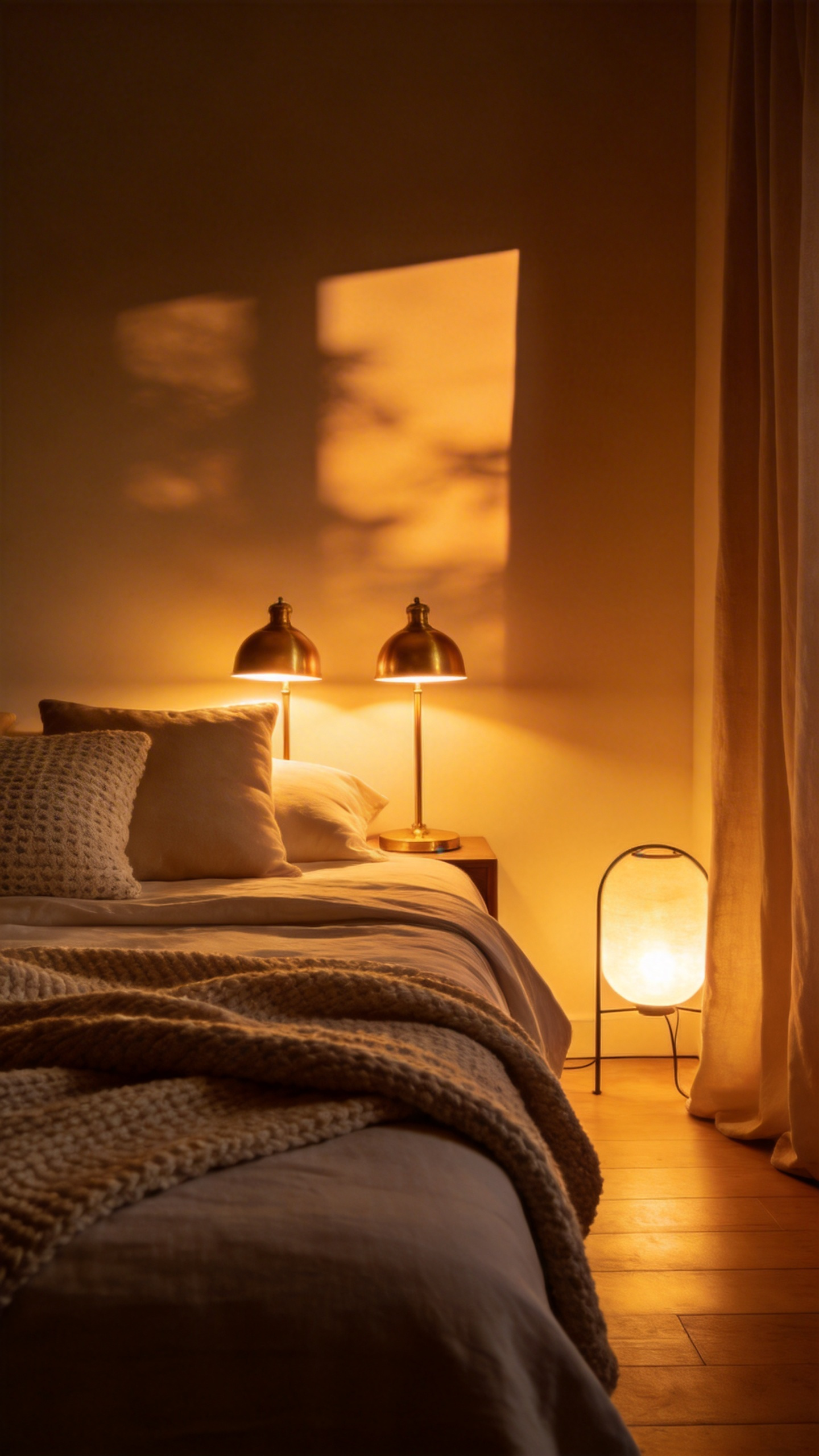
From an artistic perspective, coziness relies entirely on the interplay of light and shadow. Overhead lighting casts beams straight down, effectively erasing natural shadows. Therefore, distinct textures like velvet headboards or chunky knit throws appear washed out and two-dimensional. Furthermore, builder-grade bulbs often lack the necessary color spectrum to render warm tones accurately. Wood furniture can look muddy, and skin tones may appear grey.
Beyond aesthetics, the “Big Light” disrupts your internal clock. Biologically, our eyes interpret overhead brightness as midday sun. This triggers alertness. Specifically, this “continuous twilight” suppresses melatonin production right when you need to sleep. In contrast, light positioned at eye level mimics a campfire or setting sun. Thus, it signals the body to wind down.
Psychologically, a central light forces the entire room onto a “public stage.” Instead, aim for “pools of light” using lamps. This technique allows the room’s corners to recede into soft shadow. Banishing the overhead fixture reclaims your bedroom as a restful sensory sanctuary.
7. Warm Glow Only: Choosing the right Kelvin temperature (2700K) for bulbs
Creating an authentically cozy bedroom requires more than just installing dimmers. The secret lies in the physics of color temperature. For restorative spaces, 2700 Kelvin (2700K) is the absolute sweet spot. Historically, this specific temperature mimics the warm glow of traditional tungsten filaments. Consequently, it supports your body’s circadian rhythm far better than cooler options.
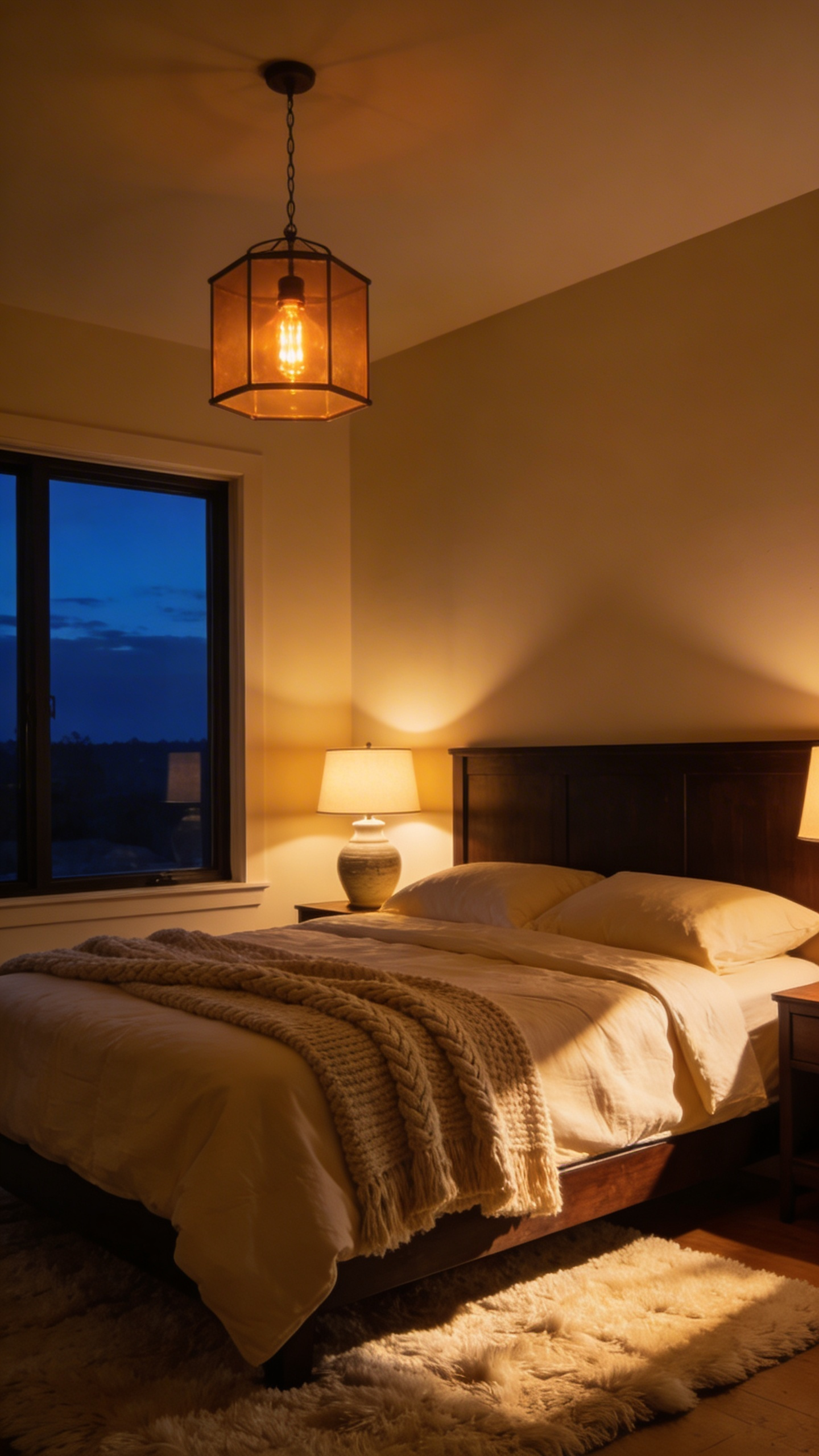
Many modern “warm white” bulbs actually measure around 3000K. However, that slightly crisp light signals alertness. This potentially prevents deep mental relaxation. Instead, 2700K acts as a visual filter for your room’s natural materials. It physically softens sharp architectural corners and warms up wood grains. Ensure your chosen bulb lists a CRI of 90+. A low CRI makes colors look muddy or strangely sickly. In contrast, high CRI bulbs keep linen bedding and skin tones vibrant.
Finally, consider investing in “dim-to-warm” LED technology for the bedside. Standard LEDs often feel grey and eerie when dimmed to low levels. These advanced bulbs shift down to a honey-hued 2200K. Ultimately, this mimics the effect of candlelight, turning your room into a true sanctuary.
8. The Magic of String Lights: Not just for dorm rooms (adult styling tips)
String lights often suffer from a collegiate reputation. However, when styled correctly, they offer sophisticated ambiance. The secret to this transition lies primarily in color temperature. Professionals strictly adhere to a 2700K limit. Anything cooler mimics the midday sun, inadvertently suppressing melatonin. Stick to warm amber tones for a restorative atmosphere. This creates a “golden hour” glow rather than a harsh glare.
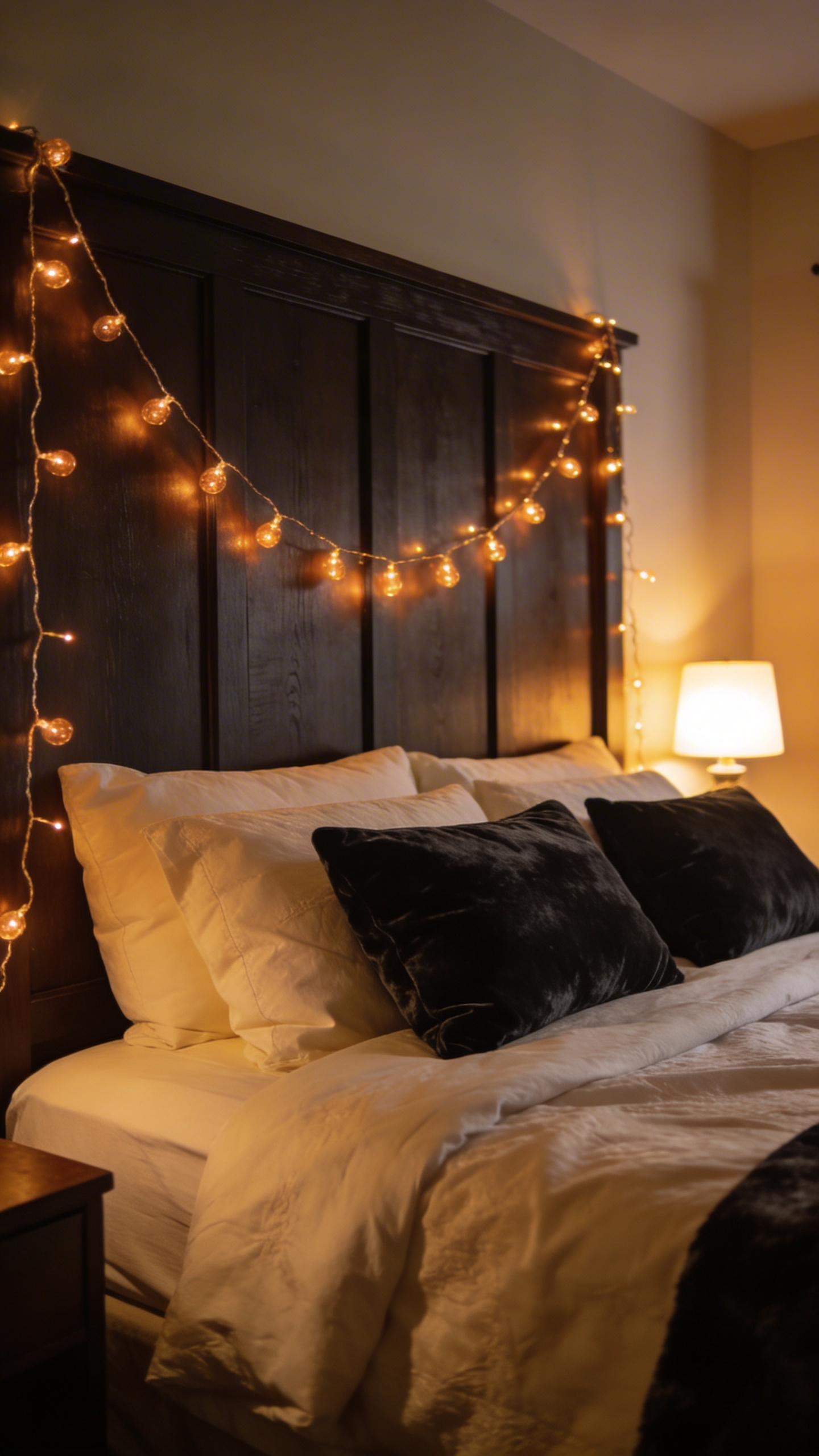
Next, rethink your installation strategy. Rather than haphazard draping, use lights to anchor architectural elements. For example, run a taut line along a ceiling beam. Alternatively, frame your headboard to create a deliberate focal point. Upgrade your hardware. Swap clear tape for small brass hooks or matte clips. Additionally, consider diffusing the glare. Placing lights behind sheer linen curtains transforms harsh bulbs into an ethereal glow.
Materiality also separates holiday leftovers from permanent design. Currently, designers favor “firefly” lights on bendable copper wire. These act as metallic accents even when unlit. Conversely, for a bolder look, opt for glass-encased Festoon bulbs. Finally, discipline your power cords. A visible black wire snaking down a wall immediately ruins the aesthetic. Hide leads behind furniture or paint cord covers to match the wall. This attention to detail elevates the look completely.
9. DIY Dimmable Ambience: Using smart plugs and budget lamps
Achieving a high-end hotel atmosphere often relies on lighting strategy. When you design a bedroom that feels like a spa, lighting is the primary sensory driver. Creating a “dimmable ambience” is the cornerstone of modern cozy design. Historically, scenic lighting required expensive custom wiring. However, smart technology has democratized this luxury, allowing renters to transform spaces instantly. The secret lies in mimicking the natural “Golden Hour.”
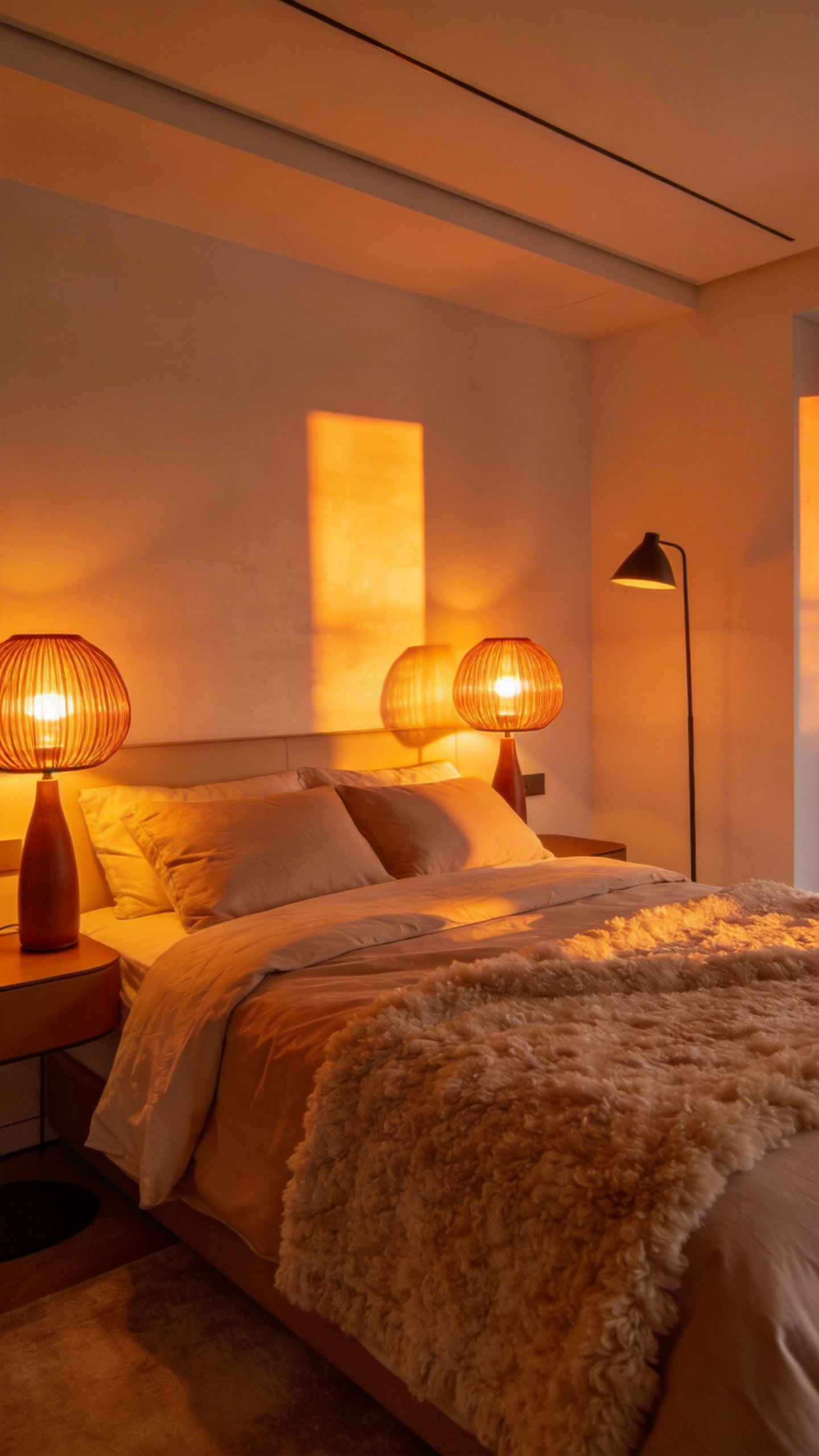
Biologically, exposure to warm light between 2000K and 3000K signals the brain to produce melatonin. The “sterile” blue light of standard bulbs stimulates alertness. Therefore, selecting the right color temperature is critical for sleep hygiene. Next, you must control the intensity. A common pitfall is assuming any smart plug can dim a lamp. In reality, standard smart plugs are binary switches. You need specialized smart *dimmer* plugs or smart bulbs to physically lower the voltage.
Furthermore, the hardware interacts deeply with your decor. Fabric shades act as diffusers, softening the light to eliminate glare. Similarly, rice paper lanterns provide a budget-friendly “omni-directional” glow that fills visual corners. Without these textures, clear glass lamps often cause uncomfortable “retinal ghosting.”
Finally, move beyond simple switches by creating “scenes.” Instead of abrupt darkness, program a digital “Goodnight” routine. Specifically, a ten-minute slow fade mimics a natural sunset. This gradual transition keeps the nervous system in a restful state. Layering budget lamps with smart tech creates a custom sanctuary for under $100.
10. Scent-scaping: Using soy candles or diffusers to add an olfactory layer
Scent-scaping, often termed “invisible architecture,” transforms a bedroom from a simple room into a true sanctuary. Originally, this strategy defined luxury retail spaces. It now serves a vital residential function. It helps create psychological partitions between high-energy living areas and zones of rest. Because smell links directly to the limbic system, a unique bedroom fragrance acts as an immediate “on-off switch” for the nervous system.
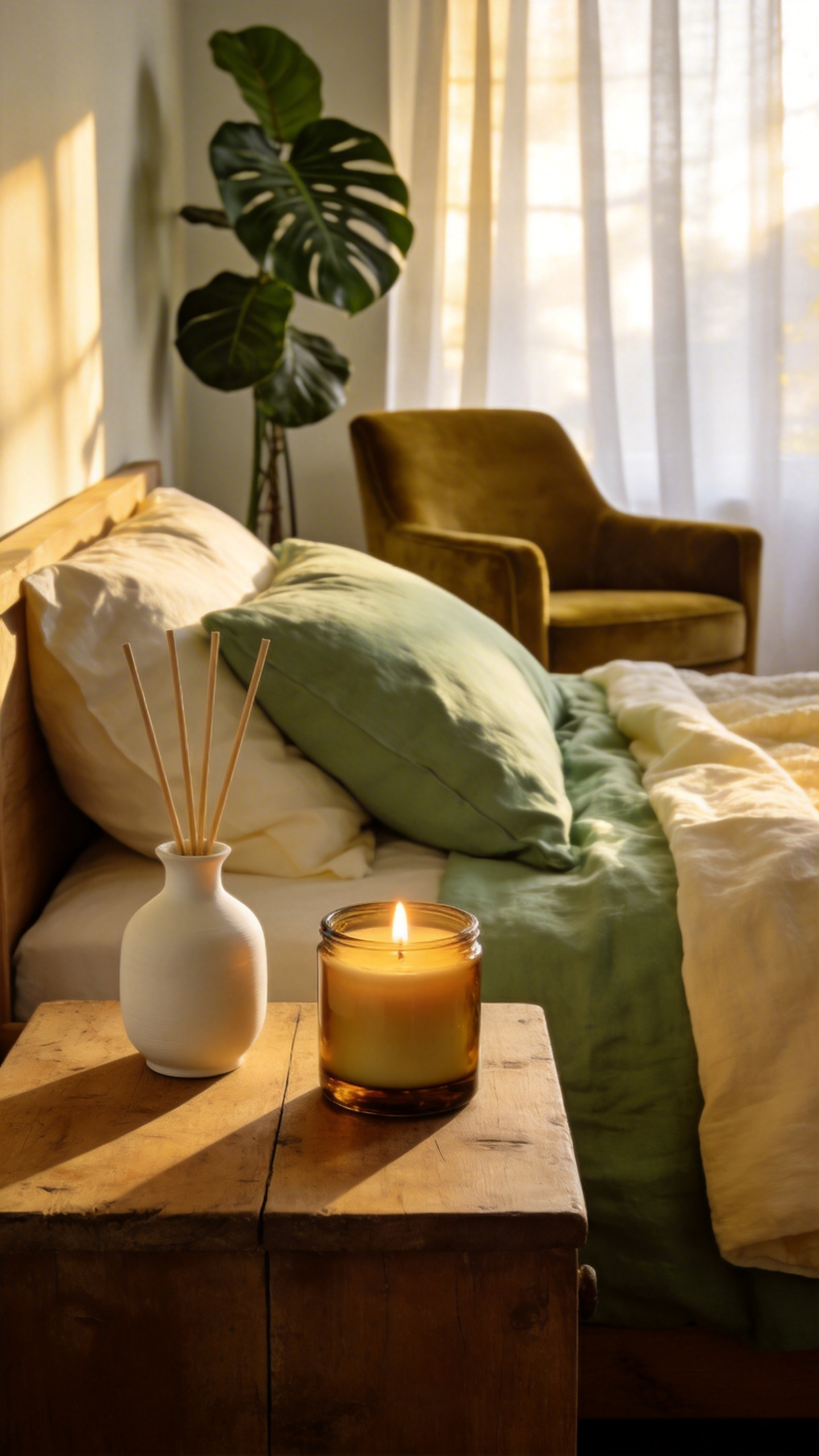
To achieve this effectively, experts recommend a “fragrance ladder” approach. Avoid a single overwhelming smell. First, establish a foundation with reed diffusers placed near the doorway. Base notes like sandalwood or amber provide a consistent background hum that settles into textiles. Then, introduce a soy candle as an atmospheric highlight. Unlike passive diffusers, the candle adds visual warmth and releases complex “heart” notes like lavender or rose.
Notably, the material you burn is non-negotiable for a sleeping environment. While paraffin is petroleum-based, soy wax offers a clean burn free from soot or volatile organic compounds. Furthermore, soy’s lower melting point allows essential oils to evaporate slowly. This lasts up to 50% longer than traditional wax.
Finally, you must manage “olfactory fatigue” to keep the space inviting. Naturally, the brain tunes out consistent smells over time. Place diffusers and candles in different corners to create distinct “scent pockets” rather than a wall of fragrance. Additionally, rotate your core scent profile every few months. Align your fragrance with the seasons to ensure the atmosphere remains fresh and functionally relaxing.
Phase 3: Personalization & Warmth (DIY & Decor)
Transforming a room into a sanctuary requires more than just shopping. Fundamentally, this phase is about environmental control. In psychology, “nesting” helps lower cortisol levels by marking your territory. Personalization serves as a vital tool for emotional resilience.
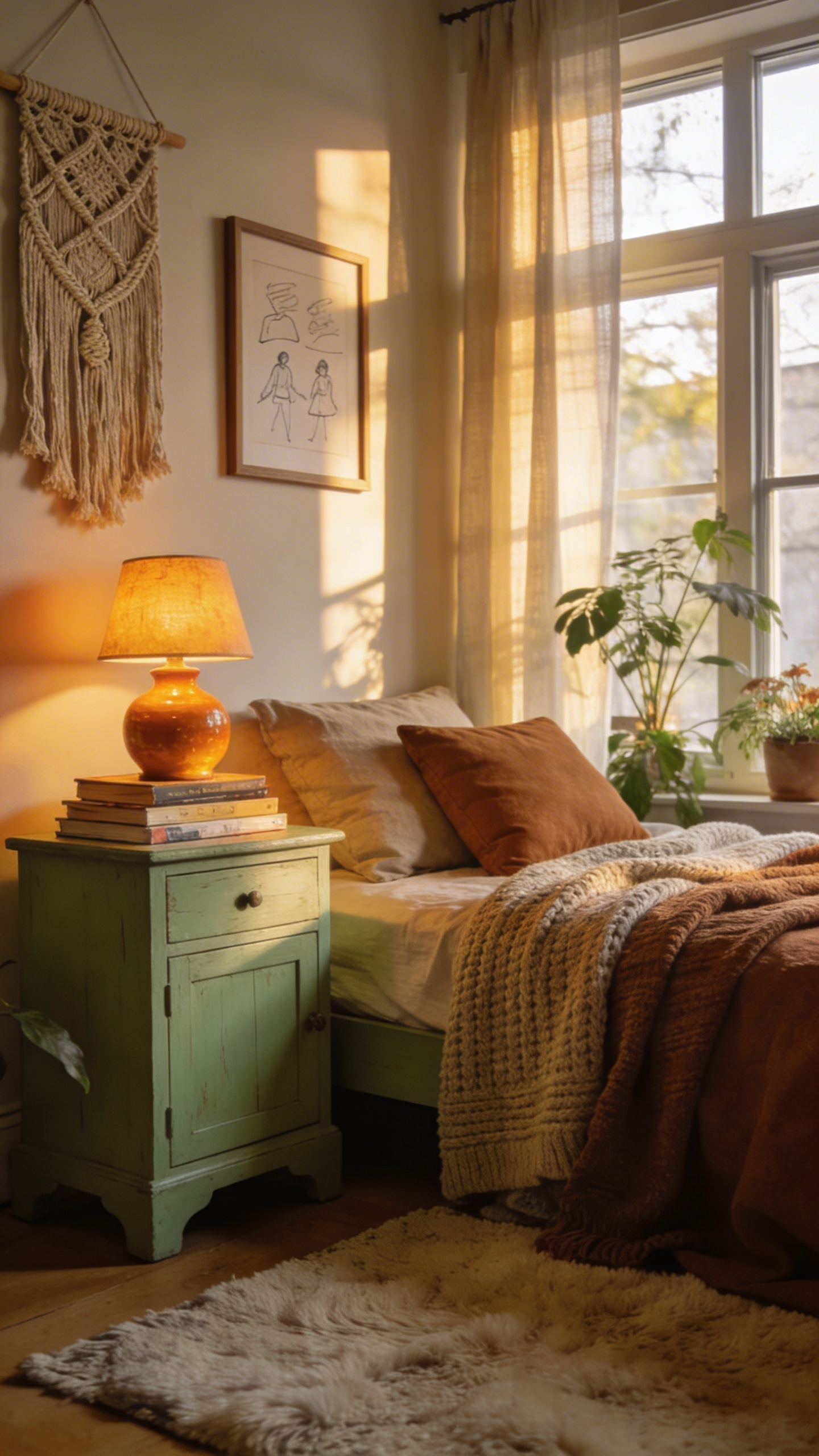
Incorporating DIY elements creates a deep sense of ownership. Experts call this the “IKEA Effect.” We value objects significantly more when we create them ourselves. Consequently, a hand-painted nightstand carries more emotional weight than a generic luxury purchase. These small imperfections provide a necessary human touch.
However, visual decor is only half the battle. True warmth relies on “sensescaping,” particularly through texture layering. You must layer tactile contrasts to achieve a cozy atmosphere. For instance, mix coarse jute rugs with absorbent velvet throws. Introduce reflective accents like gold or glass to bounce soft light.
Finally, lighting acts as the glue for these diverse elements. To mimic the “Golden Hour,” strictly use bulbs between 2700K and 3000K. This specific spectrum triggers melatonin production, naturally signaling rest. Ultimately, your bedroom should feel like a curated “soul corner,” not a sterile showroom.
11. The DIY Upholstered Headboard: A weekend project under $100
A headboard is much more than a decorative backdrop. In fact, it serves as a critical functional anchor for rest. Historically, these upholstered pieces were known as “stuffers.” They provided essential thermal insulation against cold stone walls. Today, they still offer a powerful “cocooning” effect for sleepers. Specifically, the soft surface acts as an acoustic “bass trap.” This effectively absorbs room echoes that might otherwise disturb deep sleep. Thus, a padded headboard creates a psychological boundary for relaxation.
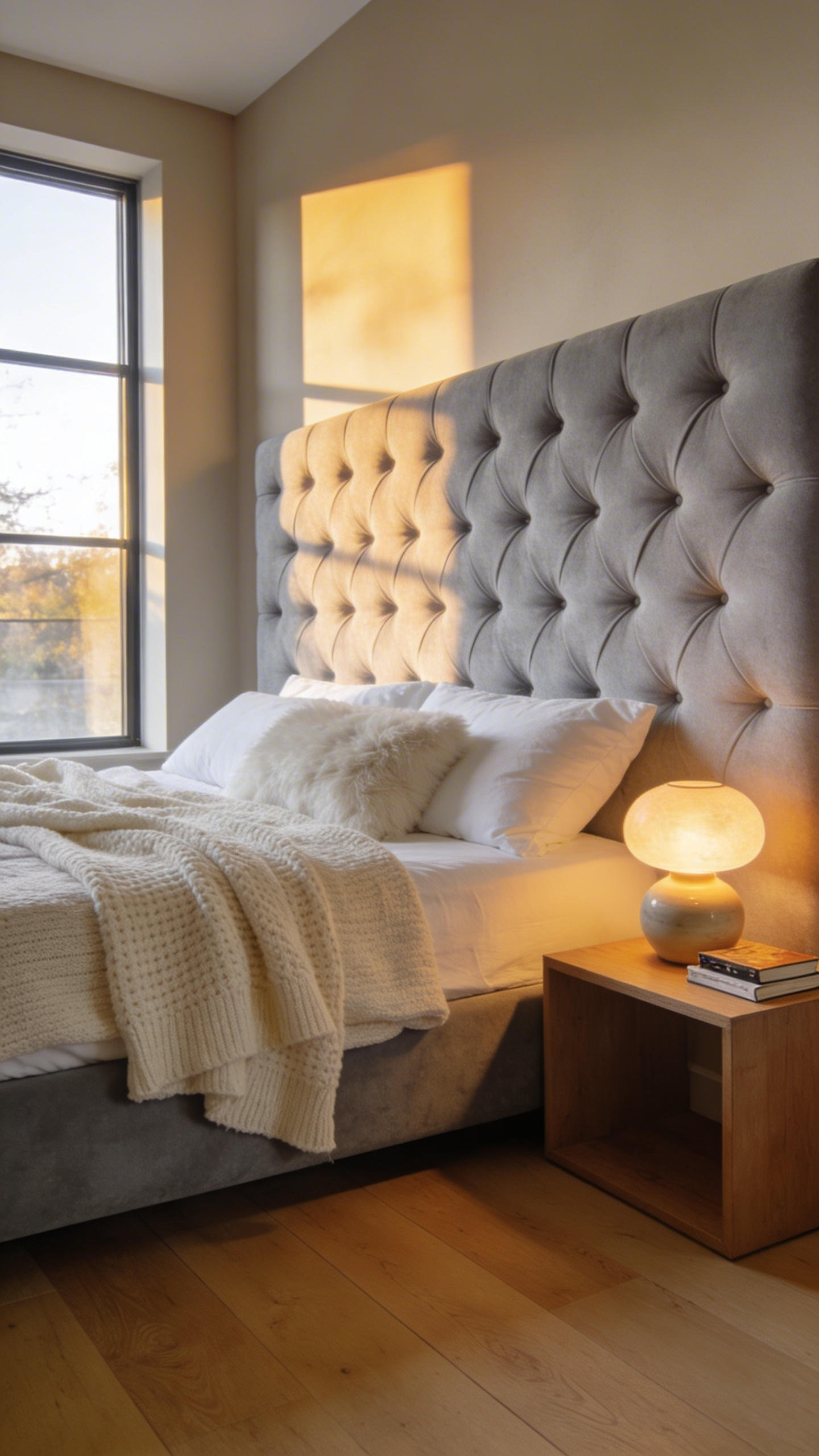
Building this sanctuary does not require a professional budget. You can achieve a bespoke look for under $100. First, swap expensive plywood for 1/2-inch MDF. It provides a smoother surface that won’t warp over time. Next, utilize a clever foam hack. Instead of pricey upholstery foam, use a twin-size egg-crate mattress topper. Placed ridge-side down, it mimics high-end plushness for a fraction of the cost. Do not skip the polyester batting. This affordable layer acts as a crucial lubricant. It allows your fabric to slide smoothly without bunching.
Finally, select a forgiving fabric like performance velvet. Its thick weave hides uneven staples, which is ideal for beginners. When attaching the fabric, use a “present wrap” technique. Pull the corners at a 45-degree angle before stapling. This creates a tension field that prevents sagging. This weekend project offers luxury comfort without the luxury price tag.
12. Creating a ‘Pause’ Point: Carving out a reading nook in a small corner
In a small bedroom, the bed dominates the visual landscape. However, carving out a dedicated reading nook creates a necessary psychological shift. We call this a “pause” point. Historically, this concept mimics the “inglenook,” a cozy recess designed for warmth and intimacy. Consequently, the nook functions as a boundary marker. It signals your brain to transition from the day’s “doing” state to a relaxed “being” state.
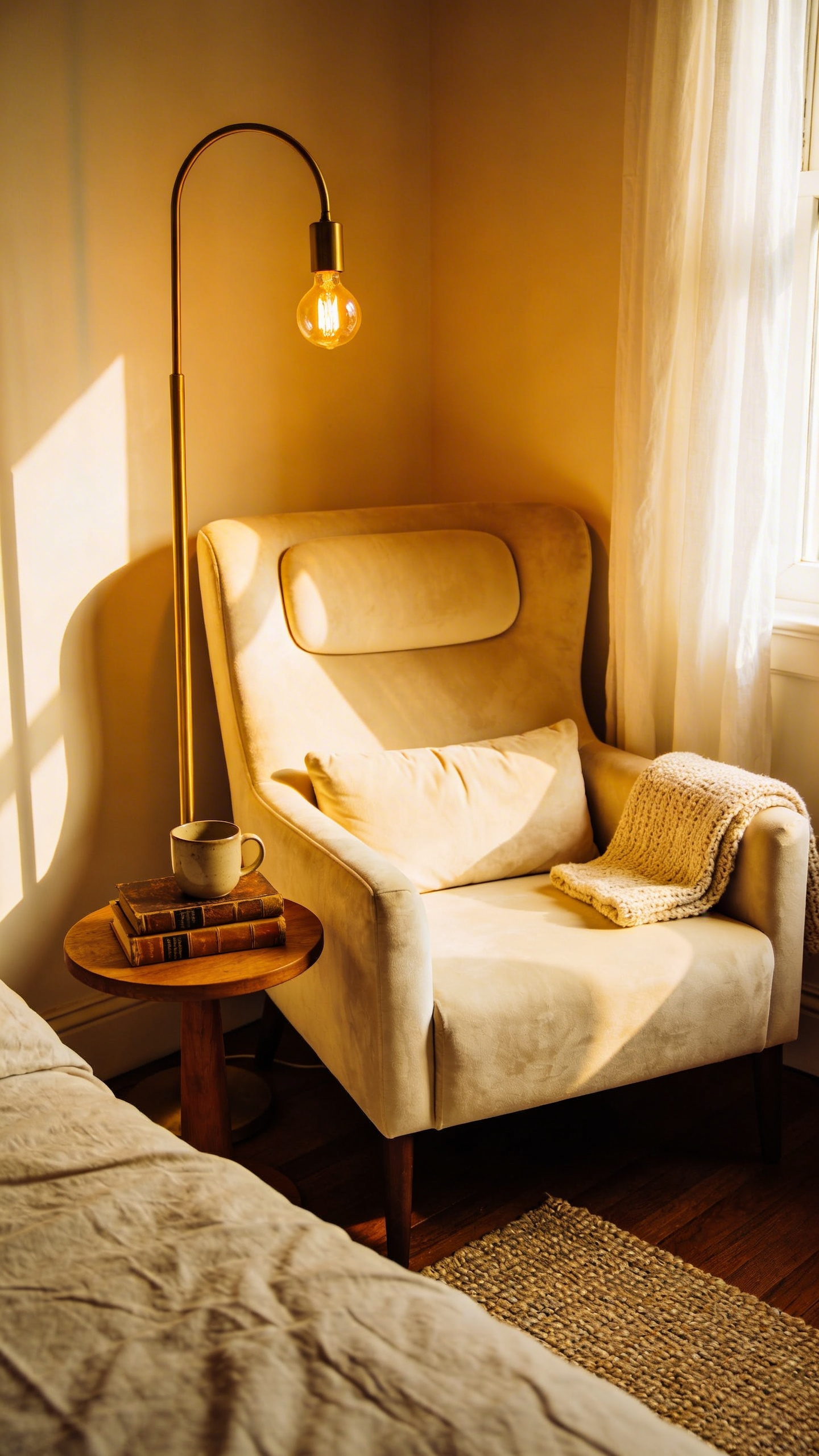
To achieve this, focusing on ergonomics is essential. Prioritize seat depth over width. A chair with at least 22 inches of depth allows for curling up comfortably. Furthermore, a slight backward tilt physically forces your muscles to disengage. You feel an immediate sense of relief upon sitting.
Next, consider the lighting temperature carefully. For a true sanctuary vibe, stick to the 2700K rule. These warm white bulbs mimic candlelight’s amber tones. They protect melatonin production better than stark, daylight-balanced bulbs. Additionally, use a directional task lamp to create a focused “pool of light.” This technique casts the rest of the room in soft shadow. Therefore, the corner feels secluded, private, and secure.
Finally, treat this space as a “digital sabbath.” Exclude screens entirely to maintain the atmosphere. Instead, include a small surface for a physical book or a cup of tea. This sensory ritual trains your brain to enter a flow state instantly.
13. Bringing the Outside In: Low-light plants that add life and warmth
Incorporating greenery into a bedroom does more than fill empty corners. Plants serve as living sculptures that calm the sympathetic nervous system. For example, the Snake Plant acts as a functional “sleep companion.” Uniquely, it releases oxygen at night through Crassulacean Acid Metabolism. Furthermore, its vertical, architectural shape creates a striking contrast against soft pillows. Historically, this plant symbolized protection in West African cultures, adding a sense of security to your sanctuary.
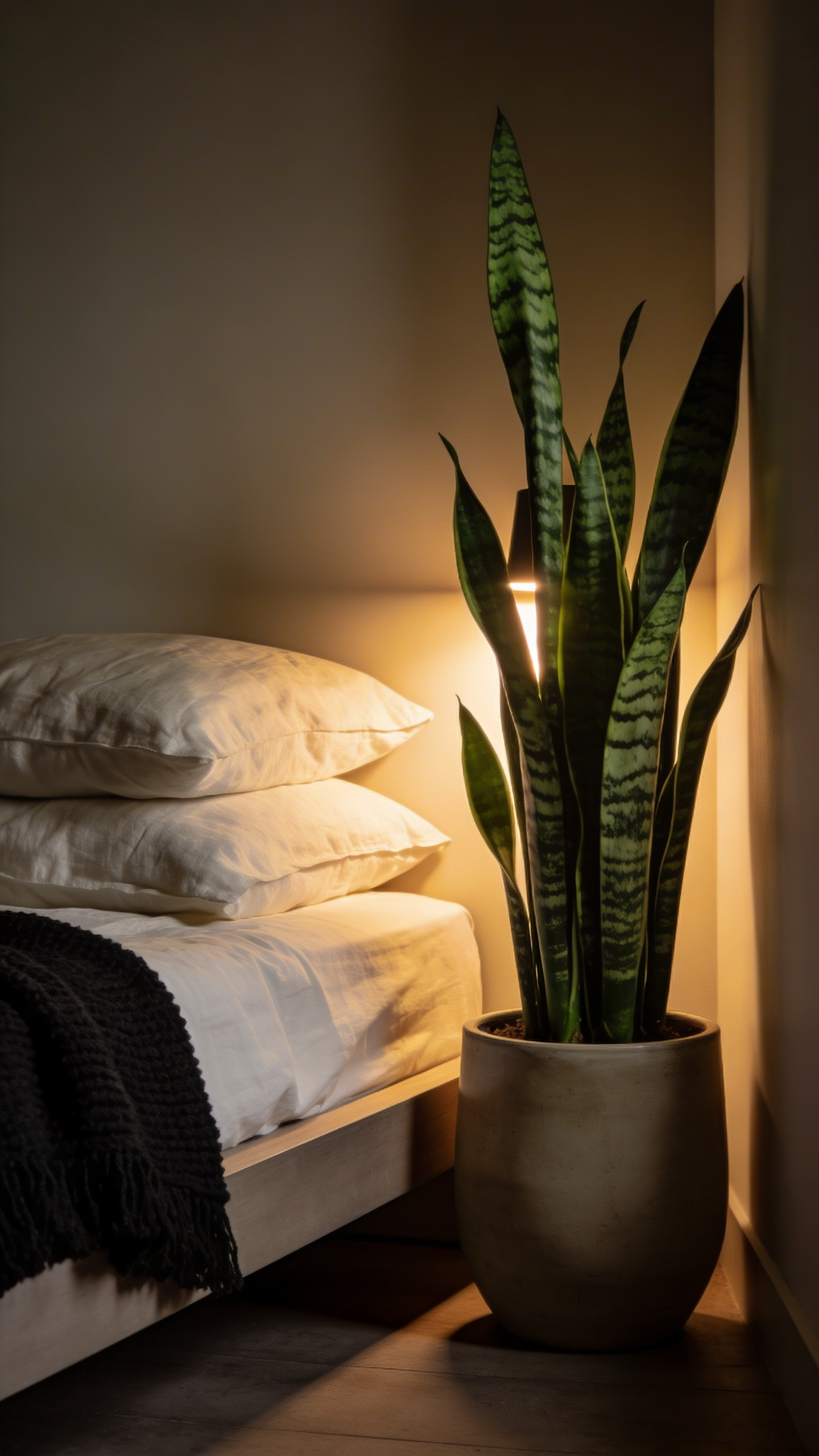
Alternatively, consider the Cast Iron Plant for a moodier aesthetic. Notably, it survived the harsh coal fumes of Victorian parlors. Consequently, its matte, deep-green foliage absorbs light, grounding the space with a quiet presence. Conversely, the ZZ plant brings a polished, modern energy. Its waxy leaves act like micro-mirrors, catching and reflecting warm lamplight.
However, the vessel is just as crucial as the foliage for creating warmth. Choose unglazed terracotta to introduce an earthy, sunset hue. This material is porous, helping prevent root rot in dimmer environments. Technically, these plants survive in just 50 to 150 foot-candles. Nevertheless, giving them occasional “light baths” near a window ensures they truly thrive. These botanical elements transform a simple bedroom into a restorative oasis.
14. Paint It Warm: Swapping sterile white for ‘Greige’, Terracotta, or Sage
For years, stark white walls defined modern interior design. However, this aesthetic often feels clinical rather than restful. We are seeing a shift away from “chromophobia” toward warmer, earthier tones. Specifically, designers now favor “dirty neutrals” that create a “biophilic cocoon.”
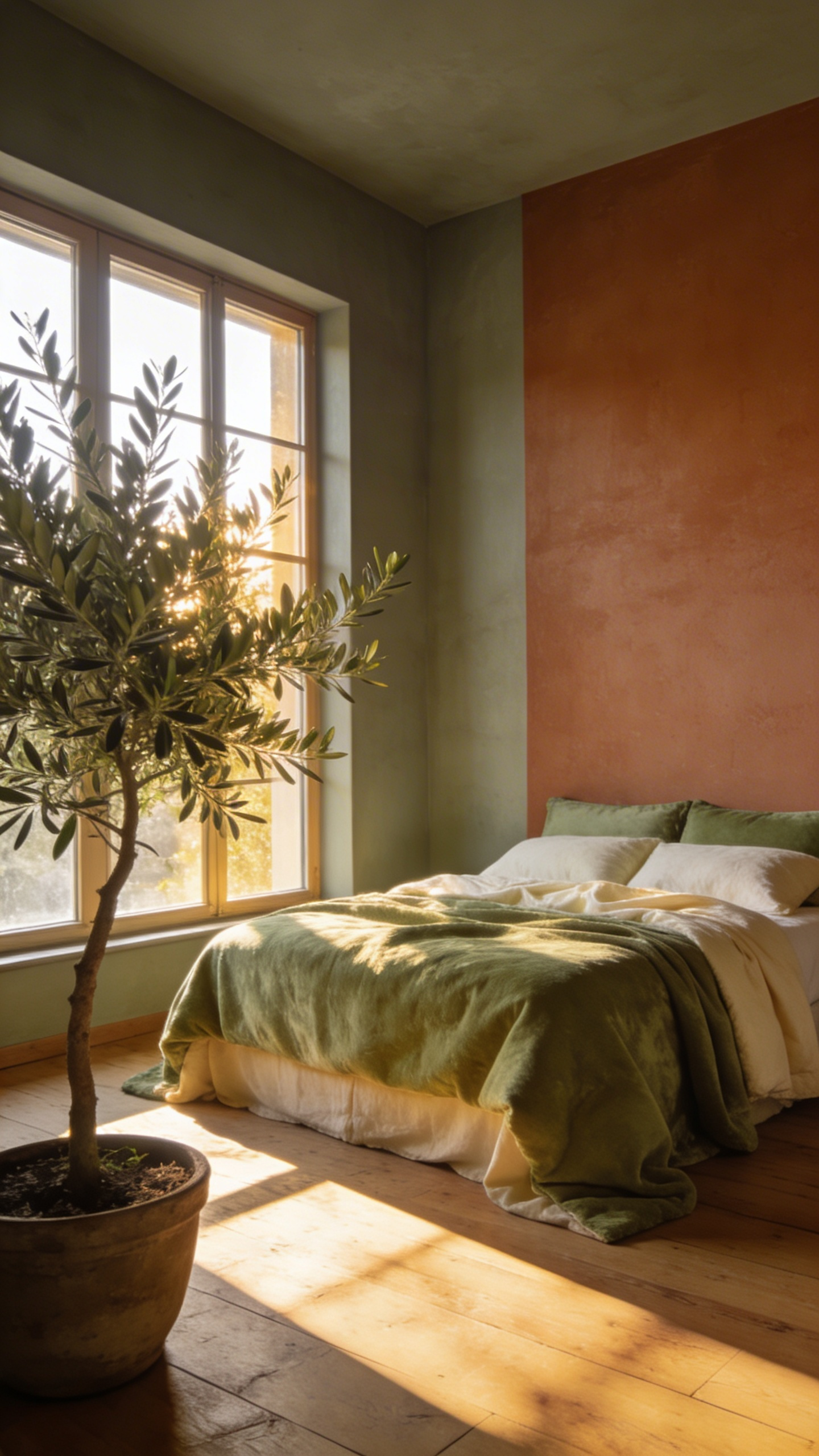
“Greige” is the most practical entry point into this trend. This blend of gray and beige acts as a diplomatic neutral. Under cool morning light, it maintains a sophisticated edge. Conversely, warm evening lamps transform it into a cozy, soft backdrop. It bridges the gap between modern minimalism and comfort.
Alternatively, sage green offers a distinct physiological advantage. Research suggests this muted hue acts as a “visual sedative.” It mimics dusty foliage, lowering the heart rate more effectively than high-sheen white. Thus, it turns the bedroom into a sanctuary of safety and abundance.
For those seeking depth, terracotta provides immediate grounding. Unlike bright orange, this “baked earth” tone adds necessary visual heat. As a result, the space feels physically warmer, particularly during winter. However, success depends on your lighting choices. Standard daylight bulbs can make these colors look muddy. Switch to 2700K bulbs to enhance the natural pigments. This attention to detail ensures your walls feel intentional and inviting.
15. Window Dressings: Heavy drapes for insulation and ‘cocooning’
Window dressings function as more than simple decoration. In fact, they act as vital architectural tools for comfort. Historically, heavy curtains effectively managed drafts in cold stone structures. Consequently, this creates a psychological sense of “refuge” in modern bedrooms. By walling off the outside world, you allow your brain to rest.
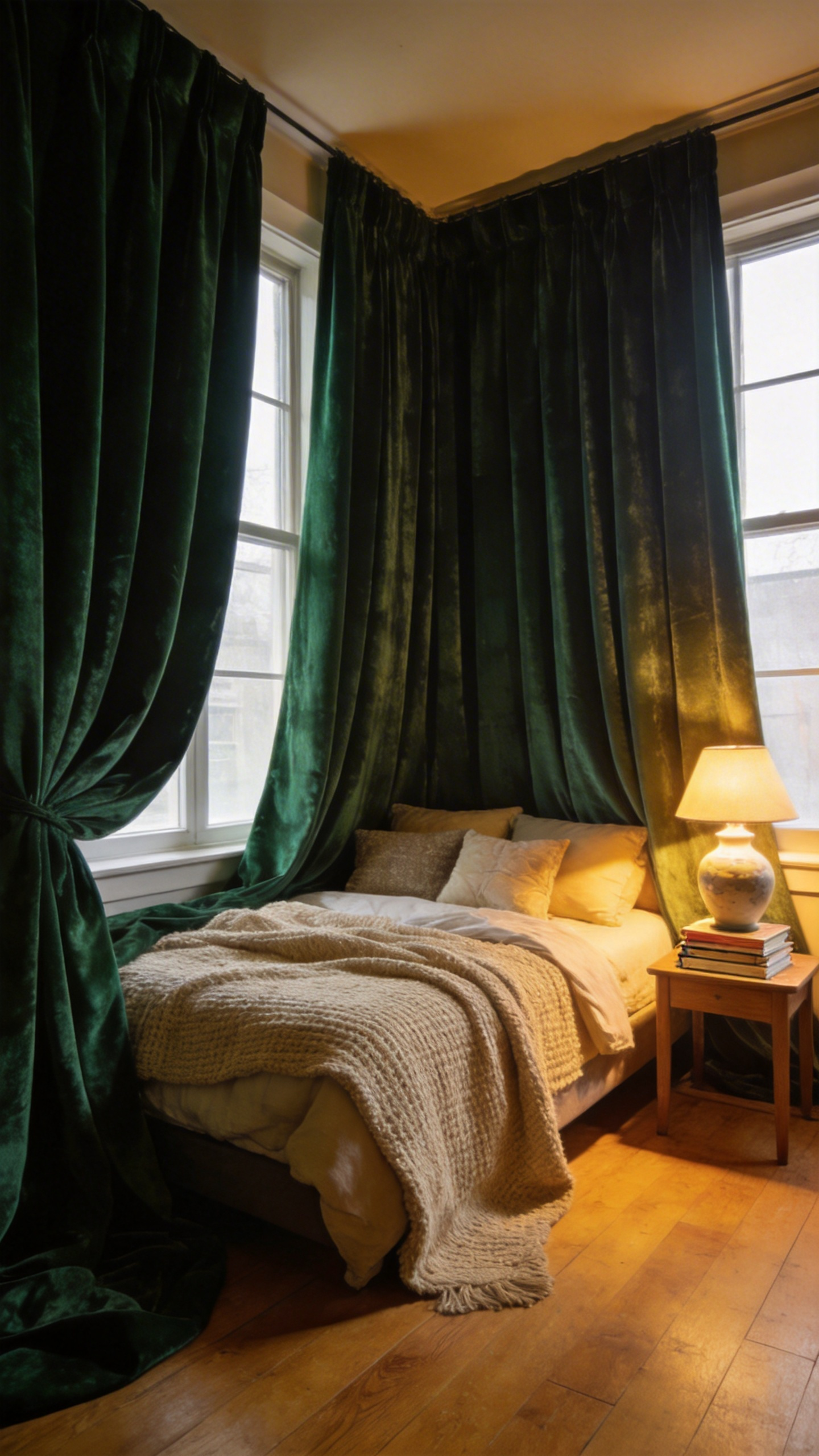
From a practical standpoint, windows often represent a room’s weakest thermal link. A standard pane of glass offers minimal insulation. However, adding heavy, lined drapes significantly boosts thermal resistance. This fabric barrier effectively traps warm air inside. Therefore, it prevents the chilly “convection loops” that feel like drafts.
Furthermore, true coziness requires managing sound alongside temperature. Textures like velvet or chenille naturally absorb auditory “noise.” Technically, this dampening effect creates a quieter environment for sleep. You avoid the “startle response” caused by sharp exterior sounds.
To achieve this luxurious “cocoon” effect, prioritize fabric volume. Ideally, aim for curtains that are double the width of your window. This “fullness” creates deep, rhythmic folds that trap heat efficiently. Additionally, consider allowing the fabric to “puddle” slightly on the floor. This technique seals the gap at the bottom to prevent airflow.
Finally, treat the closing of the drapes as a nightly ritual. The physical weight of the fabric signals the day is done. This simple action transforms your bedroom into a secure, silent sanctuary.
16. The Vintage Touch: Repurposing thrifted wood furniture for rustic charm
In a cozy bedroom, the appeal of thrifted wood goes beyond simple aesthetics. The attraction is deeply psychological. Unlike modern synthetic finishes that feel cold, aged wood possesses a warm “patina.” This surface transformation offers a tactile softness that signals the brain to relax. Consequently, incorporating pieces with “honest wear” embraces the philosophy of *Wabi-sabi*, or finding beauty in imperfection.

Furthermore, the specific wood species matters significantly for lighting. Softwoods, like pine, naturally absorb light rather than reflecting it. They help create a dim, cocoon-like atmosphere essential for rest. Conversely, hardwoods like oak provide necessary visual weight to ground the space. To enhance this rustic charm, consider stripping away shiny, dated lacquers. Instead, apply milk paint or natural beeswax. These finishes bond with the fibers rather than sitting on top. Additionally, natural oils introduce an earthy, honey-like scent that triggers our “nesting” instinct.
Finally, balance is crucial to prevent the room from feeling like a dusty museum. Apply the “80/20 rule” to your design layout. Simply mix 80% vintage textures with 20% crisp, modern linens. A repurposed armoire or chest adds history without sacrificing your modern comfort.
Frequently Asked Questions
How do you make a bedroom feel cozy but luxurious?
To achieve a luxury feel while maintaining coziness, focus on high-quality natural fibers like long-staple cotton or linen and layer them with rich textures like velvet or faux fur. Incorporating a “double duvet” hack and professional pillowscaping creates the voluminous, high-end hotel look that homeowners desire.
What is the best lighting temperature for a cozy bedroom?
The ideal color temperature for a cozy bedroom is 2700 Kelvin (2700K). This warm, amber-toned light mimics the glow of a sunset or candlelight, which helps regulate the circadian rhythm and promotes the production of melatonin for better sleep.
Can a small bedroom be made cozy without feeling cluttered?
Yes, small bedrooms can be made cozy by focusing on vertical elements and “islands of light.” Use a wall-mounted headboard to save floor space, and instead of a central overhead light, use small lamps or string lights to create depth through shadows, which makes the room feel intimate rather than cramped.
Conclusion: Transforming a house into a hug—starting small with one cozy corner
Creating a home that feels like a hug is more science than decoration. True comfort relies on satisfying our deep biological need for refuge. Consequently, establishing one secure corner using these cozy bedroom ideas allows the brain to relax and release stress. Layering heavy textiles and warm lighting transforms empty space into a sensory sanctuary. We move away from hollow rooms toward human-scale intimacy. You are engineering calm rather than just arranging furniture.
Eventually, this single cozy corner acts as a stable anchor for your entire home. It serves as a practical prototype for your future design decisions. Do not feel pressured to renovate every room at once. Instead, start small by auditing your bedroom for “low-level living” gaps. Find a corner to add vertical softness and a warm light. Your home will soon evolve from a structure into a true embrace.