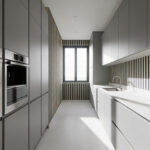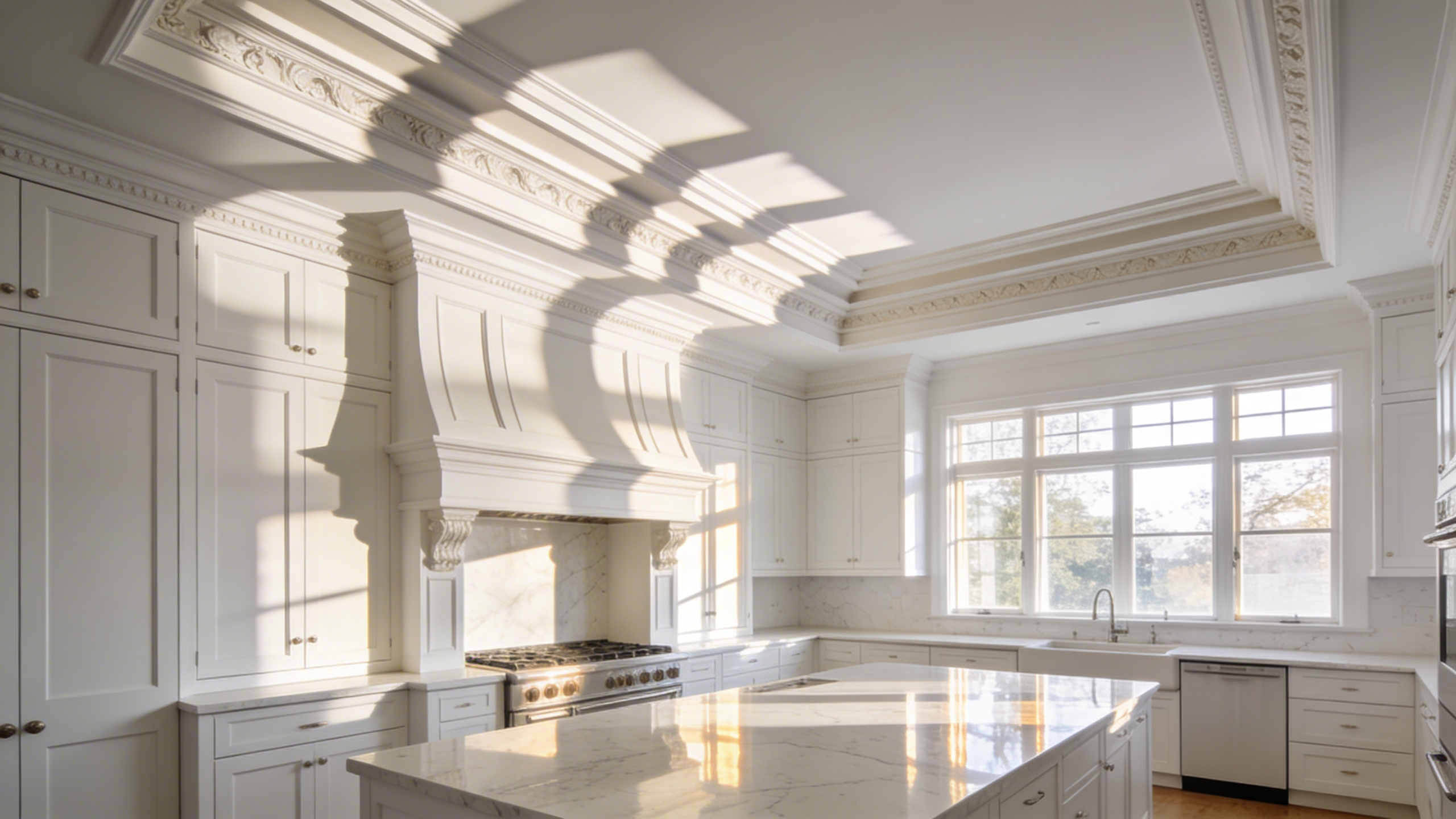
I keep coming back to the idea that a white kitchen is just a safe, sanitary default. Honestly, that perspective ignores a massive amount of design history. Exploring refined white kitchen ideas shows that a monochromatic palette is actually a highly intentional backdrop. Therefore, it is a perfect blank slate for a premium home. Instead of feeling clinical, the room becomes a curated gallery. Every design choice instantly takes on more visual weight. Indeed, you can showcase your personal taste with absolute clarity.
This classic palette frames elegant antiques and modern textures equally well. Specifically, you can highlight luxury materials like bleached oak or Carrara marble. The strategy also makes obvious financial sense today. A white kitchen is a notoriously low-risk asset for your home. In fact, future buyers almost always appreciate a bright, versatile layout. They can easily adapt the aesthetic to their own style. Ultimately, this chameleon effect strongly protects your investment.
I genuinely love how high-contrast curation changes a room. Blending bespoke cabinetry with tactile finishes keeps the design from feeling flat. A single uniform shade will almost always look dull. However, layered whites add profound depth and warmth. Next, we look at achieving this aesthetic through smart material choices and architectural precision. In fact, the secret to a flawless kitchen lies entirely in these layered details.
Phase I: The architectural foundation (color theory & millwork)
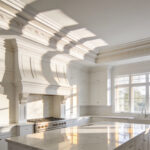
Nailing a sophisticated white kitchen requires more than just picking a paint swatch. You must actively engineer the room to handle the unforgiving nature of white paint. To find more inspiration, you might explore these 24 Stunning White Dream Kitchen Ideas for Your Next Renovation. The examples show exactly how architectural weight is applied in practice. Specifically, designers use millwork to force shadows and create depth. The human eye struggles to judge depth in a monochromatic space. Therefore, custom multi-piece crown assemblies are a massive help. Next, try incorporating glass-front transom cabinets to add vertical volume. This trick effortlessly breaks up the solid mass of white wood.
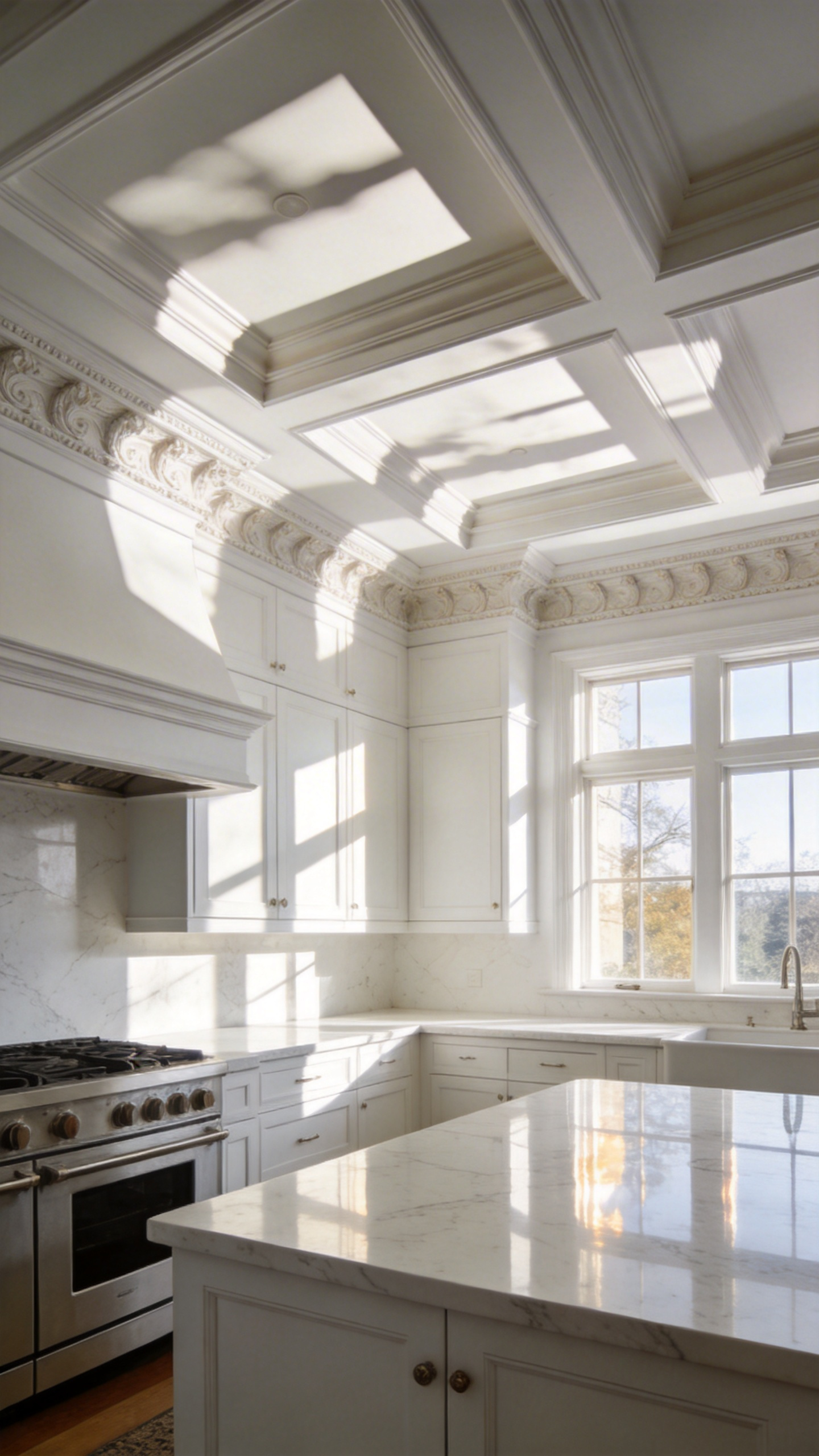
Naturally, selecting the right shade depends entirely on your light source. North-facing rooms require warm whites with subtle yellow undertones. Conversely, south-facing kitchens need cool whites to remain crisp. Ultimately, professionals almost never rely on just a single color. Flush-inset Shaker cabinetry provides a precise, furniture-like look. Today, I notice a strong shift toward highly tactile finishes. Matte lacquers and designer millwork are very popular. These options pair beautifully with honed marble to create the perfect amount of material friction.
1. The truth about undertones: selecting the perfect warm white (e.g., Alabaster vs. Chantilly Lace)
Choosing the right white paint is surprisingly stressful. Take Sherwin-Williams Alabaster and Benjamin Moore Chantilly Lace. These two shades exist worlds apart. Alabaster brings a grounded creaminess to your cabinetry. Meanwhile, Chantilly Lace is much cooler and sharper. To ensure your choices result in a high-end finish, consider these 12 Elevated Luxury Kitchen Ideas You’ll Love. They offer excellent guidance on building color harmony.
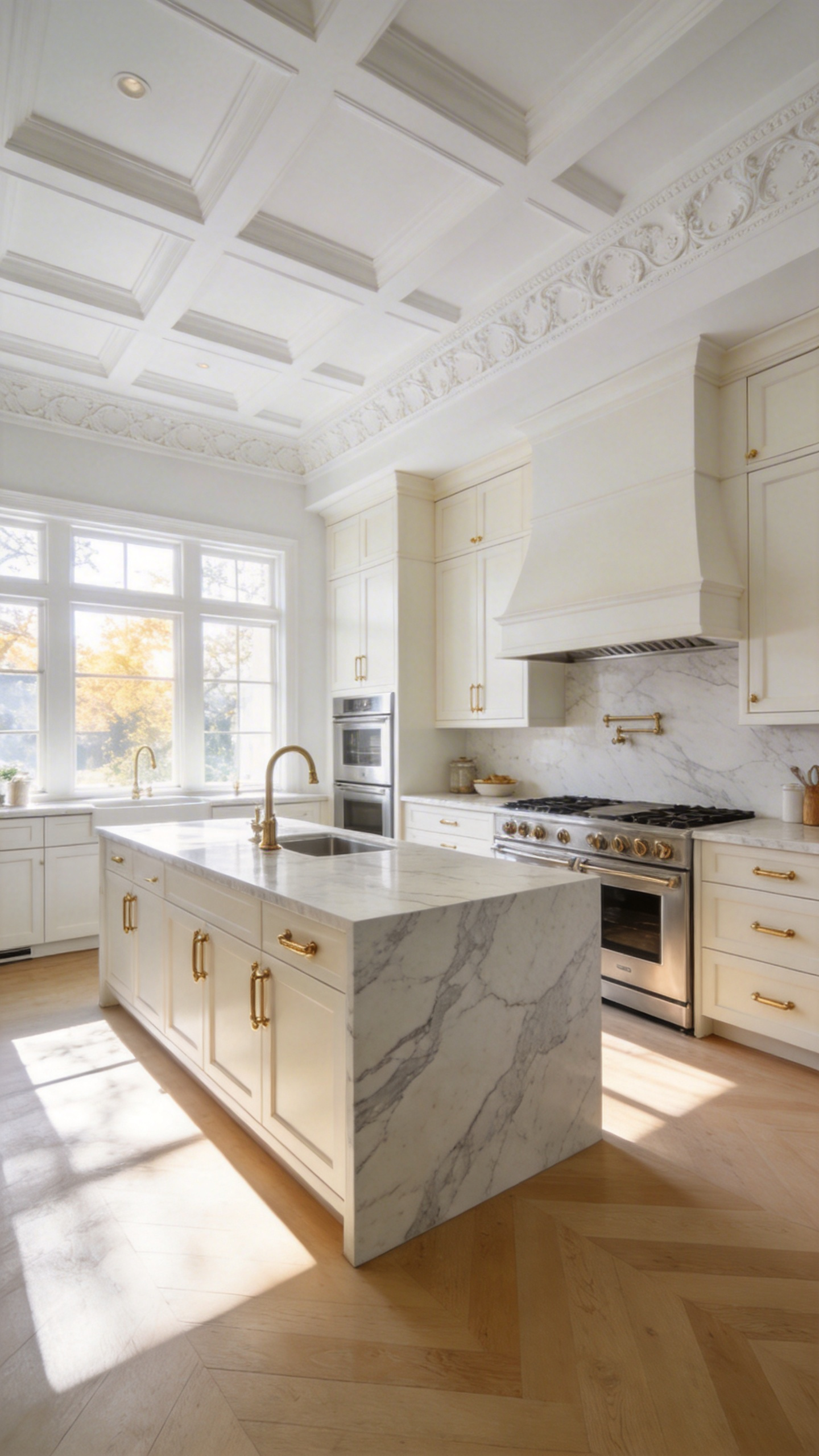
Chantilly Lace behaves much like an environmental mirror. It reflects whatever is around it. However, Alabaster absorbs light and actively prevents blinding southern glare. Alabaster also features a more complex pigment structure. Therefore, it easily covers dark wood grain during a renovation. Design trends right now strongly favor warm, organic spaces. Indeed, softer whites are a much safer choice for a welcoming kitchen.
2. Custom millwork details: elevating Shaker cabinets with bespoke profiles
In an all-white kitchen, standard Shaker cabinets often look flat. Consequently, designers use bespoke millwork to engineer necessary architectural depth. Upgrading to a deep-set panel creates dramatic, crisp shadow lines. Next, adding a shadow rail provides a neat floating effect. These 23 Kitchen Design Inspirations That Actually Work show exactly how small details redefine a room’s character.
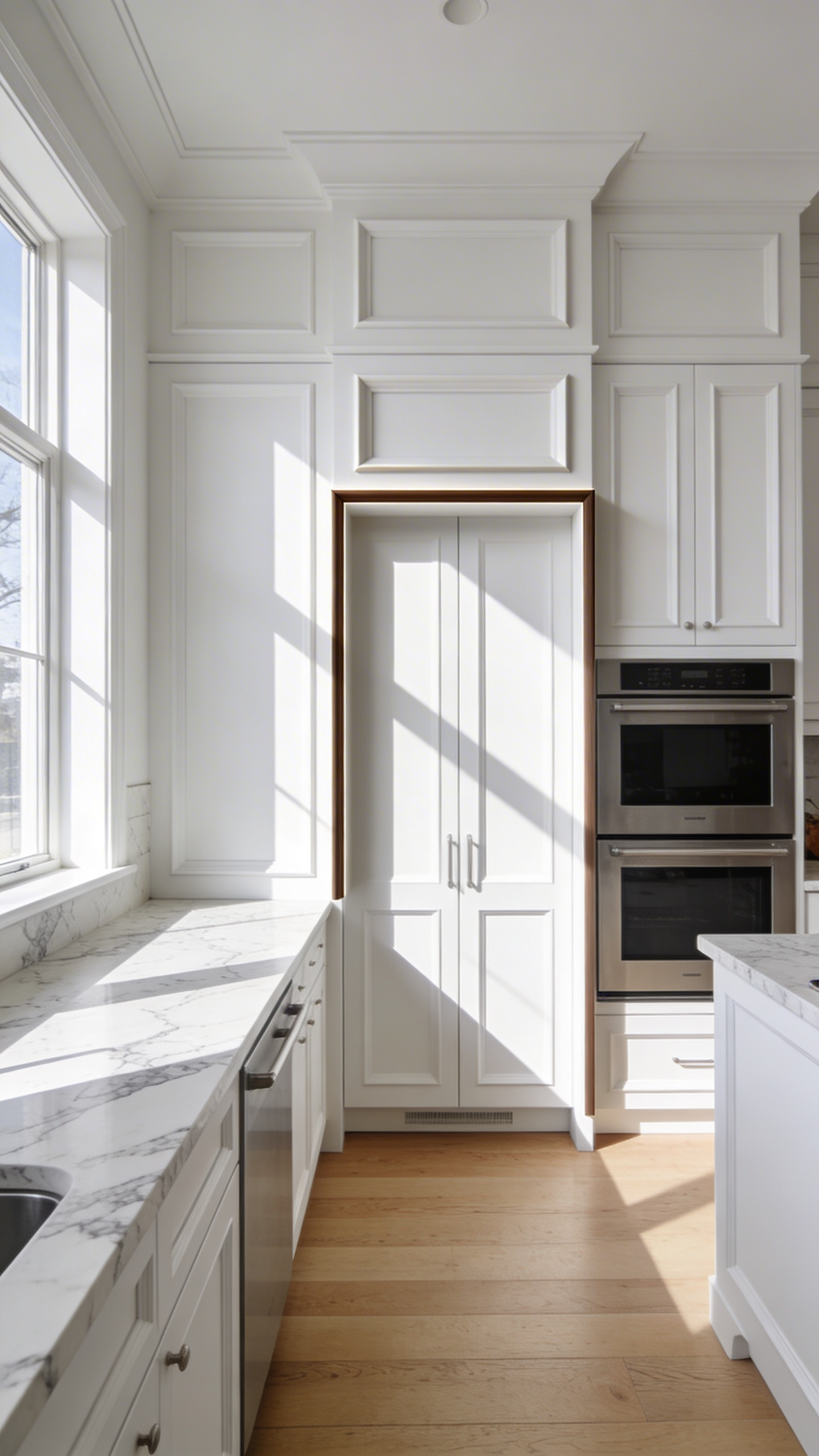
High-end designs extend this millwork directly to the ceiling to eliminate awkward gaps. White painted millwork is notoriously unforgiving. In fact, it highlights every tiny flaw. Therefore, a smart investment involves hybrid cabinet construction. I highly recommend using solid wood frames combined with moisture-resistant MDF center panels. This specific combination prevents unsightly hairline paint cracks at the structural joints.
3. The seamless transition: integrated panel-ready appliances for uninterrupted flow
A massive stainless steel refrigerator will absolutely disrupt a pristine white kitchen. Therefore, designers increasingly rely on panel-ready appliances. They are the best way to maintain a truly clean aesthetic. This specific approach is very common in 24 Minimalist Kitchen Ideas. The goal is to keep visual noise to an absolute minimum.
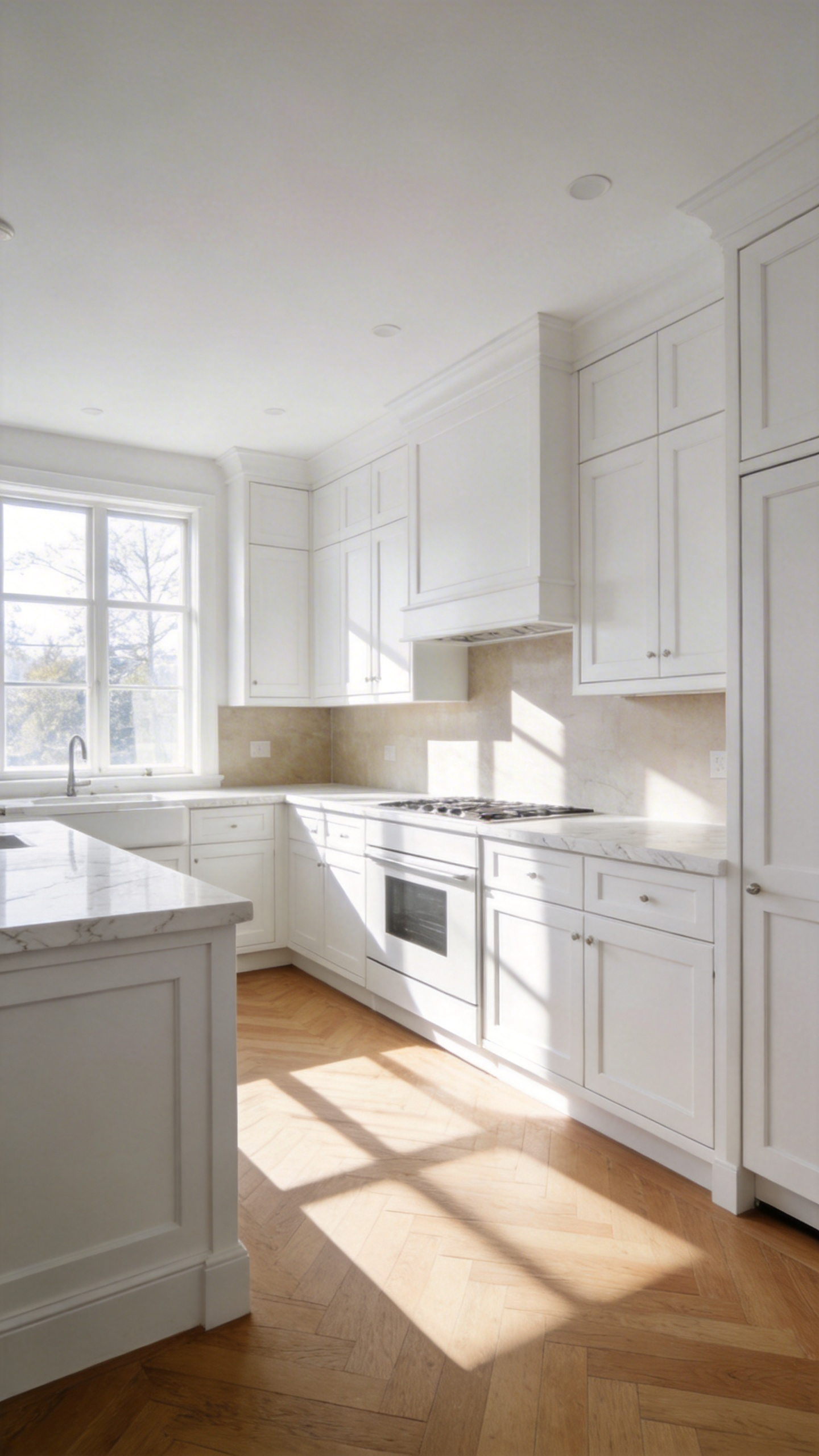
Flush-inset installation is the absolute gold standard here. It allows the custom white panel to align perfectly with surrounding drawer fronts. Eliminating appliance shadows instantly creates sensory calm. The brain simply perceives one continuous, soothing surface. Finally, heavy-duty appliance pulls in unlacquered brass add a great finishing touch.
4. Architectural ceiling treatments: coffered and beamed ceilings to draw the eye upward
The kitchen ceiling is often called the “fifth wall” for good reason. Try color-drenching beams and panels in a matching white paint. As sunlight hits the ceiling, it creates shifting grayscale tones. Therefore, the room never feels flat.
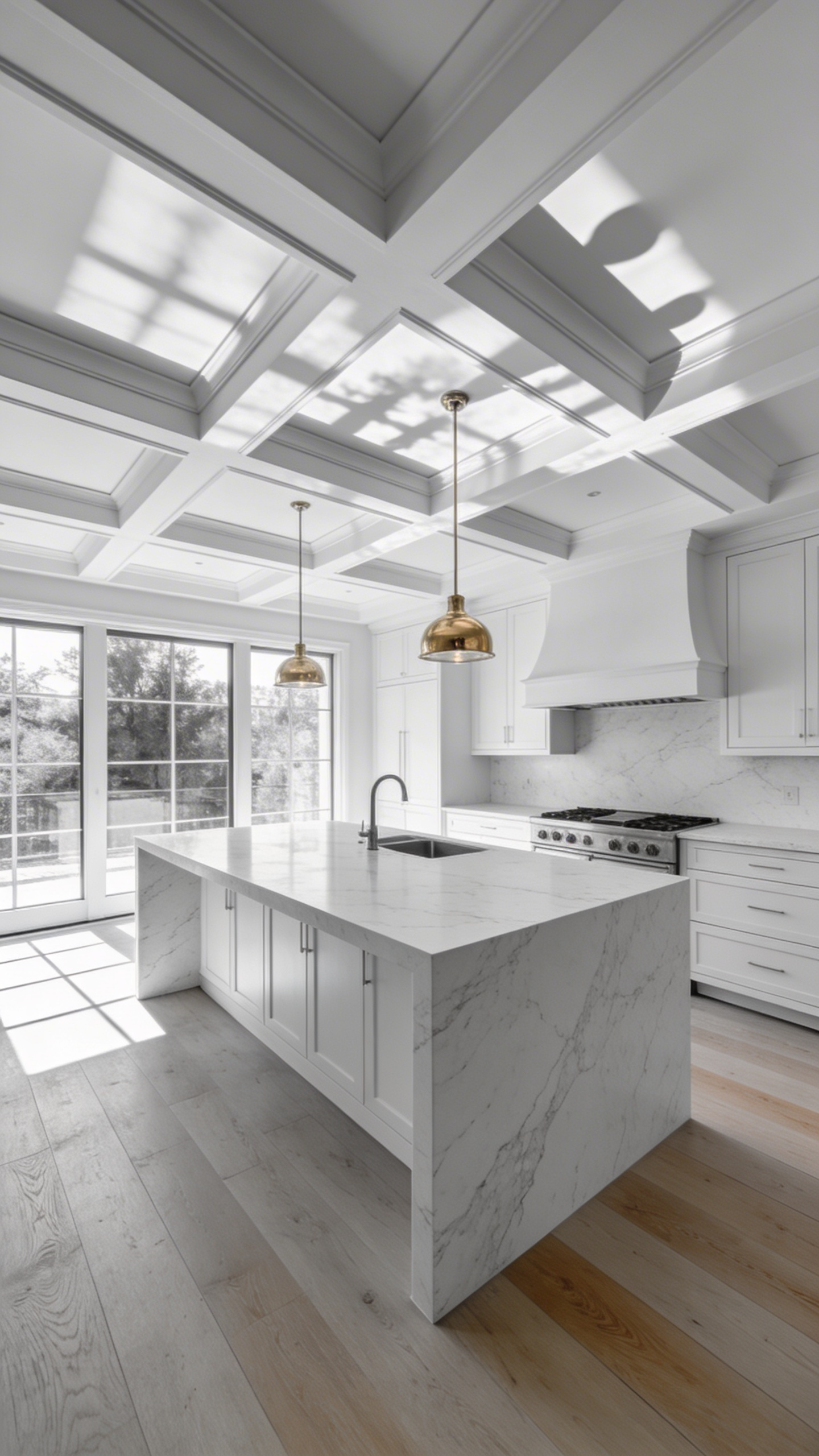
Importantly, aligning these ceiling grids requires strict architectural logic. For instance, centering a coffer directly over the range hood creates a clear sense of intentionality. Next, you need layered lighting. Adding LED tape inside the beam lip maximizes this striking verticality. Indeed, it creates a very convincing floating illusion.
Phase II: The material counterpoint (stone & surfaces)
Modern white kitchens often risk feeling like a dental clinic. Thus, introducing a strong material counterpoint is essential. Heavily veined stone provides a much-needed break for the eyes. It transforms a basic workspace into an actual focal point.
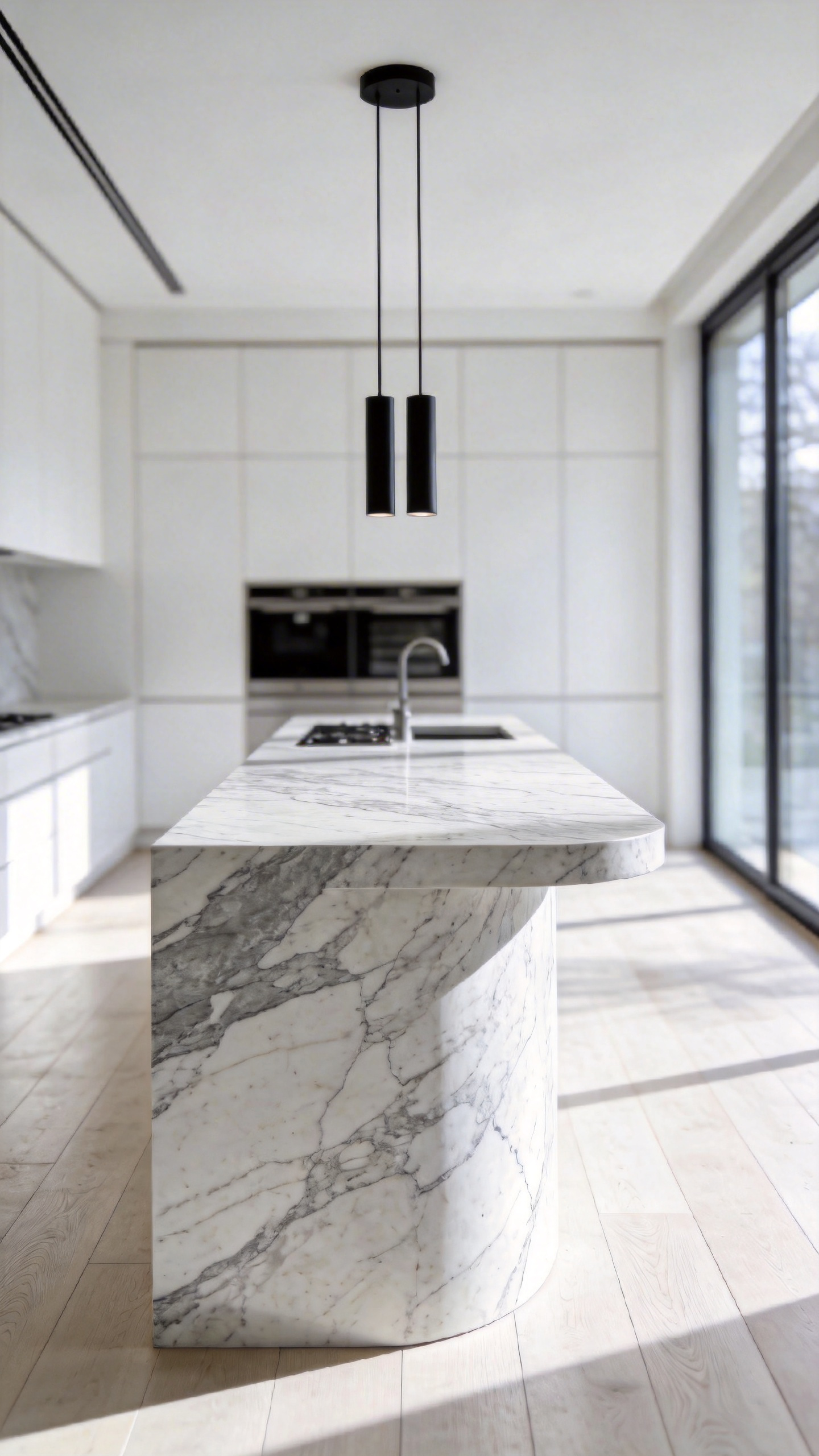
Choosing a marble waterfall island is a big commitment to natural beauty. Honestly, marble requires maintenance. However, honed surfaces eventually develop a gorgeous, lived-in patina. If you hate maintenance, quartzite offers a high-performance alternative that resists etching. Right now, designers strongly favor textured stone. Specifically, leathered surfaces do an amazing job softening sleek modern cabinetry.
5. Calacatta vs. Carrara: investing in statement marble centerpieces
Choosing between Calacatta and Carrara marble completely changes a room’s vibe. Carrara offers a serene, slightly gray backdrop with soft linear veins. Conversely, Calacatta provides a pristine white canvas with bold, dramatic veining. Therefore, Calacatta is usually the more expensive, statement-making option.
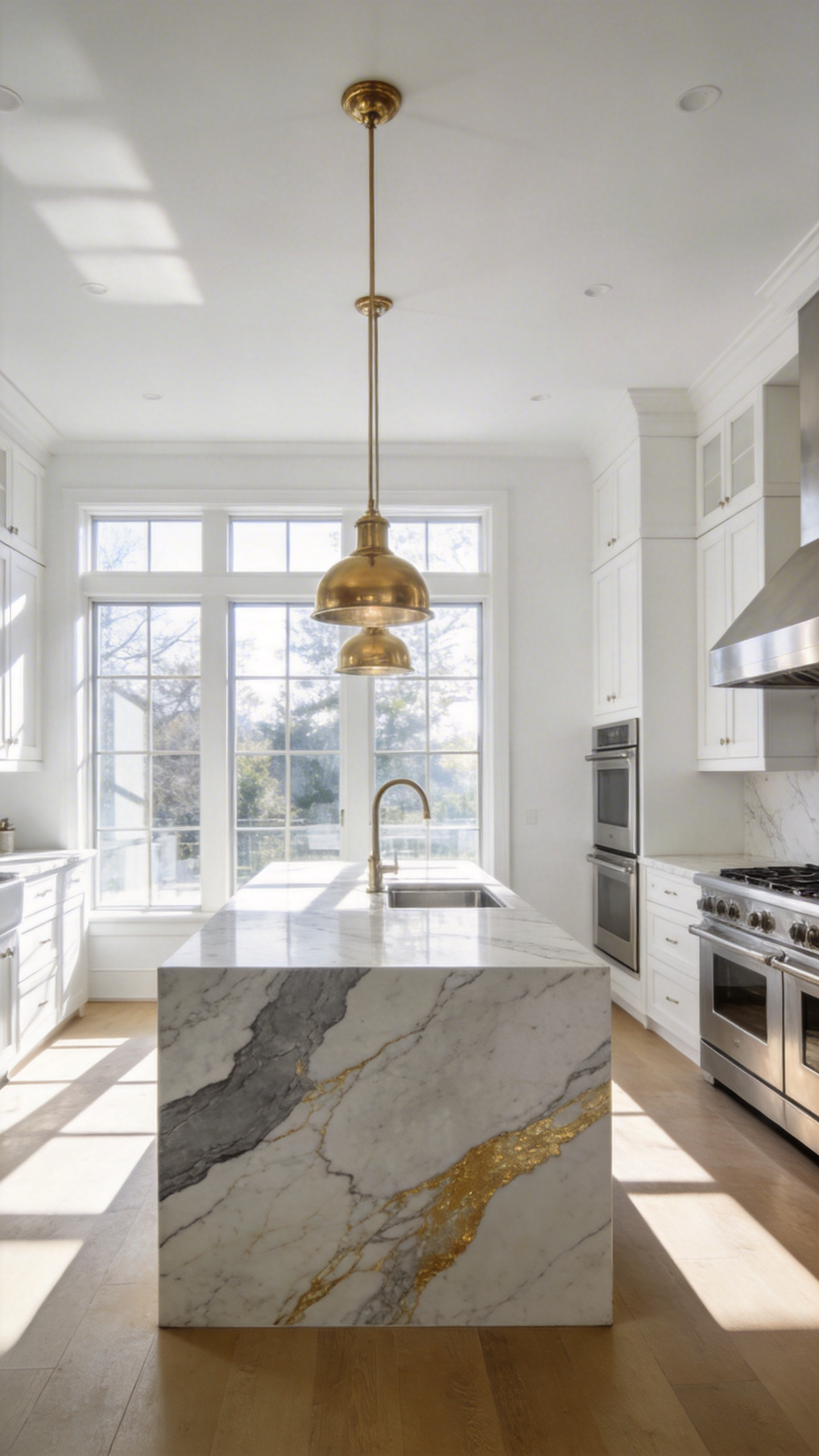
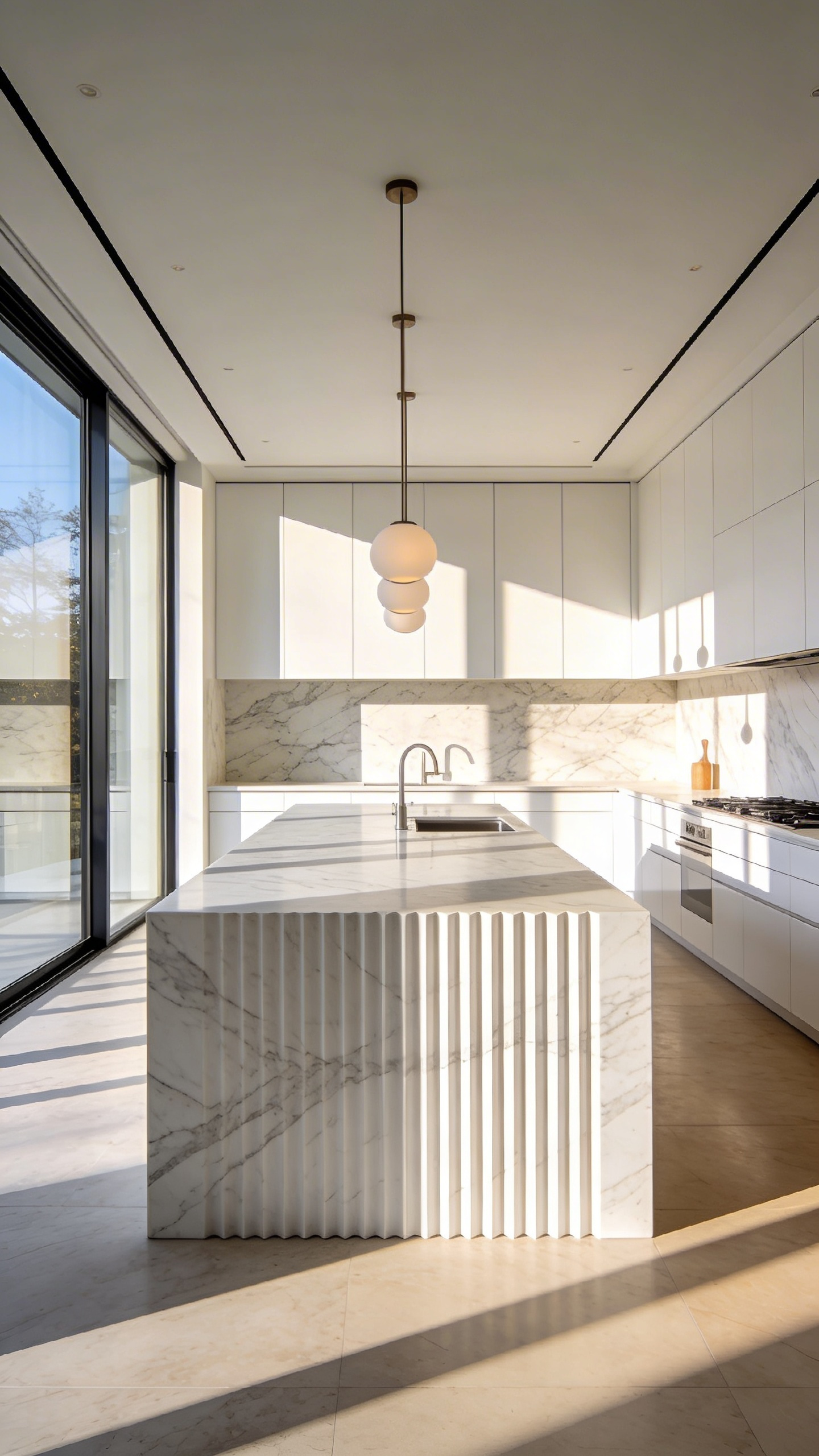
6. The fluted stone island: adding tactile dimension to monolithic white
A fluted stone island introduces a highly tactile element to the room. The carved concave grooves create deep, interesting shadows across the base of the cabinets. Plus, this specific artisanal touch just feels incredible to run your hands across.
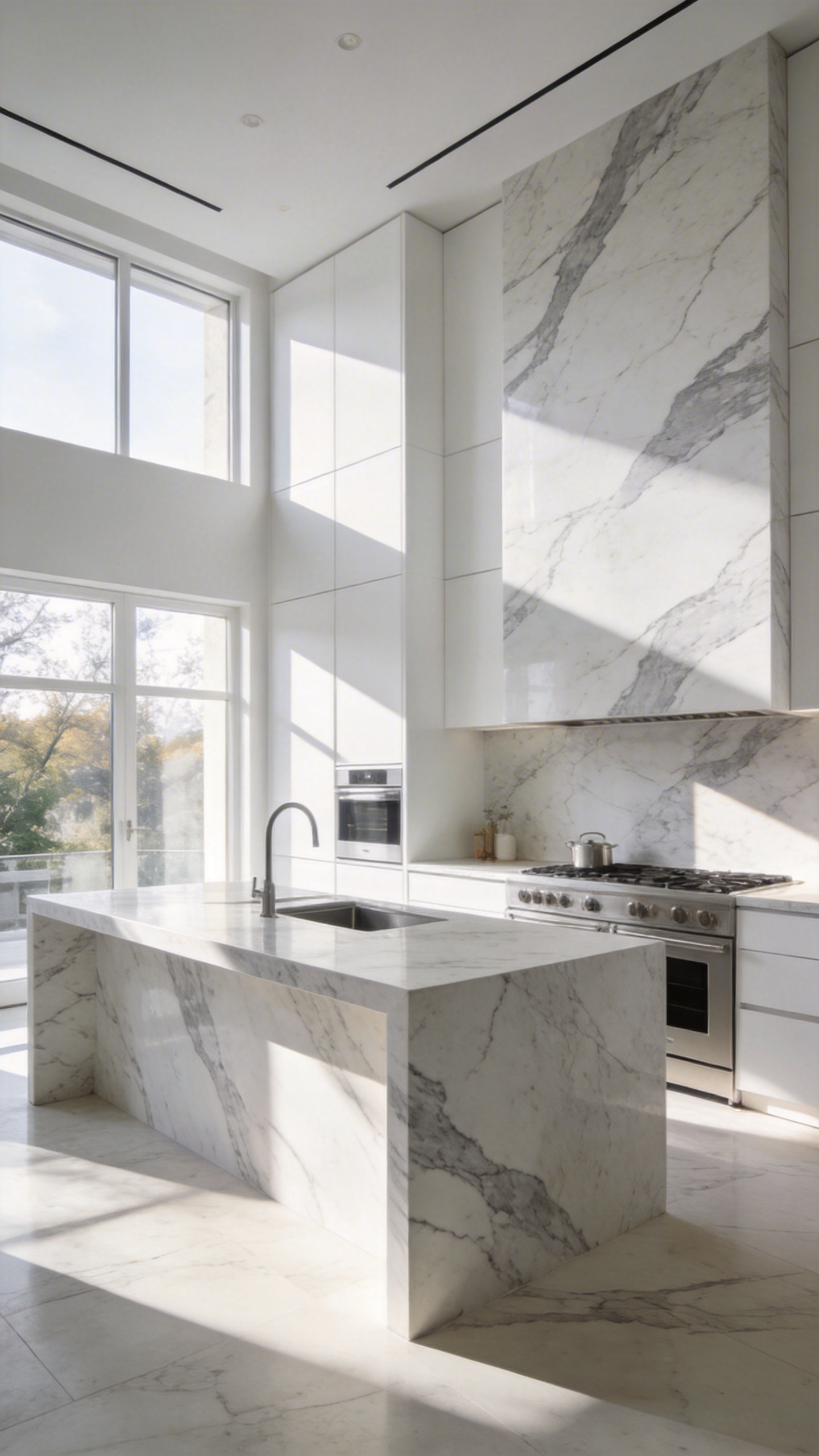
7. Continuous slab backsplashes: extending natural veining for maximum luxury
Extending a continuous stone slab directly up the wall is my favorite design trick. It completely eliminates visual noise and dirty grout lines. The seamless look makes the entire kitchen feel larger and calmer. For the best results, use digital mapping to align the natural stone veins across the corners.
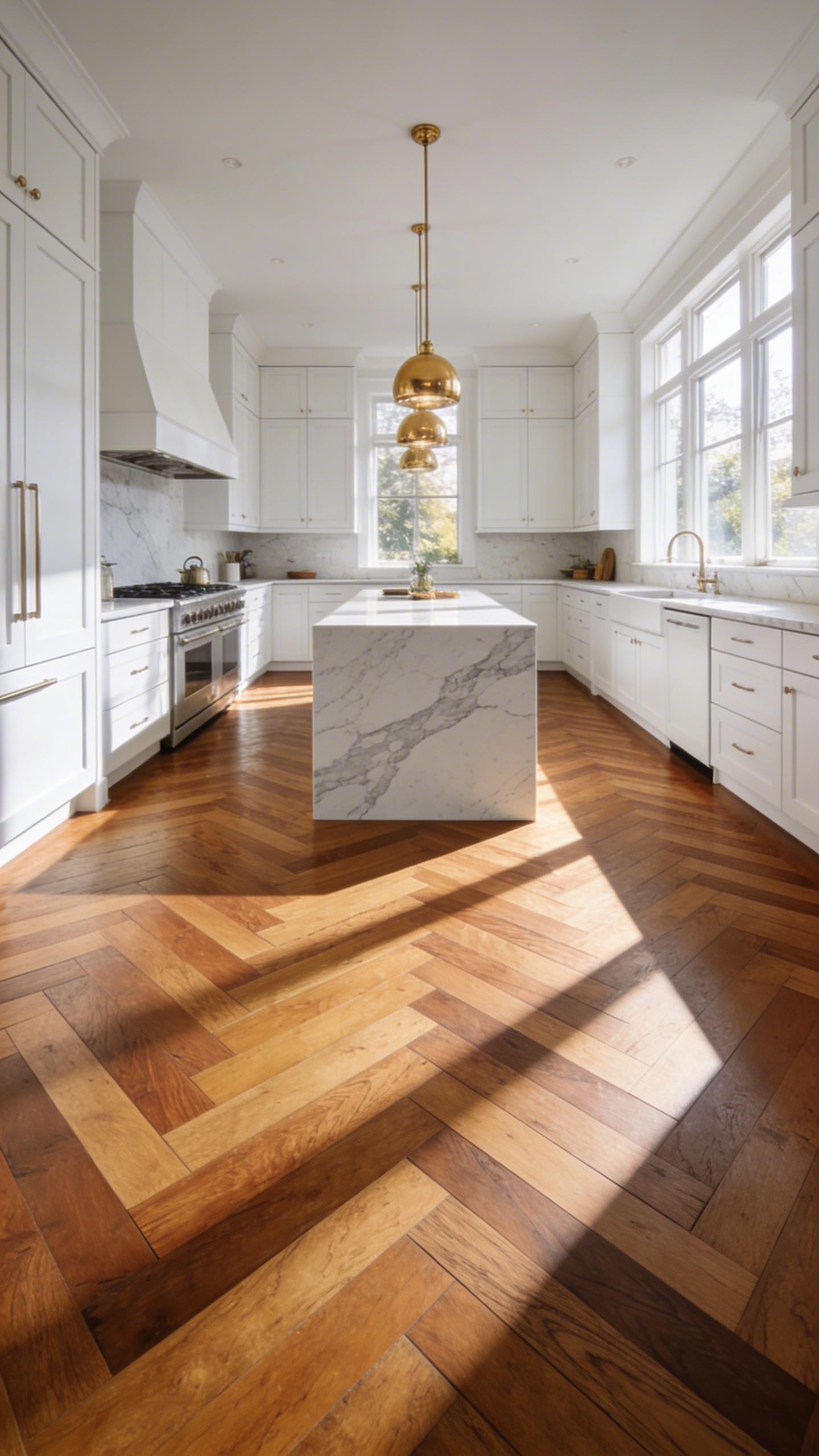
8. Herringbone and chevron hardwoods: grounding the airy palette with rich parquetry
In a pristine white kitchen, the floor is your most vital anchor. Without dark or warm floors, the room feels like it is floating. Herringbone and chevron parquetry offer a brilliant geometric contrast. In fact, these classic patterns instantly make a brand-new kitchen feel established and historic.
Phase III: The jewelry of the space (metals & accents)
Metal accents are the ultimate jewelry for your kitchen. They quickly transform functional cabinets into something special. Many high-end designers strongly prefer living finishes. For instance, unlacquered brass is incredibly popular because it develops a unique patina over time.
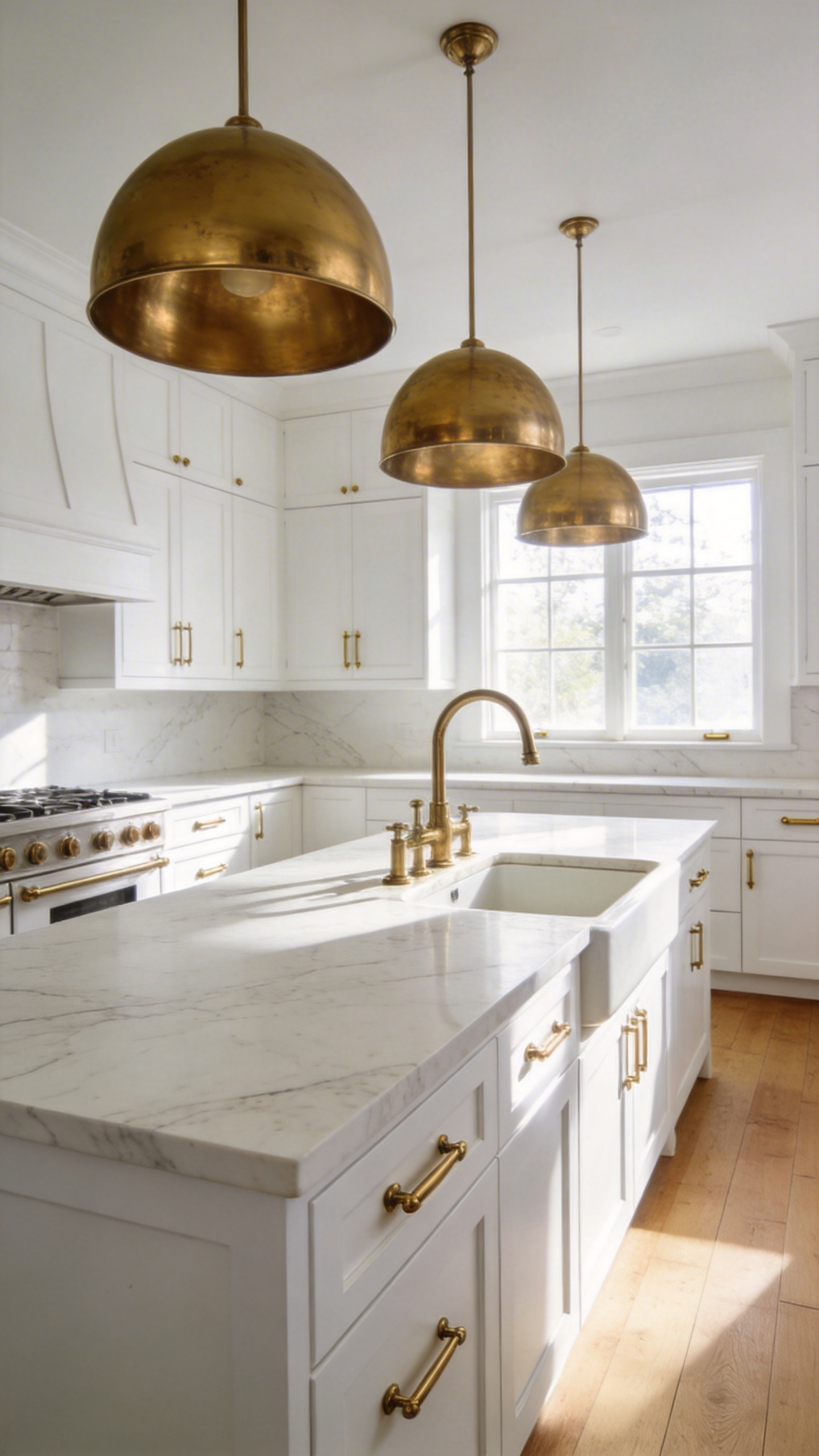
Modern kitchen design actually abandons perfectly matched metals. Instead, I recommend using a 70/30 ratio. Specifically, a dominant metal should claim seventy percent of the space. Then, a contrasting accent metal takes the remaining thirty percent.
9. Unlacquered brass hardware: introducing living finishes to pristine cabinetry
Unlacquered brass introduces a constantly evolving look to your kitchen. Because it is a raw living finish, it reacts directly to the oils on your hands. Over a few years, it mellows from bright gold into rich honey and amber tones. Therefore, it provides much-needed warmth against crisp white wood.
10. Mixed metals mastery: balancing polished nickel plumbing with burnished bronze accents
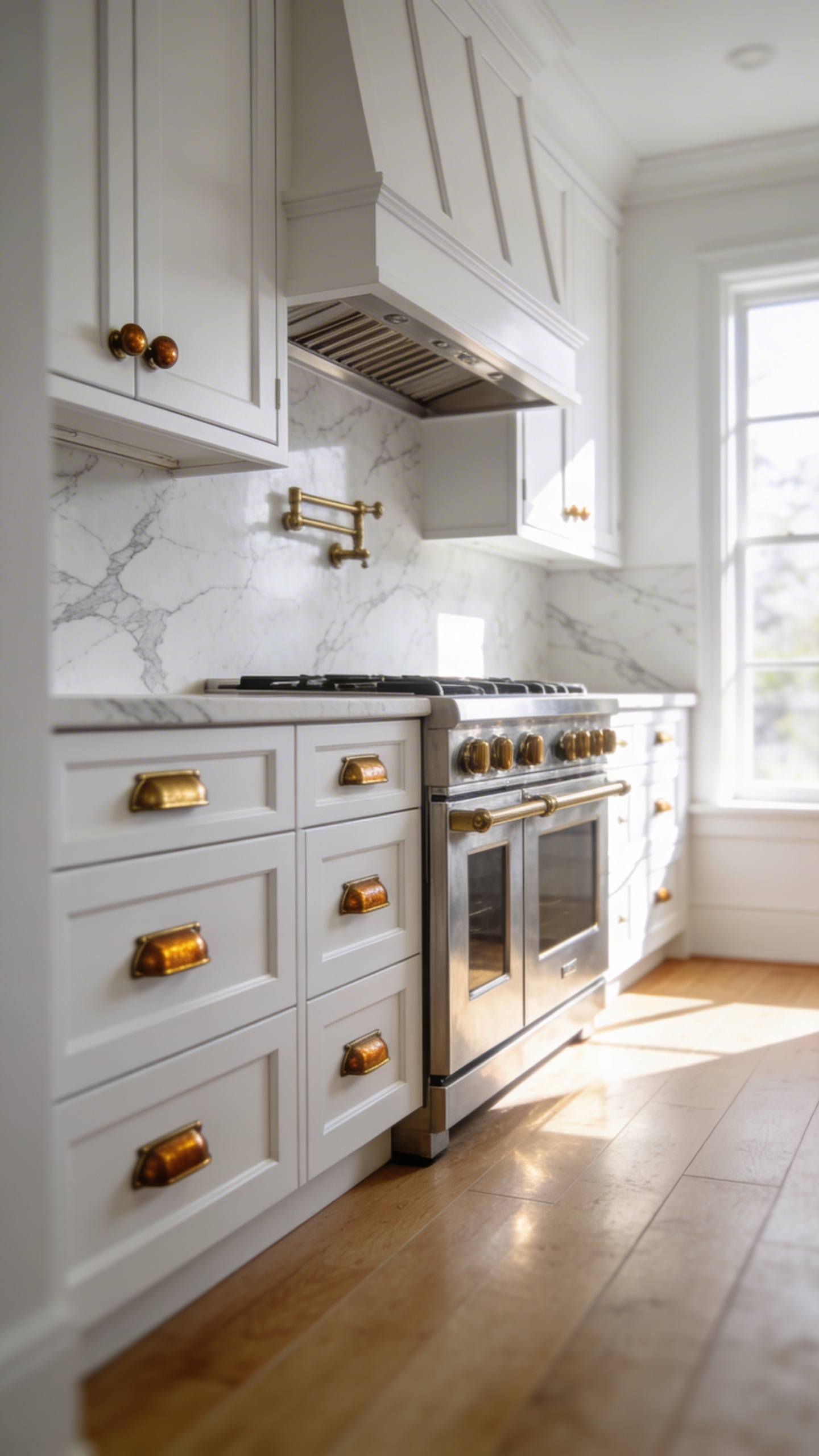
Mixing metals is the easiest way to prevent white kitchens from feeling sterile. Polished nickel actually carries a very warm, slightly golden hue. Thus, it acts as a perfect bridge to darker elements like burnished bronze. You can think of the dark bronze as the architectural eyeliner of the room. It just defines the edges.
11. The contrast island strategy: anchoring white perimeters with deep, saturated hues
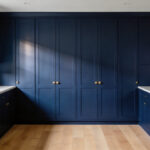
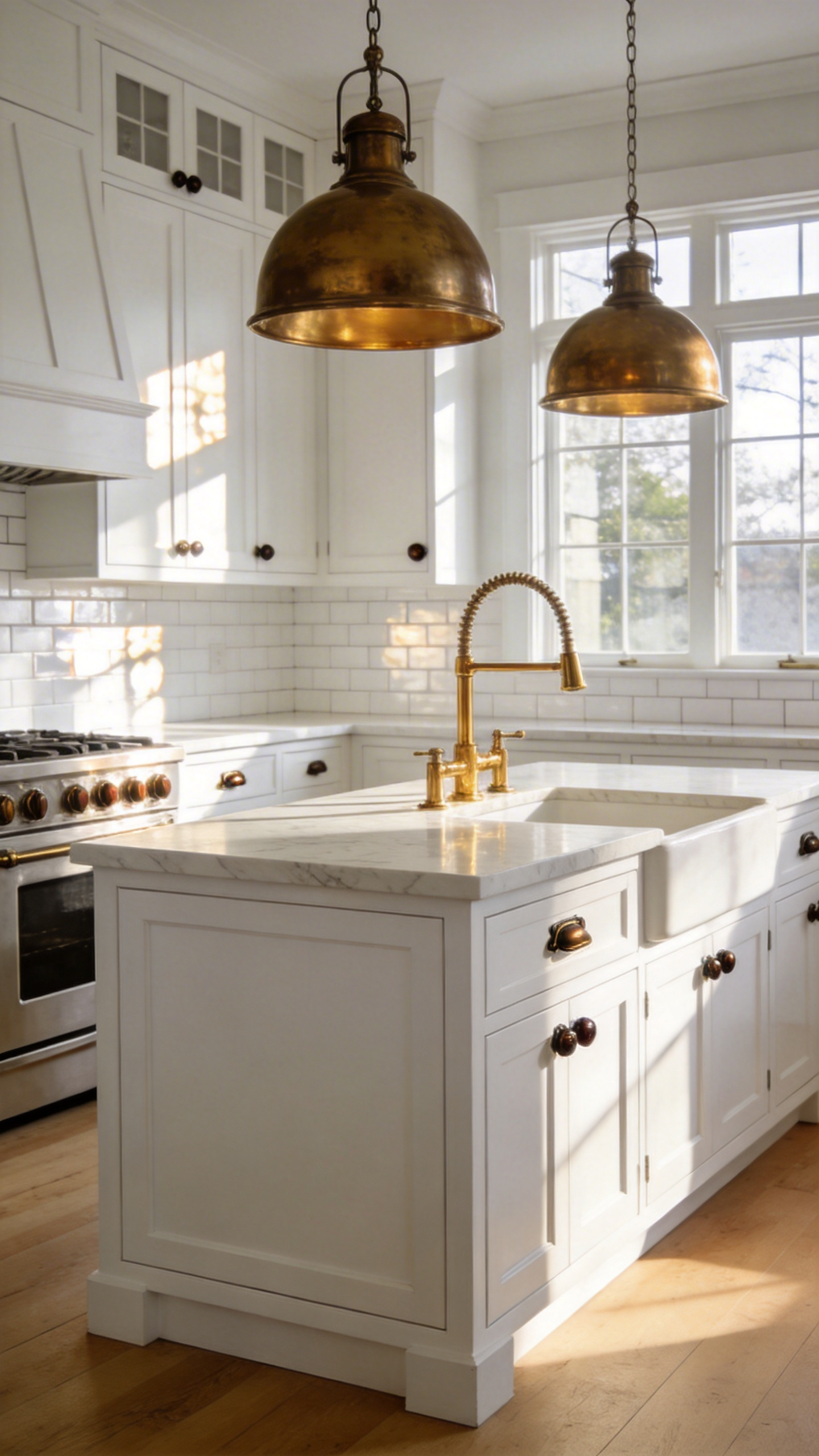
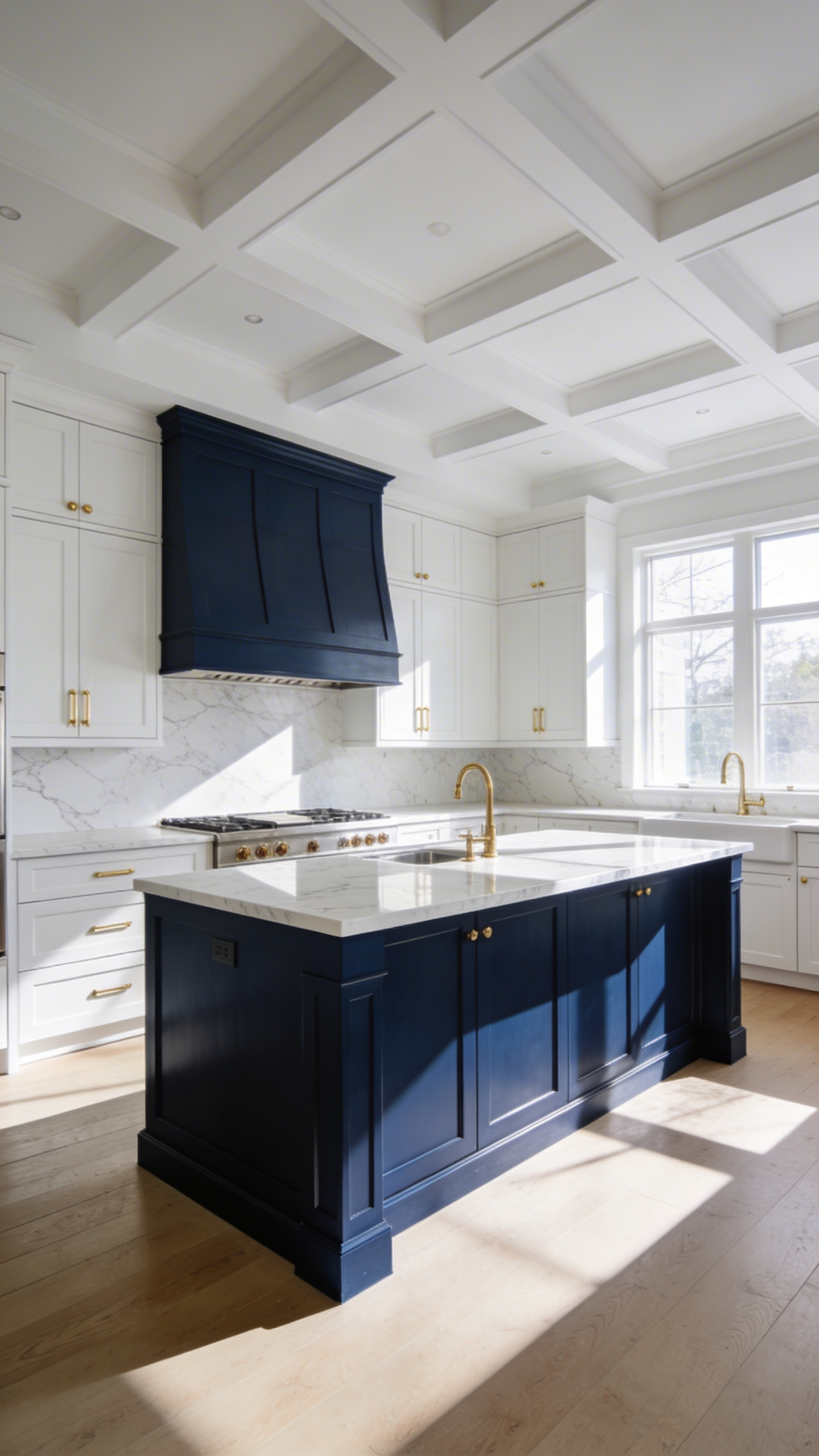
A contrasting island is a fantastic tool. It uses deep, saturated paint to anchor the expansive white perimeter cabinetry. This heavy, dark base prevents the room from feeling weightless. Ultimately, it gives the eye a specific place to rest.
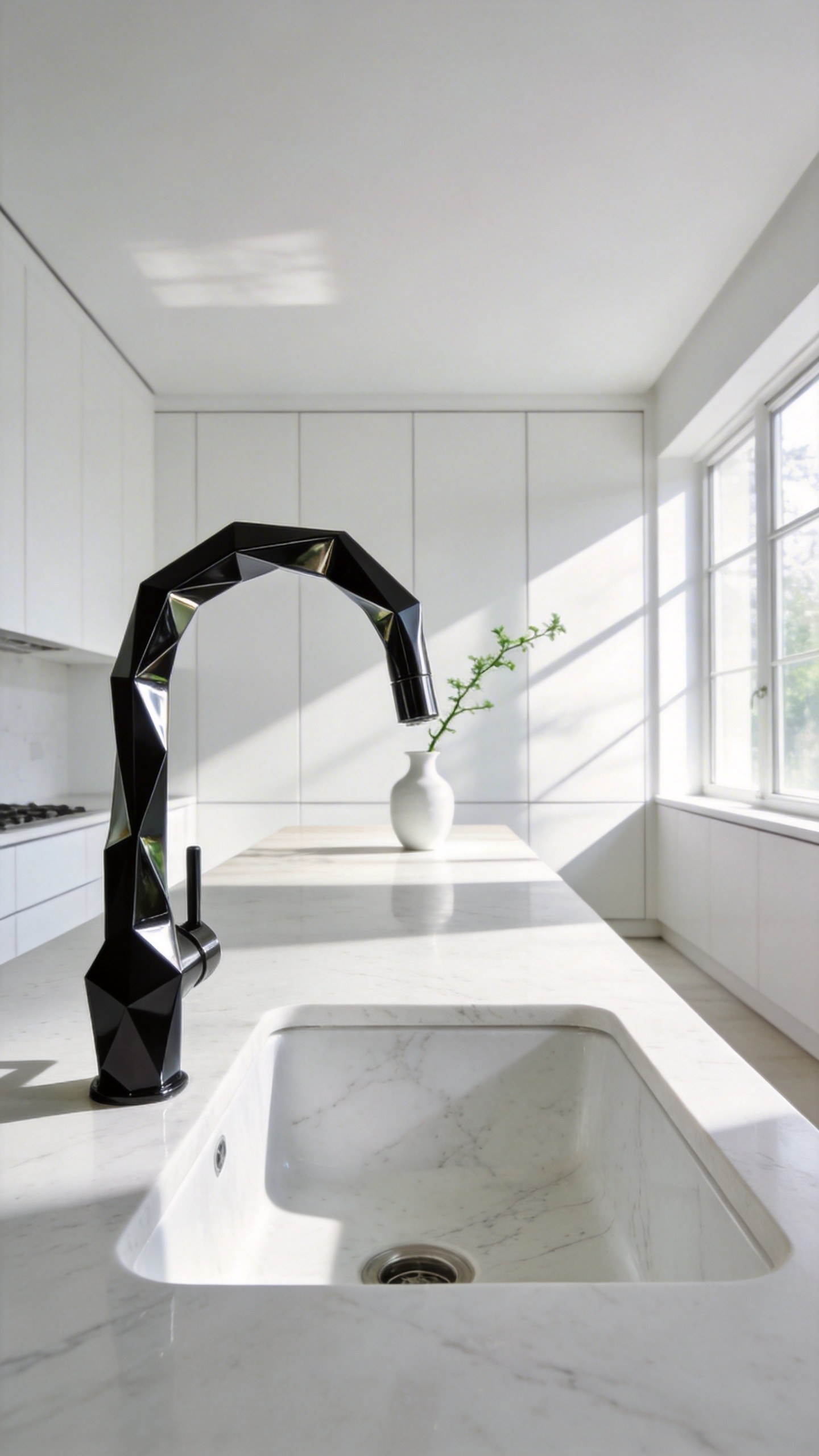
12. Sculptural faucet selections: treating the sink basin as a functional art installation
Today, the kitchen sink is no longer just a utility zone. In fact, sculptural faucets are now a major focal point. Manufacturers are producing incredible deconstructed geometric forms. Next time you renovate, choose a heavy, distinctive faucet that completely changes the look of your island.
Phase IV: Atmosphere, illumination, and heritage (lighting & styling)
A great white kitchen should feel absolutely timeless. Lighting is the secret weapon here. First, always buy bulbs with a Color Rendering Index (CRI) above 90. This ensures your white cabinets look vibrant rather than muddy yellow. Specifically, I recommend 3500K bulbs. They offer the perfect balance of crisp daylight and evening warmth.
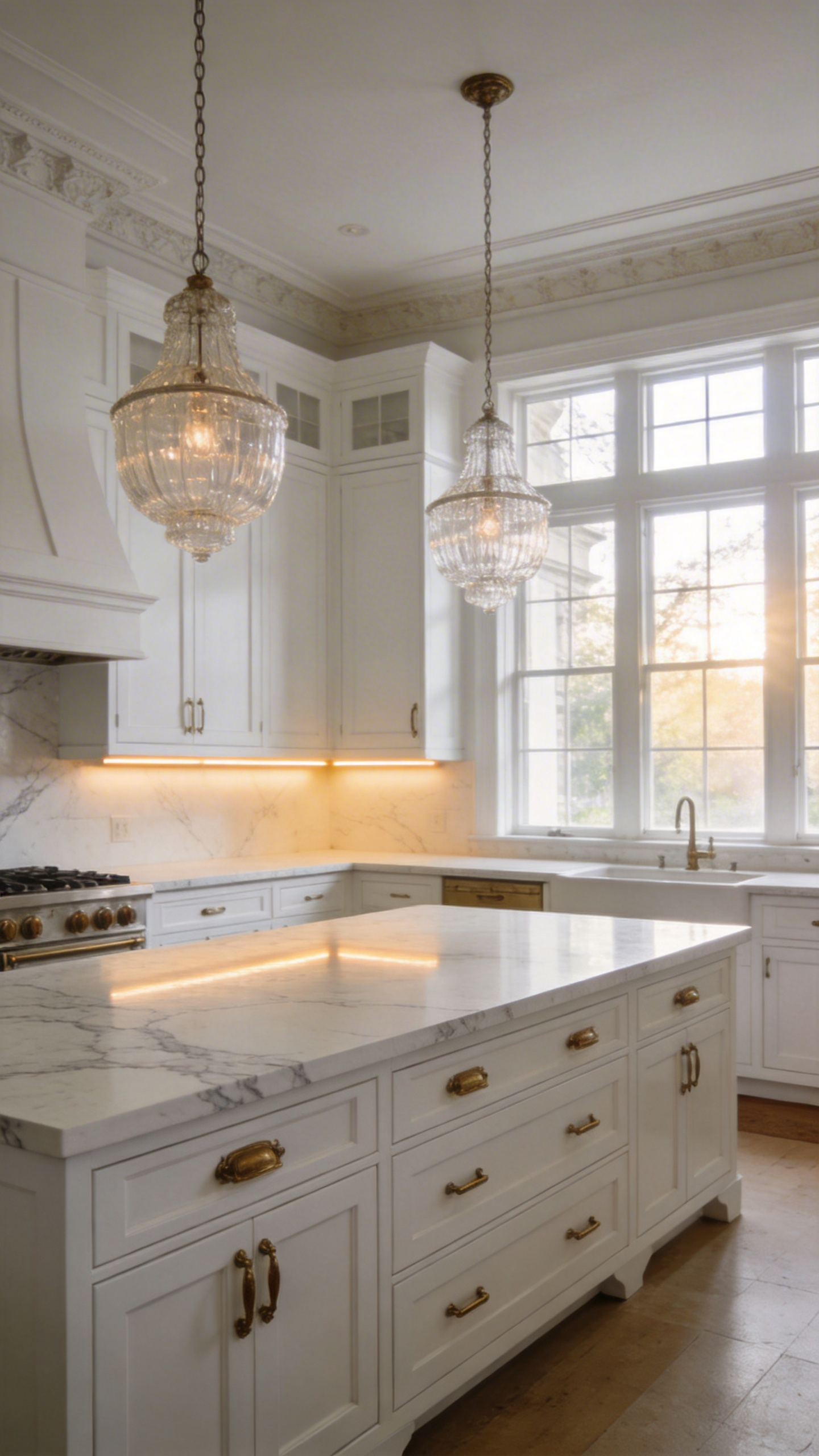
13. Monumental pendant lighting: establishing a luminous focal point above the island
Oversized pendants are brilliant architectural anchors. People love the traditional “rule of three” for island lights. However, modern designs often feature just one massive, monumental fixture instead. This approach completely eliminates ceiling clutter. Indeed, it provides a much cleaner sightline across the room.
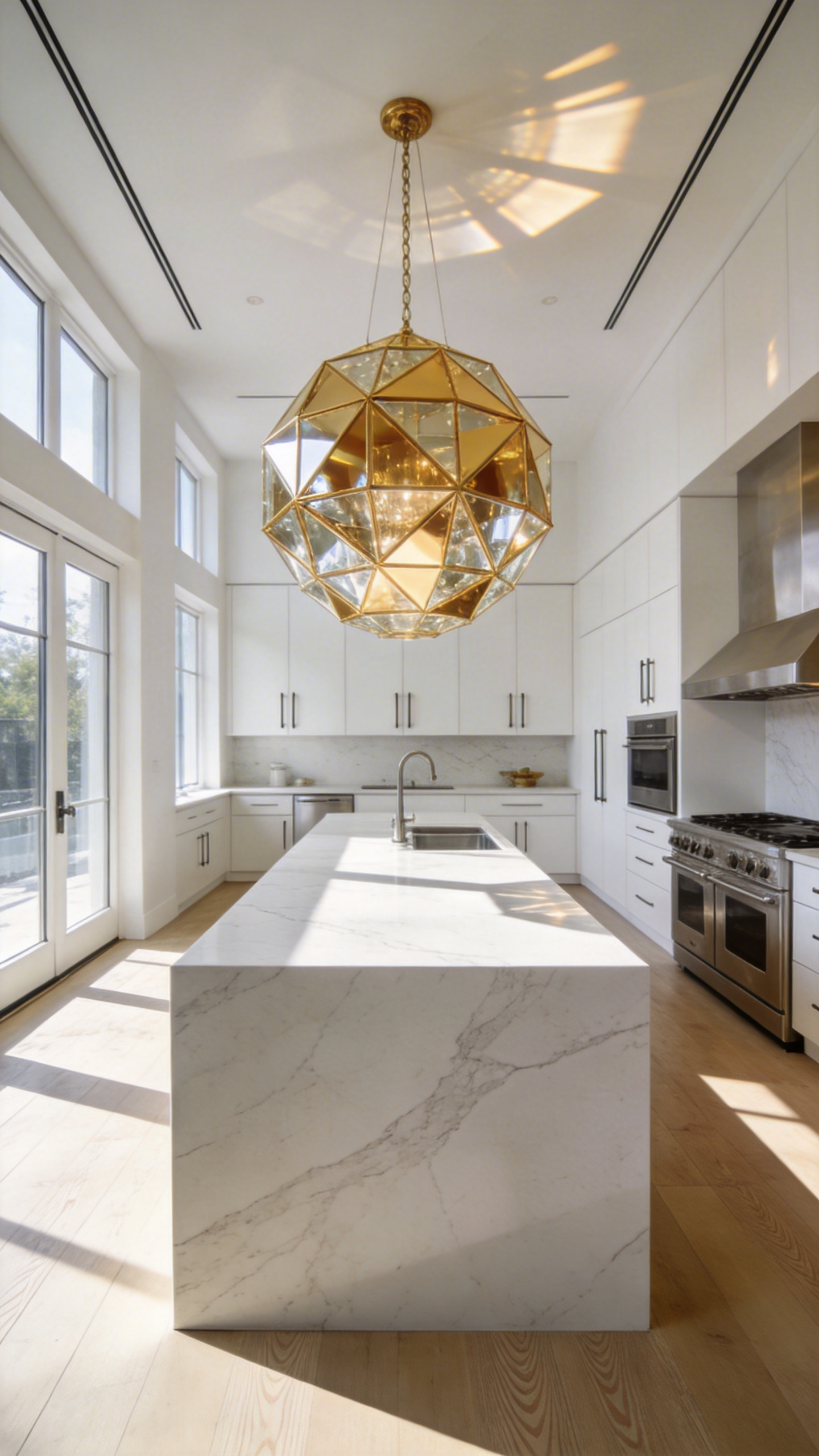
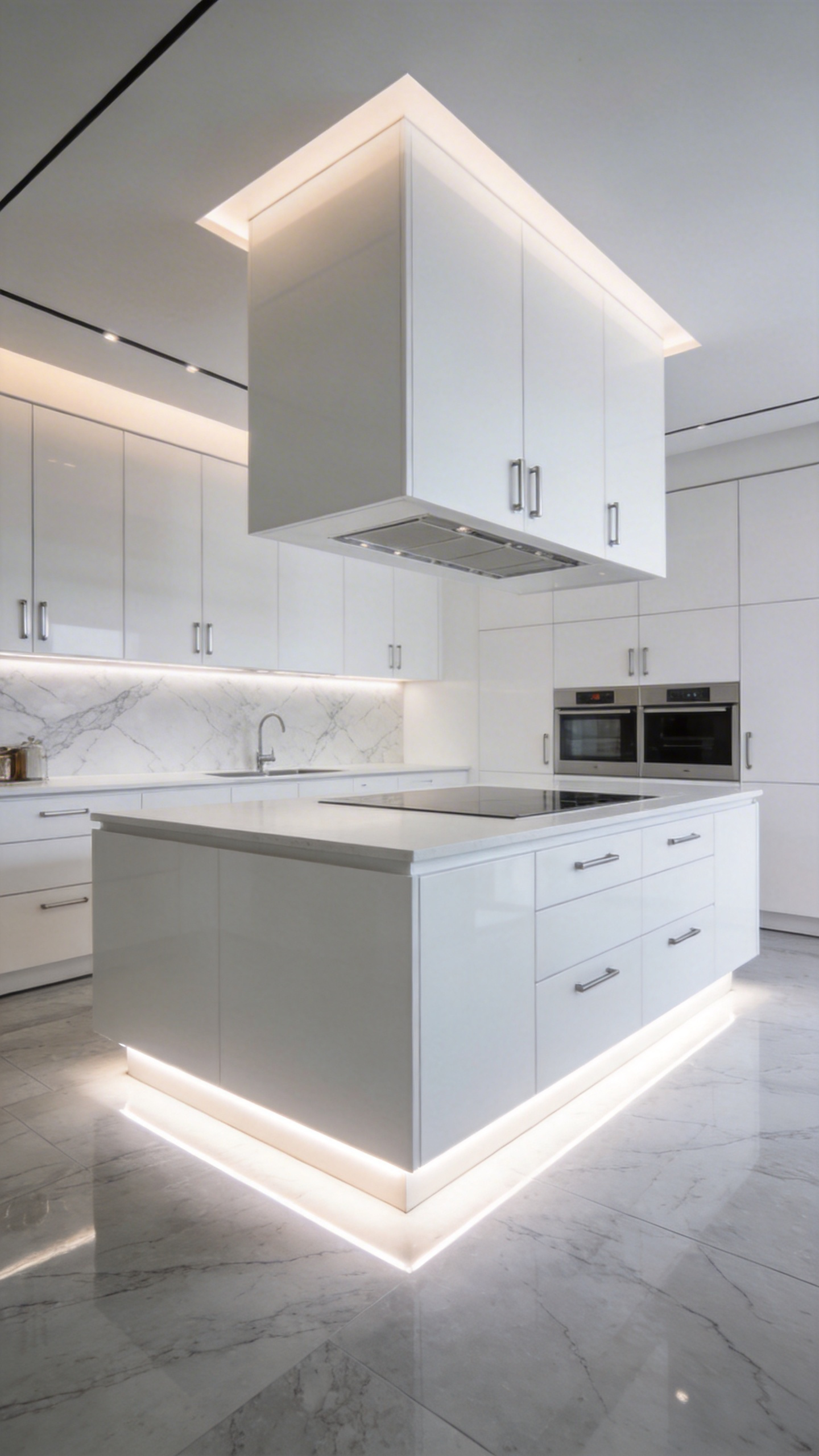
14. Layered ambient illumination: concealed LED integration for floating architectural effects
Concealed toe-kick lighting visually lifts heavy cabinetry off your floors. It creates a really neat, hovering effect at night. When installing under-cabinet lighting, always use continuous COB LED strips. These specific strips ensure a uniform wash of light. Therefore, you avoid those ugly individual LED dots reflecting on your countertops.
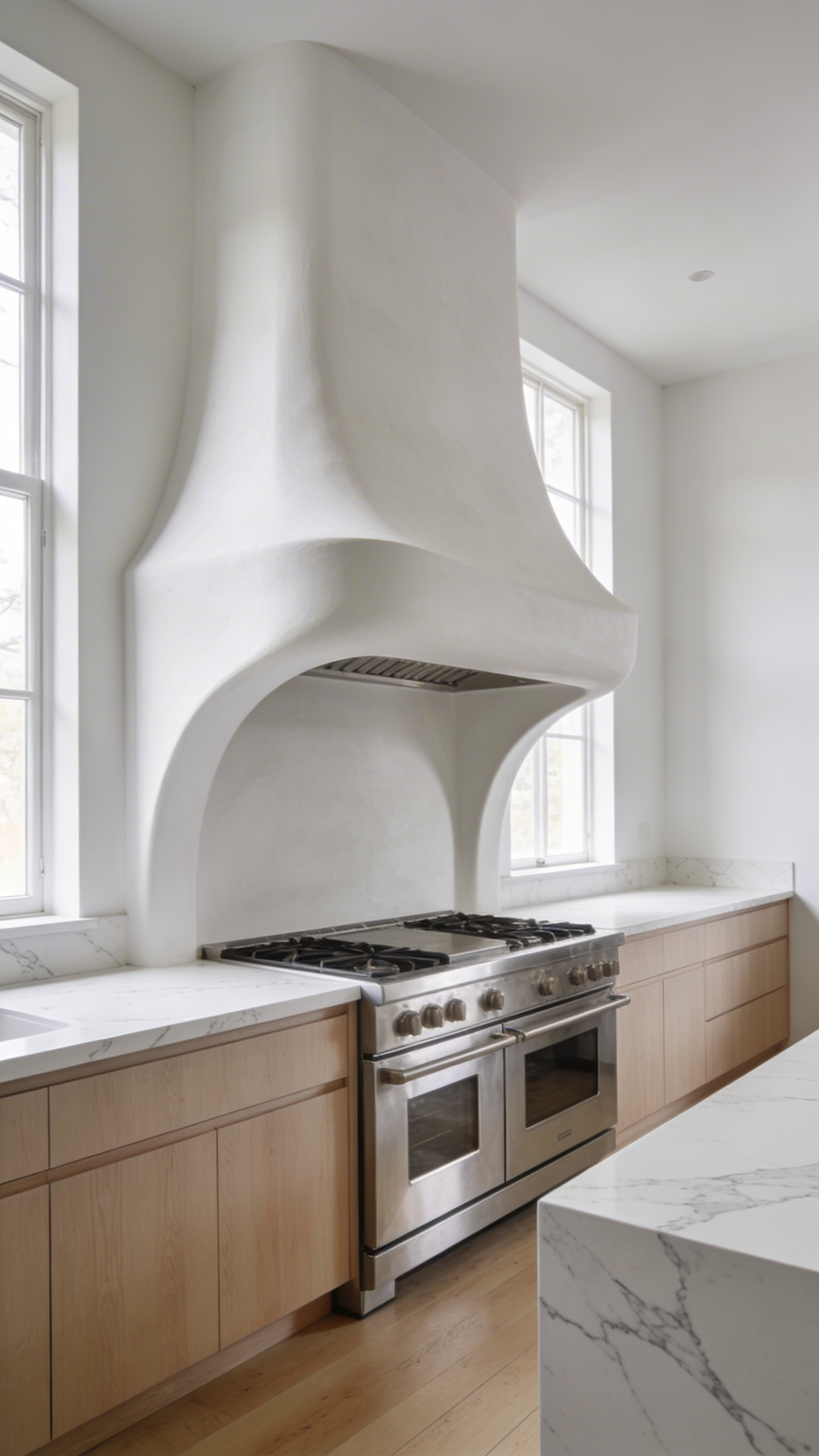
15. The plaster range hood: softening sharp angles with artisan-crafted curves
The artisan plaster range hood is incredibly popular right now. It blends seamlessly into a white wall to soften the harsh angles of standard cabinetry. In fact, you can use hand-applied textures like Roman clay or Venetian plaster. These finishes give the hood an earthy, handmade feel that basic paint cannot replicate.
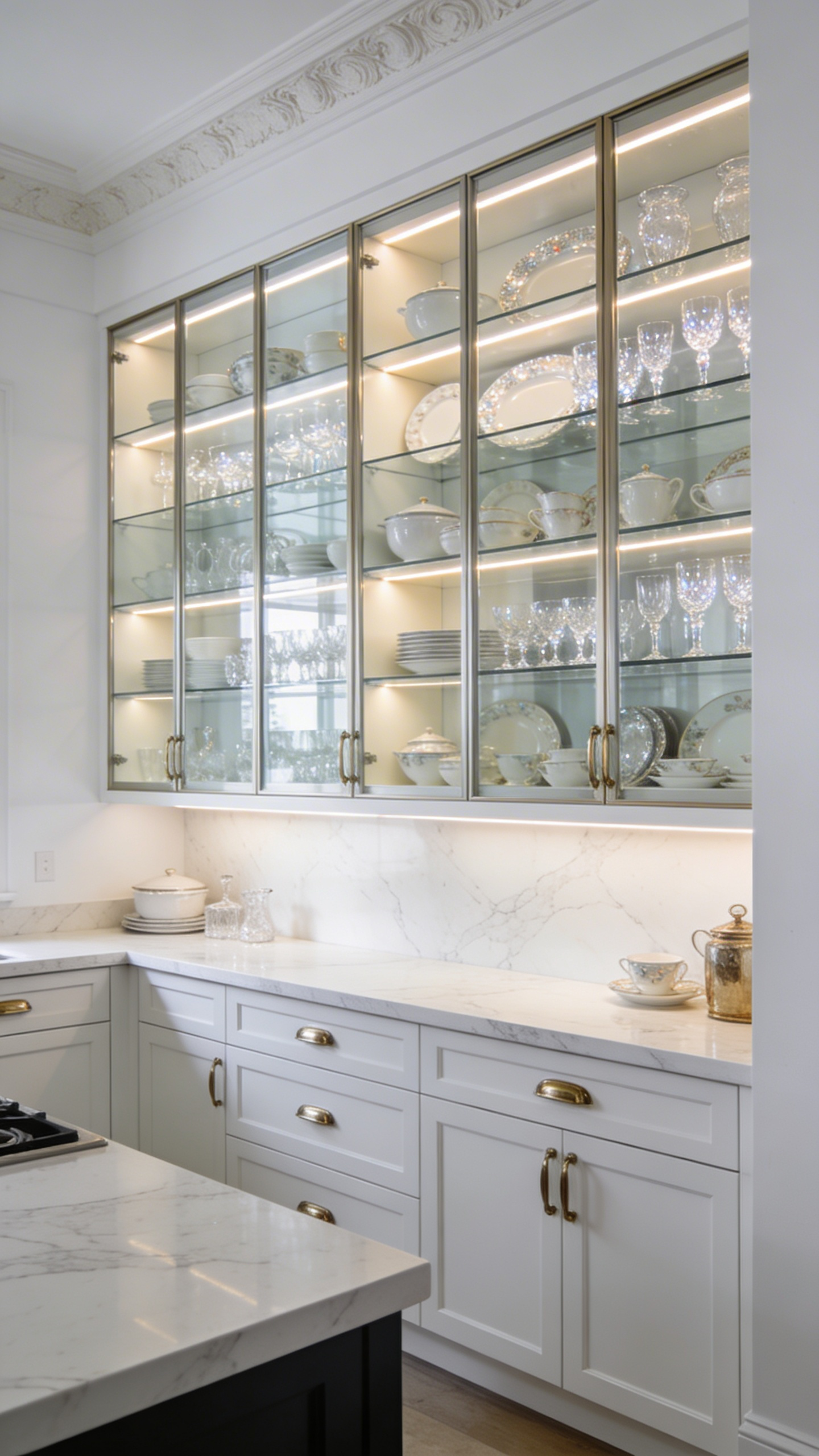
16. Curated glass-front cabinetry: framing fine bone china and crystal as gallery displays
Solid white cabinets can feel heavy if you have too many of them. Glass-front cabinetry breaks up that wall of wood. It lets you display your favorite dishes or glassware. If you go this route, low-iron glass is the only smart choice. Standard glass has a slight green tint. However, low-iron glass is completely clear, ensuring your white china actually looks white.
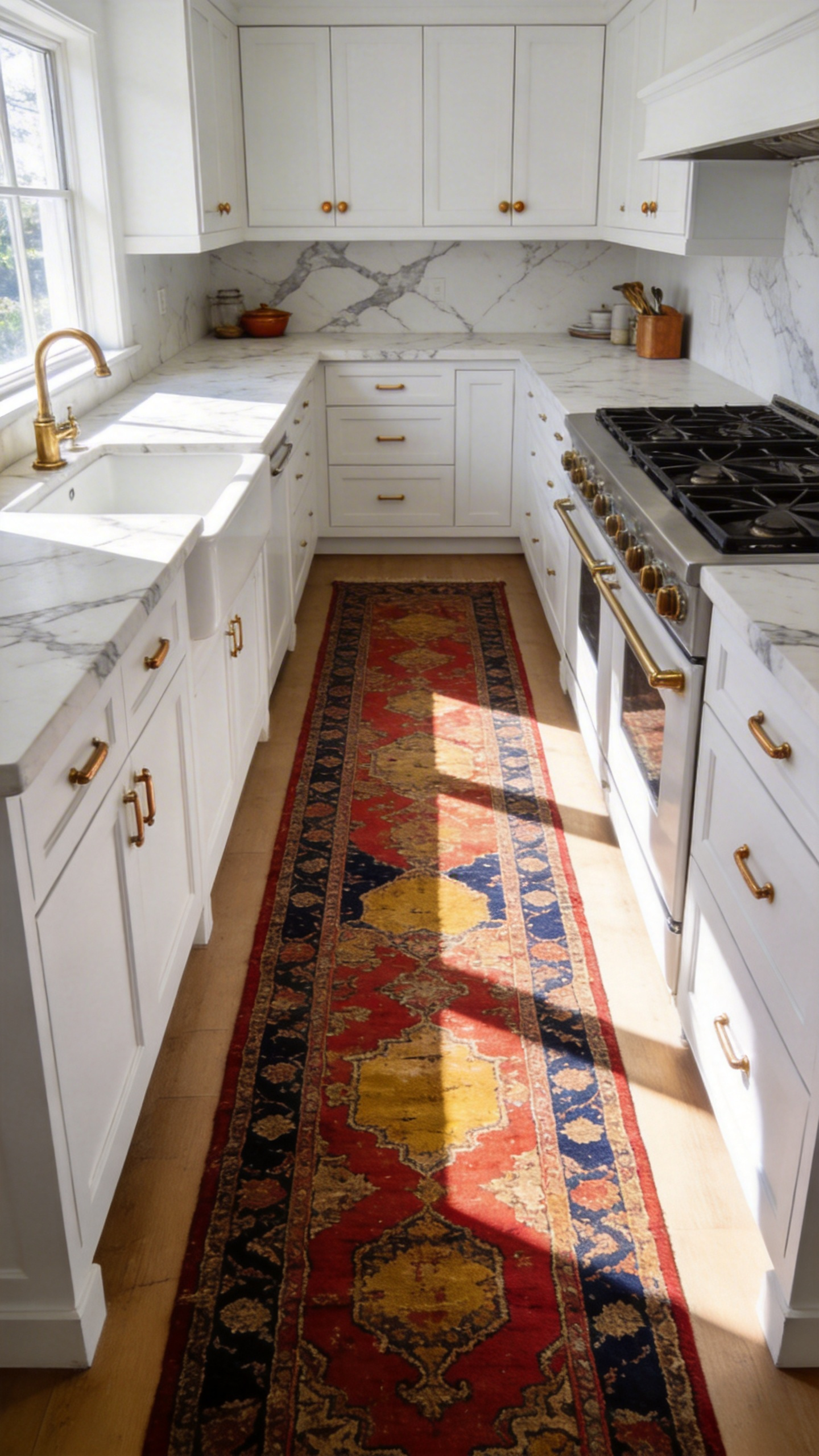
17. Antique runner rugs: injecting heritage, color, and softness into the work triangle
An antique runner rug instantly adds lived-in warmth to a new kitchen. I always suggest genuine, hand-knotted wool rugs over synthetic alternatives. Wool contains natural lanolin. Therefore, it creates a highly resilient barrier against kitchen spills. Plus, a thick rug provides joint-friendly cushioning when you are standing at the sink.
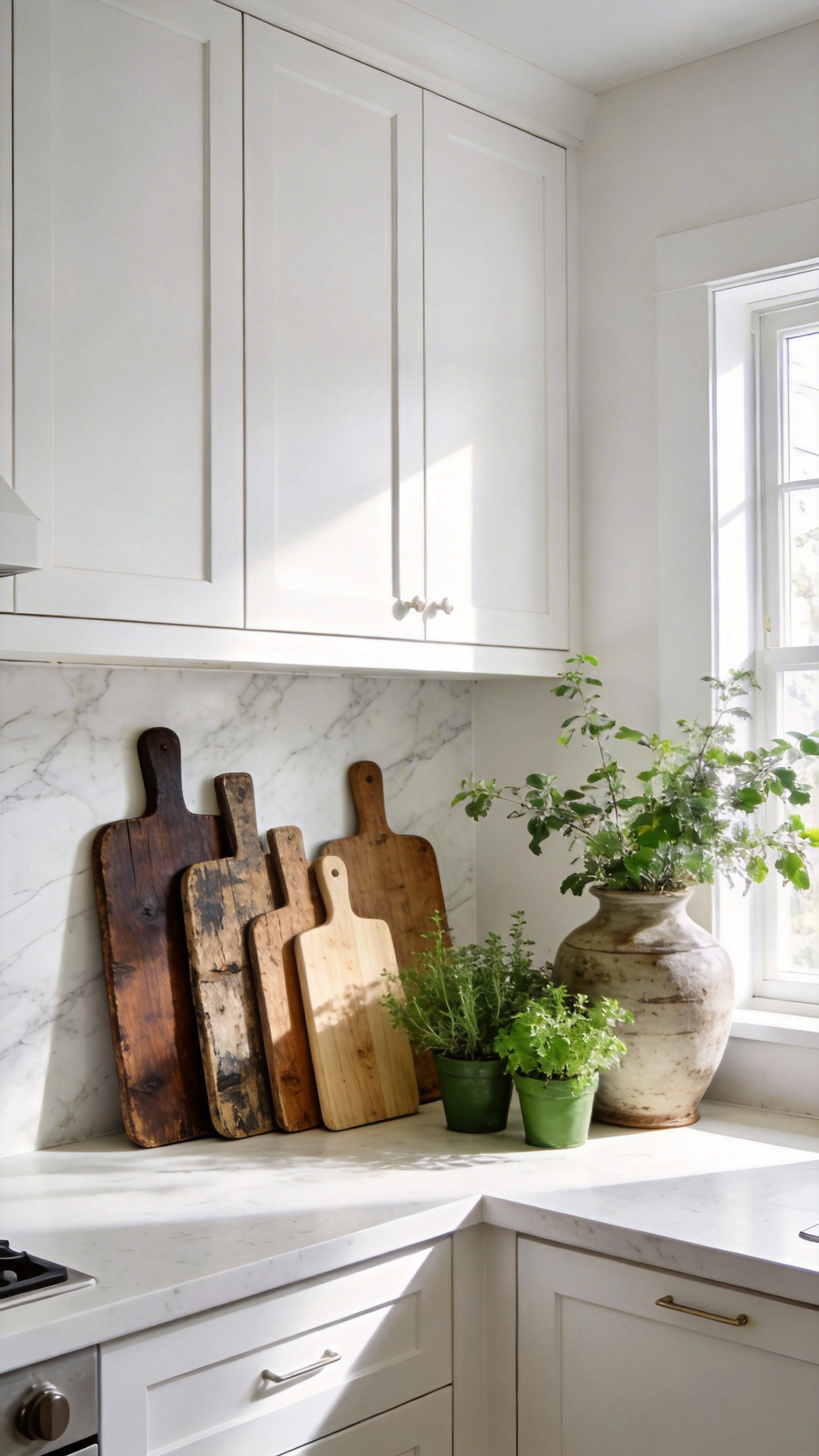
18. Organic warmth integration: styling with reclaimed wood cutting boards and living botanicals
Reclaimed wood cutting boards bring necessary organic texture into an all-white space. Try leaning a few rugged walnut boards against your backsplash. Next, add some vibrant potted herbs to the island. Combining dark wood and living greenery quickly transforms a crisp kitchen into a warm, inviting room.
A white kitchen does not have to be boring or clinical. The best white kitchen ideas rely entirely on texture, lighting, and contrast. Whether you add unlacquered brass hardware or splurge on a heavily veined marble island, the details matter. Ultimately, thoughtful layering turns a basic white room into a genuinely stunning space. You end up with a kitchen you will love for decades.
Frequently asked questions
How do I make a white kitchen feel warm and not clinical?
To prevent a white kitchen from feeling sterile, you must layer textures. I like to incorporate warm wood elements. White oak floors or reclaimed wood cutting boards work perfectly. Next, try using living finishes like unlacquered brass that patina over time. Finally, ensure your overhead lighting has a warm temperature, ideally around 3000K to 3500K.
What is the best white paint for kitchen cabinets?
The best choice depends entirely on your natural light. Sherwin-Williams Alabaster is a very popular warm white. It works well in most normal settings. However, Benjamin Moore Chantilly Lace is a cleaner, pure white. Therefore, it is ideal for rooms flooded with natural light. Always test large swatches in your specific space before buying gallons of paint.
Are white kitchens still in style for 2026?
Yes, white kitchens remain a major cornerstone of premium design. They act as a timeless, high-value asset for home resale. However, the styling has evolved. Today, the trend heavily favors “Organic White” spaces. These kitchens emphasize tactile materials, artisan plaster, and bespoke millwork. The flat, high-gloss white boxes of the 2010s are definitely gone.