Many homeowners view furnishing a living room as a simple, transactional checklist. You identify a need, visit a big-box retailer, and quickly purchase a solution. However, finding the right living room couch ideas that align with a luxury lifestyle requires a shift. You must move from passive consumption to active curation. Without this intention, spaces often feel temporary or strictly utilitarian. Consequently, the cycle of “fast furniture” persists, prioritizing immediate availability over lasting value. Yet, a sophisticated shift is currently reshaping high-end interior design. The focus is returning to bespoke craftsmanship and intentional furniture curation.
This transition marks a modern return to the philosophy of the “Master Cabinetmaker.” It is known as the “Curatorial Promise,” rooted in the Latin *curare*, meaning “to take care.” Instead of selecting from pre-determined inventory, you commission a specific narrative for your home. Therefore, the furniture becomes a primary artifact rather than a disposable object. Indeed, this relational approach ensures every element serves a distinct purpose within your domestic collection.
This guide explores how to master the art of commissioning your space with confidence. We cover essential things to know before buying a living room couch, revealing the “invisible luxury” behind kiln-dried frames and hand-tied springs. Furthermore, we examine how tactile fabrics like mohair determine a room’s emotional temperature. Ultimately, adopting this mindset transforms a house into a “soulful” home. It is time to stop merely shopping and begin truly curating.
Phase I: The Architectural Silhouette – Form as Foundation
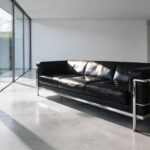
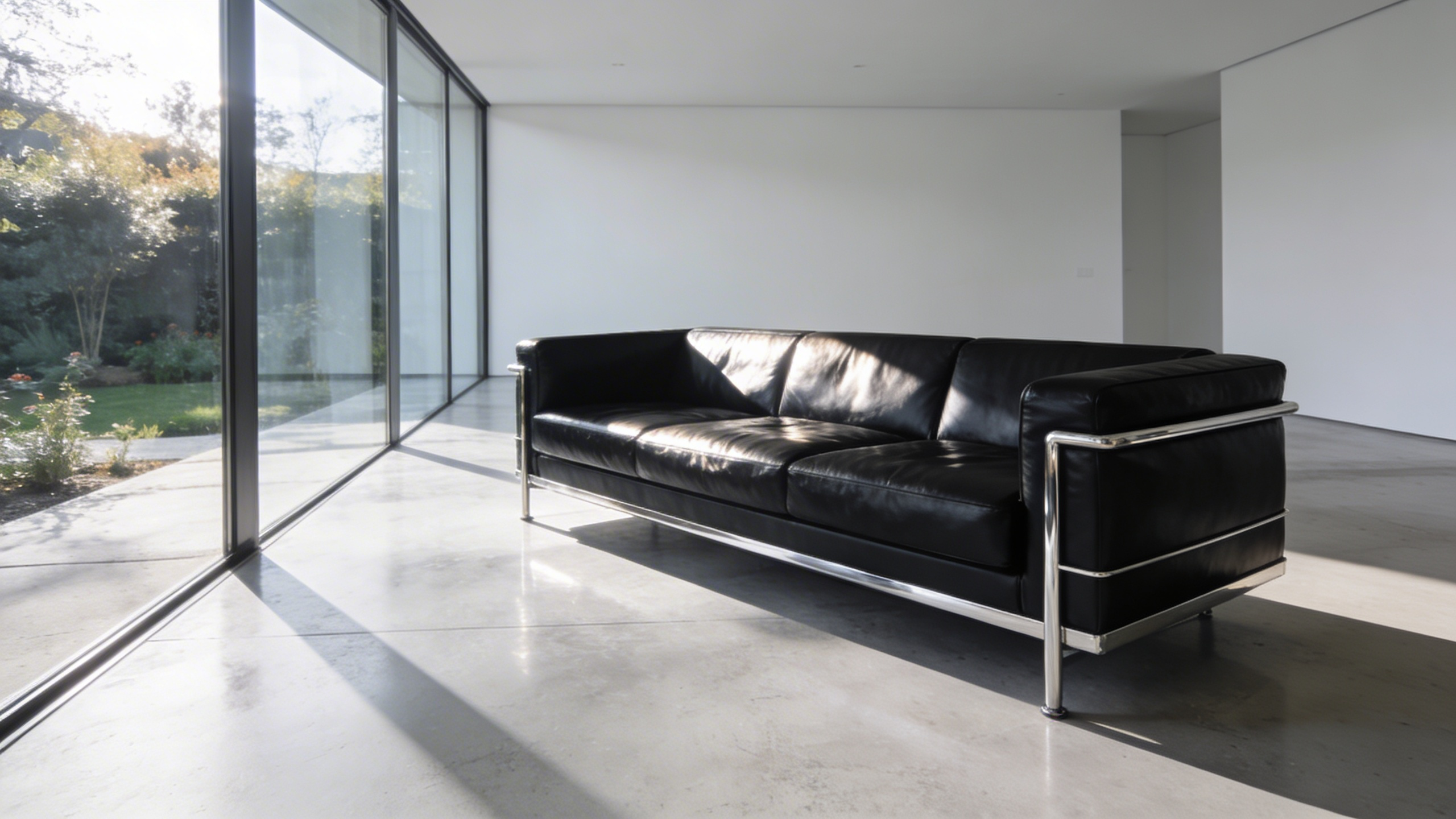
In living room design, the couch serves as the primary architectural anchor. Therefore, it dictates the room’s entire narrative, acting as a foundation rather than a mere accessory. Historically, the 1928 Le Corbusier LC2 revolutionized this concept by turning the sofa “inside out.” Specifically, this design exposed the steel frame to prioritize “honesty in materials.” Consequently, the piece acts as a spatial cage. It frames the air itself rather than just filling it. Using an architectural silhouette in your seating ensures the room remains grounded yet airy.

Next, you must consider visual weight through negative space. For instance, a sled base allows light to pass underneath the seating. As a result, the sofa appears to “hover,” visually expanding the floor plan. Conversely, a recessed plinth base grounds the room instantly. Ideally, this suggests permanence, absorbing sound and anchoring the space’s gravity.
Furthermore, the silhouette alters vertical perception. Many luxury designs utilize a low-slung profile to create a “false ceiling” effect. By keeping the furniture low, the eye travels upward naturally. Thus, the room feels significantly more expansive. To maintain this geometry, manufacturers use multi-density high-resilience foam. Ultimately, this prevents sagging and preserves the sharp architectural lines over decades of use.
Finally, the form dictates human movement. Modular silhouettes act as a topographic map, defining living zones without actual walls. For example, a curved design softens harsh building angles. Similarly, monolithic forms in pale fabrics reflect natural light deep into the room. Therefore, the sofa becomes a secondary window, effectively illuminating the interior.
1. The Curvilinear Statement: Softening Rectilinear Rooms with Organic Geometry
The move toward organic geometry in living rooms is far more than a fleeting trend. In fact, it is a calculated response to the rigid, box-like architecture of modern homes. Scientifically, this preference is deeply rooted in neuroaesthetics. Specifically, research suggests that sharp angles can subconsciously trigger the brain’s fear center. Conversely, the sweeping arc of a curved sofa signals safety. Therefore, placing a rounded sectional in a square room effectively “hacks” the body’s stress response. Ultimately, this creates a biological sense of ease within a curated interior.

To utilize this correctly, we often look to mid-century designer Vladimir Kagan. Historically, he revolutionized interiors by moving the sofa away from the wall. Previously, boxy furniture sat flat against the room’s perimeter. However, Kagan believed that “people talk better in circles.” Consequently, a curved sofa transforms a living area into a centralized “social island.” Thus, the furniture dictates a choreography of movement, forcing the room to be used more intimately.
Beyond social dynamics, these pieces act as functional organic disruptors. Technically, a curved radius improves traffic flow by eliminating the “dead zones” of sharp corners. Furthermore, soft, undulating surfaces help scatter harsh sound reflections. Nevertheless, achieving a high-end look requires restraint. Ideally, you should maintain a dynamic tension between straight and curved lines. For example, anchor the space with one large curvilinear statement. Then, contrast that organic silhouette against a linear rug. In doing so, you highlight the sofa’s elegance without making the room feel chaotic.
2. The Low-Profile Modular: Grounding the Space for Visual Height
The low-profile modular sofa serves as a sophisticated architectural tool. Specifically, it manipulates the “visual gap” within your living area. By significantly lowering the seating plane, you effectively drop the room’s horizon. Consequently, the vertical distance to the ceiling expands visually. In fact, this simple trick transforms standard 8-foot ceilings into spacious, loft-like environments. These pieces are among the most functional modern living room furniture finds for high-end residential projects.

Historically, this design evolution stems from the 1970s Radical Design movement. Notably, icons like the Camaleonda shifted the focus from stiff etiquette to relaxed lounging. Therefore, these pieces act less like barriers and more like landscaped topography. However, achieving this look requires careful material selection. To illustrate, “heavy” textures are essential to anchor the piece visually. For example, a dense bouclé or distressed leather prevents the sofa from looking unsubstantial.
Furthermore, this aesthetic borrows from the stability of Japanese Tatami culture. Yet, a grounded sofa needs a counterweight. Accordingly, designers apply the “low-high” rule to maintain harmony. Simply put, you must pair the low, monolithic form with a vertical element. Ideally, a slim arc lamp or towering bookshelf draws the eye upward. Ultimately, this balance creates a luxurious sense of airiness.
3. The Floating Tuxedo: Achieving Symmetry in Open Floor Plans
The “Floating Tuxedo” serves as a strategic architectural maneuver within open-concept living. Specifically, it imposes necessary order on vast, undefined spaces. Unlike a standard sofa, the Tuxedo features a distinct 1:1 ratio between its arms and back. Consequently, this geometry creates a perfectly level “horizon line” when placed in the center of a room. Designers refer to this effect as a “soft wall.” Effectively, it defines the living zone without requiring permanent construction, a key element in stunning living room layouts.
Historically, this approach stems from the “Baldwin Legacy.” Billy Baldwin, a dean of American design, used the Tuxedo to solve the “Manhattan Apartment Problem.” By floating the sofa, he transformed awkward rooms into intimate “conversation islands.” Therefore, this placement signals a shift in narrative. The room becomes a space for the “social sit” rather than passive television viewing. Because the high arms encourage upright posture, the atmosphere remains sophisticated.
Furthermore, the Floating Tuxedo is the primary tool for achieving bilateral symmetry. For example, placing two identical sofas face-to-face creates a balanced, hotel-lobby aesthetic. Ideally, this creates a rectangular “conversation pit” that anchors the room. To refine this look, designers often employ the “console-capping” technique. Specifically, placing a console table behind the exposed back breaks up the visual mass. However, precision is key here. The table should sit exactly one inch lower than the frame to maintain a clean line. Ultimately, this arrangement mirrors the home’s architecture, providing equilibrium.
4. The Deconstructed Chesterfield: A Modern Take on Gentleman’s Club Heritage
Originally commissioned by Lord Philip Stanhope, the Chesterfield began as a functional necessity. Specifically, its upright design prevented wrinkles in a gentleman’s bespoke suit. Later, these sofas anchored exclusive Victorian clubs, symbolizing status and high-stakes social discourse. However, the modern “deconstructed” iteration radically departs from this rigid formality.

Catalyzed by designers like Van Thiel, this style embraces “process-oriented luxury.” Instead of hiding craftsmanship behind heavy velvet, the design purposefully liberates the frame. Consequently, the piece showcases Old World artistry previously concealed by upholstery. For instance, exposed mortise-and-tenon joints and hand-tacked nailheads become the primary focal point.
Visually, this approach creates a compelling sensory contrast. The front typically offers familiar comfort with soft linen or distressed leather. Conversely, the reverse reveals raw burlap, jute webbing, and kiln-dried walnut. Thus, the sofa feels architectural and historically alive. Furthermore, this “industrial wabi-sabi” aesthetic actively challenges the fast-furniture movement.
Technically, achieving this “unfinished” look requires immense precision. In fact, without top fabric to hide flaws, every tack must be perfectly placed. Therefore, the deconstructed Chesterfield bridges the gap between the refined library and the industrial loft. Ultimately, it transforms a symbol of aristocratic gatekeeping into a celebration of honest construction.
5. The Daybed Hybrid: Transitional Sculptures for Visual Flow
In the landscape of modern interiors, the daybed hybrid has evolved significantly. It has graduated from a secondary guest-room staple into a primary architectural tool. Unlike traditional sofas that act as heavy anchors, these pieces function as transitional sculptures. Specifically, their low-profile forms allow the eye to travel across a room without interruption. Consequently, this preserves essential sightlines and establishes a necessary sense of “visual flow.”

Historically, icons like Mies van der Rohe’s Barcelona Daybed redefined this category as art. Indeed, by separating the supporting structure from the surface, these pieces create a distinct “floating” effect. Therefore, they are ideal for reducing visual clutter in open-plan lofts. Because a backless daybed possesses a 360-degree aesthetic, it serves as a sophisticated island. In fact, it bridges social zones without creating wall-like barriers.
Furthermore, the “transitional” style relies on a specific material alchemy. For instance, high-end hybrids often pair “cold” sculptural elements like chrome with “warm” tactile surfaces. As a result, the furniture feels inviting yet architectural. Ultimately, the daybed is a spatial intervention that prioritizes breathable luxury over bulk.
Phase II: Materiality and Tactile Luxury – The Sensory Experience
True luxury has shifted away from purely visual aesthetics. Instead, it prioritizes a multi-sensory “cocooning” experience. Specifically, modern high-end design leverages “neuroaesthetics” to trigger a physiological response. Your skin contains specialized nerve fibers called C-tactile afferents. These receptors respond optimally to gentle, soft textures. Therefore, surfaces like high-pile velvet signal safety to the nervous system. This reaction releases oxytocin, instantly promoting relaxation through tactile upholstery.

To achieve this, designers rely on a “Gold Standard” of materials. First, Mohair velvet serves as a resilient, glowing alternative to flat synthetics. Unlike cotton velvet, it resists crushing. Similarly, Nubuck leather offers a warm, sanded nap. In contrast to cold finished leather, it feels inviting immediately. Additionally, bouclé has evolved significantly. New blends now incorporate alpaca to soften the fabric’s traditional grit.
Moreover, texture plays a crucial role in acoustics. Hard surfaces often create stressful “acoustic glare.” However, heavy, porous textiles act as natural sound baffles. A dense sectional absorbs sound waves effectively. Consequently, the room feels physically quieter, enhancing the sense of intimacy.
Finally, tactile luxury embraces “graceful aging.” High-quality materials develop a patina over time. This visual history deepens your emotional bond with the piece. Yet, practicality remains essential. Thus, modern nanotechnology allows natural fibers to repel liquids. You retain the soft “hand” of linen without the fragility. Ultimately, this balance creates a sophisticated, livable sanctuary.
6. Performance Velvet: The Intersection of Opulence and Durability
Historically, velvet served as a fragile status symbol. However, modern textile engineering has transformed it into a resilient material. Therefore, performance velvet is now a smart investment for high-traffic living rooms. Specifically, true performance fabrics go beyond temporary topical sprays. Instead, manufacturers often use an immersion process. Consequently, each fiber is encapsulated in a molecular barrier. Thus, liquids bead on the surface rather than soaking into the yarn. Furthermore, the industry is increasingly adopting PFAS-free chemistry, ensuring safety without sacrificing texture.

Regarding structure, “Holland” velvet represents the elite standard. Manufacturers use a high-heat calendering technique to polish the pile. As a result, the fabric creates a sleek, lustrous finish. Additionally, its high density makes it nearly impossible for pet claws to snag. In fact, while cotton velvet may wear out quickly, performance options endure. They often withstand over 50,000 double rubs on the Wyzenbeek durability test. Because the pile is cut rather than looped, pilling is physically impossible.
Beyond strength, the aesthetic appeal remains undeniable. The vertical pile absorbs and reflects light, creating deep visual movement. Simultaneously, the fabric offers a “hug-like” tactile experience. Finally, sustainability is becoming a key priority. Many luxury options now utilize recycled PET from plastic bottles. Ultimately, this delivers guilt-free opulence combined with industrial-grade resilience.
7. Unprocessed Linen: Mastering the ‘Wabi-Sabi’ Aesthetic of Relaxed Luxury
To truly master the Wabi-Sabi aesthetic, one must look beyond simple wrinkles. Specifically, this style often relies on unprocessed, “loom-state” linen rather than pre-softened versions. Unlike common stonewashed fabrics, loom-state linen feels initially crisp and distinct. However, it offers a “bespoke softness” that develops slowly over years of use. Consequently, the fabric breaks down naturally, creating a texture factory processes cannot replicate.

This approach aligns with the design philosophy of looking “poor but expensive.” Indeed, the true value lies in the provenance of heavy Belgian or French flax. Visually, look for “slubs”—small, natural lumps—within the weave. These irregularities are signatures of authenticity, not defects. Furthermore, a low-slung couch allows this heavy fabric to pool gracefully at the floor. This creates a sense of effortless, unstudied luxury.
Beyond aesthetics, raw linen acts as a functional, “living” layer. Uniquely, it remains cool to the touch due to active thermal regulation. Moreover, the hollow fibers provide acoustic softness, effectively dampening room noise. Therefore, a heavy linen sofa becomes a quiet, sensory refuge.
Finally, embrace the “color of non-color” by selecting natural oatmeal or greige tones. Because undyed fibers resist uniform pigmentation, they offer incredible visual depth. Over time, the fabric develops a unique patina from sunlight exposure. Thus, you commit to an investment piece that grows more beautiful with age.
8. High-Pile Bouclé: Introducing Micro-Texture to Monochromatic Palettes
High-pile bouclé offers a tactile solution for elevating monochromatic living rooms. Specifically, it introduces a “micro-texture” that effectively acts as a substitute for traditional patterns. Unlike standard variations, this fabric utilizes a sophisticated “high-low” weaving technique. Consequently, weavers create loops of varying heights and diameters to form a complex surface.

This variation creates a miniature landscape on your furniture. In fact, these irregular loops naturally trap light to generate thousands of “micro-shadows.” Therefore, a simple cream-colored couch transforms from a flat block of color into a sculptural object. Furthermore, high-pile bouclé offers a unique relationship with light. While luxury textiles like velvet reflect light, this dense material absorbs it. As a result, it produces a soft, matte finish that feels organic.
This quality helps soften the sterile atmosphere sometimes found in minimalist spaces. Historically, this comfort-focused aesthetic dates back to Florence Knoll’s request for a chair resembling a “basket of pillows.” Today, that legacy continues through the “Quiet Luxury” movement. Beyond aesthetics, the fabric serves a functional purpose. The deep loops trap air, effectively dampening sound in open-plan rooms.
However, this investment requires specific maintenance. Because the loops are looser, they are susceptible to snagging from jewelry or pet claws. Additionally, dust can settle deep within the pile. Therefore, experts recommend a low-suction vacuuming strategy to preserve the texture. Ultimately, high-pile bouclé balances architectural interest with exceptional comfort.
9. Full-Grain Cognac Leather: The Investment Piece That Ages with Grace
A full-grain cognac leather couch is far more than a simple furniture choice. Fundamentally, it represents a living material that participates in your home’s history. Unlike fabric, which eventually degrades, full-grain leather evolves through a chemical process called patina. Specifically, the outermost layer of the hide retains its dense fiber structure. Consequently, this durability ensures the piece can last for 25 to 40 years.

Most high-end models use “Pure Aniline” leather. Therefore, they lack plastic coatings, allowing the material to breathe naturally. Over time, the raw cognac color deepens into a rich, burnt sienna. Additionally, the cushions develop a “comfort slouch,” molding perfectly to your body. Interestingly, everyday scratches do not ruin the aesthetic. Instead, they “heal” into the surface with a simple buff, adding character.
Design-wise, cognac serves as a “new neutral” for sophisticated interiors. Historically, mid-century designers used this warm tone to contrast against cold steel or glass. Thus, it pairs effortlessly with both navy blues and warm terracottas. Financially, this is a classic “buy once, cry once” scenario. Although the upfront cost is higher, the long-term value is undeniable. Ultimately, you are investing in an heirloom that improves with age.
10. Mixed Media Frameworks: Integrating Walnut and Brass Accents into Upholstery
In the realm of high-end design, combining walnut and brass represents a structural philosophy known as “Mixed Media Frameworks.” This pairing effectively balances organic warmth with architectural precision.

The most distinctive integration often occurs at the feet, historically called “sabots.” Originally, these brass caps protected slender walnut legs from household wear. However, modern designers use them to visually lift a sofa’s profile. Consequently, the metallic accent acts as a period at the end of a wooden sentence. It prevents dark frames from appearing too heavy on the floor.
Moreover, this combination is a masterclass in tonal harmony. Unlike the cold contrast of chrome, walnut and brass share a “warmth-on-warmth” aesthetic. Specifically, the wood’s deep chocolate tones ground the room, while the metal reflects light. Thus, the result is “Quiet Luxury”—inviting yet structured.
Additionally, true luxury involves longevity. These materials offer a “living finish” that evolves over decades. For instance, walnut lightens to amber, and brass softens into a bronze patina. Therefore, your investment piece creates a narrative, aging gracefully alongside your home. When selecting upholstery, choose low-sheen fabrics like mohair velvet. Ultimately, this prevents the textile from competing with the brass’s natural luster.
Phase III: Color Theory and Visual Weight – Anchoring the Room
In high-end design, your sofa acts as the room’s psychological anchor. This concept relies heavily on “visual gravity.” Consequently, darker, saturated hues like navy or charcoal create a heavy, grounded sensation. These pieces effectively “sink” into the floor, establishing a secure center of gravity. Conversely, a white linen sofa possesses significantly less visual density. Therefore, it often requires a dark rug to prevent it from appearing to float aimlessly.

Historically, this shift toward substantial furniture marks the evolution from stiff parlors to relaxed living rooms. In fact, early 20th-century “Davenports” replaced spindly legs with heavy bases to physically anchor the family unit. Beyond aesthetics, a plush, velvet sofa serves a crucial sensory function. Remarkably, dense upholstery acts as an acoustic “bass trap,” absorbing sound to quiet the room’s ambient noise. Without this weight, a space often feels thin or echoey.
To maximize this anchoring effect, you must also consider technical geometry. For instance, ensure your coffee table sits within four inches of the sofa’s seat height. This alignment creates a continuous, restful horizontal line for the eye. Finally, avoid pushing this heavy anchor flush against the wall. Instead, float it just three inches out to allow the visual weight to breathe properly. Ultimately, this negative space prevents the room from feeling crowded.
11. The Jewel-Tone Anchor: Using Sapphire or Emerald to Define Space
Open floor plans often suffer from a lack of visual hierarchy. Furniture can feel adrift in large spaces; however, a sapphire or emerald sofa effectively acts as a gravitational anchor. Specifically, these deep colors possess a very low Light Reflectance Value (LRV). Therefore, they absorb the majority of light, pulling the eye downward and inward. This creates a clearly defined conversation zone without the need for physical walls.

Furthermore, this “anchoring” effect relies heavily on the choice of fabric. Flat fabrics like linen rarely capture the necessary depth for these hues. Instead, velvet remains the gold standard for jewel tones. Because of its directional nap, velvet creates a natural “chiaroscuro” effect. Thus, a sapphire couch shifts dynamically from electric blue to midnight black depending on the light. This interplay ensures the large piece feels sophisticated rather than monolithic.
Historically, these shades evoke the “Old World” authority of Victorian luxury. However, contemporary design reimagines them through the lens of “New Traditionalism.” By placing a royal color on a clean silhouette, you bridge a stylistic gap. In fact, it connects ancestral heritage with modern urban living seamlessly.
To maximize this investment, consider your surrounding materials carefully. For instance, emerald carries an organic, earthy undertone. Therefore, it pairs beautifully with warm walnut wood and unlacquered brass. Conversely, sapphire feels architectural and cool. It works best alongside chrome accents or white Carrara marble. Ultimately, these bold choices transform a simple seating area into the undisputed heart of the home.
12. Tone-on-Tone Layering: The Art of the ‘Invisible’ Cream Sofa
The “invisible” cream sofa represents a shift from simple furniture matching to high-level architectural strategy. Specifically, this technique utilizes chromatic drenching. By matching the sofa fabric to the wall’s Light Reflective Value, the furniture’s silhouette effectively dissolves. Consequently, the piece becomes an extension of the room’s infrastructure rather than a standalone object. This approach creates a seamless visual flow. Therefore, architectural bones like crown molding take center stage, allowing the room to feel like a continuous, expansive volume.

However, removing color contrast requires a mastery of tactile contrast. Without distinct textures, a monochromatic room risks feeling flat or clinical. Thus, successful designs employ the “Rule of Three” textures. Ideally, pair a nubby bouclé sofa base with contrasting chunky wool accents and a grounding jute rug. Furthermore, precise undertone management is essential to avoid a “dirty” look. Warm creams naturally create a cozy atmosphere, while cool creams evoke a modern gallery feel.
Finally, the success of this look depends heavily on lighting temperature. Daylight bulbs often make cream fabrics look stark or sickly. Conversely, soft white lighting between 2700K and 3000K enhances the fabric’s golden undertones. This specific range creates “micro-shadows” within the weave. As a result, the room serves as a visual palette cleanser. Ultimately, this investment creates a sanctuary that counters digital fatigue.
13. Moody Charcoal and Slate: Creating Drama Through Light Absorption
Charcoal and slate sofas have evolved significantly beyond their utilitarian roots. Previously, homeowners chose these shades primarily to hide stains. Now, however, they function as high-drama interior strategies. This transformation relies heavily on the physics of light absorption. Specifically, these deep hues possess a very low Light Reflectance Value (LRV). Consequently, they act as “light sinks” rather than reflectors. This absorption causes the furniture to visually recede, effectively anchoring the room.
Yet, a flat fabric can create a “black hole” effect. Therefore, texture becomes a critical component of your investment. Indeed, materials like lustrous velvet or mohair catch light at various angles. This interaction creates shimmering, three-dimensional depth rather than a flat, dark block. Furthermore, distinguishing between these two tones is essential for setting the mood. Charcoal typically contains warm, carbon-based undertones. Thus, it feels cozy and traditional, pairing beautifully with walnut woods.
In contrast, slate offers a cooler, mineral-based aesthetic with blue undertones. This creates a sophisticated, architectural “cold drama.” Effectively, this approach applies the art of Chiaroscuro to modern living. Designers use deep shadows to define space, mirroring the techniques of Dutch masters. Finally, the current trend emphasizes “intentional charcoal.” Avoid sterile, builder-grade options. Instead, select bold silhouettes where the darkness highlights the form.
14. Earth-Tone Palettes: Terracotta and Sage for Biophilic Connection
Choosing a couch in terracotta or sage goes beyond simple aesthetics. Actually, it taps directly into biophilic design principles. These colors historically signaled survival to our ancestors. Specifically, sage represents fertile vegetation, while terracotta mimics the clay of early shelters. Consequently, these tones lower heart rates and act as a visual sedative. However, to maximize this effect, the material selection is just as critical as the color.

To achieve a high-end look, prioritize texture. For instance, a sage couch in washed linen mimics the matte finish of dry herbs. Alternatively, sage velvet captures light like moss in a damp forest. Meanwhile, terracotta shines best in high-quality aniline leather. Over time, this leather develops a patina, resembling the natural variations of red-clay landscapes. Thus, it offers a luxurious “Old World” feel without looking dated.
Furthermore, the shape of the furniture should reflect the earth. Therefore, opt for low-slung, modular sofas that physically ground the room. Curves are also essential here. In fact, a curved backrest mimics organic riverbanks, effectively reducing cognitive load. Finally, consider the room’s lighting. During the “golden hour,” a terracotta couch glows, creating a comforting “visual hearth.” Conversely, sage absorbs cool morning light, preventing the room from feeling sterile.
Phase IV: Lifestyle Integration – Configuration as Philosophy
In this terminal stage of design, the sofa transcends its role as a mere object. Instead, it becomes a functional landscape occupying the room’s center. Historically, we treated living spaces as theatres focused on a single screen. However, Phase IV reimagines the room as a social forum. Therefore, seating moves away from walls, creating an “island” that invites 360-degree interaction.

Consequently, the homeowner becomes an architect of behavior. You do not simply buy a couch; rather, you choreograph your daily life. For instance, separate modules might facilitate focused morning reading. Conversely, docking them together creates a “pit” for evening cinema. This fluidity implies that static furniture inevitably leads to static lives. Furthermore, sensory details guide these transitions. Specifically, deep, low-slung modules signal the nervous system to shift into a rest state.
Moreover, this configuration acts as a social sculpture rather than a status symbol. By adopting circular layouts, we eliminate the “head of the table” hierarchy. Thus, the design fosters accidental intimacy and democratic conversation. Finally, this philosophy addresses modern mobility. A modular system is space-agnostic, adapting easily from suburban homes to city apartments. Ultimately, this approach champions a “buy once, configure forever” strategy.
15. The ‘Conversation Pit’ Revival: Facing Arrangements for Social Sophistication
The conversation pit is shedding its reputation as a 1970s relic. However, it is returning as a hallmark of genuine social sophistication for 2025. Fundamentally, this design moves beyond simple retro nostalgia. Instead, it serves as a deliberate strategy to foster human connection in a digital age. Historically, living rooms enforced a hierarchy, often centering on one dominant armchair. Conversely, the conversation pit introduced “spatial democracy.” Here, everyone sits on the same physical level, facing inward. Consequently, the focus shifts from a television screen to active, egalitarian conversation.

Fortunately, achieving this high-end look no longer requires architectural excavation. Today, designers create “modular landscapes” to mimic the intimacy of a sunken pit. For example, utilizing low-profile sectionals like the iconic Mario Bellini Camaleonda allows for a “room within a room” effect. By arranging these investment pieces in a closed U-shape, you create a psychological boundary. Thus, the space feels grounded and distinct from the rest of an open-plan home.
Moreover, this arrangement offers distinct sensory benefits. Specifically, the surrounding furniture structure acts as a sound baffle, effectively absorbing ambient noise. As a result, the layout creates a “whisper environment” where guests do not need to raise their voices. Furthermore, keeping faces between four and seven feet apart respects the optimal “social-consultative” zone. Ultimately, sinking into these plush, tactile layers forces your focus onto the people across from you.
16. The Library Deep-Seat: Prioritizing Solitude and Reading Comfort
The “Library Deep-Seat” acts as an architectural intervention for your inner life. Unlike standard sofas designed for upright conversation, these pieces prioritize solitude. Specifically, a true library seat offers at least 23 to 26 inches of usable depth. Consequently, this extended space forces the body into a natural, reclined “tuck.” Therefore, the spine settles comfortably, significantly reducing pressure during long reading sessions.

Psychologically, this design creates a necessary boundary. Much like the historic Knole sofa, high sides provide “sensory gating.” As a result, the furniture visually narrows your focus, blocking out domestic chaos. To maximize this “nest” response, prioritize tactile materials like performance velvet or mohair. Furthermore, insist on feather-wrapped foam cores rather than bouncy synthetic fills. This composition allows for a “signature slump,” effectively cradling the body.
However, deep seating presents a unique logistical challenge. Because standard coffee tables become unreachable, you must integrate a “C-table” over the arm. Ideally, this creates a tight active radius for tea or reading glasses. Ultimately, this investment transforms a corner of your living room into a private sanctuary.
17. The Art-Gallery Settee: Sacrificing Scale for Sculptural Impact
In high-end interior design, the “Art-Gallery Settee” represents a shift from simple utility to functional artifact. Specifically, these pieces sacrifice the deep sprawl of a traditional sofa for a commanding sculptural presence. By intentionally shrinking the footprint to roughly 50 to 70 inches, designers create necessary “negative space.” Consequently, the furniture breathes, turning a living room into a curated gallery environment. This reduced scale allows for daring silhouettes that would otherwise feel overbearing. For instance, consider the sharp, bird-like angles often found in a Vladimir Kagan serpentine piece.

However, this aesthetic impact often creates a tension between ergonomic comfort and artistic integrity. Modern icons like Rick Owens argue that furniture should offer a monumental experience rather than just coziness. Therefore, the settee acts as a disciplined “social anchor.” It facilitates face-to-face conversation through a firmer, higher “formal sit.” Surprisingly, tactile contradictions play a major role here. A piece might feature soft Bouclé yet rely on rigid internal framing. Ultimately, choosing such a piece is an investment in “honesty of material.” Whether crafted from cast concrete or hand-chiseled marble, the settee becomes a semi-permanent installation.
Frequently Asked Questions
What is the most timeless living room couch idea for a luxury home?
For a luxury home, a Tuxedo sofa or a Chesterfield in full-grain aniline leather is considered the most timeless. These styles rely on clean architectural lines and high-quality materials that develop a beautiful patina over time rather than following fleeting trends.
How do I choose the right sofa size for an open-concept living room?
In open-concept spaces, the sofa should act as a “soft wall.” Choose a larger modular sectional or a “floating” tuxedo sofa that defines the living zone without blocking sightlines. Ensure there is at least 30 to 36 inches of walking space around the perimeter of the furniture to maintain proper traffic flow.
What are the best fabric options for high-end, high-traffic sofas?
Performance velvet and mohair are the gold standards for high-end durability. These fabrics offer a luxurious tactile experience while being naturally resilient to crushing and staining. For a more organic look, heavyweight Belgian linen is a sophisticated choice that ages gracefully.
Conclusion: Selecting a Sofa that Transcends Trends – The 10-Year Rule
Ultimately, selecting the right living room couch ideas is an architectural decision, not merely a decorative one. Consequently, your focus must shift from fleeting fashion to the hidden integrity of the frame. You are not just buying a seat; rather, you are investing in kiln-dried hardwood and hand-tied springs. Therefore, the “10-Year Rule” serves as a vital shield against the wasteful cycle of fast furniture. In fact, whether you choose a sculptural Chesterfield or a versatile English Roll Arm, true luxury lies in permanence.
Eventually, a well-chosen piece becomes the steady backdrop for a decade of life’s moments. It evolves with your home, developing a rich patina or adapting gracefully through reupholstery. Thus, your living space remains sophisticated without requiring constant, costly updates. Now, begin by physically testing the weight and corner stability of your next potential purchase. Finally, prioritize solid materials over temporary trends to ensure your investment truly transcends time.