Luxury living room design has two versions. One costs a fortune. The other is simply the result of making better decisions. After twelve years working with clients across the full budget range, I’m convinced that most people are only a few deliberate choices away from a room that reads as genuinely high-end. The difference is rarely money. It is almost always intention — knowing which elements carry the most visual weight, which materials age well, and where to concentrate quality.
The luxury living room ideas here come from real projects. Some transformed a room through a single material decision. Others worked because someone finally got the scale right on one key piece. Each idea is self-contained, so apply whichever is most relevant to where your room falls short. Or work through them in sequence if you’re starting fresh.
1. A Statement Sofa Built to Last Decades
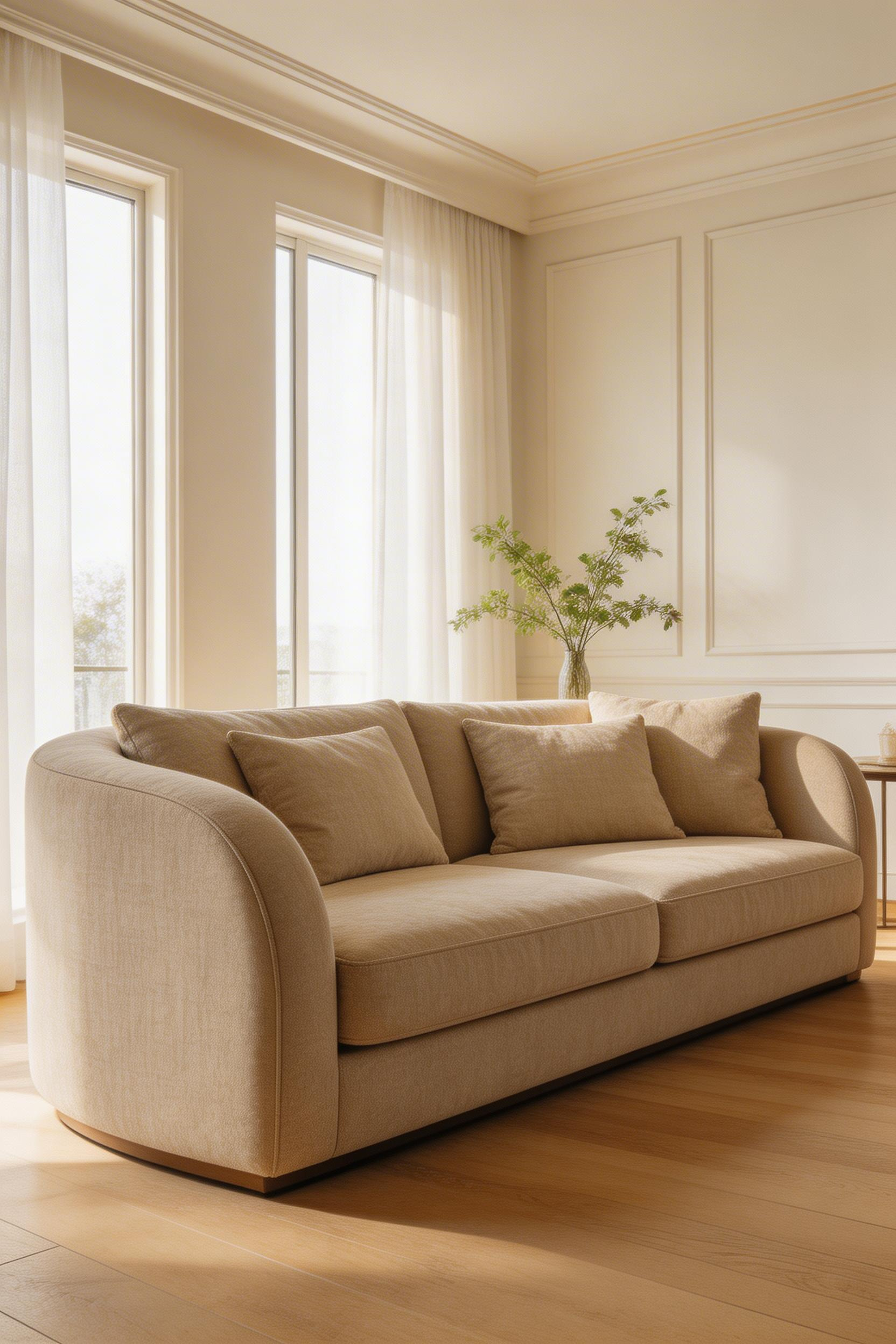
The sofa is the room’s anchor. Everything else — rug, coffee table, lighting, art — is calibrated around it. So the single most important investment in any luxury living room is a sofa built to last. Not one that looks good in the showroom and loses its shape by year five.
What to Look For in the Frame
Start with the frame. Kiln-dried hardwood — ash, beech, or oak — is the benchmark for quality sofa construction. If a product description says only “solid wood” without specifying the species, that usually means pine. Pine racks and creaks over time. Eight-way hand-tied spring suspension is the traditional standard for high-end seating. It distributes weight evenly and holds its shape for decades. Sinuous wire springs are acceptable in the mid-range, but they compress noticeably with heavy use.
Fill and Fabric
Fill matters as much as the frame. Down and feather is the softest option, but it needs regular fluffing to maintain its shape. High-resilience foam wrapped in a thin layer of down offers better long-term balance — comfortable from day one, still holding its form in year ten. On fabric, look for a rub count of at least 30,000 Martindale for a main living room sofa.
Seat depth is the measurement most buyers overlook. Twenty-two to twenty-four inches suits upright sitting; twenty-five to twenty-seven inches is better for lounging. Choosing the wrong depth is the most common sofa regret I hear from clients. The RH Cloud Sofa ($5,000–$12,000) and the Cassina LC2 ($8,000–$15,000) are both built to the right standard. For a lower entry point, the Pottery Barn Turner Square Arm ($2,500–$4,500) uses a kiln-dried frame with HR foam core that performs well above its price.
2. Layered Lighting: Ambient, Task, and Accent in One Room
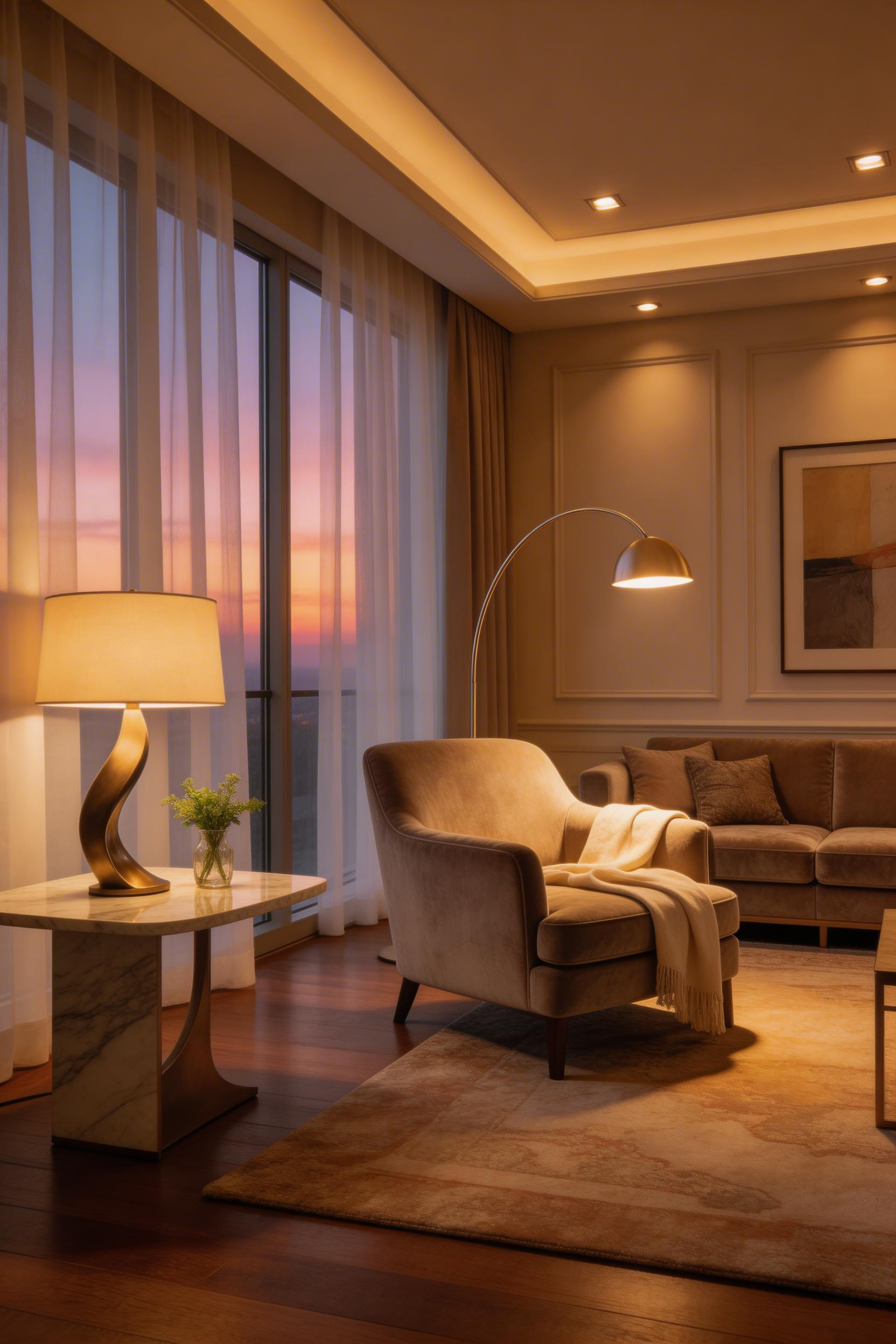
Most living rooms have one light source. That single overhead fixture is asked to do everything at once. Because it does everything, it does nothing particularly well. The defining feature of a truly luxury living room is layered lighting: three independent circuits, each on a separate dimmer.
The Three-Layer System
Ambient lighting sets the baseline: recessed downlights or a ceiling fixture on a dimmer. Task lighting serves specific functions — a table lamp beside a reading chair, a lamp on the console table, under-cabinet lighting for shelving. Accent lighting draws attention to the things worth noticing: art, architectural details, a fireplace surround.
Colour Temperature and Placement
The Kelvin temperature of your bulbs matters as much as the fixtures. For a living room, stay in the 2700K–3000K range — warm white, closer to incandescent. Anything above 3500K reads as clinical, however good the fixture. Choose LED filament bulbs with a CRI of 90 or higher. Higher CRI means colours and materials are rendered more accurately.
For more living room lighting ideas covering specific fixture styles and installation detail, that reference is worth bookmarking. But the core principle: install a separate dimmer per circuit, not one dimmer for everything. The Visual Comfort & Co. Darlana Lantern ($395–$850) works as a central ambient source with genuine visual weight. Place wall sconces at 6.5–7 feet to draw the eye upward. That single placement decision makes standard 8-foot ceilings feel noticeably taller.
3. A Bespoke Coffee Table as Functional Sculpture
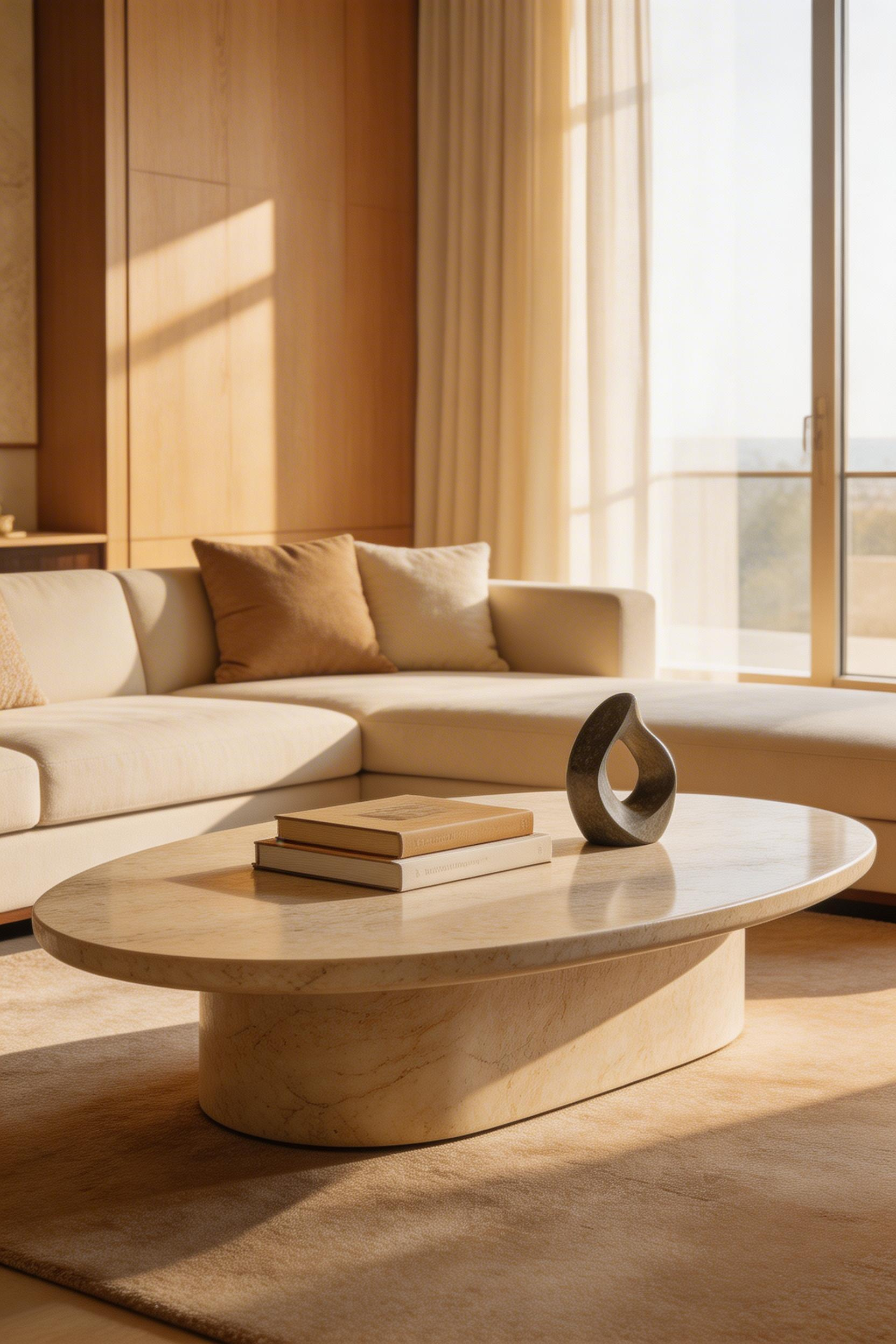
The coffee table is the most underestimated piece in most living rooms. It sits in the visual centre, in front of the sofa, visible from every seat. Yet it is usually an afterthought. In a luxury living room, it should function as sculpture as much as furniture.
Material and Scale
Travertine and marble are the dominant natural stone options. Travertine has a warmer, more organic character. Its natural pitting and varied surface become more interesting over time. Marble reads as more classical and formal. Smoked glass tops with brass or blackened steel bases have largely replaced clear glass in the high-end segment. They offer a useful middle ground between stone and transparency.
The key mistake: most people buy a coffee table that is too small. The table should be approximately two-thirds the length of the sofa — for a 90-inch sofa, that means a 54–60-inch table. Standard height is 16–18 inches. The modern luxury approach is to go slightly lower at 14–16 inches, which makes the piece feel more architectural. Leave 14–18 inches of clearance between sofa and table.
Choosing a Piece
The CB2 Roar + Rabbit Travertine Coffee Table ($899–$1,299) is an accessible entry to natural stone with genuine visual credibility. The RH Fluted Column Coffee Table ($2,800–$4,200) in handcrafted plaster reads as custom. For a room that already has significant pattern or colour, a single-material table acts as a visual anchor rather than competing for attention.
4. Architectural Mouldings and Plaster Details
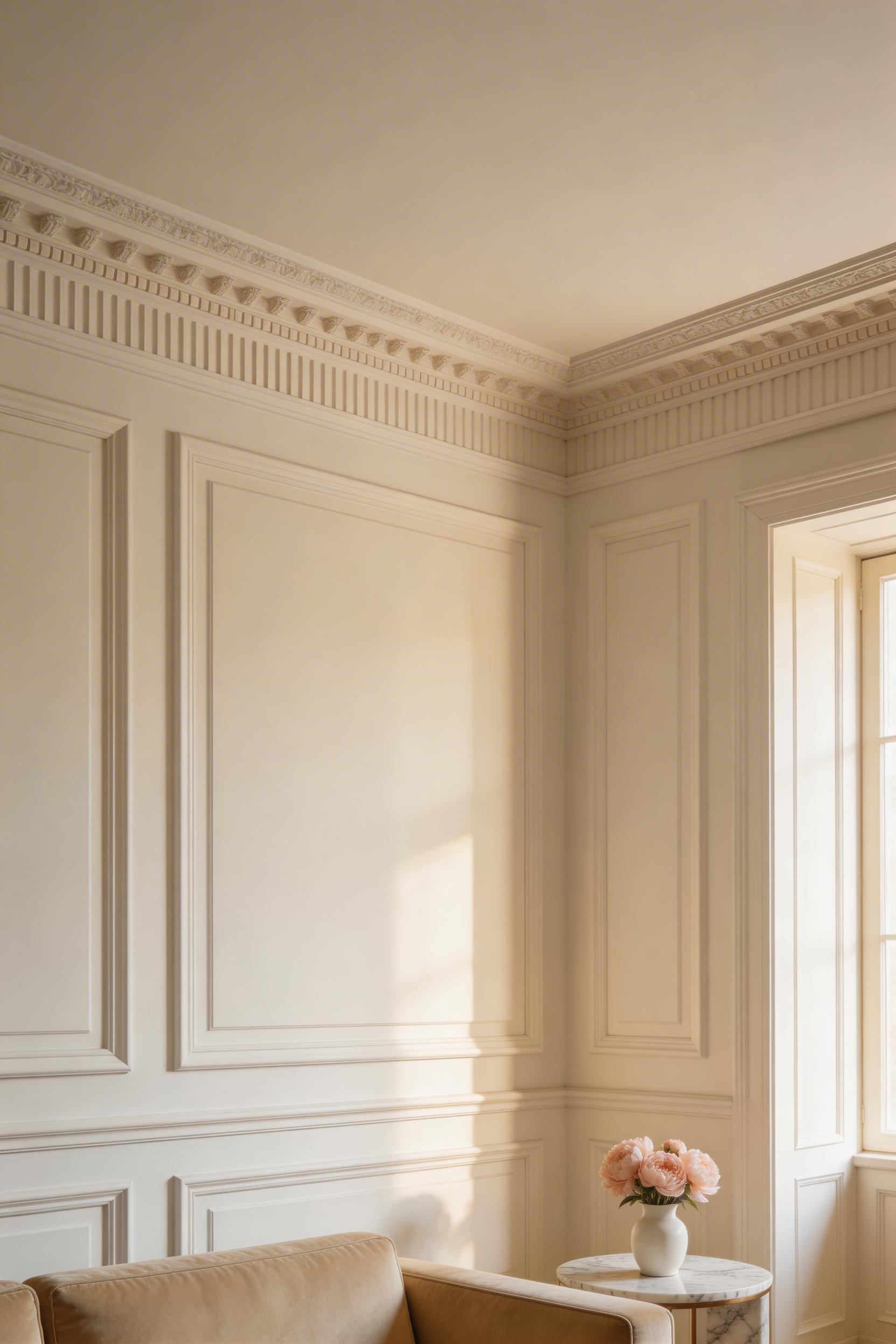
You could spend significantly on furniture and art and still have a room that feels like a rental. Plain plasterboard walls with no architectural character are the reason. Mouldings make a room feel like part of a house rather than a box within it.
Crown Moulding
Crown moulding transforms the junction between wall and ceiling. The taller the room, the deeper the appropriate profile. For a 9-foot ceiling, a 3.5–4.5-inch cornice is right; for 10 feet, 5–6 inches is appropriate. The proportion rule: one inch of cornice per foot of ceiling height. Traditional plaster cornice costs $40–$120 per linear foot installed. High-density polyurethane alternatives, such as Orac Decor profiles ($8–$22 per linear foot), are acceptable at distance and widely used in high-end renovations.
Panel Moulding and Coffers
Panel moulding on the lower half of the wall adds visual weight and makes rooms feel more tailored. A grid of rectangles 6–8 inches from the floor, with panels 18–30 inches wide, is the standard approach. The single highest-ROI moulding addition, however, is a coffered ceiling. It looks like a six-figure renovation. But it can be constructed in painted MDF for under $8,000 with a skilled carpenter. Houzz’s 2024 renovation survey found architectural mouldings among the top five features influencing perceived luxury by buyers. That finding alone makes the case.
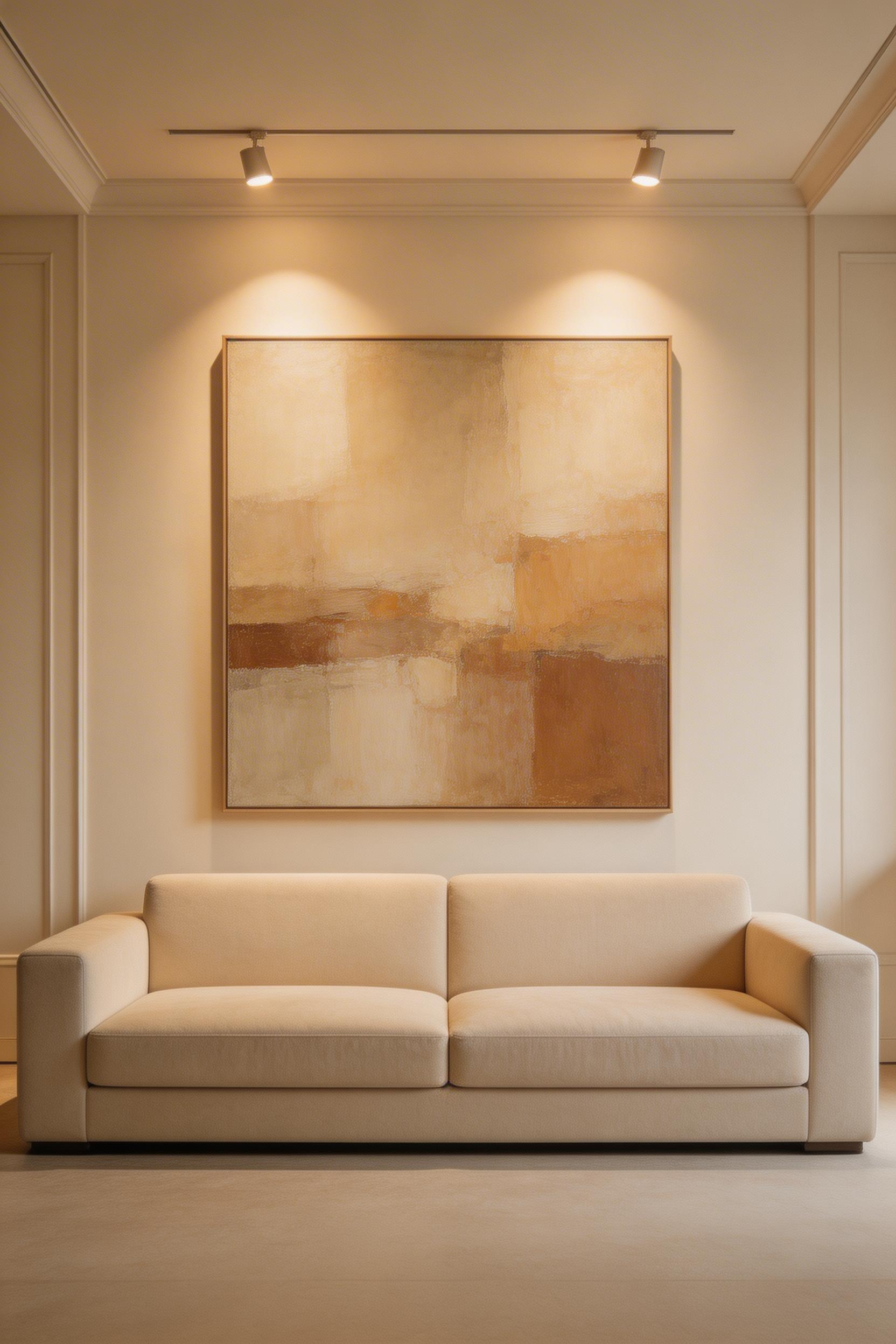
5. A Single Large-Format Artwork Over the Sofa
Gallery walls have had a long run. But in a luxury living room, a single large-format piece almost always reads with more authority. Gallery walls work in casual, eclectic spaces. They fragment the eye and suggest accumulation rather than deliberate choice. One well-proportioned work, hung correctly, does something different entirely.
Sizing Rules
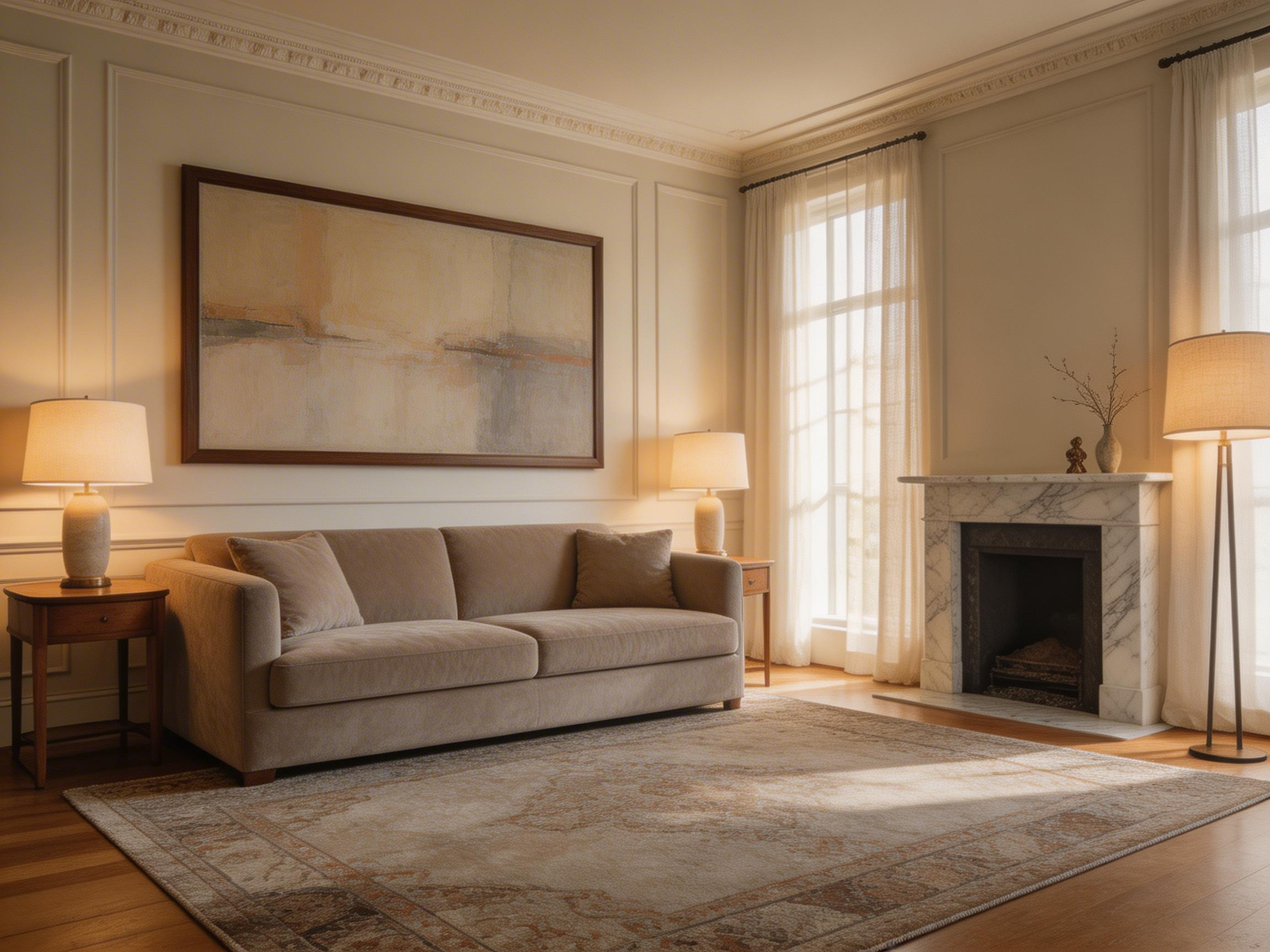
Artwork above a sofa should be two-thirds to three-quarters the sofa’s width. Hang it so the centre is at eye level — roughly 57–60 inches from the floor. The gap between sofa back and frame bottom should be 6–8 inches. Any more and the piece floats; any less and it feels crowded. For a 90-inch sofa with an 8-foot ceiling, a canvas 60–72 inches wide and up to 40 inches tall is proportionally right.
Where to Find It
Original work isn’t always expensive. Saatchi Art’s large-format originals range from $800 to $8,000. Tappan Collective offers curated emerging artists from $500–$5,000, with framed or rolled options. Before ordering anything, tape card to the wall at the exact dimensions. Live with it for a week. Most people discover they’ve sized down. Large-format work almost always looks more commanding in person than on a mood board. A 2022 survey by the Association of Art Advisors found original art added 4–8% to perceived property value in luxury homes.
6. Natural Stone: Marble, Travertine, and Onyx Surfaces
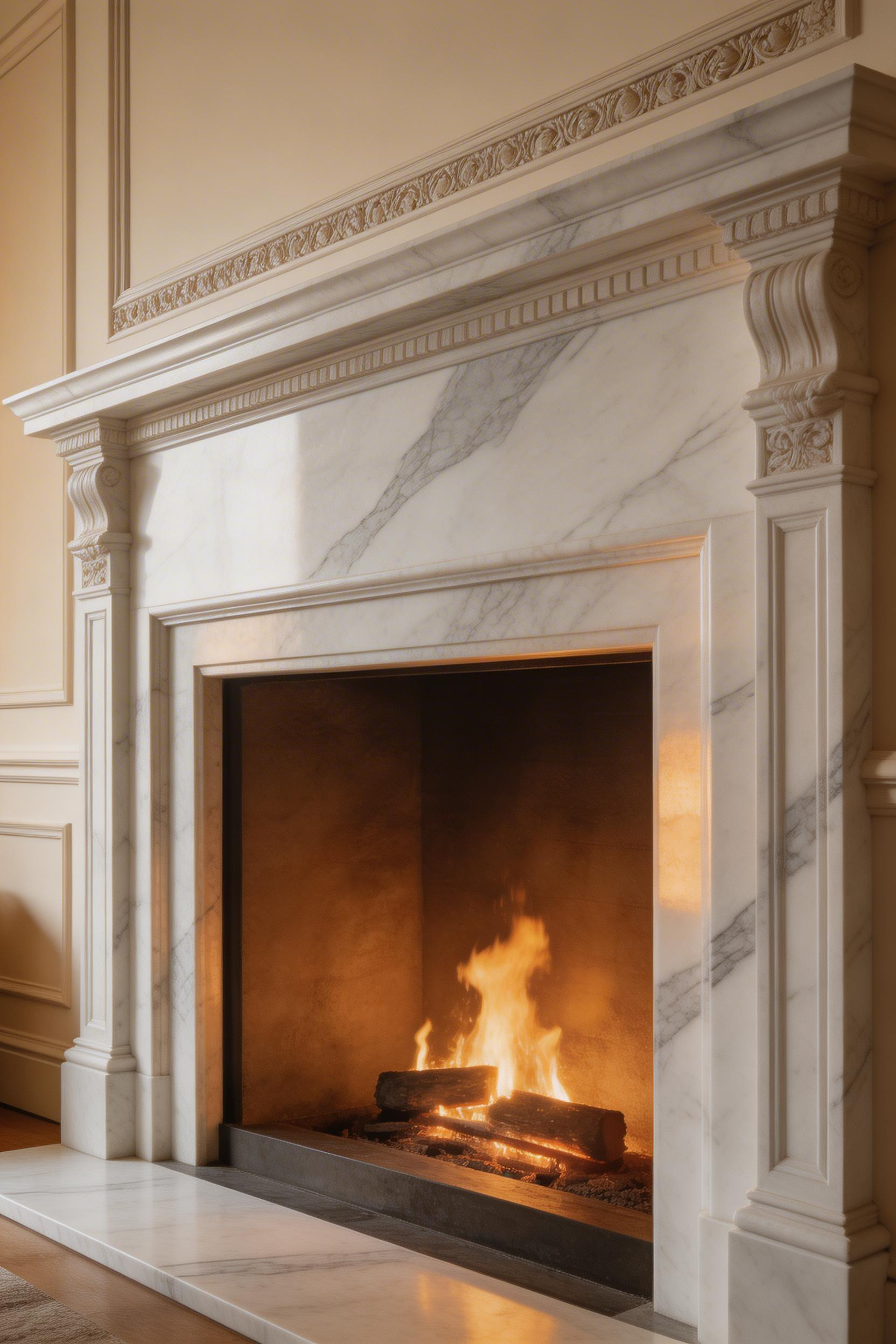
Natural stone is one of the few materials that gets better with age. A marble fireplace surround that has been in a room for forty years has a character no newly installed surface can replicate. That permanence is worth understanding before choosing where to use stone.
Where Stone Works Best
Stone doesn’t need to be everywhere to be effective. Used too broadly, it makes a living room feel cold rather than luxurious. The places where it earns its keep most clearly: the fireplace surround and hearth, a console or side table top, and occasionally a feature shelf. Calacatta marble — white with bold grey or gold veining — is the most recognised luxury stone. Carrara is softer in appearance and considerably more affordable. Travertine has had a significant resurgence since 2020. Its warm beige tones connect well to the organic, biophilic direction that luxury interiors have been moving toward.
Finish and Maintenance
Honed finishes are softer and matte. Polished finishes are more reflective but show etching from acidic liquids more readily — a practical consideration in a living room where drinks are involved. Both marble and travertine are porous and need sealing on installation and annually thereafter. If the full cost of stone is prohibitive, use it only where it will be seen up close. A single well-placed piece — a marble fireplace surround, for instance — raises the perceived quality of the entire room more effectively than stone spread thinly across a large area.
7. Floor-to-Ceiling Drapery in Premium Fabric
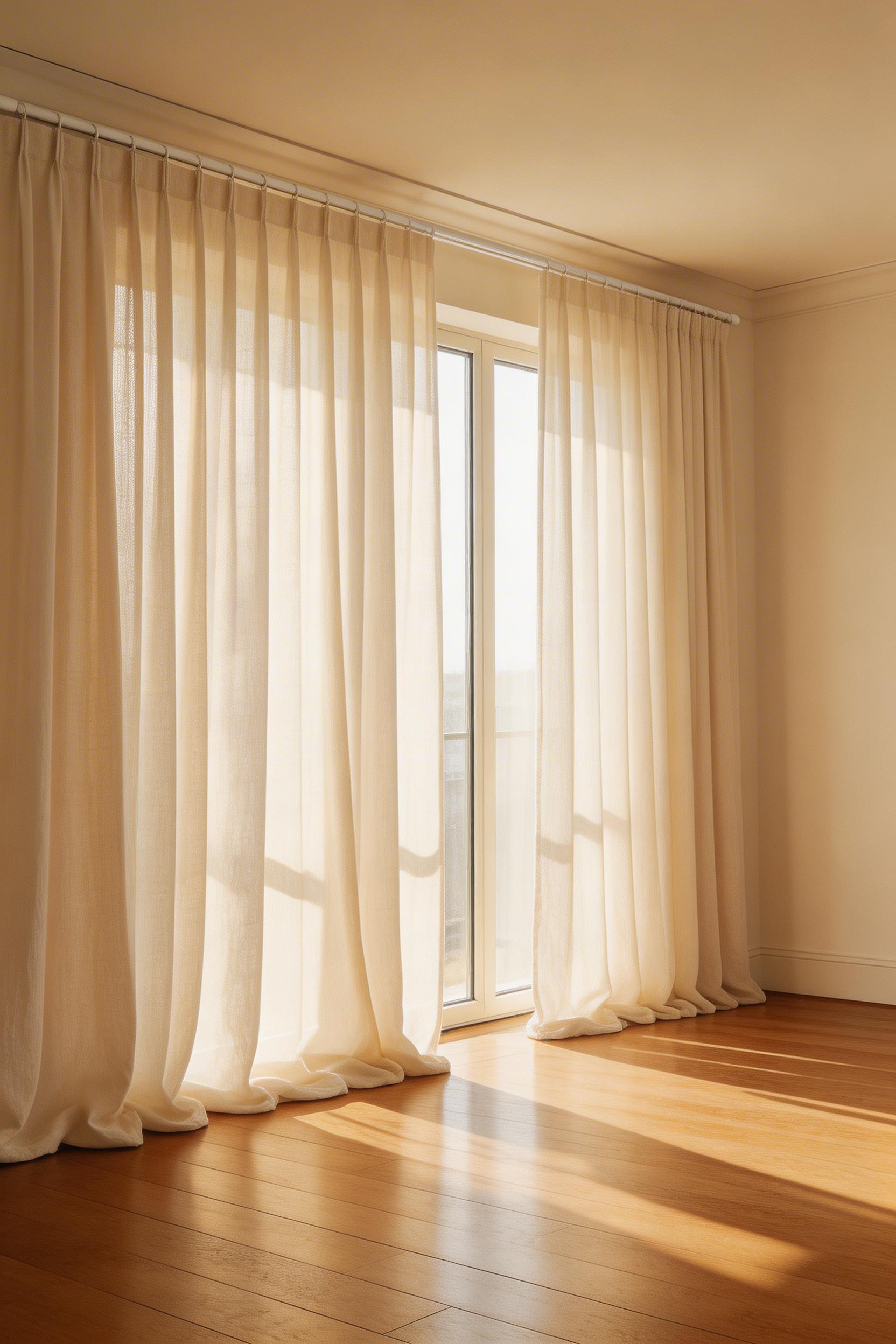
If there is one change that delivers the most visible impact per pound spent, it is getting the curtains right. Specifically, hanging them from near the ceiling rather than from the window frame. The difference in perceived room height is immediate and substantial. And it costs exactly the same to do it properly.
Height Is Everything
Hang curtain rods 4–6 inches from the ceiling — not from the window frame. This single decision adds perceived height regardless of actual ceiling measurement. Panels should graze the floor or pool slightly. A 0.5–1.5-inch break is the luxury standard. Any gap between hem and floor reads as poorly fitted. For a 9-foot ceiling, a 120-inch panel accommodates the header and a slight break. For 10-foot ceilings, 132-inch panels are the right length.
Fabric Weight and Quality
Heavy linen, silk velvet, and cotton sateen all hang differently and suit different rooms. Linen is the most versatile. Its natural texture and slight irregularity give it an organic quality that synthetic linen-look fabrics cannot replicate at any price. Blackout lining adds weight — which improves drape — and protects against UV degradation. The Pottery Barn Belgian Flax Linen Curtains ($80–$280 per panel) are an excellent entry point. The RH Belgian Track Linen Drapery ($280–$680 per panel) is the premium step, with a track system that eliminates the visual interruption of curtain rings. The most common mistake I see in otherwise well-executed rooms is curtains stopping at the window frame. It costs no more to run them floor-to-ceiling.
8. A Hand-Knotted Area Rug as the Room’s Foundation
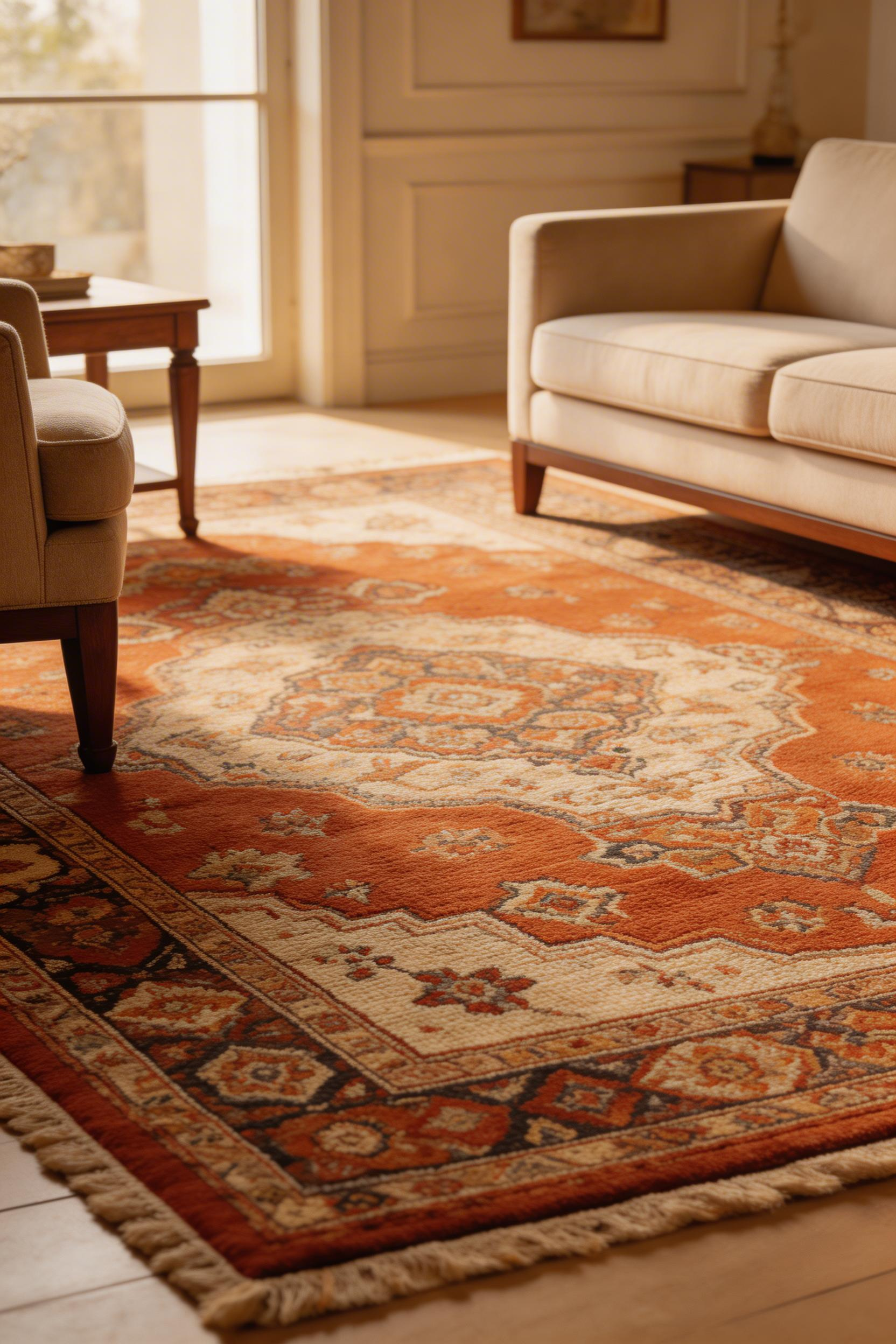
Choose the rug before the furniture, not after. This is the advice I give every client on a new room, and it is the piece of advice most often ignored. The rug is the room’s foundation. Its colour temperature, texture, and pattern should drive all subsequent choices. Rooms that look disconnected were usually furnished before the rug was selected.
Construction and Quality
Hand-knotted rugs are made by craftspeople tying each knot individually. A 9×12 rug can take three months to over a year to complete, depending on complexity. Knot count — measured in knots per square inch (KPSI) — is the primary quality indicator. One hundred to two hundred KPSI is good. Three hundred or more enters fine luxury weaving territory. Wool is the most durable fibre. It develops a patina over decades that actually improves the rug’s character.
Size Is the Critical Decision
The rug should extend at least 8 inches beyond the edge of the sofa on three sides. In most living rooms, that means a 9×12 or 10×14 rug is the practical minimum. A rug pad is non-negotiable. It extends the rug’s life, prevents movement, and improves the tactile experience. For accessible hand-knotted options, Rugs USA ($400–$2,500) and Arazi Home ($600–$4,000) offer solid quality at approachable prices. For genuine investment pieces, Nazmiyal Collection in New York deals in authentic antique and vintage Persian rugs from $3,000 upward. The Rug and Home Association’s 2023 data recorded a 28% rise in average sale price for hand-knotted rugs.
9. Integrated Bookshelves and Display Cabinetry
Built-in shelving does something freestanding furniture cannot. It makes the room feel like the house was designed to contain it. A wall of integrated cabinetry changes the architecture permanently. In a luxury living room, that permanence is part of the point.
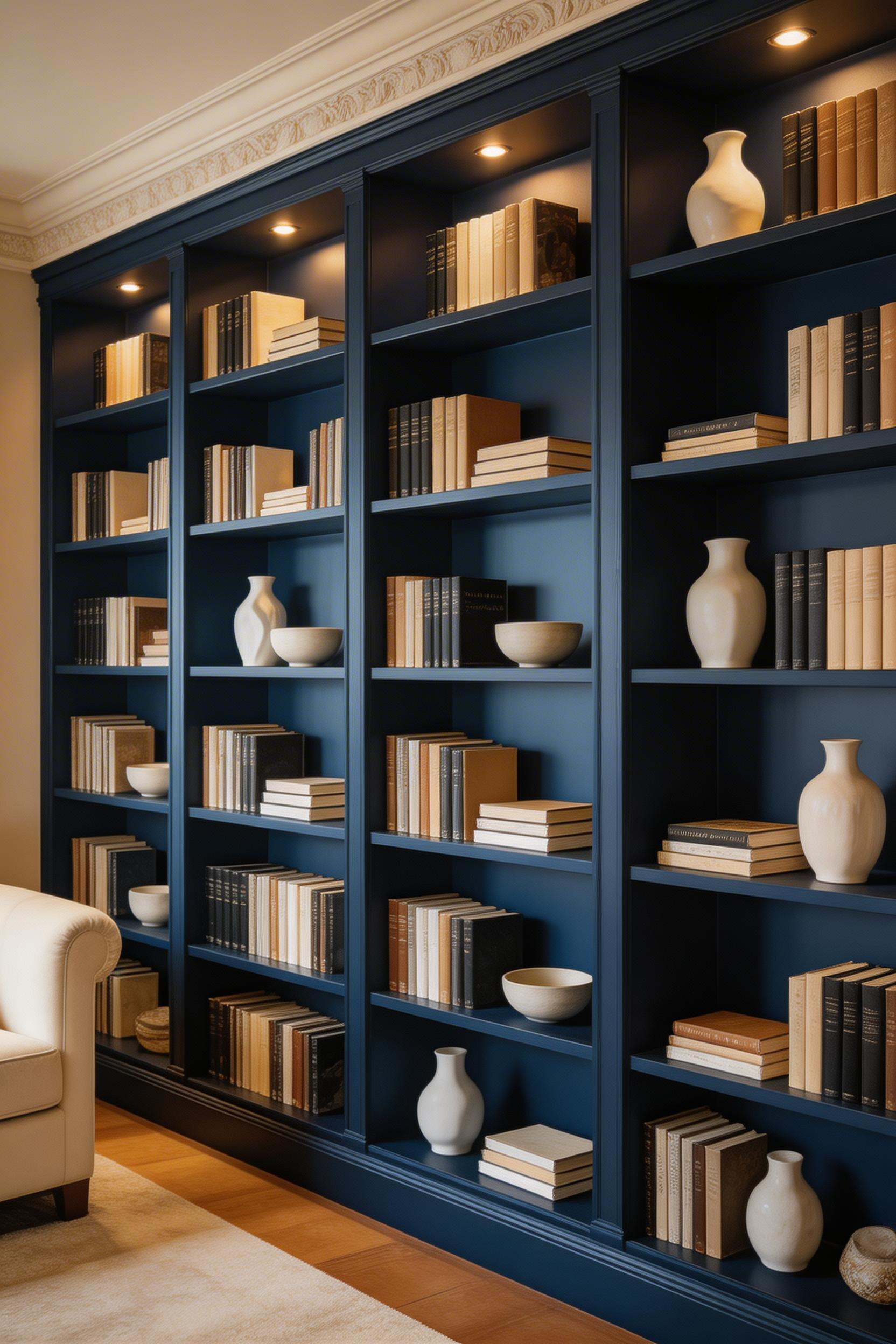
Architecture Over Furniture
The most successful built-ins combine open shelving at eye level for curated display with closed cabinet storage below for practical storage. Paint colour matters. Painting built-ins the same colour as the walls creates a seamless, architectural look. Painting them a contrasting darker colour makes them a strong feature wall. Shelf depth should be calibrated to purpose: 10–12 inches for books, 8–10 inches for display objects, 14–18 inches for AV equipment.
Styling and Execution
The ratio that works: 60% objects and books, 40% negative space. Most people overcrowd built-in shelving, which defeats the purpose entirely. The IKEA Billy bookcase with Semihandmade premium door fronts ($200–$600 per door) offers a convincing result at a fraction of custom cost. The detail that separates a DIY built-in from a custom one is the toe kick and the cornice cap. A matching cornice at the top that aligns with the room’s existing moulding makes the unit look as though it was always there. For broader guidance on living room interiors and how built-ins relate to other room elements, that reference is useful context. Also, if you want more ideas on arranging objects and furniture within a luxury living room layout, living room styling ideas covers the compositional approach well. A Zillow study from 2022 found that homes with custom built-in shelving sold for 4–6% more than comparable homes without them.
10. A Fireplace as the Dominant Focal Point
A room without a focal point is a room without an anchor. In a luxury living room, the fireplace should be the first thing you see when you enter. Furniture should radiate from it, not compete with it. When it’s done right, the fireplace organises the entire space without effort.
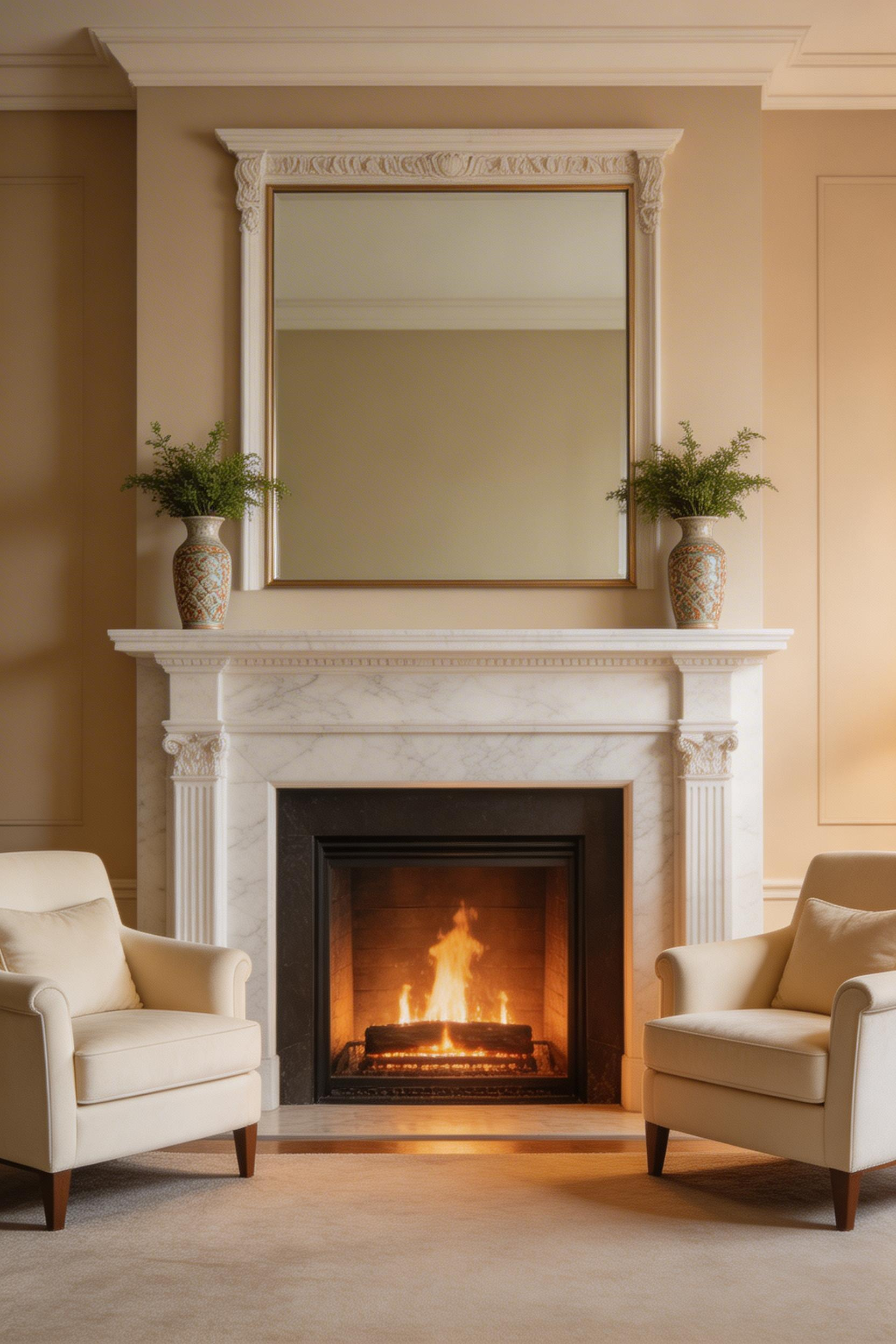
Gas vs. Wood-Burning
Gas inserts provide instant flame with no wood storage, no ash, and no creosote build-up. In most urban homes, they are the practical luxury choice. The Napoleon Ascent 36 ($3,500–$5,500 installed) and the Heat & Glo Cosmo 36 ($4,500–$7,000 installed) are both popular in high-end renovations. Smart home compatibility is now standard at this tier.
Surround Materials and Mantel Styling
Surround materials in order of formality: marble (most formal), painted timber (transitional), slate or soapstone (more relaxed). Mantel proportions follow a simple rule: the shelf extends 3–6 inches past the surround on each side. It should sit at roughly standing eye level — 54–60 inches from the floor. A bare surround reads as unfinished. A mirror, large artwork, or a simple grouped arrangement is always better than leaving the mantel empty.
If you already have a fireplace but the surround feels wrong, replacing just the surround is one of the most cost-effective upgrades in a luxury living room. A $1,200 marble surround on an existing gas firebox transforms the room’s character. The National Association of Realtors 2023 Remodeling Impact Report found fireplace upgrades recover approximately 72% of their cost at resale.
11. Velvet, Bouclé, and Cashmere: Textiles That Signal Luxury
Before a guest consciously registers the art or the furniture quality, they register how the room feels. Textiles are responsible for much of that first impression. The quality of a cushion cover, the weight of a throw, the resistance of the sofa fabric under the hand — these things register immediately. And they are the most easily upgraded element in a luxury living room.
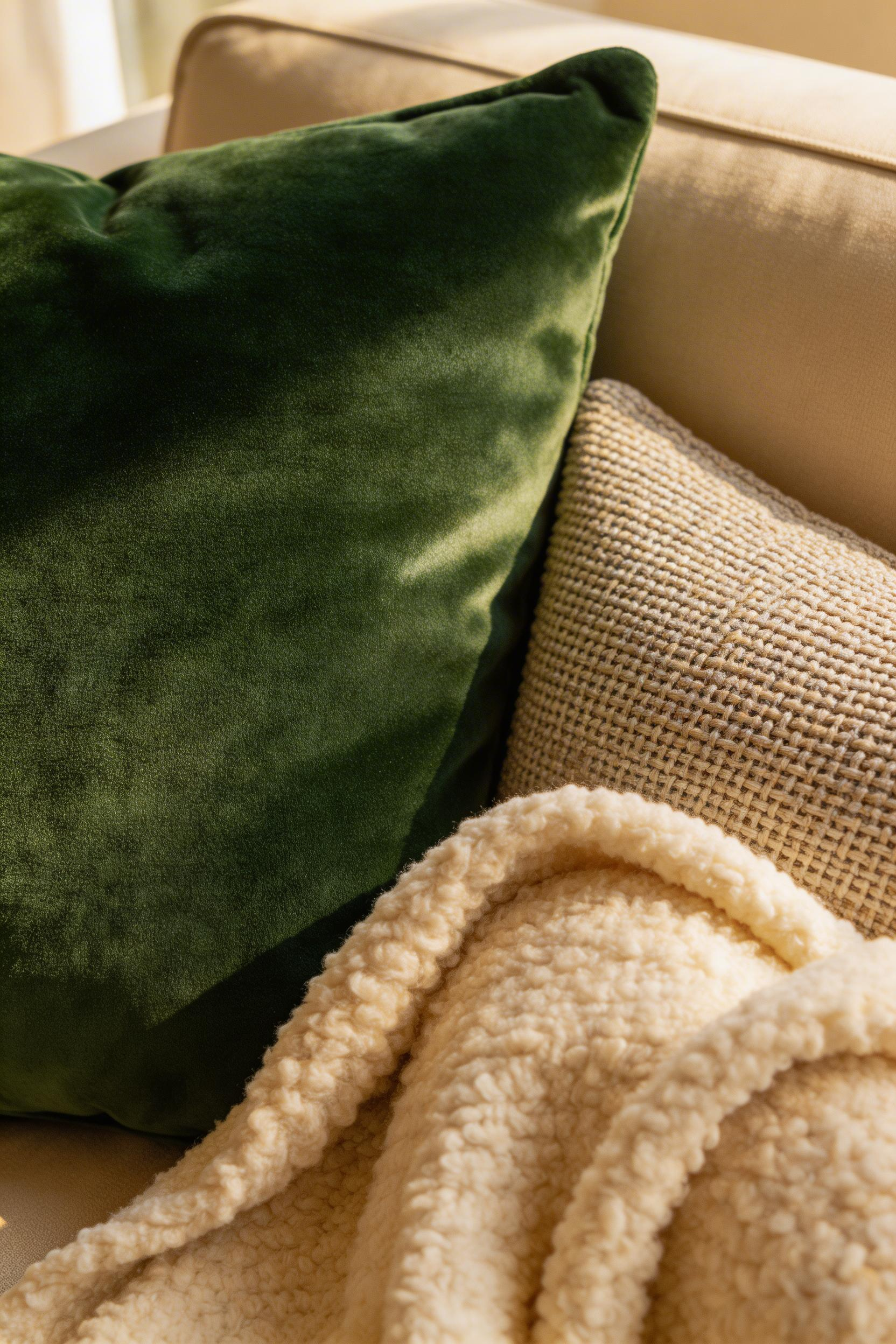
The Textile Hierarchy
Velvet is the most visually and tactilely rich upholstery fabric. It changes colour with the direction of the pile, which gives it a living quality no other material replicates. Bouclé — the looped yarn fabric popularised by Chanel — has a textural richness that works particularly well in neutral colour schemes. A 2023 survey by Dezeen found bouclé had overtaken linen as the most-specified upholstery fabric in high-end residential projects. Linen, however, is still the underrated choice. It wrinkles naturally, giving it an organic quality that synthetic alternatives cannot match at any price.
Layering Without Confusion
Combine a maximum of three fabric textures in any one room. More creates confusion; fewer than two reads as flat. The most common textile mistake: matching all fabrics tonally while keeping the same weight. A room done entirely in cream linen reads as flat regardless of cost. Introduce at least one contrasting weight — a velvet cushion against a linen sofa, or a bouclé throw over a wool armchair. For upholstery fabric, Kvadrat Divina velvet ($80–$150 per metre) is the benchmark. At the accessible end, H&M Home faux bouclé cushions ($25–$45 per cover) look credible at distance, though the tactile quality up close is noticeably lower.
12. A Sculptural Floor Lamp as Standalone Decor
The floor lamp is the easiest single upgrade in a luxury living room. It is faster to install than built-ins, less committal than an accent wall, and immediately impactful. The best floor lamps do two things at once: provide genuinely useful light and function as sculptural objects in their own right.
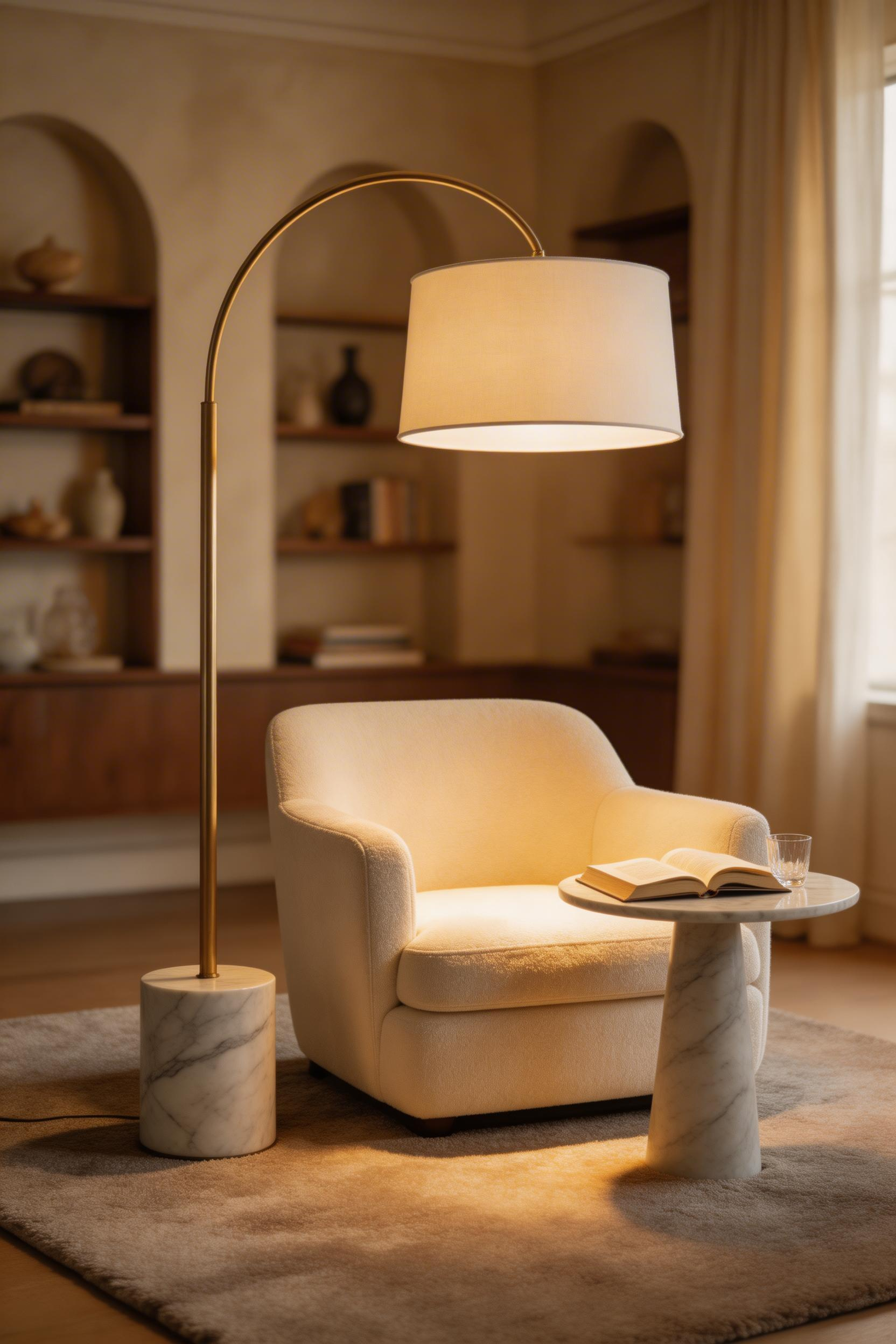
Types and Placement
Arc lamps extend over seating areas and provide direct task light from above without requiring a table surface. They are best positioned to the rear and side of an armchair. Torchiere floor lamps direct light upward, bouncing off the ceiling for diffused ambient fill. They are particularly useful in rooms without central overhead lighting. Tripod floor lamps are the most design-forward choice. Their base material — brass, lacquered wood, blackened steel — determines the room’s formality register.
Investment vs. Accessible Options
The Arco Floor Lamp by Flos ($2,100–$2,800) is the benchmark. It has a Carrara marble base, an arc extending over 2.5 metres, and an original Italian design from 1962 still in continuous production. It is an investment piece and it looks like one. At the accessible end, the CB2 Arched Matte Black Floor Lamp ($299–$499) has good proportions and a linen shade that reads well in contemporary luxury rooms. An arc lamp positioned behind a sofa also frees the side table surface entirely — a practical benefit that justifies the footprint. According to 1stDibs annual sales data, floor lamps consistently outsell pendant lights and table lamps in the premium $500–$5,000 bracket.
13. Lacquered or Fluted Accent Walls
Two wall treatments have defined the luxury residential interior of the last four years: lacquered paint in deep tones, and fluted timber panelling. Both add architectural depth to an otherwise flat wall. Both are effective on a single accent surface. And both are achievable at varying budgets.
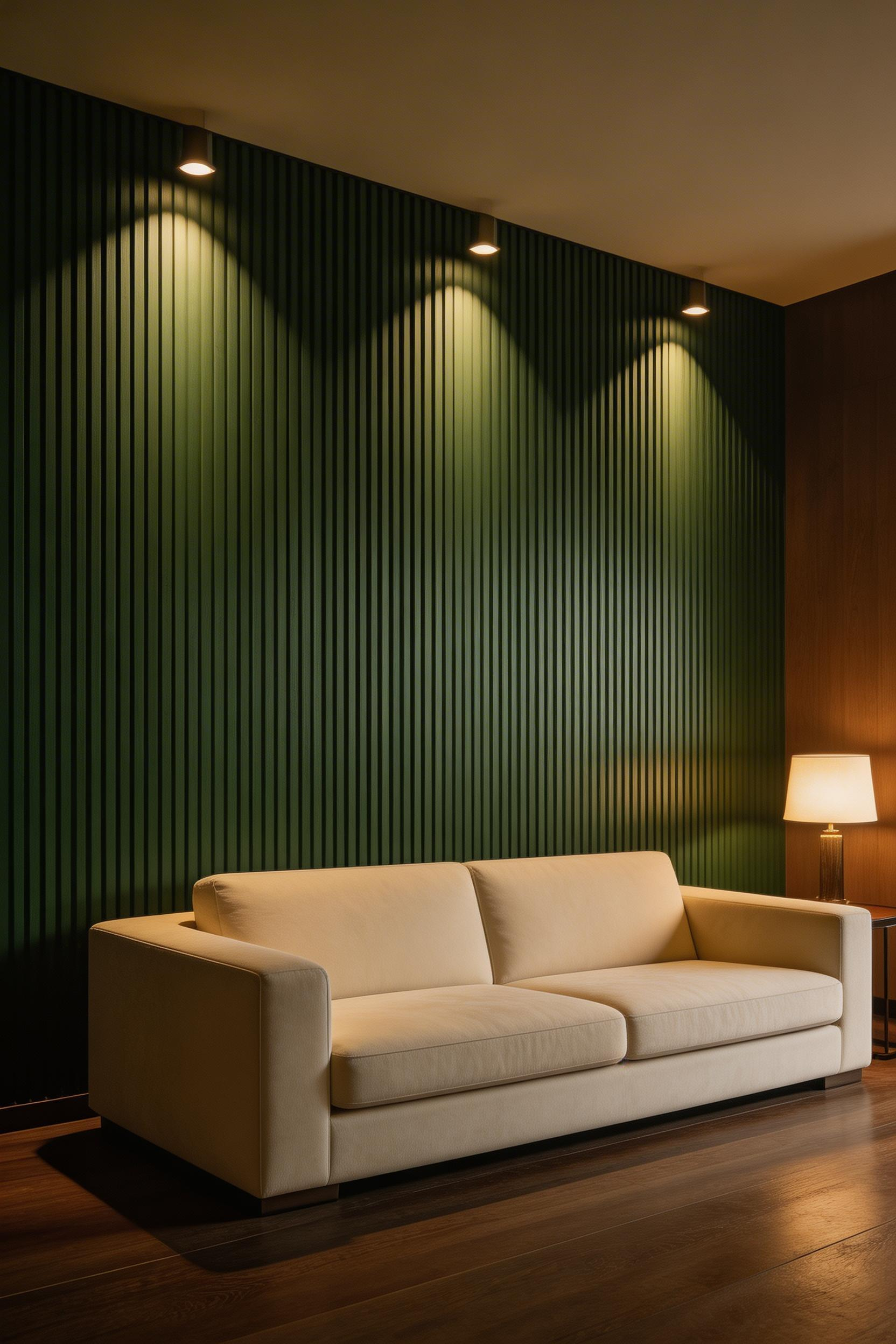
Lacquered Walls
Lacquered walls involve multiple coats of high-gloss paint, sanded carefully between coats. The result is a reflective surface closer in character to lacquered furniture than to standard paint. Deep tones work best: forest green, navy, charcoal, burgundy. Light or mid tones in high-gloss amplify surface imperfections. They can also read as clinical rather than luxurious. Farrow & Ball Dead Flat in Railings or Studio Green ($120–$150 per 5L) achieves excellent colour depth in a matte finish. It has a richness that approaches lacquer without the technical difficulty.
Fluted Panels
Fluted timber panels add architectural depth and vertical texture. They work particularly well behind a sofa, behind a TV console, or framing a fireplace. Pinterest’s 2024 design trend report identified fluted panels as the second fastest-growing interior design search term — a 340% year-on-year increase in saves. So these are no longer an exclusively trade technique. DecoWall fluted MDF panels ($45–$95 per panel) are paintable or available in natural timber finish. Application is simpler than it looks: construction adhesive and finished nails, with caulk at the edges.
The principle for both treatments is the same: do not do all four walls. The impact comes from contrast. One lacquered or fluted wall against three matte walls is far more effective than a fully treated room. Choose the wall behind the main seating or the fireplace wall.
14. A Curated Bar Cart or Drinks Cabinet
A well-placed bar cart does more than hold bottles. It communicates that the room is designed for entertaining. It also functions as a secondary focal point — a styled grouping of objects with their own visual logic that rewards attention.
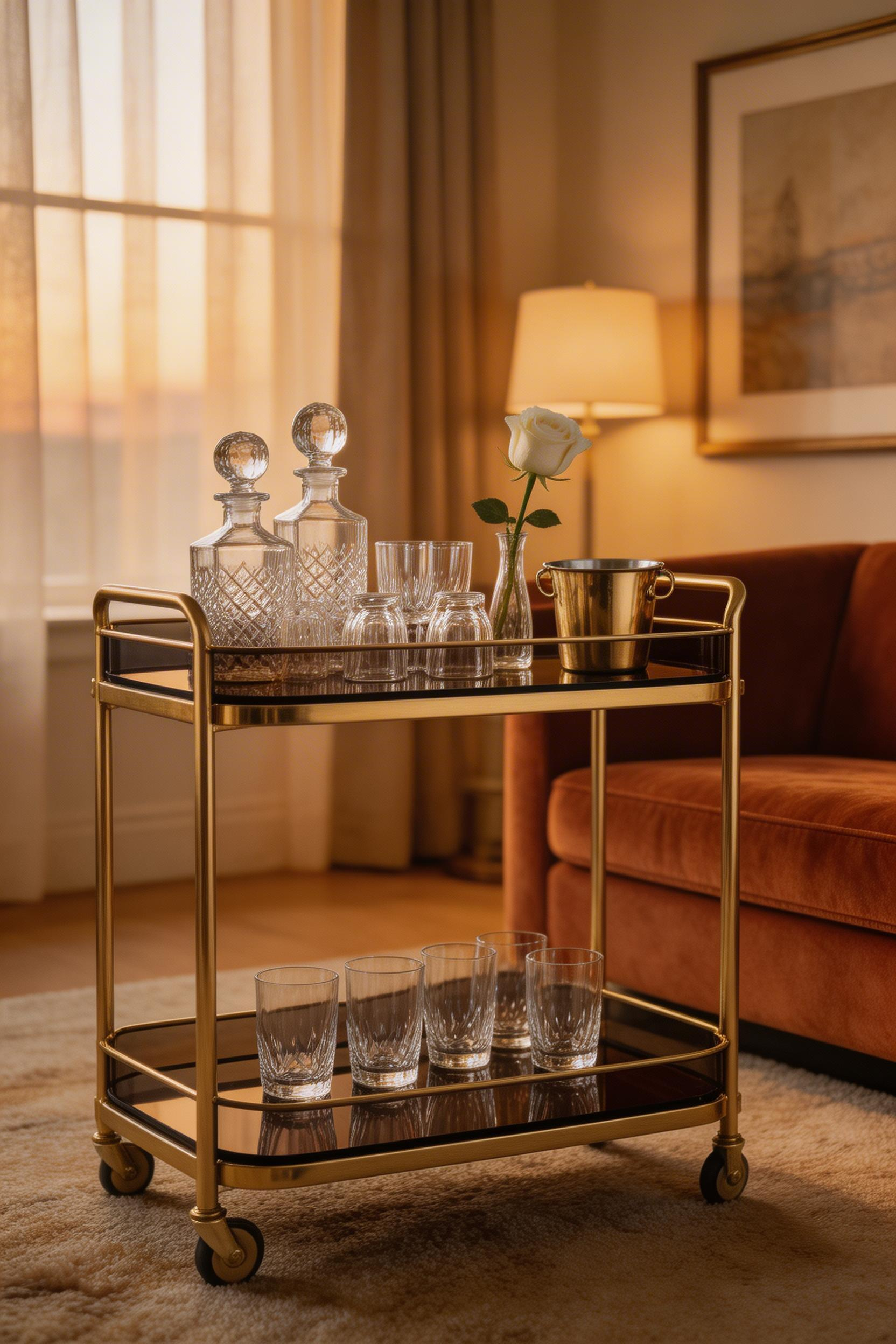
What to Put on It
The styling hierarchy that works: two or three quality decanters, four glasses of each type, an ice bucket, and a tray to anchor the grouping. The tray is important. It creates a contained footprint that reads as intentional rather than accumulated. Rolling bar carts in brass and smoked glass are the current luxury standard. Polished chrome has largely been replaced by satin brass in high-end interiors over the last five years. A drinks cabinet with glass doors is the more formal option, better suited to traditional rooms where you want the bar to disappear when not in use.
Budget Reality
The cart itself matters less than what’s on it. Three quality crystal decanters, a set of Riedel tumblers, and a good ice bucket will elevate a $200 IKEA cart. Buy the objects first; upgrade the cart when budget allows. For a cart with genuine quality, the Arteriors Antiqued Brass Bar Cart ($1,400–$2,200) is solid — two-tier, smoked glass shelves, built to last. According to the 1stDibs 2023 Luxury Outlook report, bar carts saw a 42% year-on-year increase in sales in the $500–$3,000 bracket. Home entertaining continues to drive that demand.
15. Scent, Sound, and Texture: The Invisible Layer of Luxury
Everything on this list so far has been visible. But the rooms that stay in memory longest are as much about what you cannot see as what you can. Scent, acoustic quality, and tactile variety are the invisible layer of a luxury living room. They are also universally underestimated.
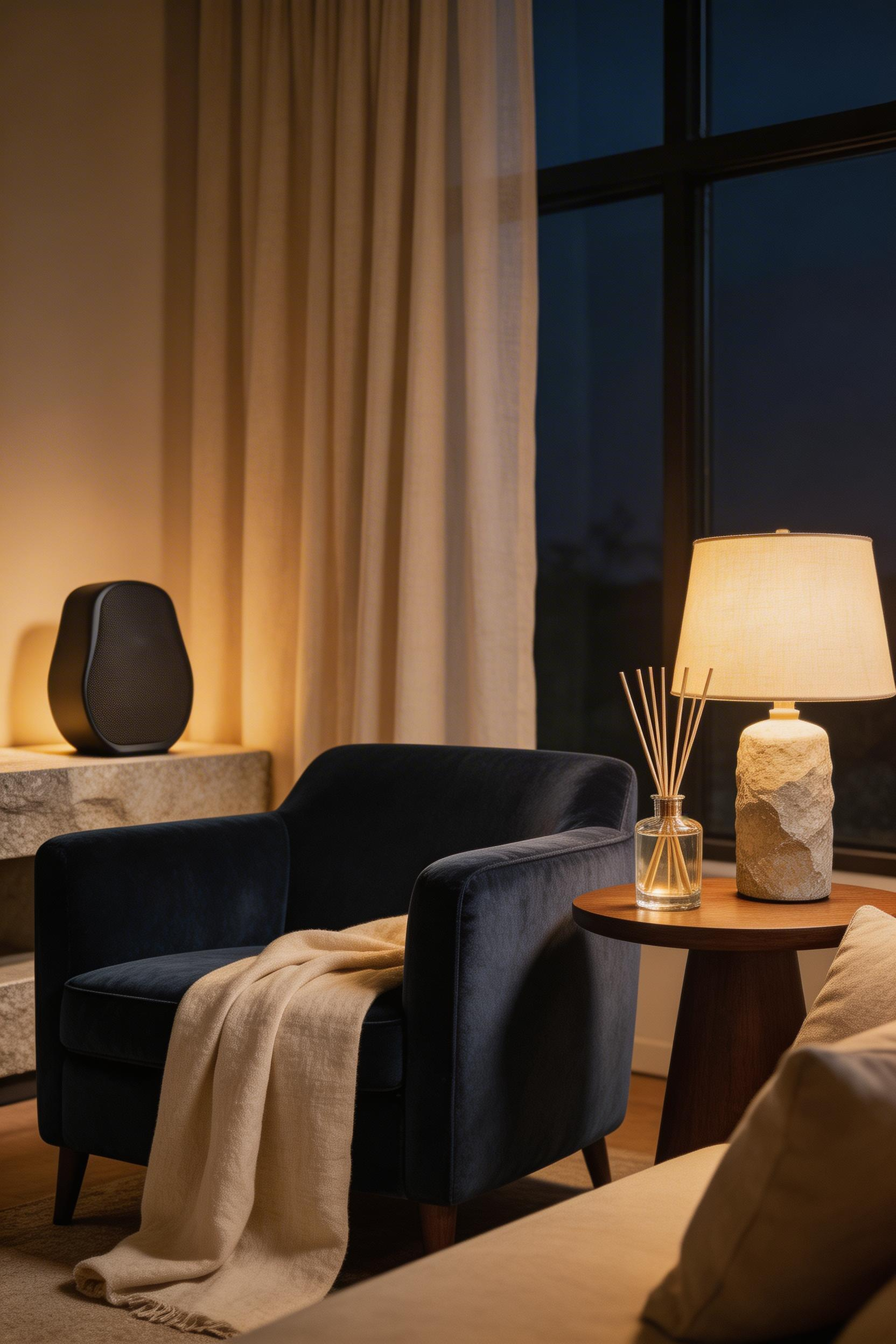
Scent
Five-star hotels invest heavily in scent design because the research is clear. A consistent, pleasant room scent increases perceived quality ratings by up to 40%. Reed diffusers provide the most consistent low-maintenance result. Diptyque Baies ($95–$145) is the benchmark — a blackcurrant and rose combination subtle enough to work in almost any setting. Jo Malone London’s Pomegranate Noir ($120–$185) is warmer and spicier, better suited to traditional rooms. For larger rooms, two diffusers positioned at different points provide more consistent coverage than one.
Sound and Acoustics
Rooms with hard surfaces — stone floors, high ceilings, minimal upholstery — have acoustic problems that are audible even if you don’t consciously identify them. A thick rug absorbs approximately 60–70% of floor-reflected sound. Adding floor-to-ceiling curtains absorbs a further 15–20%. For in-room speakers, the Devialet Phantom I ($1,790–$3,590) is both a sculptural object and an exceptional speaker — its visible placement is intentional. The Sonos Era 300 ($449) is the accessible alternative: good spatial audio and an unobtrusive form. For a broader view of luxury living room design approaches that address the full room holistically, that guide covers the relationship between these elements in detail.
The Floor Underfoot
The single most overlooked luxury detail in a living room is what the floor feels like to walk across. A thick rug pad under a good rug, combined with underfloor heating if the room is being renovated, creates a physical experience that no visual styling can replicate. You feel luxury before you see it. That order of experience is what makes the strongest impression.
Making Your Luxury Living Room Work as a Whole
The fifteen ideas in this guide are genuinely independent. You can apply any one of them tomorrow and see a result. But the rooms that work best do something more deliberate: they are internally consistent. Every material, every finish, every textile choice registers as part of the same conversation.
If there is a principle that links all fifteen ideas, it is this: quality at the points of contact, visual weight in the centre of the room. The sofa, the rug, the coffee table — these set the room’s register. If they are right, the supporting cast (lamps, cushions, art, plants) can be assembled at a fraction of the cost and still read as luxury. If the central pieces are compromised, no amount of expensive accessories will pull the room together.
The practical sequence that works: start with the rug, because its colour temperature and texture drive everything else. Then the sofa — quality of construction over aesthetic trend. Then the coffee table, which anchors the centre. From there, design the lighting as a system rather than selecting piece by piece. Art comes last — not because it matters least, but because it needs to respond to everything already in the room.
One specific recommendation to close: if you are doing one thing on this list this month, hang your curtains from near the ceiling with floor-length panels. It costs no more than the wrong approach. It is reversible. And it transforms the perceived scale of the room in a way that is immediately apparent to every person who enters.