Most dining rooms don’t get redesigned — they just get accumulated. A chair gets added, a side table gets swapped in, a painting goes up, and over ten or fifteen years the room becomes a collection of decisions that don’t quite speak to each other. The result isn’t bad, exactly. But it’s not modern, either.
The problem is that most attempts to modernize dining room spaces target the wrong things. People repaint the walls and wonder why the room still feels dated, because the brass chandelier from 1998 is still hanging above the table. Or they buy new chairs and find they look strange against a sideboard that belongs in a different decade. Modernization isn’t about one change. It’s about identifying the three or four elements pulling the room backward and addressing those first.
This guide works through fifteen specific, practical moves — from replacing the light fixture to editing what’s actually on display. Some cost almost nothing. Some require a weekend of work. All of them are grounded in what actually shifts a dining room from feeling dated to feeling deliberate. If you’re serious about how to modernize dining room spaces without starting over, this is where to start.
1. Replace the Light Fixture with a Statement Pendant
The dining room light fixture is doing more work than most people realise. It sits at eye level when you’re seated, it frames every meal, and it’s one of the first elements visitors see. A brass chandelier with crystal drops or a drum shade in beige from the 2000s communicates the decade it came from — loudly — regardless of everything else in the room.
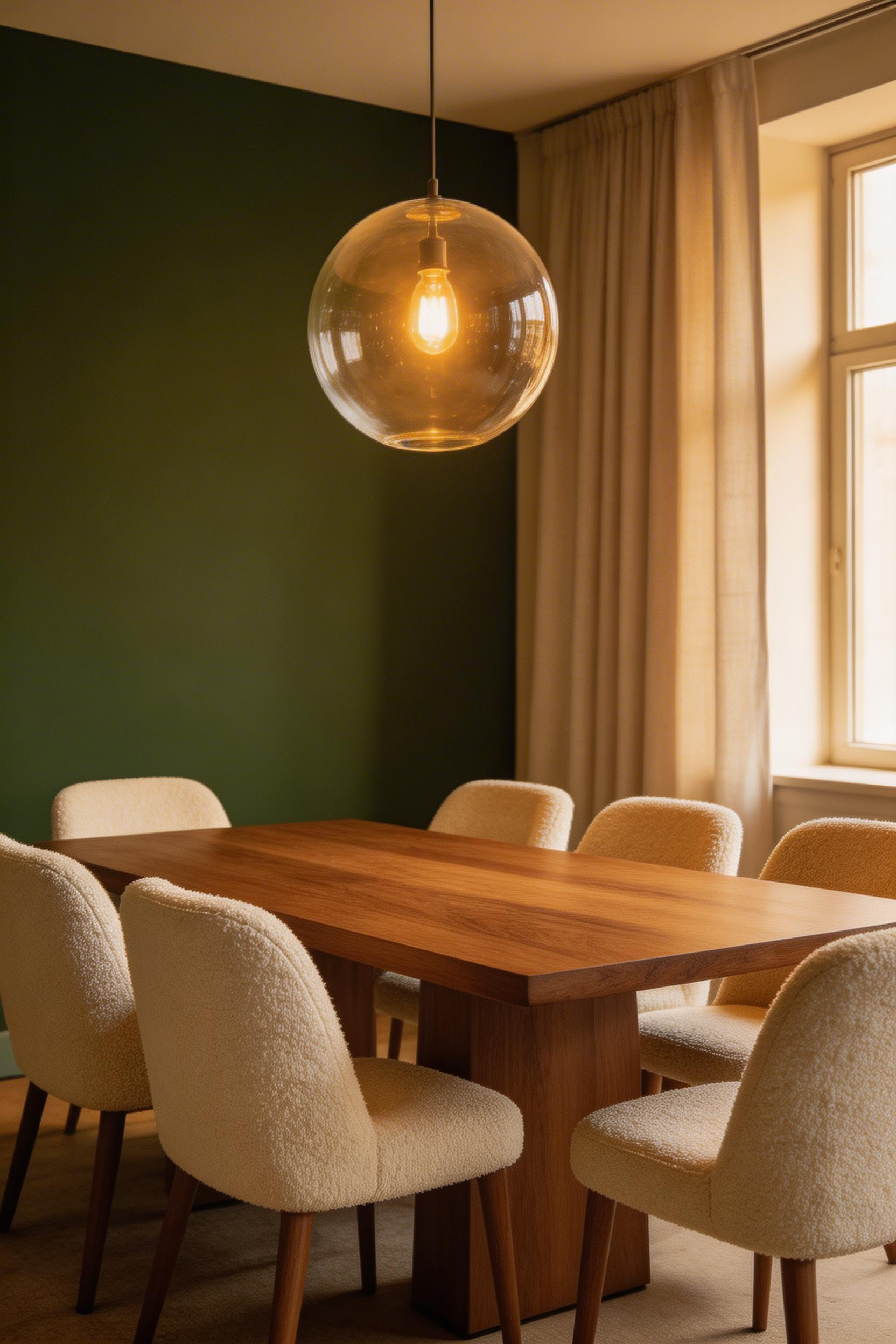
Replacing it is also the fastest way to modernize dining room atmosphere. A single fixture swap, done well, shifts the entire room’s personality.
What to Look For
For scale, subtract 12 inches from your table width to get the minimum pendant diameter. A 36-inch-wide table needs at least a 12-inch pendant; a 42-inch table can carry 18 inches or more. Drum pendants, cluster multi-bulb styles, and linear bar pendants over rectangular tables are the three dominant contemporary formats right now. Avoid anything with crystal drops, ornate arms, or shades with pleating — these are period-specific and hard to modernise around.
The West Elm Sculptural Glass Globe Pendant ($249–$349) and the CB2 Arched Rattan Pendant ($199) are both strong mid-range options. For a budget entry, the IKEA NYMÖ at $39.99 is genuinely credible in a modern space. Hang the fixture 30–36 inches above the table surface for standard 8-foot ceilings, and raise it 3 inches for every additional foot of ceiling height.
One thing many people miss: don’t just swap the shade. If the mounting canopy and hardware are dated — exposed old brass, ornate fittings — replace those too. The canopy is visible from every seat at the table, and a new pendant sitting on old hardware defeats the upgrade. Total fixture replacement typically takes 2–3 hours for a competent DIYer, and it’s one of the highest-return changes you can make when you want to modernize dining room spaces effectively.
2. Switch to a Slim-Profile Dining Table to Modernize Dining Room Style
Dining tables with ornate carved legs, bulbous pedestals, or heavy trestle bases are the most reliable indicator of a traditional dining room. The table is also the largest piece of furniture in the room. That means it sets the visual tone for everything around it.
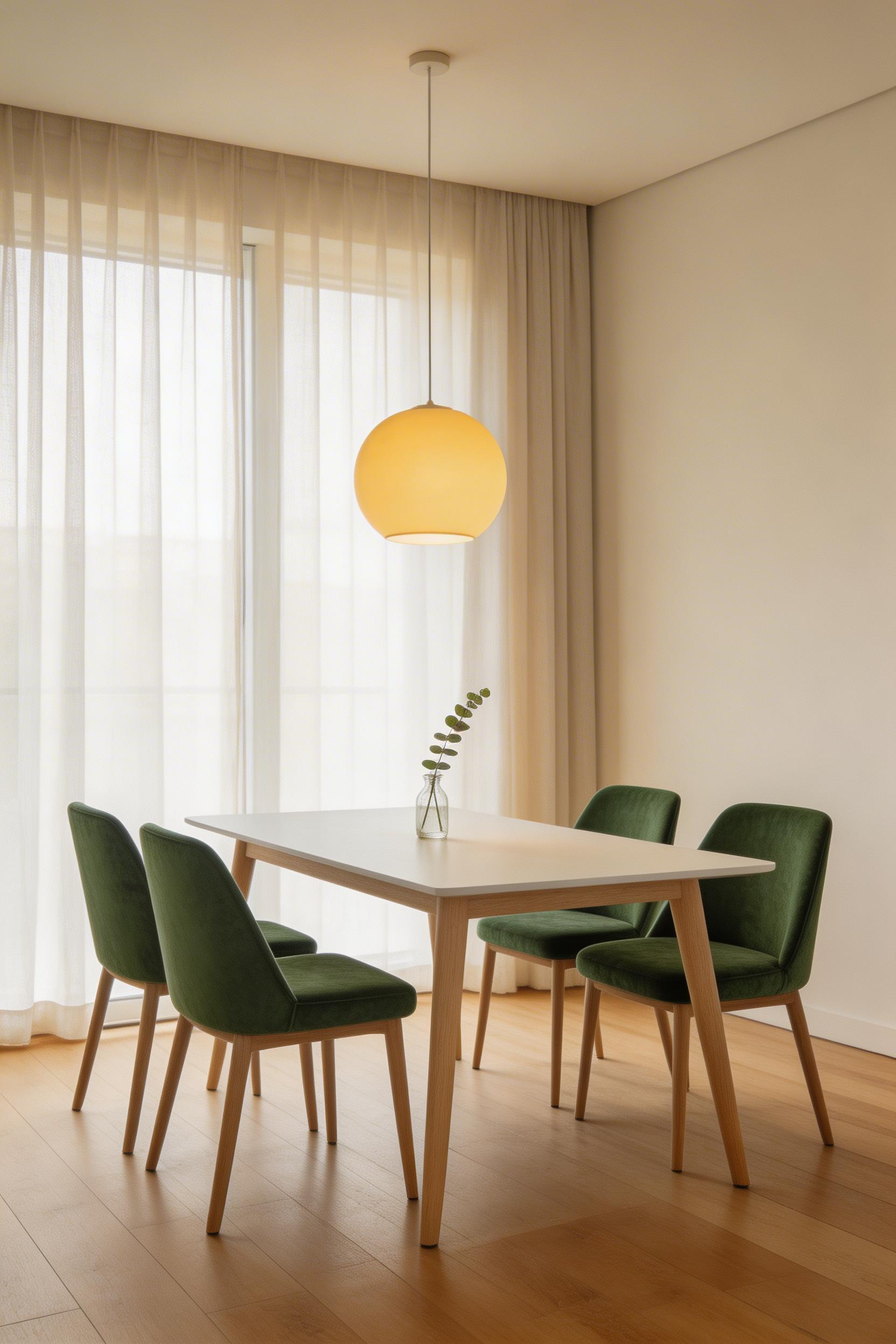
To modernize dining room furniture, start with the table. Modern dining tables are defined by restraint. Straight tapered legs, hairpin legs, or slim square profiles in solid steel or wood. Tops between 1 and 1.5 inches thick. No decorative edge profiles. The table should feel like it takes up space in the room rather than dominating it.
Sizing and Specifications
Standard height is 28–30 inches; allow 36 inches (48 inches ideal) around all sides for chair movement. Seat allowance per person is 24 inches minimum, 28 inches comfortable. A family of four needs 60 inches minimum; six people need 72 inches or more. Keep table thickness to 1–1.5 inches — thick slabs read farmhouse, not modern.
The Article Seno Extendable Table ($699–$899) is a top mid-market choice: white oak veneer, tapered legs, extends from 63 to 79 inches. The IKEA LISABO at $249 has a credible modern silhouette at an entry-level price. The leg style determines modernity more than the top material. So if budget is tight, a second-hand table with straight-line legs that you strip and repaint will outperform a new table with turned legs every time.
Also, consider the round-versus-rectangular question carefully. Rectangular tables fit most rooms; but round tables, especially in square dining rooms, create a more social, contemporary atmosphere. There’s a reason the Saarinen tulip table has never gone out of production.
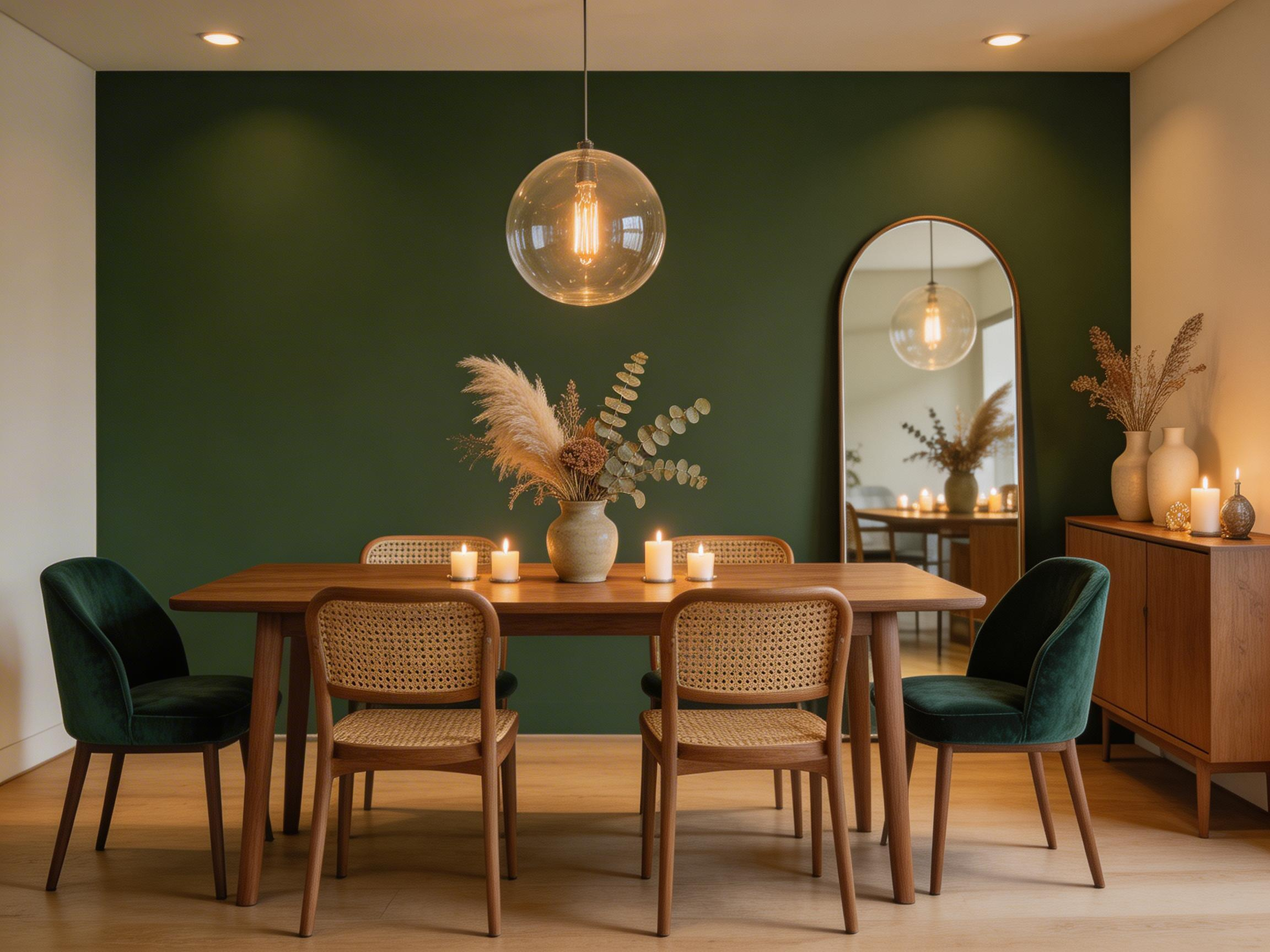
3. Add an Accent Wall in a Deep, Saturated Colour
A single feature wall is one of the highest-impact, lowest-cost ways to modernize dining room aesthetics. It covers dated texture, adds depth, and shifts the room’s whole personality — especially effective in rooms where everything else is white or neutral.
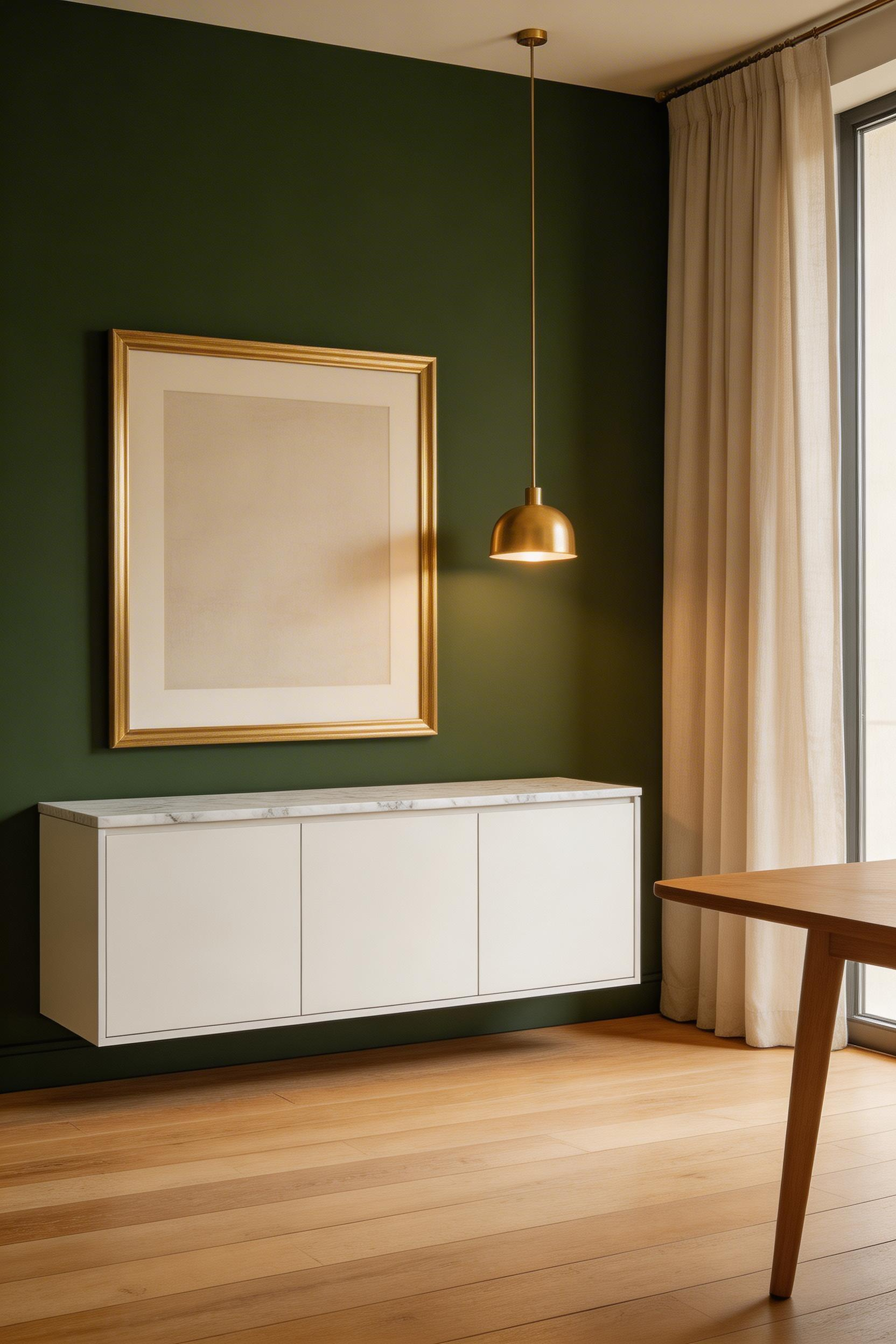
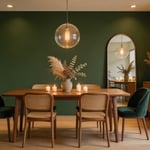
The five most-searched dining room accent wall colours heading into 2025 are deep forest green, terracotta, navy, charcoal, and dusty blue. All of them work in dining rooms because they’re saturated enough to read as intentional without overwhelming a space that’s already occupied by a table and six chairs.
Colour, Finish, and Placement
For a dining room accent wall, eggshell or satin finish is more practical than flat — it’s easier to clean and holds up better in a room where food and condensation are factors. Two coats are needed for full saturation when painting over a lighter colour.
The wall behind a sideboard or buffet is the most commonly recommended placement, and for good reason — it frames the piece and gives visitors something to look at when they enter. Farrow & Ball Calke Green No. 80 (~$75/litre) and Benjamin Moore Hale Navy HC-154 ($65–$75/gallon) are both reliable contemporary choices. For a detailed breakdown of accent wall techniques that work specifically in dining rooms, the dining room accent wall guide covers placement and colour in much more depth.
The counterintuitive thing about dark accent walls: they make rooms feel larger, not smaller, because they visually push the wall back. Pinterest’s 2025 trend report showed a 340% year-over-year increase in dining room dark accent wall searches, with forest green leading.
4. Swap Upholstered Chairs for Mixed-Material Seating
Matching upholstered chair sets entered popular design discourse in the 1980s and 1990s. They communicate a particular era. More than almost any other element, they date a dining room. Contemporary dining design has moved decisively away from full-matching sets — and toward deliberate mixing of materials, textures, and forms.
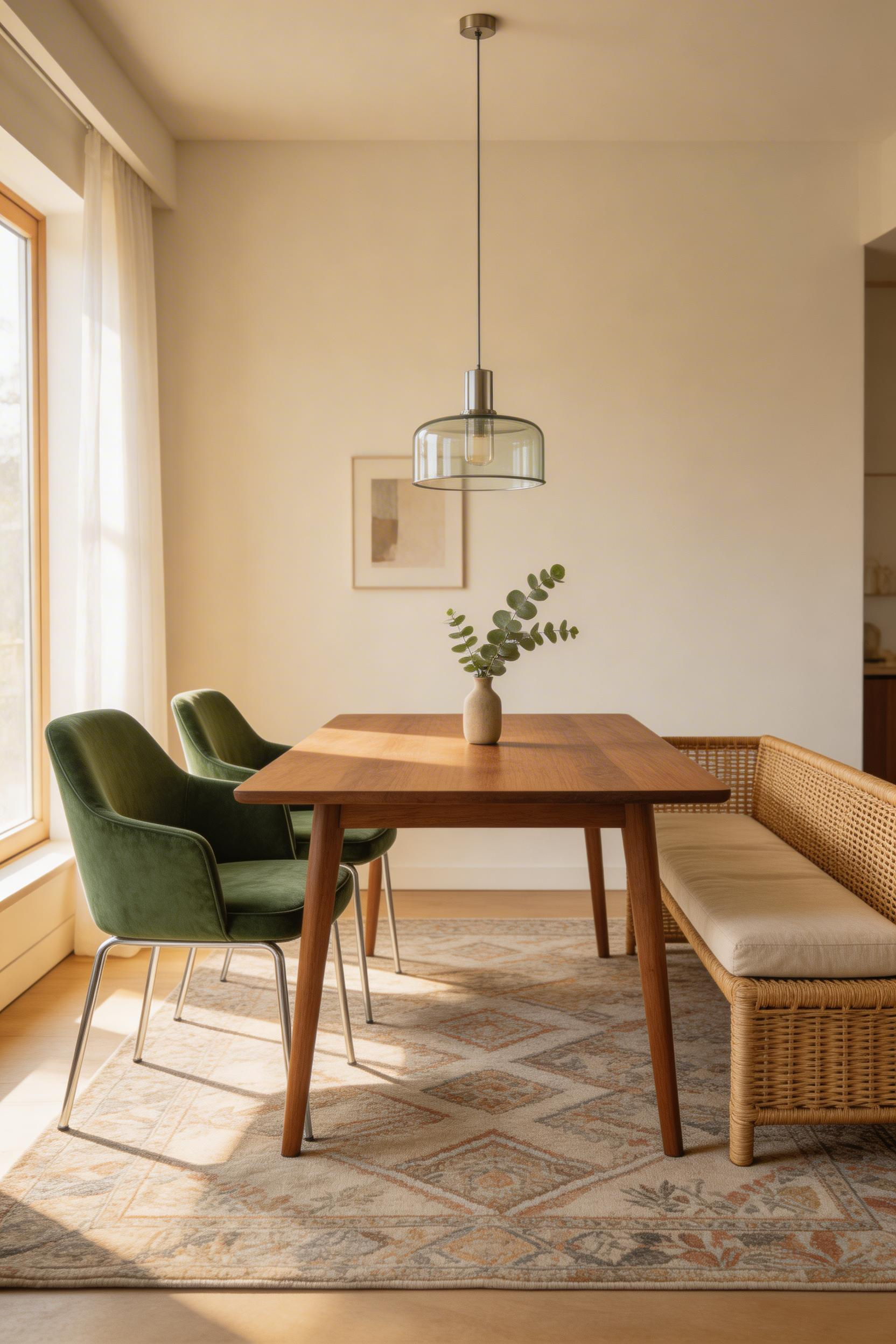
The most common modern configuration is a bench on one side of a rectangular table with chairs on the other. Mixing two complementary chair styles works equally well. If budget is a constraint, mixing chair colours or seat fabrics on an otherwise identical set creates contemporary variety without buying entirely new furniture.
What Makes the Mix Work
The key to mixing chair styles successfully is one consistent connecting element. All matte black legs. All brushed brass frames. All seats in the same fabric colour. The cohesion keeps the mix looking curated rather than random.
Boucle, velvet, and linen are the dominant contemporary upholstery materials. Metal-frame chairs with upholstered seats are the most commercially successful modern dining category right now. The CB2 Primitivo Velvet Chair ($249 each) in forest green or dusty blue is a strong choice; the IKEA TEODORES at $69 each is genuinely credible for a tighter budget. Chair seat height should be 17–19 inches for standard 29–30-inch tables. Allow at least 7 inches of clearance between seat and table underside for comfortable seating.
Wayfair’s 2024 trend data showed a 67% increase in ‘mixed dining chair sets’ searches compared to 2020. The matching set, it seems, is officially past its moment.
5. Install Floating Shelves or a Slim Sideboard
Bulky china cabinets and hutches are the single heaviest visual element in most traditional dining rooms. They fill wall space from floor to ceiling with dark wood and decorative glass, and they communicate a storage-forward approach to dining room design that feels specific to an earlier era.
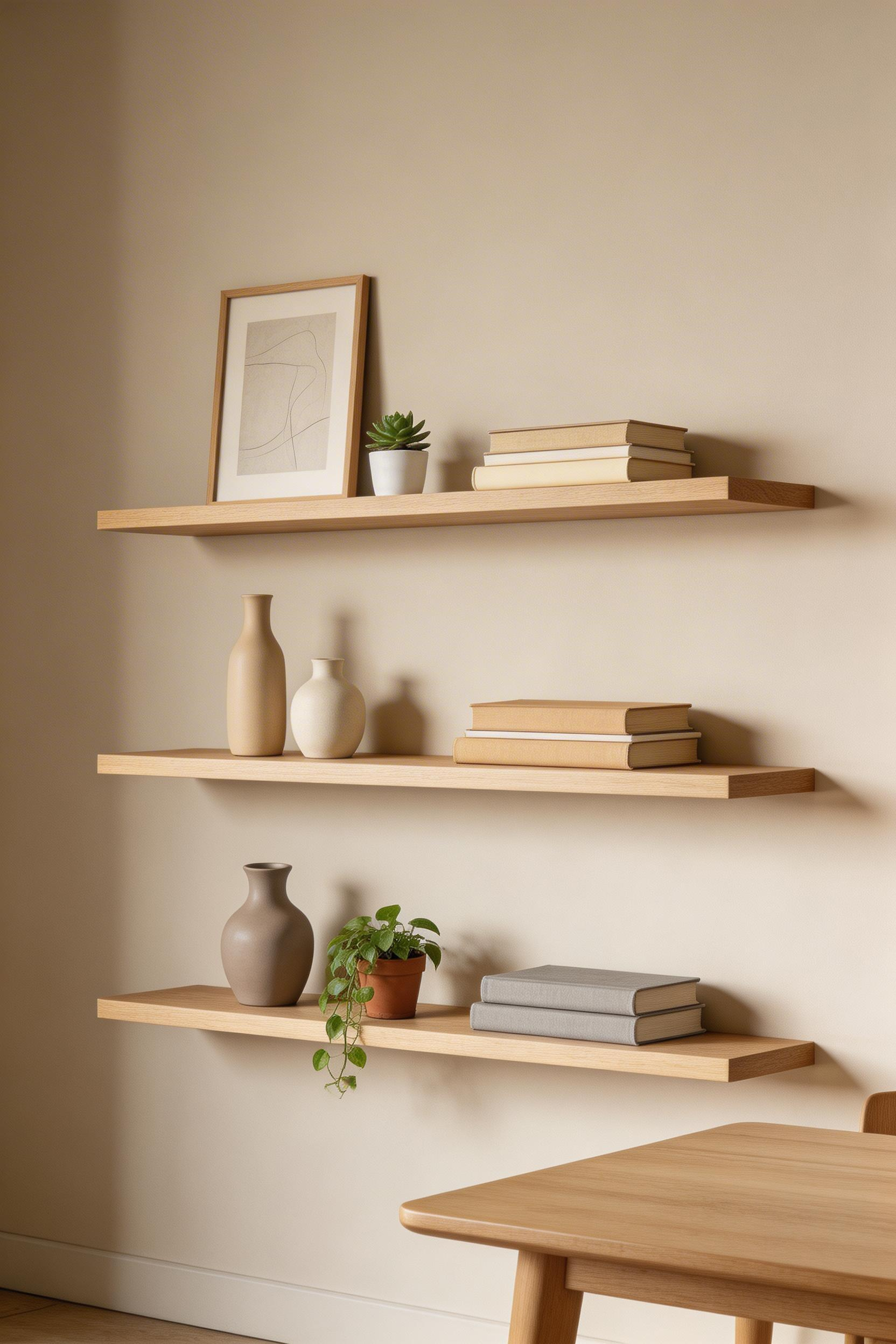
Replacing them — or simply removing them — opens up the room’s walls immediately. It’s also one of the most overlooked steps when you want to modernize dining room spaces. Floating shelves at 60–66 inches from the floor create the impression of a taller room. They also give you a more modern, gallery-like way to display objects. A low-profile sideboard — 32–36 inches high, 14–16 inches deep — provides serving surface and hidden storage. The visual weight stays low.
Styling and Installation
Open shelving requires deliberate editing to look modern rather than cluttered. The working rule is one-third objects, one-third empty space, one-third height and texture variation. Avoid rows of identical objects — that reads as a shop display, not a home.
Floating shelves for decorative use need 8–10 inches of depth. For anything load-bearing — plates, books — go 10–12 inches. Mount into wall studs with 2.5-inch screws minimum for loads over 10 lbs. The Umbra Trigg Floating Shelves ($79.99 for a set of three) offer a modern geometric option that works in most contemporary dining rooms. The IKEA BESTÅ sideboard, configured with legs, provides a clean low-profile alternative to a full hutch for $350–$550. For more dining room designs that use shelving effectively as a modern design element, the linked guide is worth a look.
6. Introduce an Oversized Area Rug for a Modern Dining Room
A rug under the dining table is one of the clearest signals of intentional design. It’s also a simple, budget-accessible way to modernize dining room floors — and the absence of one, or a rug that’s too small, reads immediately as an afterthought. Too many dining rooms still have bare floors or rugs that the chairs fall off when pushed back.
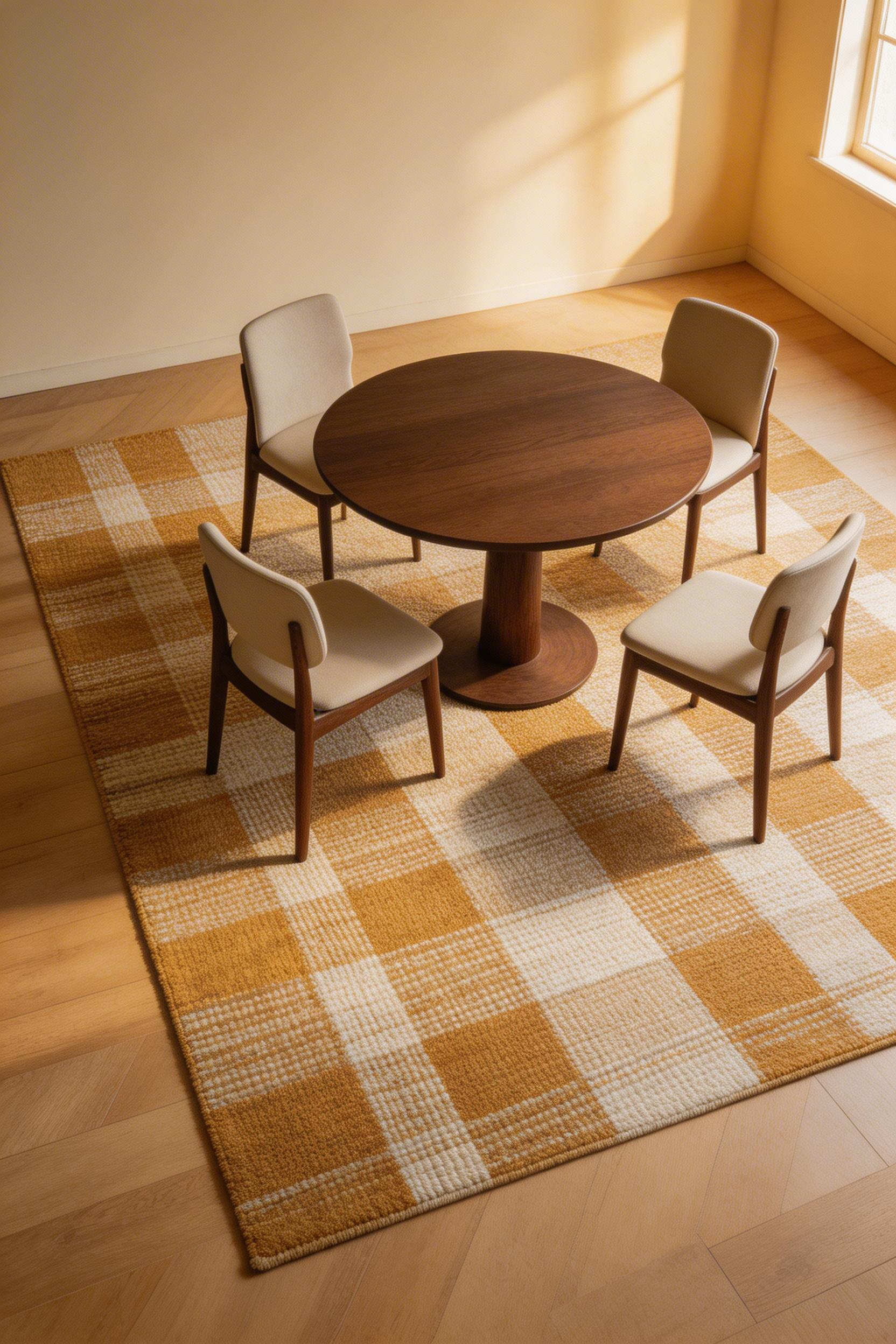
The sizing rule is simple: table length plus 24 inches on each end, table width plus 24 inches on each side. For a 60×36-inch table, the minimum rug size is 8×10 feet. For a 72×36-inch table, go 9×12 feet. All four chairs should remain on the rug even when fully pushed back from the table.
Choosing the Right Material
For dining rooms specifically, flat-weave or very low-pile rugs are the practical choice. Chairs drag in and out constantly, and a thick pile rug wears unevenly at the chair legs within a year. Wool flat-weaves last 15–20 years even with heavy use. Natural fibres — wool, jute, sisal — are the dominant contemporary choices right now.
The Loloi Horace Rug ($399–$799 for 8×10) is a reliable choice in simple earthy stripes; the Ruggable Solid Washable Rug ($259–$399) is the practical solution for rooms with children or frequent spills. A non-slip felt-rubber rug pad on hard floors prevents movement and extends rug life — sized 2 inches smaller than the rug on all sides.
A Note on Pattern
Geometric and abstract patterns age better in dining rooms than florals or traditional medallion designs. But a solid-colour rug in a warm neutral is also a very strong contemporary choice — it lets the table and chairs do the visual work without the rug competing.
7. Update Cabinet or Sideboard Hardware
Hardware replacement is one of those upgrades that seems minor until you do it. Yet when it comes to how to modernize dining room furniture without buying new pieces, it’s the first move worth making. A sideboard with chunky polished brass knobs from the 1990s communicates its decade clearly. Swap those same knobs for matte black bar pulls and the entire piece reads five to ten years younger without touching the finish or structure.
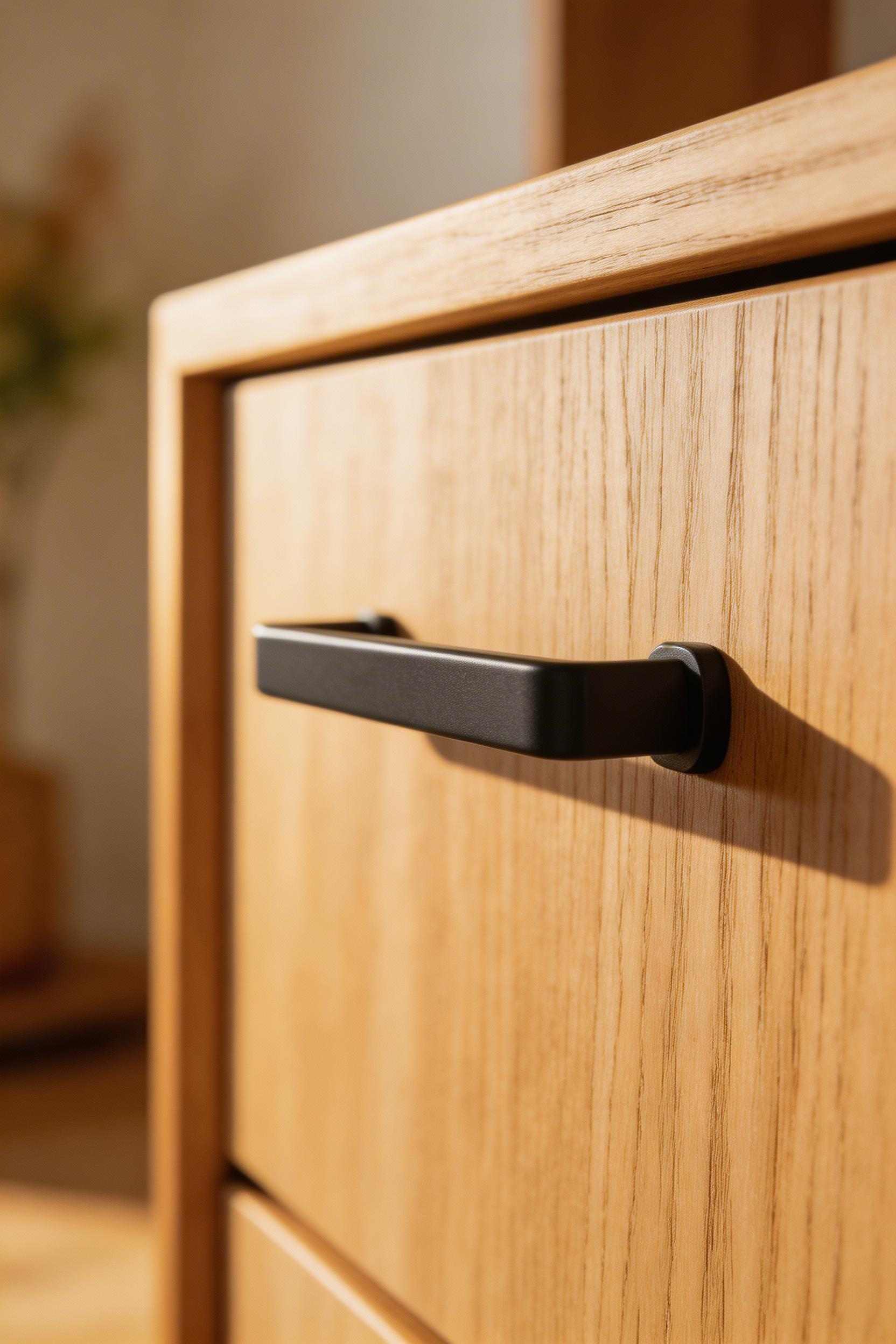
This is also the cheapest per-dollar visual improvement available when you modernize dining room spaces. Replacing hardware on a standard four-door, four-drawer sideboard costs $50–$200 in materials and takes under two hours.
Hardware Selection
Matte black, brushed brass, and unlacquered brass are the three dominant contemporary finishes right now. Bar pulls (also called pull handles) read more contemporary than round knobs on most cabinet styles — the Emtek Alden Cabinet Pull in matte black ($18–$28 each) is a reliable mid-range choice, while the Amazon Basics equivalent ($14 for a ten-pack) covers a budget update credibly.
Before ordering, measure the existing hole spacing centre-to-centre — this is the critical measurement. Common sizes are 3 inches, 3.75 inches, 5 inches, and 6.3 inches. If replacing round knobs with bar pulls on a single-hole cabinet, you’ll need to fill and redrill — or choose a pull long enough to span the old hole without requiring a second hole.
When there are multiple finishes visible on the sideboard — wood legs, metal frame, glass shelves — pick the hardware to match whichever finish appears most rather than the one you want to emphasise. The hardware should support the existing piece, not introduce a third competing element.
8. Bring in Large-Scale Wall Art or a Gallery Wall
Empty walls in a dining room read as unfinished. Small generic prints, especially when hung in a cluster of mismatched frames and sizes without a clear composition, read as accidental. Neither is modern — modern spaces have deliberate, scaled, considered art choices.
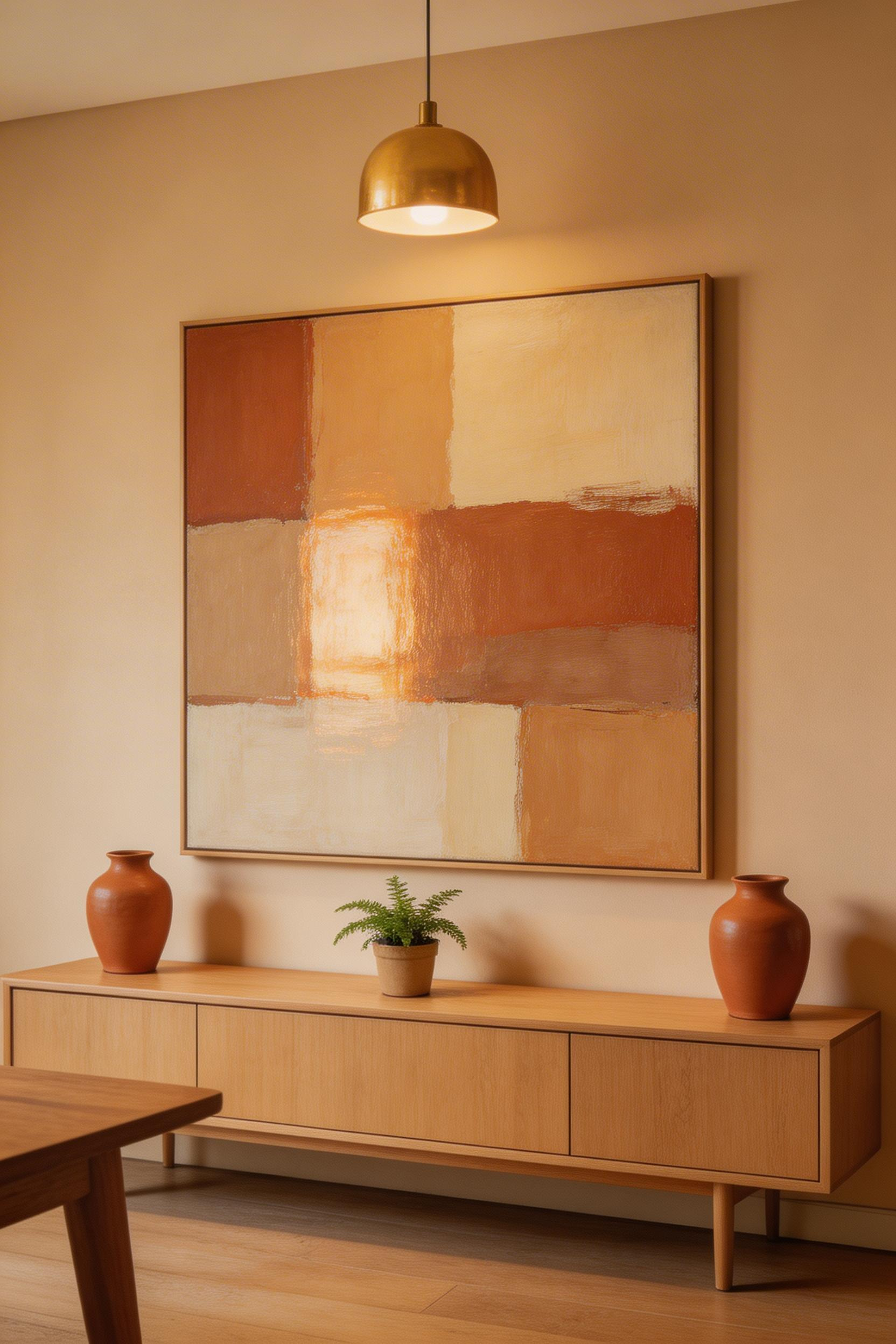
For most dining rooms, the stronger contemporary choice is a single large-format canvas — 36×48 inches or larger — over a sideboard or main feature wall. It reads as a real design decision. Four small prints never quite achieve that. A gallery wall works, but only when it’s edited — three to five pieces of varying sizes rather than a symmetric grid.
Hanging Height and Scale
Art should hang with its centre at 57–60 inches from the floor — average standing eye level. Over a sideboard, start the art 6–8 inches above the surface. As a proportion guide, art should occupy roughly four-sevenths of the wall width it’s placed on.
For gallery walls over a sideboard: lay out the arrangement on the floor before committing to nails, start with the largest anchor piece, and work outward. Use a laser level for clean alignment. Society6 large canvas prints ($80–$250 for 24×32 to 36×48 inches) offer a wide range of contemporary art at reasonable prices; Minted ($130–$400 framed) is the better option for a statement investment piece with higher print quality and custom framing.
Searches for ‘large wall art dining room’ have increased 89% on Pinterest since 2022 — which is a clear signal that the design world has moved decisively away from small, cautious art choices in dining rooms.
9. Paint Dining Chairs a Contrasting Colour to Modernize Dining Room Energy
Matching chair sets feel corporate and dated — not because matching is inherently wrong, but because the expectation that dining chairs must match is a convention from an earlier design era. Painting existing chairs a contrasting colour, or mixing two complementary chair styles, costs almost nothing by comparison to replacing furniture and immediately modernises the dining room’s energy.
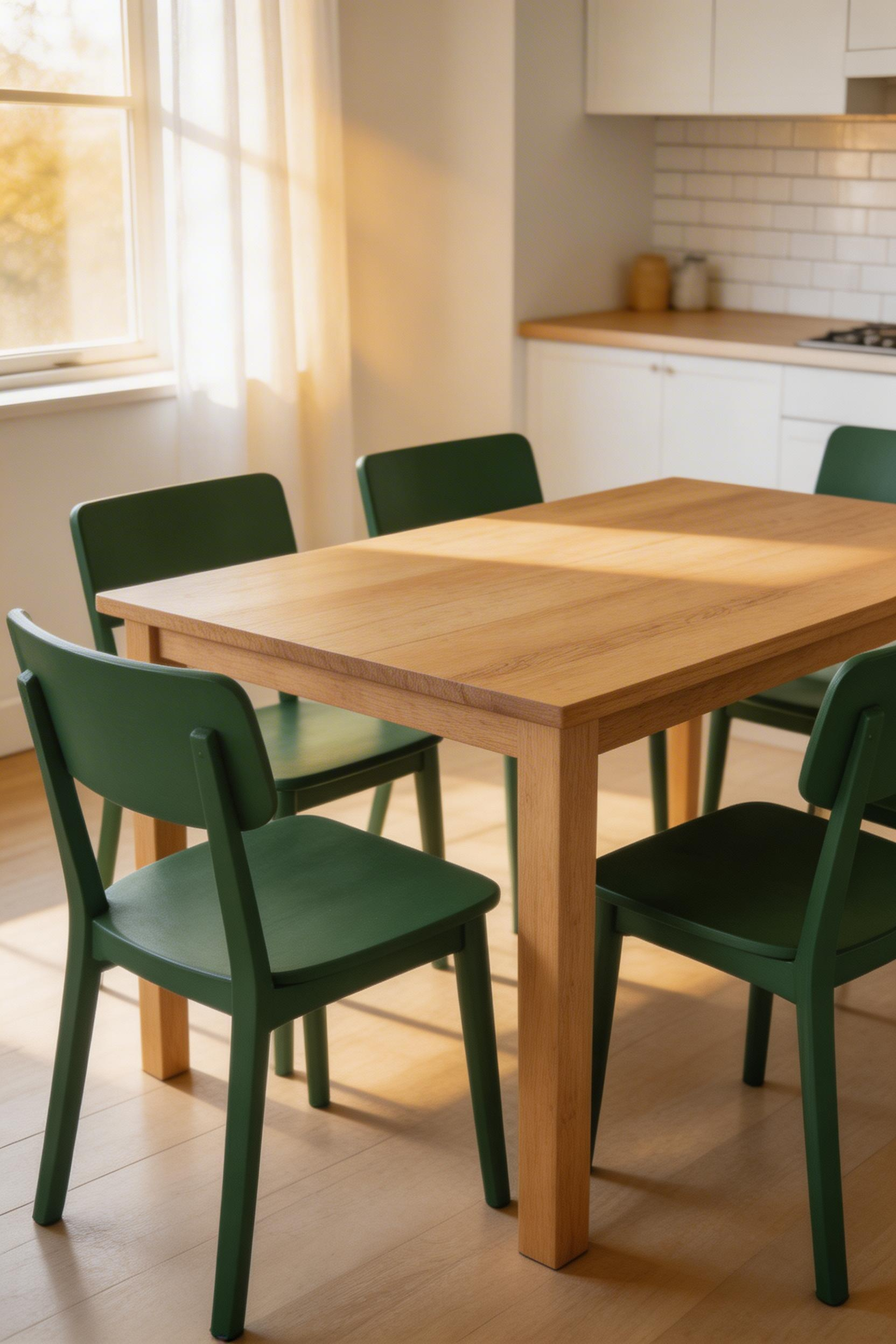
Chalk paint and fusion mineral paint are the easiest options for painting chairs. Neither requires stripping or sanding in most cases, both adhere well to wood, and both produce a flat contemporary finish. The full set of six chairs can be painted for under $60 in materials.
Process and Products
Annie Sloan Chalk Paint in Graphite ($39/500ml) and Fusion Mineral Paint in Coal Black ($34/500ml) are both reliable choices. Fusion is self-sealing and requires no topcoat, which makes it the more practical option for high-use dining furniture. Annie Sloan produces a more artisan, slightly chalky finish that works well for chairs that should look intentionally tactile.
Process: clean chairs with a degreaser or TSP solution, apply two thin coats, and finish with soft wax (artisan look, needs reapplication) or polycrylic (more durable). Wax needs 30 days to cure before heavy use — plan accordingly. Test the colour on the underside of a seat before committing. Some wood species absorb paint unevenly, and the chair bottom is the place to discover that rather than the front leg. Also don’t forget the stretcher bars at the bottom — they’re visible from every seat at the table and easily missed.
10. Use Layered Lighting Instead of One Overhead Source
A single ceiling light is the mark of an undesigned dining room. Professional designers separate lighting into three layers: ambient (overhead), task (focused), and accent (decorative, mood-setting). In a dining room, layering means pendant plus sideboard lamp plus candles. Or pendant plus wall sconces plus candlelight at the table.
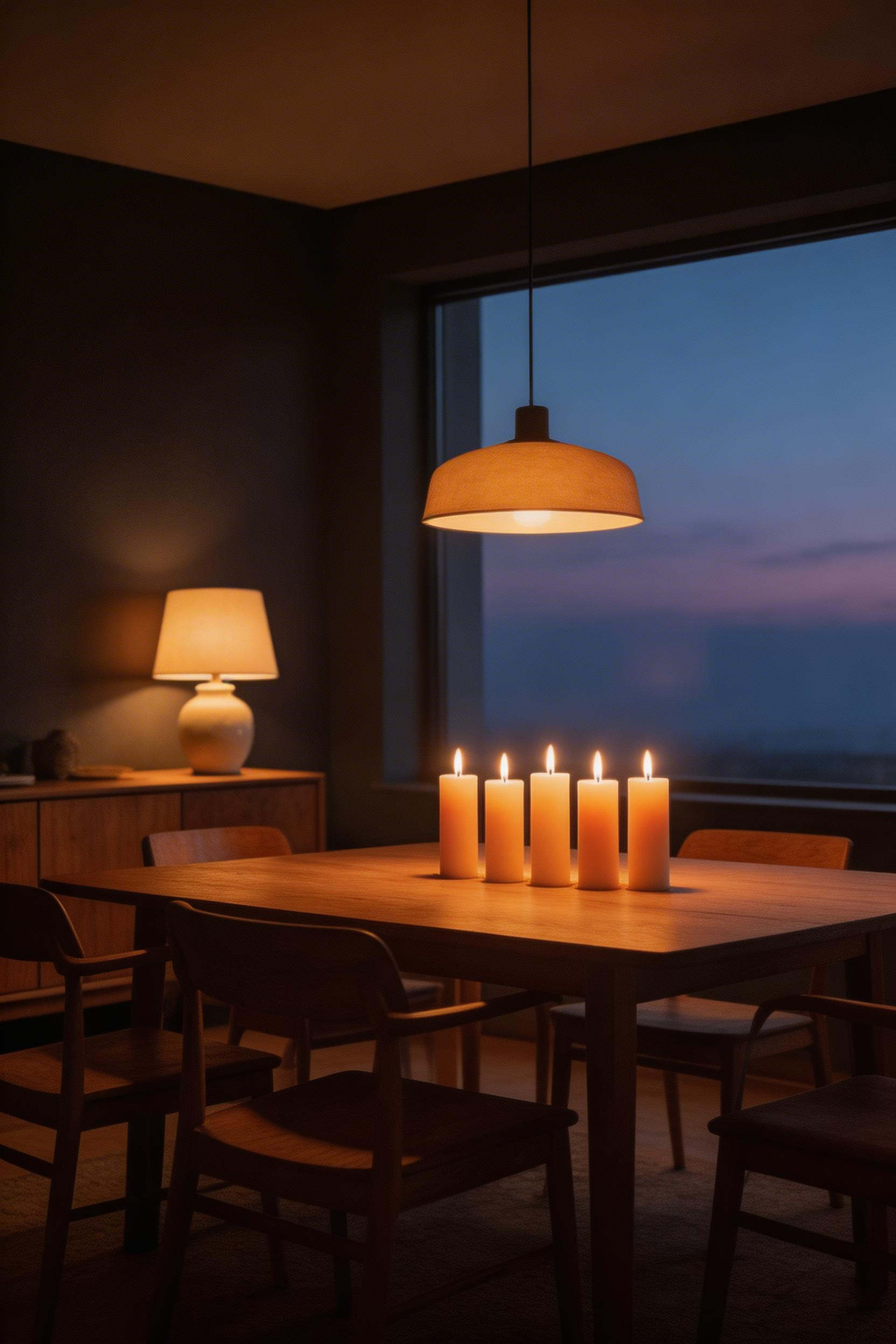
This is also one of the most atmospheric ways to modernize dining room spaces. The most accessible version doesn’t require any new wiring. A dimmer switch on the pendant, a table lamp on the sideboard, and candles at the table centre — that’s three layers, and it works. The dimmer costs $25–$35 and takes about 30 minutes to install. It’s also how most design-led dining rooms actually operate.
Dimmers and Practical Details
A dimmer switch is the lowest-effort, highest-return lighting upgrade in any dining room. The Lutron Diva Single-Pole Dimmer ($25–$35) is one of the most widely recommended by electricians and works with most LED bulbs. One important note: dimmers must be specifically rated for LED loads to avoid flicker. Many older dimmers are not LED-compatible — check the packaging before buying.
For the sideboard lamp, scale matters. A lamp that’s too small on a long sideboard looks tentative; too large and it competes with the pendant. A 16-inch ceramic table lamp base works well on most sideboards 60 inches or longer. CB2’s Arched Brass Sconce ($149 each) is also a strong option for creating symmetry flanking a mirror or artwork. A plug-in version is available, so no hardwiring is needed.
A 2023 American Lighting Association study found that 79% of homeowners who added dimmers rated the change as ‘significant’ or ‘transformative’. That’s disproportionate to a 30-minute, $30 project.
11. Add a Mirror to Bounce Light and Add Depth
A large-format mirror is one of the more architectural tools in a decorator’s kit. It doubles perceived depth, bounces natural and artificial light, and creates a focal point with real scale. And it does all this without adding visual weight. For dining rooms, a mirror placed opposite a window extends the sense of natural light through the evening hours.
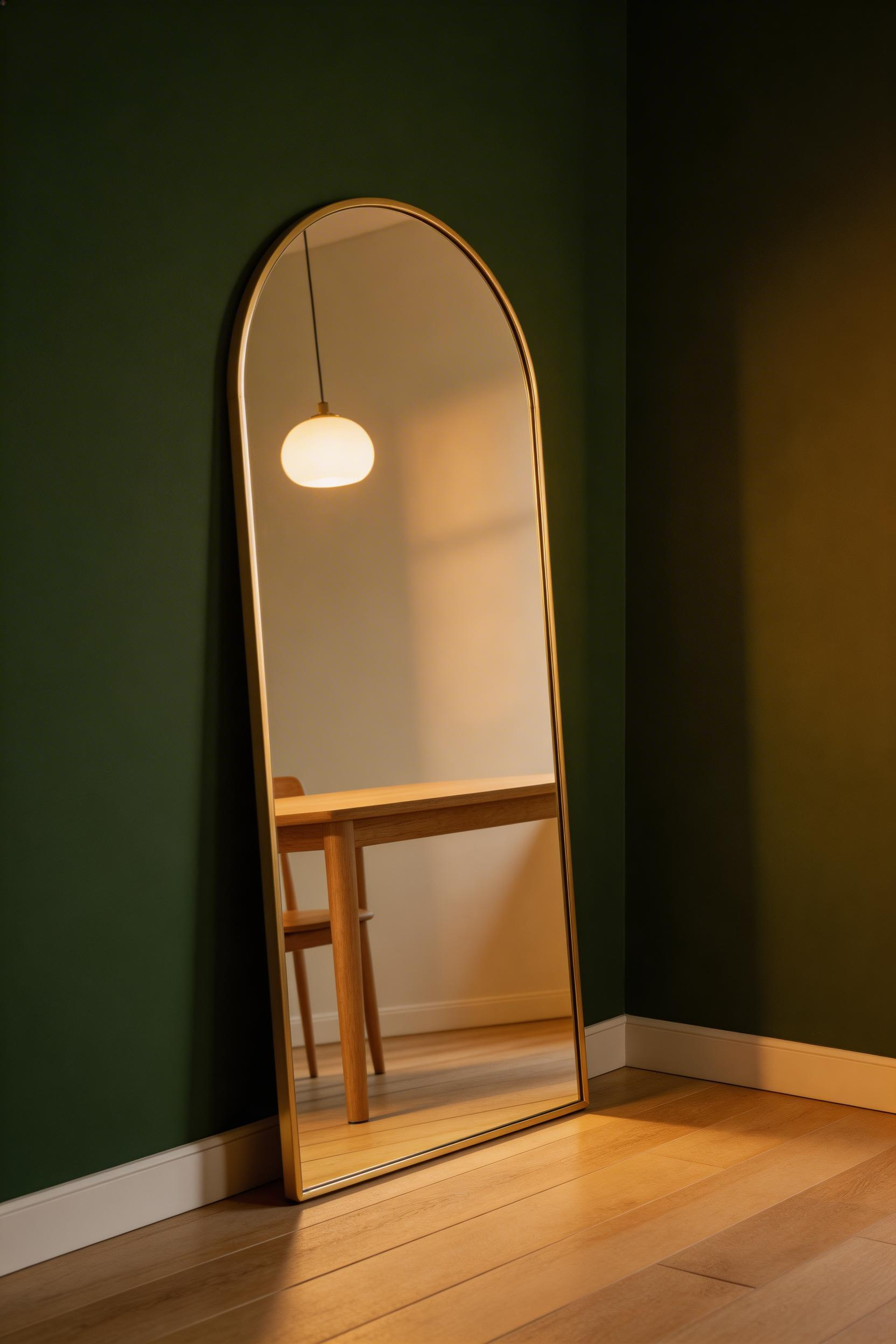
So when you want to modernize dining room spaces without structural changes, a mirror is a high-return addition. Contemporary formats skew large and architecturally simple: arch-top shapes, leaning floor mirrors, and flat rectangular formats in thin metal or wood frames. The ornate gilded frames of traditional dining rooms read very clearly as period-specific — modern mirrors are defined by their restraint.
Size and Placement
For a mirror hung above a sideboard: the mirror width should be approximately equal to or slightly narrower than the sideboard — wider than the piece below looks top-heavy. Hung mirrors sit with their centre at 57–60 inches from the floor; leaning mirrors work best in rooms with 9-foot or higher ceilings.
The CB2 Arched Leaning Mirror ($399–$599) is the category-defining product. It’s 72 inches tall, with a thin brass frame and contemporary arch top. The Wayfair Brenna Modern Arch Floor Mirror ($149–$249) provides a very similar look at half the price. For a more affordable approach, the IKEA LINDBYN in black at $99 (24-inch diameter, round) works well placed in a pair flanking a sideboard.
One honest note on mirror placement: a large mirror opposite the dining table reflects seated guests back at themselves. Some find this theatrical; others find it distracting during meals. It’s worth propping the mirror up and sitting at the table before committing to that position. Opposite a window or flanking a wall is usually the safer choice for most dining rooms.
12. Replace Curtains to Modernize Dining Room Windows
Curtain valances, swags, and pelmet boxes all signal a 1990s or early 2000s decorating approach. They’re also the easiest thing to replace. New curtain hardware and panels only need a drill and a level to install. So this is one of the most accessible updates on this list.
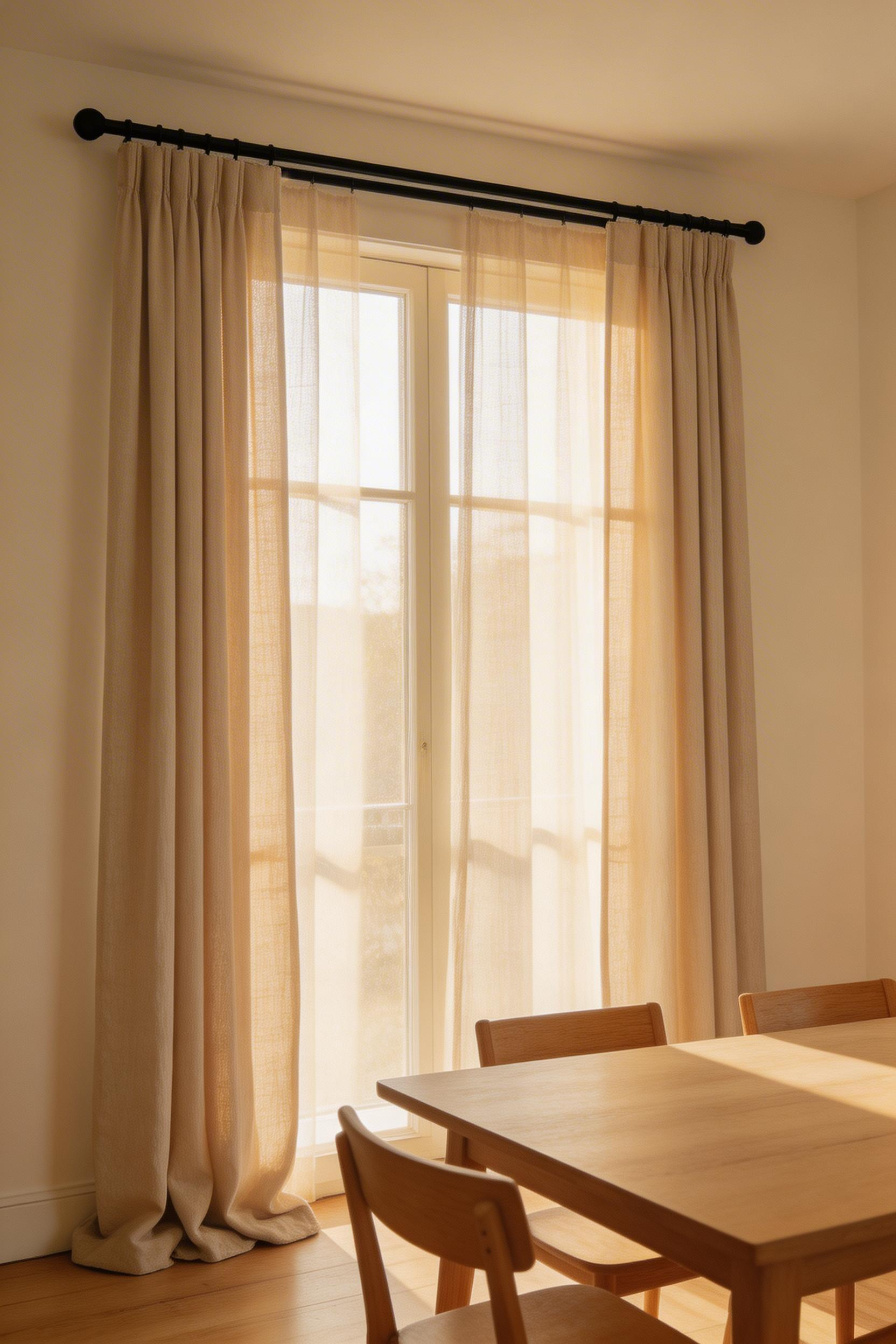
Contemporary window treatments in dining rooms break down into two main approaches: floor-length linen panels on a simple rod for a soft, draped look, or flat Roman blinds for a cleaner, more architectural line. Both read as modern; which works better depends on ceiling height and the amount of natural light the room receives.
Installation and Sizing
Rod mounting height matters. Mount 4–6 inches above the window frame to extend the apparent ceiling height. Extend 6–12 inches beyond the window frame on each side so panels clear the glass when open. For linen panels, the Pottery Barn Belgian Linen Rod-Pocket Curtains ($119–$159/panel) in a natural or warm white are a reliable contemporary standard. IKEA HANNALILL ($29.99/pair) gives a very similar look at a fraction of the price.
Roman blinds work best where a cleaner, more architectural line is the goal. This is particularly true in rooms with lower ceilings, or windows that sit close to the ceiling where floor-length panels would look awkward. The Shade Store’s custom Roman blinds ($189–$400 per window) are the quality benchmark for made-to-measure sizes. Smith & Noble’s faux wood blinds ($79–$150) are a practical alternative when privacy matters more than fabric warmth.
The sizing mistake I see most often: buying curtains that are too short. In a dining room, floor-length panels — with about half an inch of clearance — always look more deliberate than sill-length or apron-length. Short curtains look like an oversight. Floor-length looks like a decision.
13. Introduce a Focal Plant or Sculptural Centrepiece
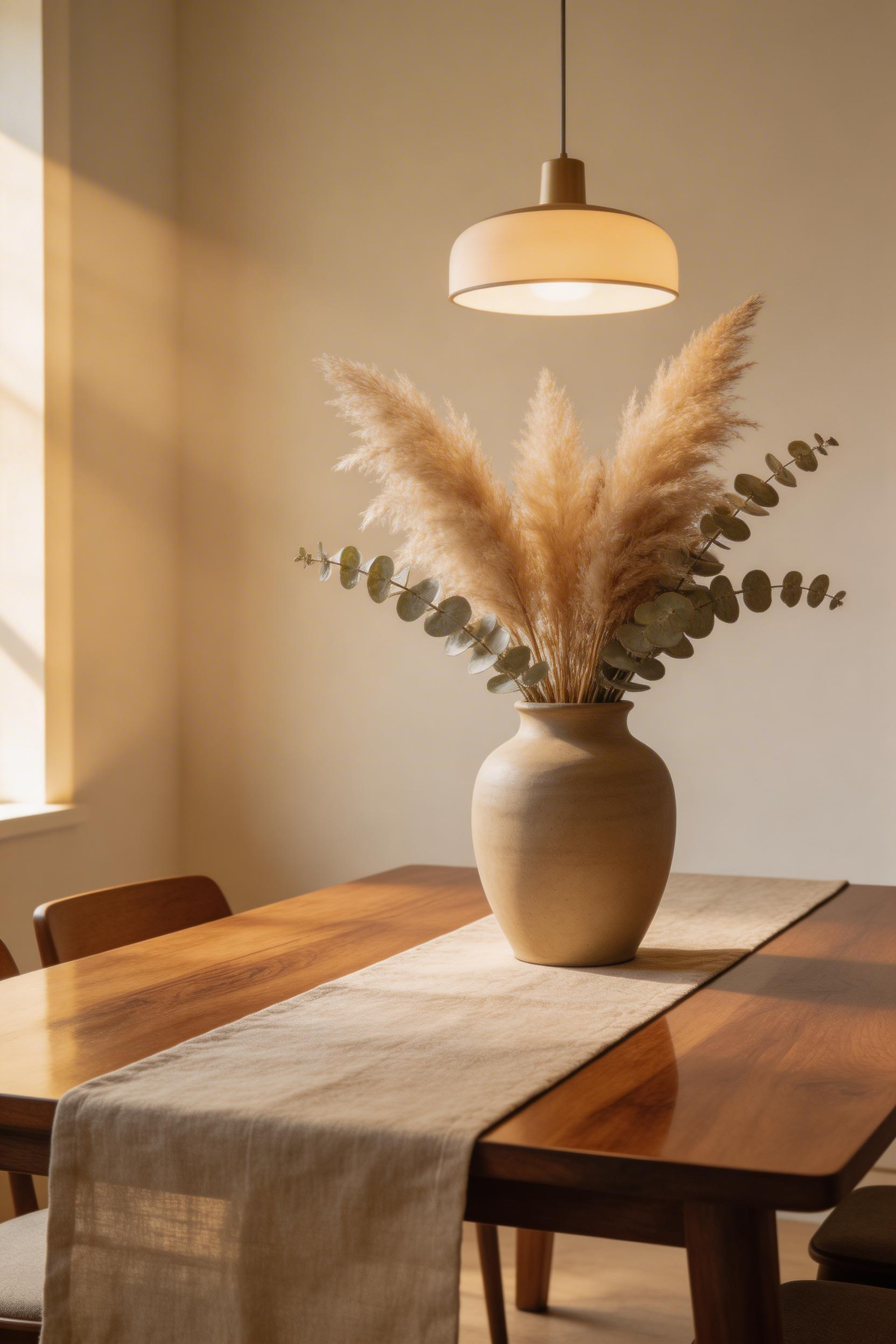
The dining table centrepiece is the room’s anchor during meals and its focal point when the table isn’t in use. Getting it right is a small but meaningful step to modernize dining room aesthetics without spending much. A formal floral arrangement in a traditional vase is a specific aesthetic choice that communicates a particular era — and it’s not a contemporary one. Modern dining room centrepieces lean toward sculptural ceramics, dried botanicals, large-format vases, and living plants with strong architectural forms.
Fiddle-leaf figs, olive trees, and monstera deliciosa are the most referenced contemporary indoor dining room plants. As floor plants positioned beside rather than on the dining table, they add scale and organic warmth without competing with the dining surface itself.
Height and Scale Rules
For table centrepieces, height should stay below 12 inches or go above 20. Below 12 inches doesn’t block sightlines. Above 20 clears them entirely. The 12–20-inch middle range blocks conversation without making a strong enough visual statement to justify the obstruction.
Dried grasses and dried botanicals are the most practical centrepiece option that still looks considered. Pampas grass, dried eucalyptus, and dried alliums all work well. They last 1–2 years, need no water or light, and maintain their architectural quality through changing seasons. I keep a large dried grass arrangement on my table year-round. I haven’t once wanted to replace it with fresh flowers. The West Elm Handcrafted Stoneware Vase ($39–$89) works well as the vessel — the irregular, handbuilt ceramic form reads as genuinely artisan rather than mass-produced.
Searches for ‘dried botanicals dining table’ on Pinterest grew 215% between 2021 and 2024, overtaking fresh flowers as the more-searched dining room centrepiece option. That’s a useful data point about where contemporary dining room taste has settled.
14. Paint the Ceiling or Trim in a Contrasting Tone
White ceilings and white trim became standard in post-war residential construction. They’re practical, they reflect light, and they require no decorating decisions. But ‘no decision’ is not the same as ‘good decision’. In a dining room, defaulting to white ceilings and white trim often results in a space that looks built rather than designed.
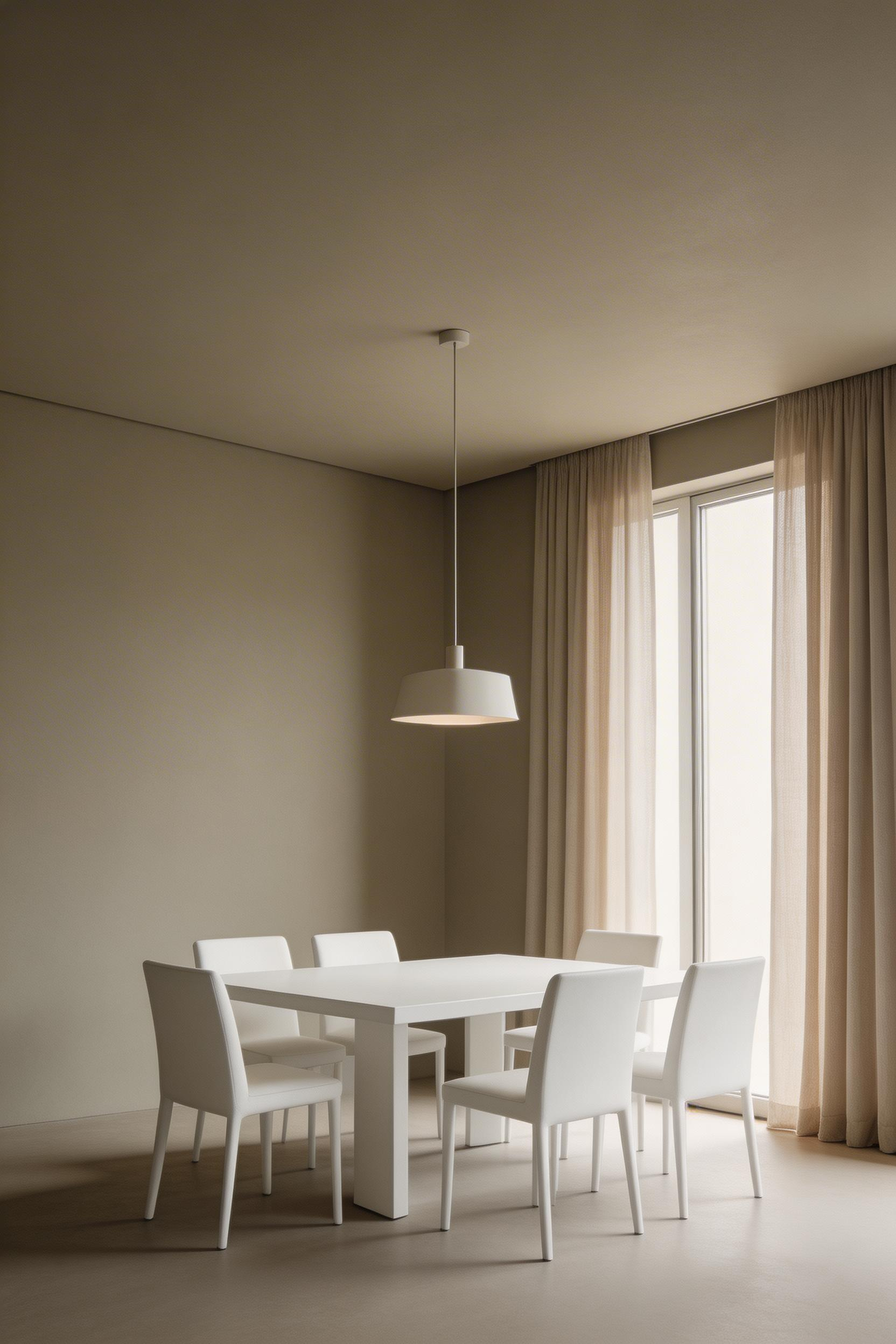
Two approaches work best here. The simpler one: paint the trim to match the walls rather than keeping it white. The bolder one: paint the ceiling in a warm off-white or a colour that matches the walls — the ‘tonal’ approach. The tonal approach uses the same colour family on walls, ceiling, and trim. It’s one of the clearest signals of contemporary interior design. And it costs no more than painting everything white.
Practical Approach
The easiest version of this: paint just the trim to match the walls. White trim against coloured walls is a period look; tonal trim reads contemporary. It takes no more paint, no more time, and makes a measurable difference to how the room is perceived.
For ceiling colour, Benjamin Moore White Dove OC-17 ($65–$75/gallon) is a warm off-white. It reads as white but has more character than standard bright white. Sherwin-Williams Mindful Gray SW 7016 is a reliable warm greige that works as a ceiling colour in rooms with warm undertones. For a more dramatic approach — Benjamin Moore Wrought Iron 2124-10 (near-black) on a ceiling with 9-foot or higher ceilings creates a genuinely enveloping atmosphere. The smaller dining room ideas covered in this smaller dining room ideas guide explore several of these tonal approaches in compact spaces.
Ceiling paint should have a flat finish to reduce light reflection. When using a tonal approach, use the same colour on both surfaces. Keep flat finish on the ceiling; use eggshell or satin on the walls. Architectural Digest’s 2024 report named tonal painting one of the top five most visible residential design shifts since 2022.
15. Edit Your Decorative Objects to Complete the Modernize Dining Room Process
Modern spaces are edited. This is not an aesthetic observation — it’s a structural one. Contemporary design is defined by fewer visible objects and more intentional placement. The discipline is removing things that lack visual weight or genuine personal meaning.
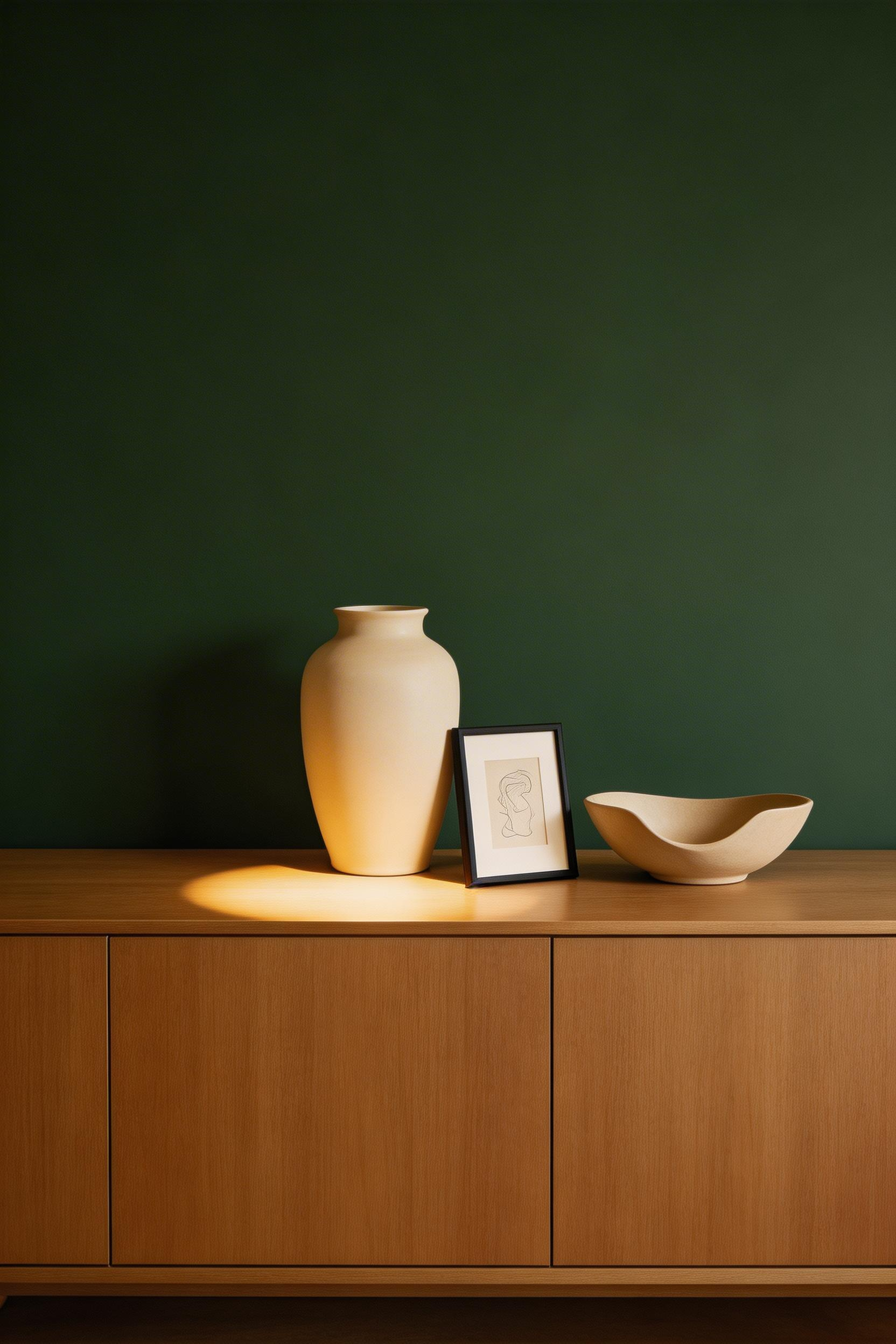
In a dining room, clutter most often accumulates on the sideboard, floating shelves, and the dining table itself. The editing process isn’t about minimalism as a style choice. It’s about removing visual noise that prevents the room from looking coherent.
The Editing Method
Work in three physical piles: Keep (has visual weight or personal meaning), Relocate (belongs elsewhere), Remove (donate, sell, or bin). Work one surface at a time. Step back six feet after editing. If it still feels busy, remove another piece. The right amount of display in a modern dining room is consistently less than your first instinct suggests.
The one-third rule of open shelving works as a guide: one-third objects, one-third empty space, one-third height and texture variation. Apply the same proportions to sideboards and any other display surfaces. The Yamazaki Tower Sideboard Tray Organiser ($35–$49) is a useful tool for corralling small objects into a contained, intentional display rather than letting them scatter across a surface.
The most effective single edit: clear one visible surface completely and leave it empty for two weeks. If the empty surface bothers you after that period, add back only the two or three pieces you missed most. Everything else stays out. A University of Minnesota study found that cluttered environments raised cortisol levels measurably. Also, rooms rated as ‘modern’ consistently contained fewer visible objects than those rated as ‘dated’. That’s not coincidence — it’s the visual principle that separates a curated dining room from an accumulated one. For more dining room inspiration on how edited contemporary dining rooms are styled, the linked guide shows several strong examples.
The Most Efficient Way to Modernize Your Dining Room
If you read through all fifteen points and feel mildly overwhelmed, start here: light fixture, seating, and one wall. That’s the triage version.
Replace the pendant first — it’s the fastest, highest-return single change. Then address the seating: either paint the existing chairs a contrasting colour, or replace the most dated chairs with two or three modern pieces mixed with what you have. Then commit to one wall treatment — a deep accent colour, large-format artwork, or both. Those three changes do more to modernize dining room atmosphere than a new table, curtains, and storage combined.
For the other twelve items on this list, work through them in order of cost from lowest to highest. Hardware replacement and decluttering cost almost nothing and have immediate effect. A rug, curtains, and a mirror are mid-range investments with strong visual returns. A new table or full chair replacement is the most expensive category. Wait until you’ve done everything cheaper first — sometimes those changes make the expensive ones feel unnecessary.
The modern dining room ideas guide on this site covers the stylistic outcomes of many of these changes in more detail — it’s a useful companion for understanding what the finished room can look like before you start. The goal is a dining room that looks like you made decisions, not just purchases.