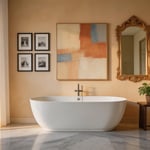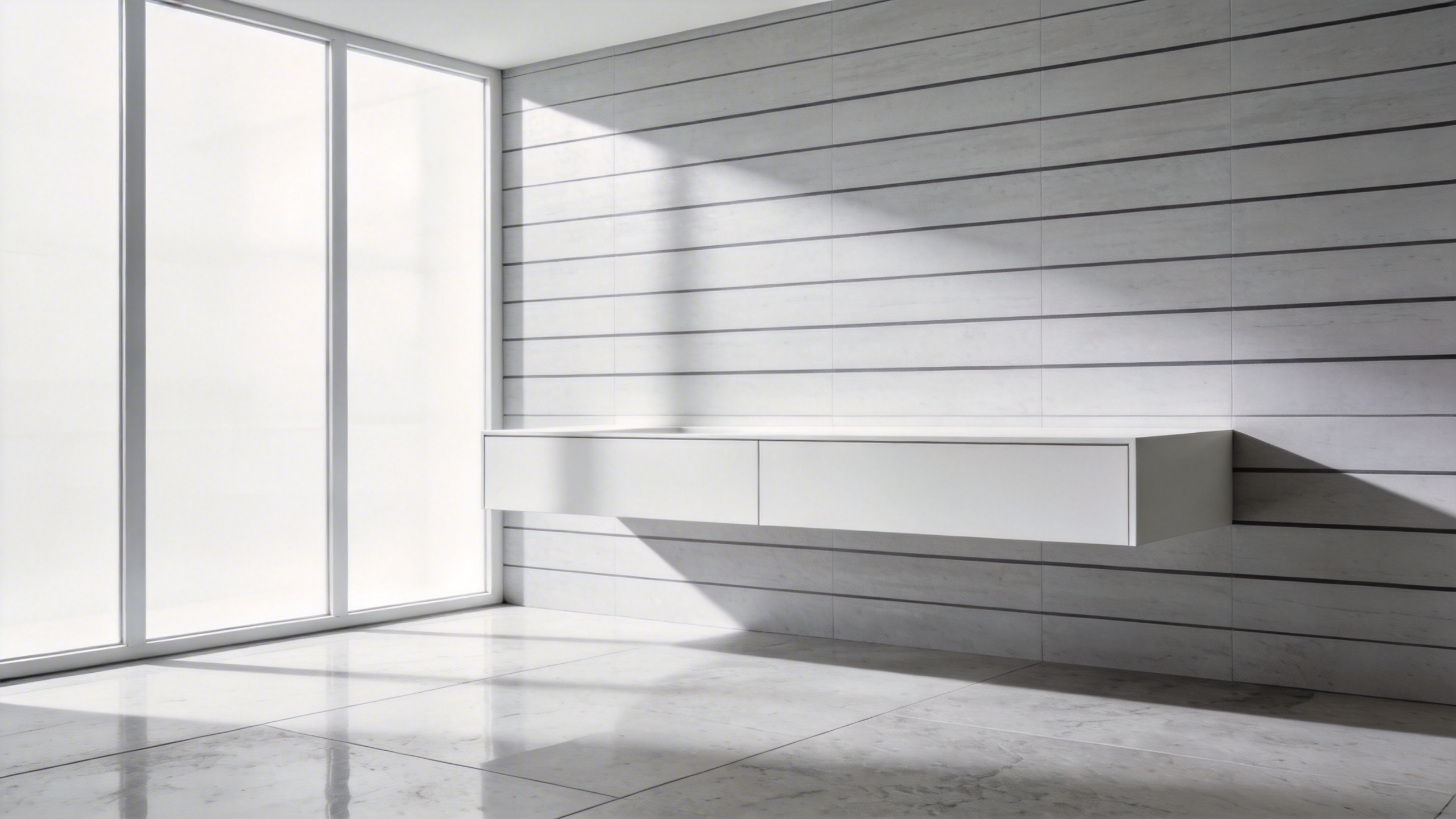
Achieving a sophisticated minimalistic bathroom design is about more than just removing clutter. It is a deliberate choice prioritizing visual silence. For discerning homeowners, this approach offers a refined refuge. Specifically, you can transform a utilitarian space into a masterpiece of spatial geometry. Next, focus on creating a spa-like bathroom oasis with minimalist principles. You will quickly discover the calming power of tactile luxury.
Phase 1: The Philosophical Anchor (Space & Geometry)
Space and geometry form the foundational DNA of any minimalist room. Specifically, this philosophy moves beyond simple decluttering. It fundamentally shapes how we inhabit the space. I always go back to Le Corbusier here. The right angle establishes a profound sense of human order. Therefore, linear tiles and sharp floating vanities reject organic chaos. They opt for orthogonal precision instead. In fact, perfect grout alignment gives the eye a much-needed resting place. This architectural silence acts as an antidote to daily visual noise.
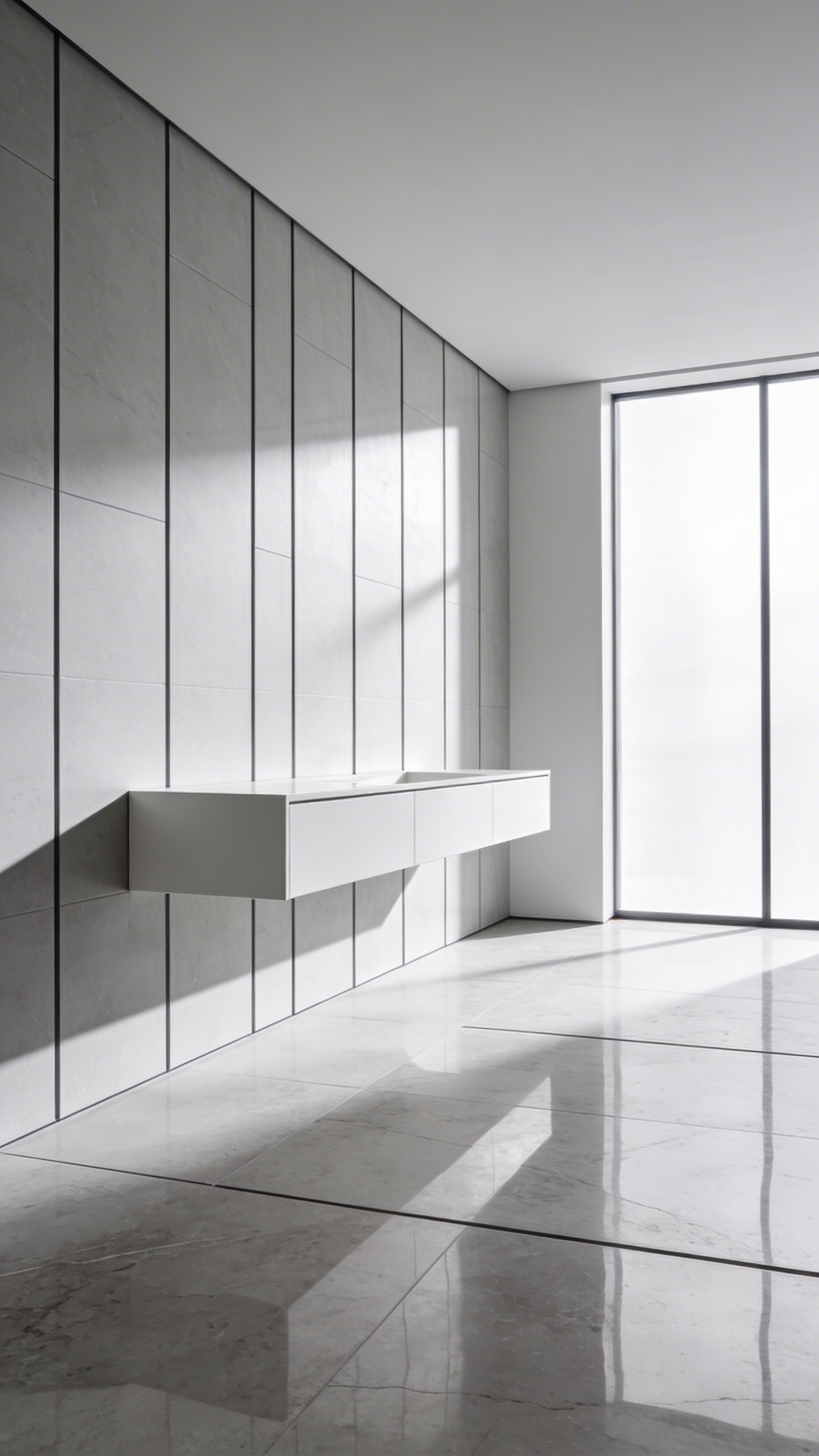
Minimalism also embraces the Japanese concept of Ma. This translates to the charged void. Accordingly, designers treat negative space along bare walls as a deliberate pause. Indeed, a floating vanity allows the room’s energy to breathe underneath. This calculated geometry choreographs our daily washing rituals. Next, architects use linear progression to guide your path from the door. Here, placements often rely on the Golden Ratio to reduce cognitive load. Setting a mirror exactly at 0.618 of the wall height feels instinctively right.
Heavy geometric stone acts as a sensory vessel for warm water. Therefore, stripping away decorative details leaves only the raw essence. Reaching the absolute minimum resolves the space completely. However, the room never actually feels empty. This geometric purity grants homeowners a beautiful refuge of mental freedom.
1. The ‘Negative Space’ Imperative: Designing for What Isn’t There
I have photographed dozens of luxury bathrooms in my career. Empty space is never just a void. Rather, it is a highly deliberate primary building material. Japanese design celebrates this exact philosophy through the concept of Ma. Specifically, this approach treats the empty gaps between fixtures as possibilities. Leaving a lime-plaster wall completely bare directs your focus. Therefore, your eyes move naturally toward a textured stone basin. The room essentially offers an immediate visual deep breath.
Achieving this unbroken architectural illusion requires intense behind-the-scenes engineering. In fact, in-wall carrier systems successfully hide bulky plumbing mechanics. Heavy vanities and toilets appear to float seamlessly above the ground. Removing these pedestals opens up a completely continuous floor plane. Extending that clear sightline directly reduces visual noise.
Modern linear drains eliminate clunky shower thresholds entirely. Next, large-format floor tiles can flow straight into the wet area. Substituting protruding shelves with recessed niches carves storage straight into the framing. Eliminating this physical clutter directly reduces your mental cognitive load. Indeed, giving your eyes a place to rest actively lowers cortisol levels.
True negative space even extends to the hidden acoustic experience. Premium silent flush systems prevent rushing water from breaking the quietness. Prioritizing empty air and natural light transforms a purely utilitarian room. It becomes a meditative sanctuary.
2. Architectural Alignment: Harmonizing Grid Lines and Visual Sightlines
A minimalist bathroom reveals its true nature up close. Specifically, it is not merely empty space. It is a rigorous mathematical puzzle. To achieve true visual peace, designers rely on modular logic. Every architectural element adheres to a strict foundational grid. Traditional spaces often stagger tiles to hide construction flaws. However, minimalists strictly employ a continuous stack bond pattern. Therefore, straight vertical and horizontal grout lines stretch across the room.
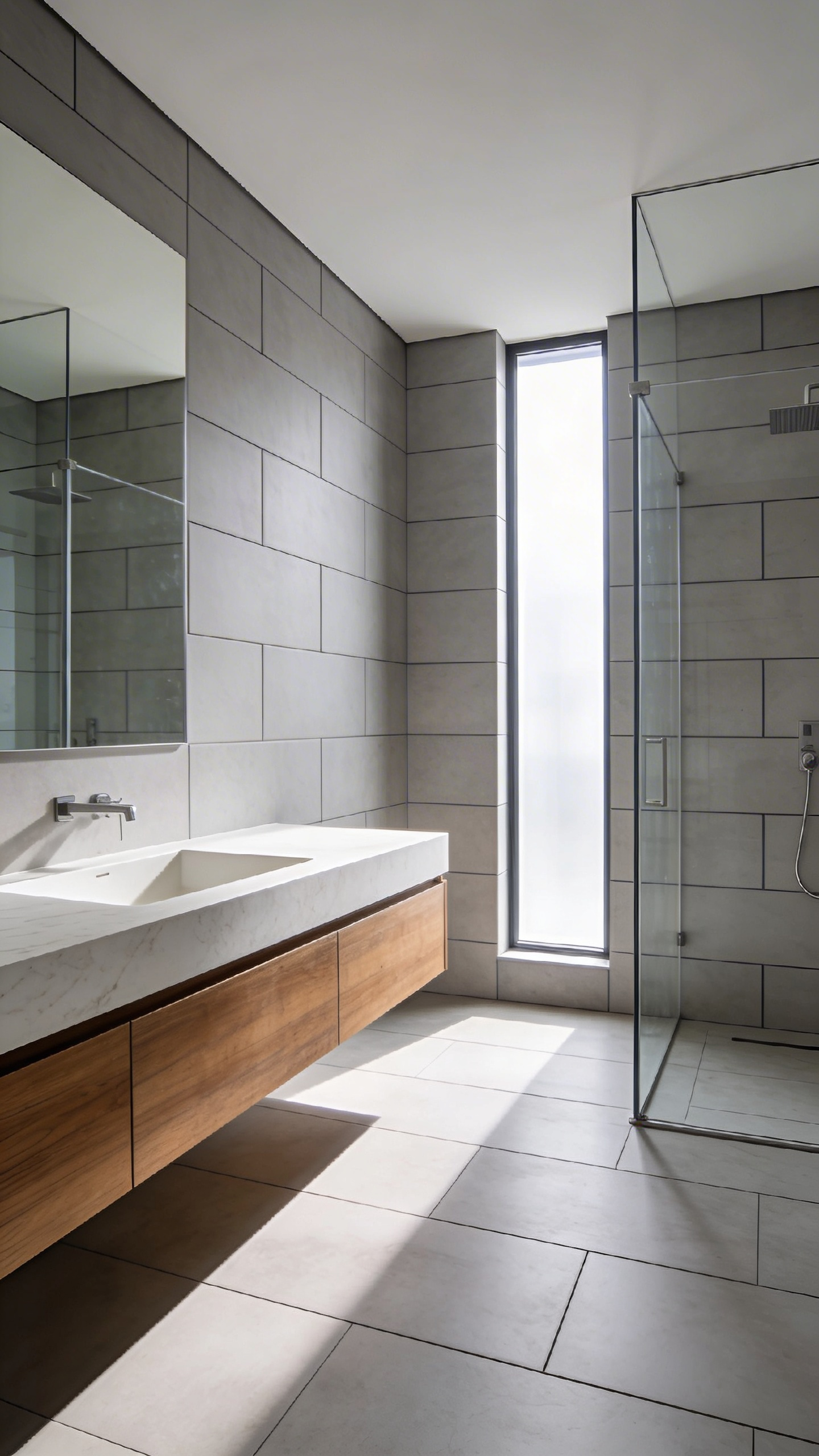
These unbroken lines must align perfectly with floating vanities. I always notice when grout lines are slightly off. Even a slight deviation creates subconscious visual noise. Indeed, flawless alignment turns isolated fixtures into cohesive wall extensions.
Harmonizing these spaces requires engineering precise visual sightlines. Designers establish a constant horizontal datum line around the room. Next, mirrors, windows, and glass shower frames share the exact same height. This unified horizon gracefully lowers the visual center of gravity. Therefore, the ceiling feels remarkably higher and far more expansive.
Material transitions must obey this invisible geometry without jarring interruptions. Zero-threshold showers completely eliminate visual barriers like raised floor curbs. In fact, floor tiles glide straight into the wet area with absolute precision. Functional hardware like linear slot drains effortlessly disappear into this grid. This strict architectural alignment completely clears away distracting visual debris. You simply experience the deeply soothing textures of water, light, and stone.
3. The Concealment Principle: Engineering Invisible Storage Systems
Visual silence is the ultimate goal here. Specifically, designers remove functional distractions to highlight the architecture. Next, consider high-end systems from Dyson that house components entirely behind mirrors. In fact, only a tiny laser-etched icon reveals the soap dispenser. Therefore, the monolithic look remains completely intact.
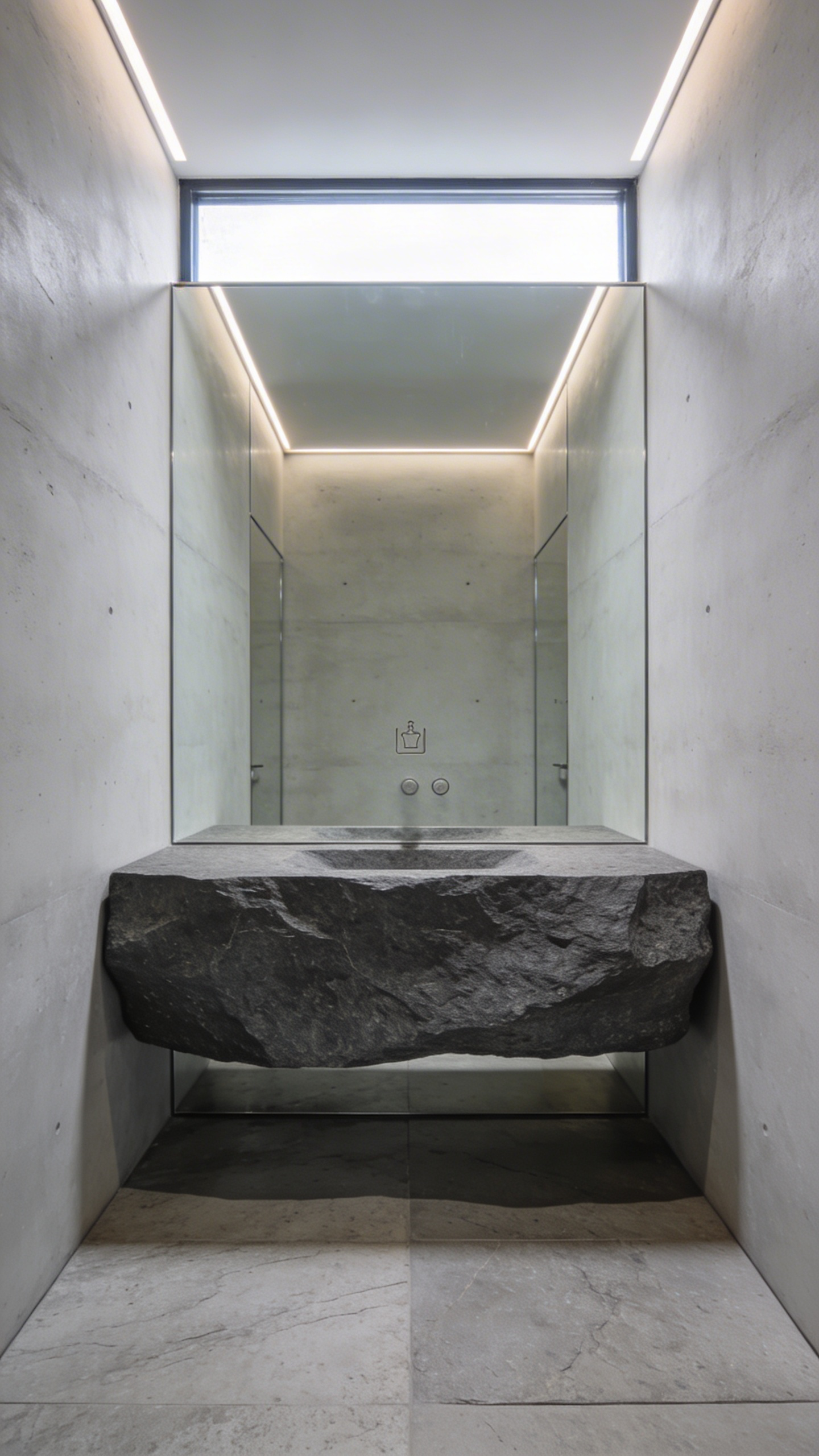
Heavy stone requires real structural ingenuity. Engineers often use MagnaPanel magnetic catches for plumbing access. Indeed, visible hardware ruins this sleek illusion. Multi-pivot SOSS hinges let doors sit perfectly flush against walls. These hidden hinges offer crucial 3D adjustability for installers. A uniform two-millimeter reveal transforms basic closets into hidden rooms.
Beyond visuals, the mechanics of concealment deeply affect your sensory experience. Opening a handle-free drawer initiates a tactile design dialogue. Precision-engineered Blum mechanisms glide with a soft, dampened sound. This creates a psychological sense of effortless luxury.
However, high-moisture environments constantly threaten to warp these hidden seams. Designers now favor waterproof composite laminates like Fenix NTM. These dense materials keep reveals perfectly consistent. Reinforced sub-frames effectively prevent heavy tiled doors from sagging over time.
4. Purposeful Proportion: Scaling Fixtures to Exact Room Dimensions
Minimalist scaling requires composing a space mathematically. Specifically, bathroom fixtures must relate directly to human proportions. Successful designs anchor the room using Le Corbusier’s Modulor system. Instinctively, matching vanity heights to human eye levels makes the room feel safe.
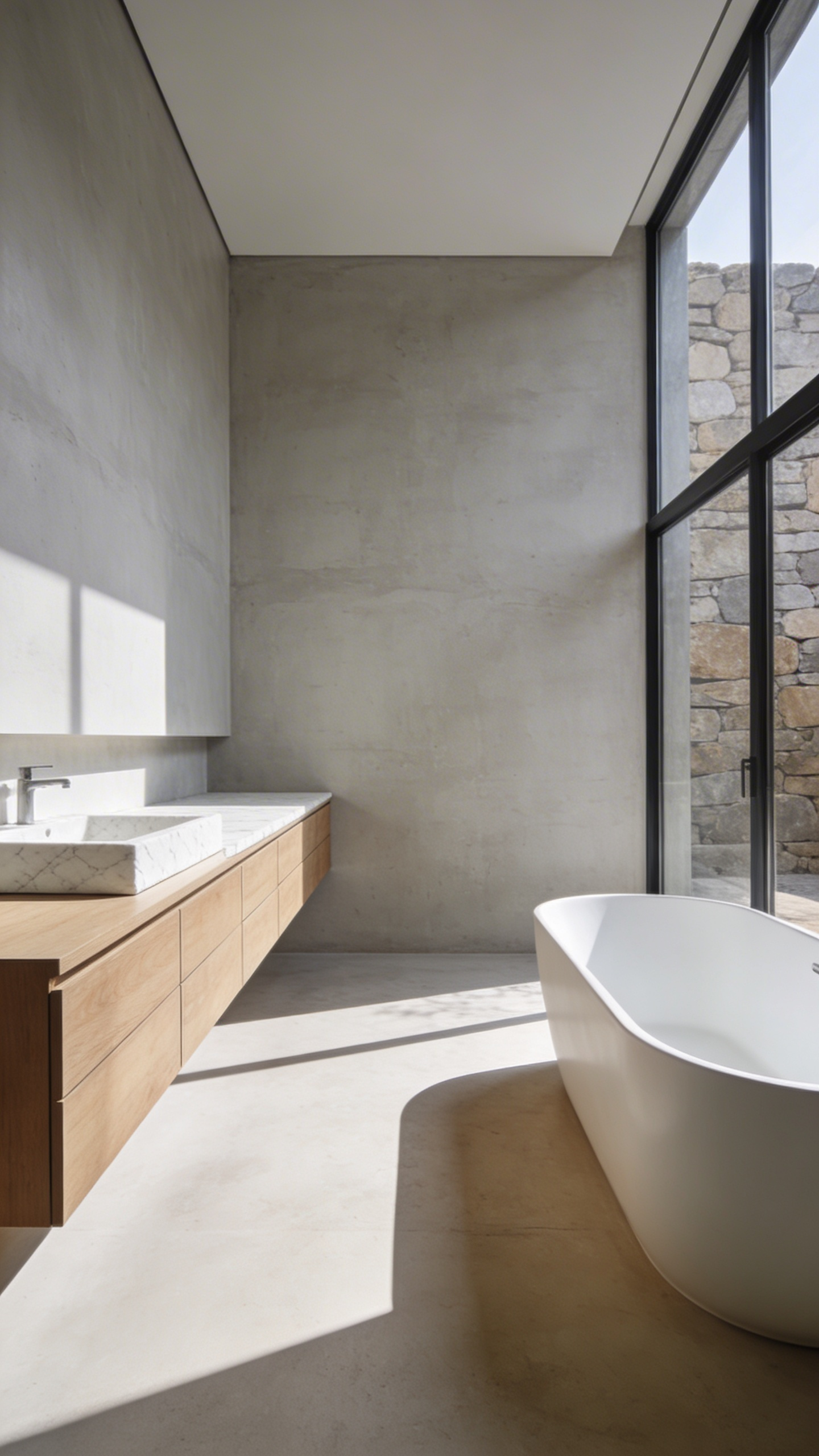
Visual silence thrives on what is intentionally left out. In fact, the Japanese concept of Ma dictates the empty space between objects. Scaling a floating vanity smaller than the wall creates vital breathing room. The eye rests on grain-matched oak rather than cramped plumbing utility.
Small bathrooms actually benefit from deliberate over-scaling to create architectural intimacy. One monolithic soaking tub turns a cramped layout into a luxurious jewel box. However, expansive rooms require linear drains to ground the wide floor space.
Vertical precision relies on strict mathematical harmony. A wall mirror should span exactly seventy percent of the vanity width below it. Otherwise, matching the full vanity width makes the walls feel uncomfortably tight.
Purposeful proportion also addresses the unseen acoustic volume of the room. Minimalist spaces echo heavily due to hard glass and porcelain surfaces. Therefore, selecting thick-walled, cast-resin bathtubs adds necessary acoustic dampening mass. This heavy material breaks up sound waves to achieve spa-like resonance.
Phase 2: Material Exploration (Texture & Surface)
I have found that minimalist spaces can easily look flat in photos. Contemporary design relies heavily on tactile minimalism to combat this. Here, texture essentially becomes the new color. When you remove a bright palette, the brain seeks sensory nutrition elsewhere. Specifically, hands and feet crave varied, engaging surfaces.
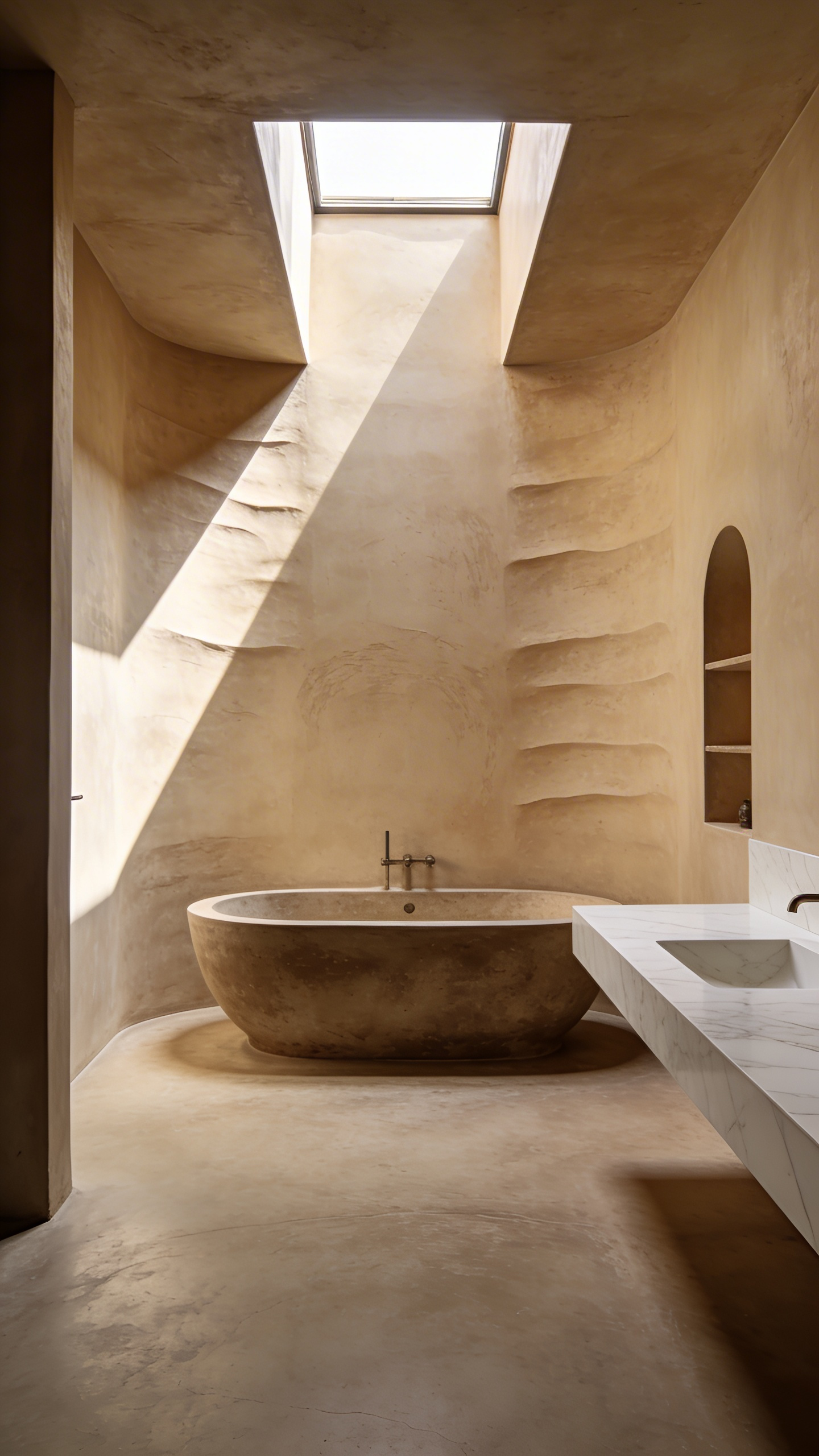
Designers often contrast living finishes with sealed shells. Traditional Tadelakt plaster offers a thick, undulating surface. This lime-based material ages with a beautiful, organic patina. Modern microcement provides a thin, highly resilient skin instead. Therefore, it delivers an industrial-chic look with almost zero maintenance.
Introducing linear relief prevents unwanted spatial flatness. Next, consider how fluted stone and reeded glass create distinct architectural rhythm. Vertical grooves capture beautifully shifting shadows throughout the day. Meanwhile, reeded glass enclosures diffuse light like a soft Japanese screen.
However, aggressive texture introduces significant daily functional challenges. Rough split-face stone traps stubborn soap scum and limescale. Professionals employ a strategic touch-zone approach to solve this. High-texture materials remain exclusively in dry vanity areas. Wet splash zones utilize completely smooth, matte-honed surfaces instead. Indeed, this layered haptic shift creates emotion without sacrificing basic hygiene.
5. Monolithic Surfaces: The Power of Large-Format and Slab Materials
Grout lines often read as intense visual clutter. Therefore, moving toward monolithic surfaces changes everything. This approach treats the modern bathroom as a sculpted void. By utilizing large-format slabs, designers eliminate the traditional tile grid entirely. The eye glides across the room without any jarring stops. Specifically, the mind perceives the space as a single, cohesive volume.
Achieving this seamless look requires advanced materials. Historically, designers relied on high-performance porcelain. However, sintered stone now leads the luxury market. This material mimics natural metamorphic processes using extreme pressure and heat. As a result, the slabs become virtually non-porous and incredibly durable. Sintered stone allows for precise mitered edges. Fabricators can craft integrated vanities from the exact same slab.
Visually, these massive surfaces engage our senses deeply. Water sounds much deeper when hitting a continuous stone floor. Slabs showcase the authentic beauty of raw materials. In fact, adjacent bookmatched slabs create beautiful mirrored focal points.
The power of these slabs relies on invisible engineering. Installers use color-matched epoxy instead of traditional cement grout. Joints shrink to a nearly invisible 1.5 millimeters. Hidden linear drains cut directly into the floor maintain the illusion. Without porous grout lines, the bathroom becomes incredibly easy to clean. Ultimately, these monolithic surfaces function as a hygienic, beautiful shield.
6. Tactile Contrast: Balancing Matte Finishes with Natural Warmth
I always pay attention to how light interacts with bathroom surfaces. Specifically, high-gloss tiles create harsh, mirror-like highlights that cause visual glare. Modern matte finishes utilize diffuse reflection to gently scatter light instead. This phenomenon softens the room and dramatically reduces visual noise. Designers use honed stone walls to capture beautiful, subtle shadows. This absence of glare signals your nervous system to relax.
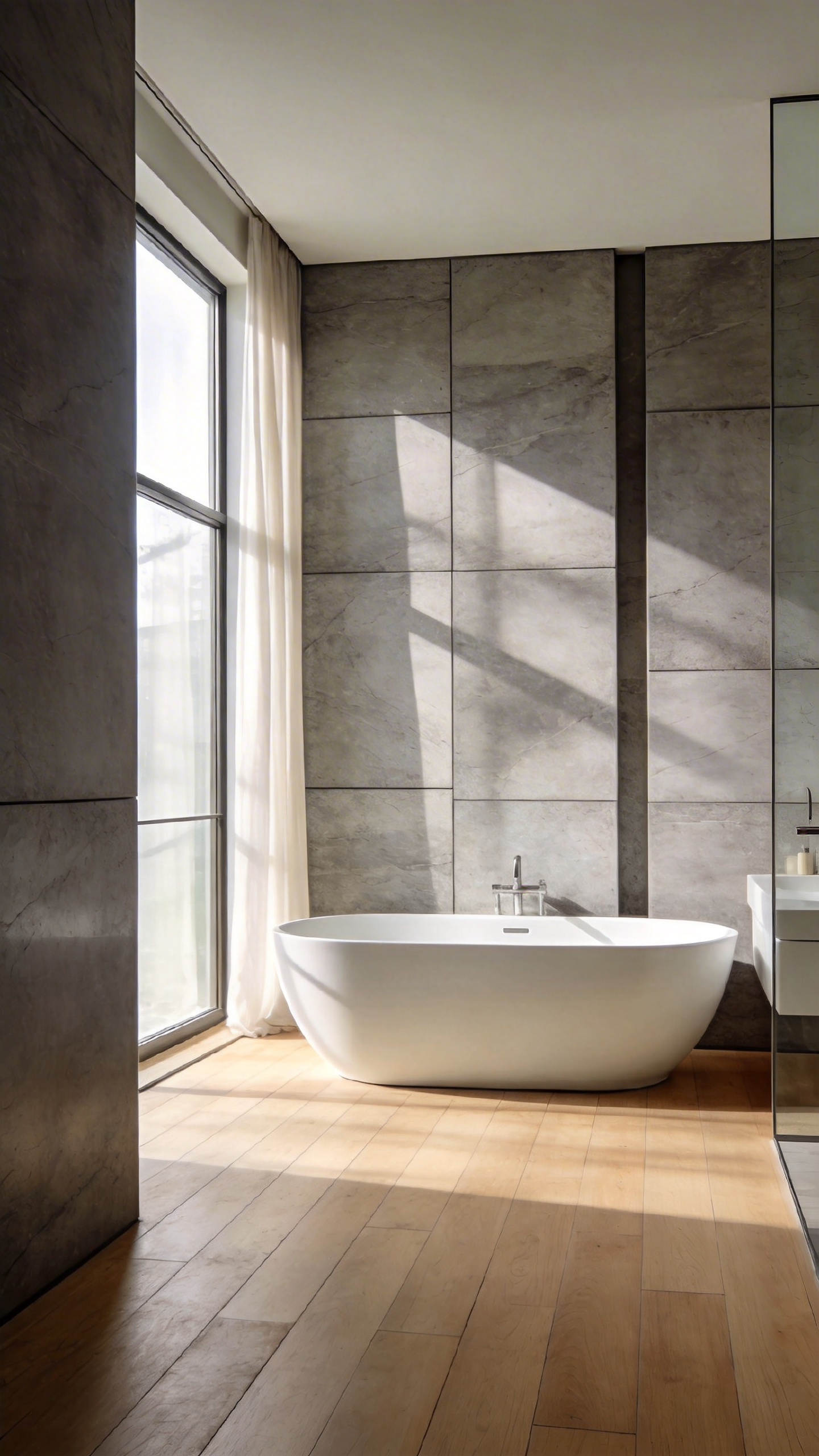
Early modern minimalism can sometimes feel clinical and cold. We must balance these light-absorbent finishes with inviting natural warmth. In practice, this means embracing the principle of tactile contrast. Next, try pairing a dead-matte black faucet with a rough-hewn wood vanity. This rich texture forces your brain to read the space through touch. Organic materials like wood provide essential thermal comfort.
Japandi design emphasizes this exact blend of formal rigor and tactile warmth. You can achieve this aesthetic balance at home using three layers. First, establish a seamless micro-cement or matte tile as your neutral base. Next, introduce an organic focal point like a fluted oak cabinet. Finally, punctuate the space with high-contrast matte hardware. Therefore, your bathroom transforms into a quiet, sensorial sanctuary.
7. The Hardware Reduction: Transitioning to Touch-Latch and Integrated Pulls
Traditional hardware almost always clutters a serene space. Standard handles act as heavy visual anchors. They break the clean lines of intimate rooms. Modern minimalist design embraces sensory decluttering instead. By removing handles, we actively lower your cognitive load. This hardware reduction turns vanities into beautiful sculptural elements.
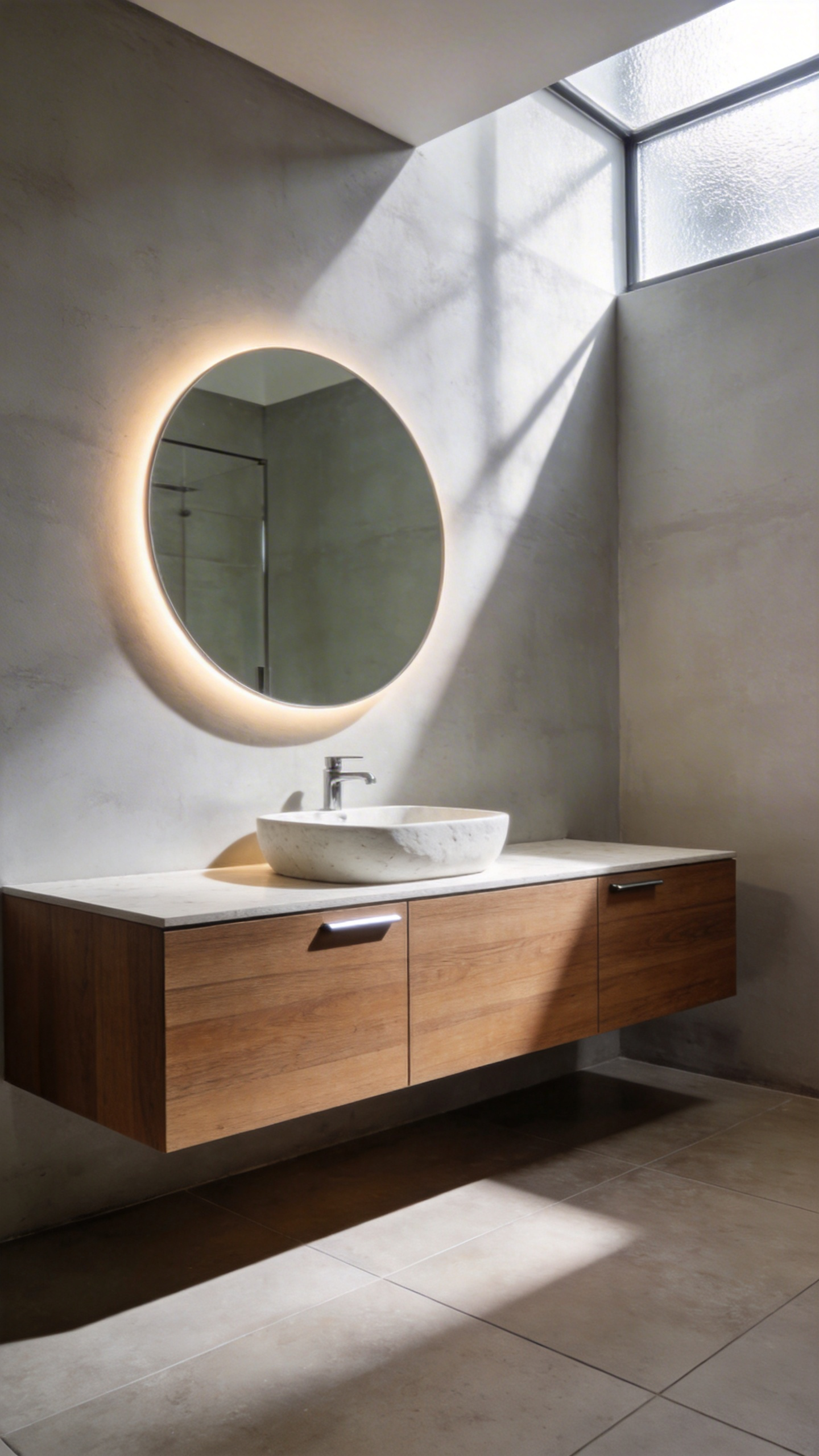
Historically, this shift began with the Italian Gola system in 1988. It uses a continuous aluminum channel. Your hand grips a recessed void behind the door. Unlike cheaper J-pulls, true Gola preserves a completely flat front. Luxury brands often add a crisp 45-degree beveled edge. Visually, this creates a striking, razor-thin cabinet profile. Tactilely, it offers a substantial yet invisible finger-hook.
This transition involves much more than pure aesthetics. Indeed, it heavily embraces haptics and tactile feedback. Push-to-open mechanisms entirely change our daily interactions. A gentle nudge easily opens heavy stone-clad drawers. Practically, this hands-free approach drastically enhances bathroom hygiene. You can easily open a wet vanity with your knee.
However, this pristine look faces harsh daily realities. Soapy hands often struggle to grip sleek integrated pulls. Handleless flat surfaces easily invite oily smudges. Therefore, anti-fingerprint nanotechnology surfaces actively combat this daily grime.
Technical fragility remains a significant bathroom concern. Fluctuating humidity quickly swells standard wood or MDF cabinets. A tiny millimeter shift easily jams sensitive touch-latches. Expert installers strictly insist on marine-grade plywood carcasses to prevent this. Ultimately, this preserves those perfect, seamless gaps.
8. Uninterrupted Flooring: Precisely Executing the Curbless Walk-in Shower
Curbless walk-in showers define modern minimalist bathrooms. Historically, zero-entry layouts were purely clinical and ADA-focused. Today, this accessible feature acts as a luxurious spa-like retreat. Specifically, the design borrows heavily from Japanese wet room concepts. Therefore, the bathroom becomes a seamless sanctuary for daily rituals.
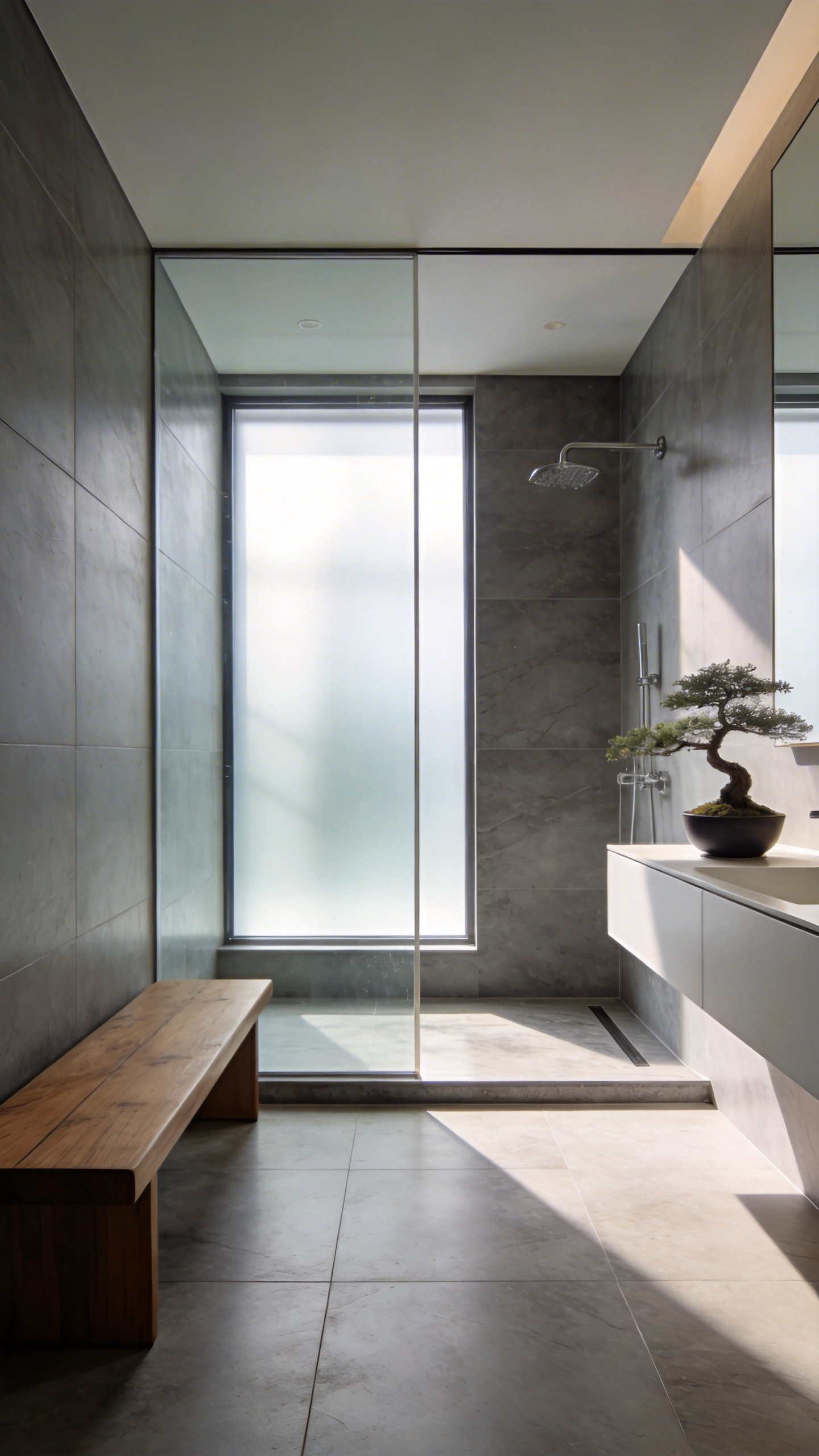
Achieving this uninterrupted canvas requires precise structural engineering. First, the subfloor must be recessed by roughly two inches. Builders must trim and reinforce underlying floor joists carefully. Next, traditional center drains are replaced by linear drainage systems. Installers create a gentle one-way slope for water runoff. Top designers prefer placing a tile-in drain against the back wall. Water disappears into a nearly invisible shadow gap. As a result, the drainage system remains completely hidden.
Visually, this single-plane slope tricks the eye beautifully. Without a physical curb, the room instantly feels significantly larger. This flat plane accommodates stunning large-format porcelain tiles easily. By using precise 1/16-inch grout joints, the surface flows perfectly. Underfoot, the tactile transition into the shower feels utterly effortless. Adding radiant floor heating prevents any sudden cold shocks. This seamless execution marries high-stakes engineering with quiet elegance.
9. Material Restraint: Limiting the Palette to Three Primary Textures
I used to find early minimalist bathrooms incredibly sterile. Modern designers rely on strict material restraint to fix this. Specifically, they limit the room to three primary textures. This curated hierarchy provides essential warmth without visual noise. Professionals usually apply a proportional 60-30-10 textural split. First, a matte foundation grounds the room perfectly. Honed stone typically claims sixty percent of the space.
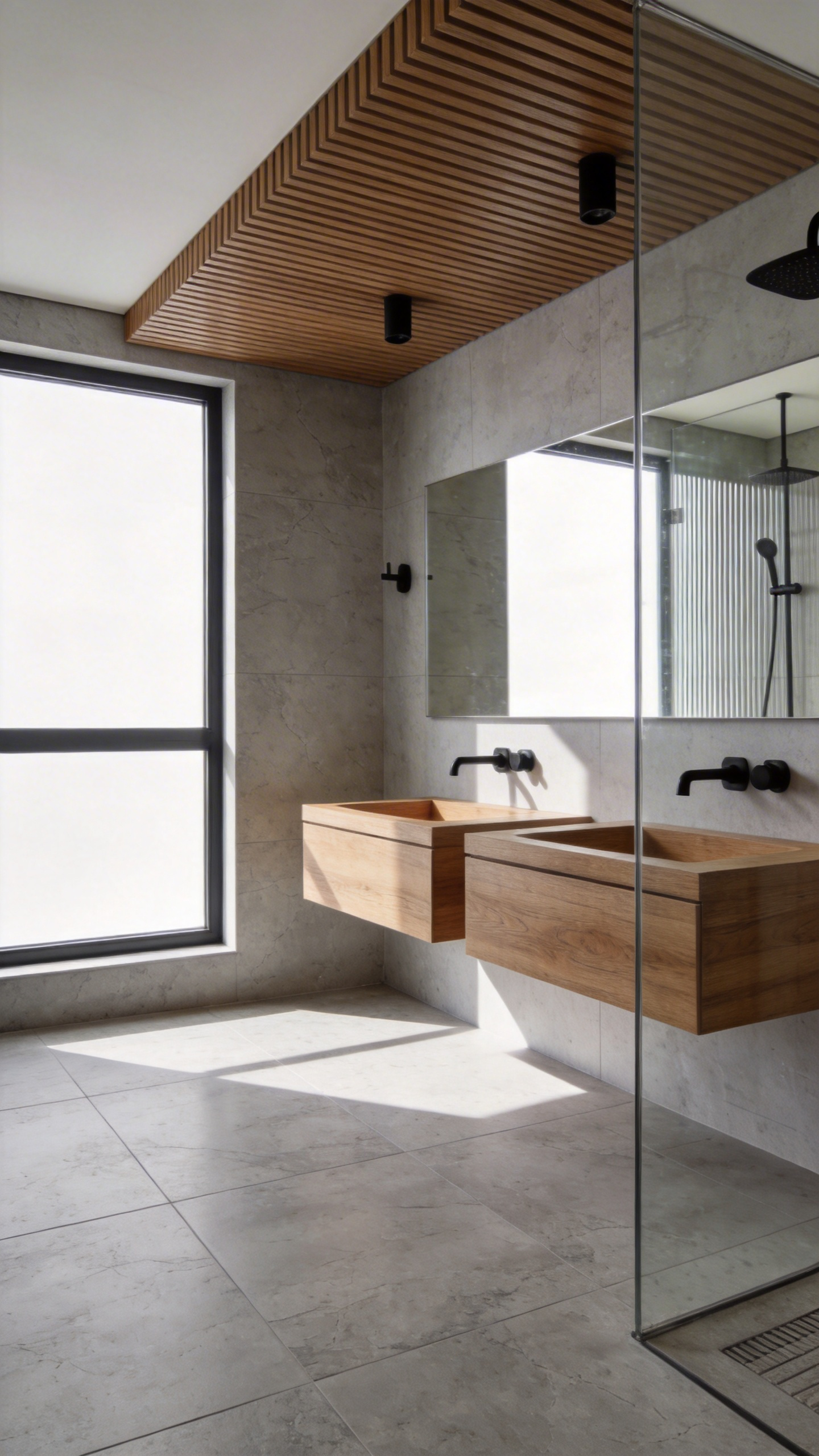
Next, warm organic materials cover thirty percent of the room. A natural oak vanity breaks the visual coldness instantly. Finally, reflective metals provide sharp, ten-percent modern accents. The human eye inherently craves this three-part harmony. Even numbers often feel too staged and predictable.
A three-texture palette creates a clear sensory map. Barefoot occupants feel properly oriented and safe. Interestingly, natural light acts as a dynamic fourth texture here. Grazing illumination emphasizes the beautiful grain of each material. Flowing water deepens the rich color of wet stone. By limiting the palette, designers let these natural elements shine.
Practically, this restraint also solves long-term maintenance issues. Large stone slabs drastically reduce ugly grout lines. High-quality stone, wood, and metal will patina gracefully together.
Phase 3: Spatial Application (Fixtures & Light)
Minimalism treats empty space as a physical material. In fact, this reflects the Japanese philosophy of Ma. This concept celebrates the active space between objects. Designers frequently utilize floating vanities and rimless toilets to achieve this. By keeping the floor plane completely uninterrupted, the room feels larger. This approach transforms a cramped room into a voluminous sanctuary. It proves that designing a modern bathroom that is both functional and stylish is highly achievable.
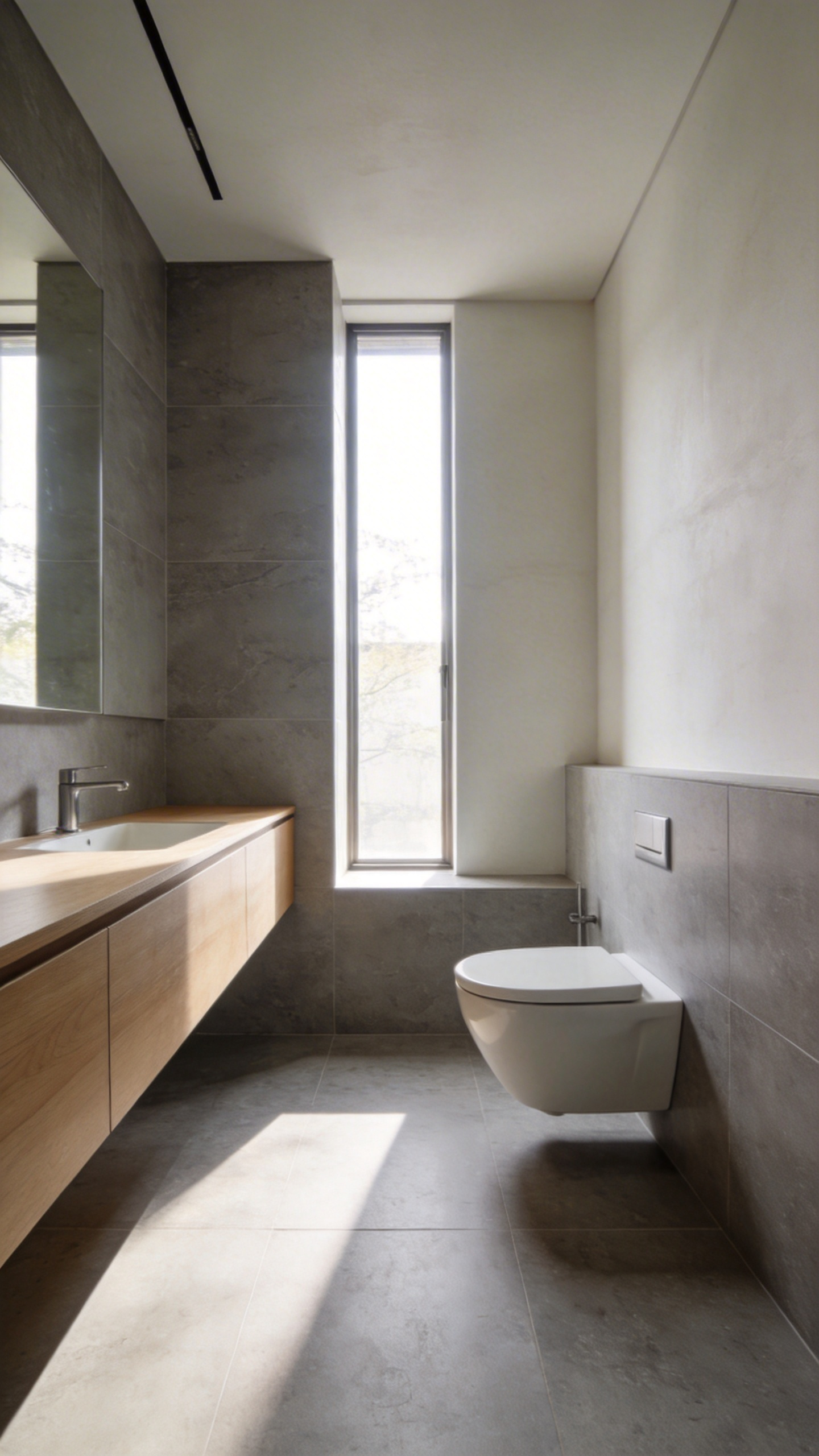
Next, we must treat fixtures as architectural tools. Traditional taps functioned as decorative bathroom jewelry. Modern minimalism demands that fixtures explain themselves intuitively instead. A single-lever mixer significantly reduces visual noise. Additionally, this simplified interface lowers your daily cognitive load. Visual silence often requires concealing plumbing behind the wall. However, this hidden layout demands high-quality brass components. Otherwise, future maintenance will require destroying pristine drywall.
Material finishes also deeply impact the physical haptic experience. Brushed stainless steel hides frustrating daily water spots. Therefore, the soft metal reinforces a feeling of quiet luxury.
Lighting acts as the final spatial brushstroke. Minimalism favors gently diffused illumination over harsh beams. A matte stone surface beautifully absorbs this gentle glow. Polished marble creates distracting and harsh visual glares instead. Warm-dim technology gracefully syncs with your circadian rhythm. Crisp morning brightness gently fades into a warm evening glow.
10. Wall-Mounted Elevations: Floating Vanities and Toilets for Floor Expansion
Floating vanities and toilets represent a structural philosophy rather than a trend. This approach borrows from Bauhaus design by prioritizing open volume over mass. Lifting fixtures off the ground exposes the room’s true footprint. The eye travels easily across the entire floor surface to the wall’s edge. This floating effect visually tricks the brain into perceiving a larger sanctuary.
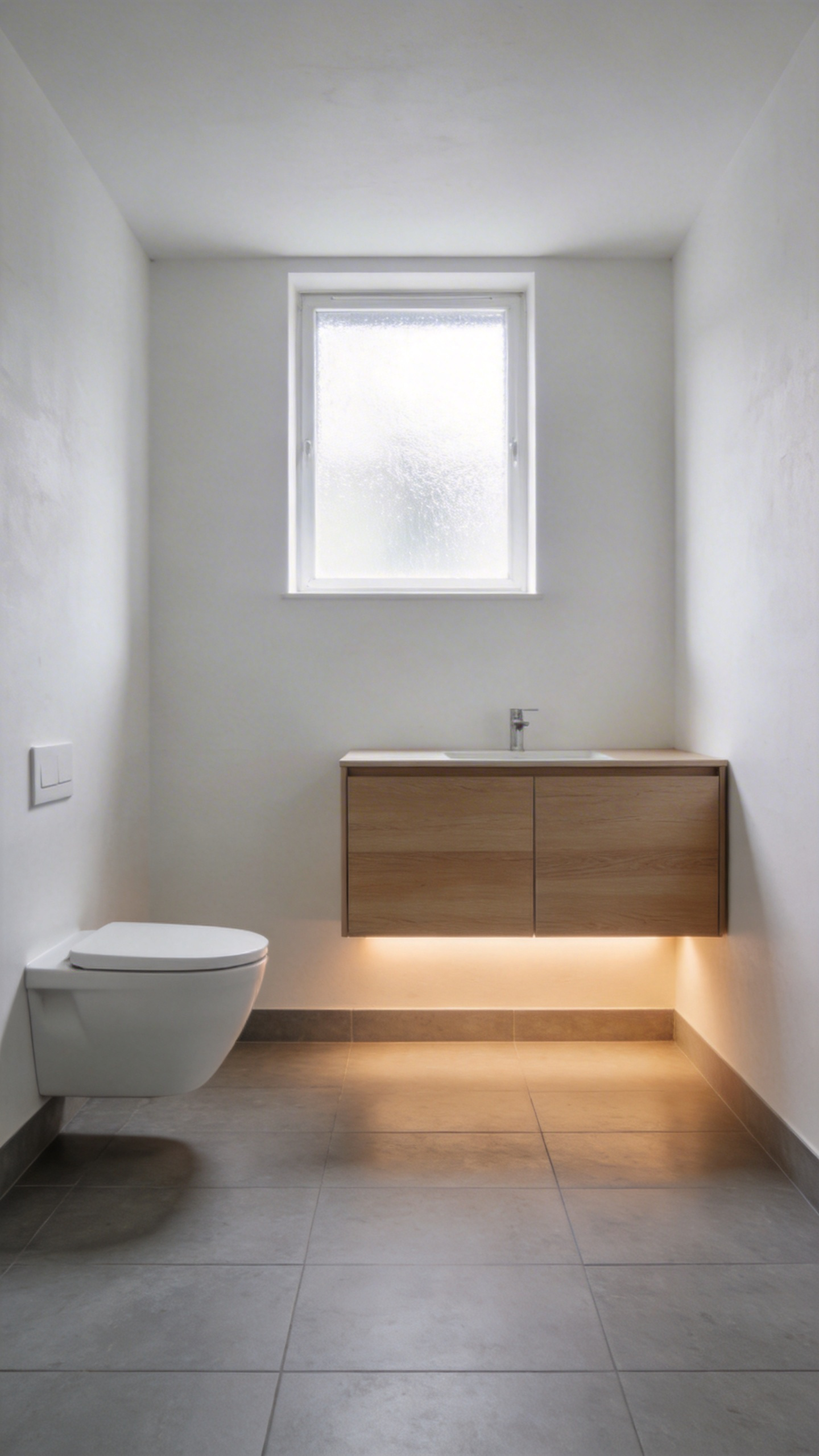
Achieving this visual illusion relies heavily on a continuous floor plane. Running large-format tiles under the vanity creates an unbroken horizon. Pairing this with a zero-threshold shower maximizes visual floor expansion. You eliminate visual stops like bulky toilet bases and vanity kick-plates.
Structurally, these hovering elements require robust in-wall carrier systems. Heavy-duty steel frames are bolted directly into the wall studs. Remarkably, these hidden frames can comfortably support between 500 and 880 pounds. Concealing the plumbing within the wall dampens flushing noises by up to thirty percent.
Lighting serves as a crucial visual support tool here. Recessed LED strips cast a warm glow along the underside of the vanity. This illumination pushes shadows away to reinforce the illusion of levitation.
Elevating your fixtures dramatically improves daily bathroom hygiene. Removing traditional bases eliminates the frustrating silicone joints where grime collects. Therefore, homeowners can mop the entire floor in a single sweep. This pristine cleanliness sustains the tranquil atmosphere of a modern bathroom.
11. The Architectural Drain: Implementing Linear and Invisible Shower Drains
Traditional center drains require a four-way floor slope. Installers must use small mosaic tiles to accommodate the curves. This creates a distracting visual noise of countless grout lines. Linear drains allow for a simple one-way floor slope instead. Therefore, you can use continuous, large-format porcelain slabs anywhere. The shower floor becomes a single, unbroken surface plane.
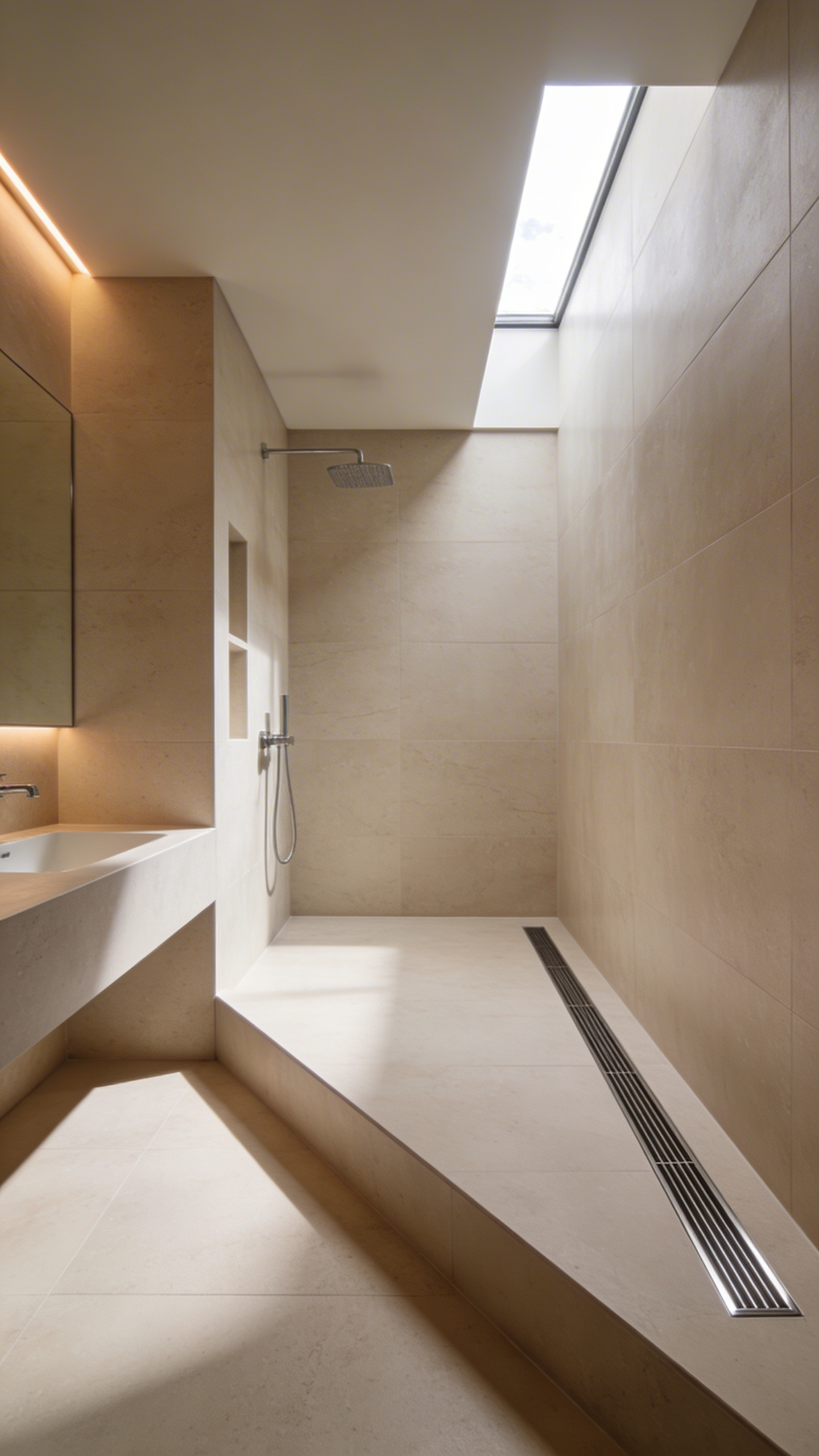
Walking into these curbless showers feels incredibly open and seamless. The space resembles a bright, airy art gallery. Uninterrupted natural light floods the flat floor plane uniformly. Initially, linear drains were purely industrial plumbing fixtures for locker rooms. Today, architectural brands treat them as high-end residential design elements. Some modern drain grates beautifully mimic sticking water droplets. They avoid repetitive patterns that disrupt the visual field. Wall-mounted drains remove the traditional floor grate entirely. Aesthetically, they remain the absolute champions of pure minimalist design.
However, these wall-mounted options carry significant technical installation risks. The vertical waterproofing junction at the wall becomes highly critical. Sealing failures trap silent moisture behind the bathroom drywall. Honestly, even floor-mounted invisible drains demand specific lifestyle trade-offs. The drainage channel is long, so it catches much more debris. Routine hair and scum cleaning becomes a much larger chore. In fact, stone tile-insert trays can weigh up to fifteen pounds. Lifting this slippery wet stone requires very careful physical effort. Achieving this seamless visual continuity requires dedicated, ongoing maintenance.
12. Sculptural Functionality: Selecting Freestanding Tubs as Sole Focal Points
Elevating a freestanding tub to a focal point transforms your bathroom entirely. Historically, bathtubs were hidden inside compact built-in tile alcoves. Modern minimalist design promotes them to sculptural centerpieces instead. Detaching the fixture from walls creates a distinct visual void. This negative space allows your eye to travel freely around the silhouette. The tub visually appears carved from a single solid block of stone.
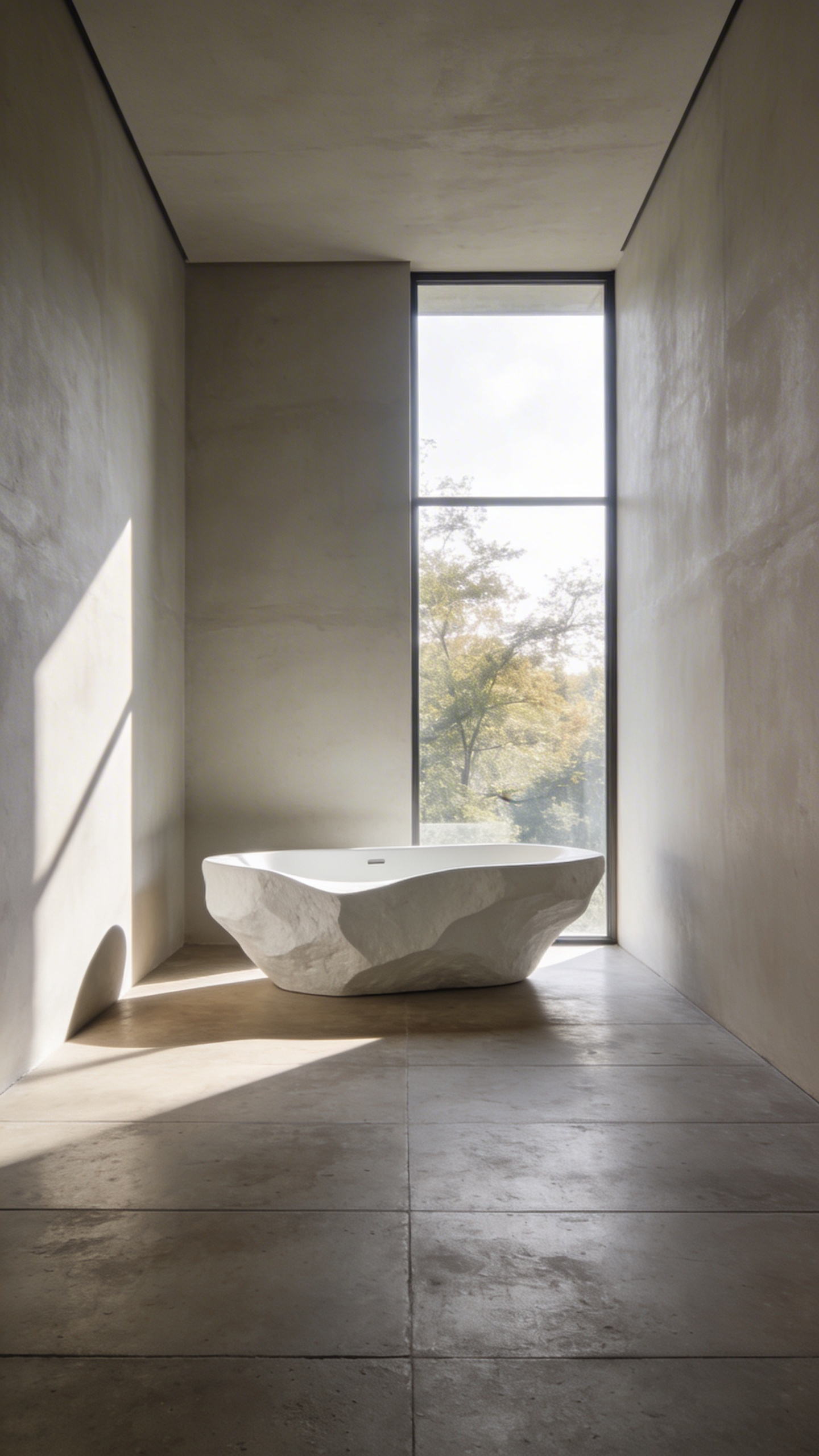
However, minimalist bathrooms can sometimes feel uninvitingly stark and cold. Material selection becomes a deeply important architectural consideration here. High-performance volcanic limestone perfectly solves this sensory issue. Unlike cold acrylic, these stone resins offer a silky, warm touch. They gracefully allow for exceptionally crisp, paper-thin tub edges. This sharp rim creates beautiful tension against the soft water.
Placement also dictates the absolute success of this functional art. You should avoid placing the tub dead center. Instead, authoritative designers utilize the Golden Ratio for dynamic room placement. Setting the tub slightly off-center generates unique visual energy. A sleek floor-mounted filler acts as a grounding vertical accent. Practically, you must still acknowledge the daily reality of bathroom hygiene. You must leave at least 12 inches of clearance around the tub. Otherwise, narrow wall gaps indefinitely trap inaccessible dust and moisture.
This bold aesthetic choice shifts the room toward peaceful ritual. Japanese ofuro tubs prioritized deep, meditative soaking over quick washing. Noisy air jets are omitted in favor of pure sensory silence. Minimalist freestanding tubs lack traditional built-in surrounding ledges for soap. Placing a minimal wooden stool nearby provides essential functional storage. This simple pairing seamlessly completes the serene, sculptural composition.
13. Integrated Illumination: Sculpting Space with Concealed LED Cove Lighting
Lighting is never just an accessory. Minimalist design treats illumination as a tangible building material. Concealed LED cove lighting becomes a critical structural element. Mastering minimalist bathroom lighting design involves hiding the light source entirely. Therefore, this approach uses negative space to sculpt the room.
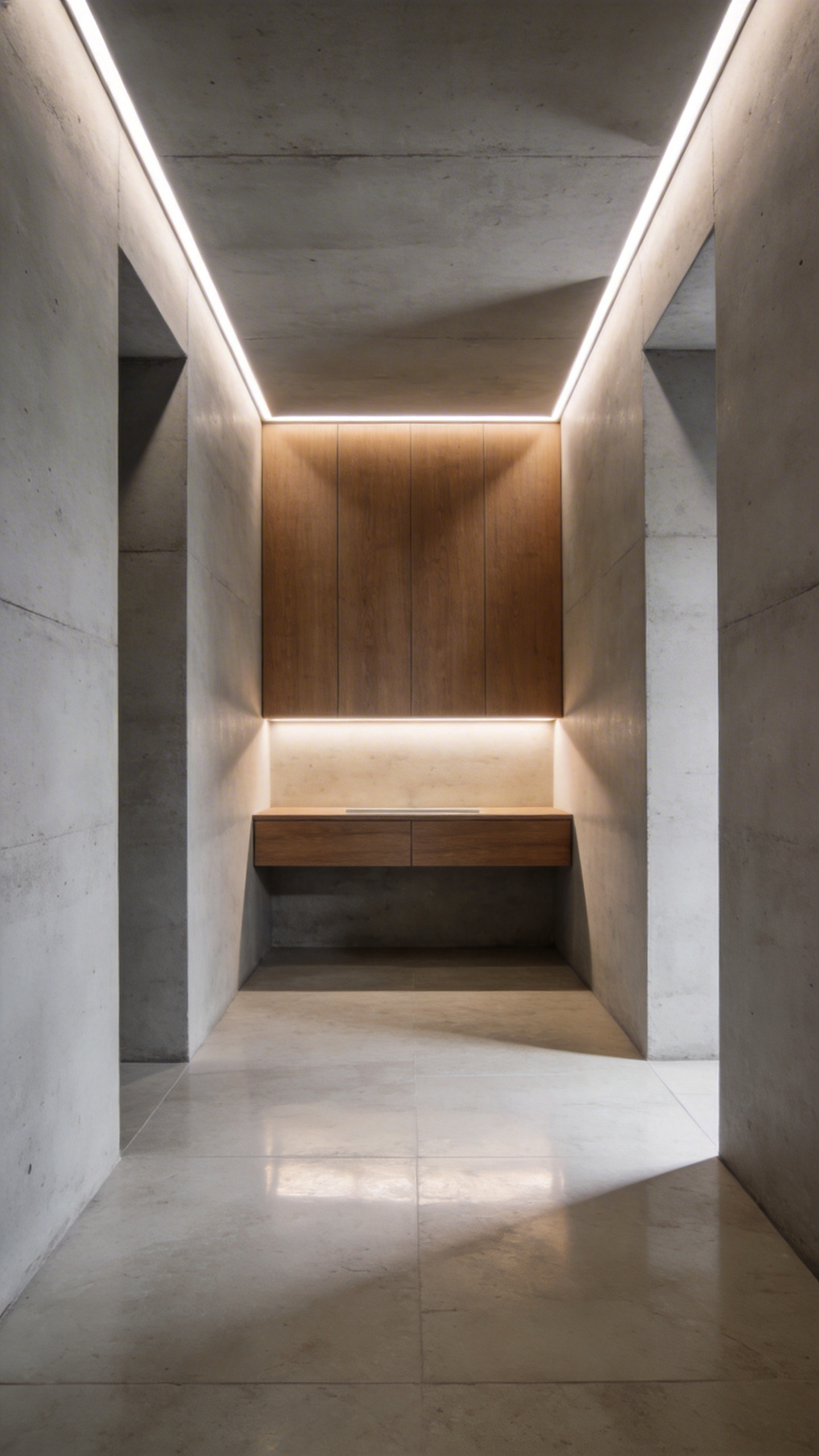
You can manipulate this glow in two distinct ways. First, wall washing pushes light wide to visually expand space. Conversely, wall grazing highlights the rich textures of honed stone. Tucking LEDs into tight shadow gaps makes organic materials truly sing. This technique creates a striking illusion of architectural weightlessness. Placing lighting beneath a heavy vanity erases shadows entirely. The massive stone unit appears to effortlessly float. Similarly, shadow gaps at the ceiling line make roofs hover.
This integrated lighting directly influences your daily mental state. Tunable white technology adjusts to match your circadian rhythm. However, you must avoid pixelated reflections on polished bathroom surfaces. Demand high-density COB strips paired with frosted silicone diffusers instead. These strips must sit inside protective aluminum mounting profiles. Crucially, this metal housing acts as a vital heat sink. Otherwise, your beautiful hidden lights will overheat behind the drywall. This seamless ribbon of light transforms bathrooms into true sanctuaries.
14. The Frameless Glass Illusion: Erasing Visual Barriers in Wet Zones
Thick metal shower frames act like heavy borders around a picture. They constantly disrupt the visual flow of a room. Frameless glass offers a brilliant architectural erasure instead. By removing this visual stutter, the wet zone becomes a continuous volume. This taps directly into the Japanese concept of Ma. This ancient principle honors the pure space between objects. The eye travels uninterrupted to the furthest tile. Psychologically, this creates a profound sense of breathability and calm.
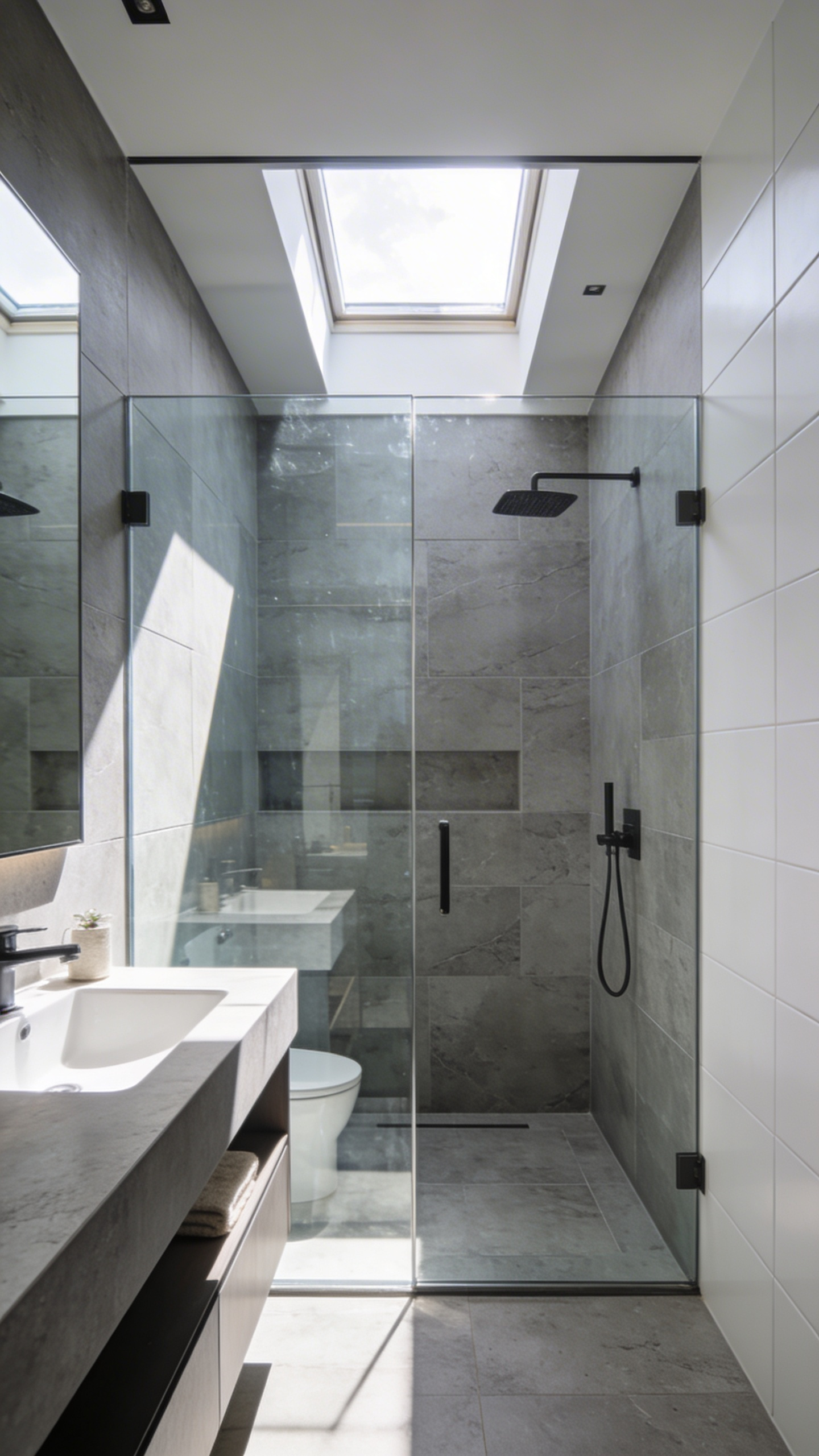
Advanced installations rely on recessed glazing to achieve this illusion. Builders mill a hidden groove directly into the subfloor. Then, heavy 12mm tempered glass drops into this track. The pane appears to emerge straight from the floor. Standard silica glass ruins this effect with a green edge. Designers specify low-iron glass to maintain crystal-clear sightlines. Hydrophobic nano-coatings repel water at a molecular level. Otherwise, hard water spots would quickly rebuild that unwanted barrier.
This vanishing act requires synergy with the floor design. Curbless floor transitions complete the seamless aesthetic beautifully. Instead of a raised curb, the floor pitches toward a linear drain. Large-format tiles run straight through the invisible glass wall. Historically, luxury meant heavy metal fixtures to show off wealth. Today, true bathroom luxury lies in brilliant dematerialization. The most sophisticated design is often the least visible.
Phase 4: Lifestyle Integration (The Daily Experience)
Clutter always creates unnecessary visual noise. A minimalist bathroom functions as a tool for cognitive offloading. Large-format tiles and hidden storage allow your eyes to glide across surfaces. This lack of visual friction gently triggers your parasympathetic nervous system. Cortisol levels drop before your morning routine even begins.
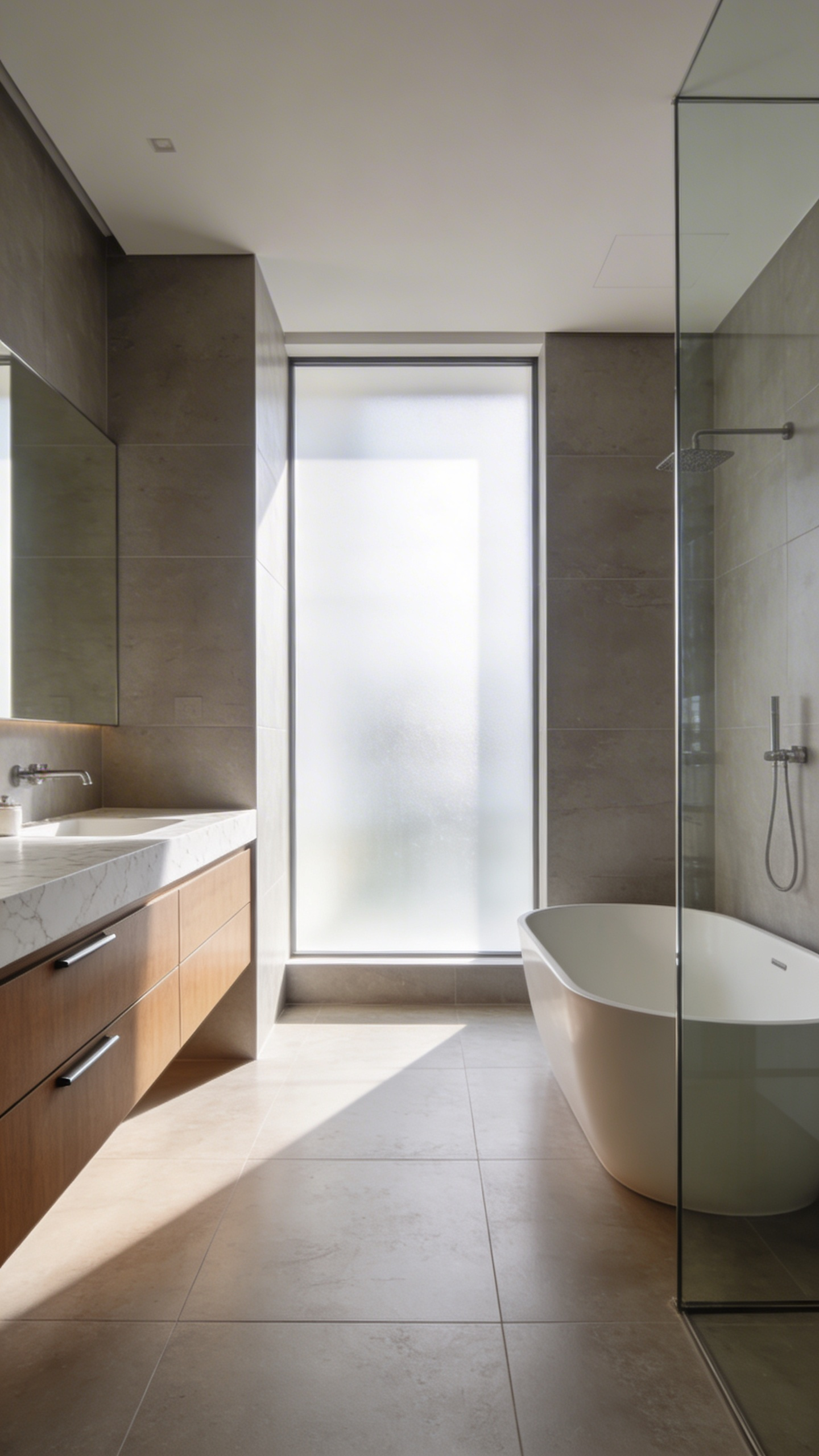
This physical space transforms a rushed stopover into a ritualized experience. Circadian lighting shifts from cool morning blues to warm evening ambers. This invisible technology quietly supports your body’s internal clock. Without visual distractions, you notice tactile sensations much more acutely. The warmth of radiant stone heating underfoot anchors your evening restoration. Digital valves enable an energizing contrast shower without bulky, distracting knobs.
Many homeowners fear these pristine spaces cannot handle messy real life. True lifestyle integration involves implementing effective bathroom storage solutions. These solutions fully embrace the natural beauty of aging. Living finishes like unlacquered brass darken where touched most frequently. Your bronze fixtures become a living map of your daily habits. You shift your mindset from stressful cleaning to mindful curating.
Routine maintenance evolves into a quick, meditative practice. Wall-hung vanities and curbless showers eliminate hidden dirt traps entirely. Wiping down surfaces becomes an effortless thirty-second reset. Restoring the room to its zero state provides an immediate sense of order. You transition from simply owning a minimalist bathroom to truly inhabiting it.
15. Smart Infrastructure: Recessing Tech and Environmental Controls
I love the idea of invisible tech in a bathroom. Designers are shifting from surface-mounted devices to plaster-in systems. During the rough-in phase, specialized housings are smoothly mudded into the drywall. This creates a flawless finish without clunky plastic cover plates. Visually, only the essential light aperture or tiny sensor remains.
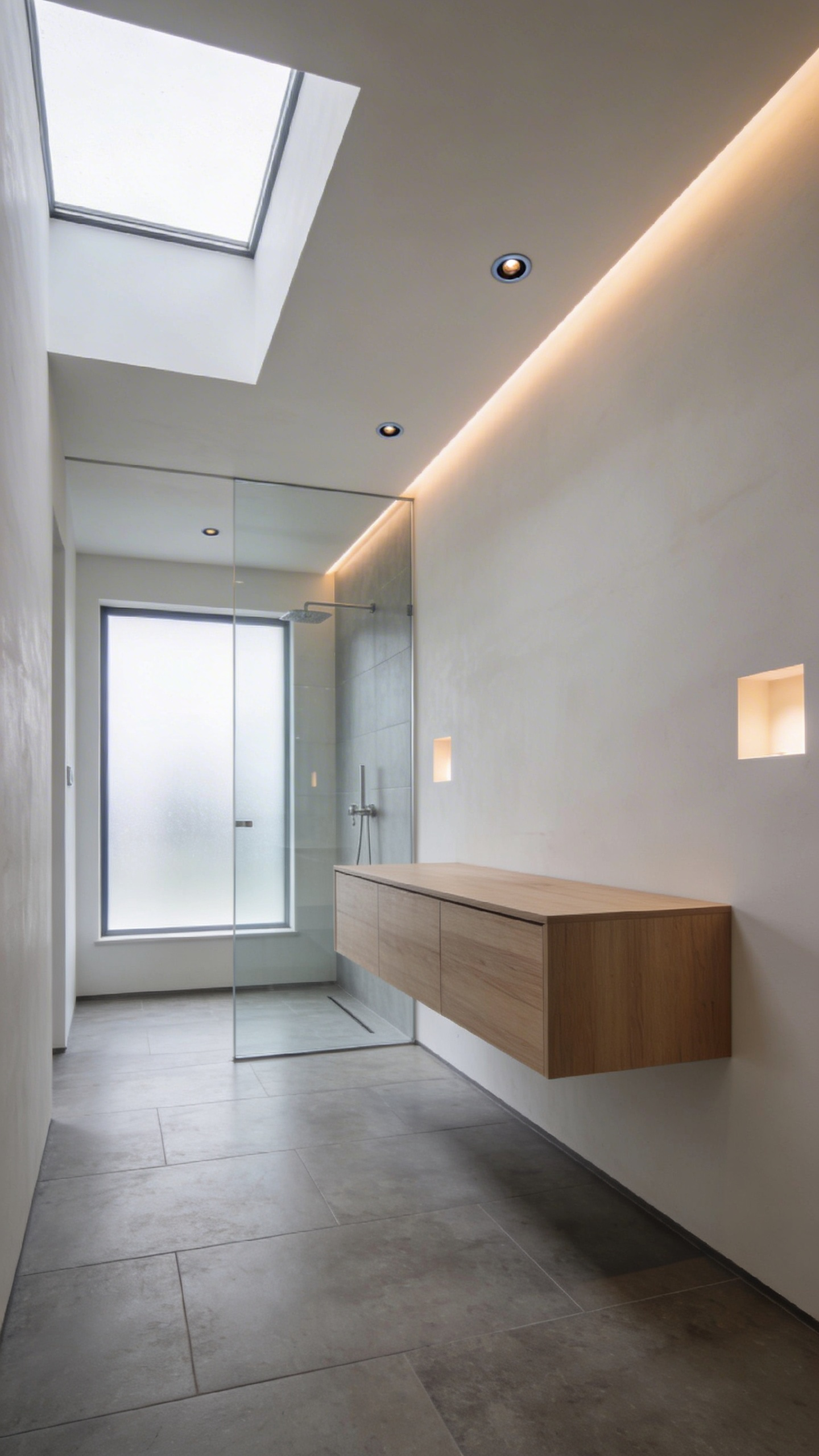
These hidden systems work quietly in the background as invisible caretakers. Hidden sensors track the room’s humidity rise instantly. Remote centrifugal fans extract the steam completely silently. Lighting systems automatically adjust from crisp morning hues to warm evening tones. You never have to adjust a visible dimmer switch. Invisible speakers behind the drywall provide high-fidelity acoustic camouflage. Removing these visual interfaces drastically reduces daily cognitive load. This beautiful absence of friction builds quiet psychological trust. The room intuitively anticipates your needs before you ask.
However, recessing these complex technical systems requires meticulous operational planning. To avoid breaking finished walls later, use a decentralized hardware model. House all drivers and controllers in a remote service closet. Future-proof structured cabling keeps the components easily accessible for updates. The bathroom itself retains complete, undisturbed architectural purity.
16. Acoustic Minimalism: Specifying Sound-Dampening Materials in Echo-Prone Spaces
Bathrooms echo relentlessly. It is just a reality of hard tile and glass. Hard surfaces bounce sound waves all over the room. Therefore, achieving a serene space requires invisible acoustic solutions. Traditional fabric baffles ruin a seamless aesthetic completely. Homeowners should specify moisture-resistant acoustic plaster instead. Visually, this finish looks exactly like smooth, continuous marble. Microscopically, it is porous enough to absorb harsh noises. The sharp clack of a dropped toothbrush becomes a soft hum.
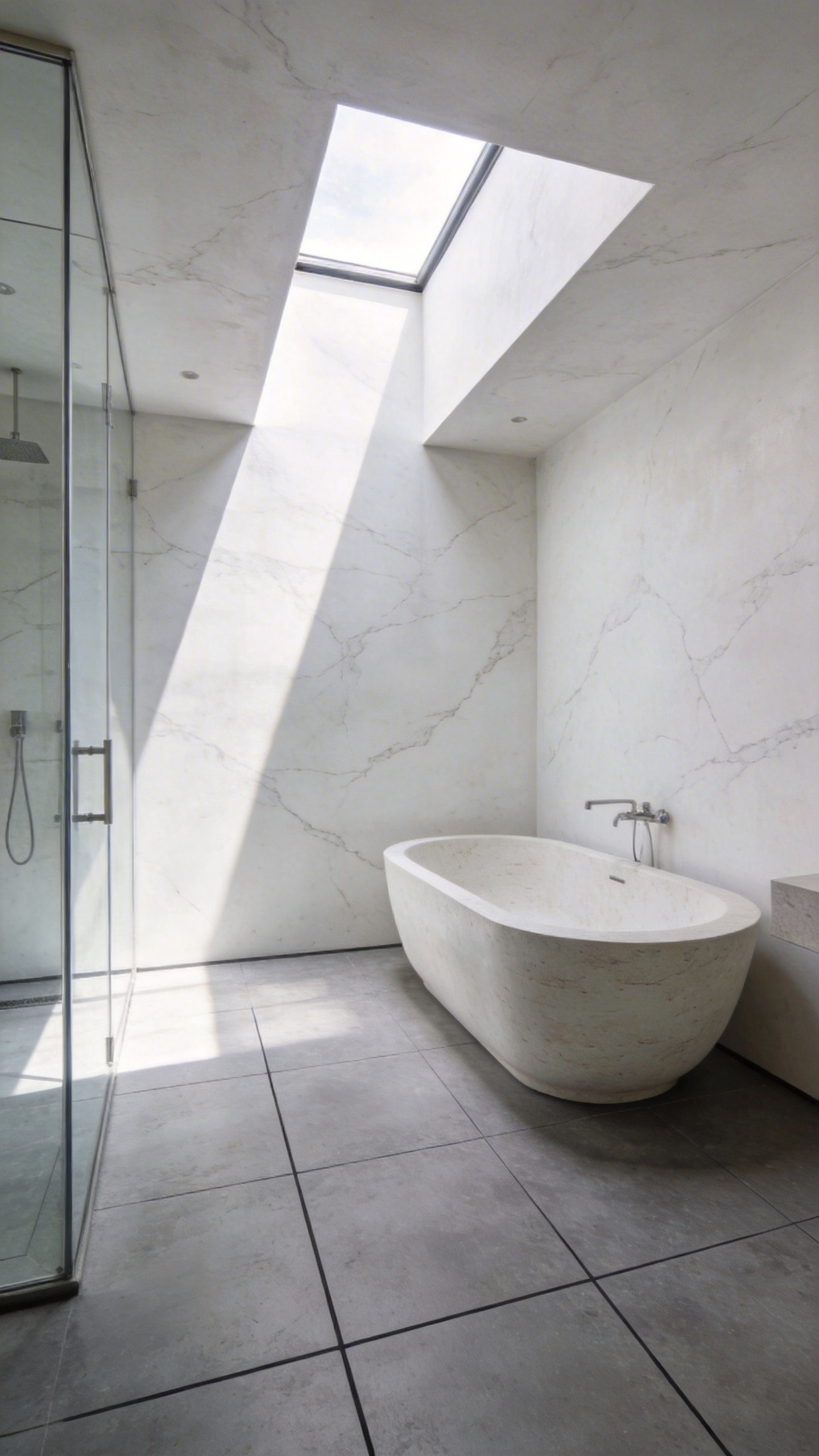
Silencing the room involves tackling hidden plumbing as well. Standard pipes usually vibrate aggressively against wall studs. Specify mineral-reinforced drainage systems instead. These heavy-mass pipes contain stone powder to reduce natural vibration. Rubber-lined acoustic brackets decouple the plumbing from your walls. Flushing sounds from adjacent rooms will completely disappear.
Designers can also utilize micro-perforated aluminum ceiling panels. These rust-proof boards feature holes virtually invisible from afar. Inside these tiny openings, trapped air acts like a spring. It effortlessly absorbs excess sound energy in humid environments.
Consider the acoustic impact of heavy frameless glass doors. A glass door striking a hard wall creates a jarring shockwave. Adding soft-durometer vinyl sweeps changes this dynamic entirely. The door closes with a muted, satisfying thud. This subtle mechanical silence elevates the bathroom’s luxurious feel.
17. Thermal Comfort: Engineering Hidden Radiant Heating and Invisible Vents
Achieving a truly minimalist bathroom requires hiding the machinery completely. Engineers must manipulate airflow and radiation for invisible comfort. Nobody wants to see a cheap plastic vent cover. Designers replace them with hidden shadow gap diffusers. These structural slits integrate perfectly into the room’s ceiling transitions. Squeezing air through narrow gaps creates high aerodynamic resistance. Builders install pressure-stabilizing plenum boxes behind the narrow slits. The exhausted air unfolds evenly without creating whistling sounds.
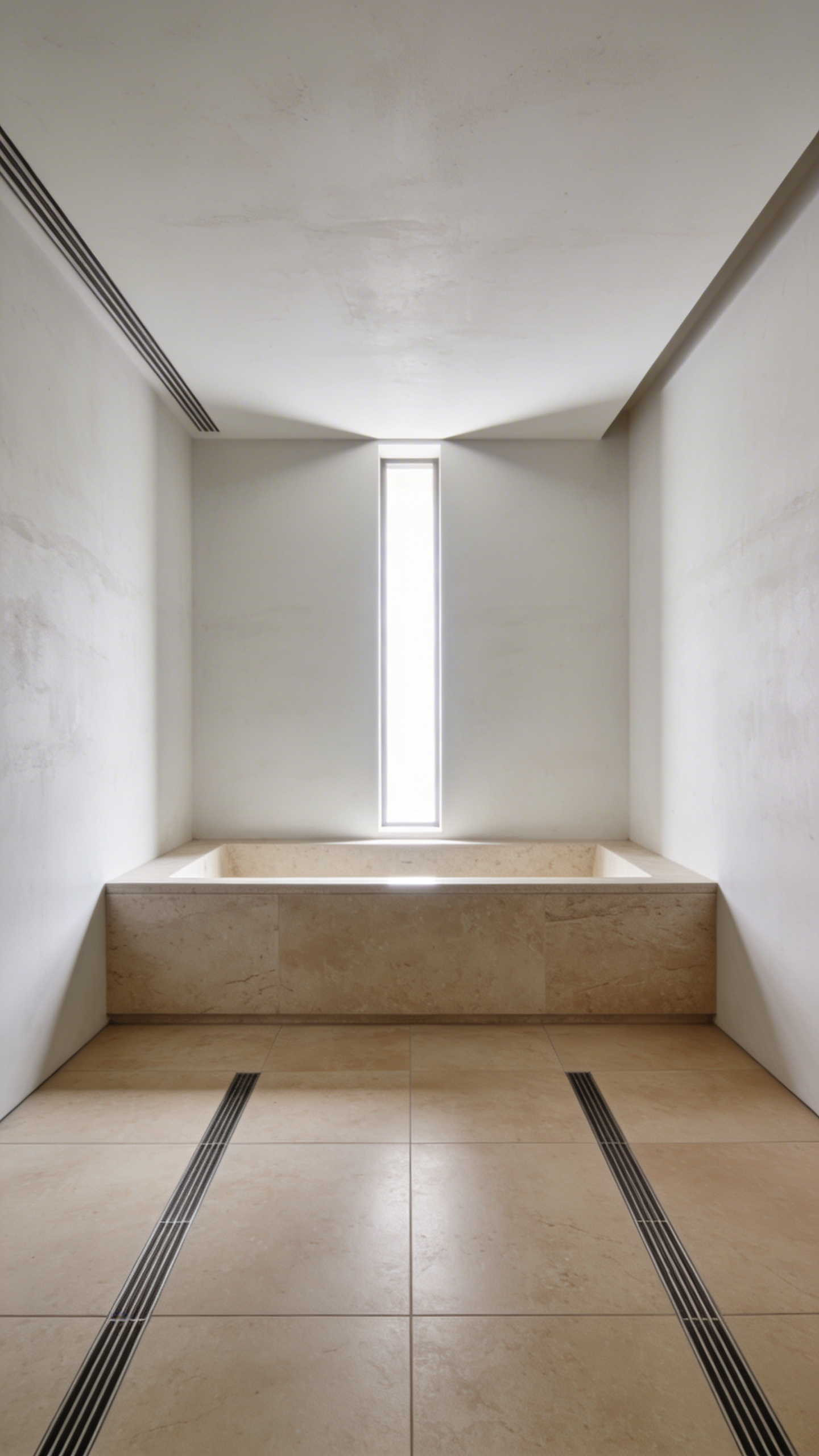
Radiant heating offers another vital layer of invisible sensory luxury. Traditional forced-air systems cause draft discomfort and uneven temperatures. Infrared panels heat the actual objects and occupants directly instead. Embedding radiant mats behind shower tiles provides immediate warmth. This invisible wall heating feels exactly like warm natural sunlight. It accelerates grout drying to prevent unseen mold growth.
Maintenance in these walled-in systems presents a unique challenge. Magnetic flush-mount panels solve this serviceability paradox quite beautifully. These smart panels use matching stone to hide access doors. Remote inline extraction motors completely eliminate disruptive acoustic noise. Hard marble and glass surfaces typically amplify traditional ventilation drones. Moving the motor outside ensures total silence. Low-sone engineering keeps operating volumes quiet like rustling leaves. This quiet environment directly lowers perceived stress for the homeowner. These modern engineering marvels create an architecture that breathes in silence.
18. The Curated Niche: Distinguishing Purposeful Display from Accidental Clutter
A bathroom niche functions as an architectural pause. It represents a deliberate extension of the room’s geometry. True minimalist design requires the recess to be perfectly tile-locked. Mitered edges replace metal trim to create a shadow-free reveal. Using a single stone remnant elevates the space into a modern shrine. Ancient Roman baths used these alcoves for sacred statuary. We can treat them as mindful altars for self-care today.
Without careful curation, a niche quickly becomes a cluttered mess. Try grounding your daily items on a marble tray instead. A solid tray signals that small objects truly belong there. Decanting liquids into uniform apothecary bottles eliminates loud typographic noise. This allows the eye to appreciate the structural form. Apply the rule of three with varied item sizes for visual balance.
Lighting serves as the final arbiter of purposeful design here. Integrated LED strips create an intentional wash of depth. Aim for a warm 2700K color temperature to soften cold tiles. Honed stone surfaces will gently absorb this ambient light. Highly polished surfaces reflect harsh glare and highlight water spots. A subtle downward slope prevents pooling water and messy soap scum. These careful visual details transform a basic storage cubby into quiet luxury.
Frequently Asked Questions
How do I start a minimalistic bathroom design?
The most effective way to start is by evaluating the layout for “Ma” or negative space. Focus on removing any non-essential elements and selecting a monochromatic color palette. Prioritizing high-quality, large-format materials early on will reduce visual noise from grout lines. This provides a strong foundation for the architectural style.
Is a minimalistic bathroom design hard to maintain?
Actually, it is often much easier to maintain than traditional designs. Curbless showers, wall-mounted vanities, and large stone slabs eliminate common dirt traps entirely. You will not have to scrub floor-based pedestals and excessive grout joints. Using nanotechnology-coated surfaces also helps repel water spots and fingerprints on handleless cabinets.
What colors work best for minimalistic bathrooms?
Natural, earthy tones and monochromatic palettes are ideal. Focus on soft grays, bone whites, and warm beiges to create a serene environment. These colors allow the textures of the stone, wood, and metal to stand out without competing for visual attention.
Implementing a professional minimalistic bathroom design requires a balance of mathematical precision and tactile exploration. By mastering the interplay of light and void, you can create a space that is as functional as it is beautiful.