For decades, a common belief held that wallpaper had absolutely no place in a busy kitchen. Homeowners feared that rising cooking steam would inevitably cause peeling seams or unsightly, warped corners. Consequently, this outdated mindset continues to limit design potential. However, material science has evolved dramatically. In fact, modern non-woven technology has rendered these historical fears entirely obsolete.
Unlike traditional paper, which absorbs water like a sponge, non-woven backings act differently. Specifically, they utilize a compacted matrix of synthetic and natural fibers. Therefore, the material provides crucial dimensional stability. It remains inert when exposed to heavy steam or wet adhesive. Thus, the damaging cycle of swelling, shrinking, and lifting simply does not occur.
This guide explores the engineering that makes the “Humidity Myth” a relic of the past. First, we break down the specific composition of non-woven fibers. Next, we clarify how vapor-permeable structures protect your drywall from trapped dampness. Finally, we highlight the practical washability of modern vinyl coatings against grease. Consequently, you will see why wallpaper is now a durable, safe solution for any kitchen. For even more visual examples, explore our comprehensive collection of kitchen wallpaper inspiration ideas for cooking spaces.
Section 1: Optical Space Manipulation
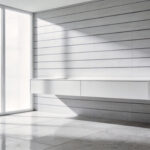
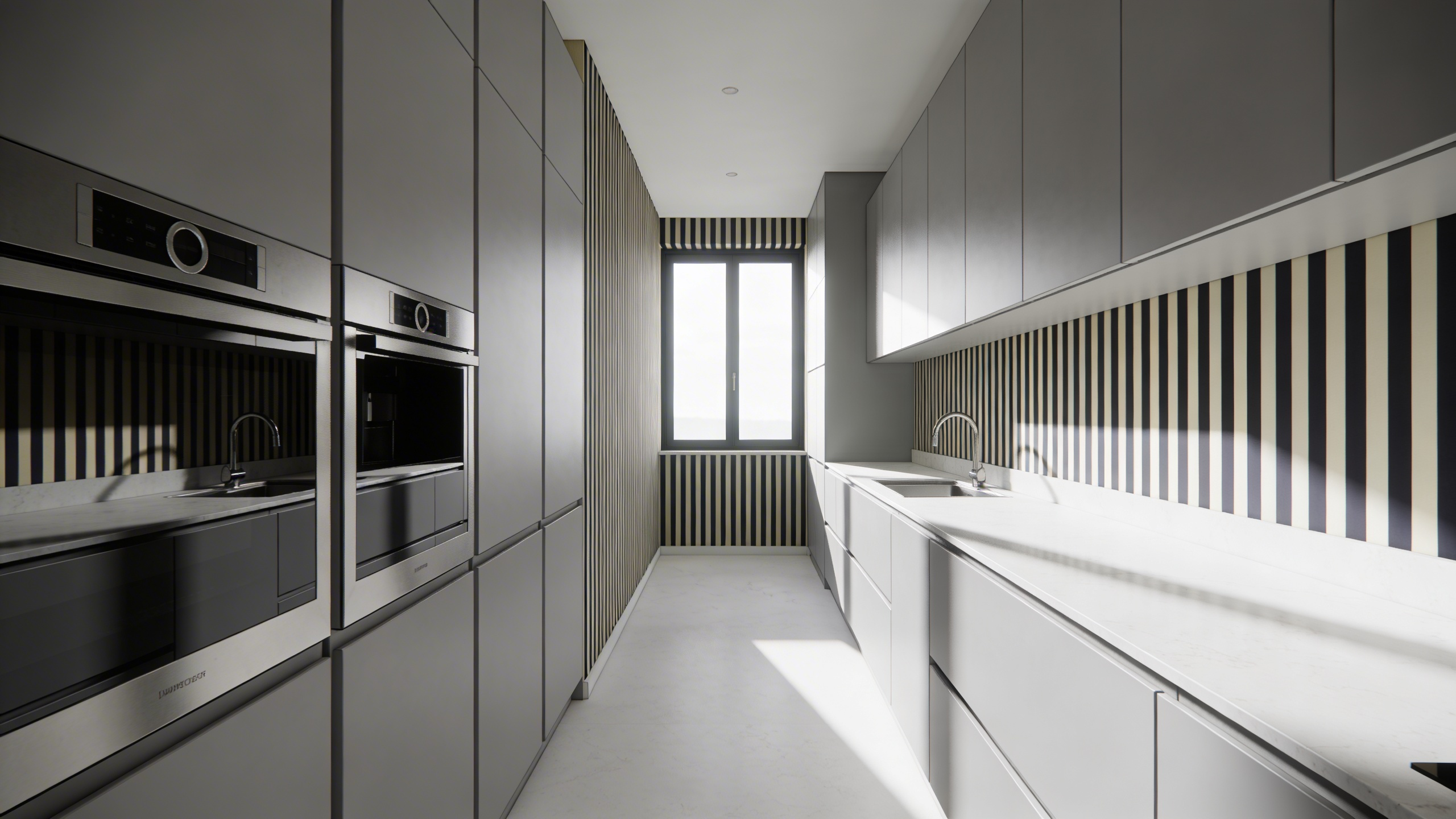
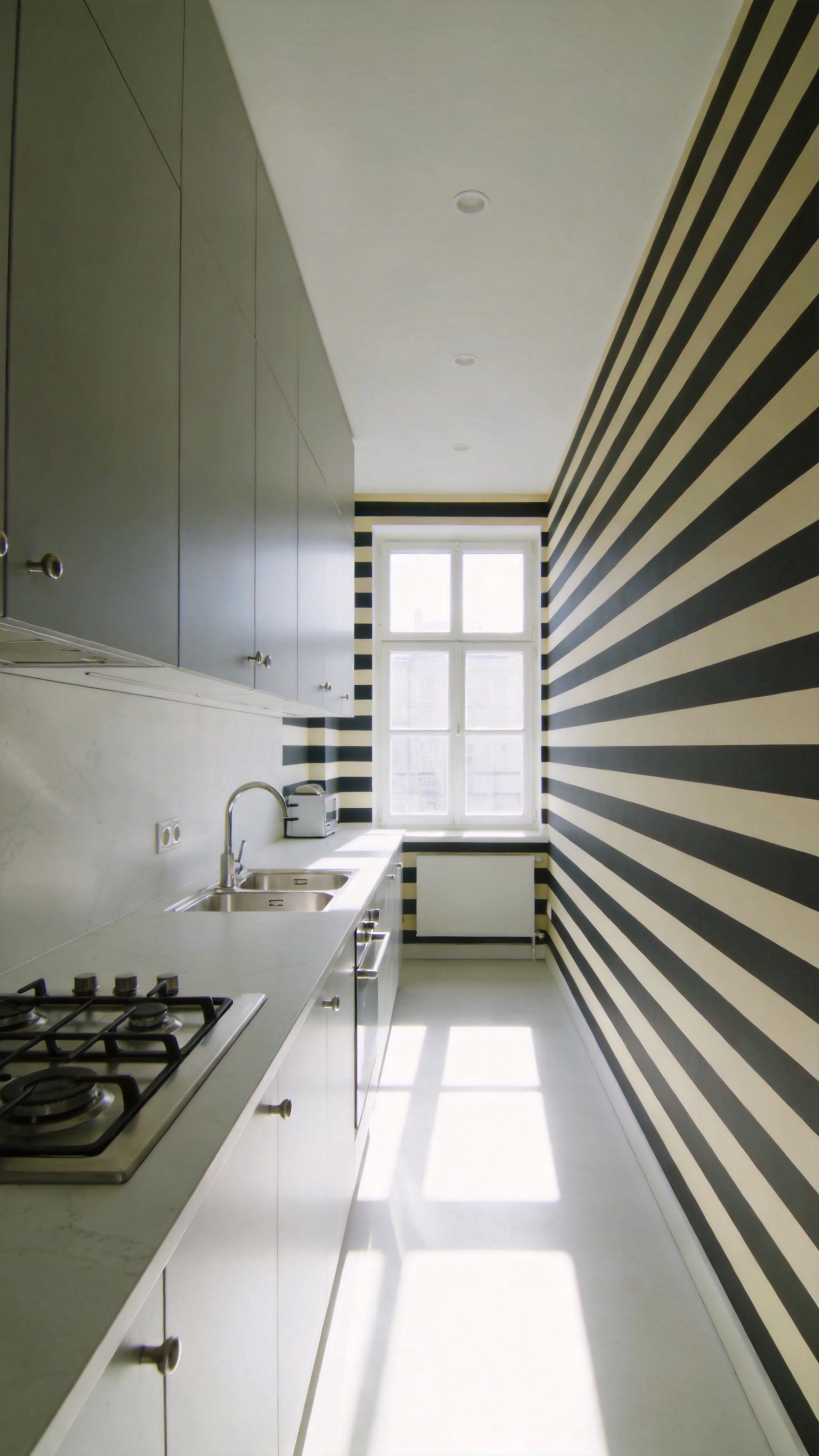
Optical space manipulation uses visual cues to trick the eye. Consequently, you can alter perceived dimensions without structural changes. For instance, the brain interprets directional lines as dimensional guides. Therefore, vertical stripes draw the eye upward effectively. This creates height in kitchens with low ceilings. Conversely, horizontal patterns push the gaze side-to-side. Thus, they visually broaden narrow, galley-style spaces.
Beyond structure, light manipulation is foundational to expanding volume. Specifically, lighter wallpapers reflect natural light efficiently. This reflection creates an indisputable sense of openness. Furthermore, finishes with a slight shimmer add needed depth. However, experts warn against high gloss. In fact, too much glare creates visual chaos. Therefore, a subtly textured finish remains the safest choice.
Finally, consider the scale of your design. Surprisingly, small patterns often make rooms feel smaller. They generate visual clutter alongside appliances. Instead, utilize large-scale prints with negative space. Consequently, the eye travels further across the wall. Additionally, panoramic murals act as powerful focal points. By depicting a horizon, they extend the room’s boundaries visually. Ultimately, these choices make a compact kitchen feel expansive.
1. The Vertical Stripe Logic: Elongating tight galley kitchens through optical illusion.
In narrow galley kitchens, the primary challenge isn’t usually the length of the room. Rather, the space often feels cramped due to perceived low ceilings. Consequently, the “Vertical Stripe Logic” works by shifting focus from width to height. This technique utilizes a well-known psychological trick called the Vertical-Horizontal Illusion. Specifically, the human eye naturally overestimates vertical lines compared to horizontal ones. Therefore, applying vertical wallpaper compels the eye to travel rapidly upward. This movement artificially elevates the ceiling, instantly creating a necessary sense of airiness.
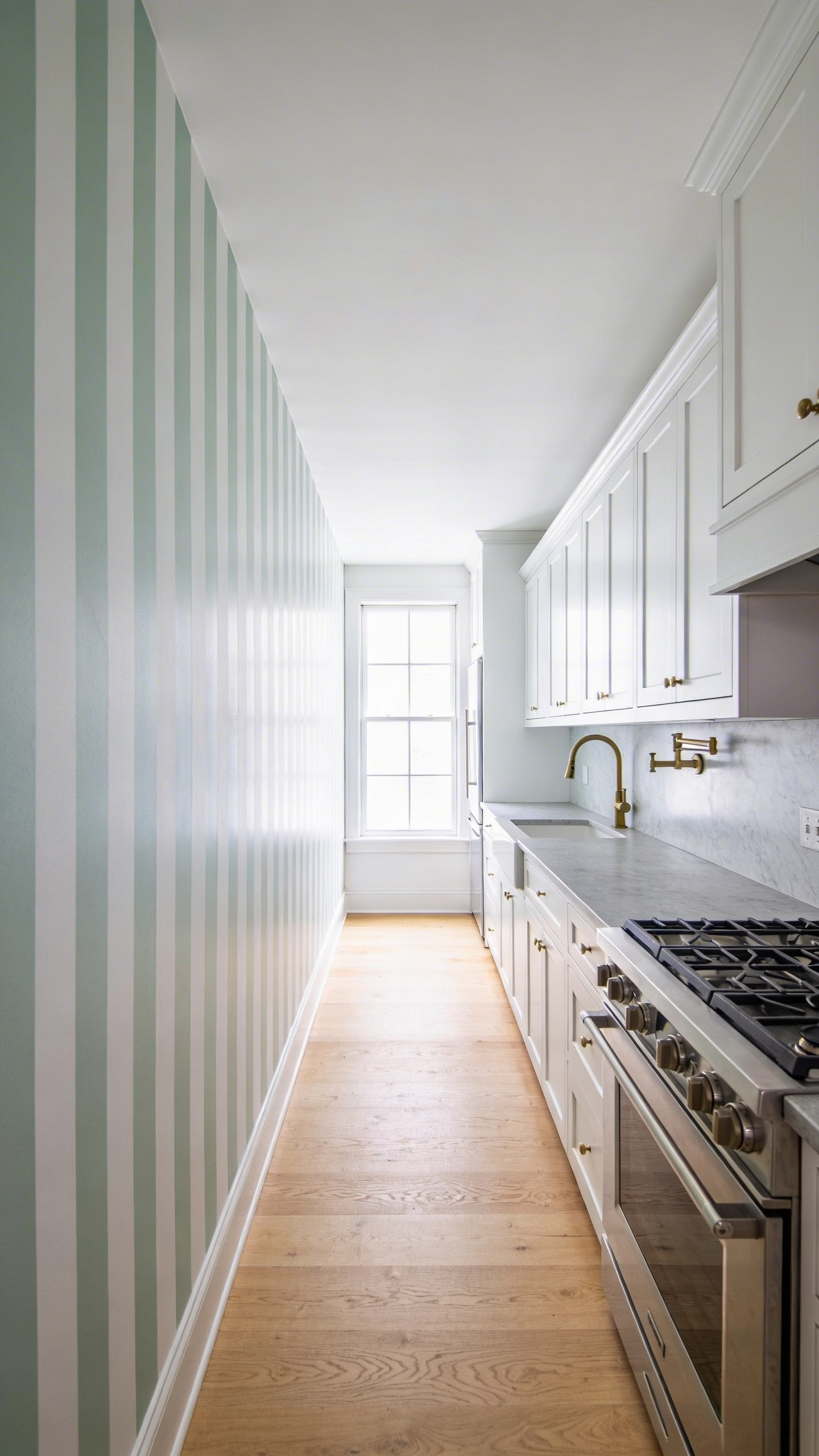
However, scale must be managed carefully to avoid overwhelming the room. In fact, designers generally prefer thinner lines, such as pinstripes or micro-patterns. Conversely, wide, high-contrast stripes can make a tight 6-foot galley feel chaotic. To maintain calm, choose a low-contrast palette like tone-on-tone creams or grays. These soft shades reflect light, effectively preventing the kitchen from feeling closed in.
Furthermore, material choice is critical for these high-humidity environments. Because of steam and splashes, durable vinyl-based wallpapers are the industry standard. Additionally, the vertical element doesn’t always require a printed graphic line. Instead, you can achieve the illusion through subtle textures like a silk-strie. Ultimately, this approach adds sophistication while practically elongating your tight space.
2. The ‘Fifth Wall’ Application: Applying wallpaper to ceilings to alter perceived volume.
Treating the ceiling as a “Fifth Wall” fundamentally shifts a kitchen’s architectural narrative. Consequently, this surface transforms from a utilitarian boundary into a defining design element. Contrary to the belief that white paint maximizes space, wallpaper offers a more nuanced manipulation of volume. In fact, a dark, moody paper can create an “infinite” effect. Specifically, designs with a metallic sheen mimic the depth of a night sky, effectively blurring the room’s upper limits.
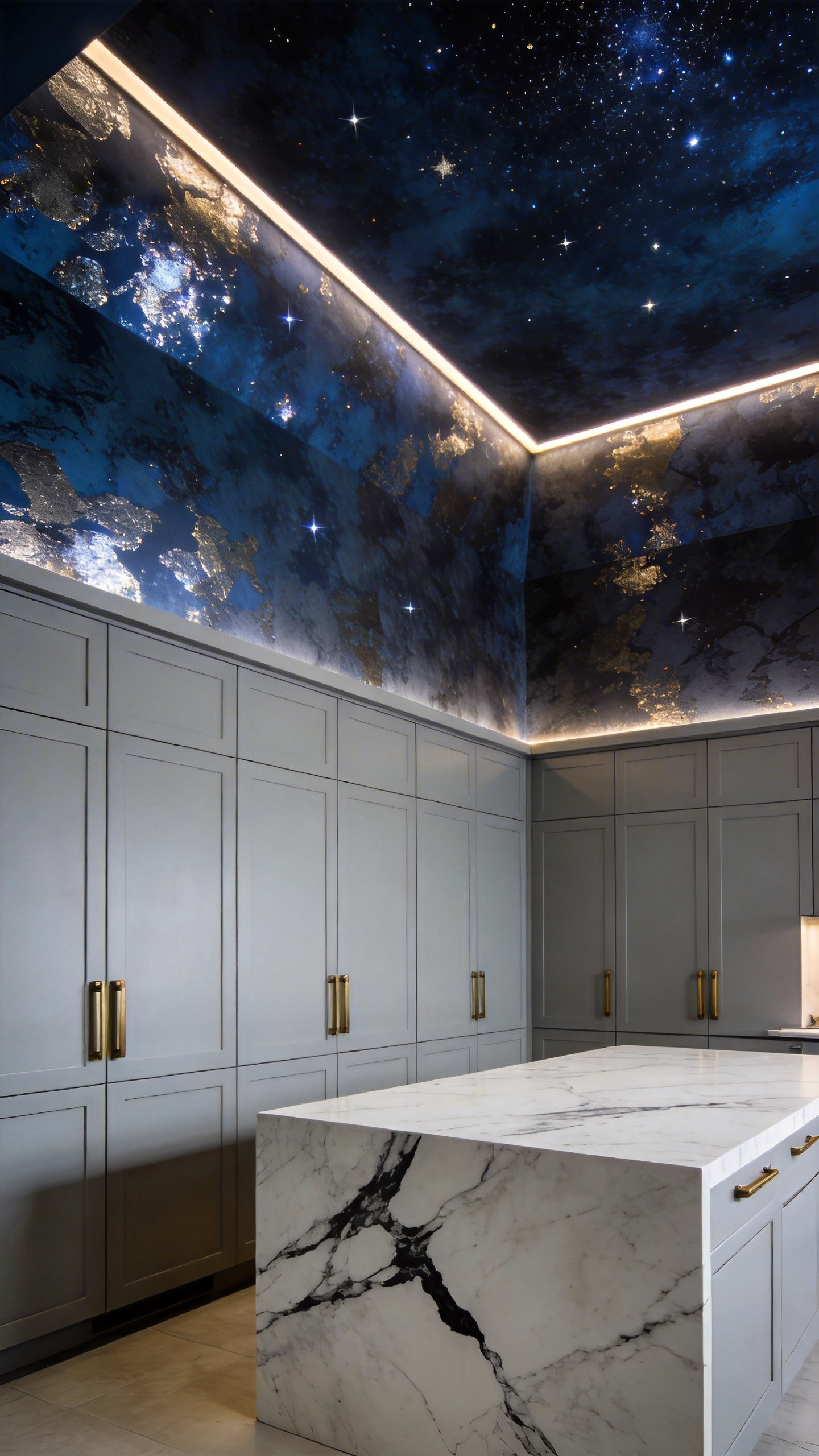
Furthermore, the pattern’s orientation directly influences spatial perception. For instance, horizontal stripes overhead visually push the walls outward. Thus, a narrow galley kitchen immediately feels wider. Historically, this approach creates a “jewel box” effect. It recalls Victorian interiors where every surface contributed to a cohesive, enveloping aesthetic.
Beyond visual tricks, ceiling applications address practical challenges in open-concept spaces. Modern kitchens often struggle with acoustics due to hard surfaces like stone and tile. Therefore, applying textured materials like grasscloth serves as a necessary acoustic buffer. These soft textures absorb sound, significantly reducing echoes without cluttering the design. Finally, the ceiling remains safe from daily wear. As a result, homeowners can utilize luxurious, delicate materials that would otherwise degrade on high-traffic vertical walls.
3. Depth through Darkness: Using charcoal and navy textures to push walls backward in small spaces.
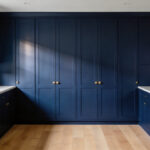
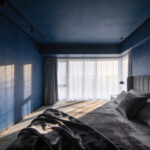
Common design wisdom often suggests painting small rooms white to reflect light. However, there is a powerful counterargument found in color psychology. Specifically, deep hues like charcoal and navy absorb ambient light. As a result, the wall surface creates a visual “black hole.” Consequently, the boundary seems to dematerialize. It pushes the wall backward into negative space. Therefore, the room creates an illusion of depth rather than confinement.
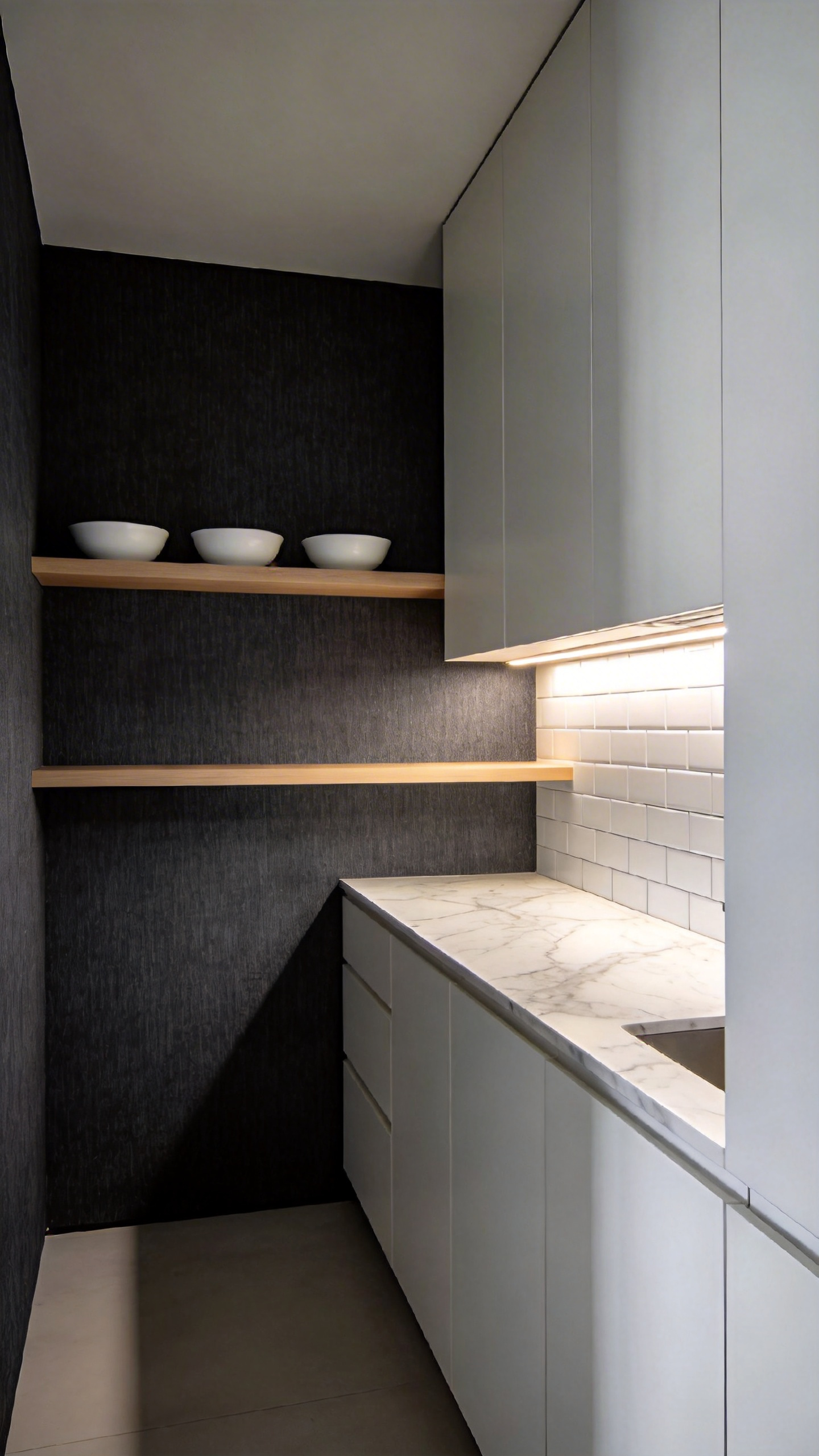
Nevertheless, the success of this technique relies heavily on surface finish. In fact, flat dark paint can sometimes feel oppressive. Instead, opt for wallpapers featuring deep matte textures. These mimic the visual plushness of velvet. Furthermore, consider designs with metallic threads or mica accents. For instance, a faux grasscloth with copper undertones catches task lighting. Thus, you introduce internal shimmer without losing the receding effect.
Ultimately, this shift transforms a cramped kitchen into a “jewelry box.” Indeed, dark backdrops act as a high-contrast canvas. Consequently, warm brass fixtures and white marble counters appear sharper. This creates a curated, intimate atmosphere. Therefore, you trade forced airiness for intentional, sophisticated drama.
Section 2: Material Mimicry & Industrial Textures
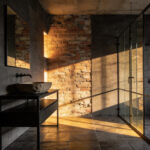
The use of wallpaper to mimic natural surfaces is deeply rooted in design history. Originally, the artistic technique of *trompe l’oeil*—meaning “to fool the eye”—allowed homeowners to replicate expensive tapestries or stone. Today, this tradition serves a highly practical purpose in modern kitchens. Specifically, it delivers the coveted “industrial loft” aesthetic without the structural weight. Furthermore, authentic brick and porous concrete are notoriously difficult to clean in splash-prone areas. Conversely, high-quality vinyl wallpapers offer that raw, edgy look with a durable, wipeable finish.
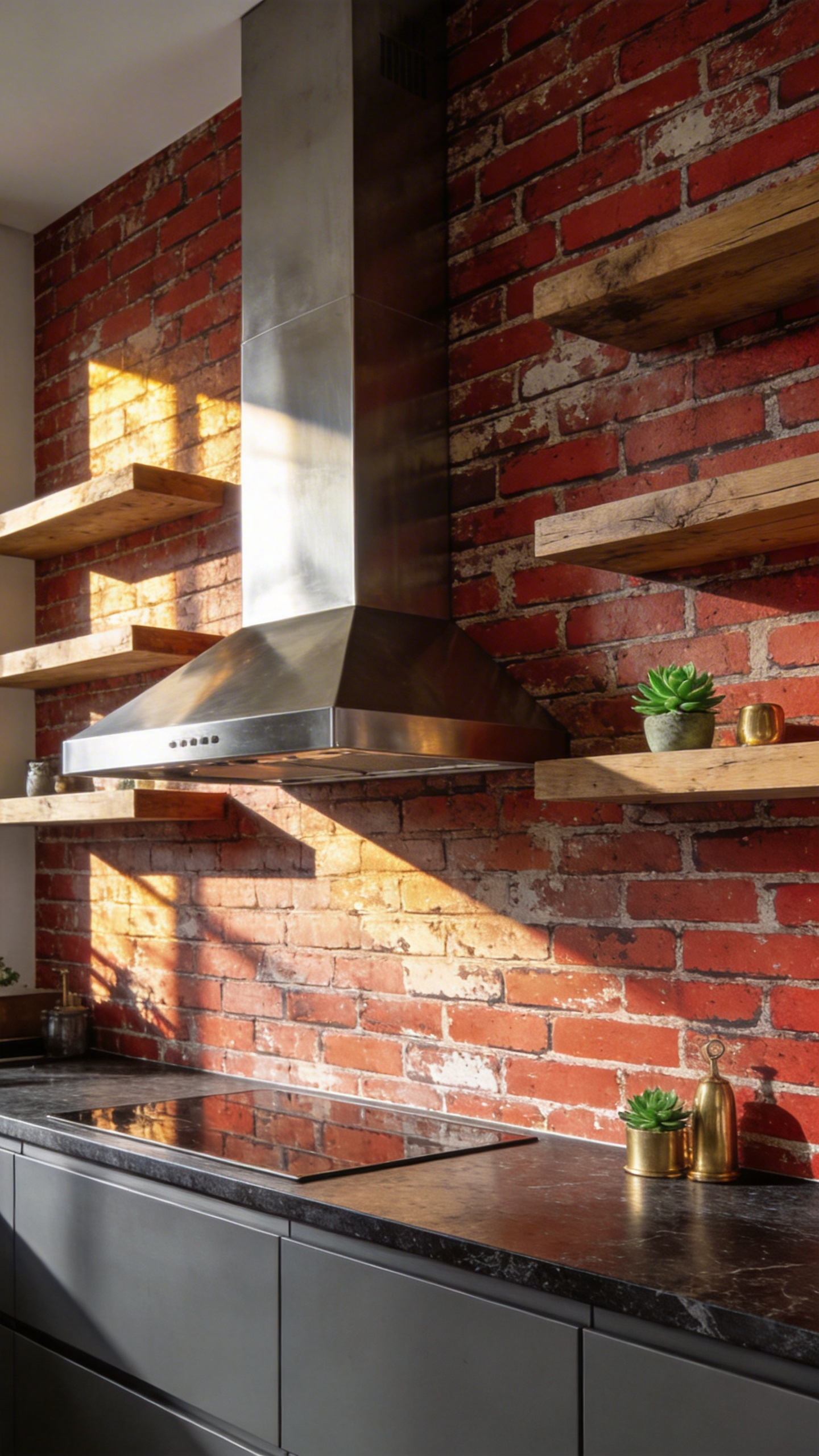
The success of this modern illusion lies in advanced manufacturing technology. Manufacturers now utilize a process called Embossed in Register (EIR). Consequently, the physical texture on the paper perfectly aligns with the high-resolution photograph. If you see a wood knot, you can actually feel the corresponding groove. Moreover, the addition of raised inks and metallic foils allows the wall to capture light dynamically. This interaction creates shifting shadows throughout the day.
Visually, these textured surfaces prevent a sleek kitchen from feeling sterile. For instance, a “blush cement” design introduces warmth to an otherwise cold, industrial material. Similarly, whitewashed brick patterns offer architectural structure while maintaining a bright, neutral palette. This material choice is fundamental when you are exploring kitchen decor styles to explore beyond the commonplace. Ultimately, material mimicry effectively marries the visual weight of stone with the practical utility required for daily life.
4. Faux Concrete & Plaster: Achieving the industrial aesthetic without structural weight.
Achieving an industrial aesthetic no longer requires heavy structural changes. In fact, faux concrete wallpaper offers the visual weight of Brutalism without the financial commitment. Specifically, these designs often feature photorealistic details like formwork tie holes. Consequently, homeowners can tap into the raw elegance of urban architecture easily. This approach transforms a style usually reserved for institutions into a sophisticated domestic backdrop.
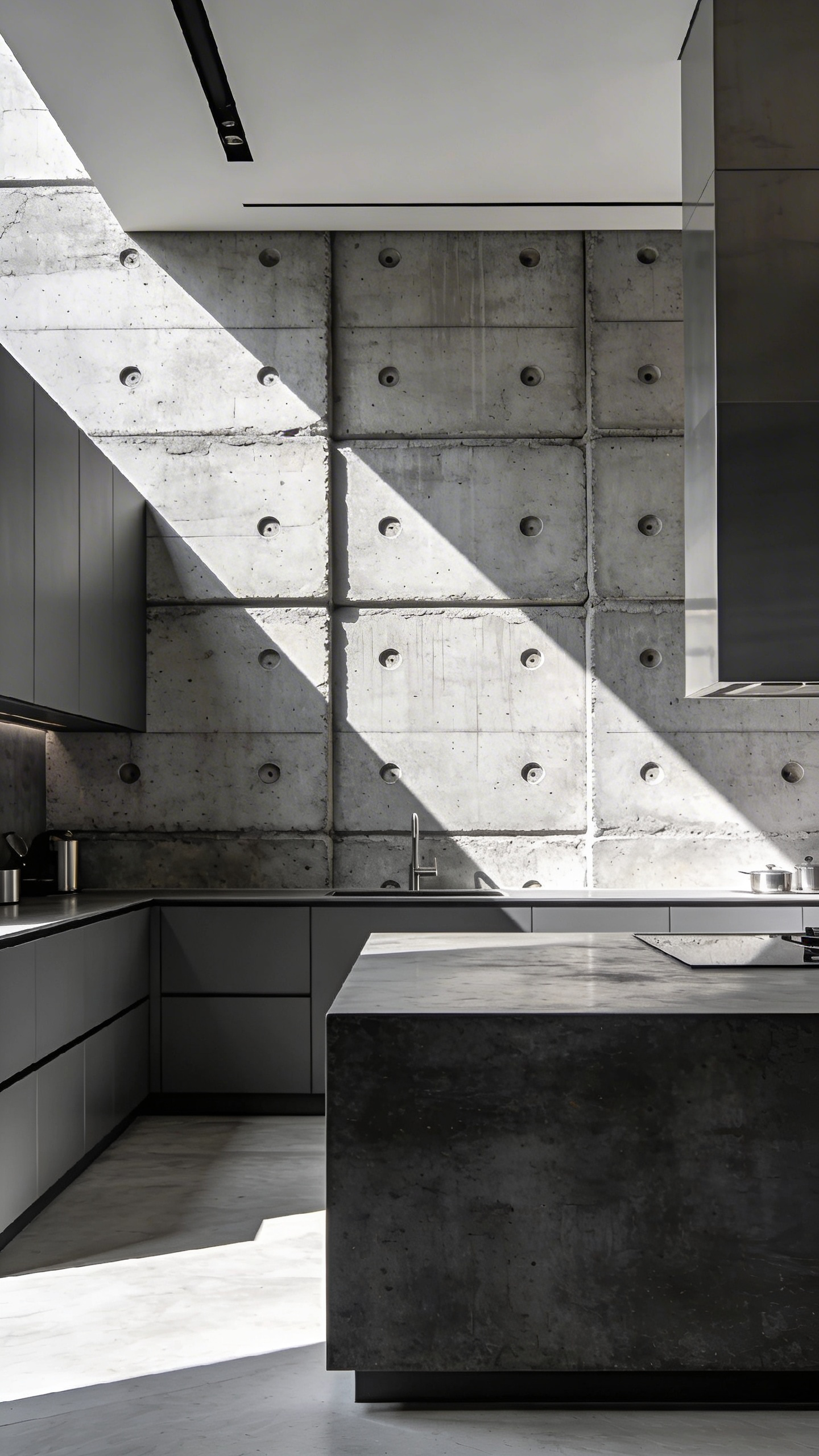
However, a common concern is that these finishes might look clearly fake. Fortunately, modern manufacturing bridges this sensory gap effectively. Many high-quality options utilize expanded vinyl technology and fine embossing. Therefore, the surface gains a realistic texture that is tactile rather than just visual. Additionally, nuanced shading and distressed raised inks create convincing depth. This prevents the wall from appearing flat. Furthermore, this thickness helps mask minor wall imperfections like bumps.
Beyond aesthetics, this material serves a strategic function in kitchens. Unlike heavy concrete slabs, wallpaper is lightweight and versatile. Moreover, these vinyl-coated surfaces are washable. This makes them easy to clean after cooking. High-grade options are also breathable, which helps prevent mold in humid environments. Ultimately, these neutral grey tones act as a quiet canvas in small spaces. They add subtle depth without overwhelming the room.
5. The Brick Veneer Alternative: Adding architectural history to modern drywall boxes.
Sometimes, the most effective wall treatment isn’t paper at all. Instead, it creates genuine architectural texture. Many modern kitchens suffer from feeling like sterile “drywall boxes.” Consequently, thin brick veneer offers a powerful counter-narrative to this blandness. Unlike flat wallpaper, veneer introduces tactile, three-dimensional reality. Specifically, real mortar joints catch light and cast shifting shadows. This dynamic interplay prevents the artificial, flat look inherent to printed patterns.
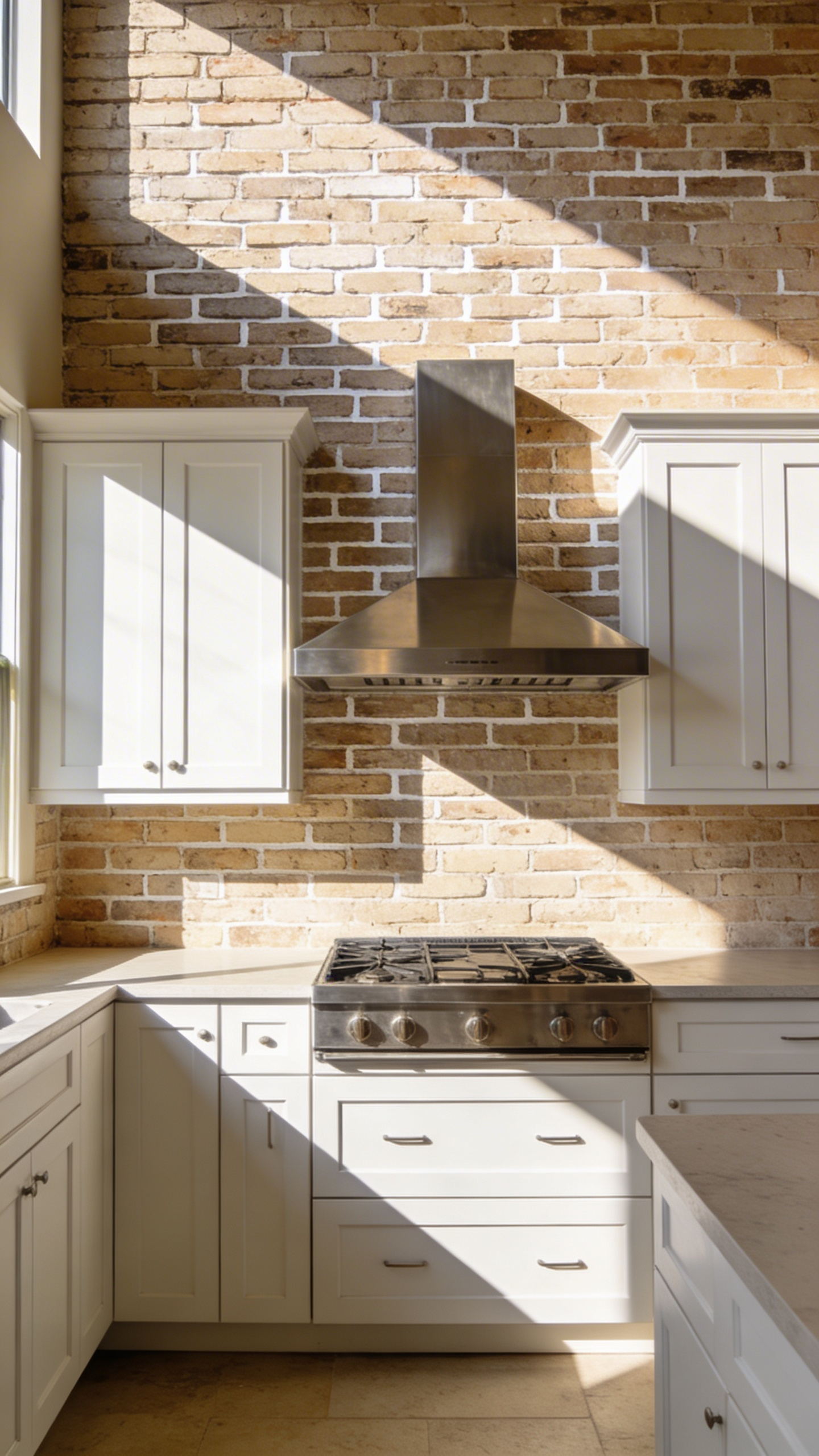
Furthermore, this material anchors a room in history. It instantly evokes the “industrial chic” of converted lofts. Alternatively, it nods to the raw material honesty of Brutalist design. You can even select specific bond patterns to echo Georgian architecture. Thus, the wall becomes a structural statement rather than just decoration.
From a technical standpoint, this upgrade is surprisingly accessible. Traditionally, brick requires heavy foundations and structural support. However, modern veneers are essentially lightweight slices of real clay. Therefore, they install directly onto standard gypsum drywall using construction adhesive. The process closely mirrors laying ceramic tile. Additionally, real clay withstands heat and steam far better than vinyl. Ultimately, veneer transforms a temporary surface into a permanent, rugged feature.
6. Terrazzo Scale: Modernizing the classic composite look in large-format prints.
Historically, terrazzo served as utilitarian flooring composed of small, subtle marble chips. However, modern interior design has dramatically reimagined this classic composite for vertical surfaces. Specifically, the current trend shifts from micro-textures to “macro” visual statements. Designers now favor an intentional exaggeration of scale on kitchen walls. Instead of fine flecks, we see bold, graphic shapes and boulder-like fragments. Consequently, this graphic inflation transforms the material into a commanding architectural feature.
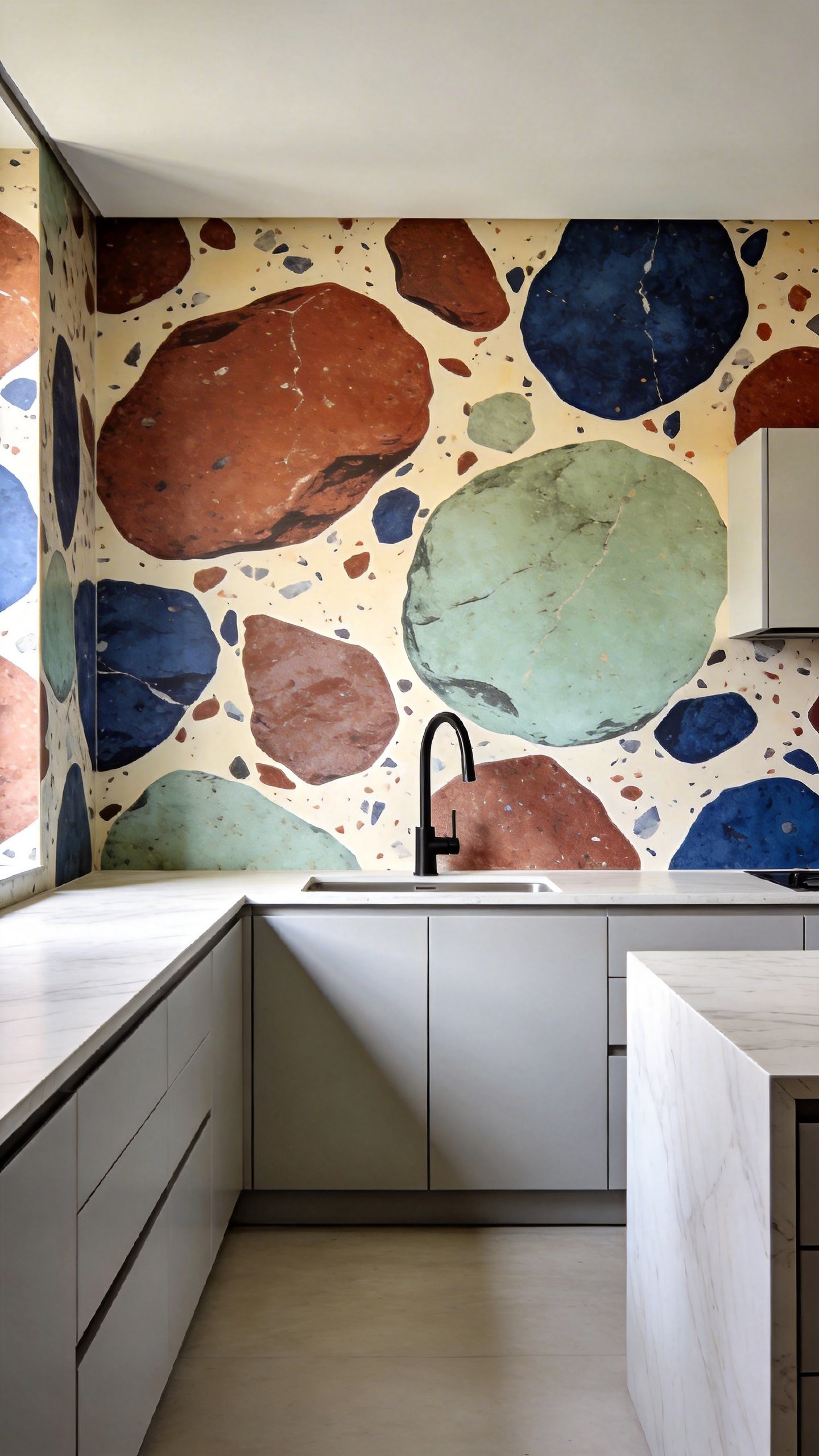
Furthermore, achieving this look requires specific printing techniques. Authentic terrazzo is prized for its seamless, monolithic appearance. Therefore, traditional wallpaper repeats often fail to capture this poured effect. In contrast, large-format digital murals eliminate distracting join lines. This allows the pattern to successfully mimic immense, polished stone slabs. The result creates a trompe-l’oeil effect that adds significant depth to a room.
Ultimately, this approach solves practical kitchen challenges. Real terrazzo is porous, expensive, and incredibly heavy to install vertically. Conversely, modern vinyl wallpapers offer that sophisticated visual depth without the maintenance. In fact, these materials are durable and wipeable. Thus, homeowners can achieve a high-end, structural look with very low commitment. You get the weight of architecture with the ease of paper.
7. Warm Woodgrains: Softening stainless steel appliances with organic visual texture.
Stainless steel has dominated kitchen design for decades. While it projects professional utility, its cool sheen can sometimes feel sterile. Therefore, introducing warm woodgrain wallpaper serves as an essential aesthetic counterpoint. This strategy balances the room’s psychology. Specifically, it softens industrial hard lines with organic visual texture. Consequently, the kitchen transforms from a cold workspace into an inviting hub.
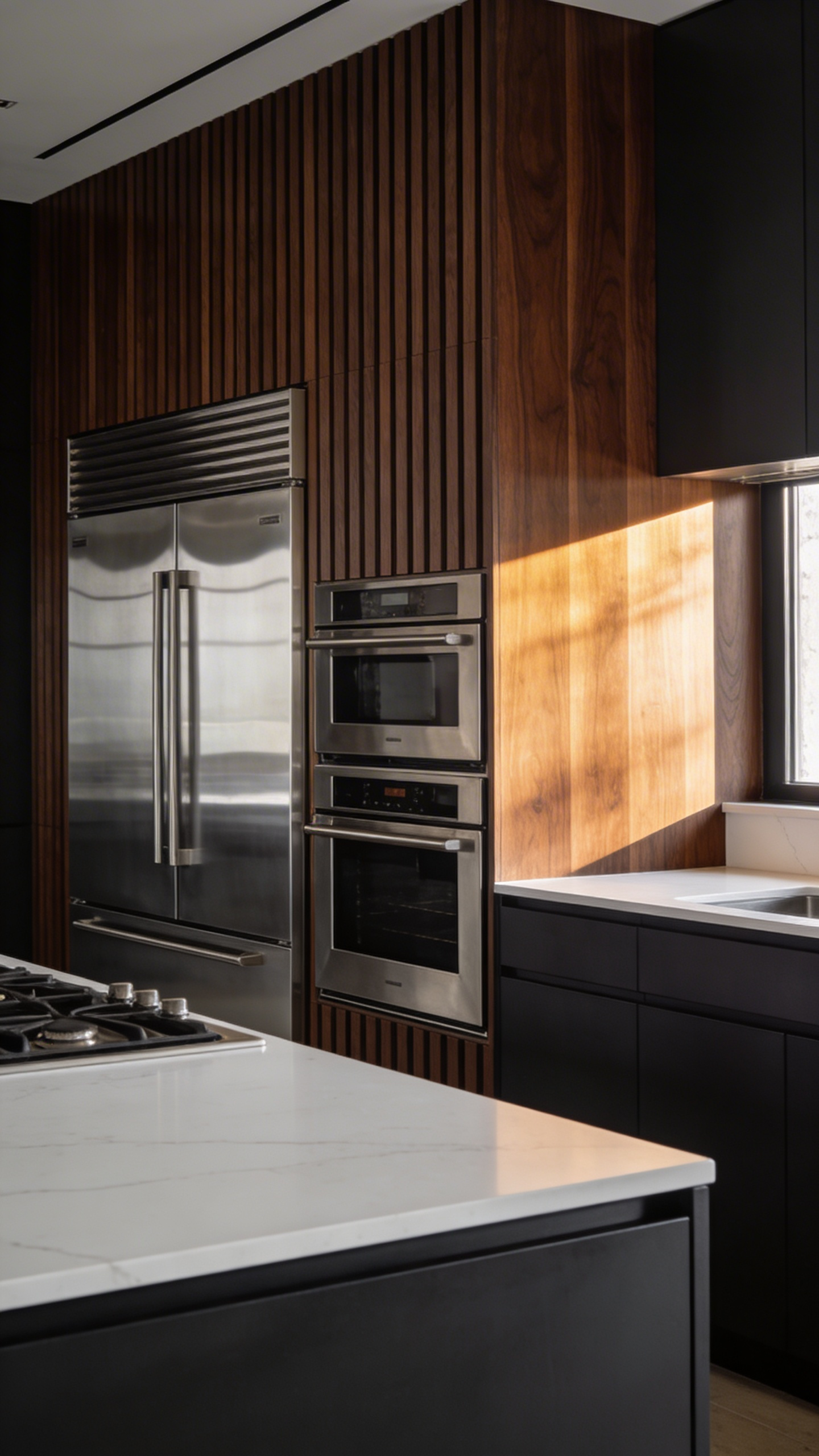
Functionally, wallpaper is often superior to real timber here. Traditional wood creates maintenance headaches near heat or sinks. However, modern vinyl wallpaper resolves this issue. In fact, many peel-and-stick options are heat-resistant and waterproof. They withstand the challenging kitchen environment of steam and grease. Furthermore, high-end options feature embossed textures. Thus, they simulate the tactile sensation of real grain rather than just the color.
Success relies on selecting the right hue. Ideally, you should aim for light to medium-brown tones. For example, bleached oak or warm maple are excellent choices. These shades provide a chromatic contrast to the silvery steel. Conversely, dark woods like mahogany might weigh the space down. Ultimately, this pairing creates a sophisticated blend of toughness and warmth.
Section 3: Zoning in Open Floor Plans
Open floor plans often suffer from a lack of definition. Consequently, the kitchen bleeds into the living area without clear purpose. However, wallpaper acts as a powerful, non-physical architectural tool. Specifically, it creates “soft boundaries” that organize these expansive rooms. Instead of erecting walls, you can use a visual anchor to signal a shift in function.
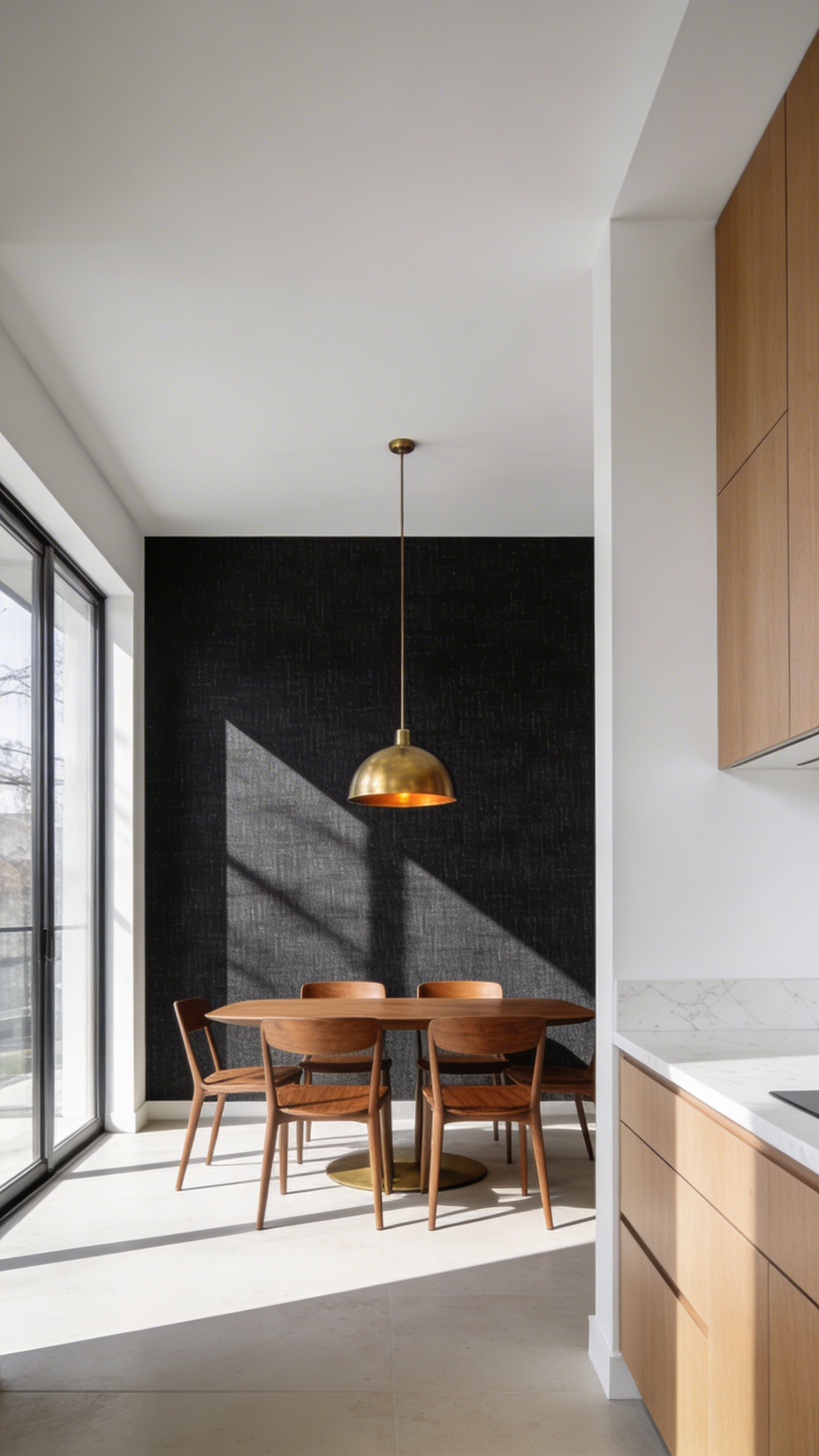
For example, apply a textured wallpaper to a dining nook. Immediately, this distinct change in surface separates the eating space from the utilitarian kitchen. Furthermore, this adds a necessary layer of intimacy. While kitchens feature hard, sleek surfaces, a wallpaper mimicking linen or velvet introduces tactile depth. Therefore, the “work” zone feels distinctly separate from the “social” zone. Psychologically, this signals the brain to switch from cooking to relaxing.
Additionally, consider the “fifth wall” strategy. Applying wallpaper to the ceiling above a breakfast island creates an invisible column of space. Effectively, this visually “caps” the area, creating a room within a room.
Crucially, maintaining visual flow is essential. You should harmonize colors across the open plan rather than matching them perfectly. Finally, durability remains a priority near cooking areas. In fact, vinyl or washable options ensure your design withstands moisture and traffic. Ultimately, wallpaper transforms an undefined expanse into a series of intentional environments.
8. The Breakfast Nook delineation: Using pattern to create ‘rooms’ within rooms.
In open-concept homes, defining specific zones without physical walls creates a significant challenge. However, wallpaper offers an authoritative architectural solution. Specifically, treating the breakfast nook as a distinct volume establishes a psychological boundary. Therefore, consider wrapping the pattern across all contiguous walls to frame the dining area. You might even extend the paper to the ceiling. This immersive technique effectively creates a “room within a room.” Consequently, the space feels physically separate from the kitchen’s main thoroughfare.
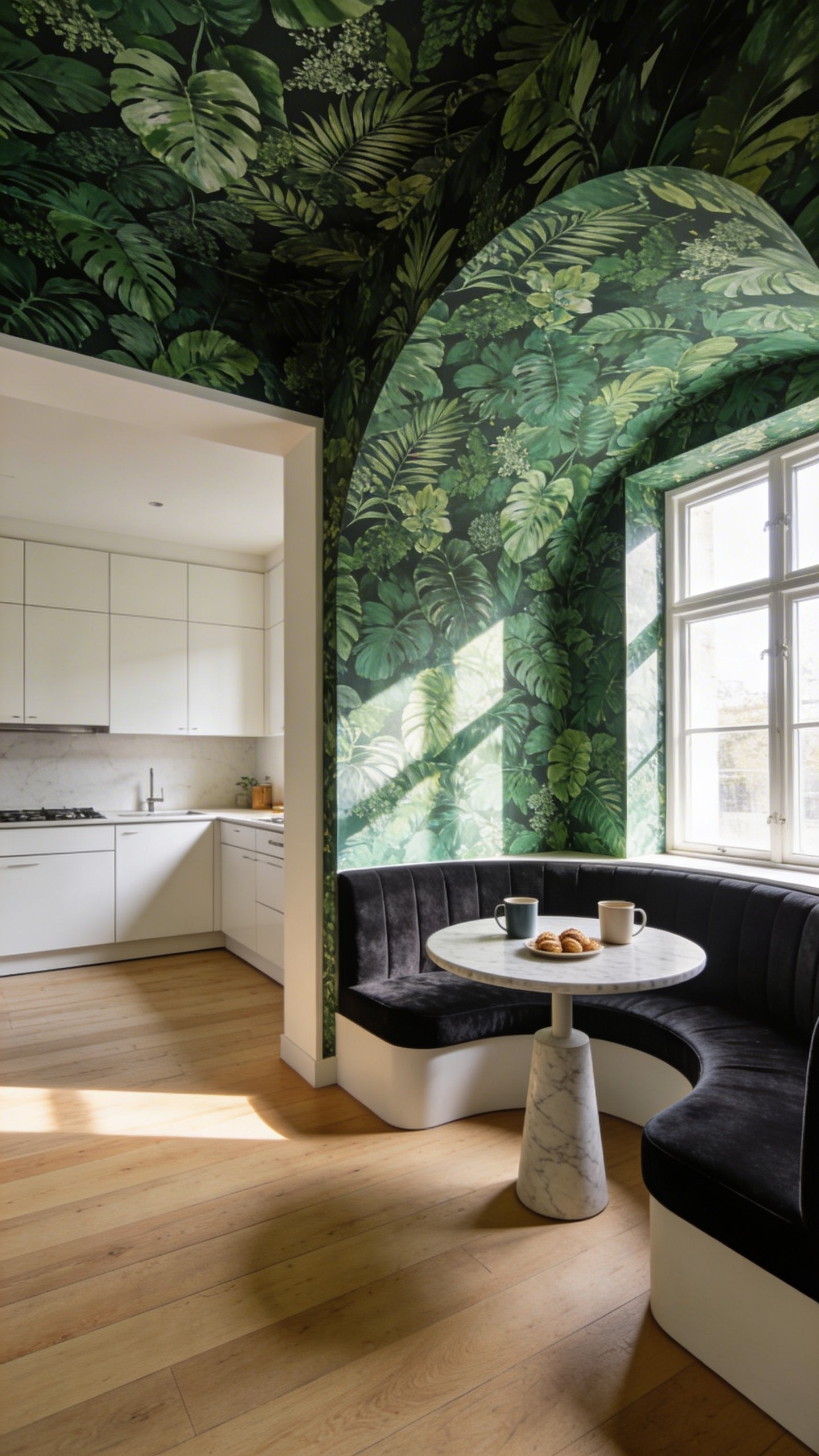
Furthermore, this visual separation signals a functional shift. Kitchens typically feature hard, monolithic surfaces like stone or cabinetry. In contrast, a breakfast nook demands a softer, more intimate atmosphere. By introducing organic botanicals or textured grasscloth, you instantly soften the hard environment. Thus, the mood shifts from utilitarian to leisurely.
Moreover, the choice of pattern dictates the spatial perception. Vertical stripes, for instance, visually raise the ceiling in compact areas. Alternatively, bold geometric designs provide a modern, crisp definition. However, be mindful of scale. A pattern that is too small may simply look like clutter from a distance. Instead, select a bold design that definitively anchors the focal point. Ultimately, this turns a small corner into a deliberate design statement.
9. The Pantry Surprise: High-impact patterns in low-exposure transition zones.
Low-exposure areas, such as walk-in pantries, are usually seen only briefly. Consequently, this temporary isolation permits bold design choices. Specifically, applying high-impact wallpaper here transforms a purely utilitarian space into a genuine design destination. Ideally, opt for large-scale patterns or vibrant murals rather than small prints. Surprisingly, these bold graphics force the eye to focus on detail. This creates unexpected depth within a compact environment.
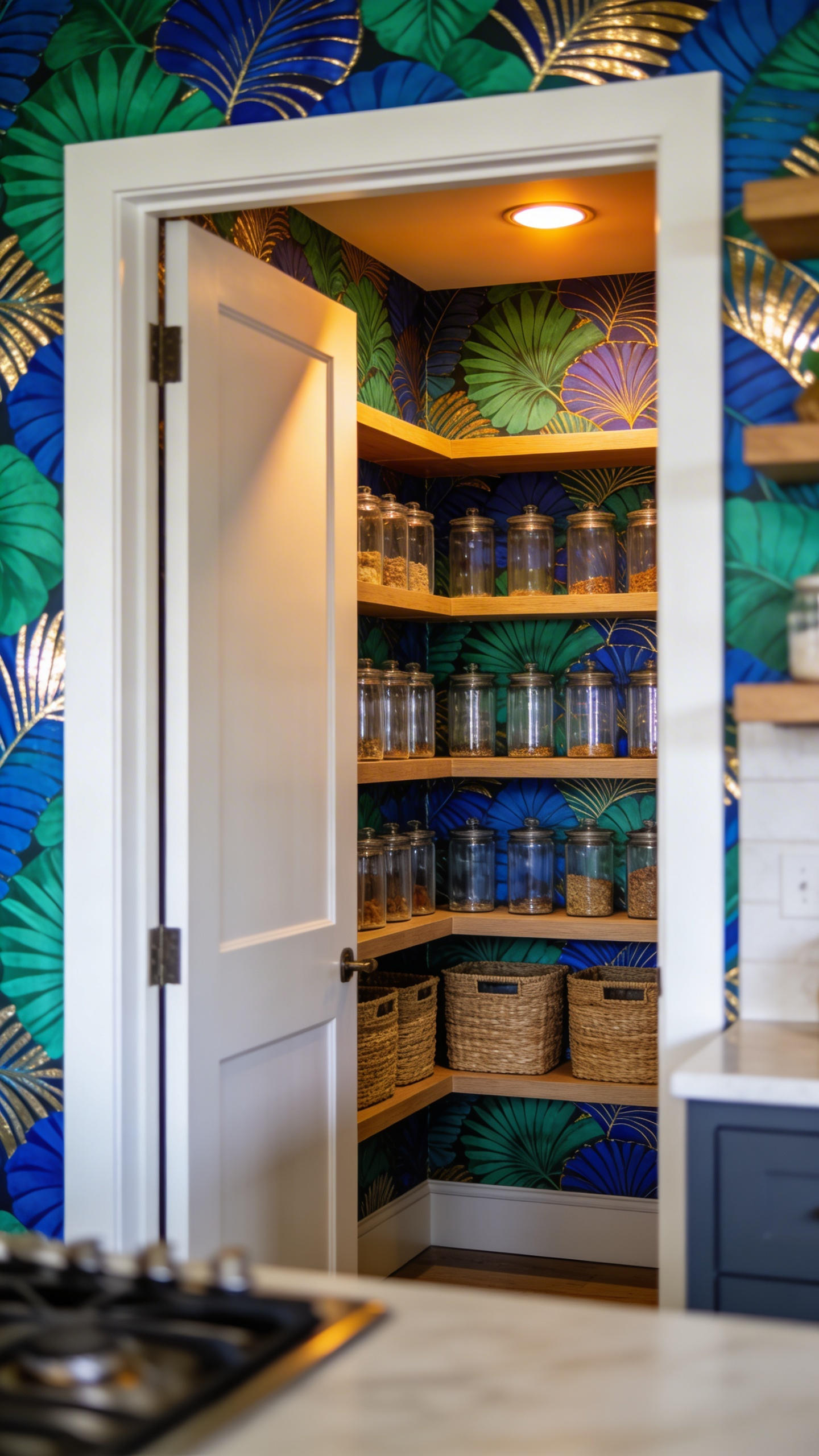
Historically, this approach echoes the 16th-century tradition of decorating private cupboards with expensive paper. Thus, wallpapering a hidden pantry represents a form of intimate luxury. However, functional durability is critical in these high-traffic working zones. Therefore, you must prioritize heavy-duty textured vinyl or moisture-resistant performance papers to withstand scuffs.
Furthermore, consider the lighting conditions carefully before installation. Since pantries often lack natural windows, high-gloss finishes can cause harsh, distracting glare under artificial bulbs. Instead, choose semi-matte or eggshell finishes to reflect light softly without visual distortion. Ultimately, this balance of resilience and style turns a mundane chore into a moment of visual delight.
10. Connecting the Mudroom: Creating visual flow between service areas.
Ideally, think of your mudroom as a visual antechamber. Architecturally, it functions as a critical breezeway between the chaotic outdoors and the kitchen. Consequently, the wallpaper here should signal a distinctive shift in environment. Specifically, use patterns to let outside stresses fall away before entering the home’s heart. For instance, a delicate, nature-inspired print bridges the gap between outdoor elements and refined indoor finishes.
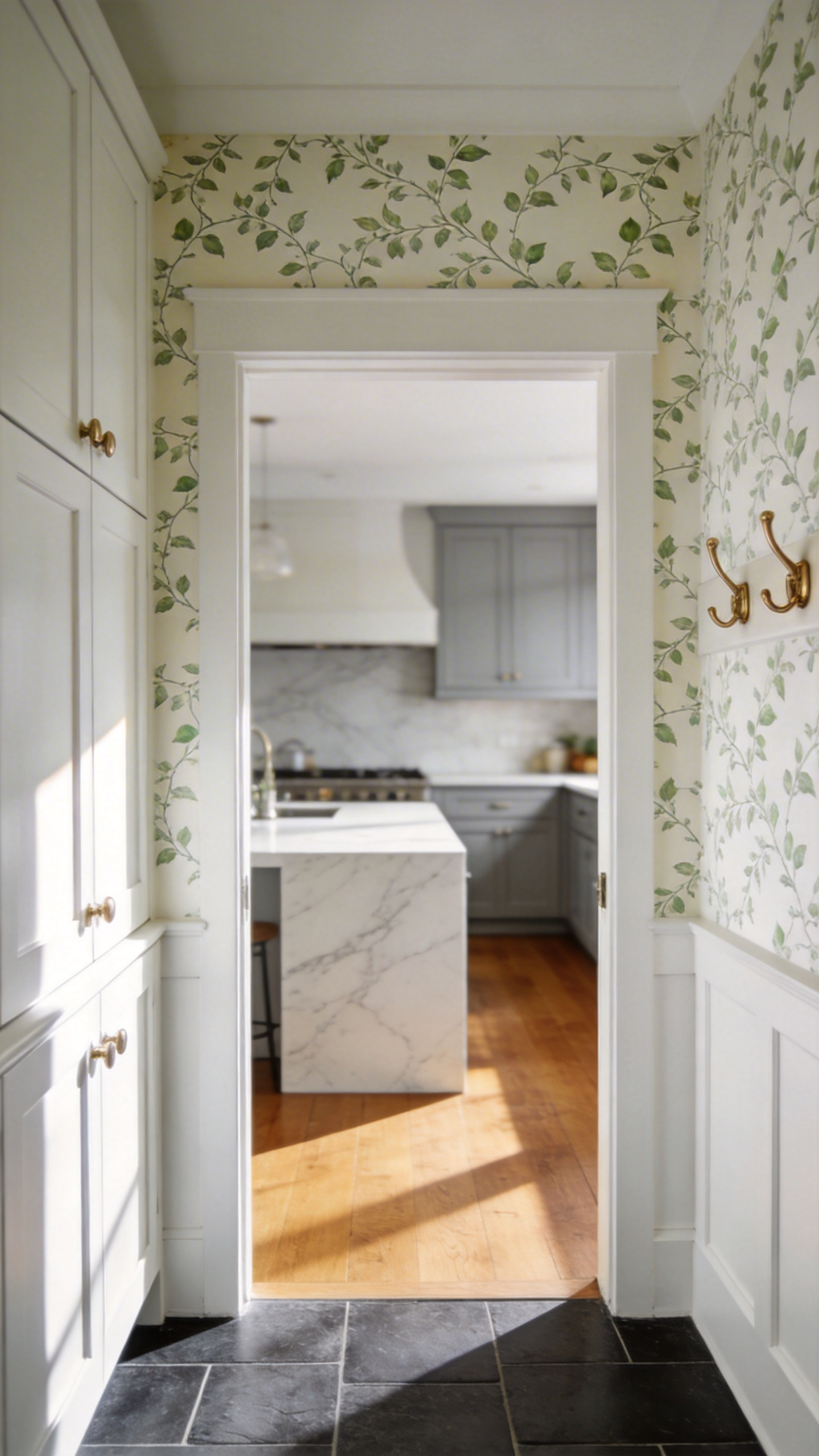
However, achieving true flow does not require using identical designs in both rooms. In fact, the most sophisticated technique creates a “harmonic echo.” Therefore, look for a mudroom paper that pulls a secondary color from your kitchen. You might match a sage-green island or the subtle veining in your countertops. This strategy creates a visual tether. It makes the transition feel seamless and intentional.
Furthermore, you must address the practical demands of this high-traffic zone. Mudrooms face constant exposure to dirt, damp coats, and scuffing. Thus, experts strongly recommend specific vinyl-coated or thick vinyl wallpapers. Fortunately, modern printing technology allows these durable materials to mimic deep, natural textures. Ultimately, this approach ensures the space remains both a rugged workhorse and an aesthetic showpiece.
11. Inside the Cabinetry: Creating depth layers behind glass-front doors.
Treating your cabinetry as a mere storage box is a missed opportunity. Instead, view glass-front doors as architectural display cases. Historically, this practice dates back to the 1600s. Artisans lined bespoke furniture with decorative papers to create a distinct “room within a room.” Consequently, adding wallpaper here elevates standard joinery into a curated focal point.
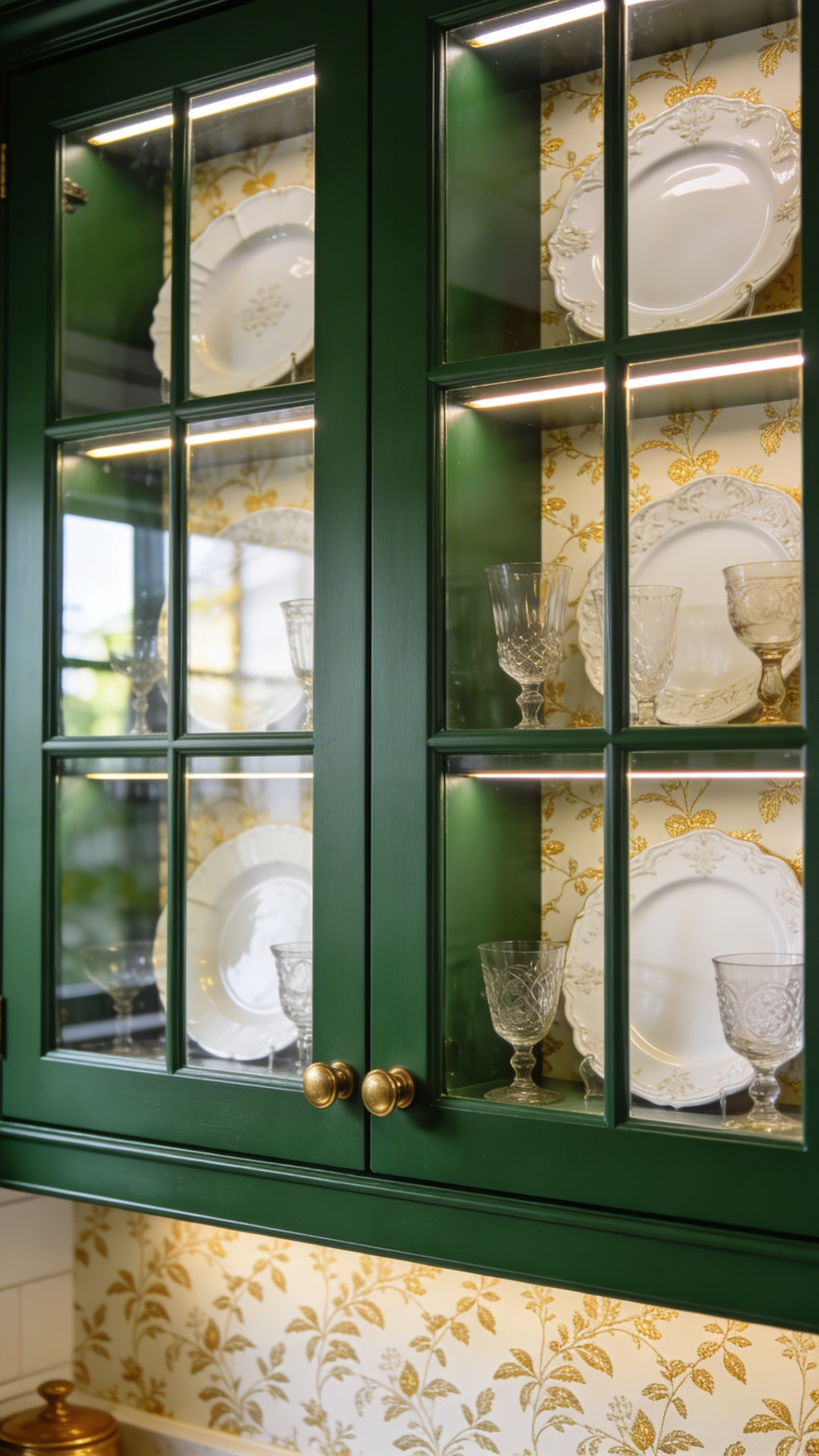
Effectively, you are manipulating the foreground, middle ground, and background. Therefore, the pattern choice is critical for controlling perceived space. For instance, strong vertical lines draw the eye upward. This immediately creates an illusion of height in standard upper cabinets. Conversely, horizontal motifs can make a narrow unit feel significantly wider. Furthermore, consider the scale of your motif against your dishware. Specifically, a dense, busy pattern visually pushes the back plane away. This contrast forces monochromatic dishware to pop forward.
Finally, lighting plays a pivotal role in this layering process. Integrated LED strips effectively separate the foreground objects from the wallpaper backdrop. Thus, the cabinet becomes a lit stage. Additionally, interacting patterns can create a sophisticated “moiré effect.” This optical phenomenon occurs when fine wallpaper textures overlap with glass reflections. As a result, the surface appears fluid rather than static. Ultimately, this combination transforms a flat back panel into a dynamic, living texture.
Section 4: Light, Tech, and Integration
The finish of your kitchen wallpaper is critical for manipulating light and atmosphere. Specifically, sheen acts as a powerful luminosity tool. Techniques like silk-screening use minute surface notches to scatter light. Consequently, these pearly finishes can make compact spaces feel significantly more expansive. However, durability is essential in sun-drenched rooms. Therefore, opt for “Duplex” papers engineered with UV resistance to effectively prevent fading or “burning out.”
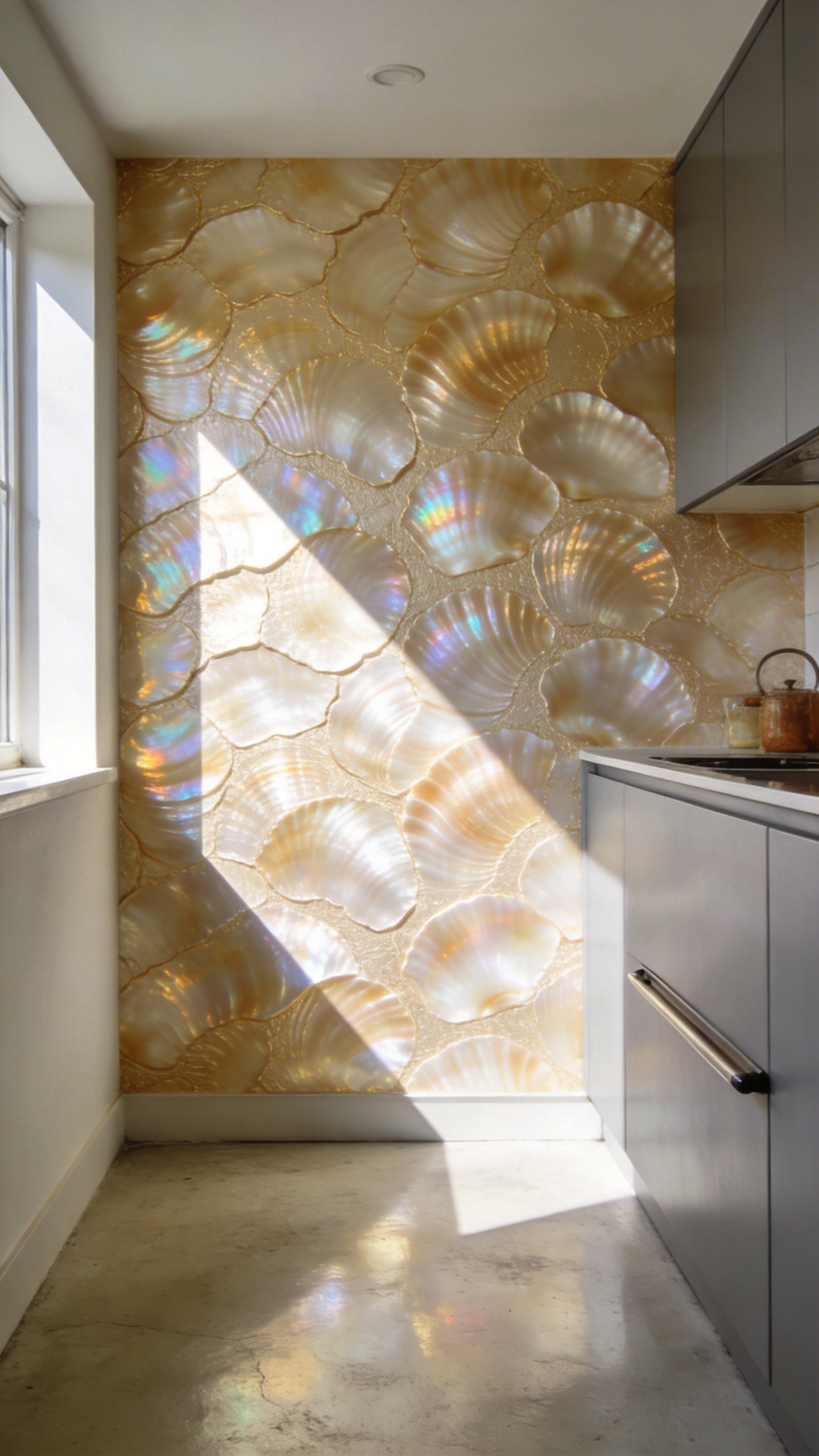
Beyond aesthetics, wall coverings are rapidly evolving into functional interfaces. In fact, industry experts are exploring responsive surfaces that subtly adjust illumination based on activity. Furthermore, modern innovation addresses the acoustics of the room. Sound-absorbing textiles help dampen noise in open-plan kitchens dominated by hard surfaces. Crucially, this integration remains discreet. The goal is technology that does not look like technology.
Finally, wallpaper acts as a non-structural architectural tool. In open-concept homes, it effectively zones different functional areas. For instance, a distinct pattern can visually separate the cooking zone from the dining space. Thus, you create clear boundaries without needing heavy partitions. Additionally, textured coverings bridge the gap between sleek appliances and cozy living areas. Ultimately, materials mimicking wood or stone prevent high-tech kitchens from feeling sterile.
12. Metallic Sheens & Smart Lighting: leveraging reflective substrates for mood lighting integration.
Light and texture share a crucial relationship in modern kitchen design. Specifically, metallic wallpapers act as sophisticated chromatic filters for your smart LED systems. For instance, gold or copper foils naturally absorb blue light wavelengths. Consequently, they transform standard warm white light into a deep, amber glow. This creates a rich, candlelight effect without needing to dim your bulbs excessively. Conversely, silver substrates function as purity amplifiers. Therefore, they reflect the true color temperature of your light source, keeping whites crisp and accurate.
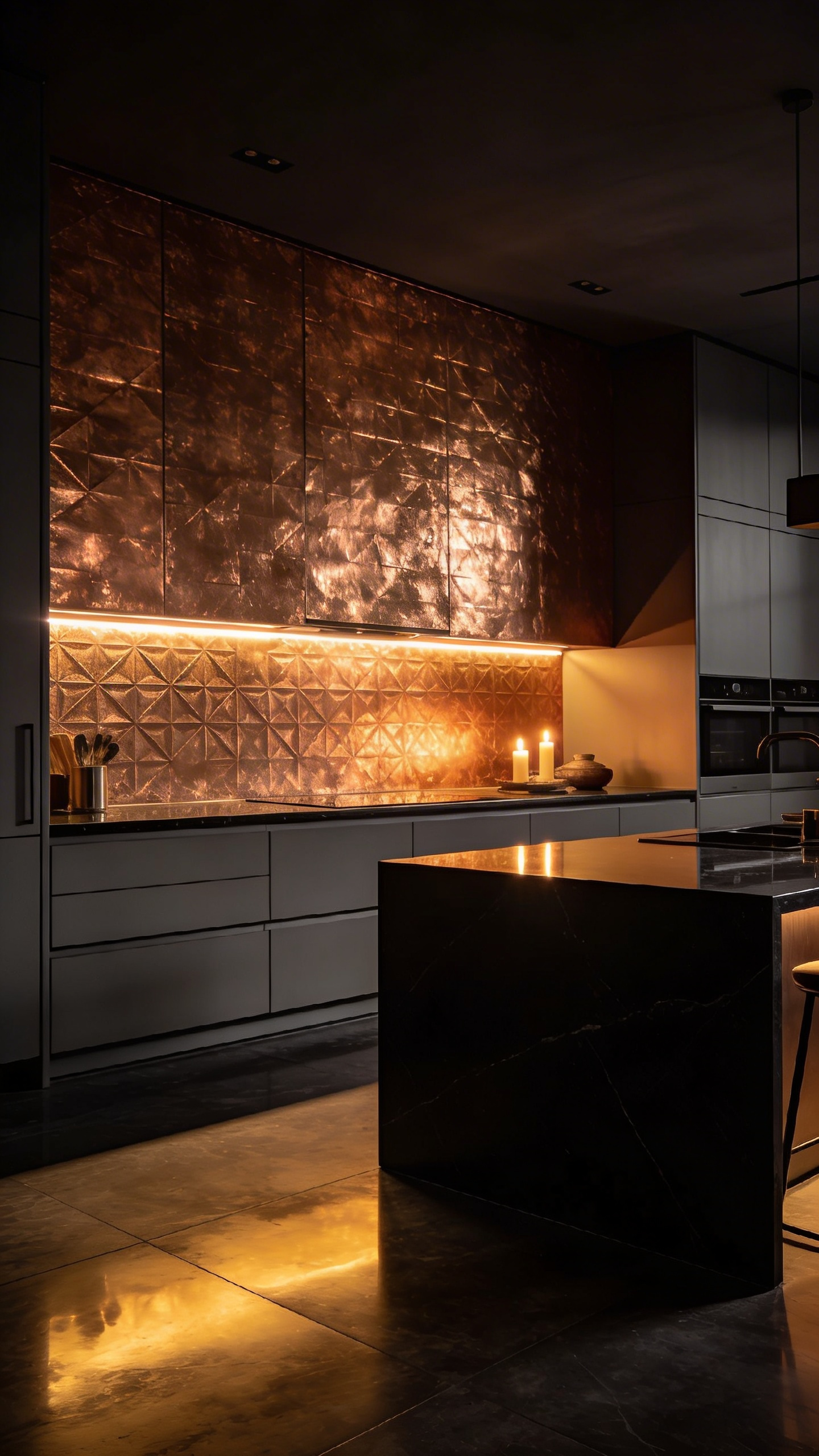
However, high reflectivity introduces the risk of harsh glare. To combat this, choose wallpapers with micro-textures like embossing or brushed effects. These textures scatter light beams effectively. As a result, you achieve a soft, ambient wash instead of blinding hot spots. Furthermore, installation placement matters significantly. Ideally, hide LED strips behind soffits or cabinetry moldings. Thus, light bounces off the wallpaper before reaching the eye.
Ultimately, this pairing supports dynamic mood cycling in your home. During meal prep, set your smart lights to cool white. The metallic surface reflects maximum brightness for safe, accurate cooking. Later, shift to a “decompression mode” with warm tones. Instantly, the kitchen feels like a high-end lounge. In fact, the wallpaper becomes a responsive part of your lighting design.
13. The Backsplash Bridge: Where vinyl performance meets heat resistance standards.
The area directly behind your cooktop represents a high-stress zone. Specifically, this “Backsplash Bridge” challenges the durability of standard vinyl wallpaper. Chemically, basic Polyvinyl Chloride (PVC) faces a low thermal tipping point. In fact, standard materials begin to soften and deform at temperatures above 60°C (140°F). Consequently, the radiant heat from searing or boiling can quickly warp the design. Furthermore, high heat often degrades the adhesive before the vinyl itself fails. This rapid curing process leads to bubbling, peeling, or visible discoloration over time.
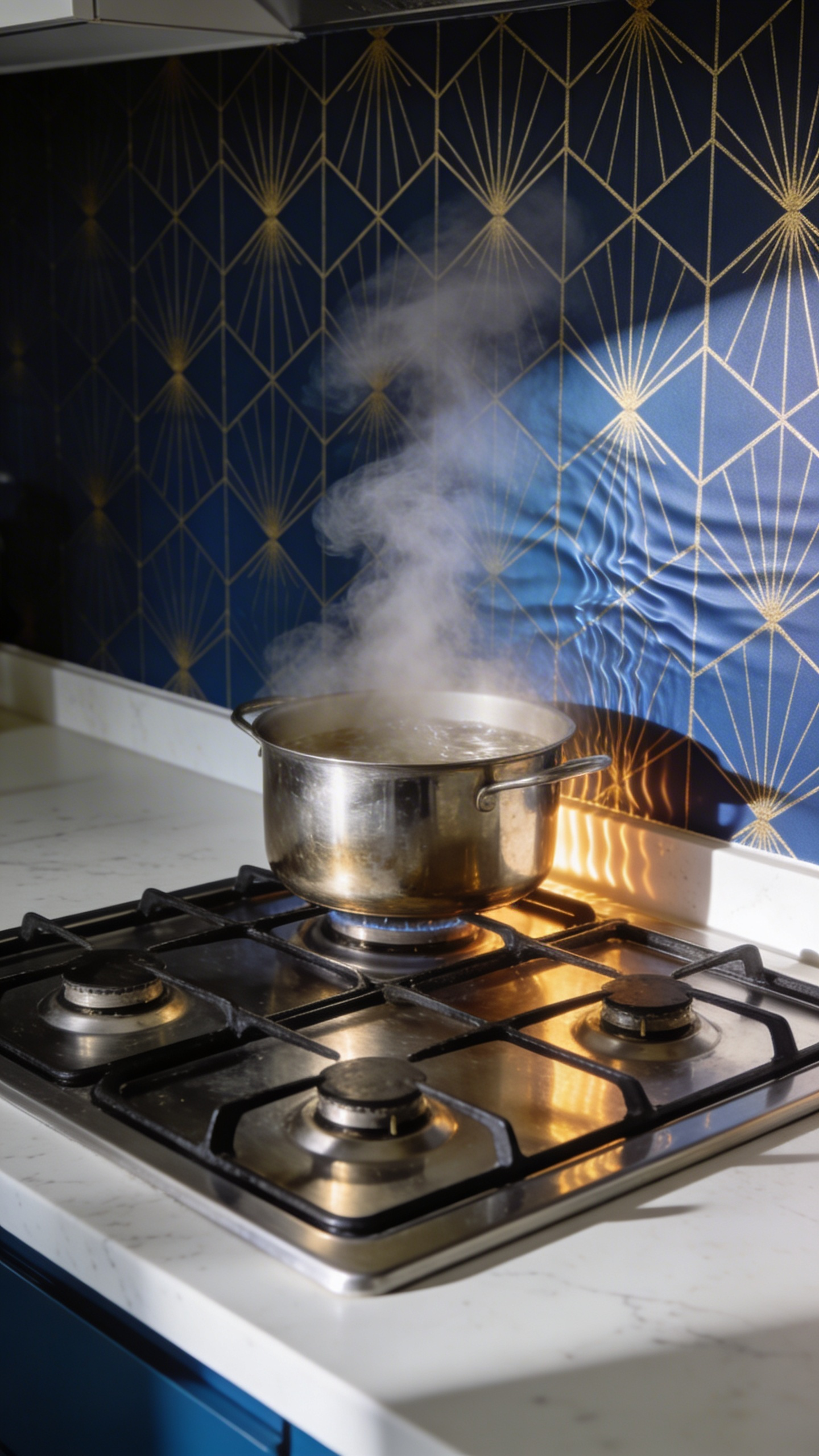
Fortunately, modern innovation has engineered a way across this bridge. High-performance composites are now designed to withstand these thermal demands. For instance, manufacturers incorporate thermal stabilizers directly into the PVC formulation. This adjustment prevents molecular breakdown even at sustained temperatures up to 80°C (176°F). Additionally, premium options often feature mineral-based coatings. These compounds release cooling water vapor when heated to delay ignition. As a result, many of these engineered wallcoverings achieve a Class A fire rating.
Despite these material advances, practical limitations still exist. Therefore, industry experts strongly advise adhering to the “6-inch rule.” You must maintain a minimum six-inch clearance between the burner and any vinyl product. Moreover, exercise extreme caution with flat-top stoves that vent heat directly upward. That concentrated airflow attacks the material more aggressively than radiant heat. Ultimately, consider this a design compromise. For maximum safety, utilize ceramic or glass directly behind the range. Then, transition to vinyl in the cooler perimeter zones to complete your aesthetic. This ensures that you have explored all the best options, from sleek tiles to advanced papers, for your chic kitchen backsplash ideas.
14. The Island Wrap: Protecting high-kick zones with heavy-duty textured papers.
Kitchen islands endure constant contact from restless feet and sliding barstools. Consequently, the base often suffers from unsightly scuffs and stains. To combat this daily abuse, designers rely on commercial-grade materials. Specifically, Commercial Grade Type II vinyl offers the necessary architectural durability. Unlike standard residential wallpapers, these heavy-duty coverings weigh approximately 20 ounces per linear yard. Therefore, they meet strict professional criteria for abrasion resistance and scrub-ability. This industrial rating ensures you can clean spills repeatedly without damaging the finish.
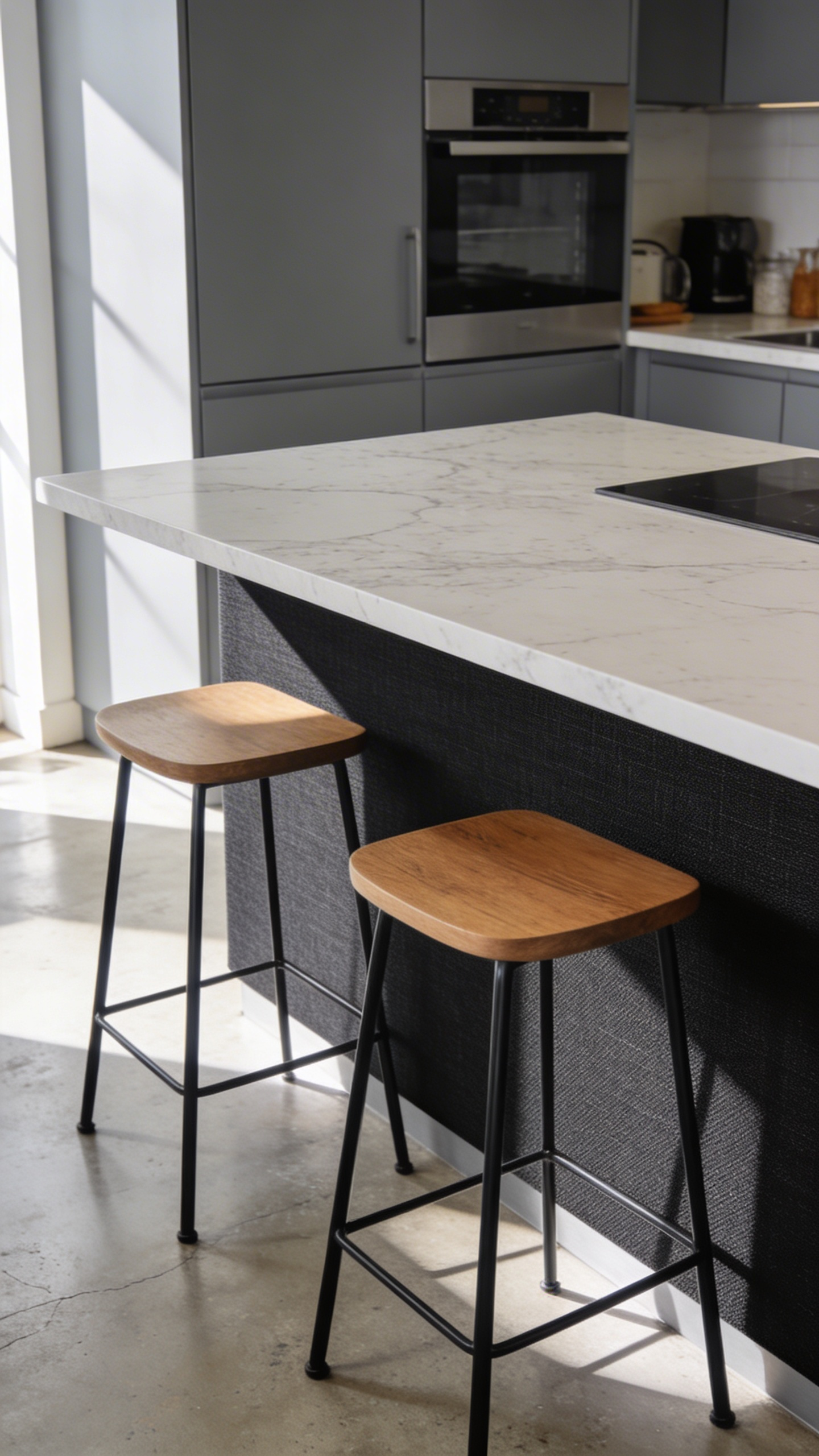
Beyond durability, the material’s texture plays a crucial visual role. In fact, deep patterns like faux grasscloth or linen weaves act as optical camouflage. The ridges and shadows absorb visual noise, effectively masking daily wear. Thus, minor marks disappear into the design rather than standing out on a smooth surface. Additionally, thick vinyl conceals imperfections on the original wood substrate. Aesthetically, this technique mimics the grounding effect of traditional wainscoting. By wrapping the base in a distinct texture, you give the island a sense of architectural permanence. Ultimately, this creates a functional, layered look that anchors the entire room.
15. Minimalist Botanicals: Integrating biophilic design without cluttering clean lines.
Minimalist botanicals represent a sophisticated evolution in kitchen design, moving beyond simple floral trends. Fundamentally, this style anchors itself in the Japandi aesthetic, blending Scandinavian functionality with Japanese Wabi-Sabi. Therefore, the goal is not merely decoration, but authentic harmony. Unlike dense, maximalist patterns that enclose a room, these designs prioritize psychological tranquility. Consequently, they provide essential visual rest within a high-traffic space.
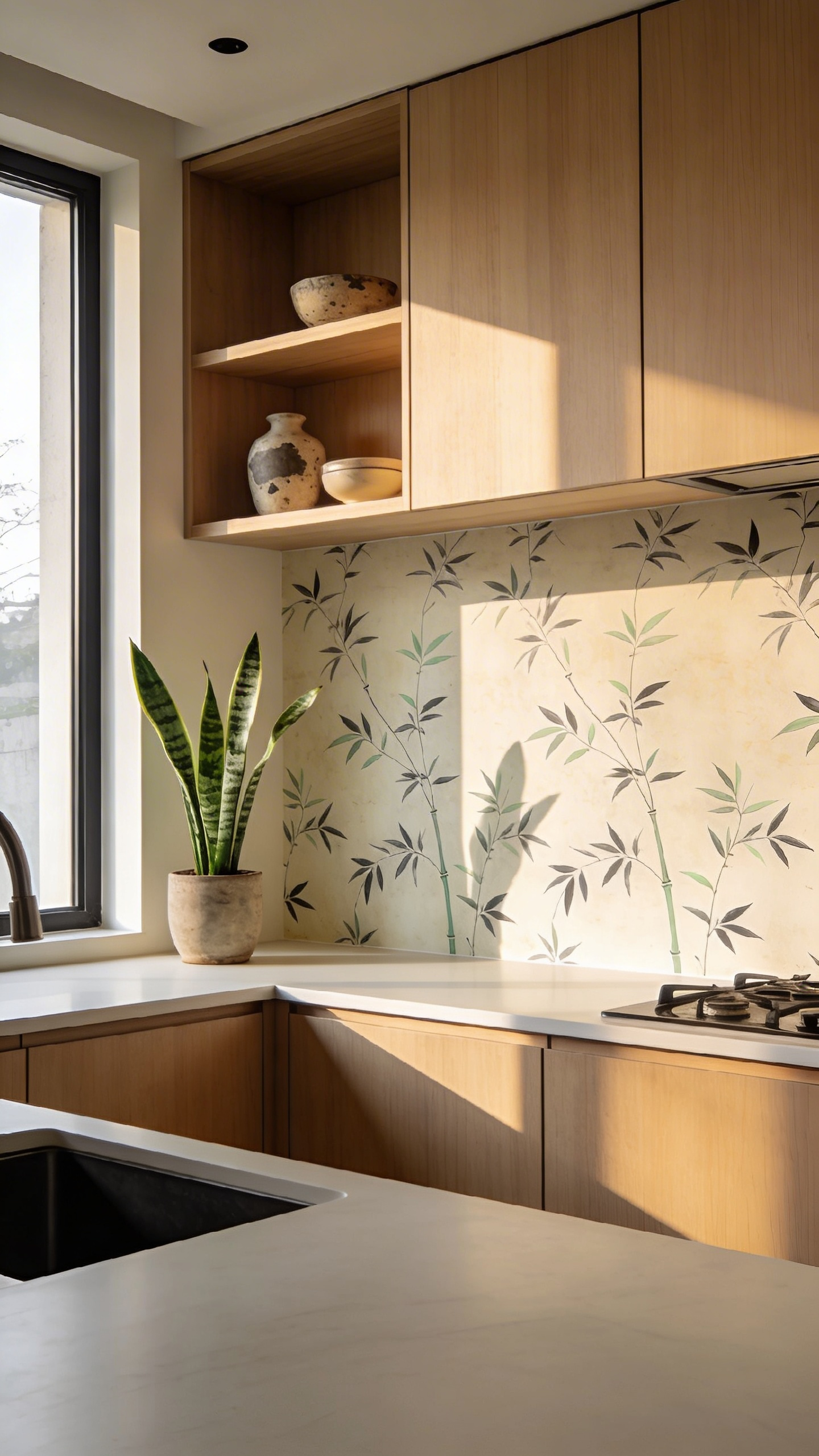
To achieve this look, the strategic use of negative space is paramount. Specifically, effective wallpapers utilize simple line art or subtle watercolor washes rather than crowded prints. You might see a delicate fern outline floating against a muted, achromatic background. In turn, this allows the pattern to recede visually rather than dominate the room. It complements, rather than competes with, the clean lines of modern cabinetry.
Furthermore, these designs function as a “visual sanctuary” through the power of fractal geometry. Research suggests that viewing these organic, self-similar patterns naturally lowers cortisol levels. Thus, the wallpaper helps regulate the emotional tone of the kitchen. Additionally, visual textures like faux linen or soft clay tones add perceived warmth. They effectively soften the harshness of stainless steel and quartz surfaces. Ultimately, this approach integrates the restorative spirit of nature without sacrificing modern cleanliness.
Conclusion: The Technical Selection Framework—Understanding ‘Scrubbable’ vs. ‘Washable’ ratings and adhesive chemistry.
Ultimately, successful kitchen design is where visual beauty meets chemical resilience. By understanding the distinction between “washable” and “scrubbable,” you transform a fragile decorative choice into a robust investment. In reality, the distinction is structural. Therefore, relying on the solid PVC barrier of scrubbable vinyls is non-negotiable for high-stress zones. This technical knowledge ensures the architectural integrity of your space.
Consequently, this framework secures the long-term vitality of your home. You can confidently embrace bold patterns, knowing the synthetic adhesive won’t fail against moisture. In fact, true luxury is a space that withstands real life without compromising on style. To begin, audit your current sample collection specifically for the “scrubbable” rating. Explore these innovative kitchen wallpaper ideas with confidence, knowing that modern technology delivers true luxury that withstands the demands of daily life.
Frequently Asked Questions
Can I really use wallpaper behind my cooktop or stove?
While modern, high-performance vinyl wallpapers are durable and moisture-resistant, the area directly behind a cooktop (the Backsplash Bridge) is subject to intense, concentrated radiant heat. Standard vinyl can warp or degrade above 140°F. Experts recommend maintaining a 6-inch clearance from the burner to any vinyl product, or using traditional, non-combustible materials like ceramic tile or glass for the immediate backsplash zone.
What is the best type of wallpaper material for a high-humidity kitchen?
The best material is typically Commercial Grade Type II vinyl, specifically those labeled as “scrubbable.” Unlike traditional paper or standard washable vinyl, scrubbable products feature a thick, solid Polyvinyl Chloride (PVC) coating that is highly resistant to grease, moisture penetration, abrasion, and repeated cleaning. Non-woven backings are also crucial as they prevent the material from swelling and lifting due due to steam.
How does dark wallpaper make a small kitchen look bigger?
This technique relies on “Depth through Darkness.” Deep hues like charcoal or navy absorb light, causing the wall surface to visually recede into negative space. Instead of reflecting light back and defining a hard boundary, the dark color makes the wall seem to dematerialize. When combined with light-colored cabinetry and strategic task lighting, this effect creates an illusion of surprising depth and sophisticated drama.