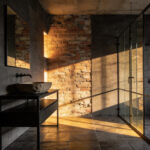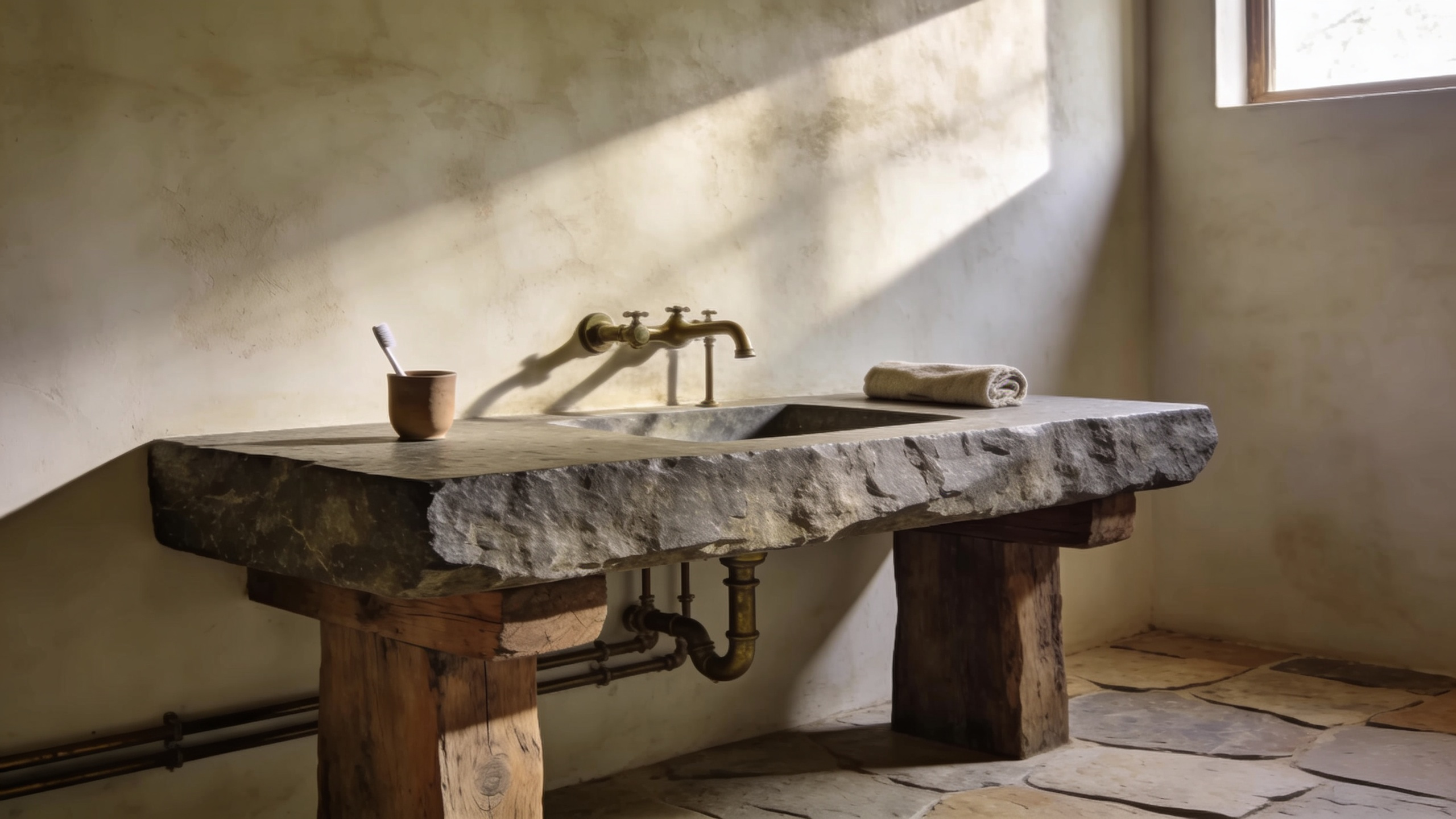
Many view the bathroom simply as a functional necessity. However, sustainable design principles can transform this space into a profound sensory retreat. For discerning homeowners, mastering rustic bathroom designs requires moving beyond superficial trends. Indeed, you must embrace material honesty.
Specifically, true rustic design relies on more than just visual aesthetics. Instead, it invites a deeper immersion through the scent of cedar and the touch of stone. Consequently, these elements turn a standard room into a grounding sanctuary. While we explore major renovations, there are also easy rustic bathroom upgrades that can immediately transform your space.
The scent of cedar serves as a powerful olfactory anchor. Historically, this rich aroma has symbolized longevity across ancient civilizations. Thus, it brings a sense of permanence to the modern home. In fact, the resinous fragrance mimics “forest bathing,” actively promoting mental well-being.
In contrast, stone offers a necessary tactile counterpoint. Its cool, unfinished surface connects the user to the earth’s history. Therefore, the temperature difference between warm wood and cool slate deeply engages the sense of touch.
Ideally, pairing these materials blurs the line between a cozy cabin and a natural clearing. This guide reveals the secrets behind this multisensory layering. We will explore how to balance the warmth of timber with the solidity of rock. Next, we discuss selecting sustainable materials that do not compromise on comfort. Ultimately, you will learn to curate a space that feels both timeless and restorative.
Philosophical Anchor: Moving Beyond ‘Farmhouse’ to ‘Organic Sanctuary’
The “Modern Farmhouse” aesthetic has dominated interior design for years. However, this style often relies on theatrical replication of the past. Consequently, a philosophical shift is occurring toward the deeper concept of an “Organic Sanctuary.”
This approach rejects mass-produced, faux-distressed finishes found in big-box stores. Instead, it prioritizes “material honesty” and the principles of Ancestral Modernity. Specifically, designers are choosing raw, unpolished stone and reclaimed wood that carry genuine history.
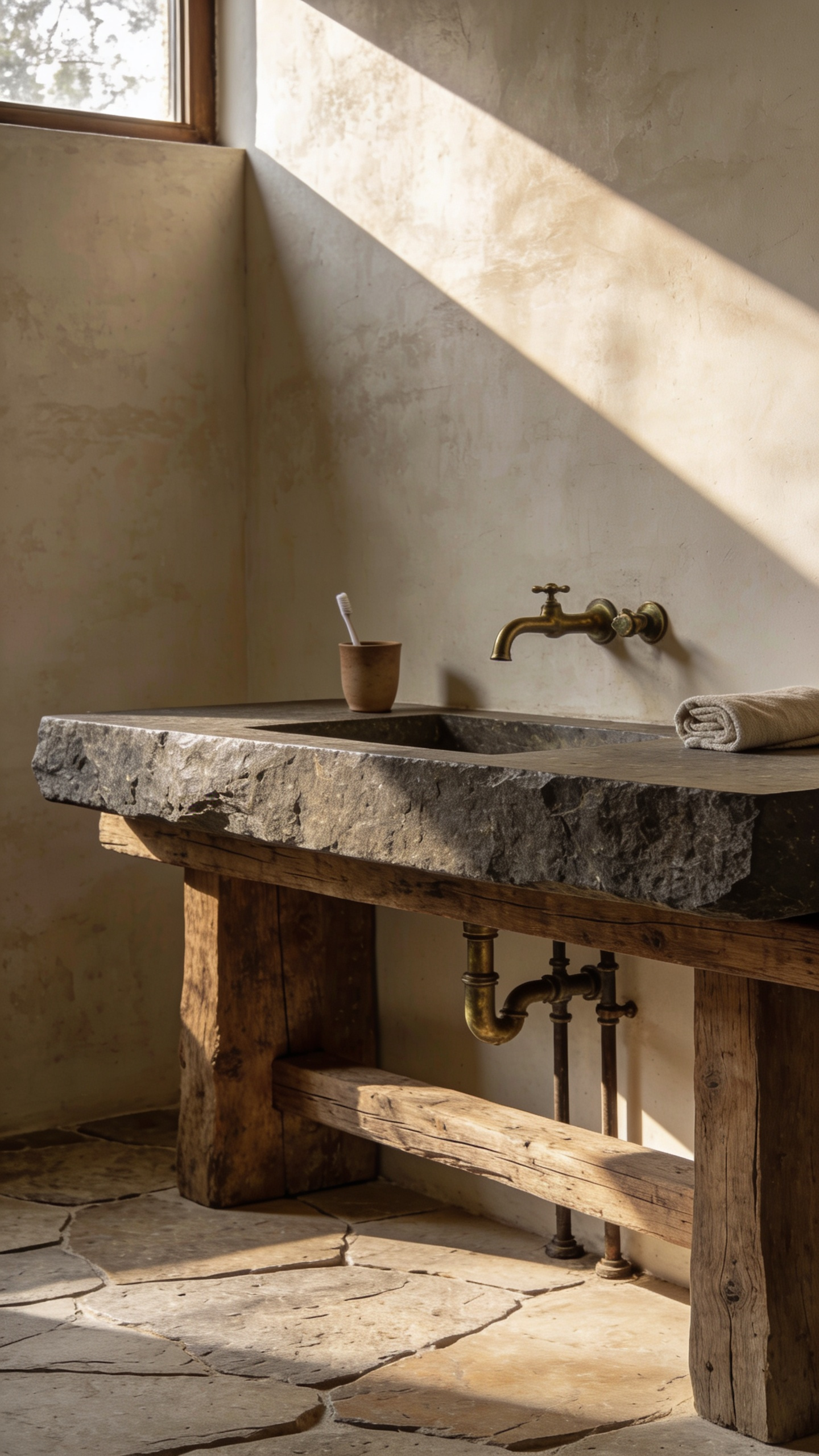
This movement anchors itself in biophilic design. In fact, incorporating natural elements like limewashed walls or travertine actively helps reduce stress. Therefore, the bathroom transforms from a utilitarian space into a restorative, private spa.
Indeed, the design embraces wabi-sabi, celebrating the beauty found in natural imperfections. Additionally, lighting acts as an architectural substance. It uses shadows to highlight these tactile surfaces. Ultimately, the goal is not just a look, but a deeply sensory, authentic experience.
1. The Ethics of Timber: Sourcing Authentic Reclaimed Wood
True sustainability in design goes beyond simple recycling. Specifically, sourcing authentic reclaimed wood preserves superior, old-growth timber. Originally harvested centuries ago, these trees grew slowly in natural forests.
Consequently, the wood features exceptionally tight growth rings compared to modern lumber. This density provides natural resistance to warping. Thus, it is vital for humid bathroom environments. Therefore, choosing this material honors a finite resource rather than encouraging new deforestation.
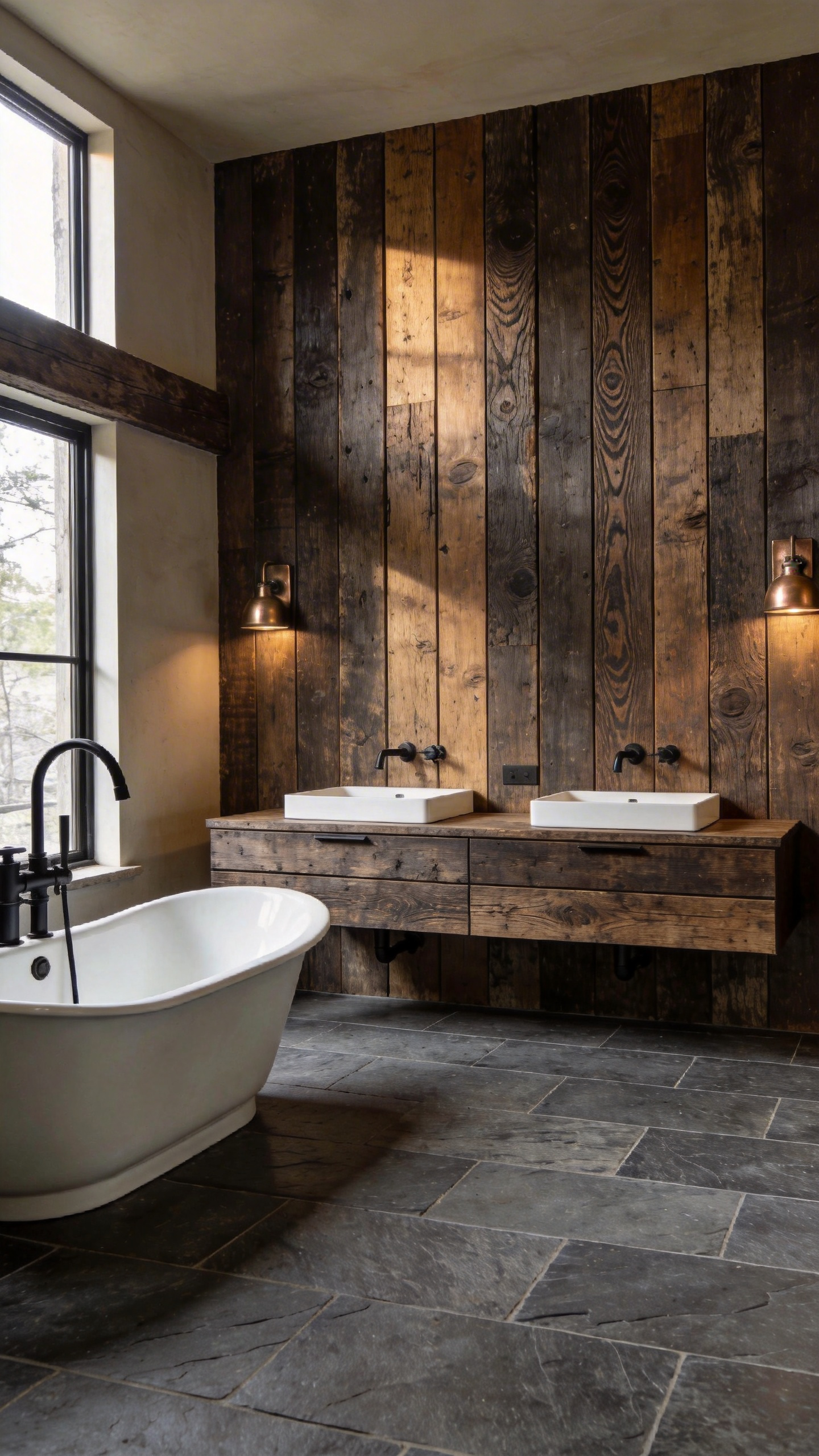
However, the current market is flooded with “distressed” counterfeits. Unfortunately, purchasing these imitations supports greenwashing rather than architectural history. In fact, manufacturers often artificially scar cheap, new lumber with chains or wire brushes.
To ensure authenticity, you must examine the surface details closely. For instance, genuine barn wood displays a deep patina from decades of weather, not chemical stains. Additionally, look for random nail holes surrounded by characteristic rust stains. Such organic imperfections are nearly impossible to replicate in a factory.
Alternatively, consider the unique narrative of sunken timber. Recovered from riverbeds, these logs were preserved in low-oxygen environments for generations. The water pressure naturally forces out sap. This results in exceptionally stable wood. Ultimately, this choice creates a distinct aesthetic that is both ethically pristine and historically rich.
2. Living Stone: Why Travertine and Slate Outperform Ceramics
Rustic design demands authenticity that manufactured products cannot fully emulate. Specifically, natural stones like travertine and slate offer a distinct “living finish.” In contrast, ceramic and porcelain tiles provide merely a static surface.
Over time, porous travertine develops a graceful, rustic patina. Consequently, minor wear enhances its ancient, enduring aesthetic rather than diminishing it. However, a chipped ceramic tile simply reveals its artificial subsurface. Therefore, real stone embraces age, while ceramics fight against the aging process.
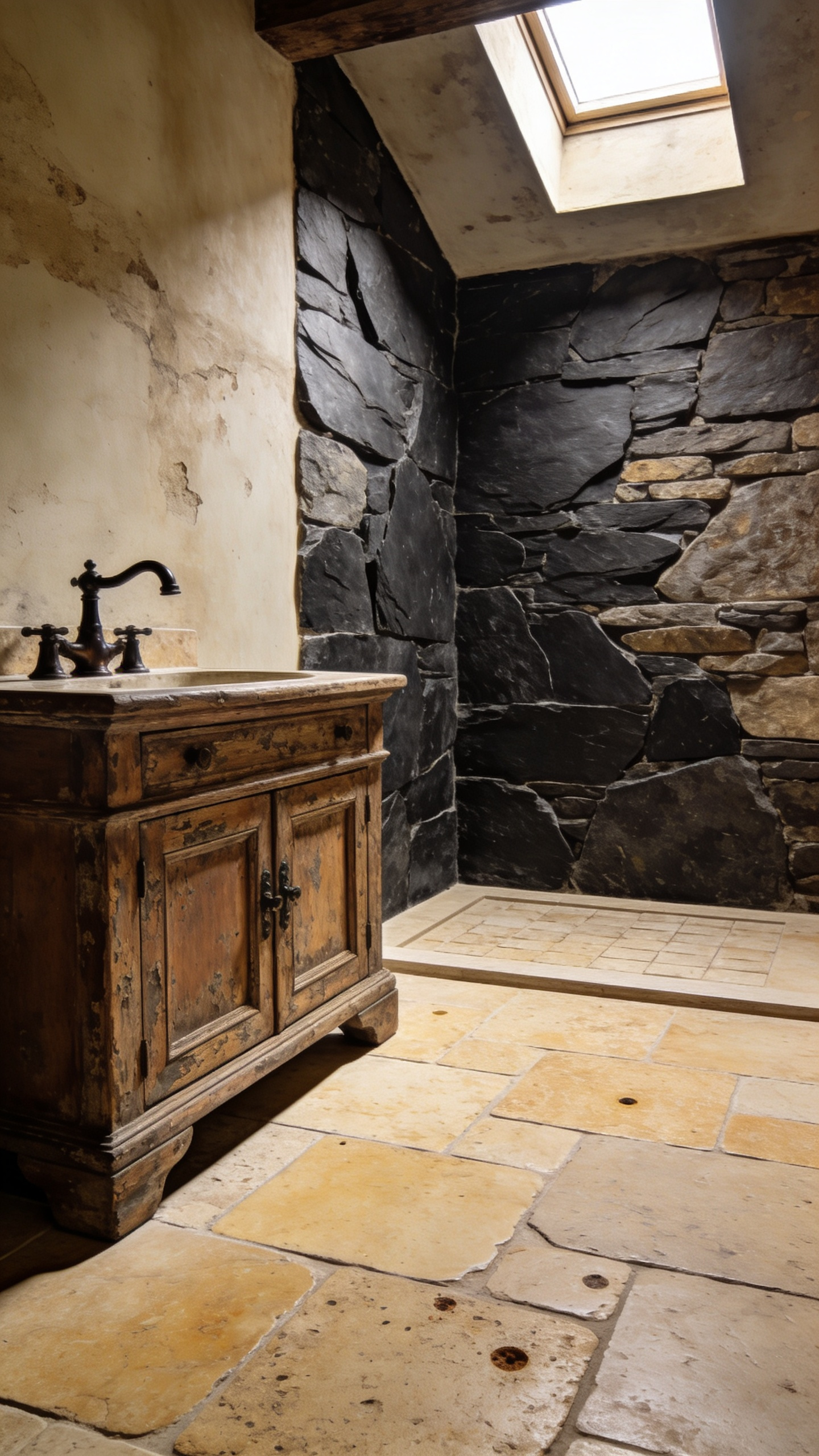
Beyond visuals, the tactile experience is notably superior. For instance, slate’s natural cleft surface ensures authentic slip-resistance. Similarly, tumbled travertine provides a rugged, organic grip essential for wet environments. Conversely, ceramics generally rely on printed glazes for texture.
Furthermore, thermal performance sets natural stone apart. Because they are dense, these stones conduct radiant heat efficiently. As a result, they offer deep, lasting warmth underfoot that mimics a cozy spa. Ceramics, unfortunately, often remain naturally cool to the touch.
Ultimately, the difference lies in geological history. Travertine serves as a physical record of mineral springs. Thus, no two tiles are ever identical. This variation creates a depth that HD printing cannot replicate.
3. The Patina Promise: Embracing Unlacquered Brass and Copper
Unlacquered brass and copper offer a distinct departure from the static perfection of modern plated fixtures. Specifically, these “living finishes” reject artificial coatings in favor of authentic transformation. Consequently, the metal reacts dynamically with the environment via oxidation.
Over time, bright gold brass matures into rich, complex tones of amber, honey, and bronze. Similarly, unlacquered copper develops earthy, brownish-red hues or even striking verdigris. This visual evolution creates a unique narrative within the home.
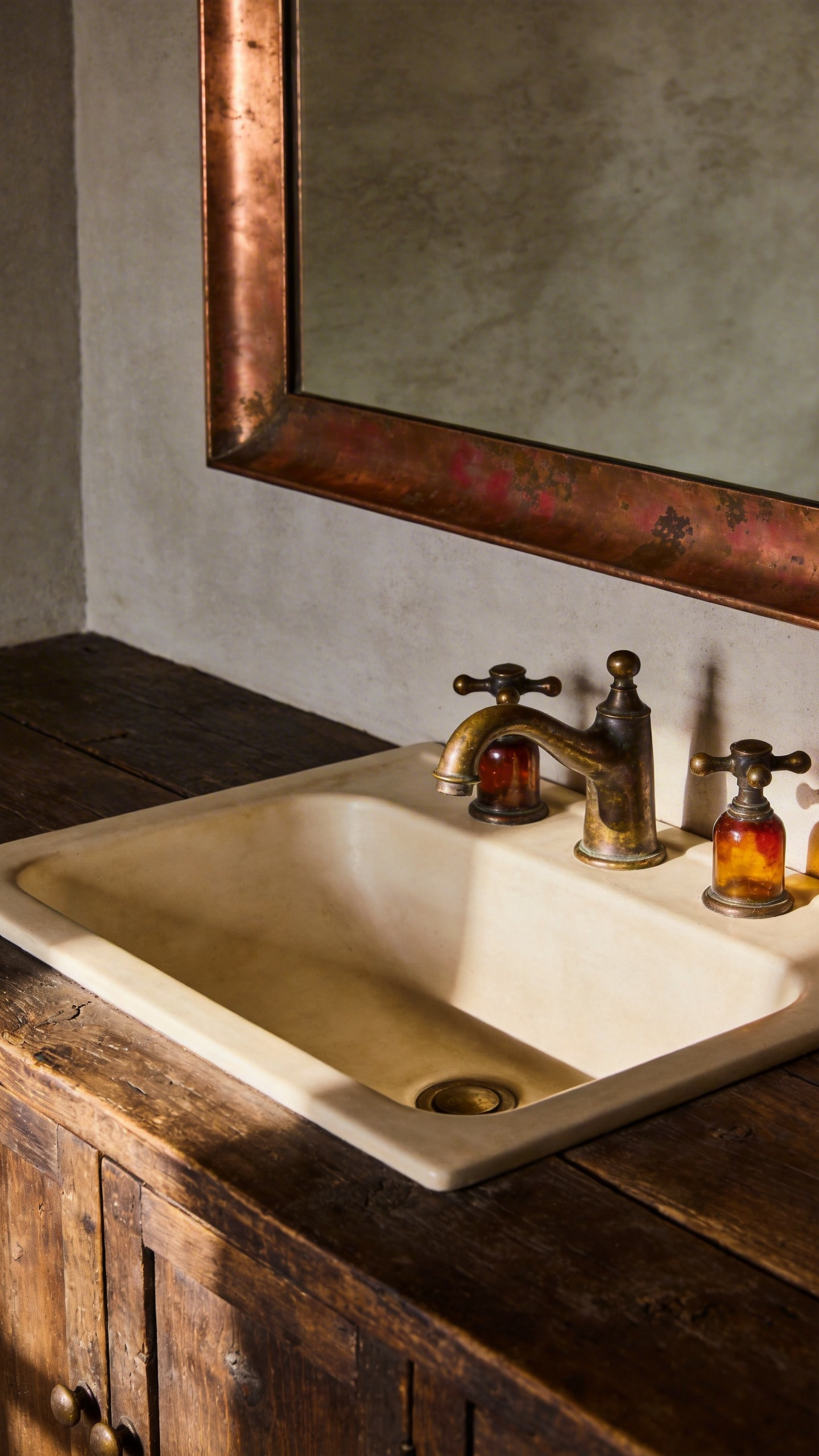
The bathroom environment actually acts as a catalyst for this aging process. In fact, high humidity and frequent water exposure accelerate the development of this protective patina. Furthermore, daily human interaction plays a crucial role in the final aesthetic.
Oils from hands naturally darken frequently touched areas like faucet handles. This creates a distinct, “lived-in” texture. Conversely, acidic products like toothpaste may leave bright, uneven spots. Rather than defects, these marks are embraced as signatures of a functional, rustic space.
Beyond aesthetics, choosing solid, unlacquered metal is a commitment to sustainability. Unlike plated finishes that eventually chip, solid brass maintains its structural integrity indefinitely. Therefore, these fixtures can last a lifetime. Finally, the finish is fully reversible. If a homeowner desires a fresh start, a simple polish resets the aging process.
4. Tadelakt and Limewash: Breathing Walls Over Glossy Paint
Standard high-gloss paints often act as a rigid barrier. Specifically, they form a non-porous, plastic-like film over your walls. While this seems durable, it frequently traps hidden moisture underneath. Consequently, this trapped dampness inevitably leads to blistering and peeling. In contrast, traditional lime-based finishes allow your bathroom to actually breathe.
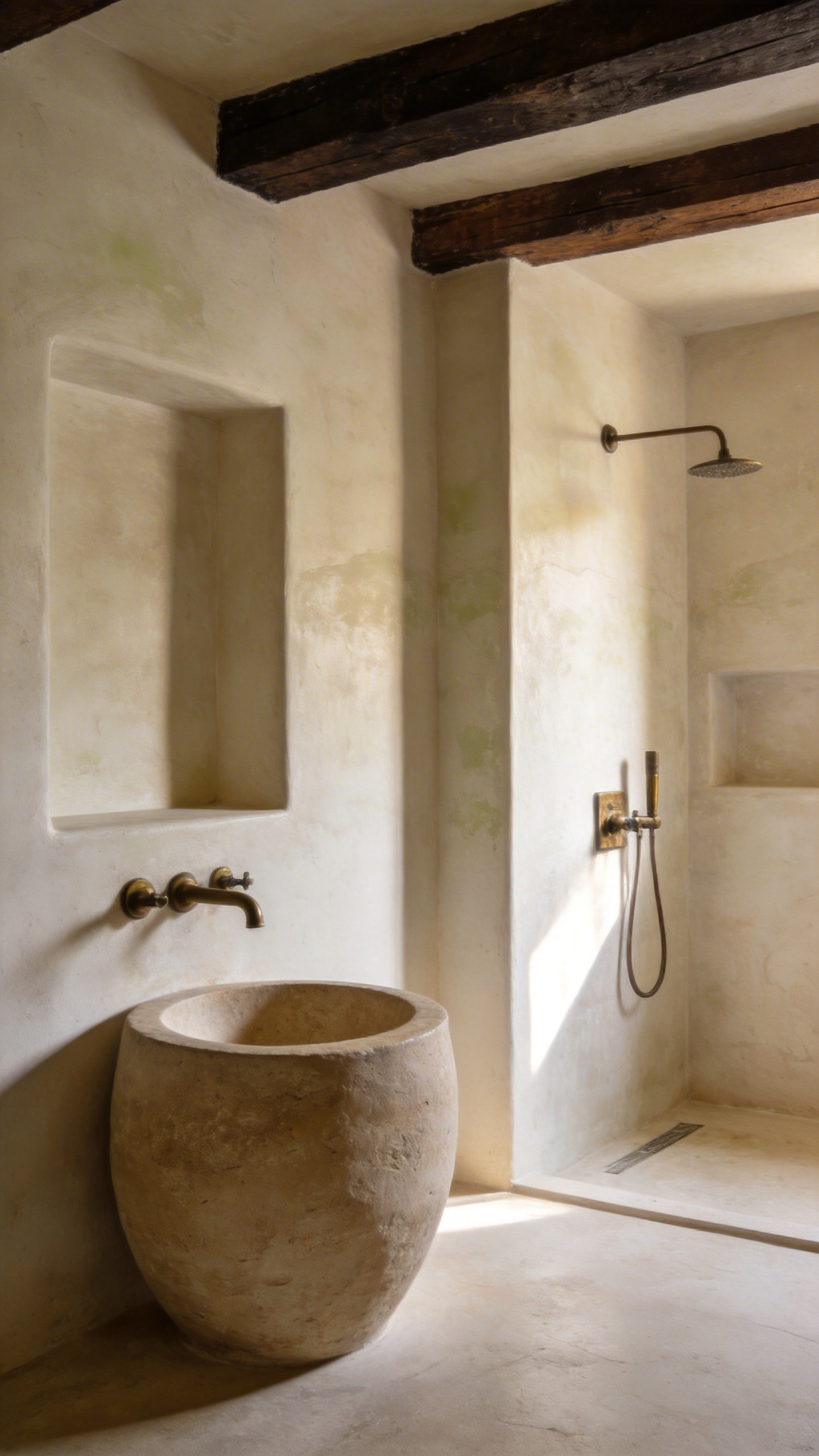
For direct water contact, Tadelakt is a superior choice. Originating in Morocco, this plaster creates a seamless, waterproof shell. Chemically, the lime reacts with olive oil soap during application. As a result, it forms a hard, hydrophobic surface. It feels incredibly smooth, often likened to river pebbles.
Conversely, Limewash is ideal for general walls and ceilings. It is not waterproof, but it is highly moisture-regulating. In fact, it absorbs humidity and releases it later. This “hygroscopic” nature effectively prevents condensation buildup. Additionally, its naturally high pH deters mold without synthetic chemicals.
Aesthetically, these materials offer unmatched organic depth. Limewash provides a soft, cloud-like patina that changes with the light. Similarly, Tadelakt develops subtle microfissures over time. Therefore, choosing lime over latex is both a stylistic and structural upgrade.
5. Raw Concrete: The Modern Counterpoint to Organic Warmth
Introducing raw concrete transforms a standard rustic bathroom into a sophisticated space. Specifically, this material blends “Old World” comfort with “New World” functionality. Consequently, the design evolves into a layered Rustic-Industrial or Organic Modern aesthetic. By celebrating unadorned surfaces, concrete acts as a rigid counterpoint to soft, reclaimed wood.
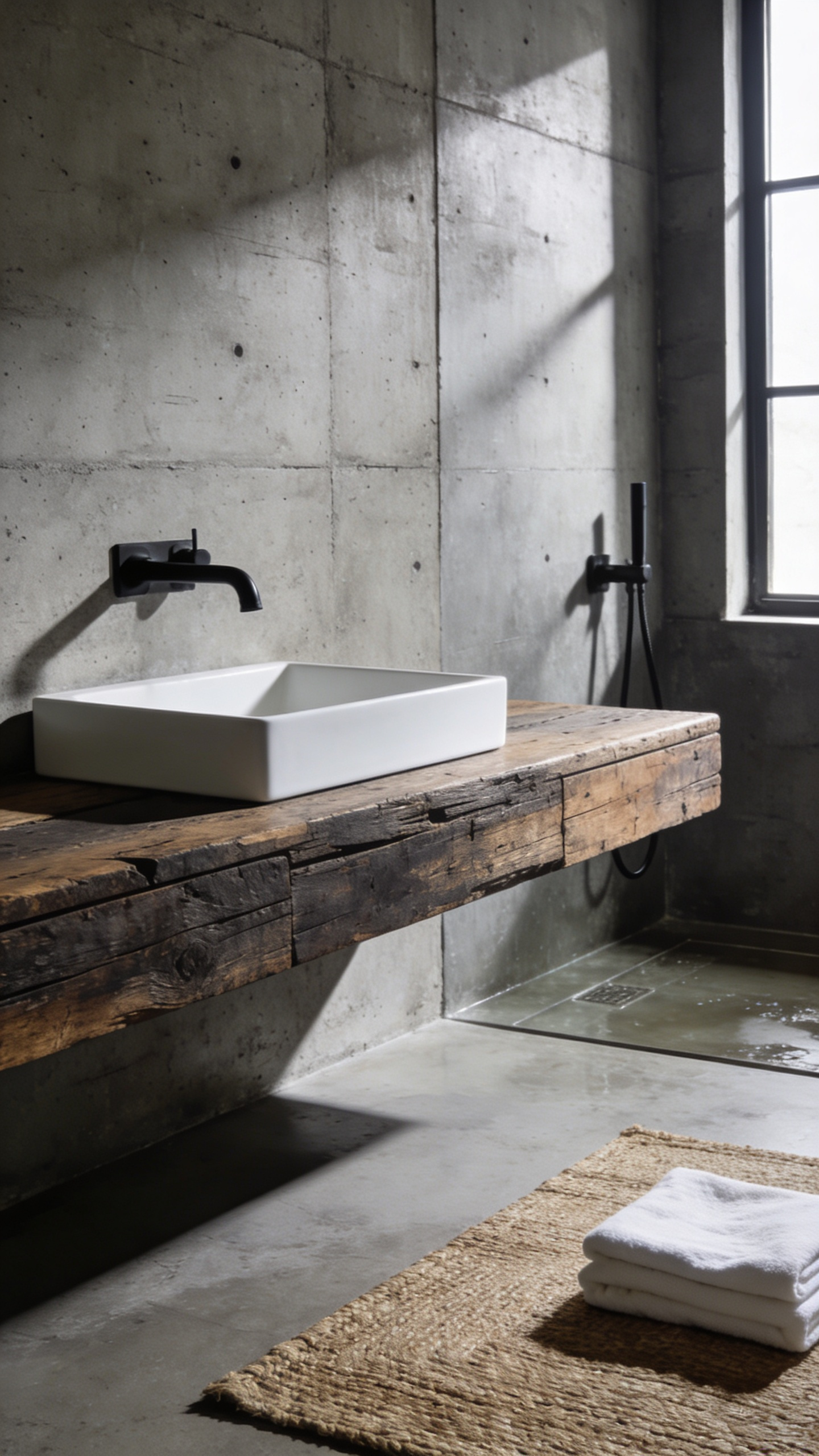
Visually, the material offers a seamless, monolithic gray backdrop. Thus, the organic warmth of wood or textiles becomes the true focal point. Furthermore, there is a compelling sensory dialectic at play here. For instance, the cool smoothness of a concrete sink contrasts sharply with grainy timber.
However, concrete is not just visually striking; it is also highly functional. Notably, its high thermal mass pairs perfectly with eco-friendly radiant heating systems. Therefore, a heated floor provides physical warmth to counter the material’s naturally cool appearance.
Ultimately, raw concrete serves to refine rougher rustic elements. By pairing a sleek concrete wall with a live-edge vanity, the wood feels luxurious. In addition, matte black fixtures often bridge these industrial and organic styles. As a result, the room feels grounded and timeless.
6. Biophilic Integration: Moss Walls and Ferns in High-Humidity Zones
Integrating moss walls and high-humidity-tolerant ferns creates a powerful biophilic experience. Specifically, this pairing mimics the tranquility of a secluded forest-floor sanctuary. In rustic designs, hard materials like slate and reclaimed wood often dominate. Consequently, the velvet texture of moss provides a necessary visual softness. This tactile contrast balances the room’s energy effectively.
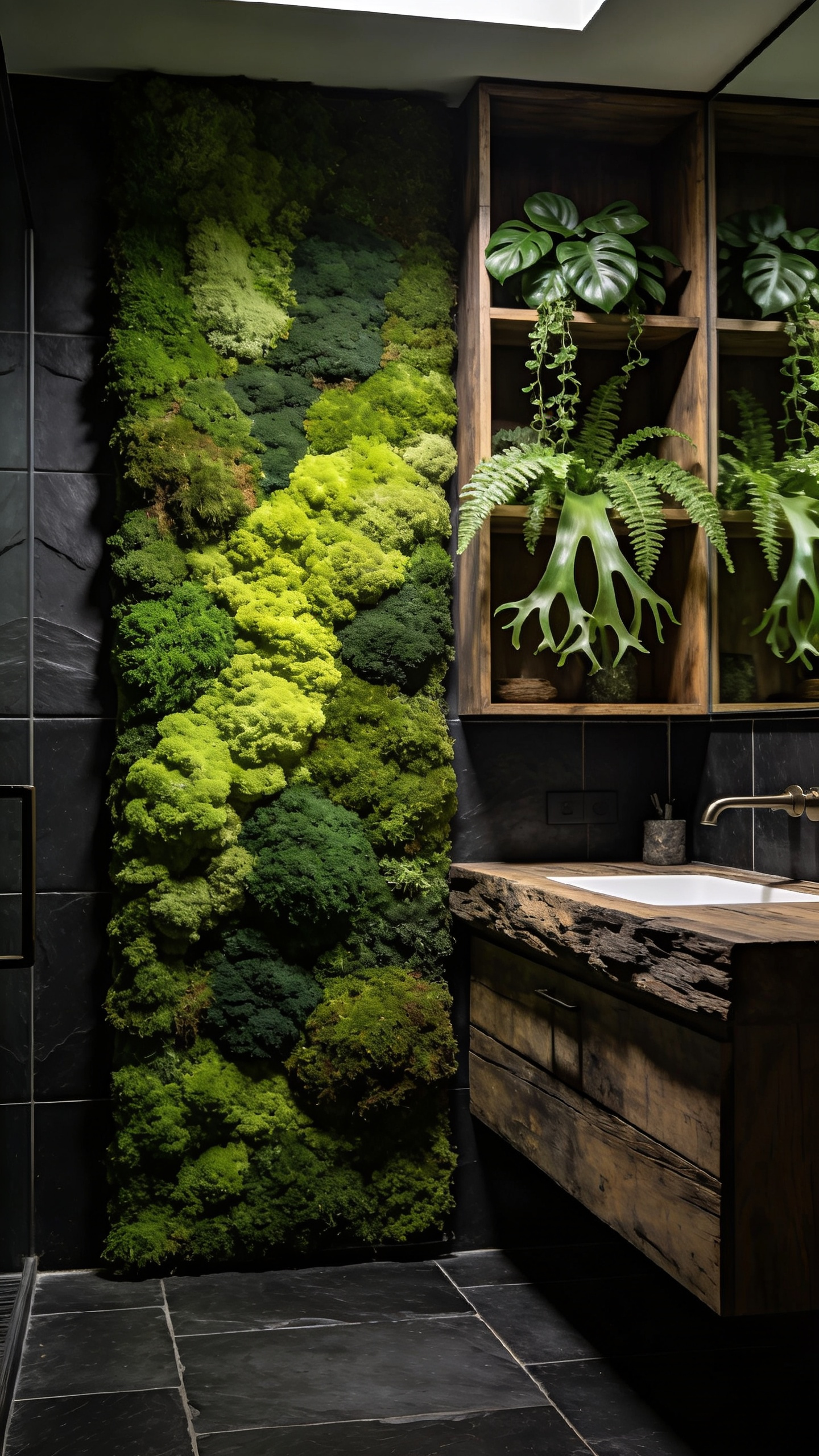
For vertical surfaces, preserved moss serves as the authoritative design solution. Technically, this greenery is treated with natural glycerin to halt maintenance needs. Therefore, it requires no soil, direct light, or watering schedules. Surprisingly, the room’s high humidity actively benefits the installation. In fact, the steam keeps the preserved moss soft, fluffy, and vibrant.
Conversely, live ferns introduce a dynamic, “mist-loving” element to the space. Designers frequently specify species like Boston or Maidenhair ferns for bathrooms. Naturally, these plants thrive in warm, steamy conditions that mirror their native environments.
Placing them near the shower allows cascading fronds to absorb moisture directly. However, live plants do require indirect light to survive. Ultimately, blending these elements creates a breathable, restorative oasis of calm.
7. River Rock Flooring: Grounding the Body Through Texture
River rock flooring offers more than just a rustic aesthetic. Fundamentally, it acts as a powerful sensory anchor within the home. Specifically, the irregularity of natural stones provides a gentle massage. Consequently, this tactile variation stimulates the soles of the feet.
This sensation effectively mimics walking on a natural streambed. Therefore, it creates a calming, “spa-like” experience directly connected to nature. For a smoother feel, sliced stones offer consistency. However, rounded stones deliver a more authentic, reflexology-inspired texture.
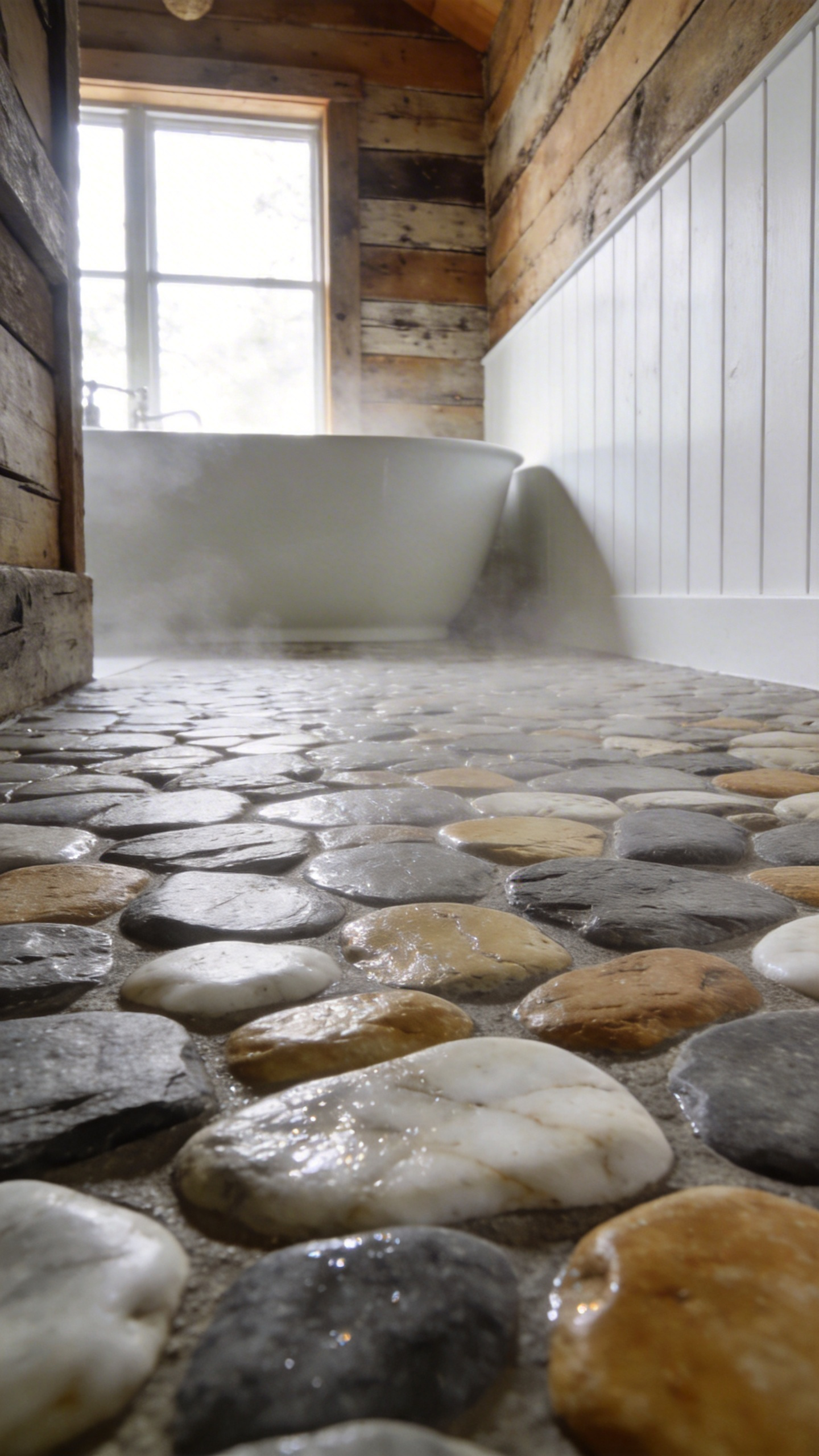
Beyond the physical, these stones introduce essential elemental balance. In Feng Shui, river rocks represent the grounding Earth element. Uniquely, they stabilize the energy in a water-heavy bathroom environment. Thus, they act to prevent auspicious energy from washing down the drain.
Historically, this design choice draws on ancient architectural traditions. In fact, Greek artisans perfected durable pebble mosaics centuries ago. Therefore, installing river rock connects your modern home to timeless wisdom.
Practically, proper installation is vital for maintaining this organic look. Because natural stone is porous, it requires sealing before grouting. Consequently, this critical step prevents staining from dyes. Furthermore, it preserves the rich, “wet-look” color that enhances the stone’s depth.
8. The Vessel Sink: Hand-Carved Stone as Functional Art
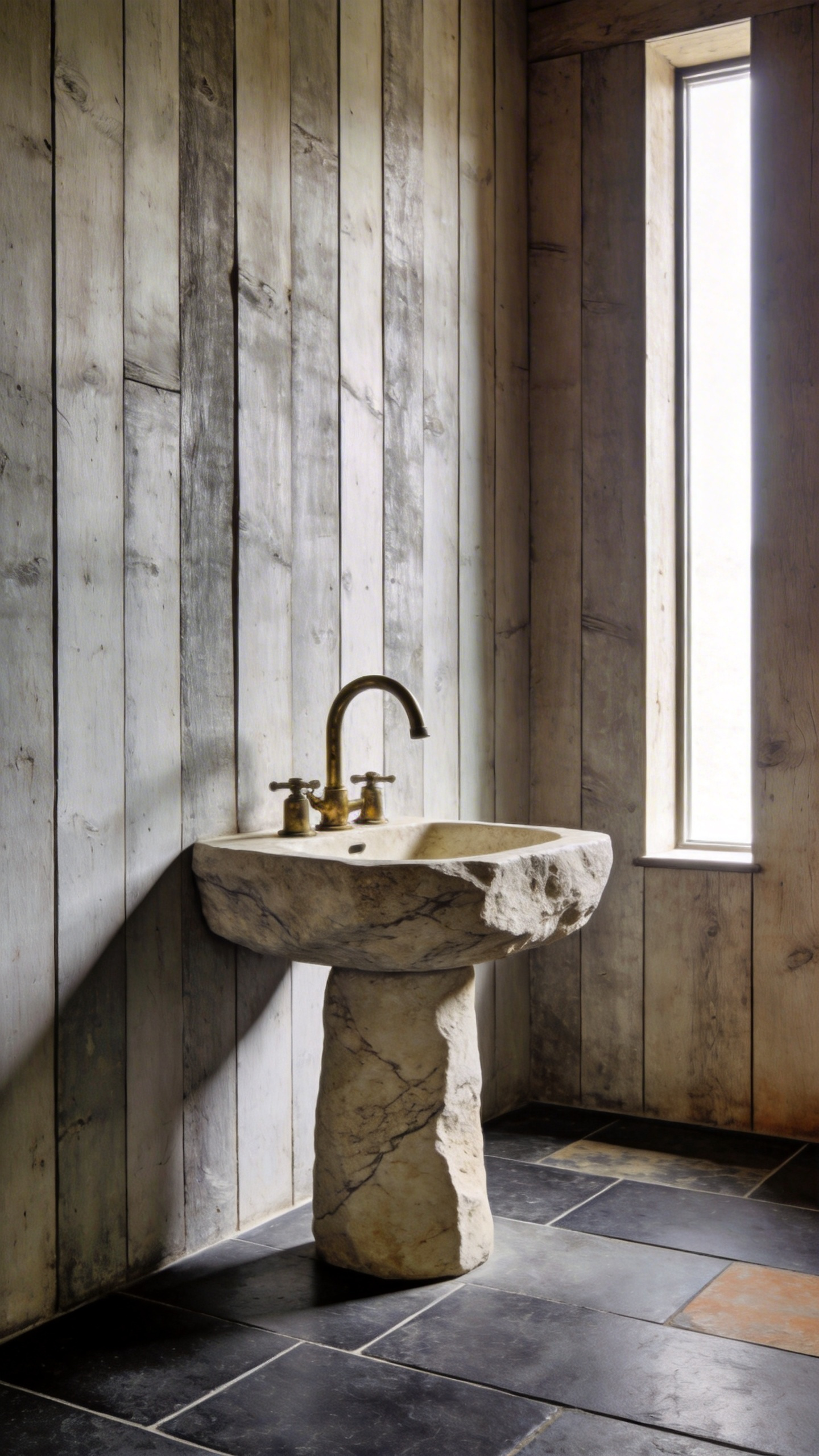
Unlike standard undermount basins, the vessel sink sits proudly atop the counter. Consequently, it transforms from a utility item into a sculptural focal point. Specifically, materials like petrified wood ground the rustic bathroom in geological time.
These sinks are not merely stone; rather, they are fossilized artifacts. Over millennia, minerals replaced organic wood cells, preserving the original grain and growth rings. Alternatively, Cantera stone offers a deep connection to architectural history.
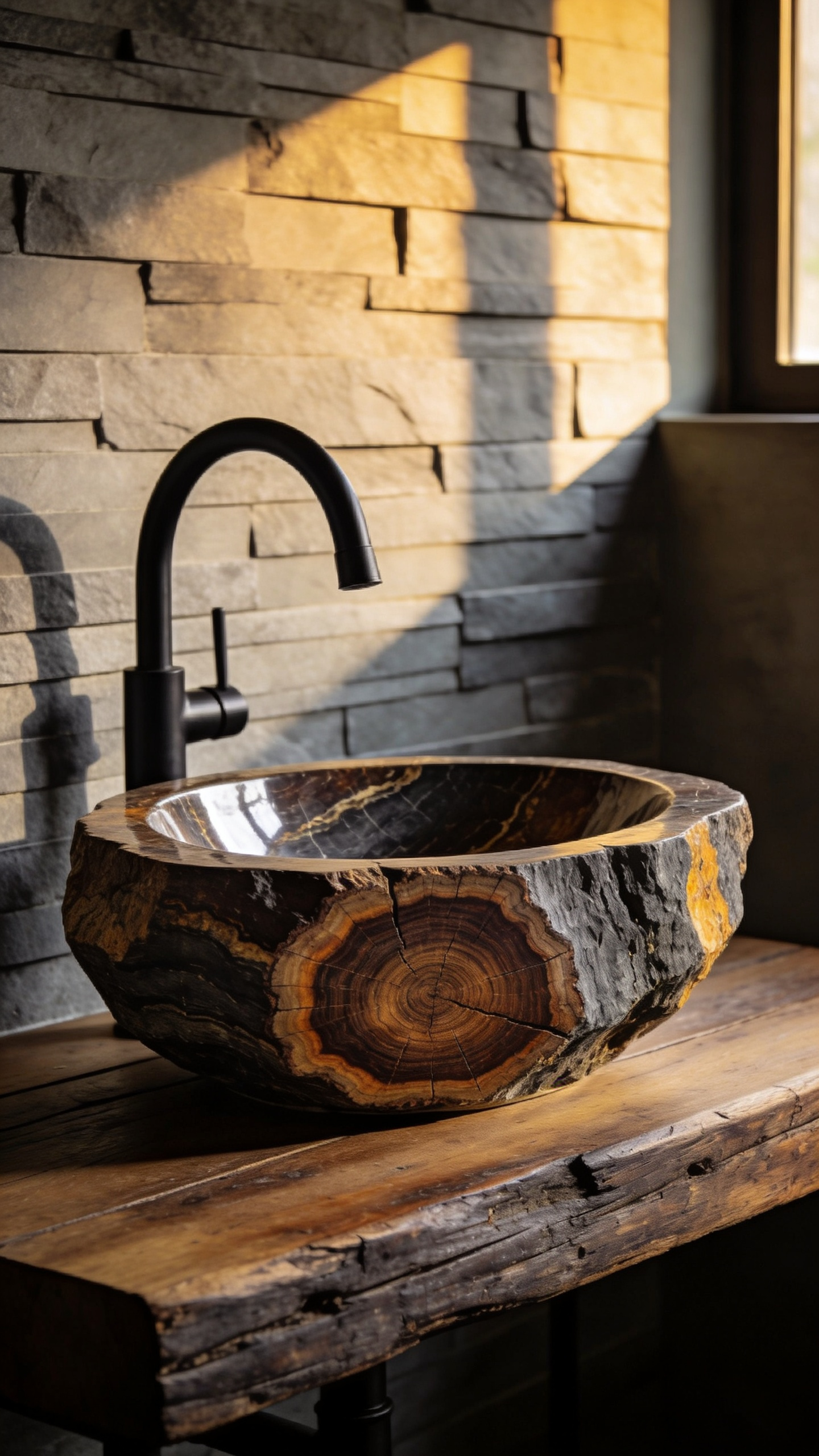
Beyond material choice, the artistry lies in the deliberate contrast of finishes. Artisans frequently pair a smooth, polished interior with a raw, chipped rock face exterior. This dichotomy serves a functional purpose while celebrating the stone’s wild origins.
The polished bowl ensures distinct sanitation and a silky hand-feel. Conversely, the rough exterior preserves the memory of the quarry block. Furthermore, the monolithic walls provide a substantial, architectural weight. This heaviness visually anchors the vanity, evoking the permanent stability of nature.
Ultimately, these sinks invite a unique sensory engagement. Running a finger along the surface often reveals minute traces of hand-tooling. To maintain this authentic connection, experts advise against high-gloss epoxies. Instead, they prefer pH-neutral sealants.
9. The Statement Tub: Soaking in Heat-Retaining Cast Iron or Copper
Sustainable design often prioritizes longevity and efficiency. Specifically, copper and cast iron excel at retaining heat, unlike rapidly cooling modern acrylics. However, they function differently.
Copper acts as a rapid conductor. Consequently, it absorbs heat quickly, warming the surface to eliminate any initial chill. Once heated, the metal transfers that warmth back to the water. In contrast, cast iron functions as a massive heat sink. Because of its density, it requires more energy to heat initially. Yet, once warm, it radiates a steady heat, feeling like a secure hug.
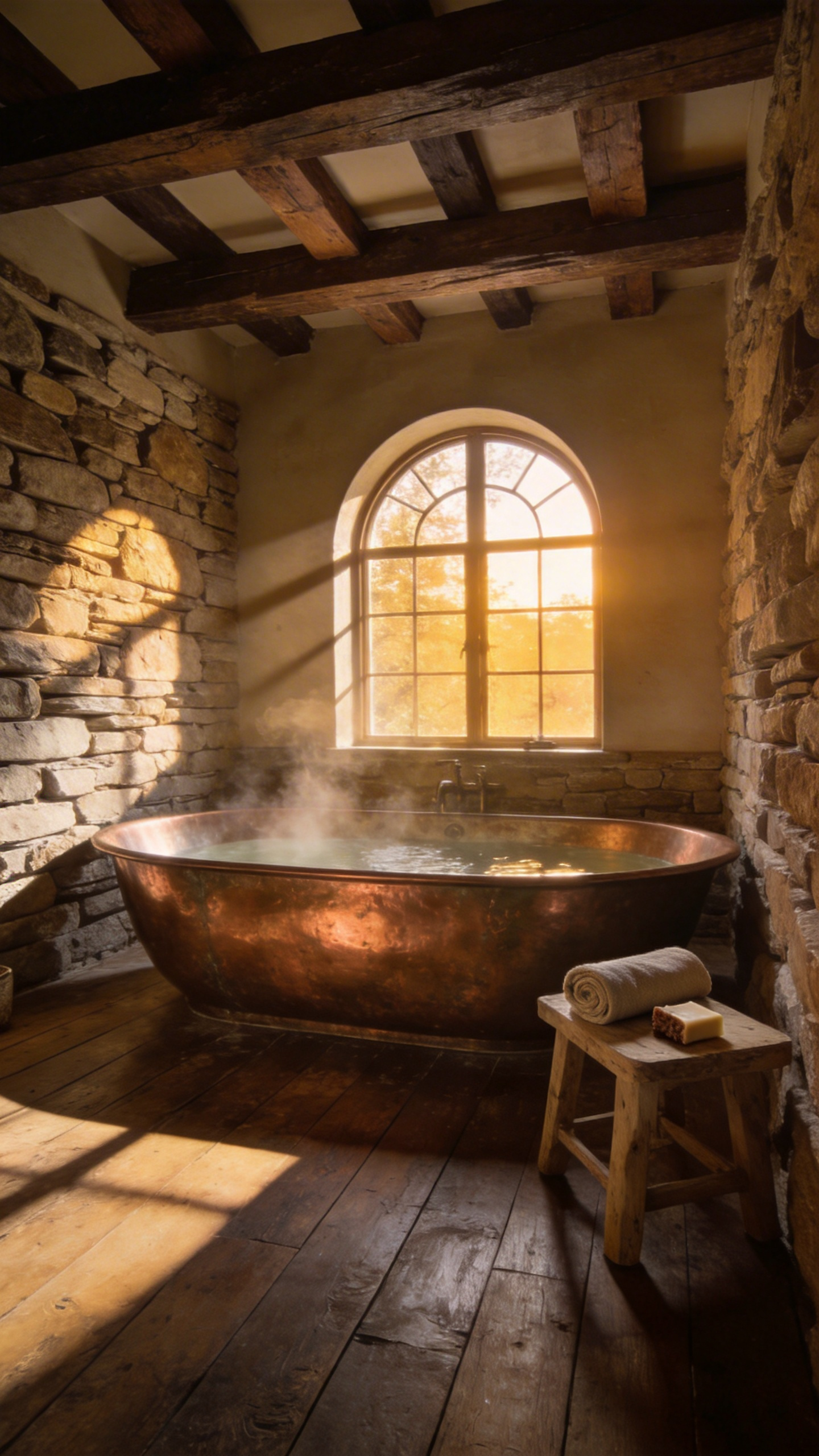
Aesthetically, both materials anchor a rustic space with historical authority. Copper evokes ancient, artisanal luxury. Over time, it develops a rich patina, turning the tub into a living, aged masterpiece.
Conversely, cast iron recalls the Victorian era. Its classic enamel coating offers a clean, durable surface. Thus, it provides a stark, heavy focal point that feels permanent and substantial.
Practically, installation requirements vary significantly. Surprisingly, copper tubs are lightweight, averaging around 45kg. Therefore, they rarely require structural reinforcement, making them ideal for historic renovations. Alternatively, cast iron is incredibly heavy. A filled tub can weigh 250kg, often necessitating expensive floor reinforcement.
10. Lighting Design: Layering Warmth with Artisan Sconces
True rustic lighting moves beyond simple utility to function as textural art. Instead of flat, mass-produced finishes, artisan sconces introduce warmth through inherent material flaws. Specifically, hand-hammered copper or forged wrought iron provides a sensory depth.
These materials develop complex patinas over time, adding to the design narrative. Furthermore, the choice of diffuser is crucial for managing light quality. For instance, amber mica shades or milk glass globes gently soften the output. This reduces harsh shadows, creating a flattering glow ideal for vanity use.
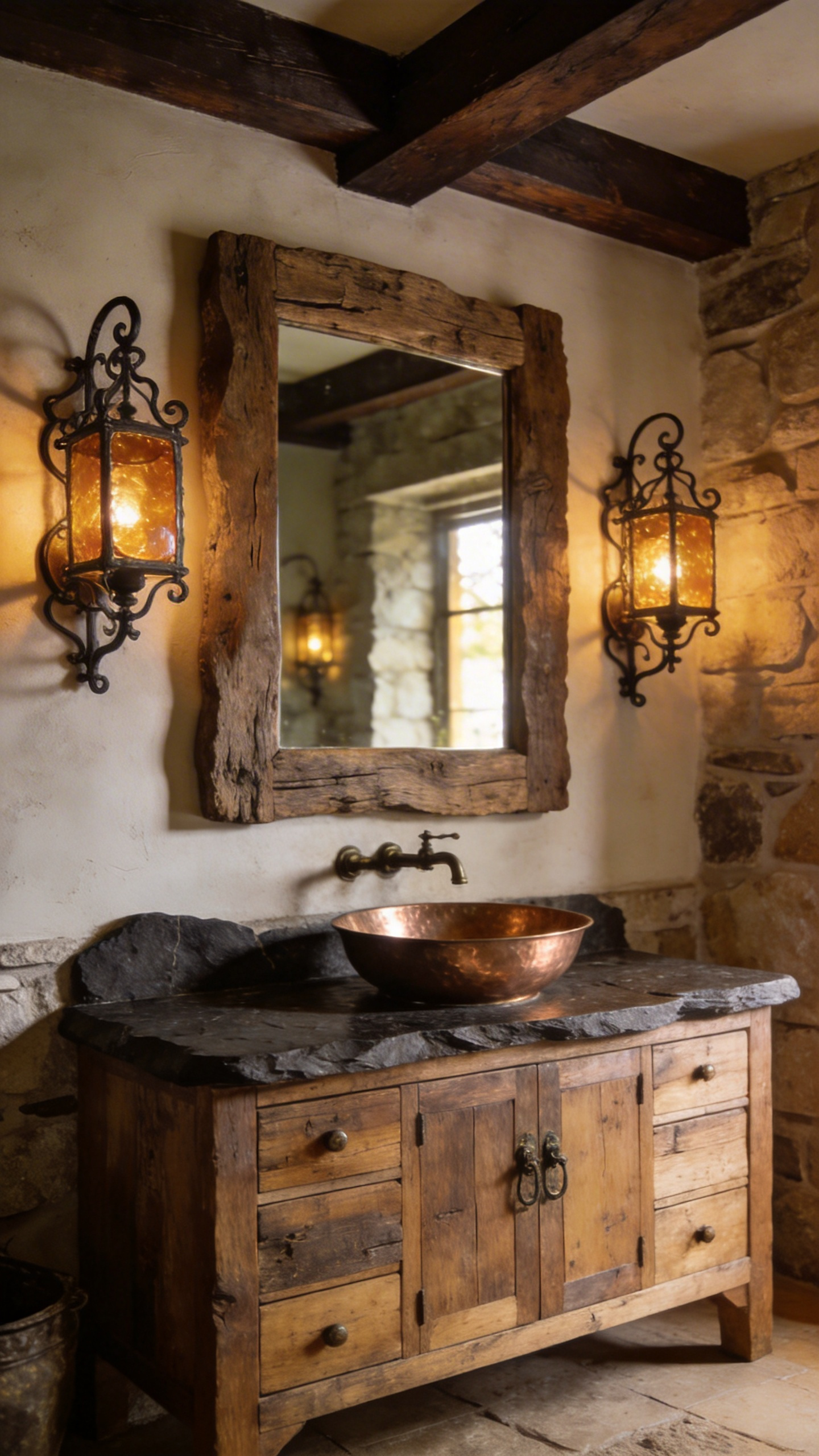
However, the fixture is only half the equation. To achieve genuine warmth, you must technically calibrate the light source itself. Consequently, designers focus on the Correlated Color Temperature (CCT). Ideally, you should aim for a “sweet spot” between 1800K and 3000K.
In fact, a 2700K LED bulb effectively replicates the deep amber quality of traditional incandescent lighting. Therefore, this warm light naturally saturates reds and yellow wood tones. Conversely, cooler light can make these same organic textures appear dull.
Ultimately, this layering technique roots your bathroom in historical authenticity. Early American homes relied on sconces for accent lighting near the hearth. Thus, modern artisan fixtures revive this functional heritage.
11. The Vanity Architecture: Floating Heavy Materials for Visual Balance
The “Rustic Modern” aesthetic relies heavily on dynamic contrast. Specifically, it blends the raw weight of natural materials with the airiness of suspension. Materials like live-edge wood or concrete possess high visual weight.
In fact, their complex textures and densities make them feel incredibly heavy. However, floating these massive elements creates a striking visual tension. Consequently, the negative space beneath the vanity opens up the room. This makes even small bathrooms feel larger and more breathable. Learn more about designing a spa-like bathroom in a small space by leveraging open lines.
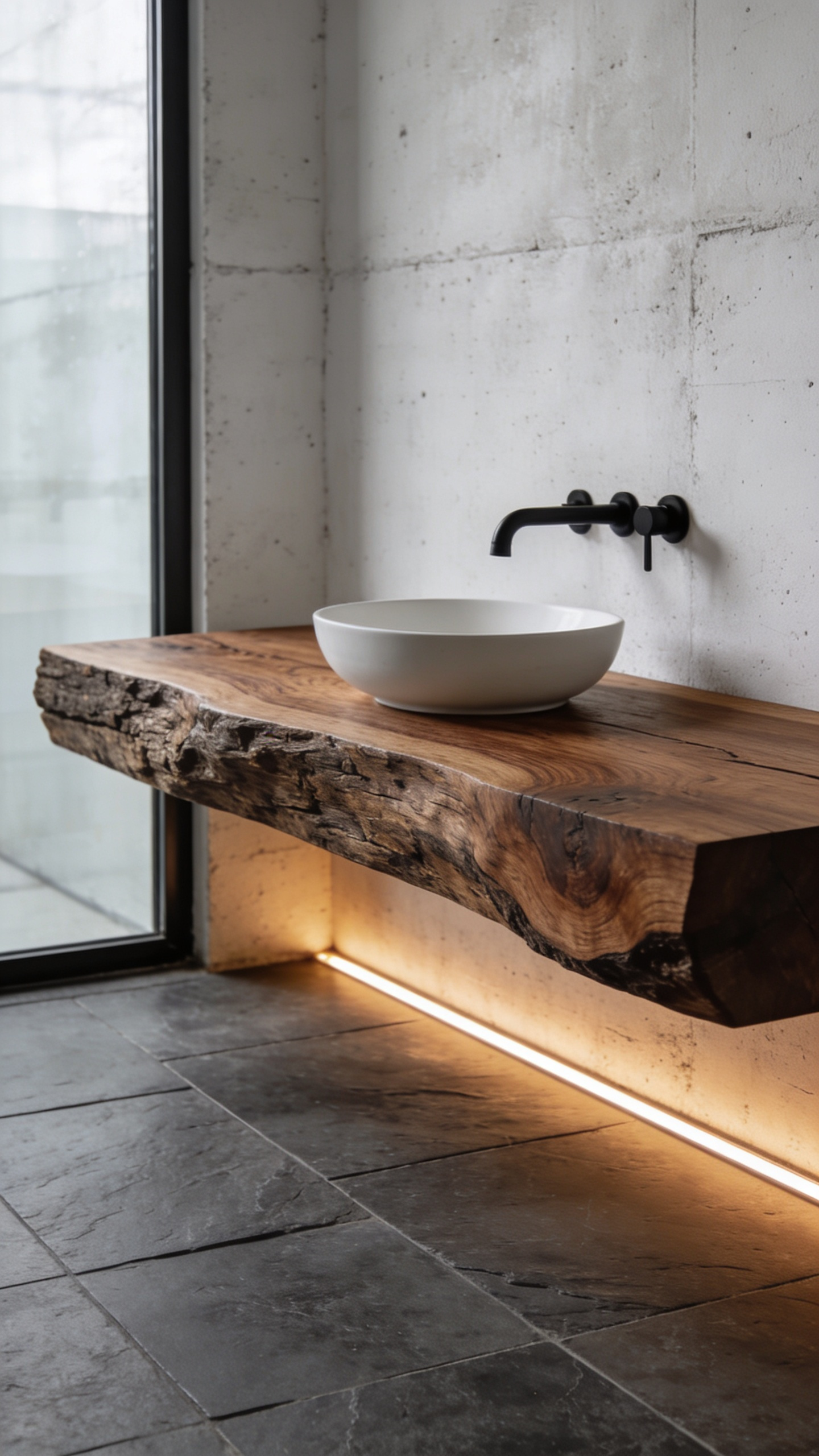
Achieving this illusion requires precise engineering. Naturally, standard drywall installation is insufficient for these loads. Therefore, structural reinforcement is mandatory. Builders utilize high-capacity steel brackets anchored directly into wall studs.
For added security, contractors often install wood blocking between studs. Ultimately, these hidden systems support hundreds of pounds without visible hardware.
Aesthetically, this isolation transforms the vanity into an art piece. It draws the eye to unique details like knots and patina. Thus, the reclaimed wood serves as a grounding emotional anchor. It provides warmth against typically cool bathroom surfaces.
12. Textile Selection: The Role of Organic Waffle Weaves and Linens
In a rustic bathroom, hard surfaces often dominate the visual landscape. Consequently, organic textiles provide a critical soft counterpoint to elements like reclaimed wood and raw stone. Specifically, the honeycomb structure of a waffle weave offers a geometric, subtle texture.
This contrasts beautifully with the irregular grain of natural timber. Furthermore, high-quality linen adds a layer of imperfect grace through its characteristic natural crinkle. Therefore, these fabrics create visual depth and tactile warmth without introducing complex patterns. For more insights into softening hard surfaces, explore rustic bathroom decorating secrets that utilize texture and color.
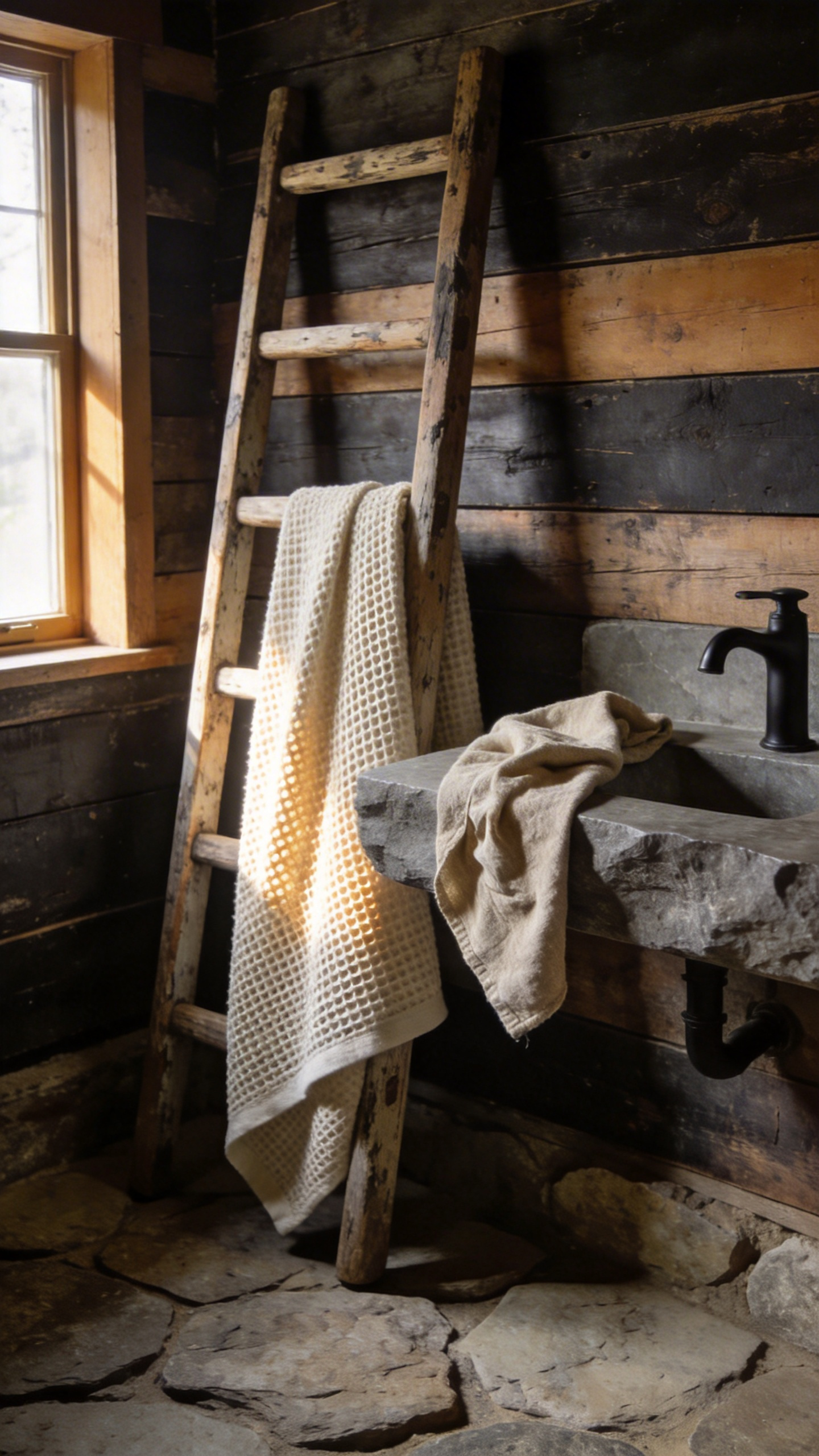
Beyond aesthetics, utility remains a cornerstone of sustainable design. Unlike traditional plush terry cloth, waffle weaves utilize a unique structure to promote superior airflow. As a result, they dry exceptionally quickly in humid environments.
This rapid drying process naturally discourages bacteria and mold growth. Thus, selecting these textiles aligns perfectly with a “clean living” ethos. Additionally, linen is notably lighter and less bulky than standard cotton.
Finally, the choice of organic material deepens the room’s connection to nature. For instance, linen derived from the flax plant requires fewer resources to grow than conventional cotton. In fact, much like wood develops a patina, organic linen softens with age.
13. Water Conservation: High-Performance Eco-Fixtures That Don’t Sacrifice Pressure
Historically, the term “low-flow” invoked fears of weak, trickling showers. Indeed, early fixtures from the 1990s often restricted volume without compensating for performance. Fortunately, today’s engineering has shifted from simple restriction to smart repurposing of kinetic energy.
Specifically, WaterSense-labeled fixtures now guarantee a minimum 20% reduction in water use. Crucially, they do this without sacrificing power.
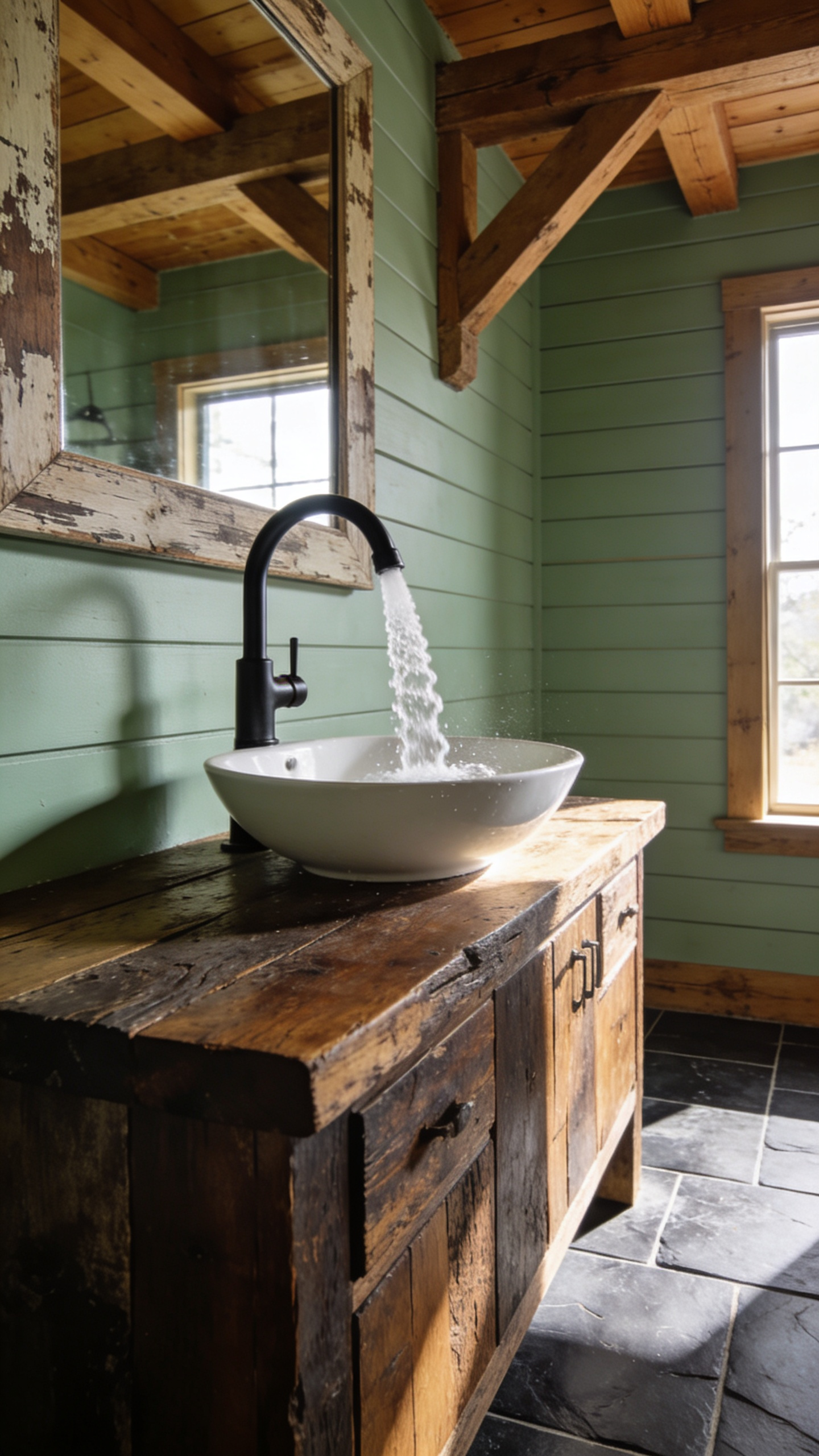
For instance, aerating faucets mix air into the stream, creating a soft, voluminous sensation. Conversely, non-aerating showerheads utilize precision nozzles to maintain invigorating pressure, even with lower gallons per minute (GPM). Consequently, the user experiences an engineered illusion of high pressure rather than raw volume.
Crucially, sustainability no longer demands a sleek, futuristic aesthetic. Manufacturers now house these high-efficiency cores within traditional forms, such as bridge faucets with cross handles. Therefore, distinct finishes like Oil-Rubbed Bronze can still tell a story of heritage while performing responsibly.
Finally, conservation extends beyond just water volume. Because heating water accounts for substantial residential energy use, efficient fixtures significantly lower your utility footprint. In fact, reducing hot water flow naturally cuts the energy required by your water heater.
14. Radiant Heating: The Invisible Luxury Essential for Stone Floors
Rustic bathrooms often rely on the rugged, grounded beauty of natural stone. However, these materials can feel inherently cold underfoot. Consequently, radiant heating becomes an essential component, transforming a chilled surface into a comforting touchpoint.
Scientifically, stone serves as the perfect partner for this technology due to its high thermal mass. Once heated, the heavy slabs retain warmth long after the system turns off. Effectively, the entire floor functions as a low-energy, slow-release “storage radiator.”
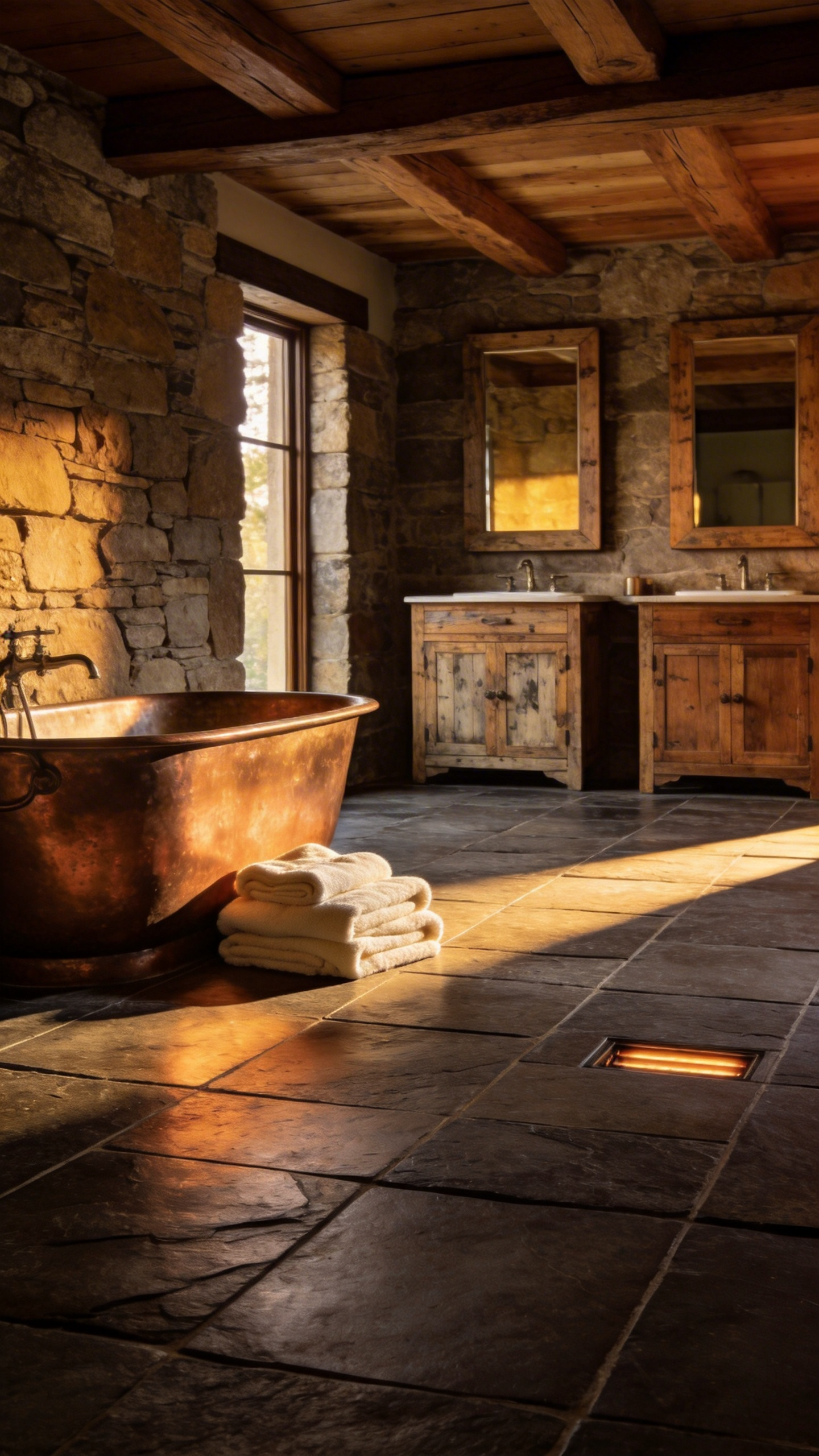
Visually, this system supports a seamless design narrative. Because the technology remains invisible, it eliminates the need for bulky, modern radiators. Therefore, you maintain the uncluttered, natural purity essential to a rustic aesthetic.
Interestingly, this concept echoes the ancient Roman *hypocaust* system found in luxury villas. Thus, heating stone from beneath stands as a time-tested signifier of sophistication.
Beyond comfort, the gentle heat provides a crucial functional advantage. Specifically, it accelerates evaporation, which significantly reduces moisture and mildew risks within porous stone. For most bathroom renovations, electric radiant mats are the preferred technical solution.
15. Material Maintenance: Non-Toxic Sealing for Longevity
Sustainable design requires balancing aesthetic goals with functional needs. Specifically, rustic bathrooms present a unique challenge regarding moisture control. For porous materials like concrete floors or natural stone showers, experts recommend zero-VOC penetrating sealers.
Unlike topical coatings that sit on the surface, these impregnators sink deep into the material’s capillary pores. Consequently, they chemically bond to the substrate to create an invisible, hydrophobic barrier. Importantly, this allows the material to remain breathable.
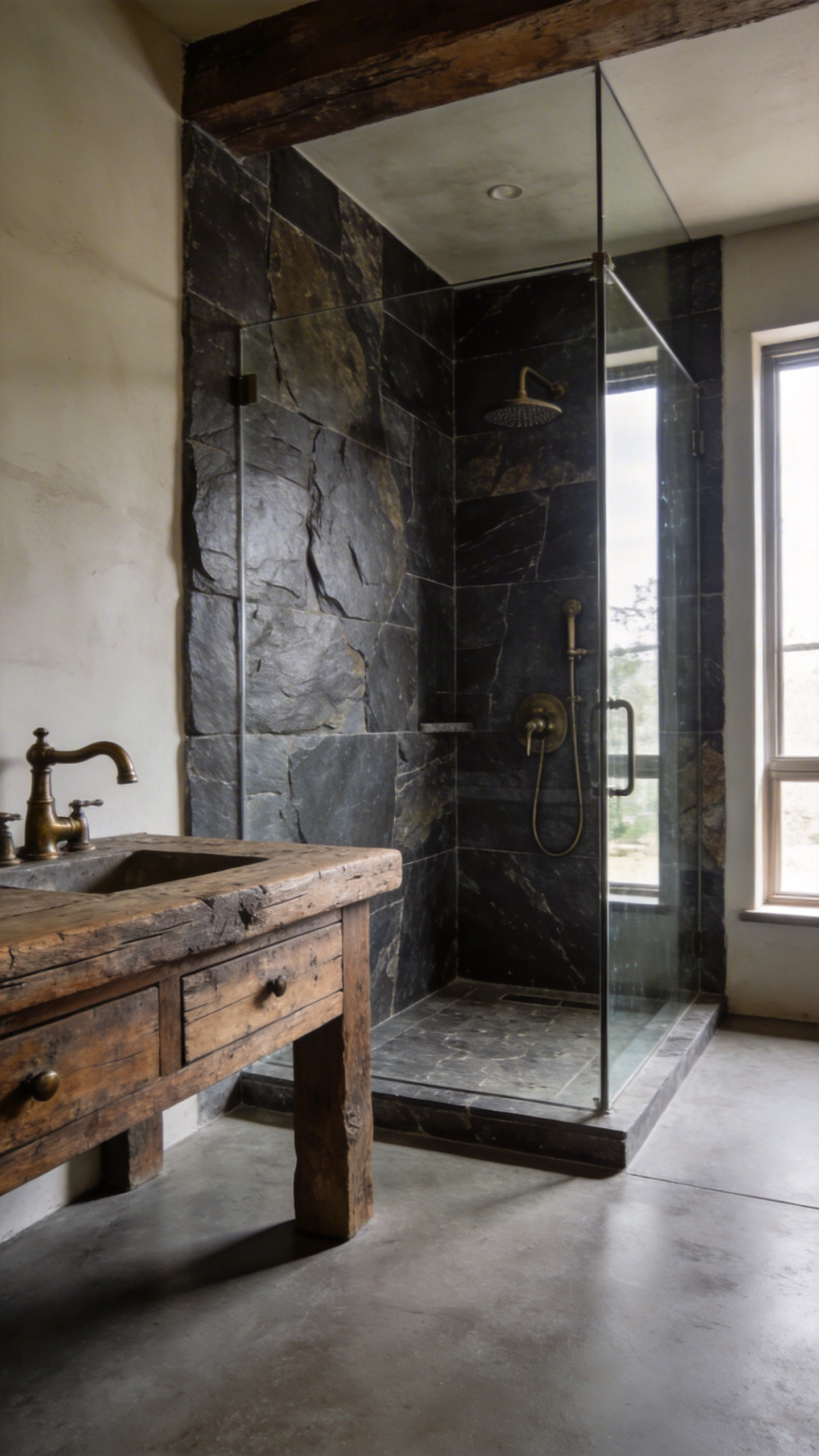
Conversely, wood vanities and shelves benefit from a nourishment strategy. Instead of applying plastic-like varnishes, opt for pure Tung oil or beeswax blends. Historically, Tung oil was used to preserve wooden ships, proving its exceptional water resistance.
However, the goal here is not just protection, but patina. In fact, applying these oils becomes a sensory maintenance ritual. This process “feeds” the wood, creating a warm, hand-rubbed sheen that improves with age. Furthermore, this method remains infinitely repairable.
16. Conclusion: The Sustainable Future of Rustic Retreats
Ultimately, the future of rustic retreats represents a profound shift from decorative style to regenerative philosophy. Specifically, this movement champions “Slow Interiors,” where longevity replaces the wasteful cycle of fast trends.
Therefore, true luxury is defined by material honesty rather than price. For instance, elements like reclaimed wood and honed natural stone are chosen because they age gracefully. Over time, these materials gain a unique patina, signaling permanence instead of obsolescence.
Consequently, we move away from stark, catalogue aesthetics toward grounded, ethical craftsmanship. However, if you are planning a full renovation, finding expert rustic bathroom remodel ideas should be your first step.
However, aesthetics are only half the equation. Crucially, the modern rustic bathroom must evolve from a water consumer into a sophisticated, functional utility. In fact, advanced greywater recycling systems are now essential infrastructure for sustainable luxury.
By treating wastewater for irrigation or flushing, these setups push retreats toward near water-neutrality. Furthermore, this closed-loop approach captures residual heat, thereby improving overall energy efficiency. Thus, technical innovation quietly supports the environmental mission.
Finally, the enduring appeal of these spaces rests on our deep psychological need for nature. Scientifically, this connection is known as biophilia. Specifically, organic textures and earthy palettes trigger primal feelings of safety and warmth. In contrast to digitalized modern life, these non-toxic environments offer a necessary sanctuary.
Frequently Asked Questions
What elements make a rustic bathroom look high-end and luxurious?
High-end rustic design moves past mass-produced items and focuses on material honesty. This includes using thick slabs of natural, living stone (like honed travertine or raw basalt), genuine reclaimed old-growth wood, and unlacquered metal fixtures (brass or copper) that develop a sophisticated patina over time. Invisible luxuries like radiant floor heating and custom, architectural lighting are also key indicators of quality.
Are rustic materials like raw wood and natural stone difficult to maintain in a high-humidity bathroom?
When installed correctly and treated with the right non-toxic finishes, rustic materials are highly durable. Reclaimed wood must be high-density (old growth) and sealed with pure oils to repel moisture without trapping it. Natural stone (slate, travertine) must be sealed with zero-VOC penetrating impregnators. These steps protect the materials while ensuring breathability, preventing moisture issues and making daily cleaning straightforward.
How does “Organic Sanctuary” style differ from traditional Modern Farmhouse?
The Organic Sanctuary aesthetic, rooted in Ancestral Modernity and biophilic design, emphasizes authenticity and permanence. It rejects the painted shiplap, bright white surfaces, and faux distressed finishes typical of Modern Farmhouse. Instead, it prioritizes deep, earthy textures, celebrating natural imperfections (wabi-sabi), and using materials like Tadelakt plaster, raw concrete, and unpolished stone that improve visually as they age.