True luxury whispers; it never shouts. During my tenure in high-end design, I once watched a client bypass a pristine, trending velvet sofa for a vintage leather Chesterfield with distinct signs of wear. She understood a fundamental truth that eludes many: a home shouldn’t serve as a snapshot of a current catalog, but as a living biography of its inhabitant. This is the essence of the curatorial promise. It rejects the sterile perfection of a showroom in favor of a space that feels deeply personal, collected, and historically grounded.
The modern impulse often drives us to fill voids with fast furniture and fleeting accessories. We mistakenly equate “new” with “improved,” only to find our interiors feeling dated by the following season. A curated room, however, prioritizes longevity over the latest fad. It demands that we look past the surface finish to evaluate the integrity of the form. By shifting your mindset from consumer to curator, you stop simply decorating for the moment and start building a legacy within your walls. This guide offers essential living room design inspiration based on principles of timeless luxury.
Achieving this sophisticated balance requires a discerning eye and a strategic approach. We must apply the 80/20 rule of provenance to anchor the space with genuine history and identify materials that patina beautifully—such as unlacquered brass and natural wood—to ensure investments look richer, not older, with time. It is time to dismantle the temporary and design a living room that truly transcends trends.
Part I: The Architectural Envelope (Setting the Stage)
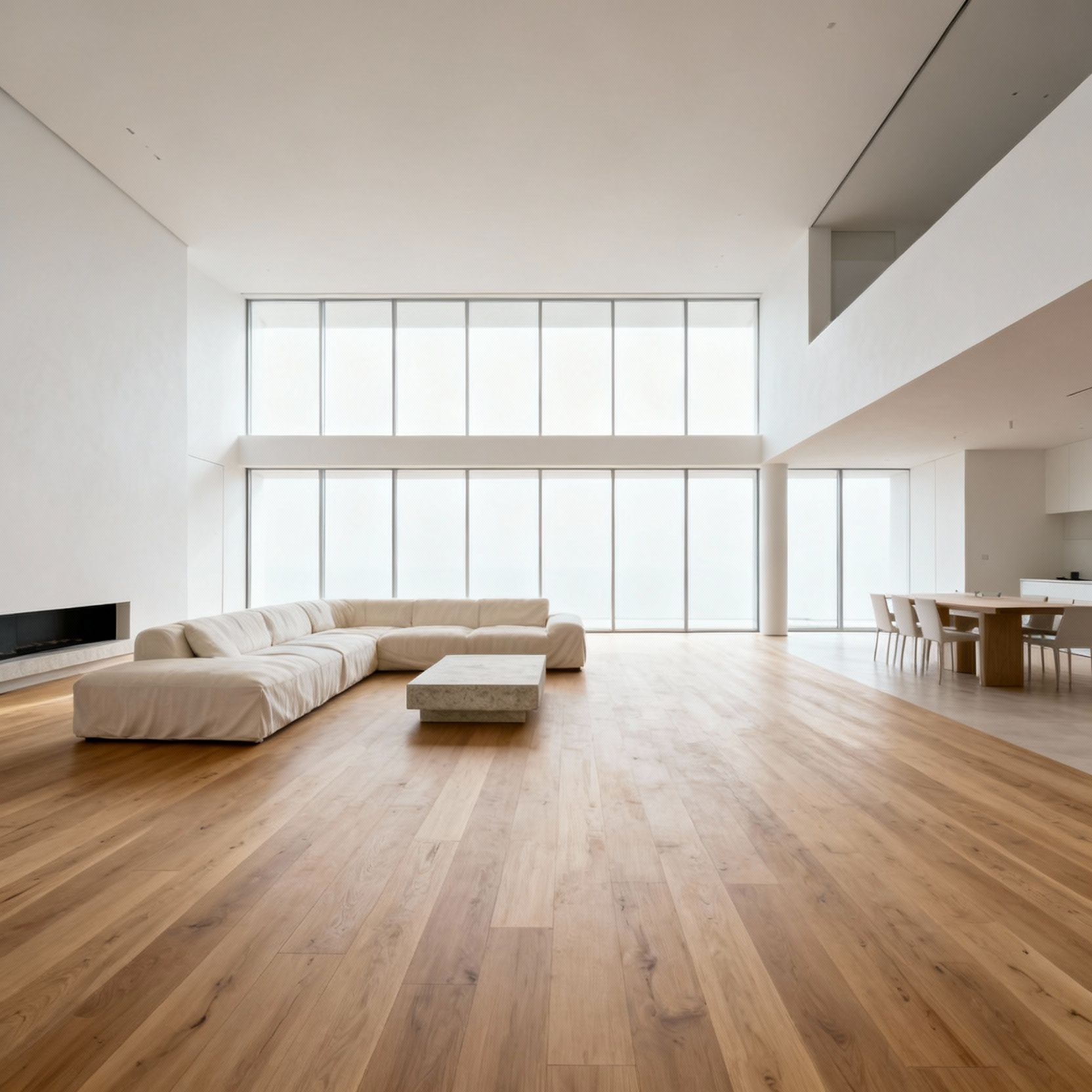
True luxury relies on a room’s “bones” rather than its furnishings. During my years in luxury retail, I watched countless clients attempt to salvage a lackluster room with an expensive imported sectional, yet the space remained visually flat. You must establish a rigorous architectural envelope first. Start by eliminating visual breaks; maintain continuous flooring, such as wide-plank oak or polished concrete, between the living area and adjacent zones to dramatically expand the perceived footprint. Refuse to accept plain drywall. Apply architectural millwork—picture rails or wainscoting—to inject historical weight and create an automatic focal point.
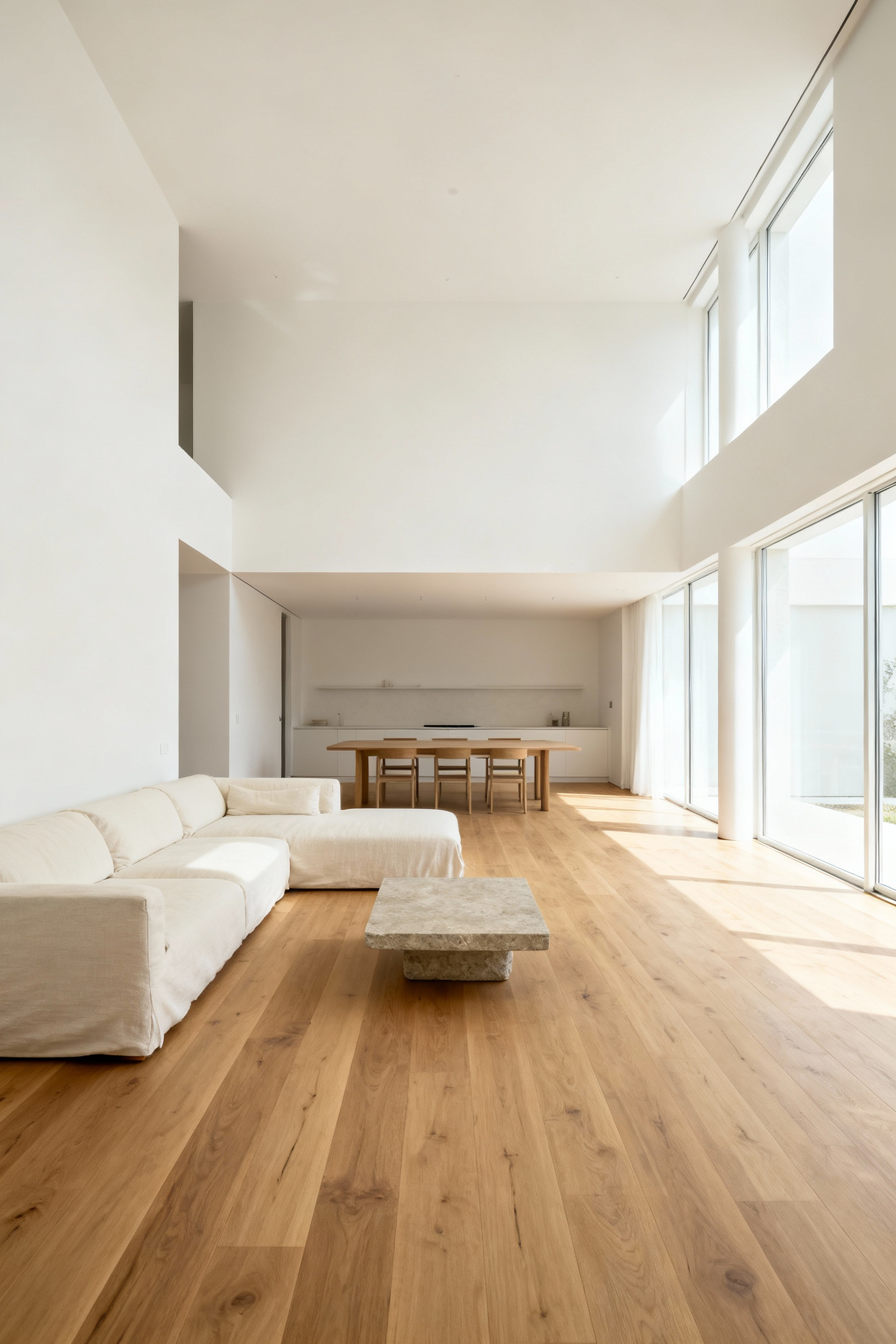
Your design strategy must extend to the room’s upper and outer limits. Professional designers view the ceiling as the “fifth wall,” utilizing specific treatments to elevate the aesthetic. Incorporate tray ceilings or exposed beams to define volume, or use acoustic plaster and molding to conceal mechanical elements like lighting tracks and vents. Finally, mount window treatments so they stack completely off the glass to maximize aperture. This precise placement floods the room with natural illumination and effectively blurs the boundary between interior luxury and the outdoors.
1. Restoring Architectural Integrity: The Return of Crown Molding and Custom Millwork
Standard drywall often feels flat and impermanent. To restore architectural integrity, abandon builder-grade standards and opt for tiered crown molding measuring at least six inches. This substantial scale visually lifts the ceiling and instantly commands attention. Extend this detailing downward by incorporating picture frame molding or wainscoting. These architectural layers add crucial depth, transforming a plain box into a sophisticated envelope.
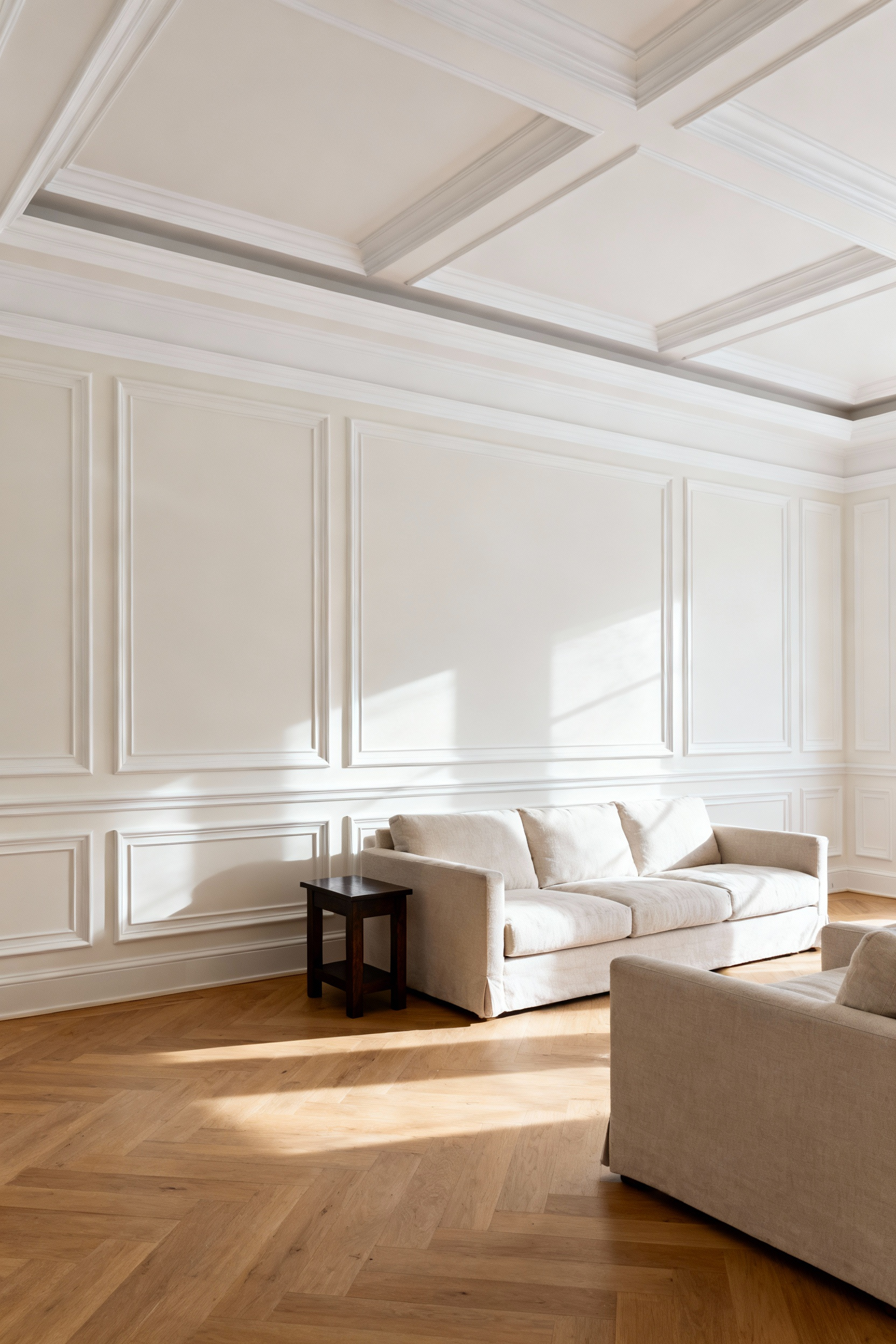
Modernize these classical elements with precise lighting and finish strategies. For example, integrate discreet LED tape behind the molding to create soft, ambient cove lighting. This contemporary touch eliminates harsh shadows and emphasizes craftsmanship. Finally, select a paint application that enhances the millwork’s character. “Monochromatic Drenching”—painting the molding, baseboards, and walls the exact same color—highlights texture over contrast. Alternatively, apply a high-gloss white finish to the trim against deep wall tones for sharp, dramatic definition. Invest in these permanent details, as they consistently yield the highest return on visual elegance.
2. Defining the Focal Point: Anchoring the Room Around Fireplaces or Views
True luxury demands a clear visual hierarchy. Without a dominant anchor, even the most expensive furnishings feel chaotic. Identify your room’s architectural crown jewel, whether it is a hand-carved limestone mantel or a panoramic window, and orient your primary seating directly toward this feature. Resist the urge to perimeter-load the room; floating a sofa in the center of the space creates intimacy and directs traffic behind the seating area, preserving the view’s integrity. In penthouse projects, simply pulling the seating arrangement away from the glass walls often transforms a cold, vast space into an inviting sanctuary.
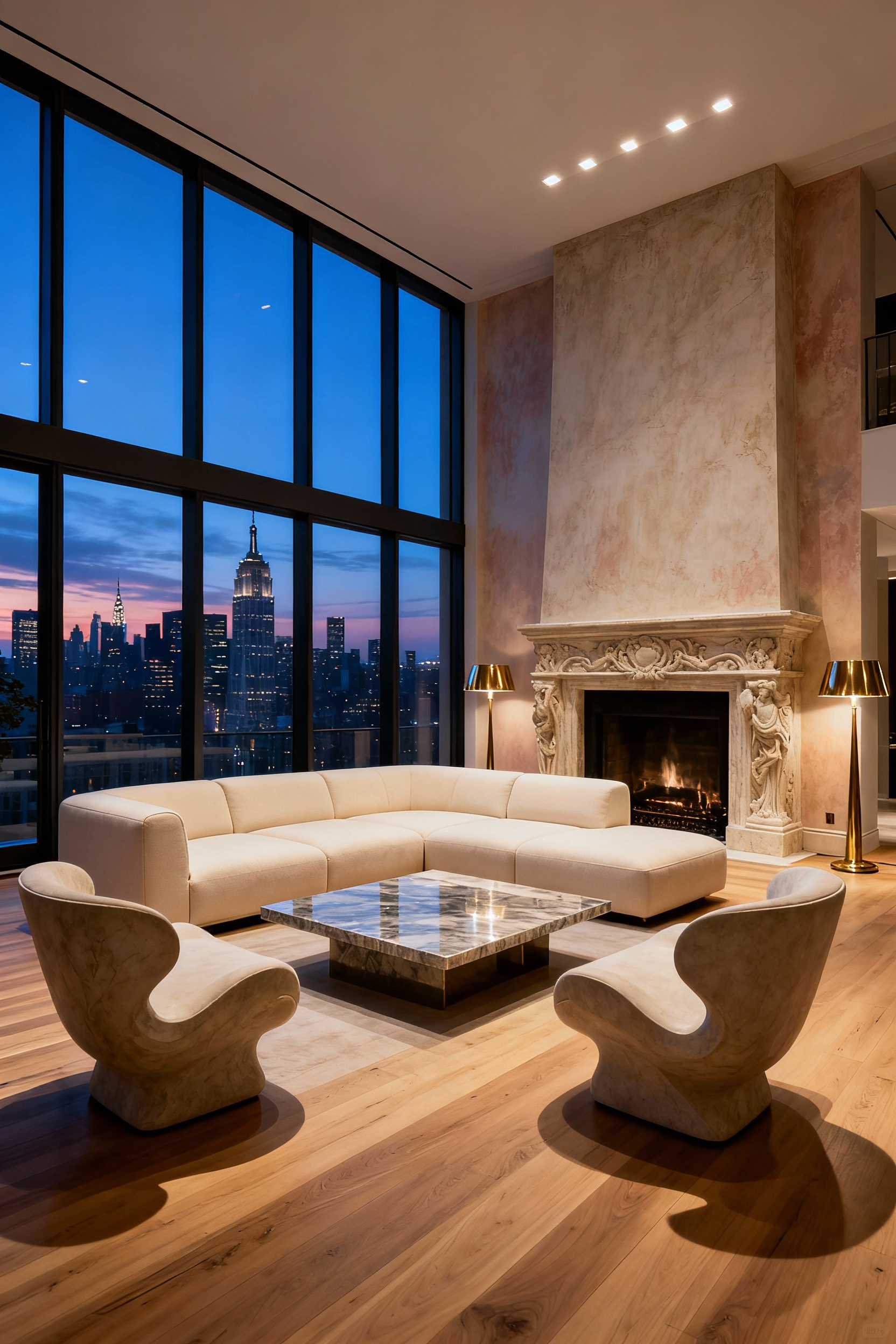
Elevate this focal point through intentional, disciplined styling. A fireplace commands attention naturally, so dress it with the precision of a gallery curator rather than treating it as a catch-all shelf. Employ the rule of three by grouping objects of varying heights—perhaps a tall bronze sculpture alongside a low crystal vessel—to guide the eye upward. Layer distinct textures like matte stone or polished brass to create depth without visual noise. If a television is essential, integrate it subtly: mount it flush above the mantel or recess it into custom millwork to maintain a singular, cohesive view.
3. The Art of Invisible Symmetry: Balancing Visual Weight Without Rigidity
True sophistication rarely relies on the rigid predictability of mirror-image layouts. Instead, master the nuanced discipline of asymmetrical balance. This approach demands you judge objects by their perceived visual mass rather than their physical dimensions. A heavy, charcoal velvet sectional anchors a room, but matching it with an identical piece often creates a sterile, “showroom” aesthetic. Instead, counterbalance that weight with a curated grouping of lighter elements on the opposing axis, such as two structured armchairs paired with vertical artwork.
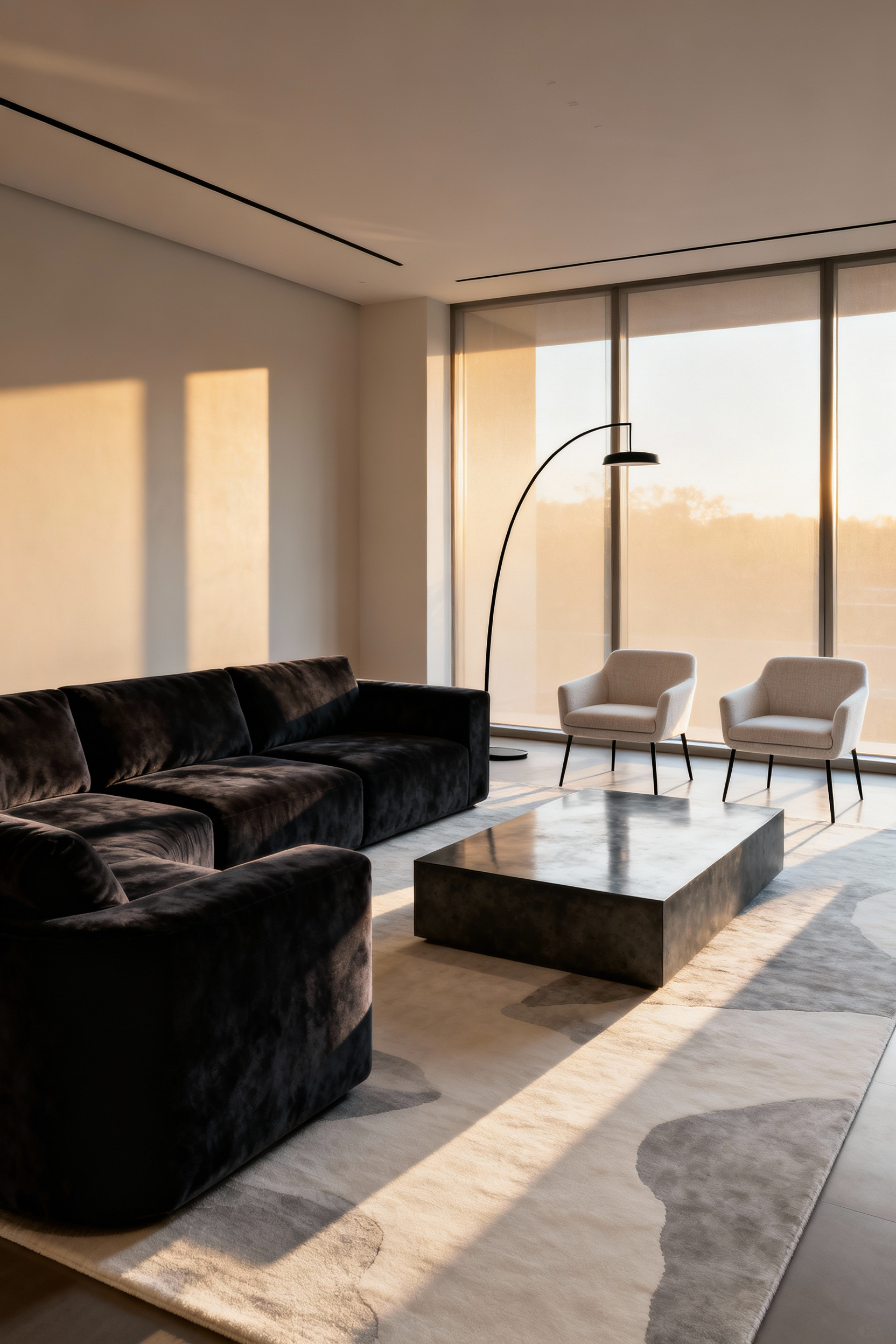
The most luxurious spaces manipulate the eye through contrast and void. You must treat every design element—including empty space—as a weight on a delicate scale. Leverage intensity by using a small, deeply saturated accent chair or a textured antique to offset a significantly larger, neutral sofa. Utilize verticals, like floor-to-ceiling drapery or an oversized mirror, to counter horizontal bulk. Most importantly, honor negative space; allow deliberate blank wall sections to provide “breathing room” that balances dense gallery displays. By acknowledging that a void carries as much visual weight as a solid, you prevent the composition from feeling lopsided and achieve an equilibrium that feels effortlessly grounded.
Part II: Atmospheric Elements (Lighting and Color) for Living Room Design Inspiration
True luxury relies on atmosphere, not just expensive furniture. A simple switch in bulb temperature can transform a sterile penthouse into a warm sanctuary, proving that lighting sculpts space. To replicate this depth, banish single overhead sources and curate a layered approach. Implement three essential tiers to construct the mood.
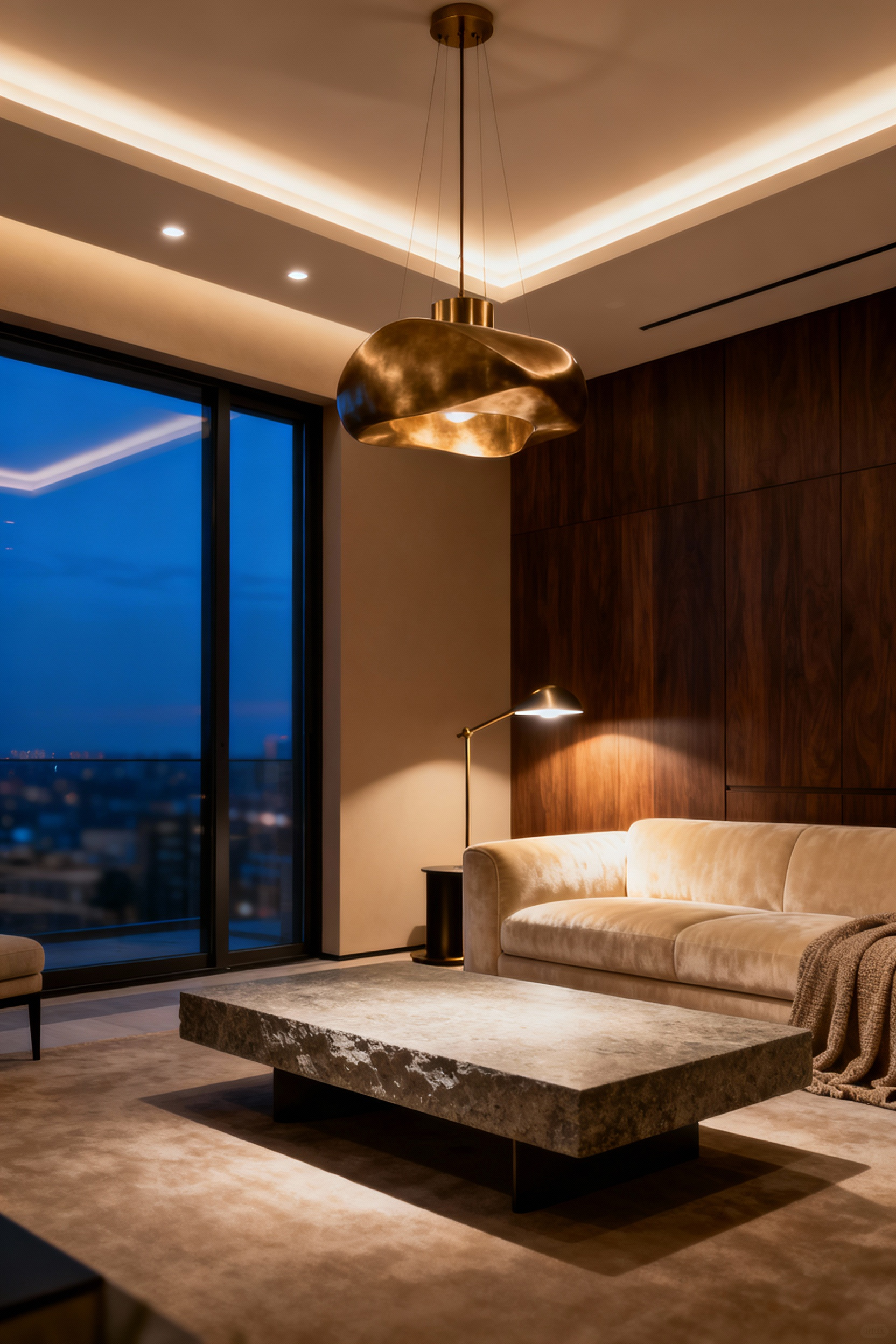
First, establish ambient lighting to provide a soft, general glow through recessed cans or dimmable chandeliers. Second, position task lighting specifically for functions like reading or intimate conversation. Finally, use accent lighting to direct focused beams toward architectural details or artwork. Insist on the correct color temperature; select warm white bulbs between 2700K and 3000K to mimic the inviting embrace of candlelight, strictly avoiding the harshness of cool daylight bulbs.
Once the lighting is set, address the color palette with architectural precision. Apply the classic 60-30-10 rule to ensure balance without chaos: devote 60% to dominant walls, 30% to secondary upholstery, and 10% to bold accents. Crucially, integrate your light fixtures into this scheme. Treat a sculptural pendant or a colored glass table lamp as jewelry for the room—a deliberate visual anchor rather than a mere utility.
4. Mastering the 60-30-10 Rule with Texture Instead of Just Hue
True luxury is felt, not just seen. Monochromatic spaces often fail because they lack tactile depth, not color. To remedy this, apply the classic 60-30-10 rule strictly to material finishes rather than hue. Dedicate 60 percent of the room to “visual rest.” Select matte, light-absorbing foundations like flat-finish plaster walls or low-loop wool rugs. These elements anchor the space and prevent visual fatigue, creating the necessary stage for more aggressive textures to shine.
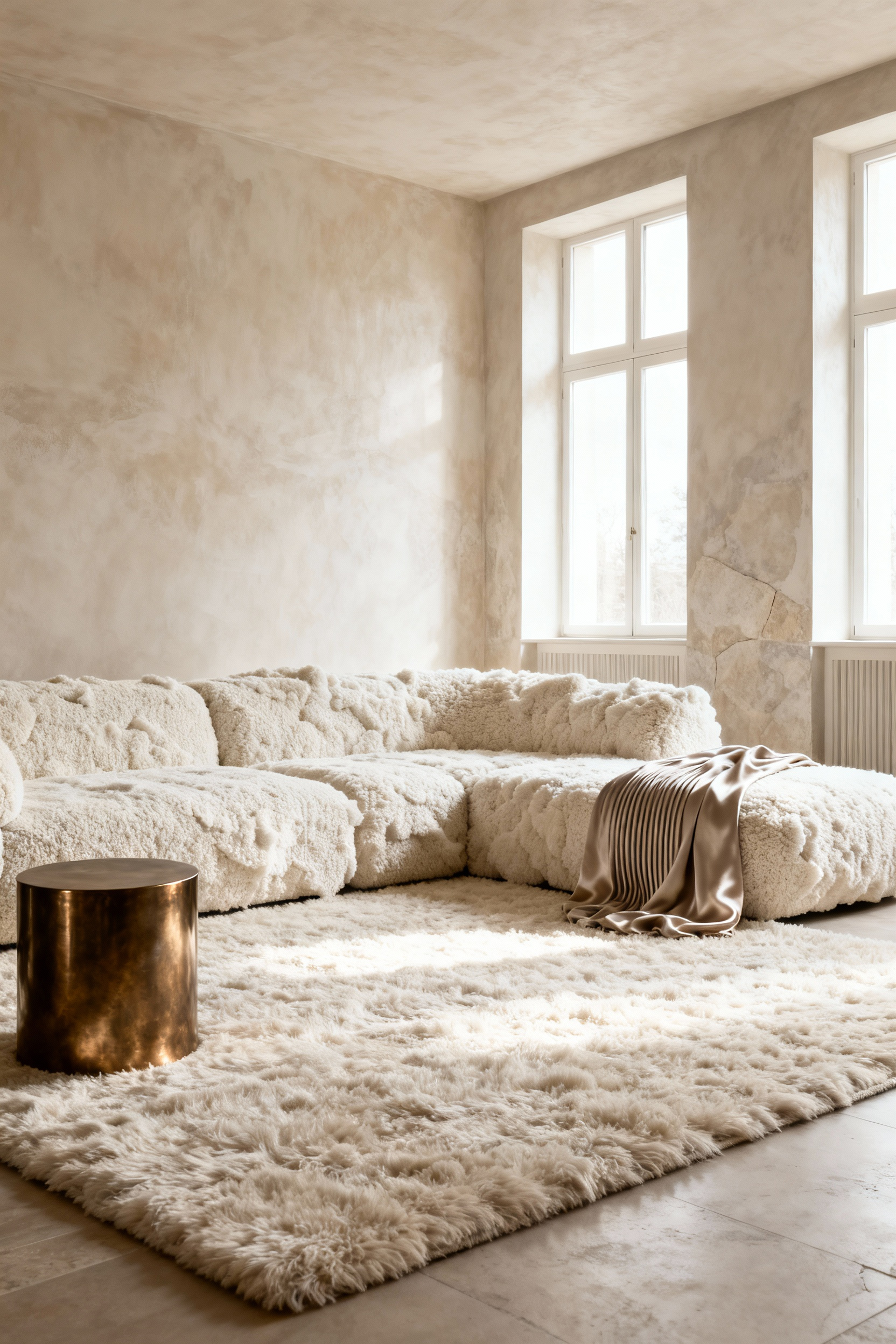
Once the foundation is set, use the remaining percentages to introduce friction and light play. For the 30% (Structure), introduce material opposition. If your foundation is soft linen, select hard, smooth surfaces like sleek leather armchairs or honed marble tables to define the room’s functional zones. Reserve the final 10% (Radiance) for high-gloss or dense tactility. Unlacquered brass hardware, smoked mirrors, or a singular shearling throw capture light and direct the eye. Texture acts as the pigment in a neutral palette; by meticulously zoning these finishes, you cultivate a sense of sophisticated restraint that feels expensive and intentional.
5. Sculptural Illumination: Selecting Chandeliers That Serve as Art
Treat your ceiling fixture as a suspended sculpture. Correct scaling defines true elegance more than the price tag; a chandelier must command attention without crushing the room’s architecture. Aim for a diameter roughly two-thirds the width of your anchor furniture, such as the coffee table. This specific proportion grounds the floating element to your seating area. Furthermore, prioritize unique materials that convey craftsmanship over generic shine. Hand-blown glass offers fluid, organic light distortion; alabaster diffuses illumination with a soft, stone-like warmth; and blackened steel adds graphic, modern contrast to neutral palettes.
- Lighting: Soft, professional-grade ambient lighting mimicking late afternoon golden hour. The chandelier’s integrated lights are subtly dimmed (warm color temperature, 2400K) to cast soft, directional highlights on the coffee table surface and surrounding textures.
- Camera Settings: Shot on a professional DSLR (e.g., Canon 5D Mark IV) with a 35mm prime lens. Aperture F/4.0 to ensure a slightly shallow depth of field focusing attention on the anchor grouping. ISO 200. High-resolution, photorealistic, architectural interior design photography style.
Once installed, let the art breathe. Keep surrounding wall decor minimalist to allow the fixture’s form to serve as the undisputed focal point. Analyze the light dispersion before purchasing; the most sophisticated sculptural pieces cast intriguing shadows that add drama to the walls. Finally, always install a high-quality dimmer switch. This essential tool transforms a static art piece into a dynamic mood setter, instantly justifying the investment through versatility.
6. The Layered Light Philosophy: Integrating Ambient, Task, and Accent Sources
True luxury design lives in the nuances of illumination. Treat ambient, task, and accent lighting as distinct entities rather than a single wash of brightness, wiring these layers to independent dimmer controls. This separation allows you to manipulate the room’s depth instantly. For a gallery-worthy effect, apply the “3:1 Luminance Ratio.” Ensure your accent lights—those hitting artwork or joinery—burn at least three times brighter than the surrounding ambient light. This specific contrast guides the eye and creates dramatic, sophisticated focal points.
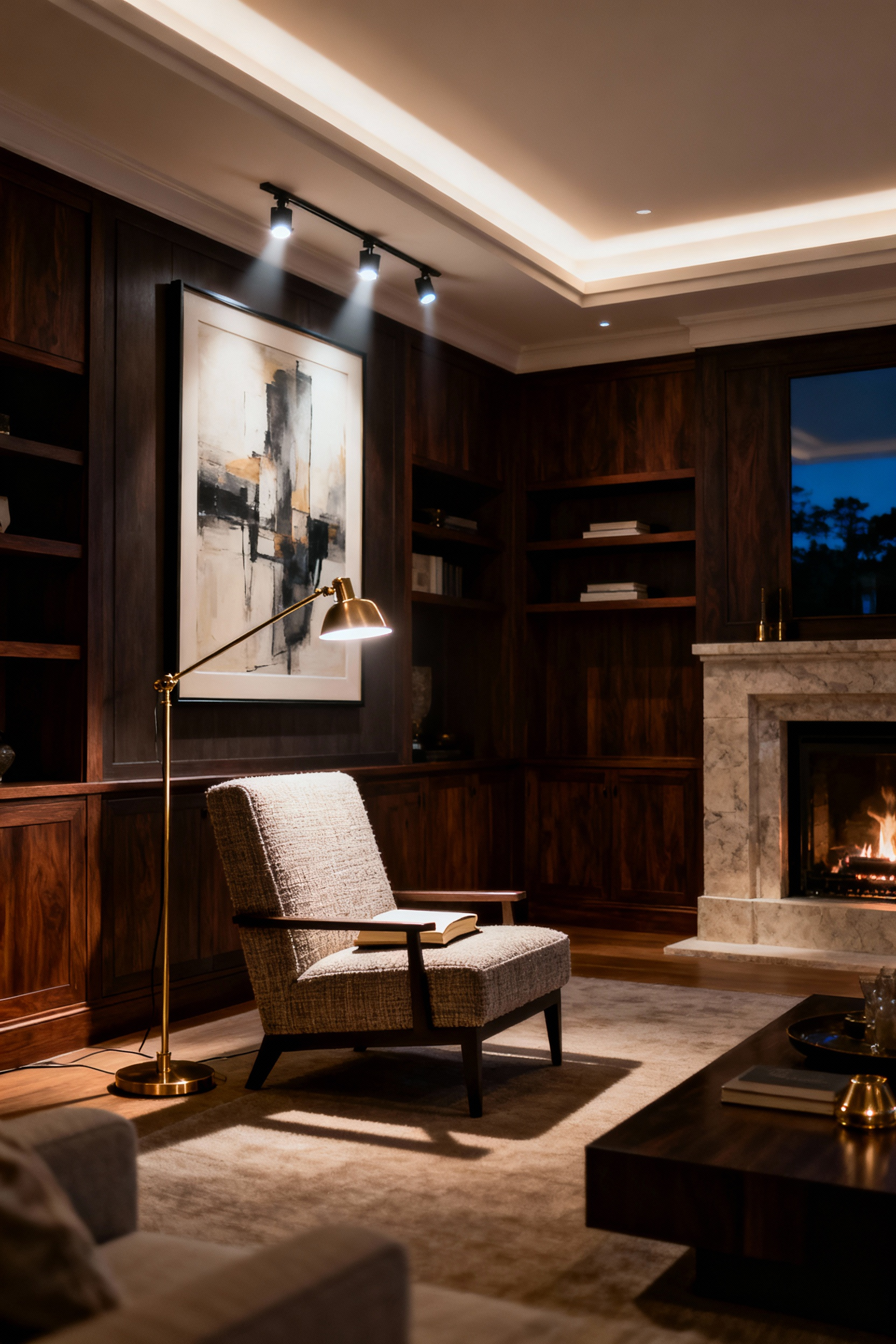
Beyond aesthetics, proper layering elevates functionality. A reading nook fails without precise calibration; position floor lamp shades slightly above shoulder level to cast light on your book while sparing your eyes from glare. Effortless sophistication requires modern integration. Leverage smart scenes to create presets like “Warm Cozy” or “Bright Day,” and unify control to adjust color temperature and intensity across all layers with a single command. By mastering these technical details, you transform a living room from a static space into a dynamic environment.
7. Window Treatments as Architecture: Drapery Height, Weight, and Pleat Styles
Treat window treatments as structural elements rather than mere decoration. To elevate the room’s perceived scale, always mount hardware six to twelve inches above the window frame and extend the rod well past the casing. This “High and Wide” technique maximizes natural light and instantly mimics the grandeur of soaring ceilings. Nothing signals “budget” faster than skimpy, lightweight panels that hover awkwardly above the trim; true luxury requires gravity.
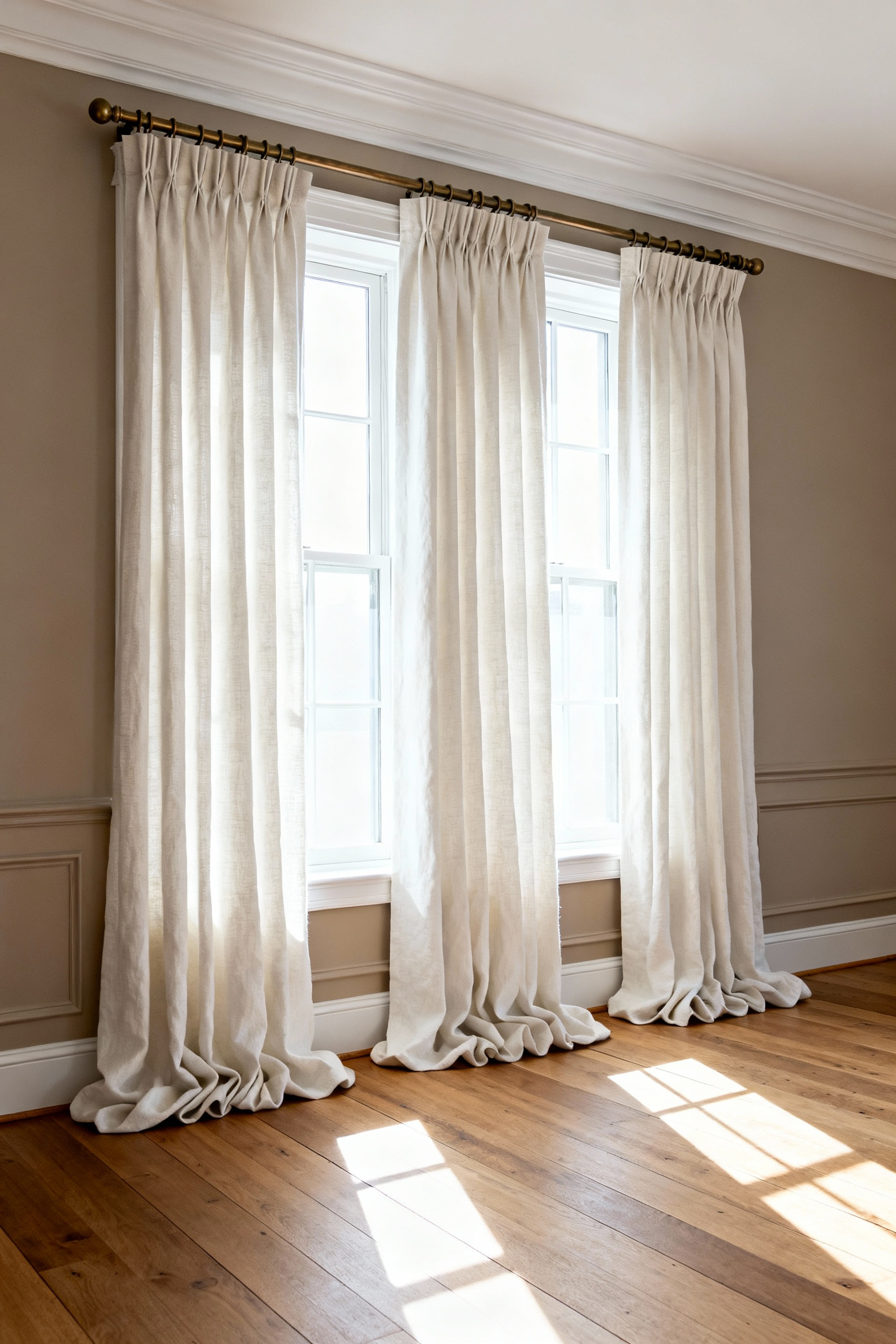
Prioritize heavy, interlined fabrics like silk velvet or wool blends that dampen sound and anchor the space. Ensure the fabric width measures at least 2.5 times the window opening to avoid a sparse, unfinished appearance. Allow the architecture of the home to dictate the specific pleat style: French pleats deliver a tailored, traditional silhouette; Ripplefold tracks offer continuous, modern waves ideal for glass walls; and Inverted Box pleats create a clean, flat line for contemporary precision.
Part III: Furnishing with Intent (Investment Pieces)
True luxury demands substance, not just style. Therefore, allocate the majority of your budget to the “Big Three” anchor pieces: the primary sofa, the area rug, and the main lighting fixture. These elements define the room’s structure and endure the most wear. Look past the fabric and inspect the bones; demand kiln-dried hardwood frames and 8-way hand-tied springs. Without this internal architecture, aesthetic appeal fades quickly. Prioritize natural materials that age with dignity rather than deteriorating into shabbiness, such as solid wood which resists warping, wool or linen for inherent stain resistance, and natural stone for timeless texture.
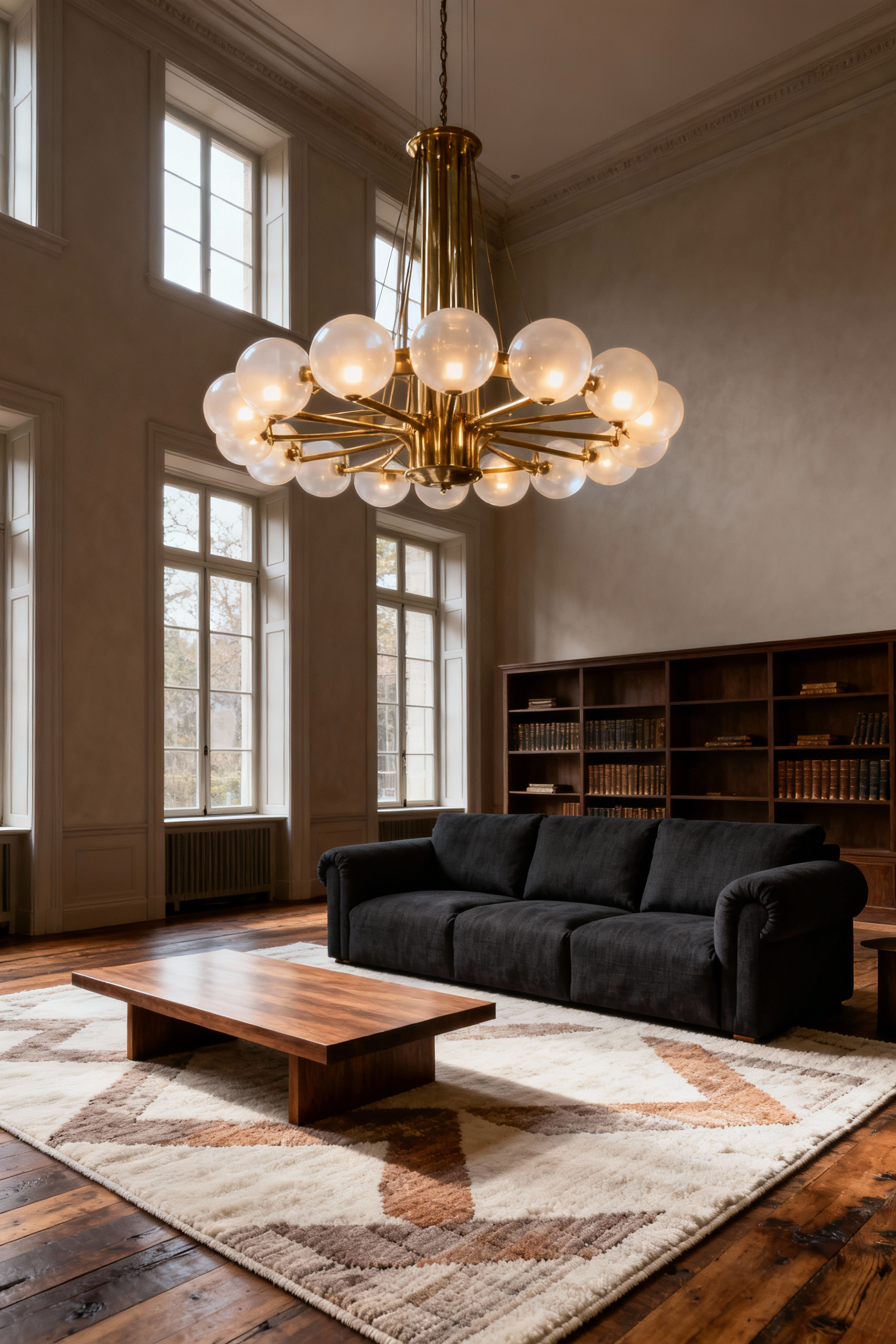
Treat lighting as functional sculpture. A fixture from a heritage design house, like Flos or Artemide, elevates the perceived value of the entire room and retains value like fine art. However, provenance means nothing without proper proportion. An expensive sofa becomes a liability if it chokes the room’s flow, so always measure for negative space to ensure your investment breathes. Finally, resist loud color trends. Select texture-rich, neutral fabrics like boucle or performance velvet to guarantee your foundational pieces remain relevant for decades.
8. The Anchor Investment: Identifying Heirloom-Quality Sofas and Upholstery
A sofa dictates the rhythm of a living room; treat it as a lifelong partner rather than a temporary guest. True luxury always hides beneath the fabric. Demand a kiln-dried hardwood frame—specifically maple or oak—joined with dowels rather than staples. Inspect the suspension; the “gold standard” remains the 8-way hand-tied spring system, which distributes weight evenly and prevents the dreaded sag that plagues inferior mass-market pieces.
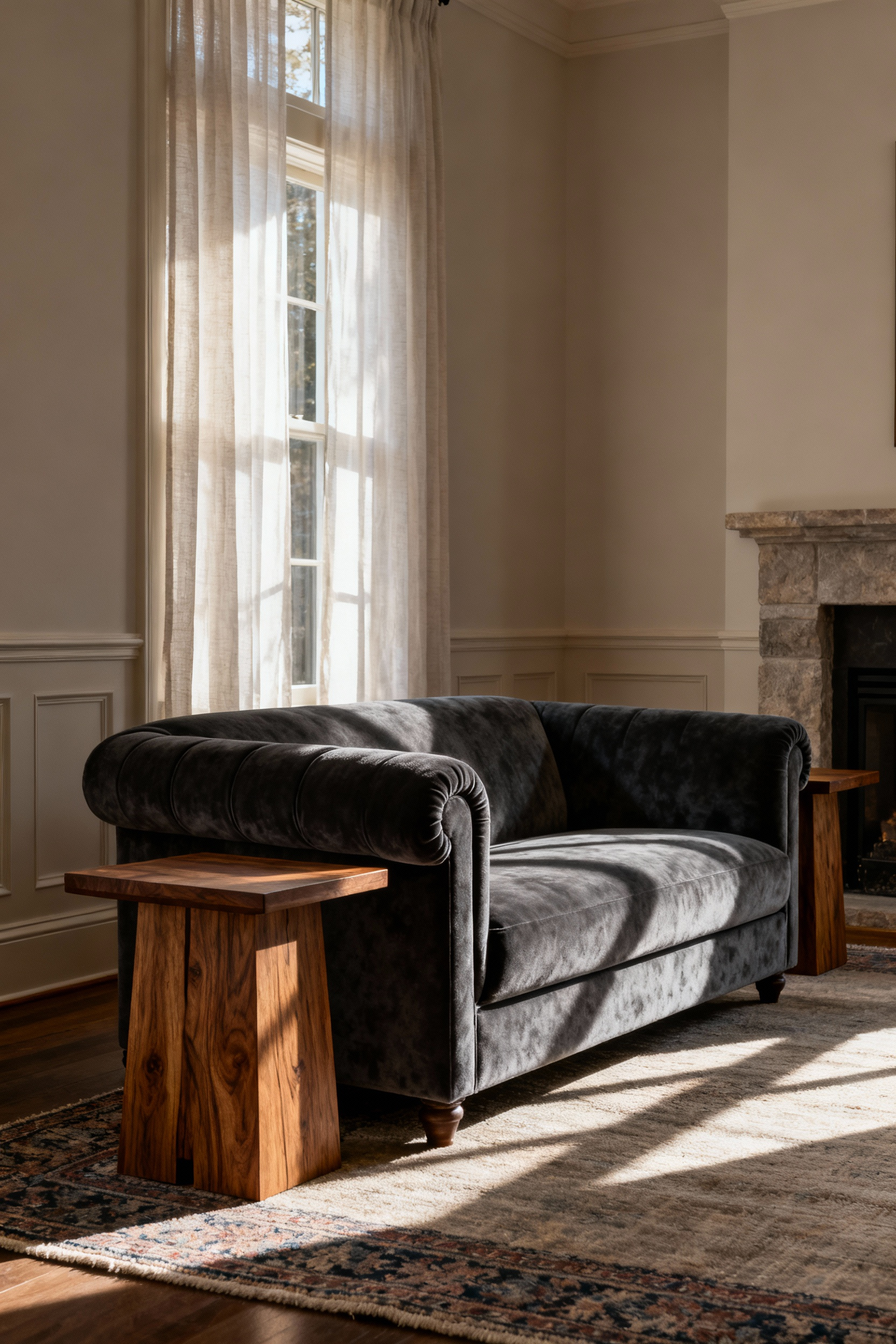
A robust frame is useless without resilient comfort and timeless style. Select a high-resiliency (HR) foam core wrapped in a down blend to retain architectural shape while offering distinct, sinking-in comfort. When choosing the silhouette, bypass the “flavor of the month” for enduring profiles that bridge eras. The English Roll Arm offers relaxed, traditional elegance; the Tuxedo provides clean lines for a sophisticated, modern aesthetic; and the Bridgewater delivers casual, inviting versatility. Commit to these classic shapes in neutral performance fabrics with a Wyzenbeek rating over 30,000, and your investment will gracefully survive decades of shifting design trends.
9. Creating Conversation Circles: The Strategic Placement of Occasional Chairs
True luxury facilitates connection, not just admiration. Spacing dictates the room’s energy, so never push seating against the walls. Instead, pull occasional chairs within eight feet of the sofa. For optimal intimacy, maintain a tight three-to-five-foot distance across the coffee table. Angle the chairs slightly inward; this subtle rotation breaks rigid lines and creates an inviting, enclosed sphere.
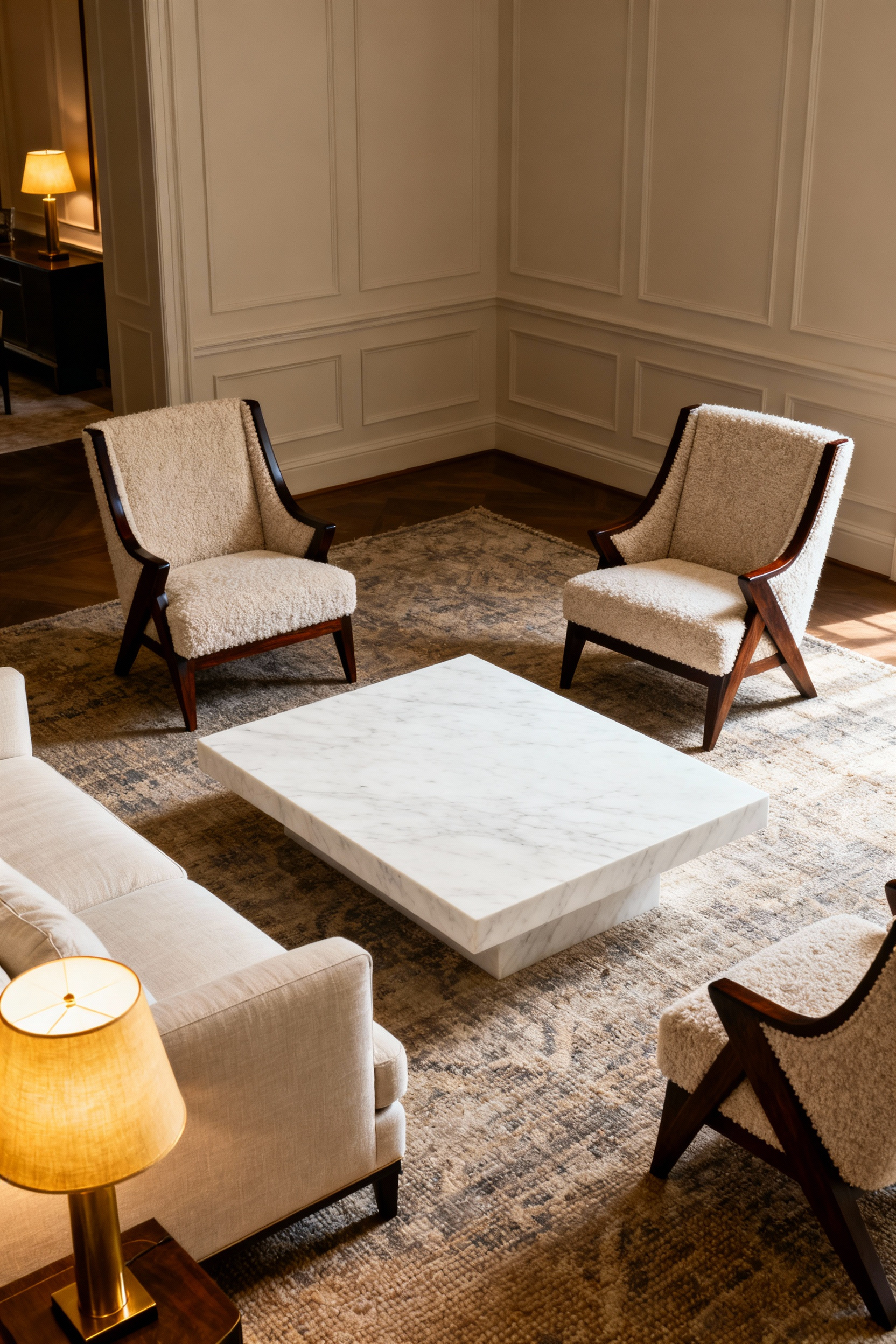
Select furniture that adapts to the gathering. Prioritize portability alongside aesthetics—a static room feels museum-like, while a flexible layout breathes. Master this dynamic by prioritizing the pivot; choose chairs that move easily, allowing guests to turn from the periphery into the core circle instantly. Create secondary zones by positioning two complementary chairs across a small rug to form a distinct “pairing” for private conversations. Treating layout as a fluid concept ensures the space remains as functional as it is beautiful.
10. The Alchemy of Mixing Eras: Pairing Modern Lines with Antique Provenance
True sophistication demands a deliberate tension between the sleek and the storied. Do not turn your living room into a period museum. Instead, apply the “80/20 Rule” for immediate balance. Dedicate 80 percent of your layout to contemporary, clean lines. Reserve the remaining 20 percent for distinct, provenance-rich antiques. This allows a singular 18th-century commode to command attention against a neutral, modern backdrop, ensuring the room feels collected, not cluttered.
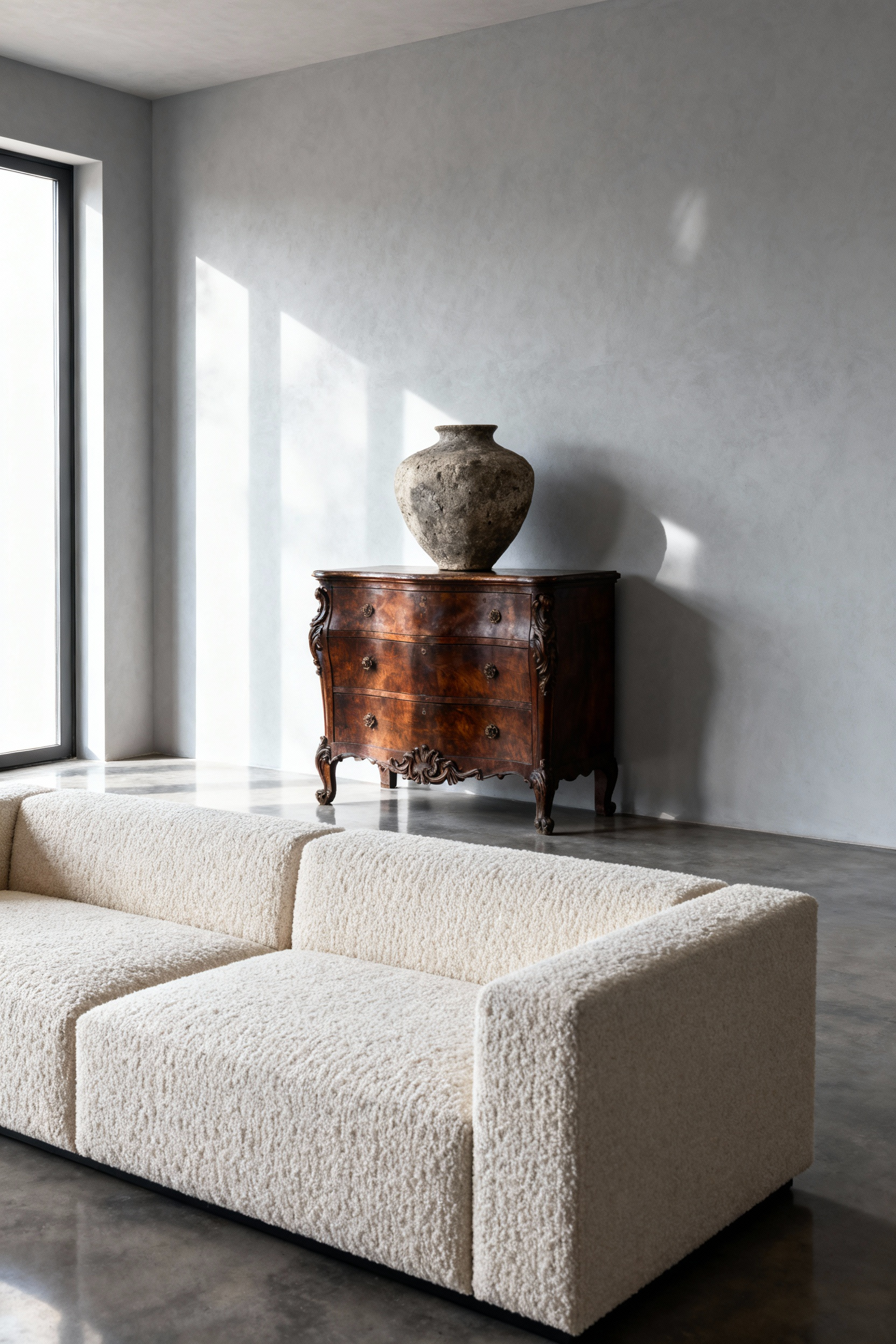
Successful alchemy relies on a shared visual thread. Bridge the gap between eras by repeating a specific material; connect a mid-century velvet sofa to a Georgian chest through the subtle repetition of dark walnut or unlacquered brass. Respect the hierarchy of scale to prevent visual overcrowding. Offset a heavy, ornate mirror with a low-profile, minimalist credenza, or repurpose distinct antiques, like a weathered trunk, as functional side tables. Use one large heritage piece to ground floating modern furniture.
11. Grounding the Space: Rug Sizing and Material Selection for Acoustics
True luxury engages the ears as well as the eyes. An echoing room feels cold and unfinished, regardless of the furniture’s price tag. To master acoustics, prioritize density. Select high-pile wool or dense synthetic blends over thin, flat-woven options. These materials trap airborne sound waves, instantly quieting a space. Never underestimate the underlayment; a quality felt pad—at least a quarter-inch thick—is non-negotiable. It extends the rug’s life and absorbs impact noise effectively.
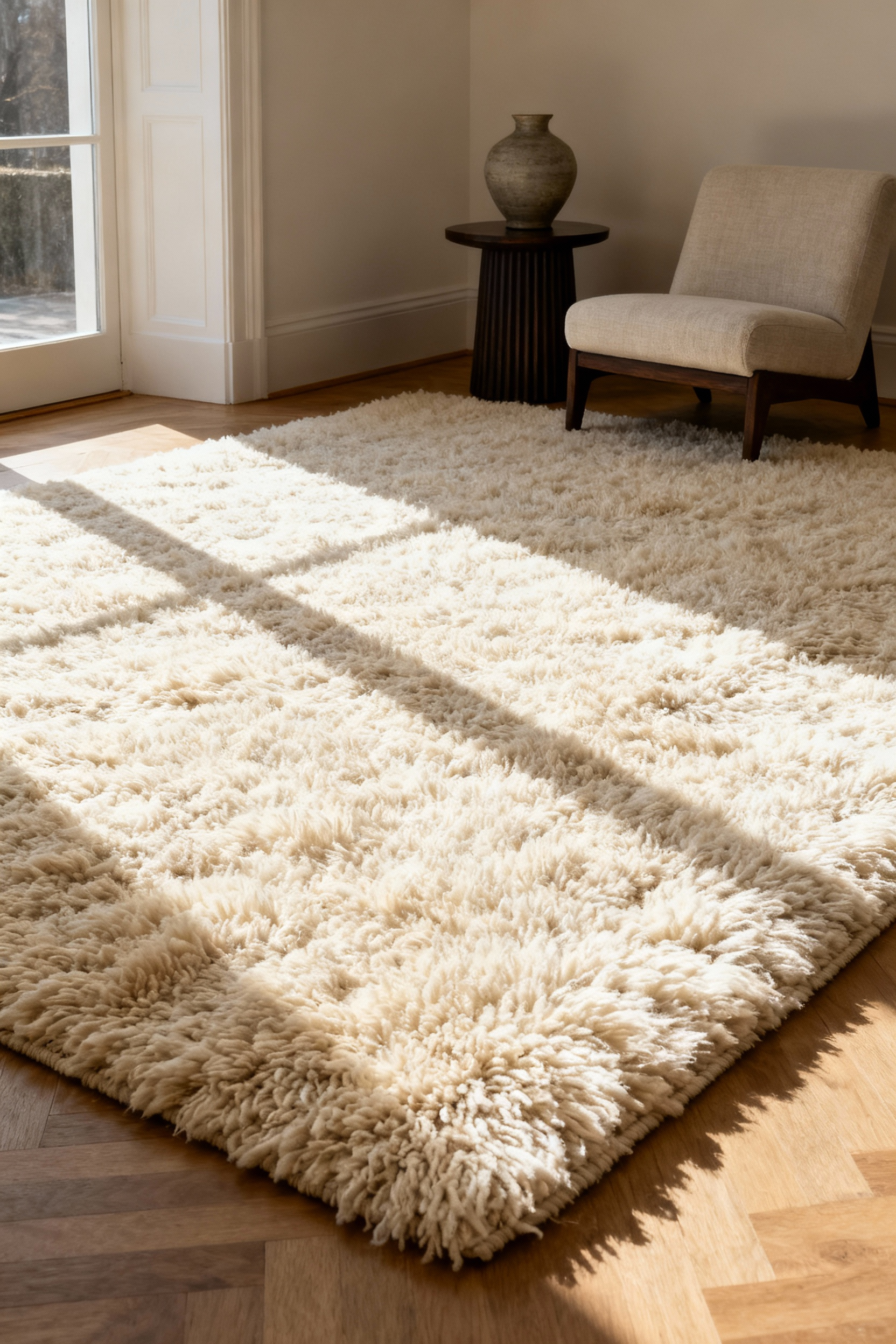
Proper sizing dictates the room’s visual and auditory coherence. Avoid the “postage stamp” look common in amateur designs. Instead, anchor your conversation zone with these professional standards: extend the perimeter so the rug reaches 6–12 inches beyond the main furniture pieces to define the zone, and place at least the front two legs of sofas and armchairs on the rug to prevent visual fragmentation. For superior texture and sound absorption, layer a plush, smaller hide over a large natural fiber base. Trust the scale; a grounded room sounds as substantial as it looks.
Part IV: The Final Curation (Soul and Detail)
True luxury lives in the narrative, not just the price tag. To avoid the sterile “showroom effect,” you must embrace the 80/20 rule in your accessories. Ensure at least twenty percent of your decor carries personal history or vintage provenance to infuse the space with “soul” that money cannot buy. Similarly, prioritize scale over color when selecting art. Choose pieces that command the wall and evoke emotion, rather than simply matching your upholstery; let the art drive the conversation.
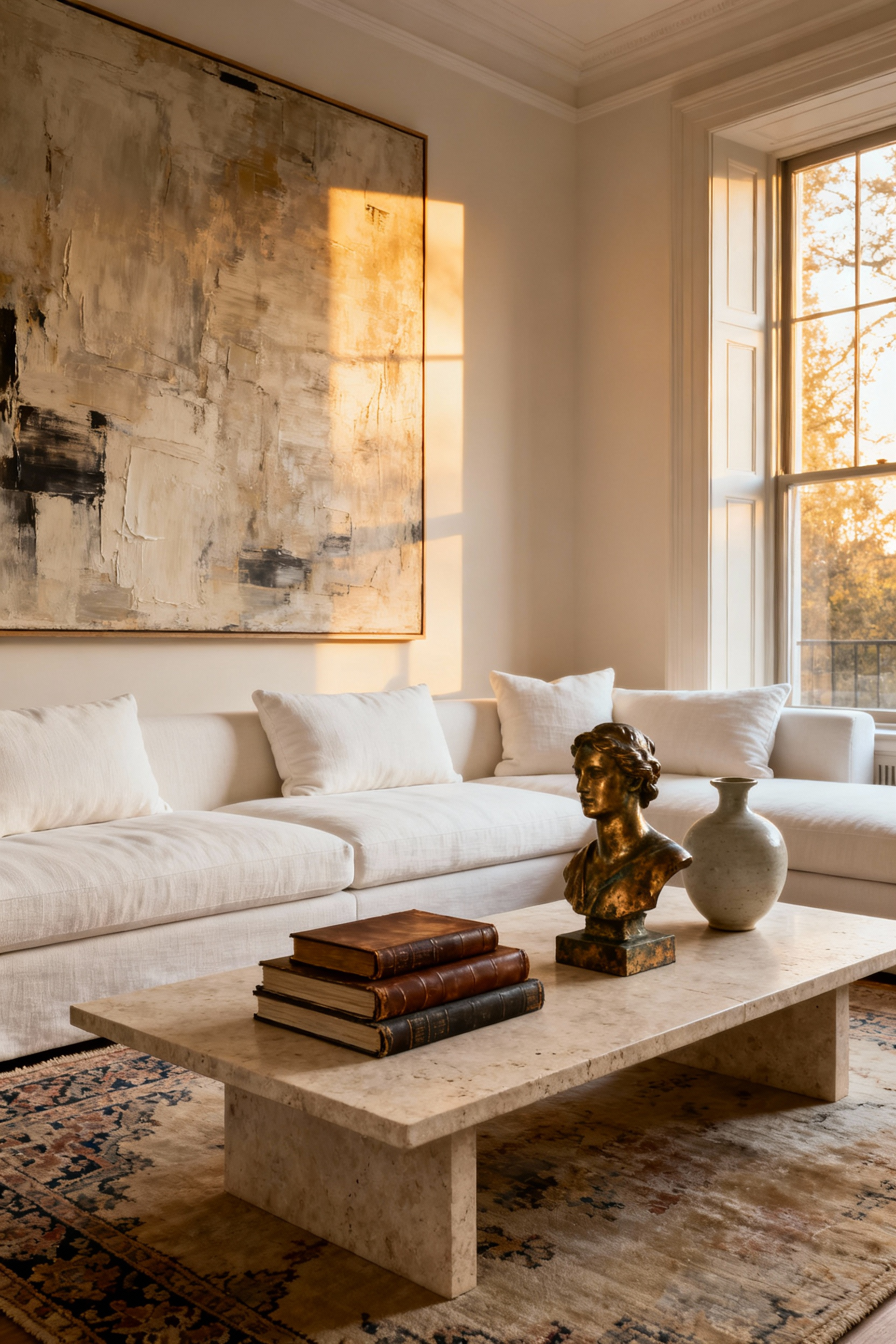
Once the emotional foundation is set, focus on technical precision. Style coffee tables and mantels using the Rule of Three, grouping odd-numbered items with varying heights and materials to create dynamic, curated vignettes. Treat lighting as your room’s ultimate texture; layer ambient, task, and accent illumination to sculpt the space and control shadows, elevating the room from furnished to finished.
12. Wall Curation: The Debate Between Gallery Walls and Oversized Statement Art
Select a single oversized statement piece for immediate sophistication. This approach embraces the “Rule of Scale,” effectively minimizing visual clutter in rooms with complex architecture or built-in shelving. Ensure your art matches the proportion of your furniture; a massive canvas demands a substantial sofa beneath it to ground the composition. View a statement piece as the room’s heartbeat, anchoring the space with quiet confidence rather than competing for attention.
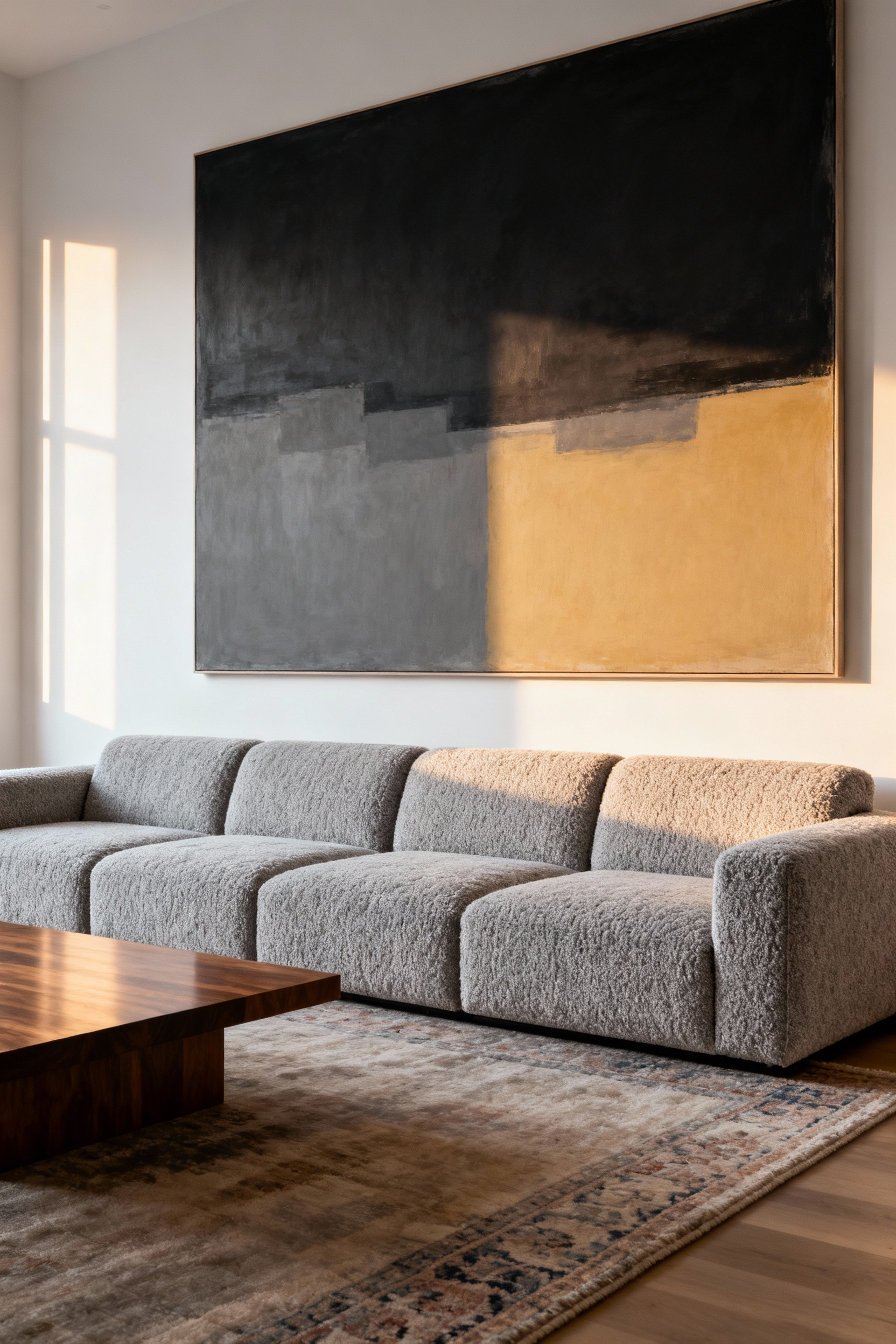
Conversely, gallery walls tell a personal story, implying a “collected” life rich in history. Curation requires discipline to avoid a messy aesthetic. Maintain elegance by standardizing frames with a consistent material like matte black or brass to tie disparate works together. Limit the palette by selecting art that shares a common color story, and mind the spacing by keeping the distance between frames uniform—ideally two to three inches. If investing in large-scale fine art proves cost-prohibitive, deploy an oversized architectural mirror. It occupies the necessary visual real estate while amplifying natural light, delivering the impact of a masterpiece with the utility of reflection.
13. The Coffee Tablescape: Elevating Books and Objets d’Art Beyond Clutter
True luxury lies in curation, not accumulation. A coffee table often falls victim to daily clutter, yet it offers the perfect stage for a sophisticated vignette. Boundaries create beauty. Start with a substantial tray—lacquer or mirrored finishes reflect light beautifully—to contain your arrangement. This simple tool transforms scattered items into a deliberate collection. Within this frame, establish an anchor using a heavy art book or a sculptural vase to ground the eye immediately.
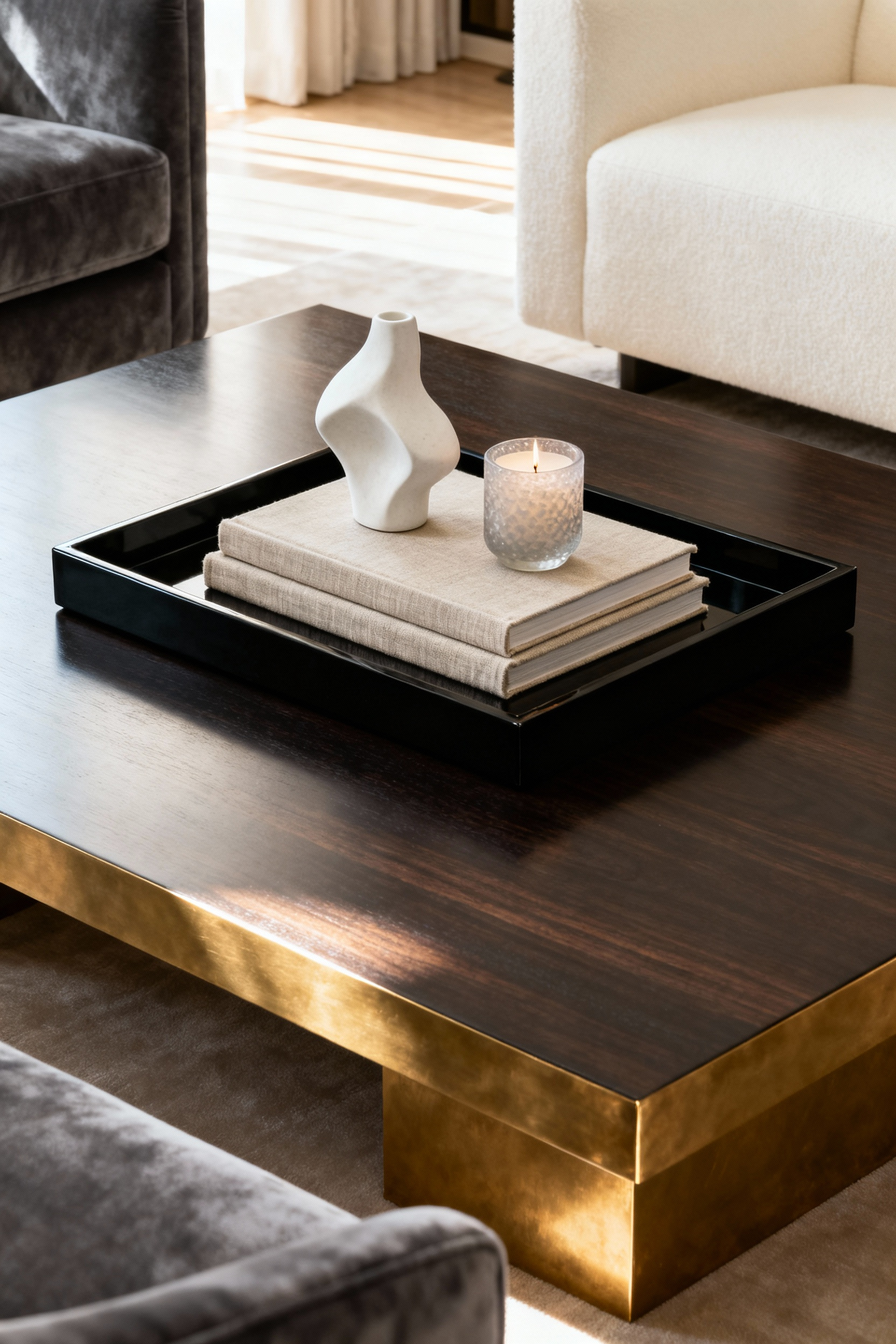
Build vertical interest to avoid a flat, stagnant look. Stack two or three hardcover books to elevate a small *objet d’art*, like a bronze paperweight or ceramic bowl. Mix materials—pair cool glass with warm wood to engage the senses—and adhere to the Rule of Three by grouping items in odd numbers for a natural, unforced aesthetic. Finally, respect negative space. Leave at least half the table bare. This restraint ensures your design accommodates a wine glass or a book, proving that true elegance is always livable.
14. Biophilic Sculpture: Using Large-Scale Botanicals to Breathe Life into Luxury
Treat large-scale botanicals as architectural commissions rather than mere accessories. In high-end interiors, volume dictates value; undersized plants often register as visual clutter. Select architectural-grade specimens, such as preserved olive or ficus trees standing eight to fifteen feet tall, to command the room’s vertical space. A large tree provides a necessary organic counterpoint to polished surfaces, instantly grounding the design. Anchor these statement pieces in minimalist vessels, like aged bronze or polished concrete, to emphasize the sculpture over the container.
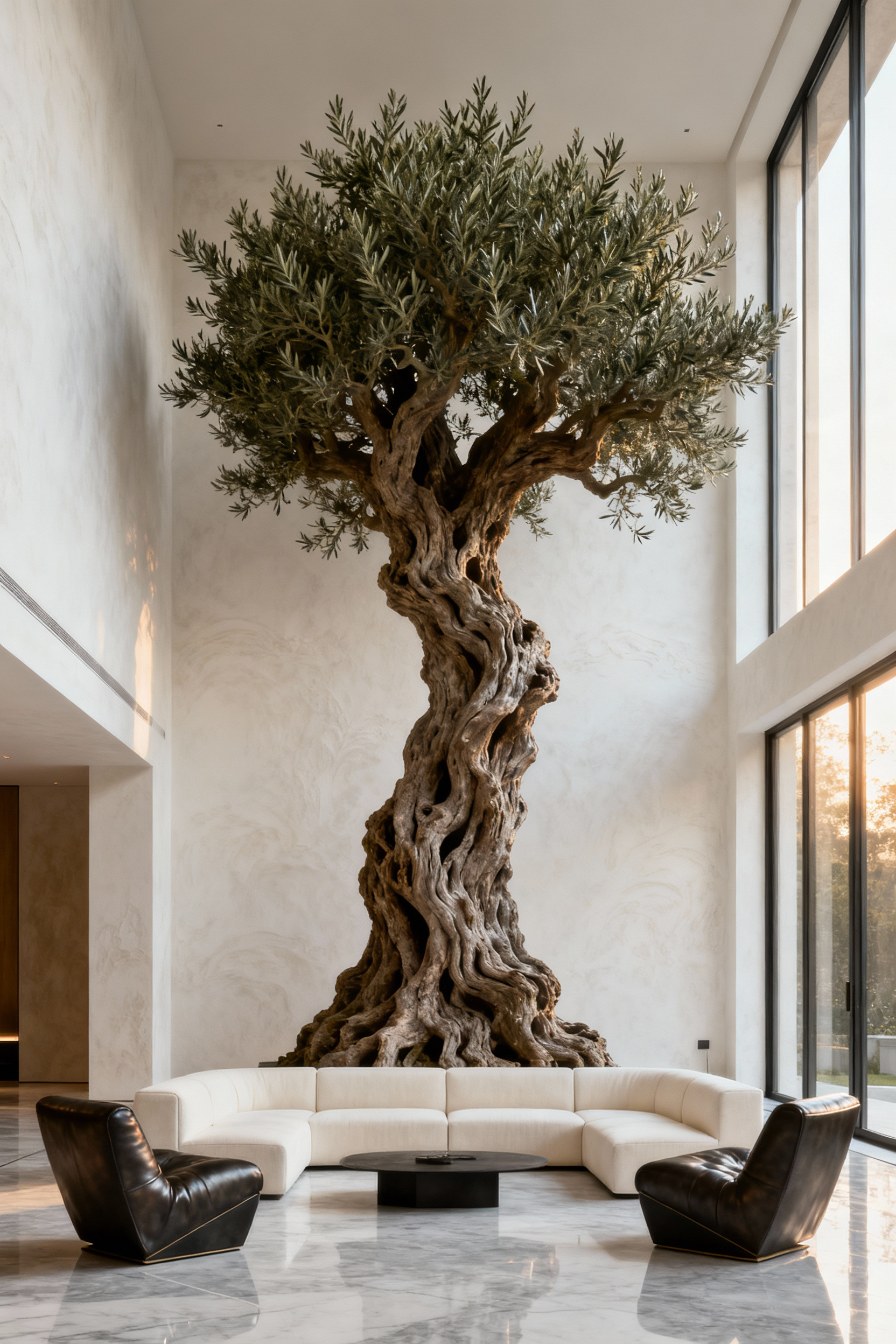
Elevate these natural forms through strategic illumination. Without light, even the most expensive botanical vanishes at night. Use recessed floor fixtures to uplight the base, casting dramatic shadows through the branches, or direct gallery lighting onto moss walls to reveal three-dimensional depth. These installations function as static, zero-maintenance art, providing the psychological benefits of nature with the permanence of fine sculpture.
15. The Invisible Layer: Designing the Room’s Scentscape
True luxury extends beyond the visual; it requires an invisible architecture known as the scentscape. “Olfactory zoning” subconsciously defines open-plan spaces. Position crisp, botanical notes like eucalyptus near entryways to sharpen focus, then anchor your seating area with warm sandalwood or cashmere to signal relaxation. This sensory shift guides the mind between activity and rest more effectively than a wall ever could.
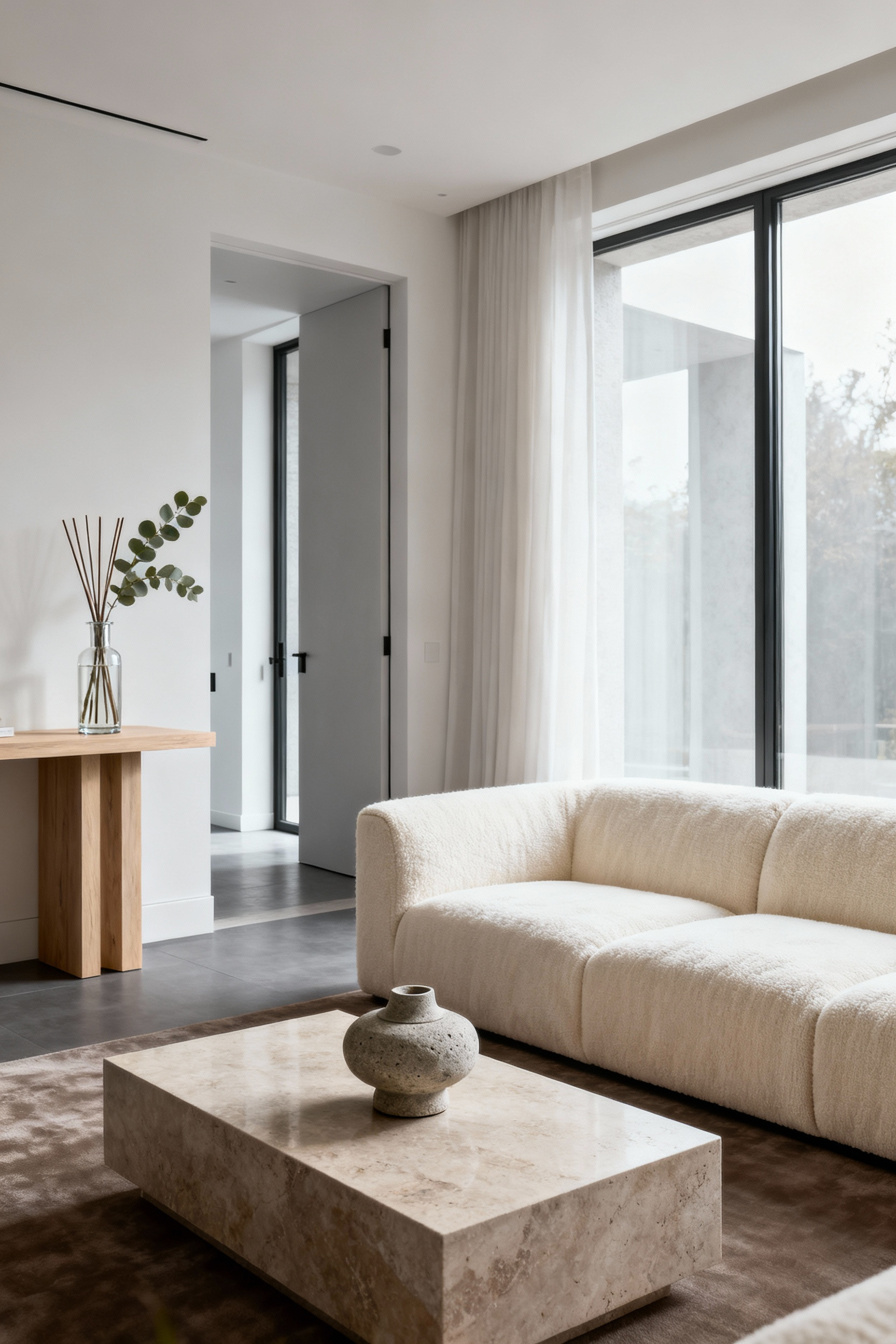
Harmony remains paramount. Align your scent profile with your room’s material palette: pair light woods and linen with airy, green notes like fig leaf or white tea, and match heavier textures like velvet and dark leather with complex tobacco, amber, or dark patchouli. Prioritize delivery method over intensity. Avoid overpowering candles; instead, invest in programmable smart diffusers that release consistent, subtle micro-mists, ensuring the fragrance remains a refined background element rather than an intrusive presence.
Conclusion: From Showroom to Sanctuary – Ensuring Your Design Ages Gracefully
True luxury extends far beyond the initial showroom reveal; it relies on endurance. Prioritize structural integrity over temporary sheen by selecting high-grade performance fabrics that withstand the rigors of daily life. Embrace natural materials like solid wood, stone, and leather. Unlike synthetic surfaces that degrade, these honest elements develop a rich patina over time, allowing your space to gain character and depth rather than simply showing wear.
Protect your investment by anchoring the room with the 70/30 principle: dedicate the majority of your budget to timeless, neutral foundations, reserving fleeting trends for easily interchangeable accessories like pillows and art. Demand flexibility from your layout by choosing modular furnishings that adapt seamlessly as your household evolves. By designing for longevity, you transform a static image into a living sanctuary. Cultivate a home that ages as gracefully as you do.