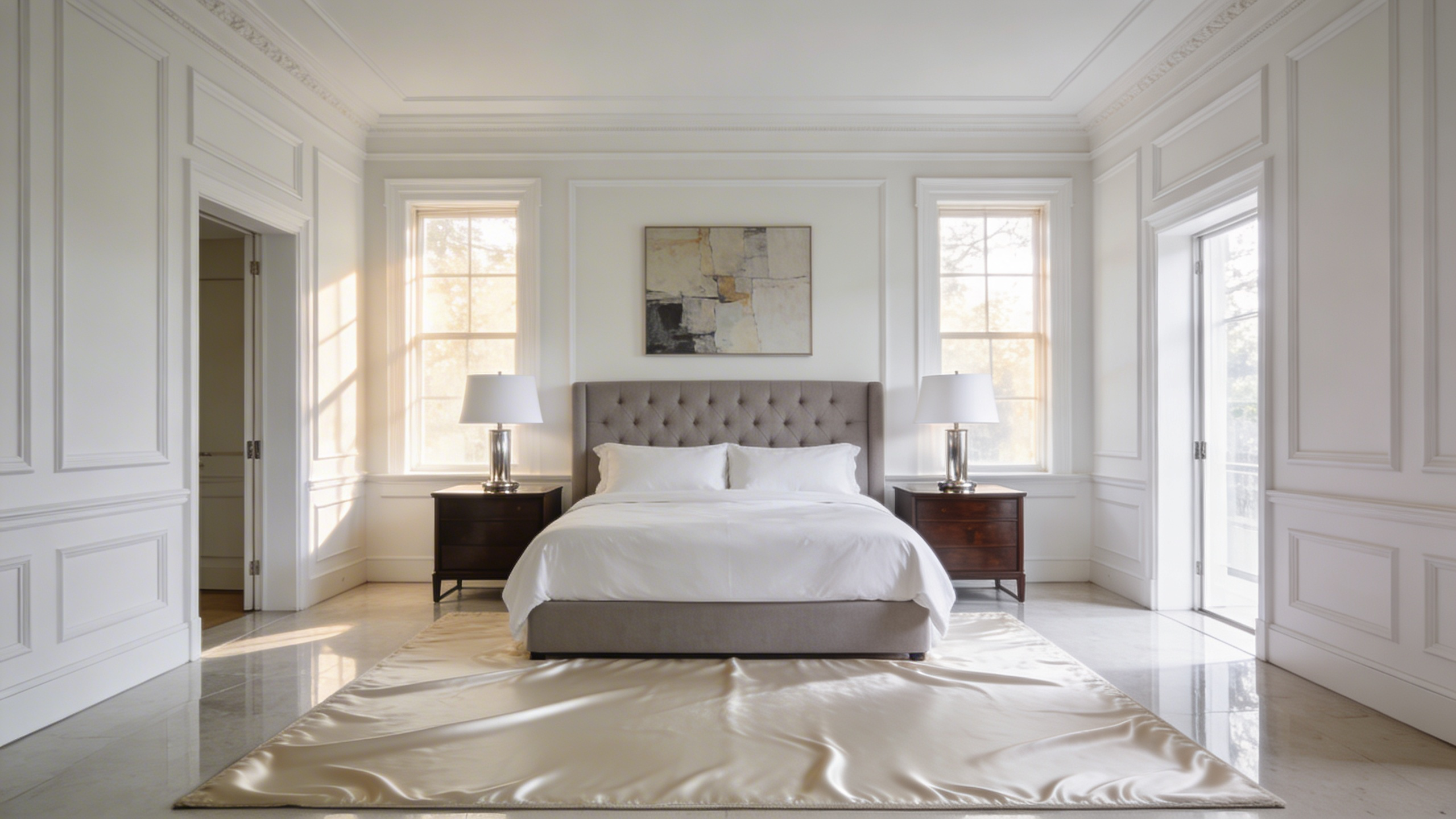
Many people treat a couple’s bedroom as a utilitarian sleep chamber. Let’s be honest, though. The marital bed was traditionally a very public stage. Neighbors and family members routinely witnessed bedding ceremonies for centuries. Thankfully, the 1926 Sears catalog eventually popularized the modern master bedroom suite. The space therefore shifted from public display into a hidden retreat. When exploring the best bedroom ideas for couples, I always notice one thing. The modern sanctuary truly represents a rebellion against our communal past.
Creating a shared sanctuary goes far beyond picking out paint colors. Instead, it requires designing a psychological retreat for two distinct people. Architectural theorist Christopher Alexander famously called this the “couple’s realm.” Couples indeed need physical separation from daily family chaos. An ante-room naturally provides this crucial buffer. Next, this environment acts as a necessary backstage area. Here, partners can safely drop their social masks. High-end master suite design consequently becomes a real investment in relational health.
We will first explore the neurodesign of calming intimacy. Next, we examine the importance of visual symmetry around the bed. Identical nightstands specifically prevent a subconscious power imbalance. We then discuss establishing the bed as the symbolic room center. Modern luxury spaces strictly incorporate a tech-free sanctum to protect relational bandwidth. Finally, we must address the modern design shift toward functional sleep autonomy. Individual duvets or dual-zone cooling ultimately guarantee mutual restoration through sophisticated bedroom design ideas.
Phase I: The Spatial Foundation & Symmetry
A successful couple’s retreat begins with a balanced layout. Specifically, this spatial foundation requires a strict commitment to bilateral symmetry. Designers often refer to this as the equality of access principle. Practically, you should provide 30 to 36 inches of clearance on both sides of the mattress. Therefore, neither partner feels forced into a physical hierarchy. This balanced layout echoes classic Neoclassical design principles. By finding the longest uninterrupted wall, you establish a primary central axis. Consequently, this predictable geometry instantly soothes the eye. It perfectly aligns with professional bedroom style ideas.
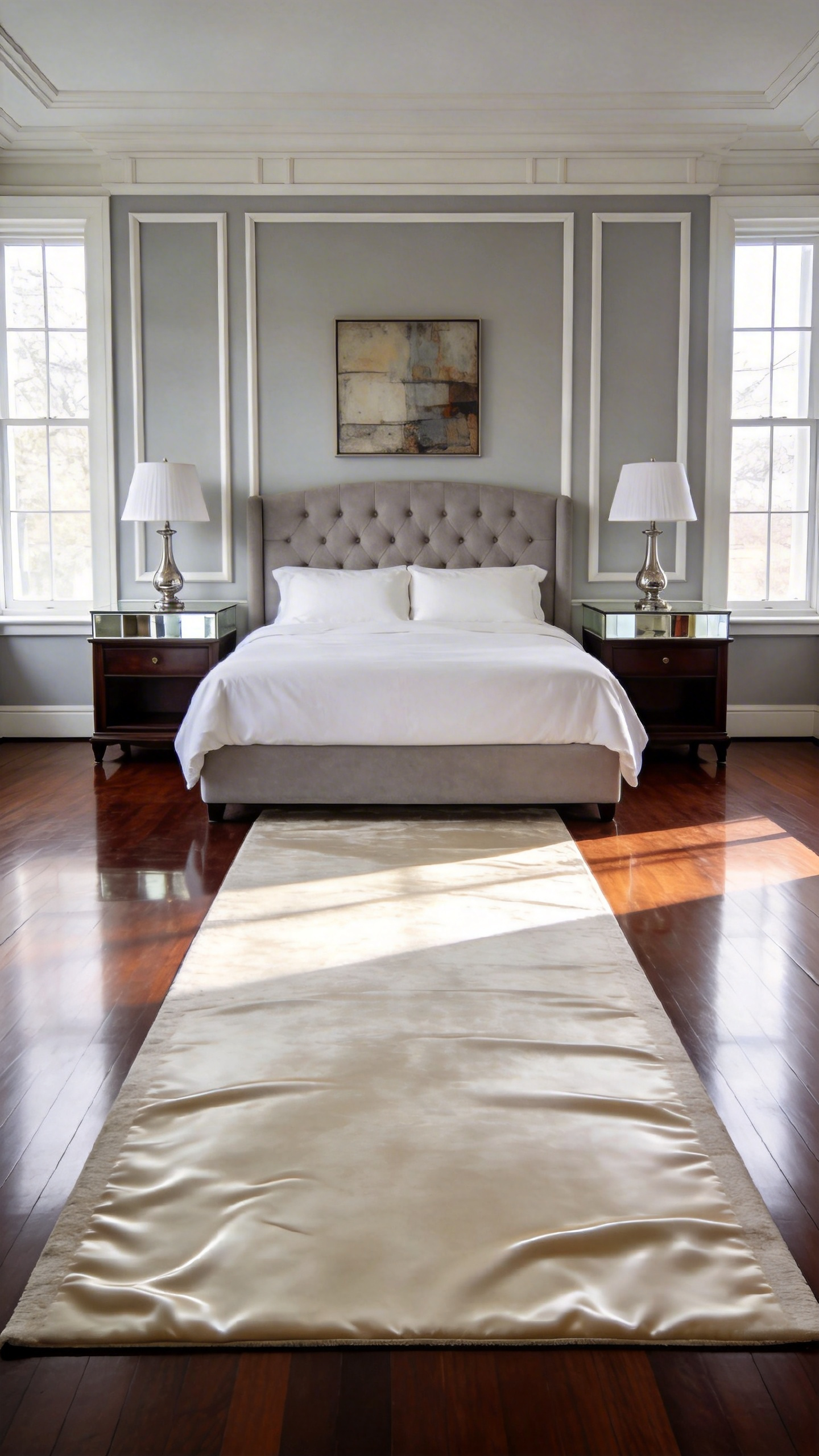
Human brains are evolutionarily wired to find symmetry safe. Indeed, matching heavy wooden nightstands create a comforting bilateral anchor. As a result, this visual containment actively lowers daily cortisol levels. You can then layer the rule of threes over this strict grid. For instance, two identical bedside tables frame a single upholstered headboard. Ultimately, this dynamic composition keeps the suite from looking accidentally over-matched.
Finally, spatial mastery requires managing the room’s energy flow. Placing the bed diagonally from the doorway creates a commanding psychological vantage point. Thus, you cultivate a shared sense of security. The room immediately becomes a highly functional shared sanctuary.
1. Anchor the Room with Intentional Symmetry
Creating a sophisticated couple’s retreat begins with spatial equality. Specifically, intentional symmetry establishes a soothing neutral ground for intimacy. Historically, the 1920s introduced the unified primary bedroom concept. Today, high-end interior design relies on mirroring large-scale foundational elements. Therefore, use the bed as your central architectural axis. Invest wisely in two identical nightstands and classic lamps. Next, experts recommend leaving at least 90 centimeters of bedside clearance. This vital access symmetry ensures neither partner feels trapped. Consequently, the human brain processes this balanced room instantly. In fact, this rapid visual scan lowers your cognitive load. Ultimately, reducing environmental stress makes room for deep emotional vulnerability.
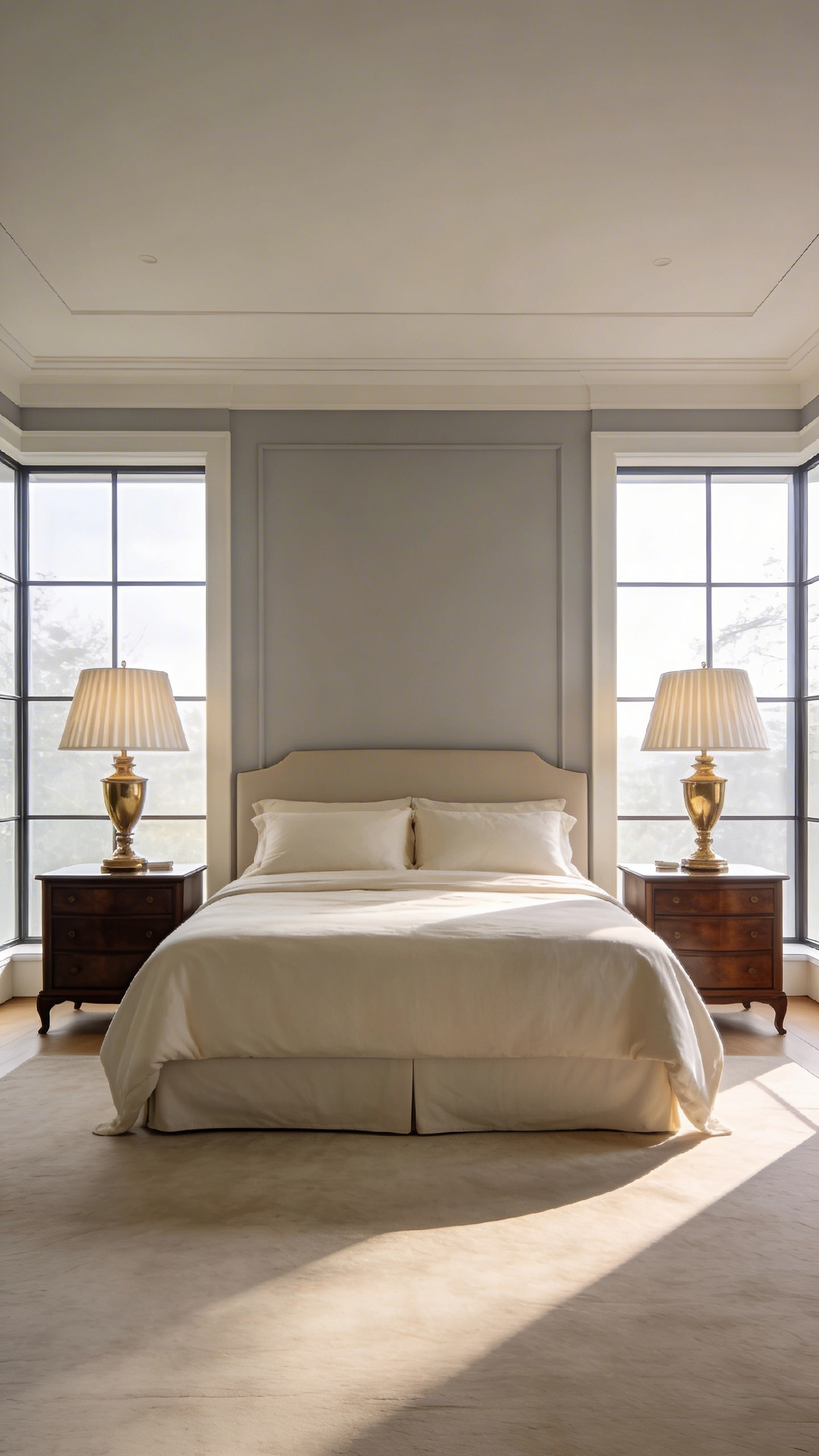
However, you must avoid creating a cold hotel room. I always suggest purposefully layering intentional asymmetry over your structured base. For example, apply the 3-5-7 rule to your bedside styling. One partner might display three stacked books alongside a tray. Conversely, the other could feature two small vases. Thus, you build individual narratives within a unified shared structure.
Reinforce this visual balance with thoughtful sensory details. Install symmetrical warm lighting at a calming 2700K standard. Specifically, this provides personalized task lighting without disrupting the sanctuary. Finally, physically anchor both sides of the bed with a large area rug. Naturally, investing in shared textures effortlessly unites the space. Consequently, luxury and comfort remain equally distributed for both partners.
2. Establish a Sophisticated, Gender-Neutral Color Foundation
Historically, bedrooms suffered from a hyper-gendered Victorian divide. These spaces forced a choice between floral nurturing and rugged utility. However, a modern suite prioritizes relational equilibrium. Establishing a shared sanctuary requires a foundation of complex neutrals. Ultimately, these shades change depending on the light.
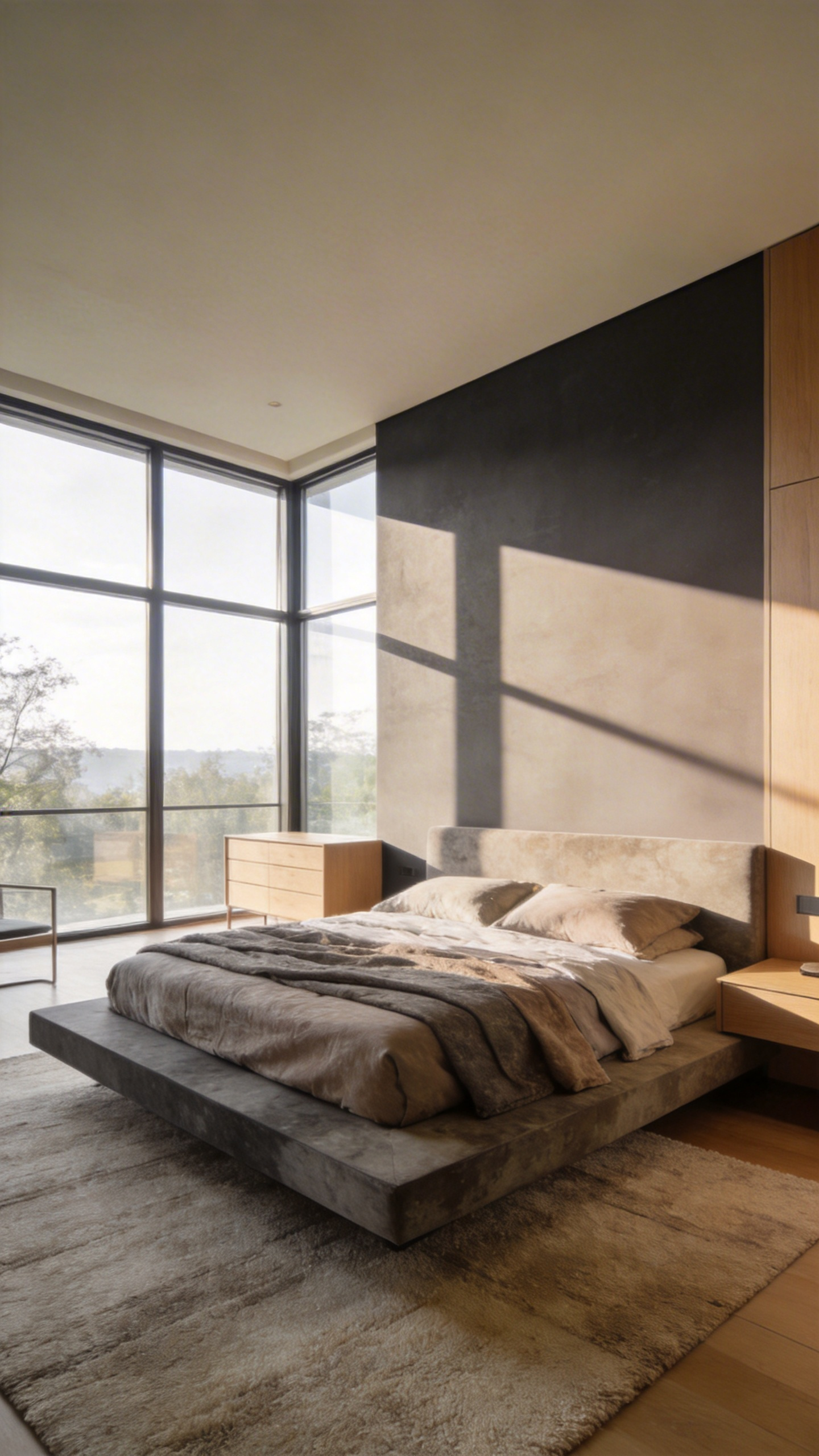
For instance, interior designers utilize Light Reflectance Value. A north-facing room needs warm undertones to prevent muddy shadows. Conversely, a sun-drenched space handles moody colors perfectly. Sophistication is often found within the invisible undertone. Thus, greige bridges cool gray and warm beige. A subtle green undertone feels wonderfully organic.
Consequently, utilizing the 60-30-10 rule is a smart strategy. First, use a true neutral like oatmeal linen for the foundation. Next, add warm wood or leather to create sensory tension. Bridge colors like deep teal provide a sophisticated accent. Furthermore, tactile variety replaces loud colors in restrained palettes. Pairing a matte wall with a silk rug creates visual depth. Finally, acoustic materials like heavy boucle add quiet intimacy.
3. Master the Scale and Proportion of the Primary Bed
Selecting the perfect bed involves more than choosing the largest frame. Specifically, mastering proportion requires balancing elegance with comfort. For instance, a spacious king bed gives the brain spatial permission. Consequently, your nervous system relaxes without monitoring physical boundaries. Therefore, this psychological safety encourages restorative sleep. Next, interior designers rely on the mathematical three-to-one ratio.
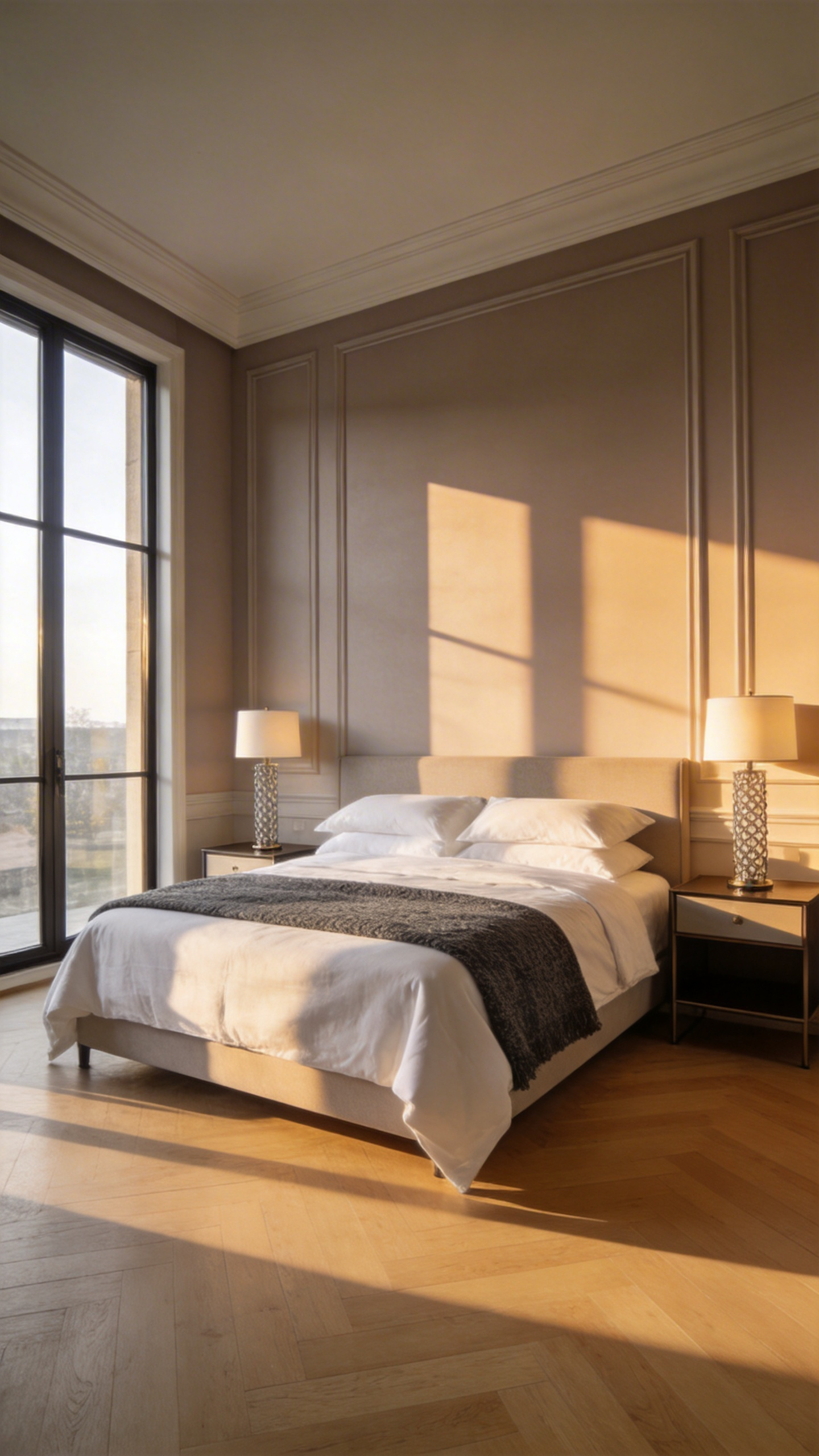
The total room area should ideally triple the bed’s horizontal footprint. Otherwise, the suite quickly feels like a cramped box. Vertical scale matters equally when curating a high-end aesthetic. Accordingly, rooms with high ceilings demand tall canopy frames. These structures lower the visual ceiling using draped linens. Thus, they create a plush nest within a massive room. Additionally, the empty space around the bed requires careful planning. A thirty-six-inch clearance zone serves as a crucial relational buffer.
Ultimately, this generous path allows each partner to move independently. You must also balance the visual weight of heavy velvet upholstery. To illustrate, anchor the opposing wall with a substantial wood dresser. Finally, the ergonomic sweet spot for bed height is twenty-four inches. This elevation lets both partners sit comfortably with flat feet. Consequently, this grounds the sanctuary in ultimate stability.
4. Carve Out Distinct Micro-Zones for Individual Retreat
True luxury in a shared bedroom requires intentional personal space. Specifically, creating a micro-zone honors the psychological need for autonomy. Therefore, placing a reading chair two feet from the bed establishes primary territory. Grounding this zone with a rug powerfully signals physical ownership. In addition, plush texture serves as a tool for soft boundaries.
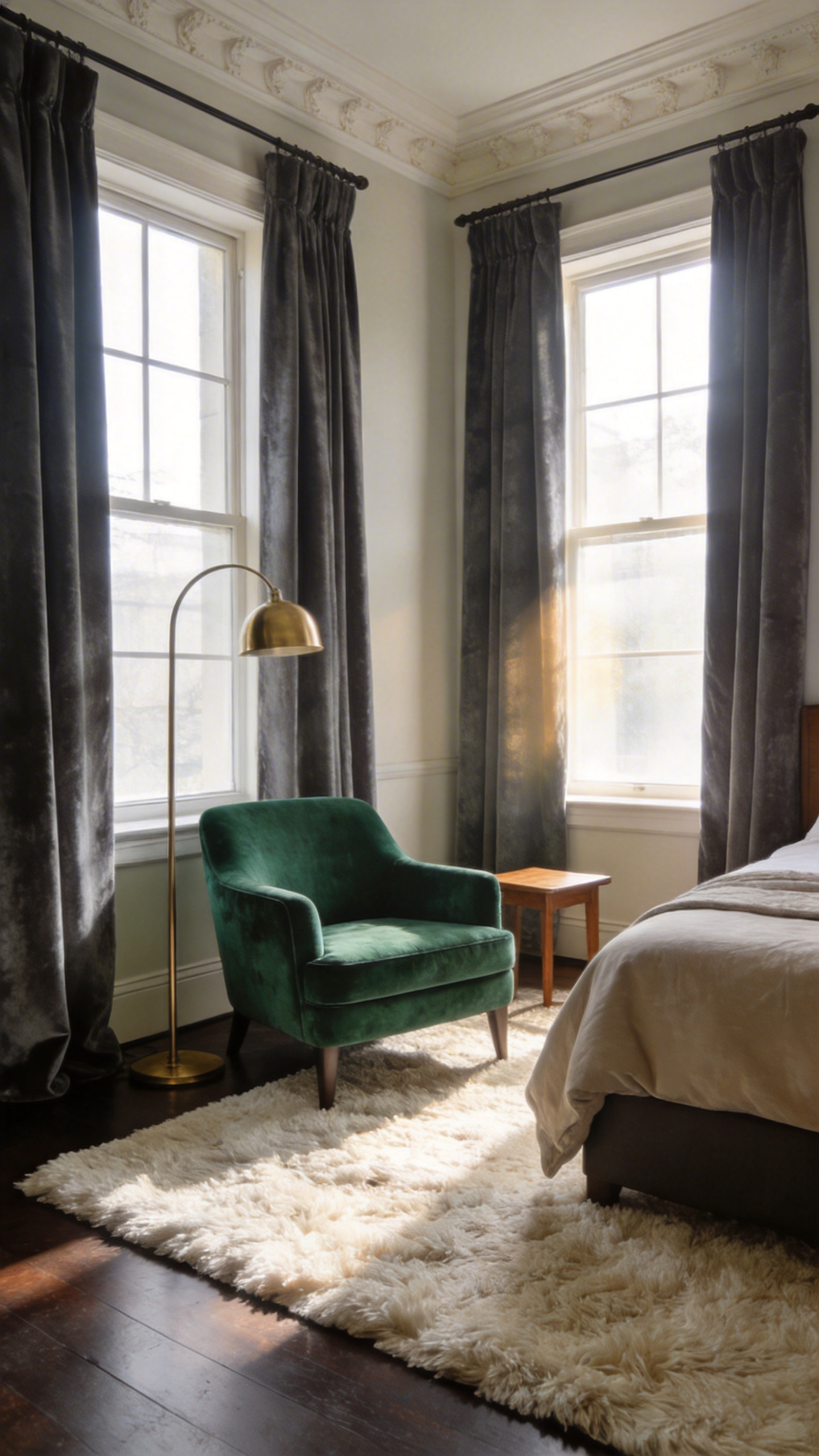
Consequently, investing in heavyweight velvet drapery absorbs sound significantly better than basic linen. Visual separation is equally important for a restful retreat. For instance, low-level lighting creates intimate pools of illumination. Thus, one partner remains hidden in shadows while the other reads. Interestingly, this nested concept mirrors 18th-century French architectural design. In fact, historic master suites featured graceful daybeds for private reflection.
Indeed, you can achieve this look today with a classic chaise. However, you must carefully avoid cluttering the room with too much furniture. Instead, embrace the Japanese philosophy of purposeful negative space. Particularly, leaving empty floor area between zones allows the room to breathe. Ultimately, these literal gaps prevent retreats from feeling cramped. Moreover, styling a corner with personal items fosters a restorative sense of self. As a result, couples can share a sanctuary while maintaining independence.
Phase II: Sensory Sophistication & Materiality
Moving beyond functional layouts, sophisticated design uses materiality to influence the nervous system. Specifically, this phase employs neuro-design to create an emotionally resonant environment. For instance, harsh materials keep the body in a subtle state of alertness. Conversely, natural textures like bouclé and brushed linen activate the parasympathetic nervous system. Implementing these cozy bedroom ideas signals psychological safety to the brain. Additionally, a deep-pile silk rug acts as a physical grounding mechanism. Ultimately, this lowers cortisol levels as couples enter the space.
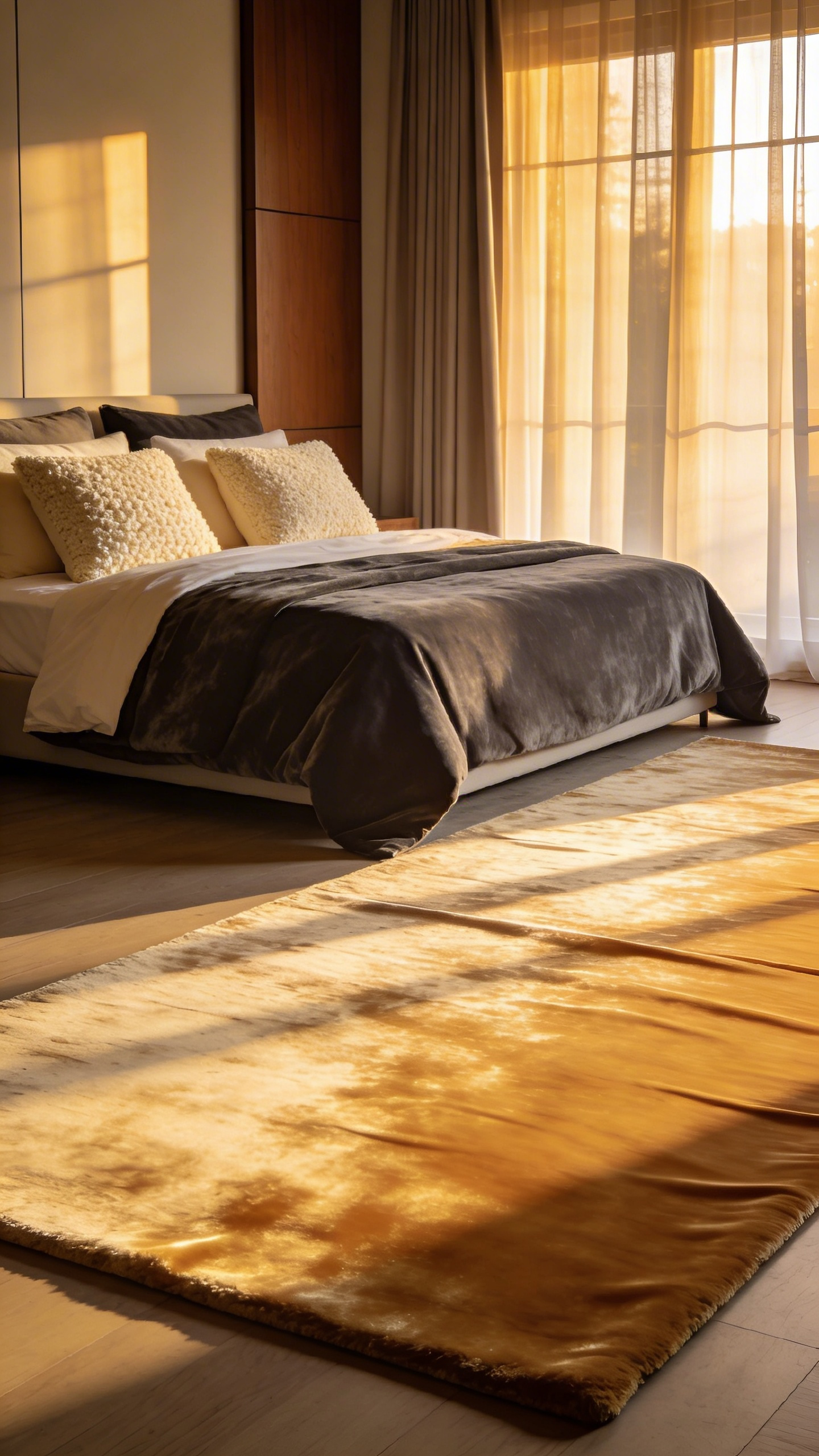
However, a nuanced balance exists between emotional intimacy and sexual desire. I often find that intimacy requires soft lighting and soothing, consistent textures. Meanwhile, desire thrives on sensory contrast and subtle tactile friction. Thus, pairing a cool marble table with a warm velvet headboard introduces essential tension. Furthermore, dim-to-warm lighting shifts the atmosphere seamlessly from reading to romance.
Similarly, high-end spaces treat sound as a tangible material. Indeed, upholstered wall panels and heavy drapery create a tranquil acoustic cocoon. Consequently, a monochromatic palette of varied taupe textures promotes visual silence. Rather than processing competing patterns, the brain simply feels the room.
Historically, master bedrooms were purely utilitarian spaces for basic rest. Presently, they have evolved into transportive main suites. Accordingly, designers select investment materials like natural wood and genuine leather. Eventually, these elements develop a rich patina that adds character. Moreover, invisible technology maintains the room as a peaceful sanctuary. Finally, atmospheric materials elevate the overall sensory experience. Crucially, scent-scaping with warm sandalwood directly engages the limbic system. Likewise, hidden filtration ensures effortless, pure air quality.
5. Invest in Hotel-Quality, Temperature-Regulating Linens
The foundation of a luxurious bedroom starts with the bed itself. Specifically, investing in hotel-quality linens transforms a simple sleeping area into a restorative sanctuary. Furthermore, choosing the right weave dictates the entire sensory experience. For example, crisp percale cotton feels invigorating and cool against the skin. Conversely, sateen offers a lustrous drape that feels incredibly indulgent. However, sateen can sometimes trap collective body heat between partners. Therefore, smart design means looking beyond deceptive massive thread counts. In reality, a 300-thread count sheet of extra-long staple cotton outperforms tighter weaves. Indeed, excessively high thread counts block airflow and create a stifling effect. Meanwhile, high-quality fibers ensure necessary thermal breathability for a shared space.
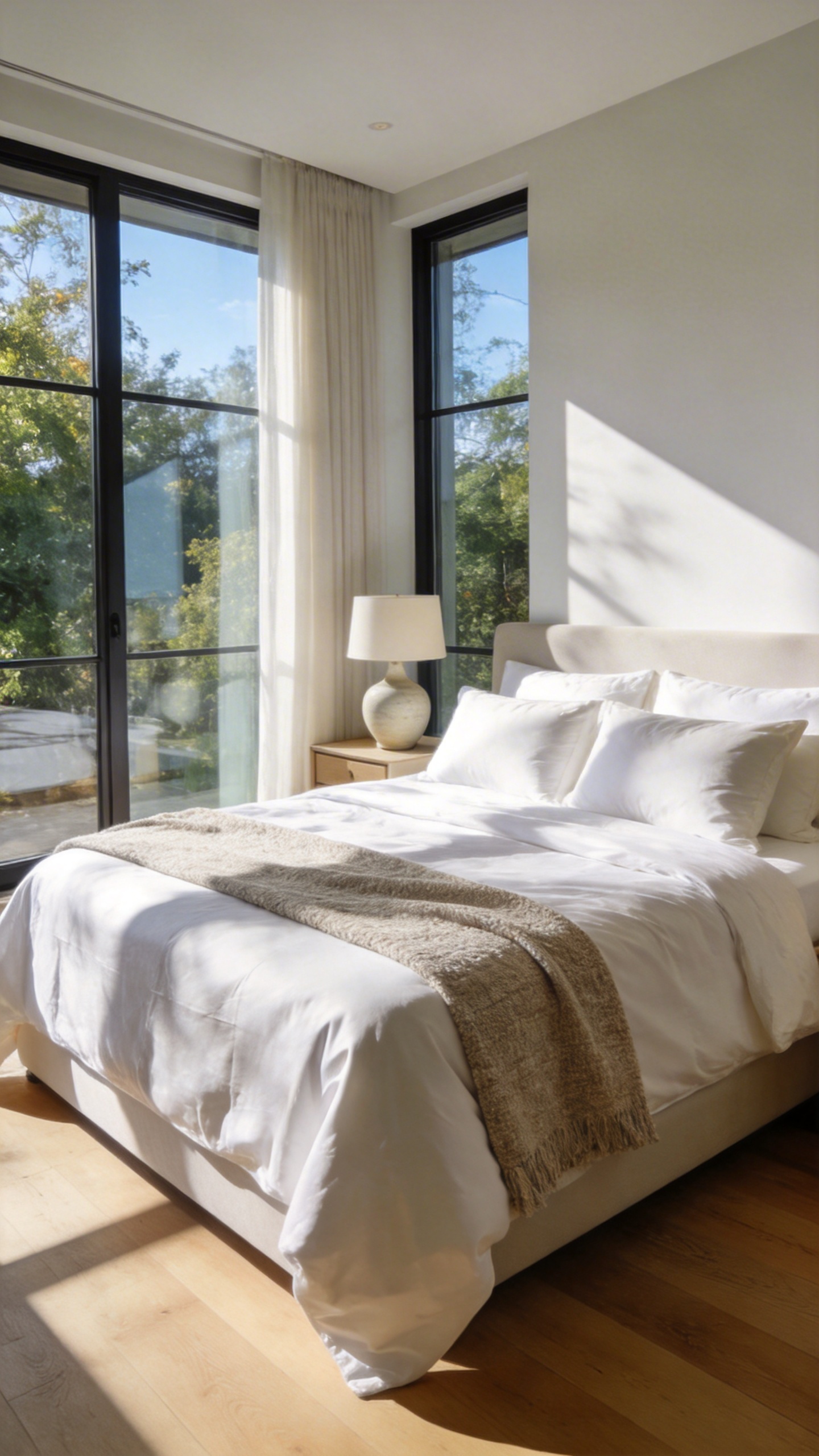
Crucially, our bodies must drop their core temperature for deep sleep. Consequently, temperature-regulating materials like Tencel or bamboo are excellent investments. Naturally, these intelligent fabrics actively draw heat away from the skin. Alternatively, couples facing thermal incompatibility might try the Scandinavian sleep method. Specifically, using two separate duvets on a shared bed eliminates nighttime temperature battles. Finally, selecting an all-white color palette mimics luxury hospitality. Moreover, this pristine visual cue subconsciously promotes instant relaxation. Ultimately, pairing biological function with elegant design ensures a beautifully restorative environment.
6. Layer Window Treatments for Dual Sleep Preferences
Managing different sleep habits often requires a specific approach to window treatments. Specifically, a high-performance layered system resolves conflicting needs for light and temperature. In fact, luxury design relies on a precise six-layer method. This smart investment balances classic elegance with absolute modern comfort.
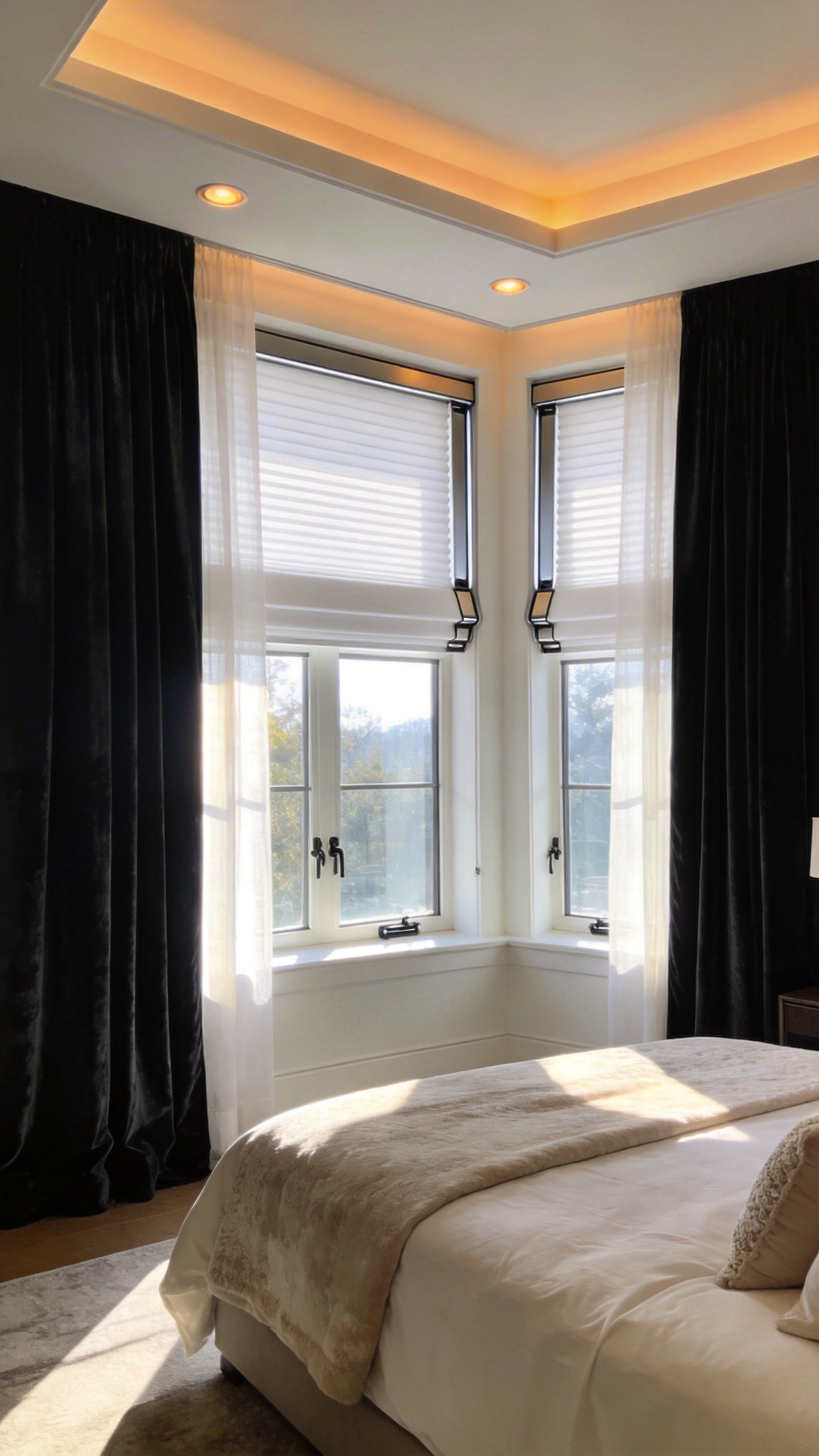
First, a functional core of cellular shades traps air. Consequently, this thermal barrier stabilizes the room at an ideal 65 degrees. Low-profile side channels eliminate frustrating light halos at the edges. Next, sheer panels provide a delicate diffusion layer for daytime privacy. Heavy velvet blackout draperies add necessary mass to block streetlights. Furthermore, an invisible acoustic liner dampens disruptive urban noise significantly. Ultimately, an architectural cornice caps the window to prevent top light leaks.
This elaborate setup evolved from extravagant Victorian window fashions. However, today’s wellness-driven approach prioritizes biological sleep quality over status. For example, dual roller shades easily satisfy both early birds and night owls. One partner can enjoy gentle filtered moonlight through the sheers. Conversely, the other partner can sleep soundly in a pitch-black cocoon. Finally, motorization serves as the ultimate modern layer. Smart scheduling allows automatic adjustments without waking a sleeping partner.
7. Ground the Space with High-Pile, Tactile Rug Placements
A rug in a primary suite goes beyond simple decor. Indeed, it acts as sensory architecture that anchors the relationship. Stepping onto a cold floor triggers a minor stress response. Conversely, a high-pile wool rug provides a calming sensory bridge. Therefore, this soft landing protects your body’s delicate waking state. Furthermore, plush textures create a shared sense of profound security.
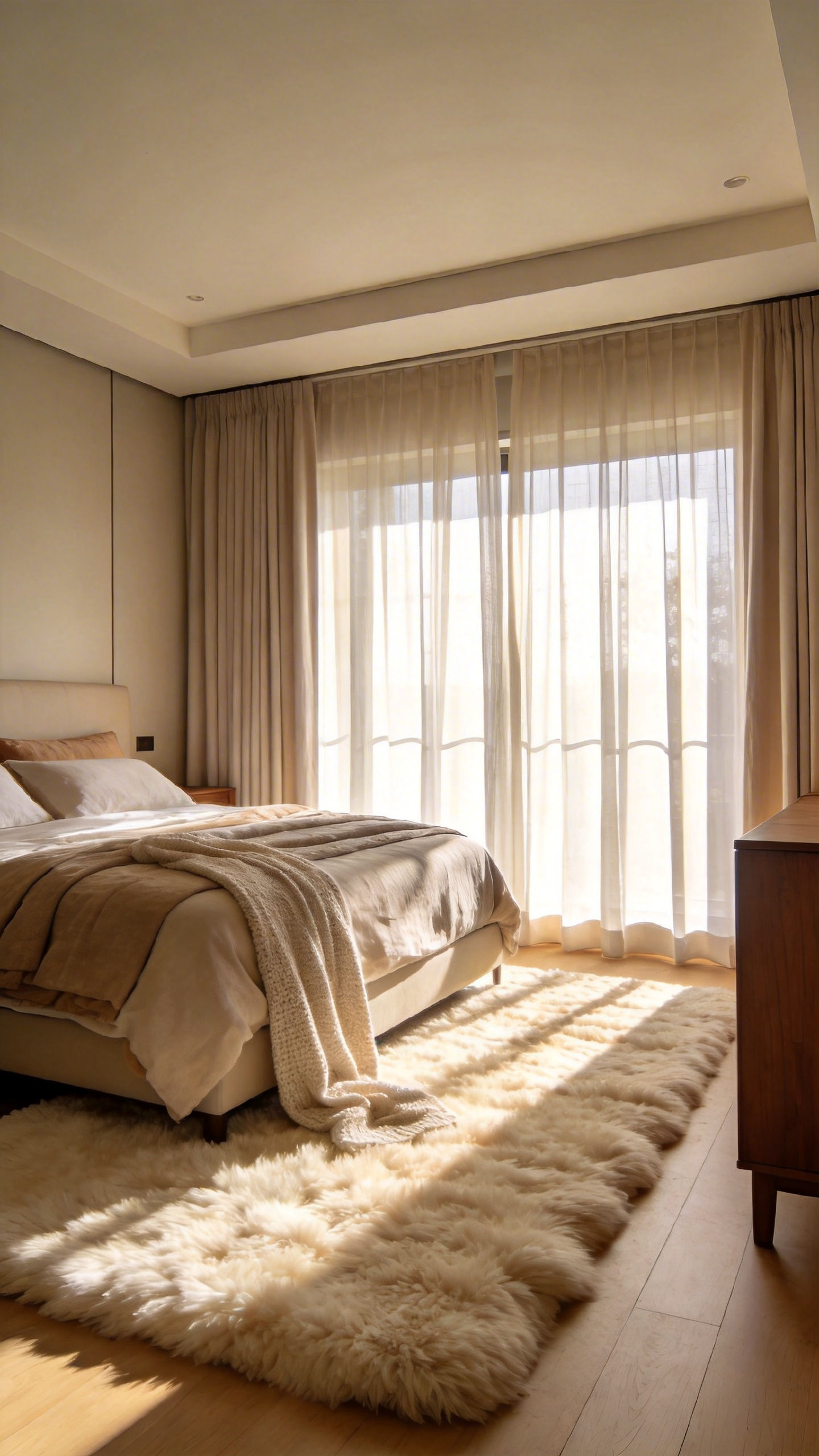
Moreover, dense natural fibers offer a vital layer of acoustic privacy. Specifically, a high-pile rug absorbs disruptive high-frequency sound waves. Consequently, the bedroom remains a quiet, sound-sealed sanctuary. Practically, designers recommend extending the rug well beyond the bed. Specifically, an 18 to 24-inch border creates a grounding visual island. Thus, the bed never appears to float awkwardly in space. Interestingly, psychological studies reveal that soft environments foster cooperative dynamics. Ultimately, this subtle haptic influence helps couples feel less rigid.
Naturally, prioritize high-quality materials as smart interior design investments. For instance, pure wool contains lanolin for year-round temperature regulation. Additionally, blending wool with botanical silk introduces an authoritative luxury. Truly, this rich shimmer enhances romantic atmospheres under dim lighting. In short, tactile rugs effortlessly balance classic elegance and modern comfort.
8. Integrate Acoustic Dampening Elements for True Tranquility
Fundamentally, true tranquility requires more than blocking outside noise. Instead, you must manage how sound behaves inside the room. Modern bedrooms often feature hard surfaces that amplify every sound. Consequently, this acoustic brightness causes lingering listener fatigue. Therefore, creating a sensory cocoon requires high-quality acoustic dampening. Specifically, materials like heavy acoustic felt absorb unwanted echoes beautifully. As a result, the space feels deeply and physically cozy.
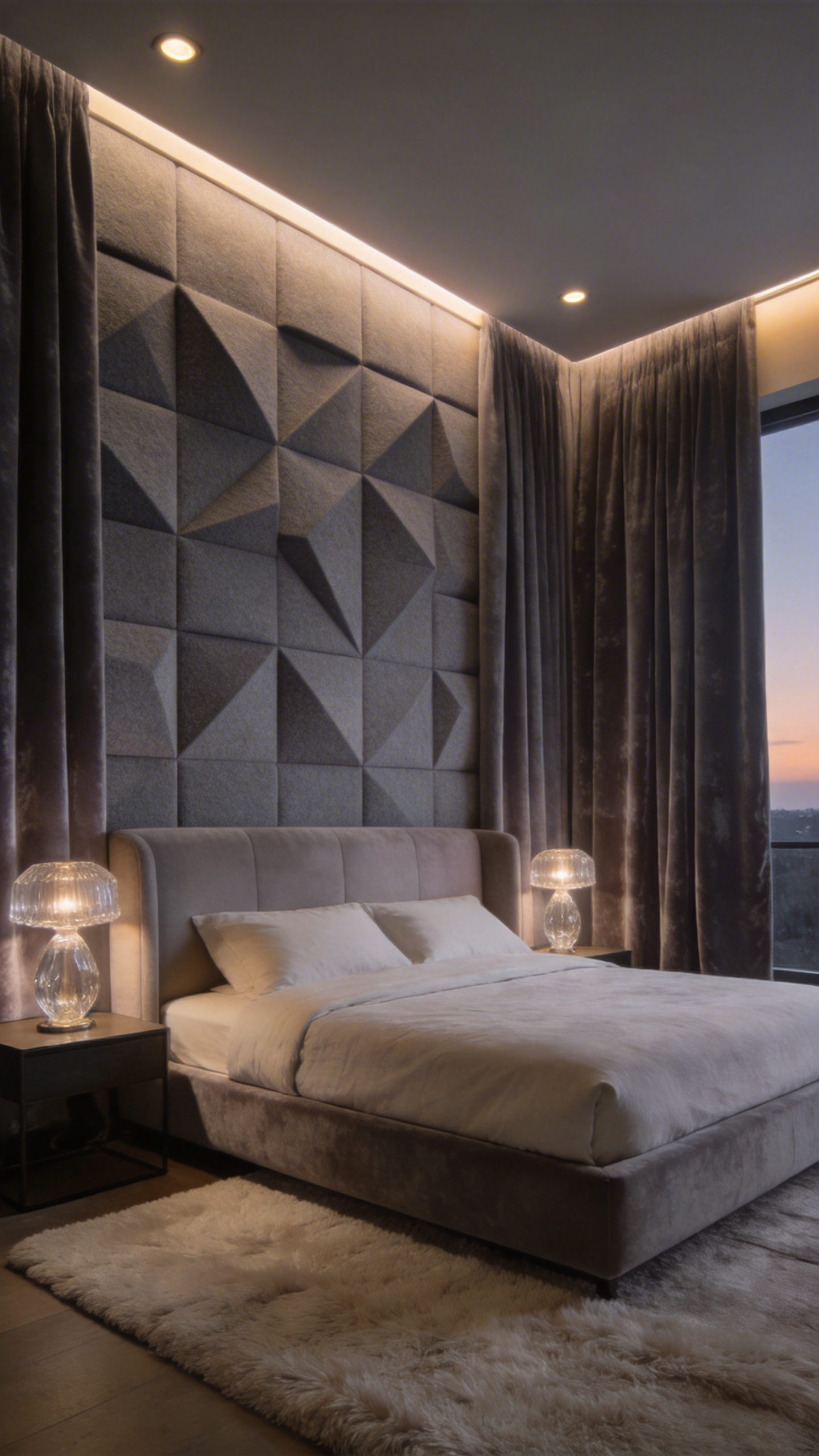
Furthermore, a quiet bedroom fundamentally changes how couples communicate. Indeed, lowering ambient noise optimizes your shared whisper threshold. This acoustic intimacy encourages vulnerable, late-night conversations. For instance, an oversized upholstered headboard makes a brilliant sound trap. Wrapped in heavy velvet, it absorbs sharp echoes perfectly. Thus, it creates a protected acoustic shadow around your pillows.
Historically, luxury hotels mastered this concept of absolute auditory stillness. Today, quiet luxury demands that same layered attenuation at home. For example, layer a thick wool rug over dense rubber. Additionally, hang mass-loaded drapes to block external disruptions entirely. You can also add fabric-wrapped ceiling coffers to stop downward noise. Ultimately, these smart investments deliver a profound sanctuary effect. In this serene cocoon, the outside world simply fades away.
Phase III: Illuminating Intimacy & Ambiance
Moving beyond functional furniture, you must treat light as emotional architecture. Specifically, we must abandon flat, hospital-like overhead lighting. Instead, sophisticated designs embrace the Chiaroscuro technique. By purposefully leaving room corners in shadow, you create a psychological refuge. Furthermore, this visual narrowing spotlights the bed to reduce sensory chaos. Accent lighting should be three times brighter than your base ambiance.
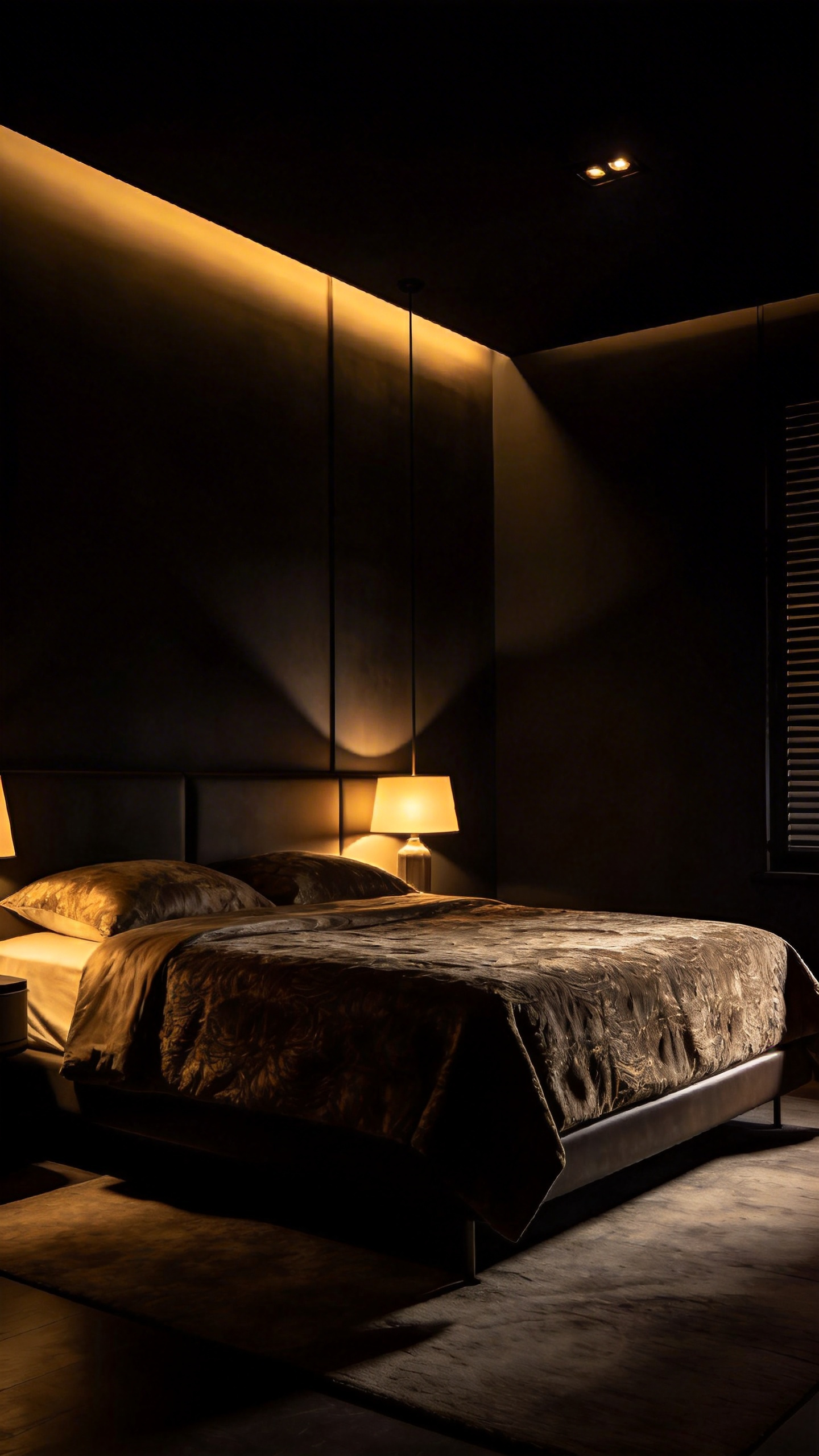
Next, consider the precise color temperature of your fixtures. Standard warm whites simply cannot foster true intimacy. Therefore, you should push into the 2000K to 2400K amber threshold. This specific spectrum mimics historical firelight while suppressing stress-inducing cortisol. Consequently, it acts as a soft natural filter for your skin. However, a warm glow is useless without proper color accuracy. Thus, investing in bulbs with a Color Rendering Index over 90 is crucial. High-CRI lighting reveals vibrant red tones to foster deeper connection. For more inspiration, consider incorporating romantic bedroom decor ideas that utilize light and shadow.
Additionally, lighting placement heavily influences tactile comfort. For instance, placing linear LEDs near a velvet headboard creates beautiful wall grazing. This technique casts dramatic shadows across the fabric’s peaks and valleys. Ultimately, the illumination makes the room feel undeniably touchable. Finally, high-end designs often replicate luxury resorts through circadian mimicry. Smart tunable systems shift from crisp evening light to dim candlelight. In fact, hidden toe-kick lights allow safe nighttime navigation without breaking the spell.
9. Implement the Tri-Level Lighting Rule for Shifting Moods
In luxury design, we treat light as a liquid medium. Specifically, high-end spaces utilize three distinct heights and intensities. This tri-level approach cures the clinical feel of uniform brightness. Therefore, implementing zonal independence creates essential harmony for couples. The ambient layer provides an illuminating foundation for morning routines. Conversely, dedicated task lighting allows one partner to read comfortably. This narrow-beam focus keeps the other person in peaceful shadows.
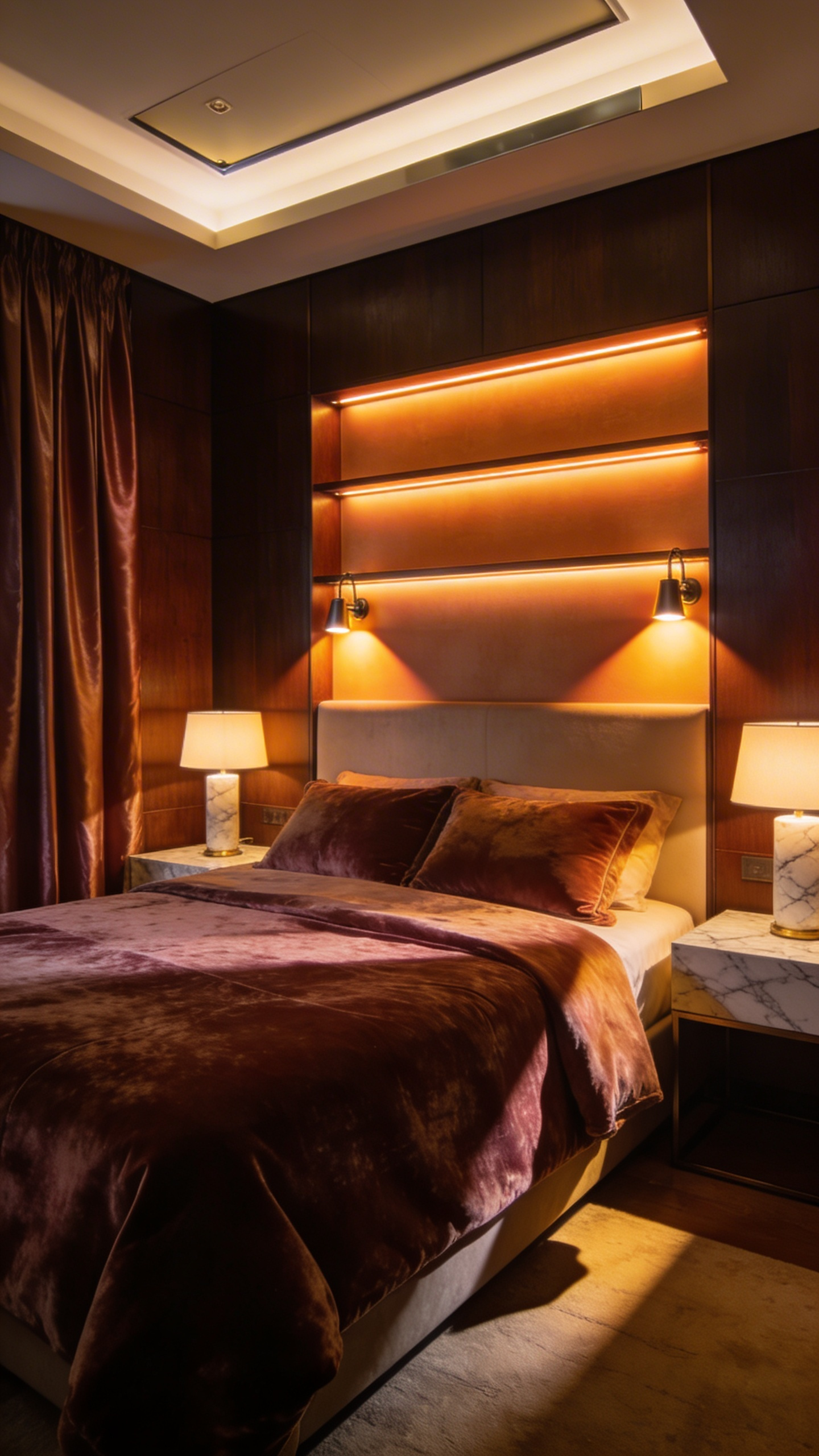
Furthermore, accent lighting is your ultimate tool for shifting moods. You must look beyond simply turning the overhead lights down. Instead, curate depth through a high-contrast technique known as chiaroscuro. For instance, place low-wattage LED strips underneath the bed frame. This floating effect signals the brain to produce sleep-inducing melatonin. Additionally, luxury hospitality strongly favors dim-to-warm lighting technology. These smart investment bulbs shift into the amber zone while dimming. Naturally, this glow perfectly mimics a romantic flickering candle. Moreover, consider installing elegant frosted wall sconces at eye level. This horizontal wash of diffused light softens facial features beautifully. Ultimately, fading slowly between these thoughtful layers establishes a true sanctuary.
10. Install Independently Controlled, Articulating Reading Sconces
Upgrading to articulating reading sconces instantly elevates your bedroom. Specifically, it introduces machine-age luxury into a shared intimate space. These fixtures trace their elegant bespoke roots to 1930s industrial workshops. Consequently, their exposed brass joints offer a satisfying tactile quality. You can literally shape your own luxurious lighting environment. Furthermore, wall-mounted fixtures reclaim valuable real estate on your nightstand. This spatial gift beautifully reduces visual clutter and nighttime stress.
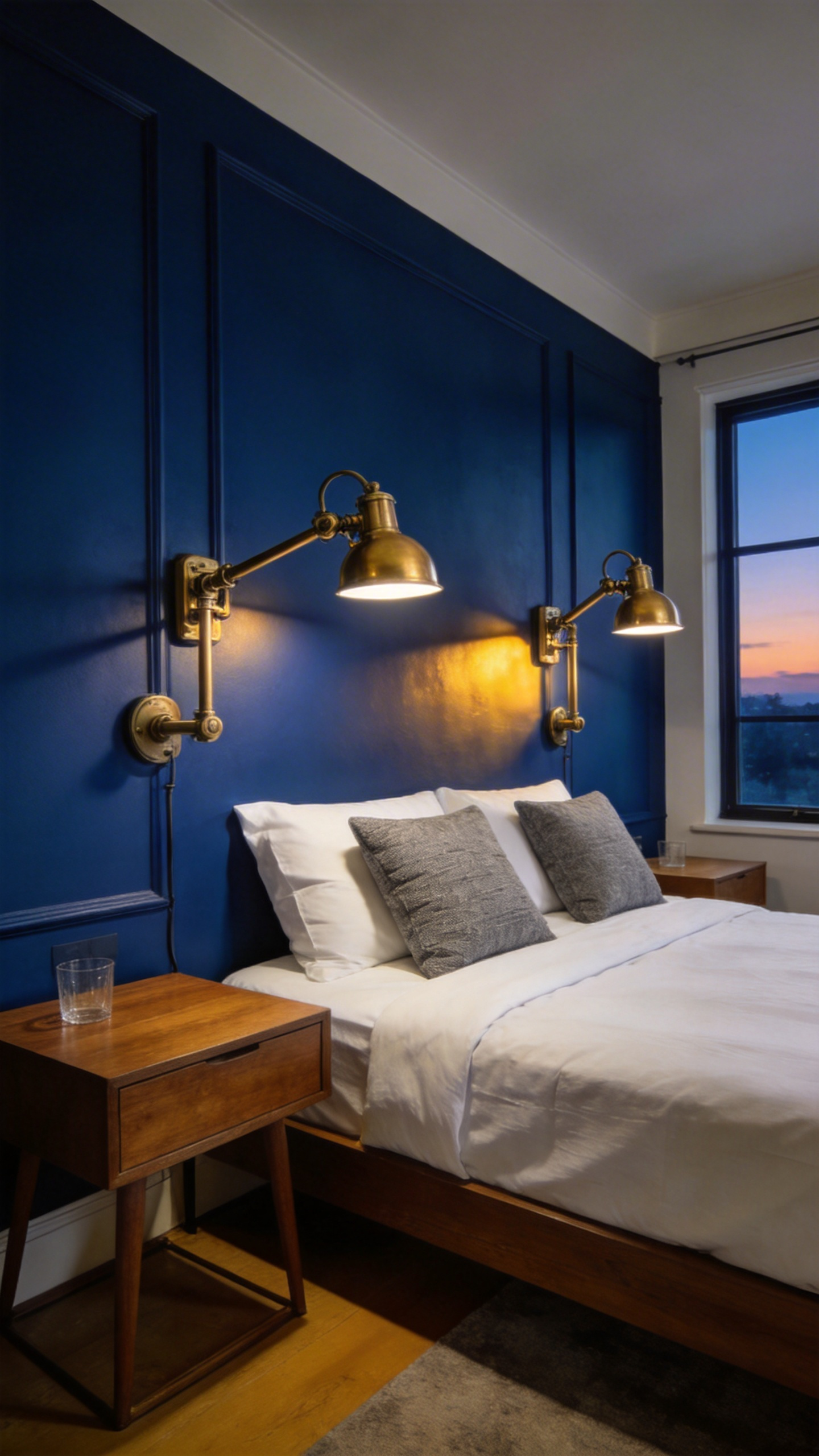
Importantly, articulating sconces solve the classic reading-versus-sleeping dilemma. Traditional fabric table lamps cast a wide, disruptive ambient glow. Conversely, metal sconces with opaque cowls provide narrow-beam precision. Therefore, the crisp light spill stays within a safely contained radius. Your partner can sleep peacefully in the cool dark. Ultimately, independent controls provide essential psychological autonomy for resting couples. You establish a private zone tailored perfectly to your circadian rhythm.
Additionally, proper ergonomic installation makes a significant aesthetic difference. Experts recommend mounting the shade six to twelve inches above your shoulder. Thus, the warm light casts perfectly onto your reading page. For modern platform beds, measure thirty inches above the mattress surface. Finally, choose timeless fixtures with intuitive toggle switches on the backplate. This ensures a peaceful, highly sophisticated nighttime routine.
11. Utilize Warm-Dim Smart Technology for Evening Transitions
Standard dimming simply makes static cool light look gray and lifeless. Conversely, warm-dim smart technology represents a sophisticated investment for modern bedrooms. Specifically, this technology uses dual-chip arrays to recreate a classic incandescent glow. As you lower the brightness, the color temperature seamlessly shifts. Consequently, the space transitions from a functional 3000K to a romantic 1800K amber. Furthermore, this gradual drop actively preserves your body’s melatonin production. Traditional bright LEDs suppress sleep hormones by mimicking midday sunlight. Therefore, an automated sunset fade helps synchronize discordant sleep schedules. Even if one partner reads, the amber hue prevents sleep disruption.
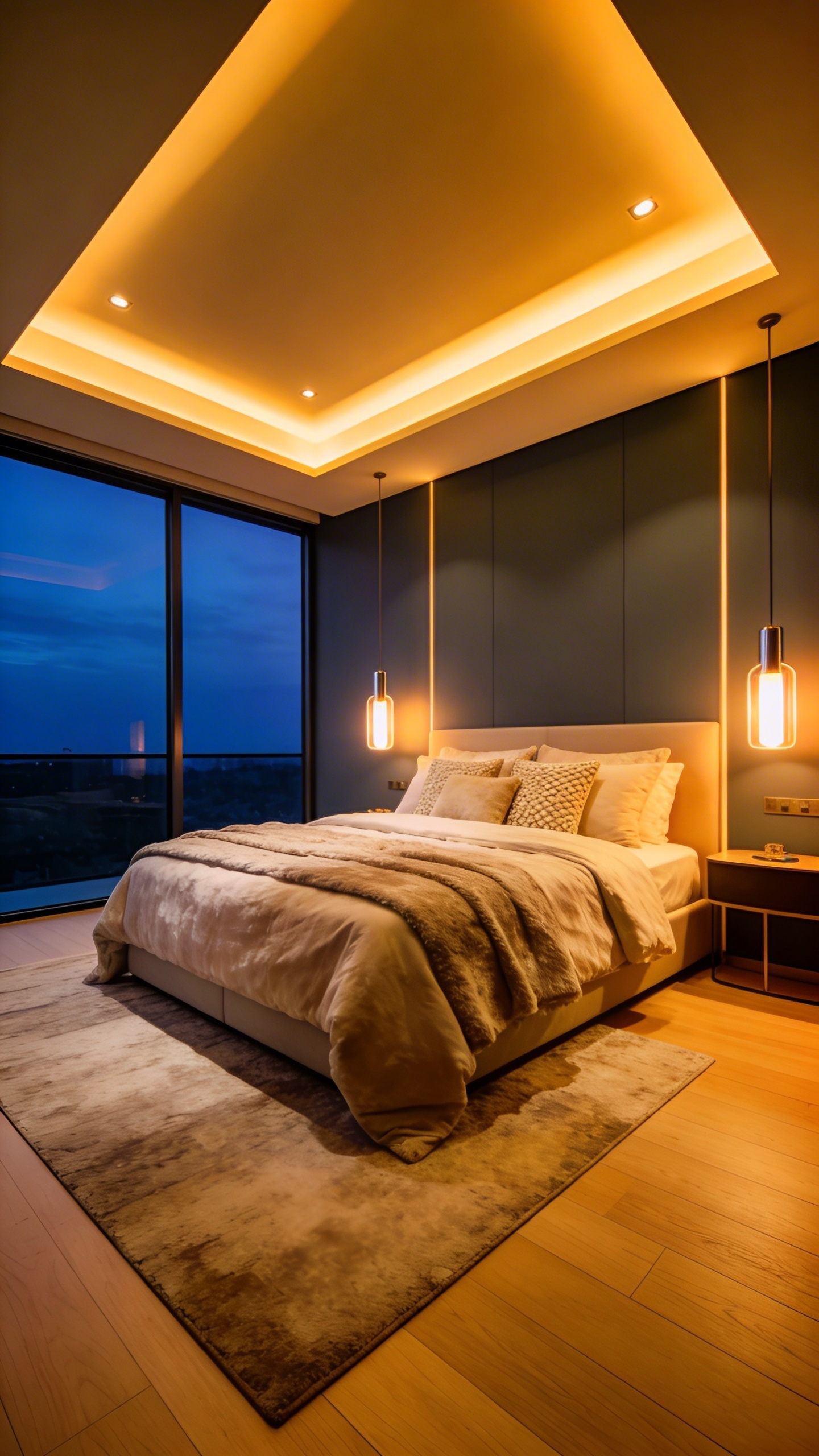
Additionally, this warm light softens harsh shadows and flatters skin tones. Thus, it transforms a large bedroom into an intimate sanctuary. For optimal design, sleep scientists recommend utilizing indirect lighting sources. Namely, install these smart bulbs inside shaded sconces or elegant cove fixtures. Ultimately, this indirect approach prevents glare from hitting the sensitive lower retina. Instead, couples experience a timeless fireside warmth that balances modern comfort.
12. Establish a Signature Olfactory Experience with Bespoke Scents
Truly sophisticated interior design extends beyond visual elements. Specifically, fragrance acts as the invisible architecture of your bedroom. Therefore, investing in a bespoke signature scent elevates your space. Scent directly impacts your brain’s emotional and memory centers. Consequently, inhaling a custom fragrance lowers daily cortisol immediately. This creates a powerful, comforting sensory anchor for couples. However, relying on mass-market room sprays is a mistake. Human noses quickly adapt to simple, single-note fragrance profiles. Instead, a bespoke, multi-layered blend prevents this olfactory fatigue. For example, combining earthy vetiver with soft neroli adds beautiful complexity. Ultimately, this crafts a unique identity for your partnership.
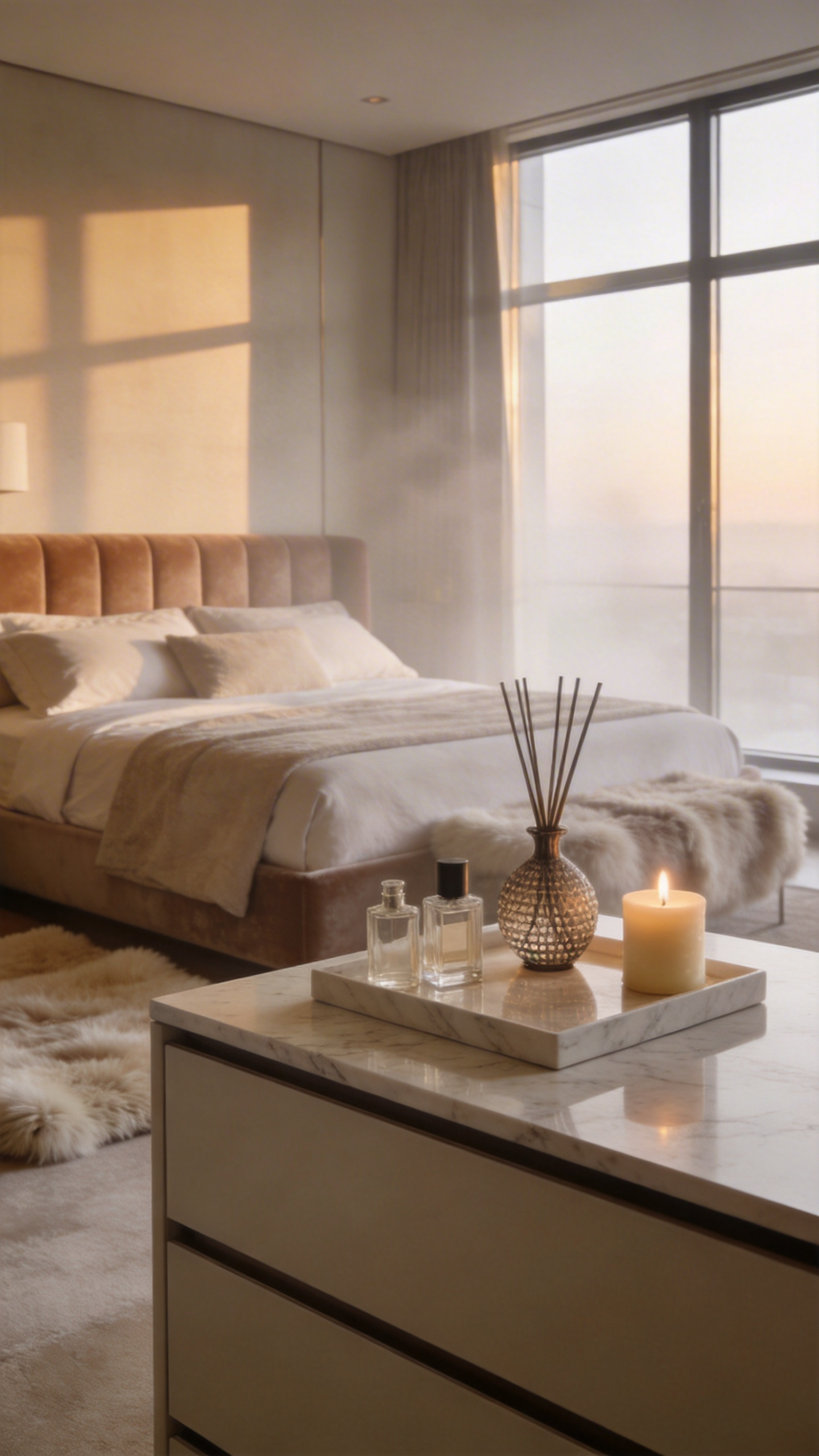
Furthermore, the delivery method dictates the luxury of the experience. Heat-based diffusers often destroy delicate fragrance notes. Conversely, cold-air nebulization preserves the true integrity of essential oils. This advanced technology gently releases a dry mist of nanoparticles. As a result, the complex scent lingers beautifully on expensive linens. Additionally, you must always prioritize phthalate-free, clean scent ingredients. After all, you spend hours breathing deeply in this enclosed sanctuary. Eventually, the bespoke fragrance settles into a warm dry down. Soft ambers and light musks beautifully complement your natural presence. Indeed, this intentional sensory curation forms a highly elegant nighttime ritual. Thus, it perfectly separates outside stress from your private retreat.
Phase IV: The Art of Curated Compromise
Ultimately, true luxury in a shared bedroom requires moving past a fragmented compromise. Instead, couples should develop a unified aesthetic. Specifically, this involves applying the 80/20 rule to your space. One dominant style provides the room’s architectural bones. Meanwhile, the secondary style adds curated, high-end interruptions. Consequently, this prevents a chaotic, decorating-by-committee look.
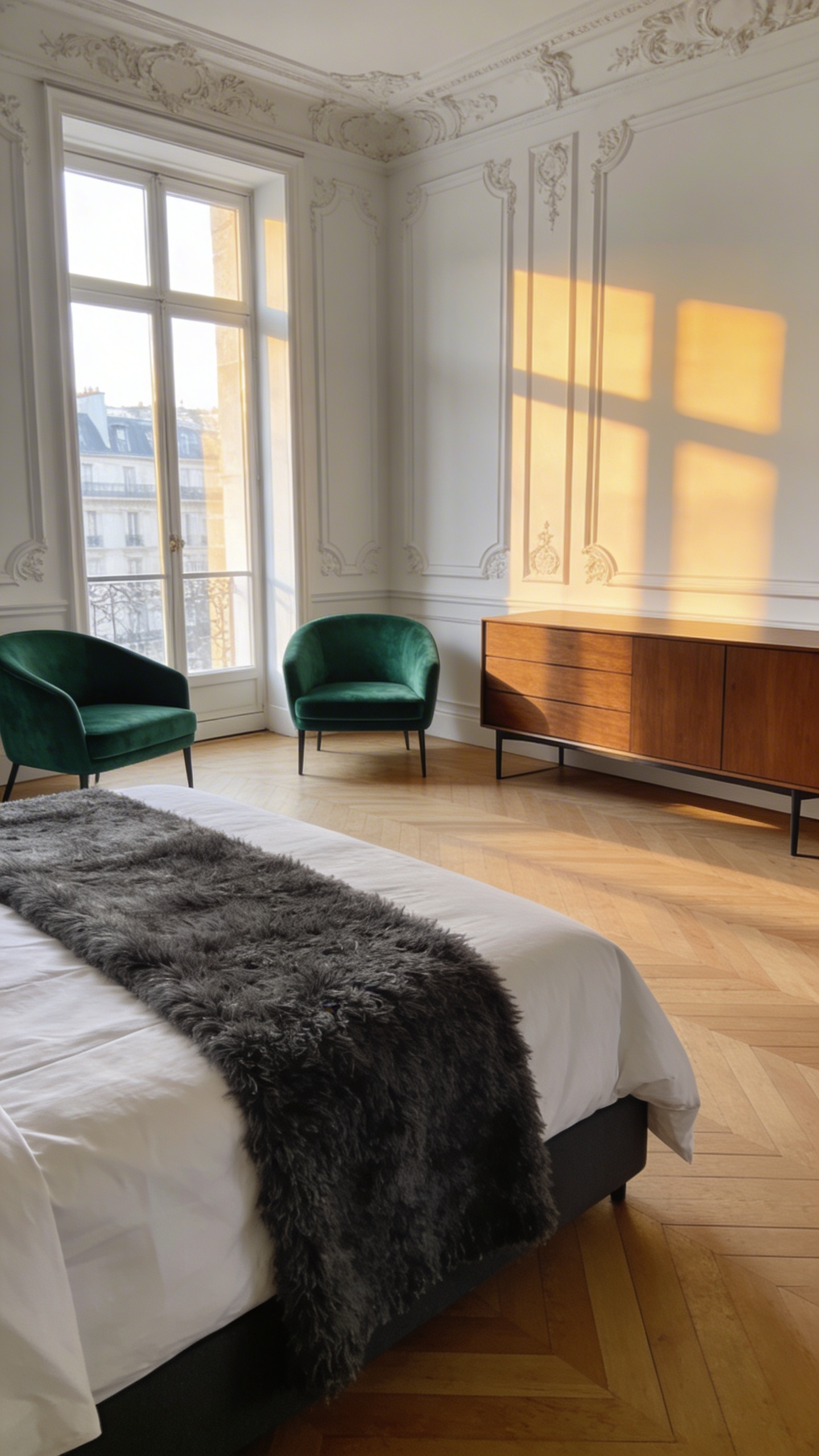
Furthermore, bridging disparate tastes requires focusing on tactile synchronicity. For instance, layer a heavy, dark-charcoal wool throw over airy white linens. Thus, you create a sophisticated contrast that satisfies both partners. However, a curated space still requires distinct moments of individuality. Therefore, designers implement zonal autonomy through personal nightstands. Naturally, these bedside spaces act as sovereign personal altars.
Similarly, smart investments must extend into behavioral design. In fact, addressing differing sleep schedules is a crucial step. Specifically, soft-close dresser drawers allow morning routines to happen silently. Furthermore, focused reading lights let differences coexist without visual disruption. Finally, this design phase demands a ruthless edit. Indeed, couples must purge cheap placeholder furniture entirely. Ultimately, replacing hand-me-downs with quality pieces creates a true permanent sanctuary.
13. Design Custom Wardrobe Systems for Equitable, Elegant Storage
The most common mistake in shared wardrobe design is a rigid equal division of space. Let’s be honest, fairness rarely requires exact symmetry here. Instead, modern organizers strongly advocate for an inventory-driven equitable split. One partner might need extensive vertical space for long evening wear. Conversely, a sneaker enthusiast may require substantial shelving volume. Therefore, using modular zones rather than a center divider prevents clutter-induced friction.
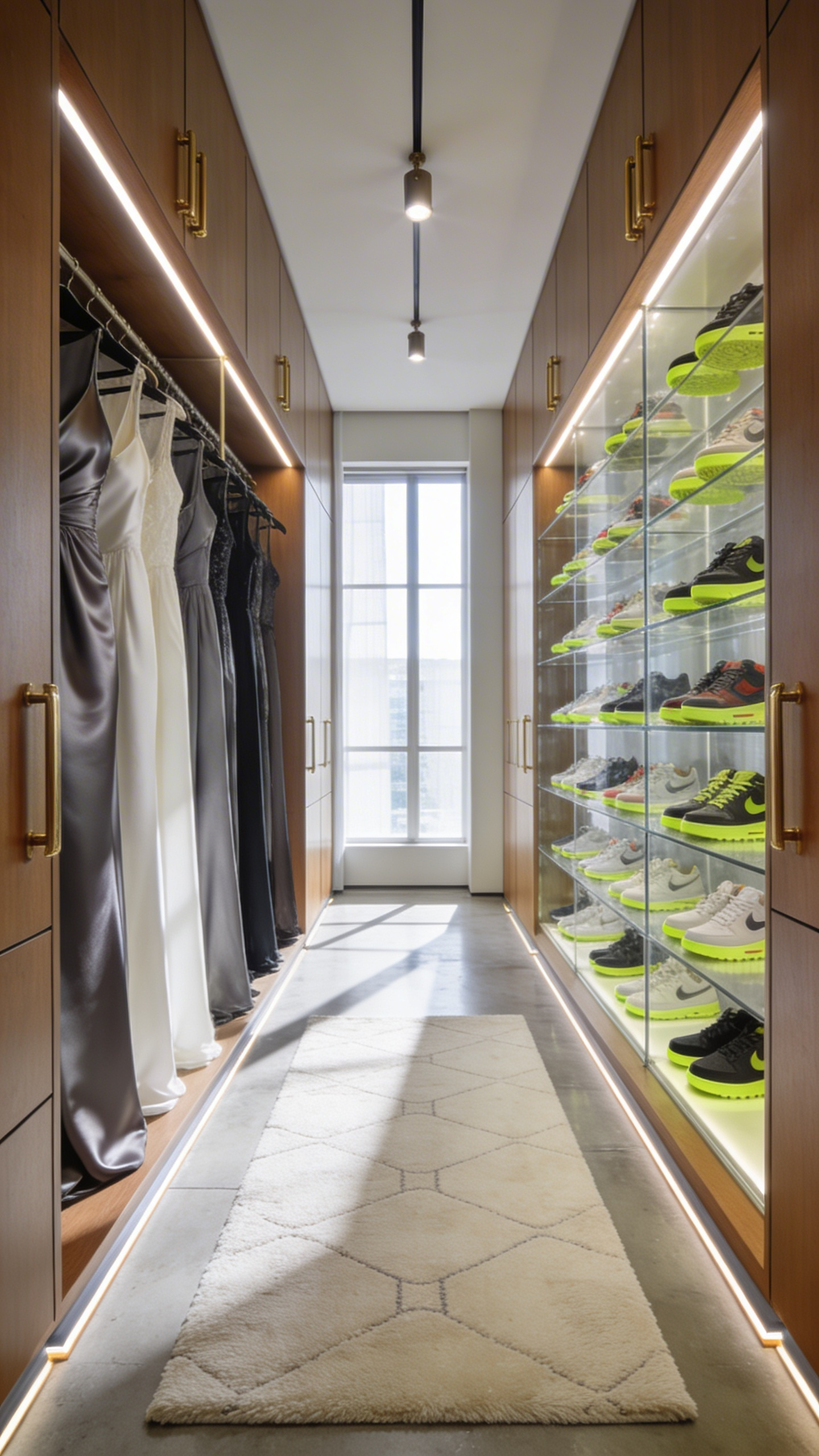
Additionally, elegant storage must adapt to different physical profiles. High-end custom systems frequently incorporate pull-down wardrobe lifts. Consequently, the less reachable vertical space becomes perfectly functional for partners of varying heights. Furthermore, retractable valet rods provide a stress-free way to stage morning outfits.
Moreover, true luxury relies heavily on sensory architecture. Leather-lined drawers protect delicate watches while beautifully dampening sound. Similarly, soft-close hardware and upholstered door panels create a silent closet. As a result, one partner can dress early without waking the other. Finally, custom lighting ecosystems elevate these collections beautifully. Recessed vertical LED strips eliminate harsh shadows entirely. Ultimately, warm motion-sensor lights protect sleep cycles, transforming utilitarian closets into autonomous sanctuaries.
14. Conceal the Tech: High-End Solutions for Screens and Cables
In a luxury bedroom, visible technology creates unwanted cognitive load. Specifically, tangled cables trigger the brain to perceive unfinished tasks. Consequently, this visual noise raises cortisol levels. Historically, true luxury was defined by the invisibility of utility. For instance, modern concealment mirrors the 18th-century jib door. Therefore, hiding the traditional black rectangle prioritizes intimacy over information.
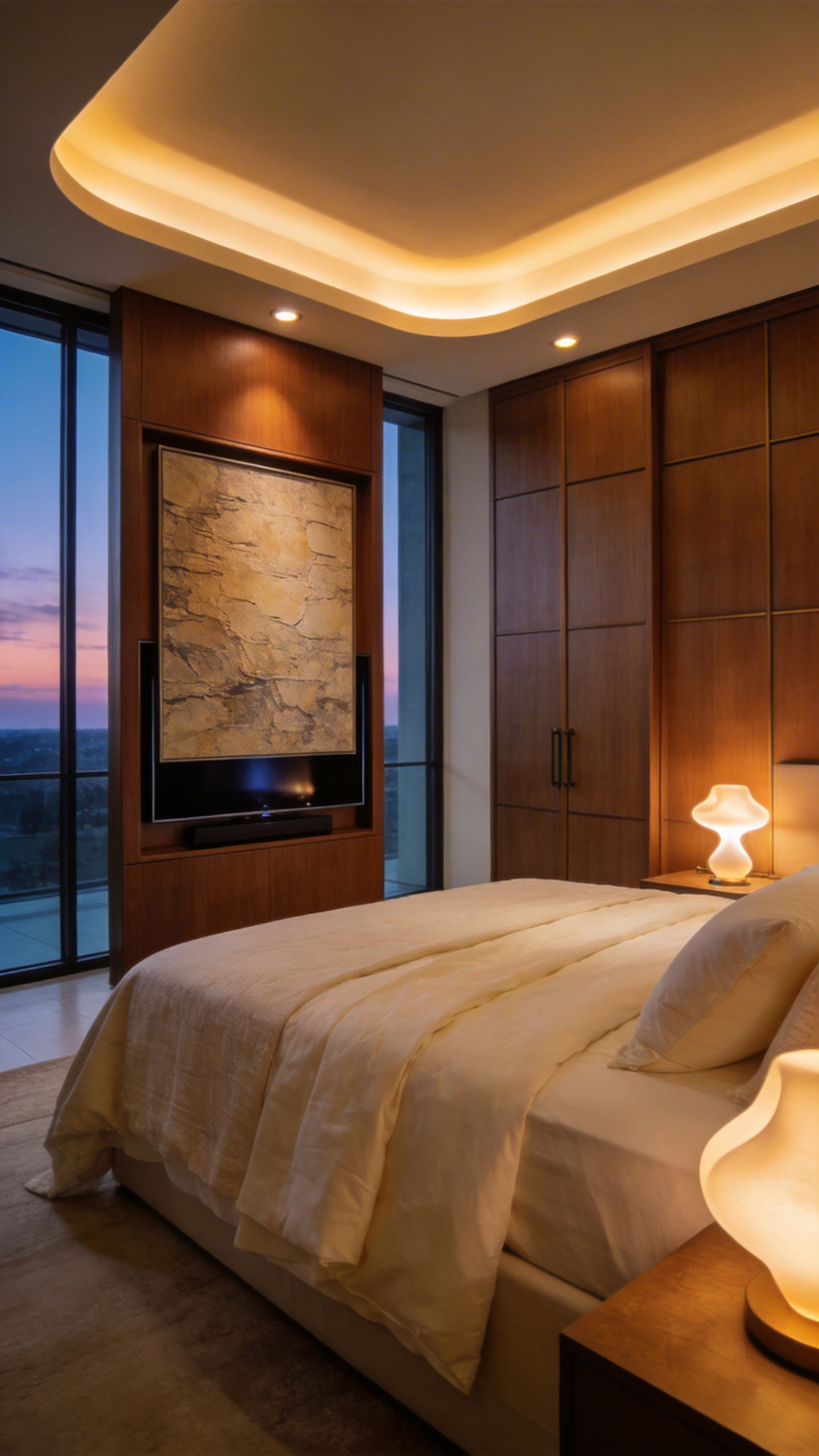
Today, sophisticated concealment requires smart investment choices. For example, motorized art lifts slide heavy canvas using whisper-quiet actuators. Importantly, these mechanisms operate below forty decibels. Alternatively, luxury designers utilize entertainment-grade mirror TVs. Furthermore, specialized glass ensures crystal clear viewing while remaining invisible when off. Moreover, under-bed lifts offer the ultimate space-saving solution. Ultimately, they store screens horizontally using soft-start telescoping arms.
However, mechanical brilliance must also extend to sophisticated cable management. Indeed, a single visible wire ruins a high-end aesthetic. Thus, professionals install low-voltage brush plates behind recessed units. Additionally, quiet luxury furniture features velvet-lined chase-ways inside headboards. Consequently, this prevents any rattling during motorized movements. Furthermore, bespoke stone nightstands act as invisible induction chargers. Specifically, charging technology is physically embedded into solid marble tops. Finally, wrapping these enclosures in hand-stitched leather elevates the entire space. Ultimately, the hidden spot becomes more beautiful than the technology itself.
15. Bridge Contradictory Styles Through Unifying Textures
When couples share a bedroom, differing design preferences often clash. I’ve found that interior designers rely on texture as an invisible diplomat here. Specifically, blending an industrial vibe with a soft sanctuary requires careful strategy. First, establish a textural hierarchy using the 70-20-10 ratio. Usually, a smooth, neutral base covers seventy percent of the room. Consequently, this matte background easily prevents distracting visual noise. Next, dedicate twenty percent to plush secondary textures. For instance, a velvet headboard introduces essential, high-end comfort. Finally, allow ten percent for raw or shiny accent materials. Thus, contradictory personalities shine without domestic design wars.
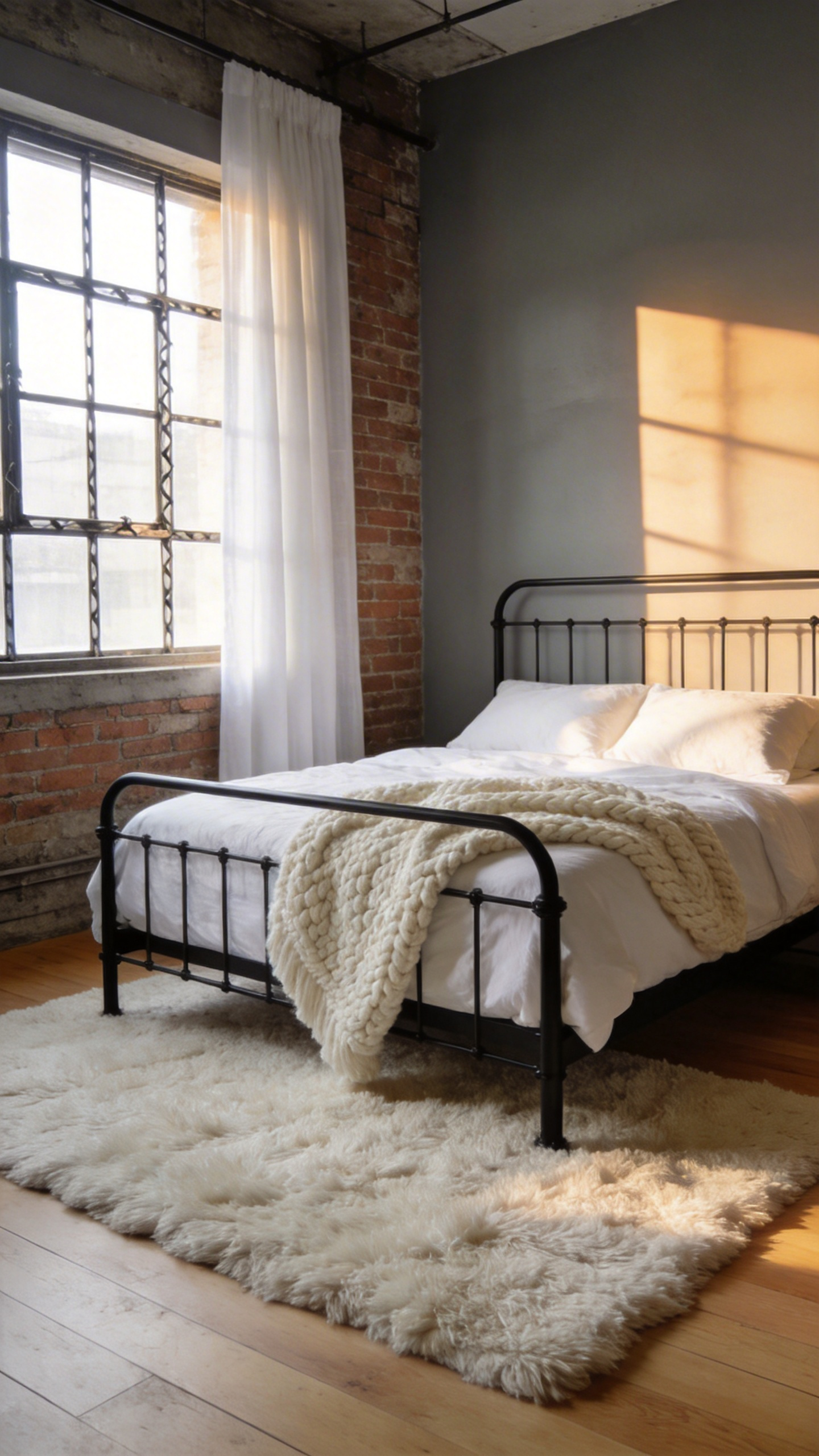
Furthermore, specific fabrics naturally soften harsh architectural lines. Historically, bouclé transitioned from high fashion to iconic modernist furniture. Today, it remains the ultimate stylistic bridge for shared spaces. Indeed, bouclé drapes beautifully over sharp, modern bed frames. Thereby, it respects structural integrity while providing tactile warmth.
Moreover, texture orchestrates visual weight to create absolute equilibrium. Often, mismatched furniture makes a room feel completely lopsided. However, a highly textured object carries significant visual mass. For example, placing a woven basket near a minimal desk adds necessary grit. In practice, this balances out a heavy, traditional wooden dresser nearby. Additionally, textures fundamentally change how light behaves in your space. Glossy surfaces reflect light to create sophisticated morning energy. Conversely, rough, matte surfaces absorb evening light to foster intimacy. Accordingly, layering a rustic wooden headboard against traditional silk curtains ensures psychological comfort.
16. Establish a Tech-Free Seating Area for Evening Connection
Currently, a tech-free seating area is a vital psychological intervention. Removing smartphones eliminates digital technoference from your intimate relationship. Consequently, this dedicated zone lowers your stress-inducing cortisol levels. Instead, face-to-face interaction releases oxytocin for deeper emotional bonding. Historically, the French boudoir served as a private drawing room. Recreating this concept transforms your bedroom into an elegant retreat. Furthermore, it frames the evening as a dedicated luxury appointment.
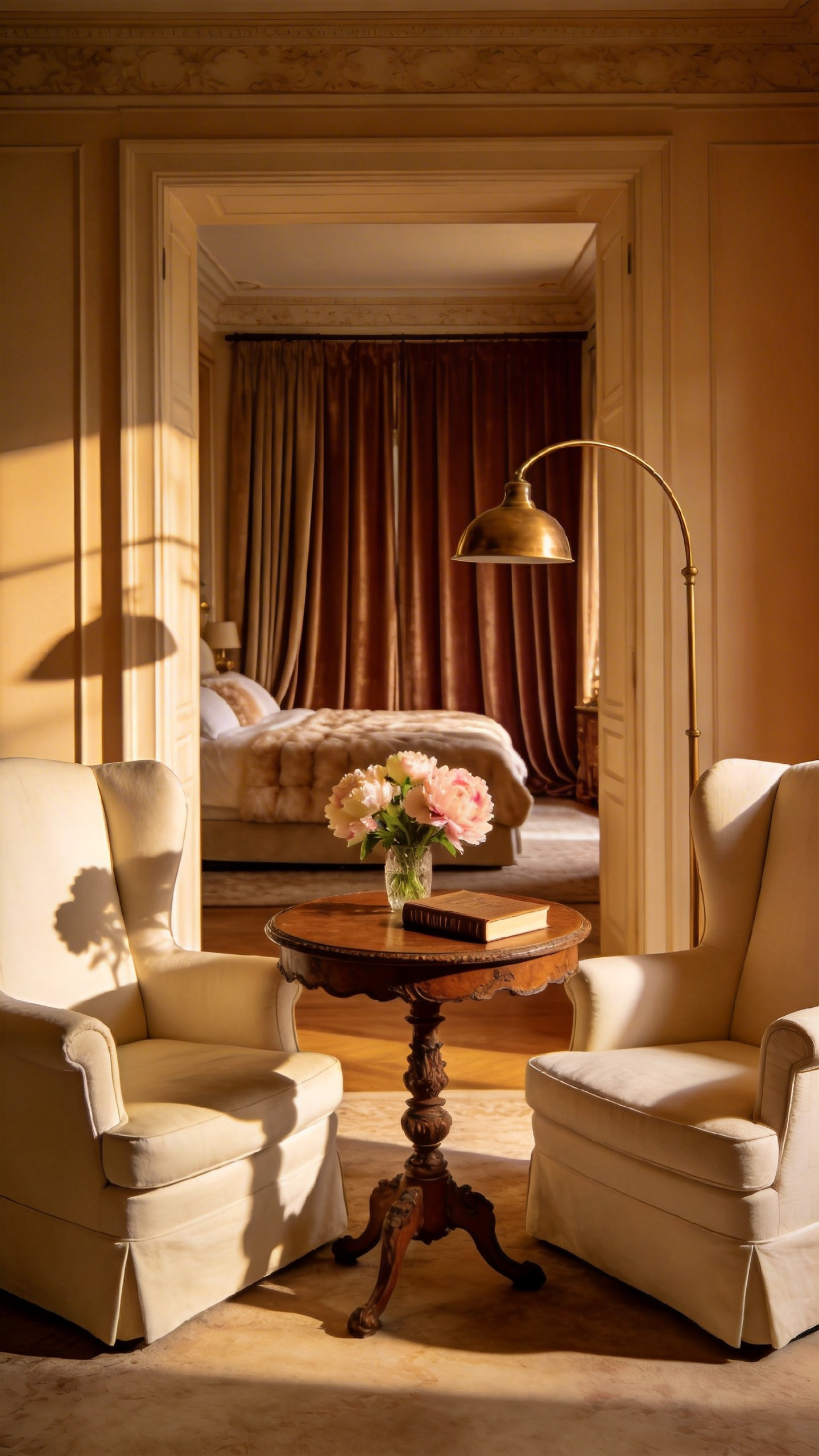
Therefore, the geometry of your furniture placement matters immensely. For example, two velvet armchairs placed face-to-face encourage eye contact. Alternatively, a side-by-side cashmere loveseat creates a safe, cooperative environment. You should maintain a seating distance of three to six feet. Naturally, this intimate zone encourages softer voices and private disclosures.
However, this space must entice you away from endless scrolling. High-touch materials like a plush shag rug beautifully anchor the senses. Additionally, heavy linen curtains absorb echoes to create an acoustic cocoon. Lighting a sandalwood candle establishes a deeply relaxing olfactory ritual. Finally, you must avoid the harsh glare of blue light. Instead, use warm-toned accent lamps under 2700K to promote sleep. Keep a shared gratitude journal tucked in a sleek drawer. Ultimately, these design choices cultivate a sophisticated, deeply connected sanctuary.
17. Curate Meaningful, Collaborative Artwork Mappings
Transforming a bedroom into a visual memory palace requires intentional collaboration. Specifically, curating an artwork mapping goes far beyond mere decoration. In fact, this technical process beautifully mirrors Dr. John Gottman’s famous relationship theories. By plotting shared milestones, couples create a physical blueprint of their union. Naturally, a primary challenge here is aesthetic friction between partners. However, collaborative mapping offers an elegant methodology to resolve differing tastes. Instead of arguing over one hero piece, opt for a salon-style gallery. Consequently, you can blend a high-brow abstract painting with personal travel photography. To unify these disparate mediums, simply employ a shared style cue. For example, matching walnut frames or a consistent color palette elevates the arrangement.
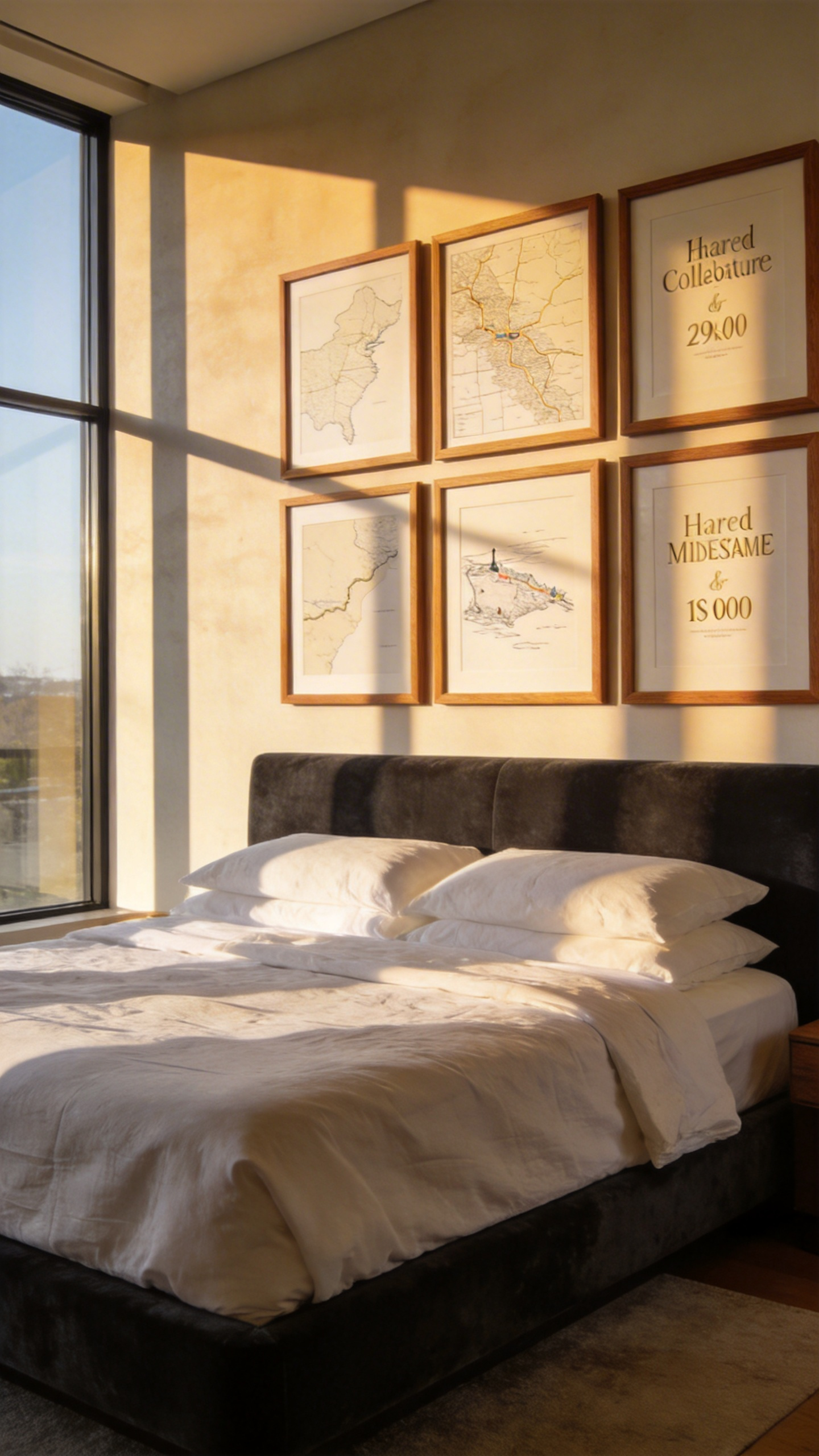
Furthermore, spacing is critical for achieving a calming, high-end atmosphere. Professional mappings rely on two to three inches of deliberate negative space. Therefore, the brain processes visual information easily without triggering sleep-disrupting alertness. Additionally, integrating tactile art like woven tapestries adds sumptuous comfort. Ultimately, a truly sophisticated gallery wall is never actually finished. Rather, you should leave purposeful gaps within your chosen layout. This iterative approach allows you to seamlessly integrate future memories. As a result, your curated artwork remains a dynamic, evolving investment.
18. Cultivate the ‘Invisible Compromise’: Prioritizing Frictionless Flow
Achieving a shared aesthetic requires the invisible compromise. Specifically, this approach engineers out stressors to create frictionless flow. Therefore, luxury designers abandon the chaotic “meet in the middle” strategy. Instead, they embrace symmetrical sovereignty. For instance, lopsided bedroom layouts create subconscious power imbalances. Consequently, centering the bed with identical utility zones removes daily micro-friction. Additionally, utilizing the Scandinavian Sleep Method offers brilliant high-end functionality. Specifically, individual luxury duvets provide closeness without the physical friction of shared blankets.
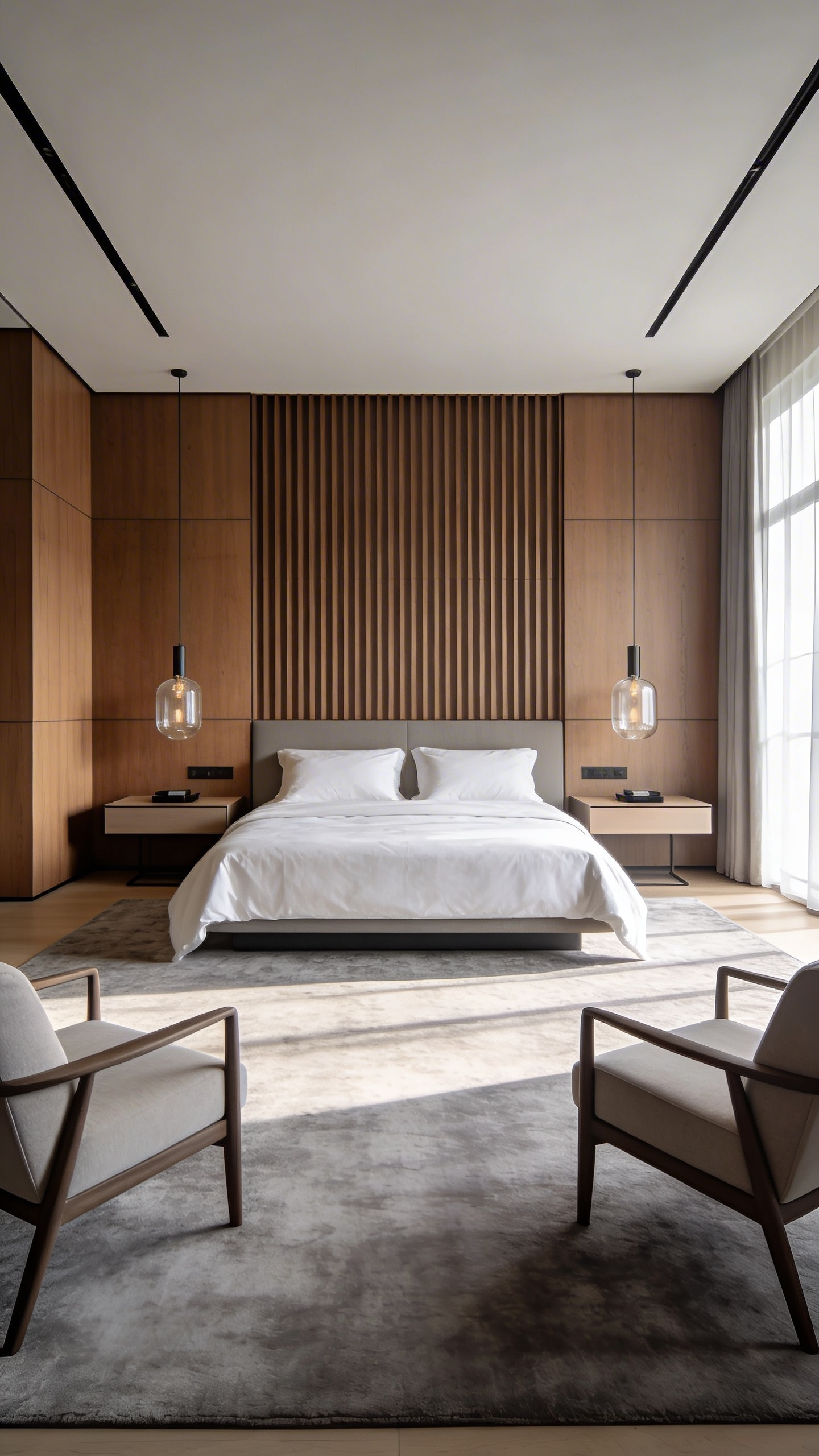
Furthermore, proper spatial circulation acts as a vital relationship lubricant. Designers consistently recommend a minimum 36-inch clearance around the bed. In fact, dropping below 24 inches triggers a mild stress response. Thus, floating the bed away from walls ensures graceful morning navigation. Similarly, sliding closet doors prevent frustrating physical bottlenecks.
Moreover, managing different sleep schedules requires clever circadian zoning. Harsh overhead lighting severely disrupts the human nervous system. Instead, directional task lighting at headboard level creates an elegant solution. Thus, one partner reads comfortably while the other sleeps in darkness. Additionally, investing in silent soft-close hardware maintains this serene atmosphere.
Finally, blending different aesthetic tastes relies on somatic materialism. Specifically, establishing a high-end neutral base of warm ivory satisfies minimalists. Conversely, layering heavy linen and rich velvet fulfills the maximalist desire for warmth. Ultimately, this strategic material investment reduces visual clutter while maintaining deep tactile richness. Therefore, both partners enjoy a sophisticated sanctuary. These bedroom ideas for couples ensure that the master suite remains a place of mutual restoration.
Frequently Asked Questions
How can couples balance different design styles in a shared bedroom?
The most effective way to balance different styles is to follow the 80/20 rule. Choose one dominant architectural style to cover 80% of the room’s foundational elements. Use the remaining 20% for curated interruptions that reflect the other partner’s taste. Keeping all elements within a tight, neutral color palette helps unify these disparate styles.
What is the best color palette for a couple’s bedroom?
A sophisticated foundation of complex neutrals is ideal for a couple’s bedroom. These shades are gender-neutral and change beautifully depending on the light. They provide a calming backdrop that reduces cognitive load. You can then layer in warmth through natural wood tones and leather accents without overwhelming the space.
How do you create a tech-free zone in a primary suite?
Creating a tech-free zone requires a dedicated seating area positioned away from the bed. Use face-to-face furniture arrangements, such as two armchairs with a small side table. This naturally encourages conversation. Implementing smart concealment solutions further removes digital distractions from the visual field.